Billboard advertising remains one of the most powerful forms of outdoor marketing, but understanding why billboard advertising campaigns fail is critical for brands aiming to maximize impact. Despite reaching millions of people during daily commutes, many campaigns fall short due to common billboard advertising mistakes such as poor placement, weak messaging, and lack of audience targeting.
Studies show that while a majority of consumers notice outdoor ads, only well-executed campaigns achieve strong recall and engagement. This highlights the importance of avoiding key billboard campaign strategy mistakes and focusing on clarity, visibility, and audience relevance.
By identifying the core reasons behind outdoor advertising campaign failures, brands can refine their approach, improve campaign performance, and ensure their billboards deliver measurable results. In this blog, we explore the most critical mistakes brands make and how to avoid them for more effective outdoor advertising.
1. Poor Location Selection
Choosing the right location is one of the most important factors for a successful billboard campaign. Research shows that billboards in high-traffic areas like commuter corridors, entry roads and busy junctions can reach up to 100,000 people per day, generating millions of impressions weekly. When placements align with target audience movement and daily activity zones, they naturally capture more attention and drive better brand recall.
Strategic campaign planning ensures that billboards don’t just get seen,they get remembered. Studies indicate that 90% of consumers recall at least one billboard they’ve seen in the past month, proving that consistent exposure in the right locations boosts marketing visibility and engagement. By focusing on audience-centric routes rather than random spots, brands can maximize impact and make every outdoor ad count.
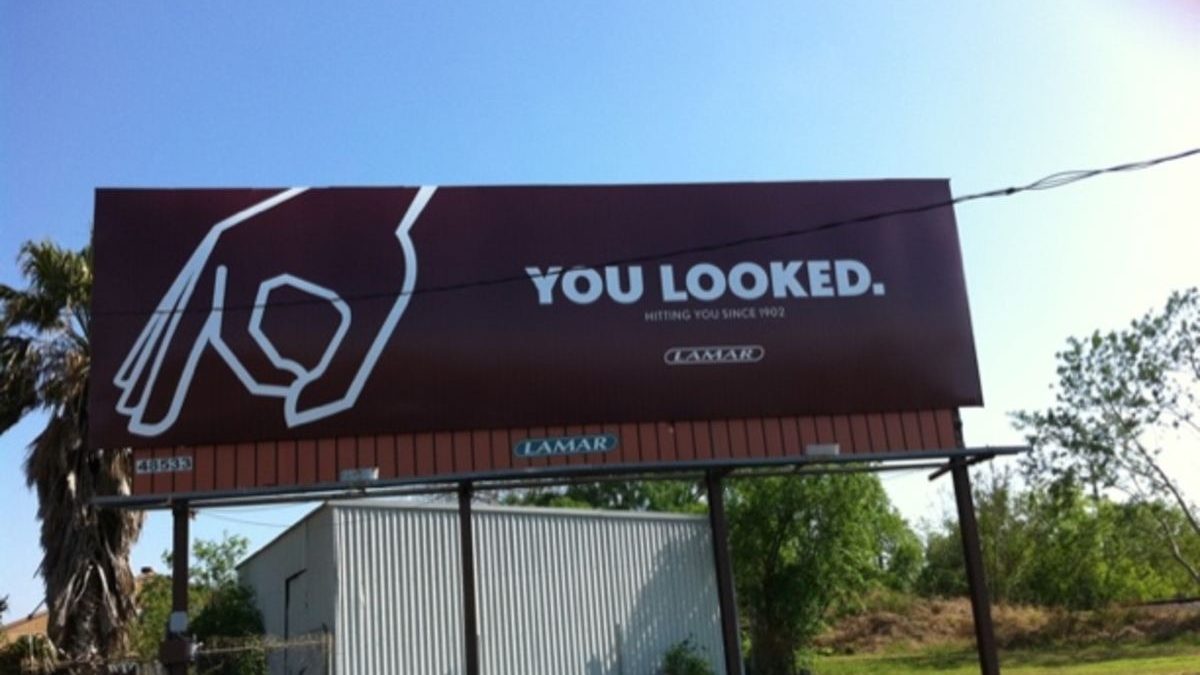
2. Unclear or Overloaded Messaging
Billboards are usually viewed for only a few seconds. When messages include too much text or multiple ideas, audiences find it difficult to understand and communicate quickly.
Simple, focused messaging works best. A clear headline, minimal copy and one strong visual idea help avoid confusion and improve recall. Overloaded messaging remains a key reason some billboard campaigns struggle to connect.
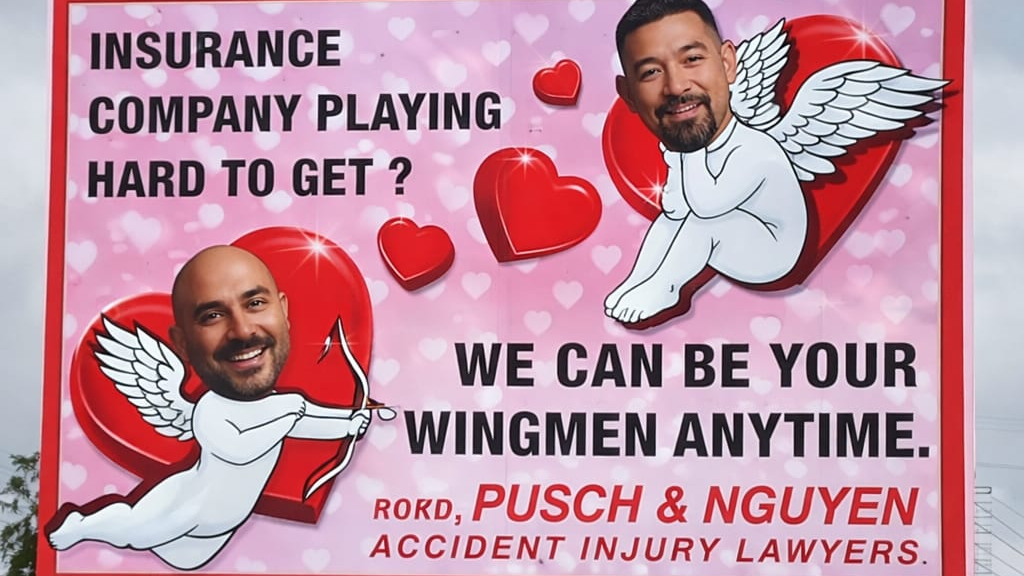
3. Weak Visual Design
Visual design is key to billboard success. Research shows readability drops by up to 50% when text is small, contrast is low or layouts are cluttered. Clear visual hierarchy ensures the brand name and message are instantly understood, boosting brand recall.
Poor design often undermines even well-placed billboards. Studies find that well-designed visuals increase engagement by over 70%, proving that strong campaign planning and thoughtful offline advertising formats make outdoor ads memorable and effective.
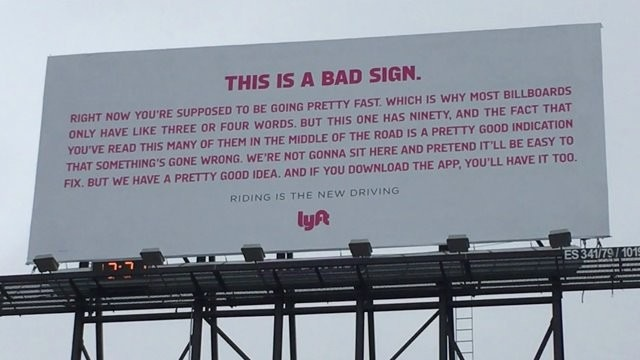
4. Lack of Audience Targeting
Choosing billboard locations based on audience demographics, lifestyle and daily routines is key to campaign effectiveness. Research shows that when placements match audience movement, billboards are up to 60% more likely to be noticed, making messages feel timely, contextual and relevant.
For instance, brands targeting working professionals see higher brand recall when billboards are near office zones rather than residential streets. Misaligned placement is a major reason many campaigns fail, highlighting the importance of strategic campaign planning and audience-focused offline advertising formats.
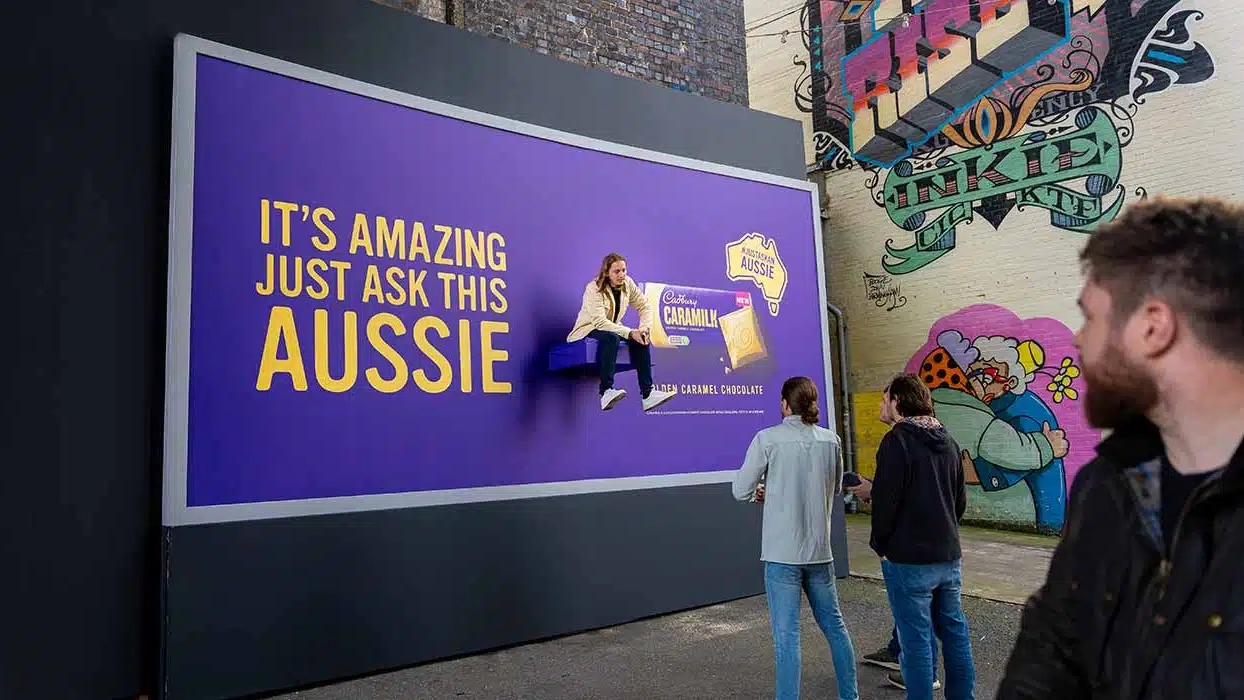
5. Inadequate Campaign Duration
Billboards rely on repetition to build awareness and recall. Short campaign durations do not provide enough exposure for messages to register with audiences.
Adequate display duration allows the billboard to be familiar over time. Insufficient campaign length is often a factor behind why some billboard campaigns fail to achieve their visibility goals.
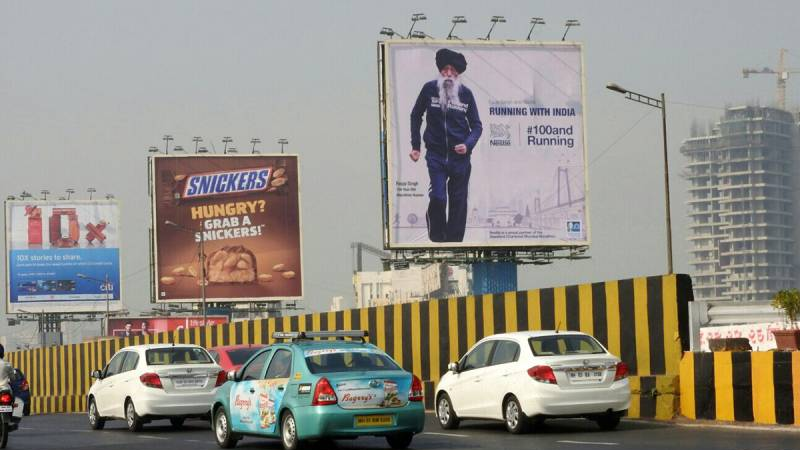
6. Poor Timing of the Campaign
Timing has a direct influence on campaign effectiveness. Launching billboard campaigns during periods of low footfall, off season demand or misaligned business cycles reduces visibility.
Aligning campaigns with peak movement periods, festive seasons, or key business timelines improves results. When timing does not match audience behaviour, some billboard campaigns underperform.
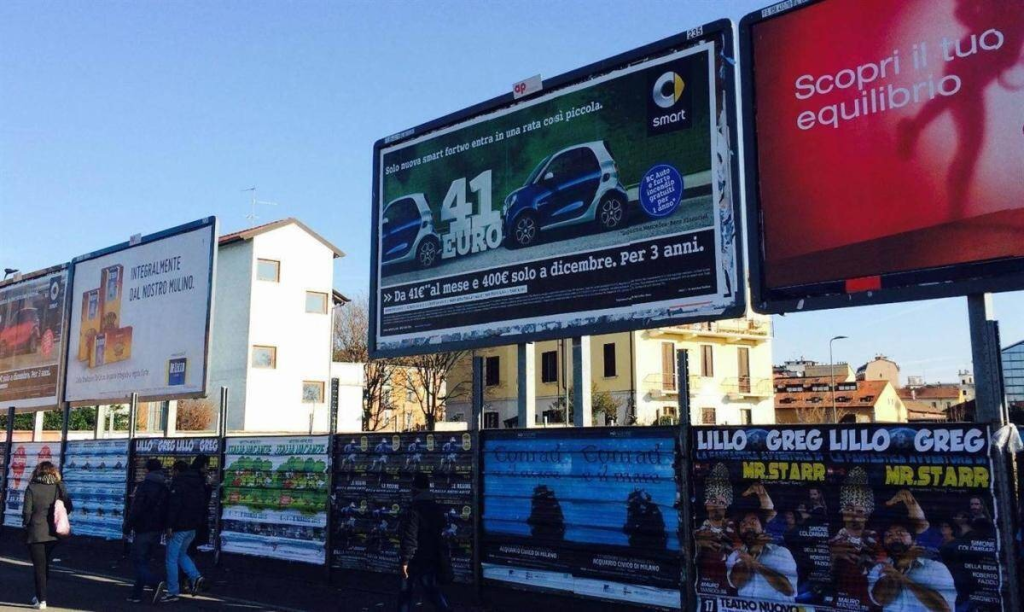
7. No Integration With Other Marketing Channels
Billboards are most effective when combined with digital, social or on-ground marketing efforts. Studies show that integrated campaigns can increase consumer engagement by up to 80%, reinforcing messages across multiple touchpoints and boosting brand recall.
Standalone billboards can raise awareness but often struggle to drive action. Research indicates that campaigns without integration are less likely to influence purchase decisions, showing that strategic campaign planning and cohesive offline advertising formats are essential for maximizing impact.
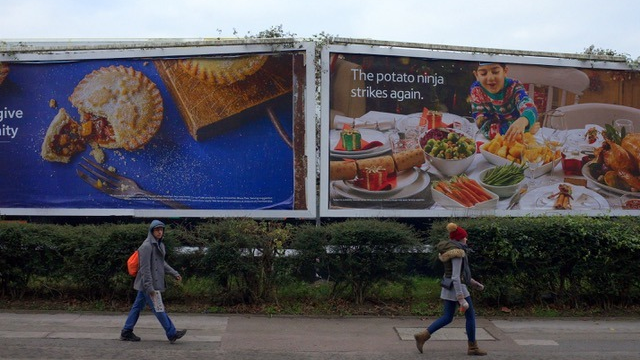
8. Limited Monitoring and Execution Control
Once a billboard campaign is live, regular monitoring is crucial to maintain consistent visibility. Studies show that up to 30% of outdoor ads lose effectiveness due to issues like poor lighting, obstructions or maintenance delays, which reduce marketing visibility and weaken brand recall.
Ongoing checks ensure quality throughout the campaign period, preventing execution gaps from undermining even the best-laid plans. Research highlights that campaigns with active monitoring achieve 20–40% higher engagement, proving that strong campaign planning must be paired with diligent execution to deliver real impact.
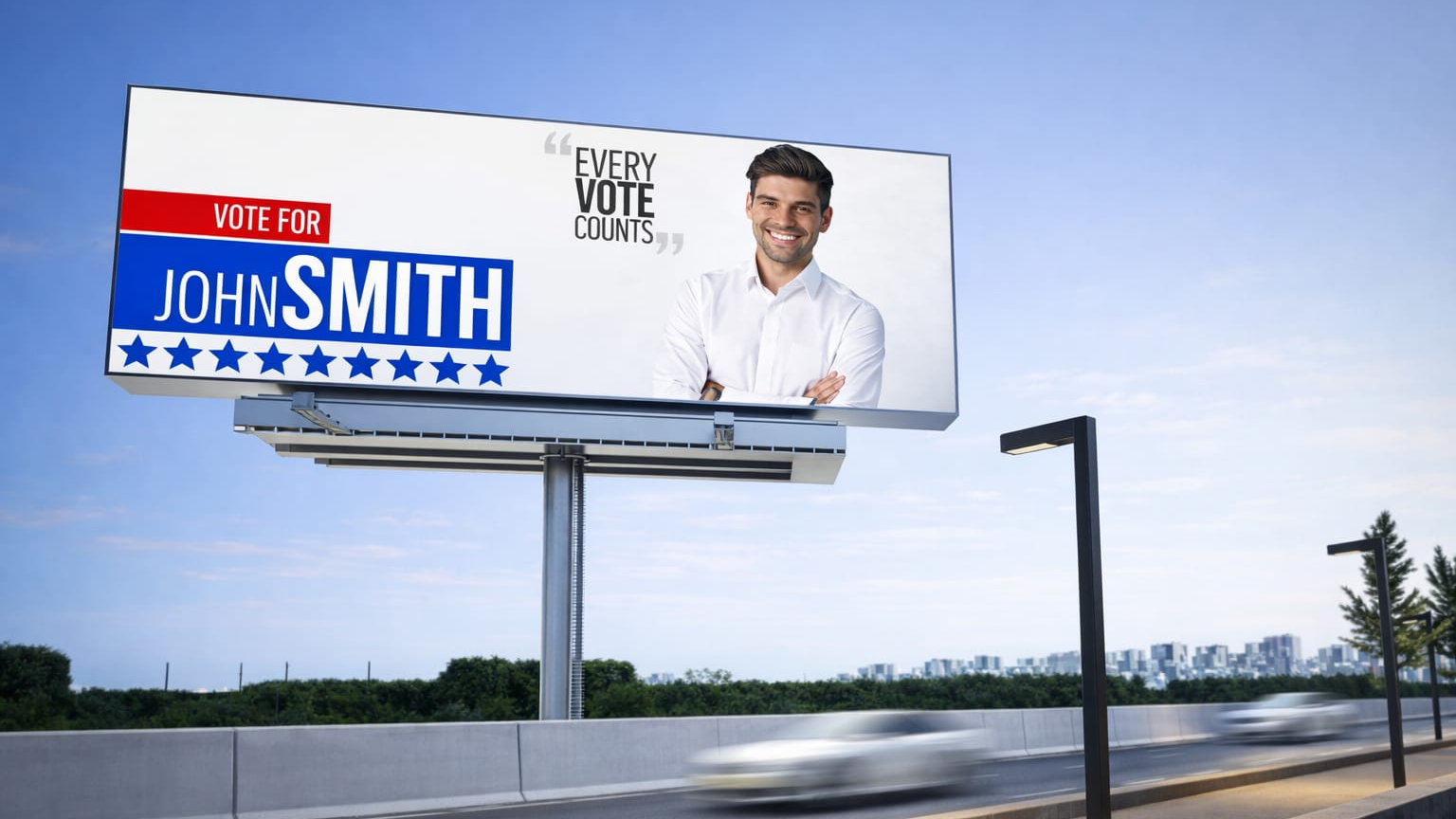
How Brands Can Avoid These Billboard Challenges
Improving billboard performance begins with clear campaign planning. Research shows that campaigns with simple, visually strong creatives in audience-relevant locations see up to 70% higher brand recall. Allowing sufficient duration for repeated exposure helps messages stick, turning brief glimpses into lasting awareness.
Supporting billboards with digital or on-ground marketing efforts further boosts engagement and impact. Understanding why some campaigns fail, whether due to placement, design or execution gaps which enables brands to refine strategies, make informed decisions and maximize marketing visibility in future outdoor advertising efforts.
Benefits of Identifying Billboard Performance Gaps
- Better location and media selection
- Clearer messaging and stronger recall
- Improved budget utilisation
- More consistent campaign performance
- Smarter long term outdoor advertising decisions
Billboard advertising remains one of the most effective ways to build brand visibility and recall in outdoor environments. Studies show that well-planned billboards can reach over 80% of urban adults weekly, yet many campaigns underperform not because of the medium, but due to gaps in campaign planning, placement or audience alignment.
By understanding why some billboard campaigns fail, brands can approach outdoor advertising with more clarity and confidence. Thoughtful planning, strategic ad placement and consistent execution ensure that billboard campaigns generate measurable impact and improve marketing visibility over time.
Frequently Asked Questions (FAQ’s)
1. Why do billboard advertising campaigns fail?
Billboard campaigns fail mainly due to poor location selection, unclear messaging, weak design, and lack of audience targeting, which reduce visibility and recall.
2. What are the most common mistakes in billboard advertising?
Common mistakes include overcrowded messaging, low-visibility design, short campaign duration, poor placement, and lack of integration with other marketing channels.
3. How can brands improve billboard campaign performance?
Brands can improve performance by choosing high-traffic locations, using clear and simple messaging, ensuring strong visual design, and aligning campaigns with audience behavior.
4. Why is location important in billboard advertising?
Location directly impacts visibility and audience reach. Billboards placed in high-traffic, relevant areas generate more impressions and stronger brand recall.
5. How does messaging impact billboard advertising success?
Simple and clear messaging improves quick understanding, while cluttered or complex content reduces engagement and makes campaigns less effective.
Why Choose Ginger Media Group for Affordable Offline Marketing
Ginger Media helps startups execute affordable offline marketing campaigns with clarity, transparency, and measurable impact. With strong expertise across outdoor, transit, print, and on ground activations, Ginger Media focuses on cost effective solutions that deliver real visibility without unnecessary spending. From planning and execution to monitoring and reporting, the team ensures startups get the best value from every offline campaign. By combining strategic media selection with on ground execution strength, Ginger Media enables brands to scale offline marketing efficiently and confidently.
]]>In today’s competitive urban advertising landscape, billboard advertising near IT parks has emerged as one of the most effective ways for brands to capture the attention of high-income, tech-savvy professionals. India’s IT parks are not just workplaces but high-density ecosystems of daily commuters, making them prime zones for outdoor advertising near tech parks in India.
With the rapid growth of India’s IT workforce and increasing corporate footfall, brands are actively investing in best billboard locations near IT parks to maximize visibility and recall. The outdoor advertising industry is also witnessing significant expansion, reinforcing the value of strategic billboard placements in high-traffic zones.
By leveraging billboard placement strategies near IT hubs, brands can ensure repeated exposure during peak commute hours, influence decision-makers, and drive stronger brand recall. This blog explores the most effective billboard locations near IT parks, helping brands optimize reach, engagement, and campaign performance.
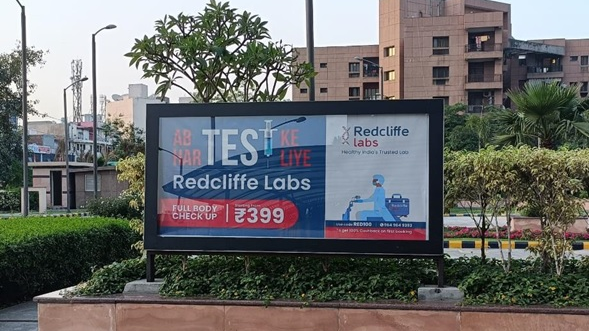
1. Entry and Exit Roads of IT Parks
The main entry and exit roads of IT parks are some of the most effective billboard locations. These routes experience heavy traffic during morning and evening office hours, ensuring repeated exposure.
Among all billboard locations near parks, entry routes deliver maximum frequency and attention.
2. Junctions and Signal Points Near IT Corridors
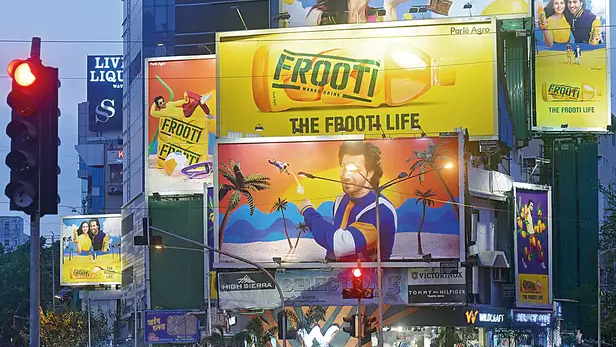
Traffic signals near IT parks force vehicles to stop, increasing viewing time. Billboards placed at these junctions benefit from longer dwell time and better message retention.
These are the most impactful locations near IT parks for high visibility campaigns.
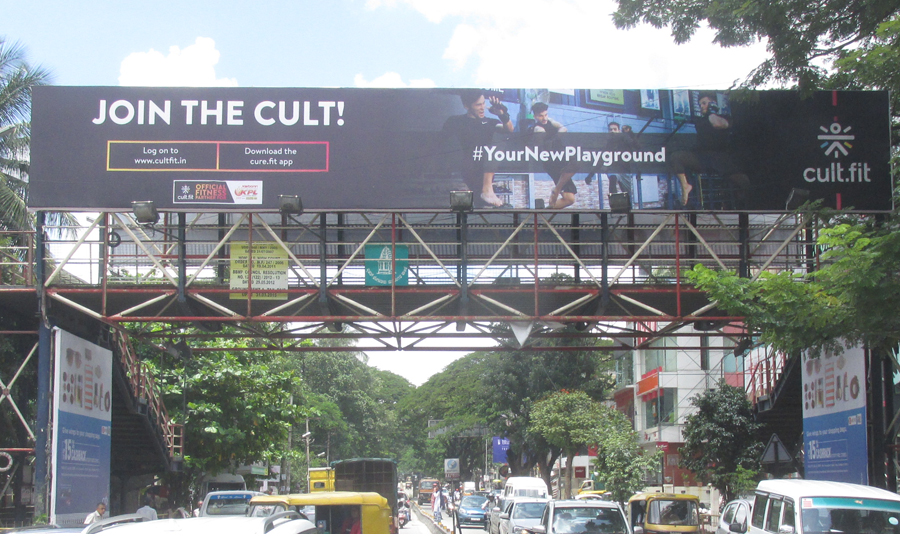
3. Flyovers and Underpasses Near IT Zones
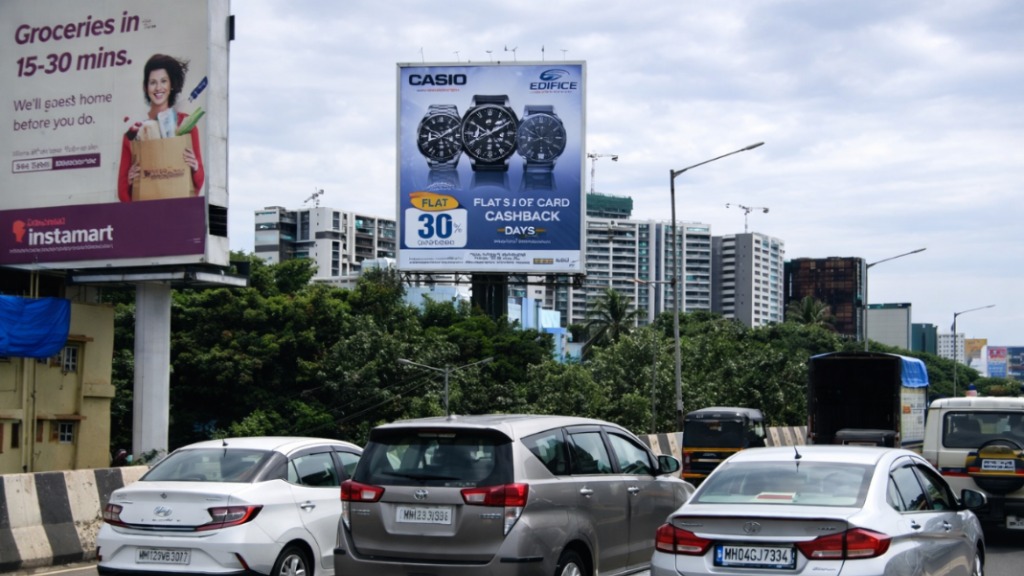
Flyovers near IT parks provide elevated visibility, making billboards easily seen by thousands of commuters and pedestrians every day. These high-traffic spots ensure your brand captures attention from long distances.
Urban billboards in such locations can generate over 1,000 daily impressions, with 74 % of views coming from within 1.4 miles, offering strong, round-the-clock visibility that drives brand recall and engagement.
4. Tech Park Peripheral Roads
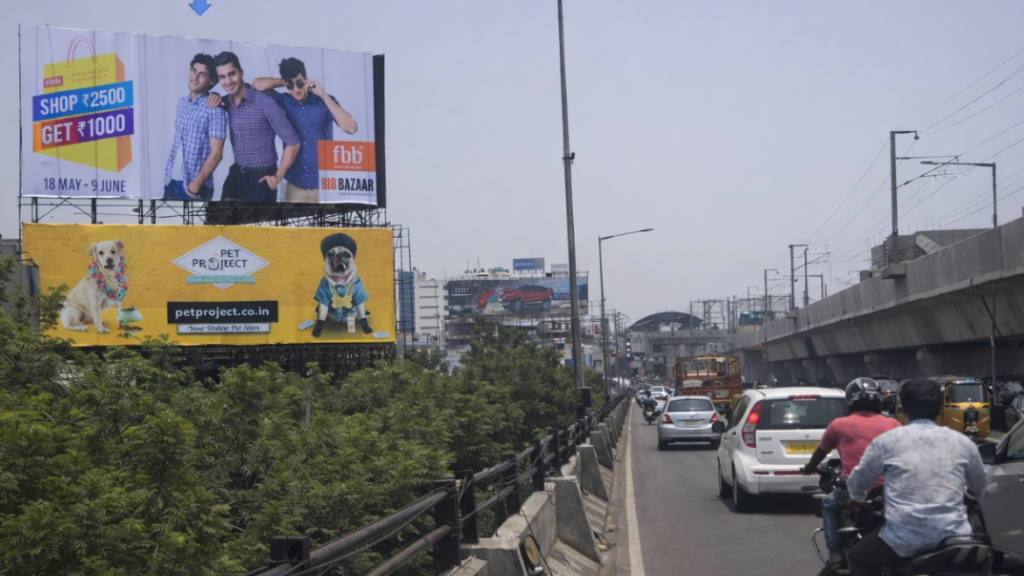
Peripheral roads around IT parks are commonly used for daily commuting. These routes often have less visual clutter, making billboards stand out more clearly.
These billboard locations near parks are ideal for clean and distraction free visibility.
5. Commercial Zones Adjacent to IT Parks
Malls, cafes, restaurants and retail outlets near IT parks attract thousands of professionals after work hours. Billboards placed in these commercial zones capture attention when commuters and office-goers are most active.
Such locations can generate up to 1,500 daily impressions, with 50–60 % of viewers being decision-makers or high-income professionals, making them highly valuable for extending brand visibility during and after office hours.
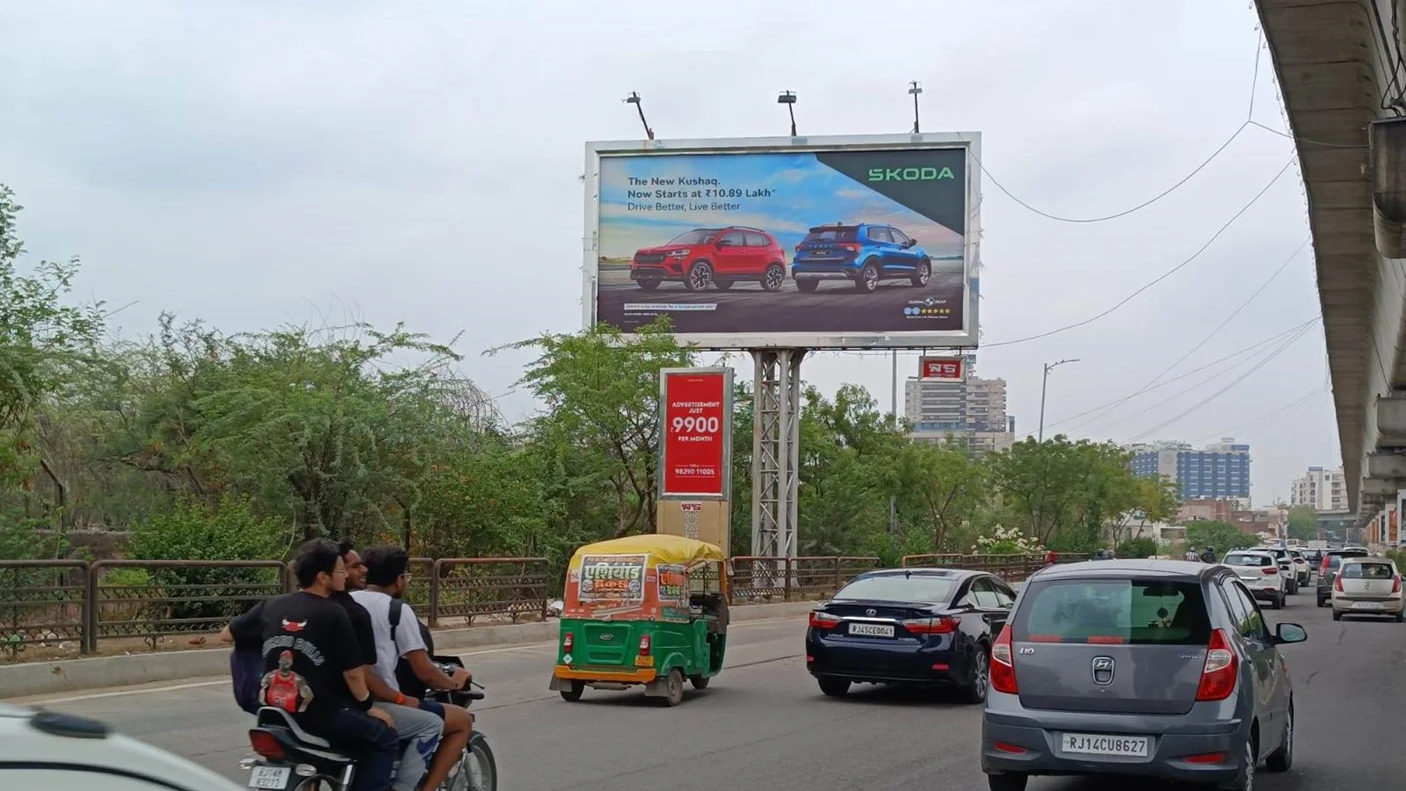
6. Metro Stations and Bus Stops Near IT Parks
Transit points near IT parks, such as metro stations and bus stops, see continuous footfall from employees throughout the day. Billboards in these areas gain repeated exposure, reaching commuters multiple times daily.
Studies show that outdoor ads near transit hubs can deliver 1,200–2,000 daily impressions, boosting both brand awareness and recall. These high-traffic locations are ideal for campaigns targeting tech professionals and corporate audiences.
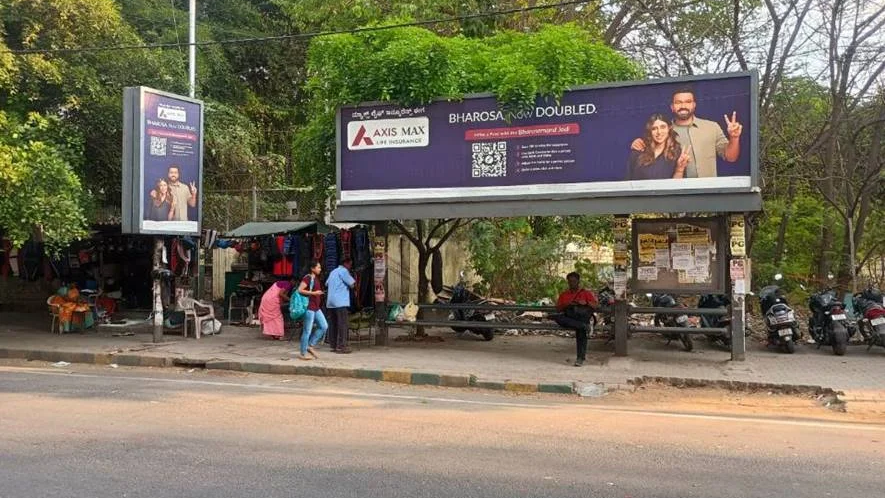
7. Parking Areas and Service Roads
Parking zones and service roads near IT parks often experience slow moving traffic. Billboards placed here receive closer attention due to reduced vehicle speed and proximity.
These are underrated and effective billboard locations near IT parks.
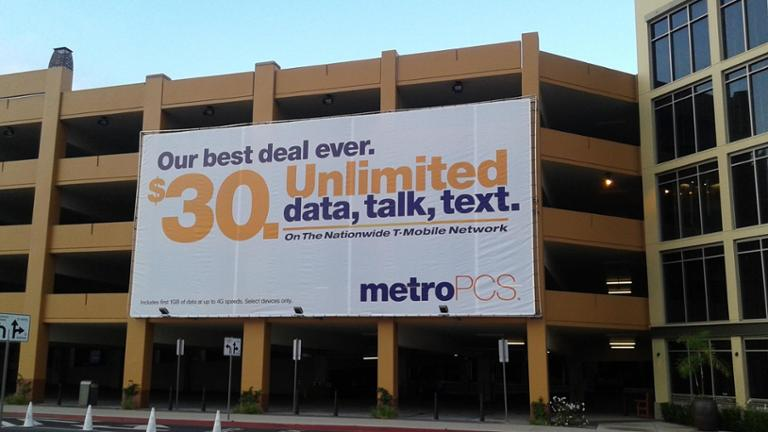
8. Residential Areas Close to IT Parks
Many IT professionals live in residential clusters near their workplaces. Billboards placed along connecting roads with IT parks and housing areas ensure exposure beyond office hours.
These billboard locations near urban areas help brands remain visible all day.
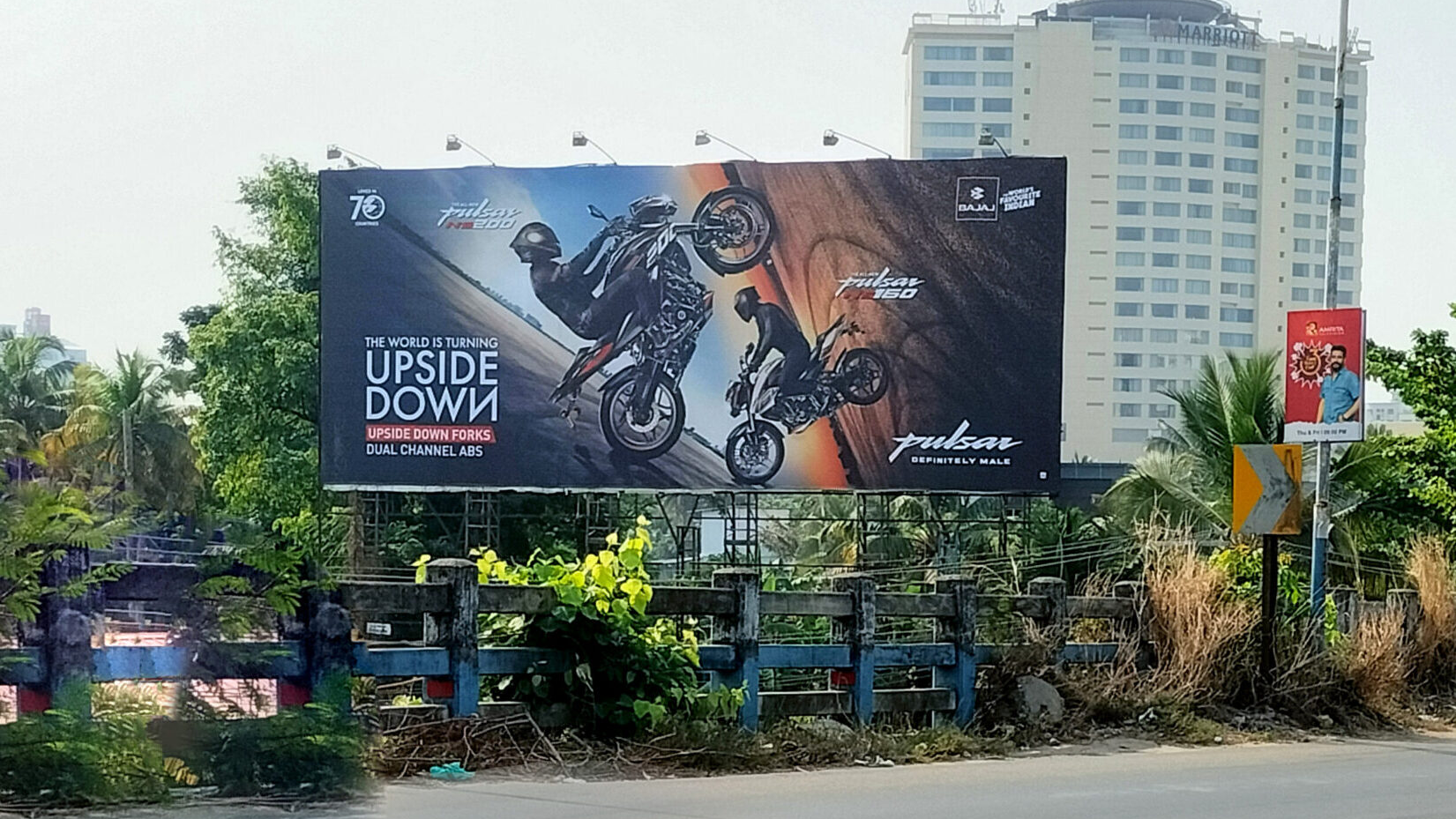
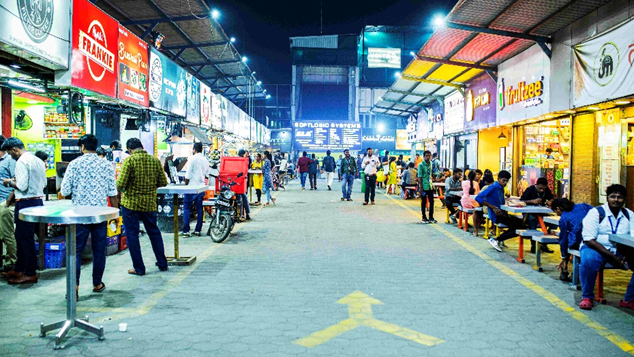
9. Food Streets and Entertainment Zones Near IT Hubs
Food streets and entertainment areas near IT parks attract professionals during lunch breaks and evenings. Billboards placed here benefit from relaxed viewing conditions.
Such locations near commercial zones help improve engagement and brand recall.
10. Highway Connectors Linking IT Parks
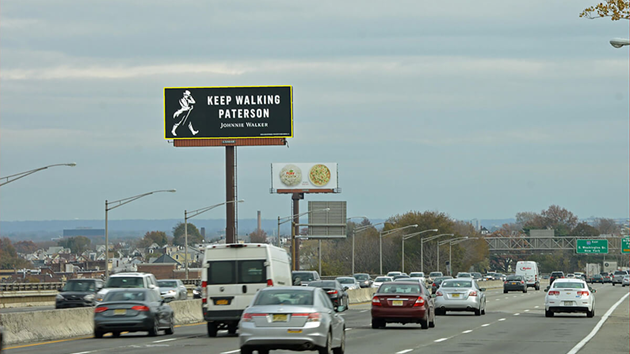
Highways and arterial roads connecting IT parks to city centres offer opportunities for large format billboards. These routes ensure city wide visibility while still targeting IT audiences.
These are premium billboard locations near IT parks for high impact campaigns.
How Brands Choose the Right Billboard Locations
Choosing the right billboard locations depends on campaign objectives, budget and target audience. Brands should prioritise routes with consistent traffic flow, high dwell time and minimal visual clutter.
Using a combination of billboard locations near parks often delivers better reach. A strategic mix ensures frequency, recall and stronger campaign performance.
Benefits of Billboard Advertising Near IT Parks
- High exposure to working professionals
- Strong repetition and brand recall
- Access to urban and tech savvy audiences
- Visibility during peak commute hours
- Effective targeting near commercial zones
Billboards near IT parks offer brands a powerful way to connect with urban professionals in high traffic environments. By selecting the right billboard locations, advertisers achieve consistent visibility and long term brand recall.
From entry roads to nearby commercial hubs, the most effective billboard locations near IT parks combine traffic density, dwell time and audience relevance. With thoughtful planning and strategic placement, billboard advertising near IT parks can deliver strong and measurable results.
Frequently Asked Questions (FAQ’s)
1. Why is billboard advertising near IT parks effective for brands?
Billboard advertising near IT parks is highly effective due to consistent high traffic, repeated exposure, and access to urban professionals and decision-makers.
2. What are the best billboard locations near IT parks in India?
The best locations include entry and exit roads, traffic junctions, flyovers, metro stations, and commercial zones with high commuter density.
3. How do brands choose the right billboard locations near IT hubs?
Brands select locations based on traffic volume, audience profile, visibility, dwell time, and proximity to IT parks to maximize campaign impact.
4. What are the benefits of outdoor advertising near tech parks?
Outdoor advertising near tech parks offers high visibility, strong brand recall, targeted audience reach, and repeated impressions during daily commutes.
5. How can billboard advertising improve brand recall among IT professionals?
Frequent exposure in high-traffic areas combined with clear messaging and strategic placement helps reinforce brand recall among IT professionals.
Why Choose Ginger Media Group for Affordable Offline Marketing
Ginger Media helps startups execute affordable offline marketing campaigns with clarity, transparency, and measurable impact. With strong expertise across outdoor, transit, print, and on ground activations, Ginger Media focuses on cost effective solutions that deliver real visibility without unnecessary spending. From planning and execution to monitoring and reporting, the team ensures startups get the best value from every offline campaign. By combining strategic media selection with on ground execution strength, Ginger Media enables brands to scale offline marketing efficiently and confidently.
]]>In today’s highly competitive electoral landscape, choosing the best advertising media for political campaigns is critical to winning voter attention and driving engagement. With India’s diverse electorate spanning regions, languages, and demographics, effective political campaign advertising strategies require a well-planned mix of both traditional and modern channels.
Recent trends in political advertising in India highlight a sharp rise in campaign spending, with overall budgets expected to grow by 20–60% compared to previous elections. While digital and social media platforms are transforming how parties reach and influence voters through targeted messaging, traditional channels like television and outdoor advertising continue to dominate in terms of mass visibility.
A strong election campaign marketing strategy integrates digital precision with offline scale to maximize reach, improve recall, and ensure consistent messaging across touchpoints. This blog explores the most effective political campaign marketing channels, helping campaigns build awareness, shape public perception, and connect meaningfully with voters.
1. Outdoor Hoardings and Billboards
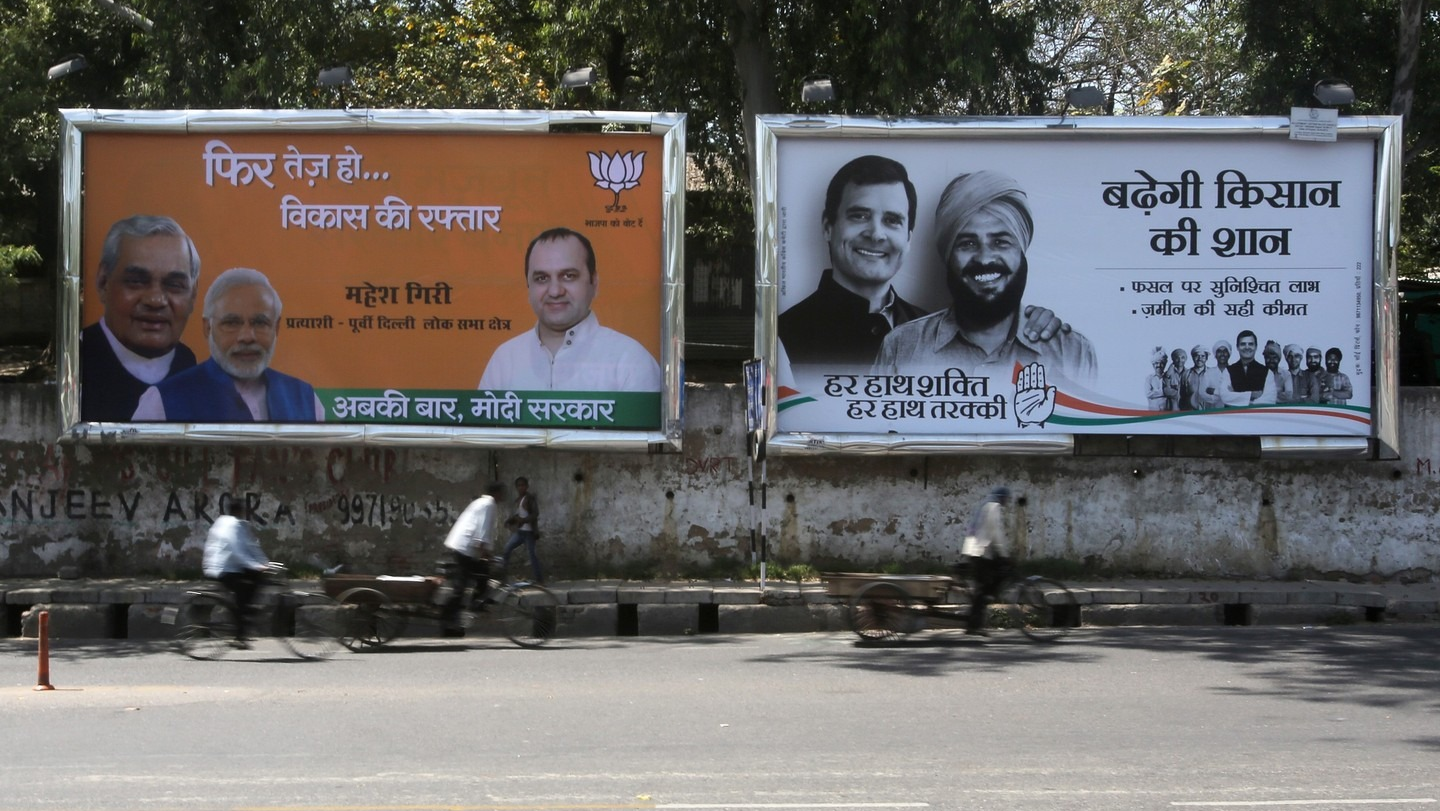
Outdoor hoardings and billboards are among the most widely used political campaign media, offering tens of thousands of daily impressions in high-traffic areas like junctions and highways. In India, premium hoardings can be seen by 100,000+ people per day, making them highly effective for name recognition, party symbols and simple messaging. Their constant presence helps campaigns reinforce identity and recall within key constituencies.
2. Wall Paintings and Murals
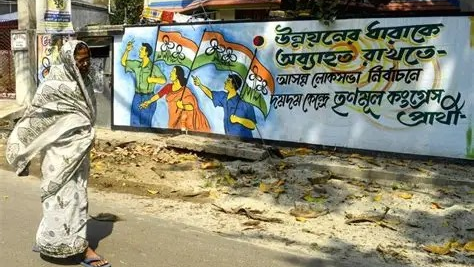
Wall paintings are a traditional and powerful form of political advertising in semi urban and rural areas. They provide long term visibility and remain in place throughout the campaign period.
This format is popular in media political campaigns because of its affordability and wide reach. Wall paintings help campaigns maintain a constant presence in local communities.
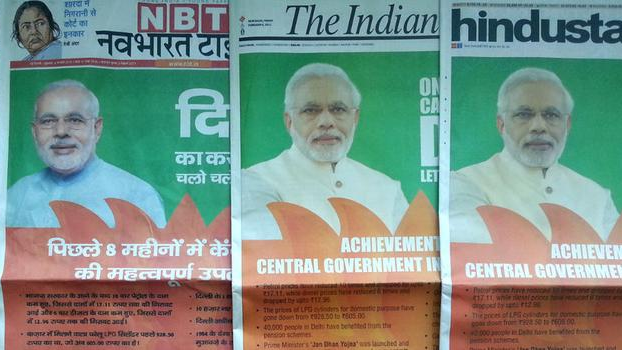
3. Newspaper Advertising
Newspaper advertising allows political campaigns to communicate detailed information such as announcements, policy highlights and candidate messages. Print media is trusted by older voters and regional audiences.
As part of advertising media for political campaigns, newspapers add credibility and allow campaigns to tailor messaging by region and language. They are particularly useful for reaching voters who rely on traditional news sources.
4. Pamphlet and Flyer Distribution
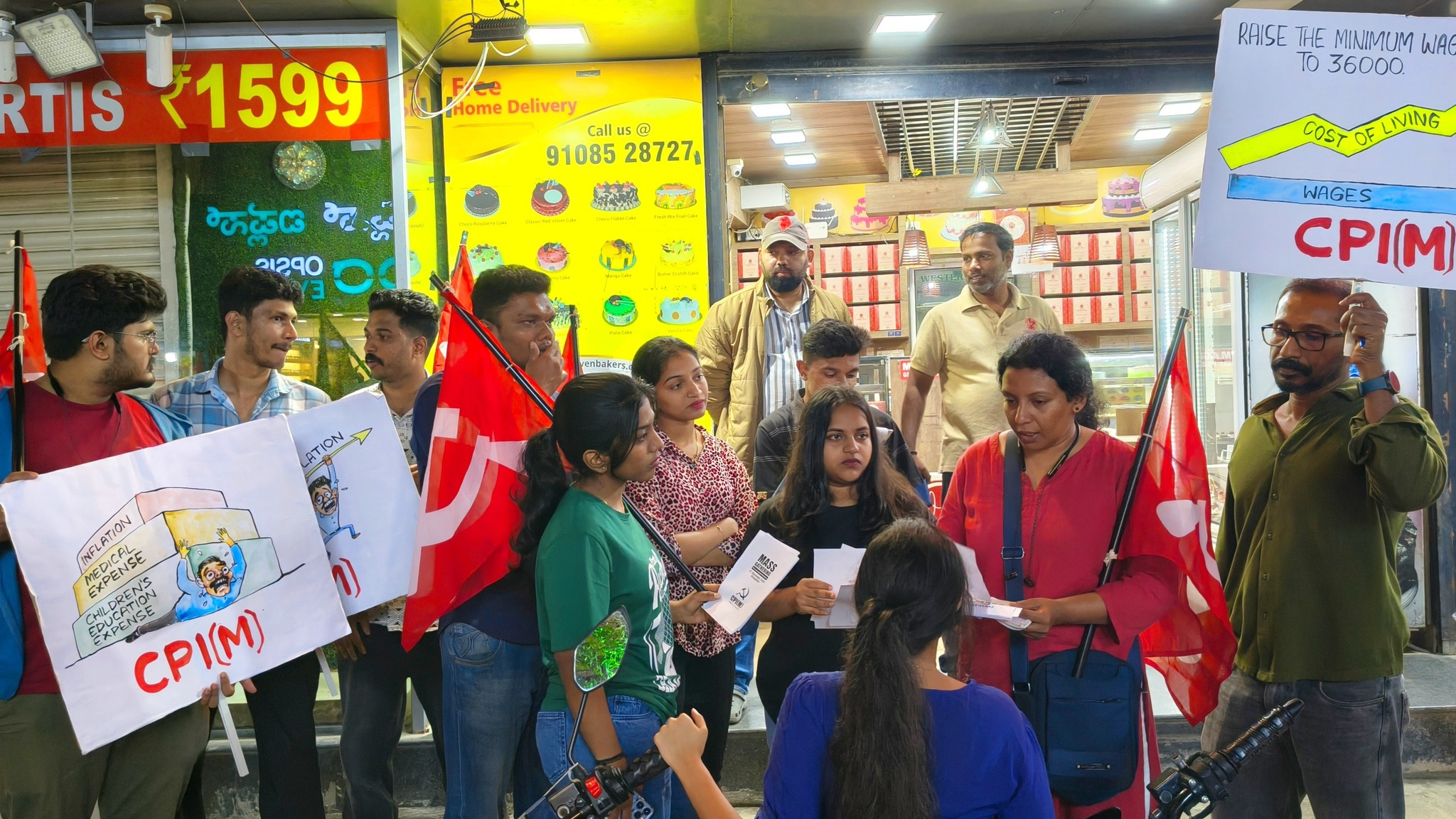
Pamphlets and flyers enable direct, grassroots level communication with voters. These materials are commonly distributed door to door, at public gatherings or during campaign activities.
This medium supports advertising media political campaigns by allowing campaigns to share structured information directly with households. Flyers are effective for explaining key messages, symbols and voting details.
5. Transit Media Advertising
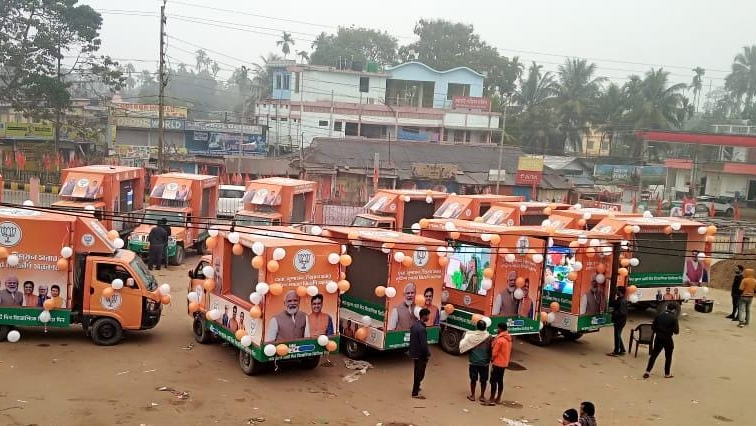
Transit media includes bus branding, auto branding, and advertisements on trains or transit hubs. These formats offer mobility and repeated exposure as vehicles move across different neighborhoods.
Transit advertising is considered one of the most effective media political options for city wide and regional coverage. It ensures that campaign messages are seen by commuters all day.
6. Public Address Systems and Audio Campaigns
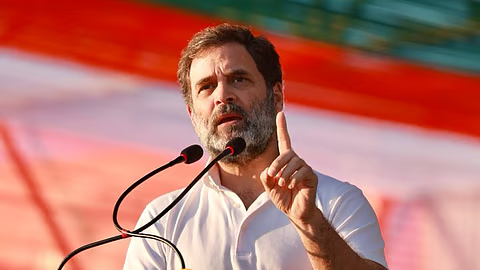
Audio campaigns using loudspeakers and public address systems are commonly used during political rallies, roadshows and local events. They are effective in crowded or high density areas.
This medium plays an important role in advertising and political campaigns by delivering messages audibly to large audiences. Audio campaigns are particularly useful in areas with lower literacy levels.
7. Digital and Social Media Advertising
Digital platforms allow political campaigns to reach specific voter segments based on location, age, language and interests. Social media advertising helps spread campaign messages quickly and widely.
This medium complements traditional advertising media by extending campaign visibility into online spaces. Digital ads also allow campaigns to adapt messaging based on audience response and engagement.
8. Ground Activations and Public Meetings
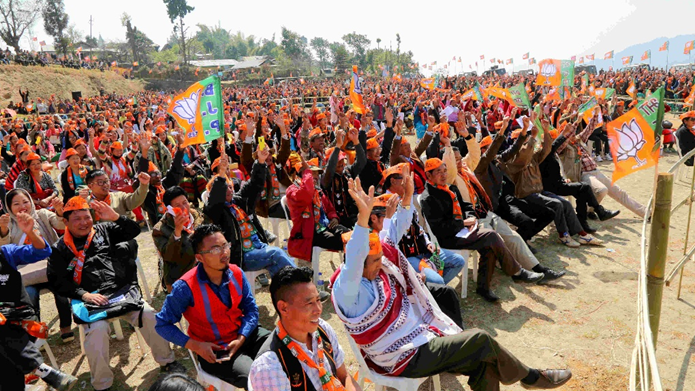
Ground activations like rallies, roadshows and public meetings allow campaigns to engage directly with voters, creating strong emotional connections. Studies show that face-to-face interactions can increase voter recall by up to 30% compared to passive media. These engagements build trust, reinforce authenticity and leave a lasting personal impact.
How Political Campaigns Can Choose the Right Advertising Media
Selecting the right advertising media mix depends on several factors, including voter demographics, geographic spread, campaign budget and election timelines. Urban campaigns benefit more from digital platforms and outdoor formats, while rural campaigns often rely on traditional print and audio based media.
Campaigns should assess where voters spend most of their time and which media channels they trust. Using multiple advertising media and political channels together helps reinforce messages and improve overall campaign effectiveness.
Common Challenges in Political Advertising Media Planning
Political campaigns often face challenges such as limited timeframes, budget constraints and regional diversity. Poor coordination with media channels leads to inconsistent messaging or wasted impressions.
Over reliance on a single medium reduces reach, while a lack of monitoring impacts execution quality. Addressing these challenges requires careful planning and continuous evaluation of advertising media and political campaigns.
Benefits of Using the Right Advertising Media for Political Campaigns
- Wider voter reach across regions
- Stronger message recall
- Improved visibility and recognition
- Better alignment with voter behaviour
- More effective use of campaign budgets
- Consistent messaging across multiple touchpoints
Advertising media play a central role in the success of political campaigns. By selecting the right advertising media, campaigns reach voters more effectively, communicate messages clearly, and maintain strong visibility throughout the election period.
From outdoor formats and print media to digital platforms and ground activities, the most effective advertising media political campaigns use are those aligned with voter needs and campaign objectives. With strategic planning and consistent execution, political campaigns maximize impact, engagement and message recall.
Frequently Asked Questions (FAQ’s)
1. What is the best advertising media for political campaigns?
The most effective approach is a mix of outdoor advertising, digital platforms, transit media, print, and ground activations to ensure both mass reach and targeted voter engagement.
2. Why is digital advertising important in political campaigns?
Digital advertising enables precise voter targeting, real-time optimization, and scalable reach, making it a key component of modern political campaign strategies.
3. How do political campaigns choose the right advertising channels?
Campaigns select channels based on voter demographics, geographic spread, media consumption behavior, campaign goals, and budget allocation.
4. Is offline advertising still effective for political campaigns?
Yes, offline media like hoardings, wall paintings, and pamphlets remain highly effective for local visibility and strong recall, especially in rural and semi-urban areas.
5. How can political campaigns improve voter engagement and recall?
By using a multi-channel strategy, consistent messaging, localized content, and combining digital outreach with on-ground activations, campaigns can significantly boost engagement and recall.
Why Choose Ginger Media Group for Affordable Offline Marketing
Ginger Media helps startups execute affordable offline marketing campaigns with clarity, transparency, and measurable impact. With strong expertise across outdoor, transit, print, and on ground activations, Ginger Media focuses on cost effective solutions that deliver real visibility without unnecessary spending. From planning and execution to monitoring and reporting, the team ensures startups get the best value from every offline campaign. By combining strategic media selection with on ground execution strength, Ginger Media enables brands to scale offline marketing efficiently and confidently.
]]>Out-of-home (OOH) advertising remains one of the most powerful offline marketing tools for brands aiming to capture attention at scale. Whether it’s billboards, transit media, or street-level displays, OOH advertising places brand messages directly into real-world environments, where people actually engage with them. OOH advertising becomes part of everyday life, delivering consistent visibility and stronger brand recall. This is why many marketers include it as a core component in their advertising planning and broader campaign strategies.
To maximize results, brands rely on a structured OOH advertising planning checklist. A well-defined advertising planning checklist helps ensure the right locations, formats, messaging, and timing are aligned for maximum impact. Effective OOH advertising planning not only improves reach but also enhances campaign efficiency and ROI.
However, visibility alone doesn’t guarantee success. Many OOH campaigns fail because of poor planning, resulting in wasted budgets and missed opportunities. A strong, structured planning approach ensures your campaign reaches the right audience, in the right locations, with the right message and also maximizes impact and ROI. In this blog, we walk you through 8 essential steps to plan, execute and manage high‑impact OOH advertising campaigns that deliver measurable results.
1. Define Clear Campaign Objectives
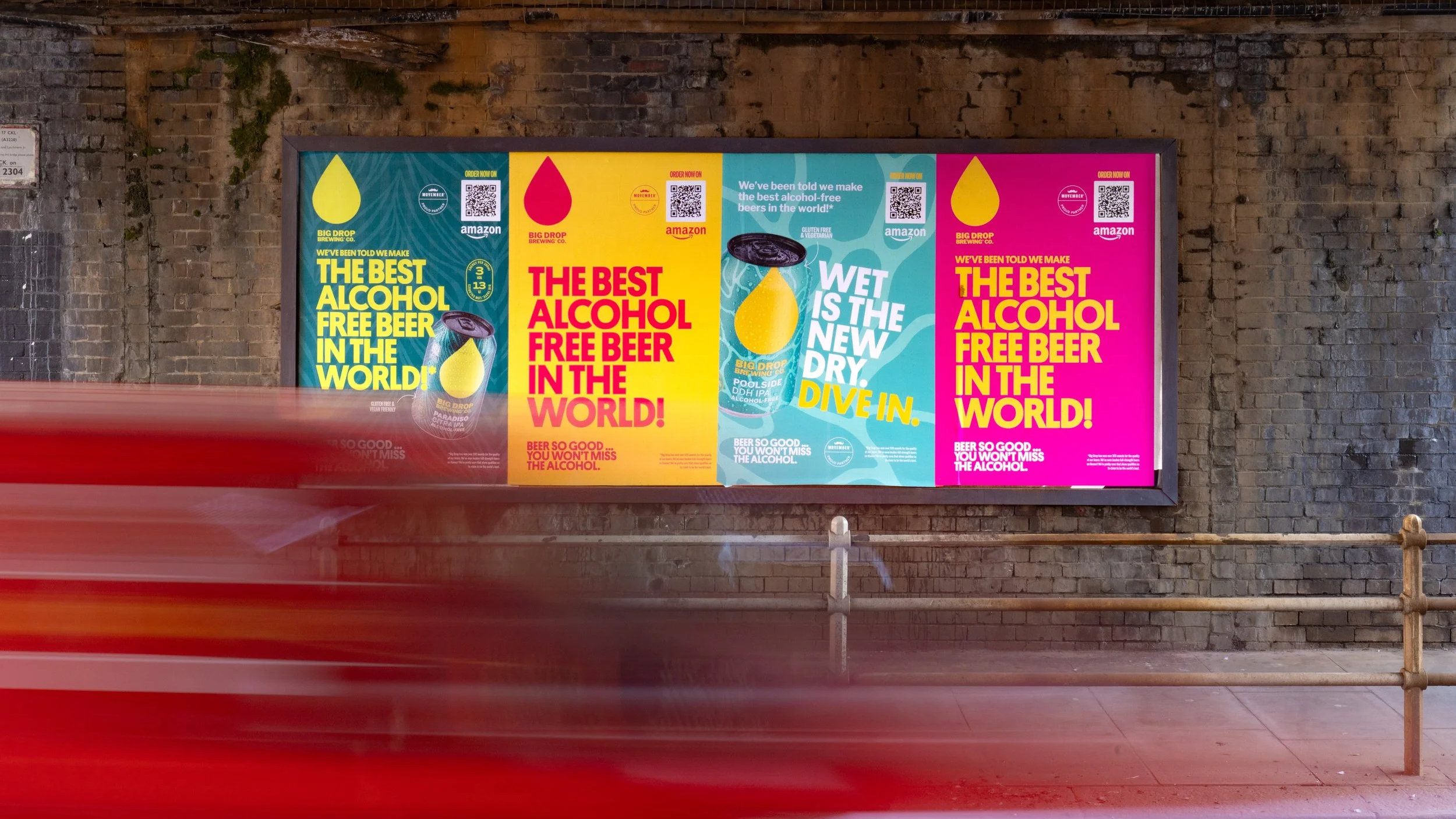
Every successful OOH campaign starts with clear objectives. Brands need to define what they want to achieve before selecting media or designing creatives. Objectives may include building brand awareness which OOH can increase by up to 25%, launching a new product, driving store visits or strengthening market presence.
Clear goals guide all advertising planning decisions. When objectives are well defined, it is easier to choose suitable formats, locations and campaign duration. Studies show that OOH campaigns with defined objectives are 70% more likely to meet their marketing goals, ensuring the campaign stays focused and aligned with business outcomes.
2. Identify the Target Audience
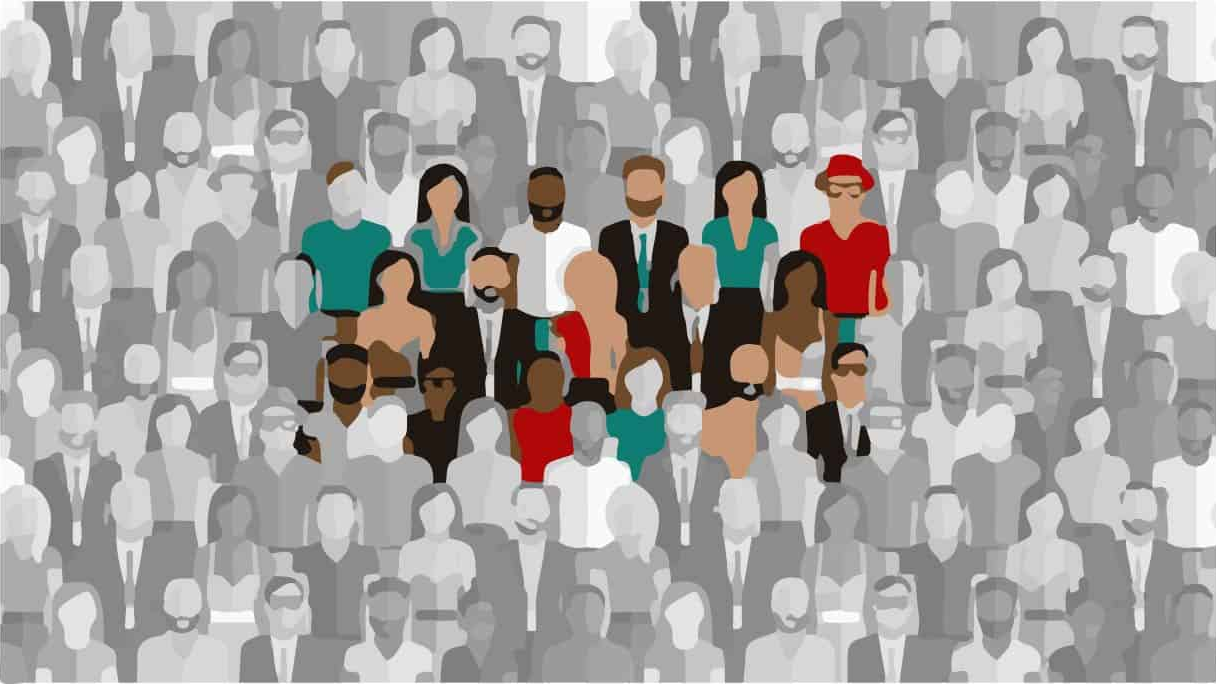
Understanding the target audience is critical in OOH advertising. Factors such as age, profession, lifestyle, income group and daily movement patterns influence where and how ads should be placed.
Research shows that OOH campaigns targeting the right audience can increase ad recall by up to 47%. Campaigns perform best when they match audience behavior, knowing where your audience travels, works, studies or socializes helps improve relevance and attention. Accurate audience profiling strengthens outdoor advertising strategies by ensuring that messages reach the right people at the right time, maximizing engagement and campaign effectiveness.
3. Select the Right OOH Media Formats
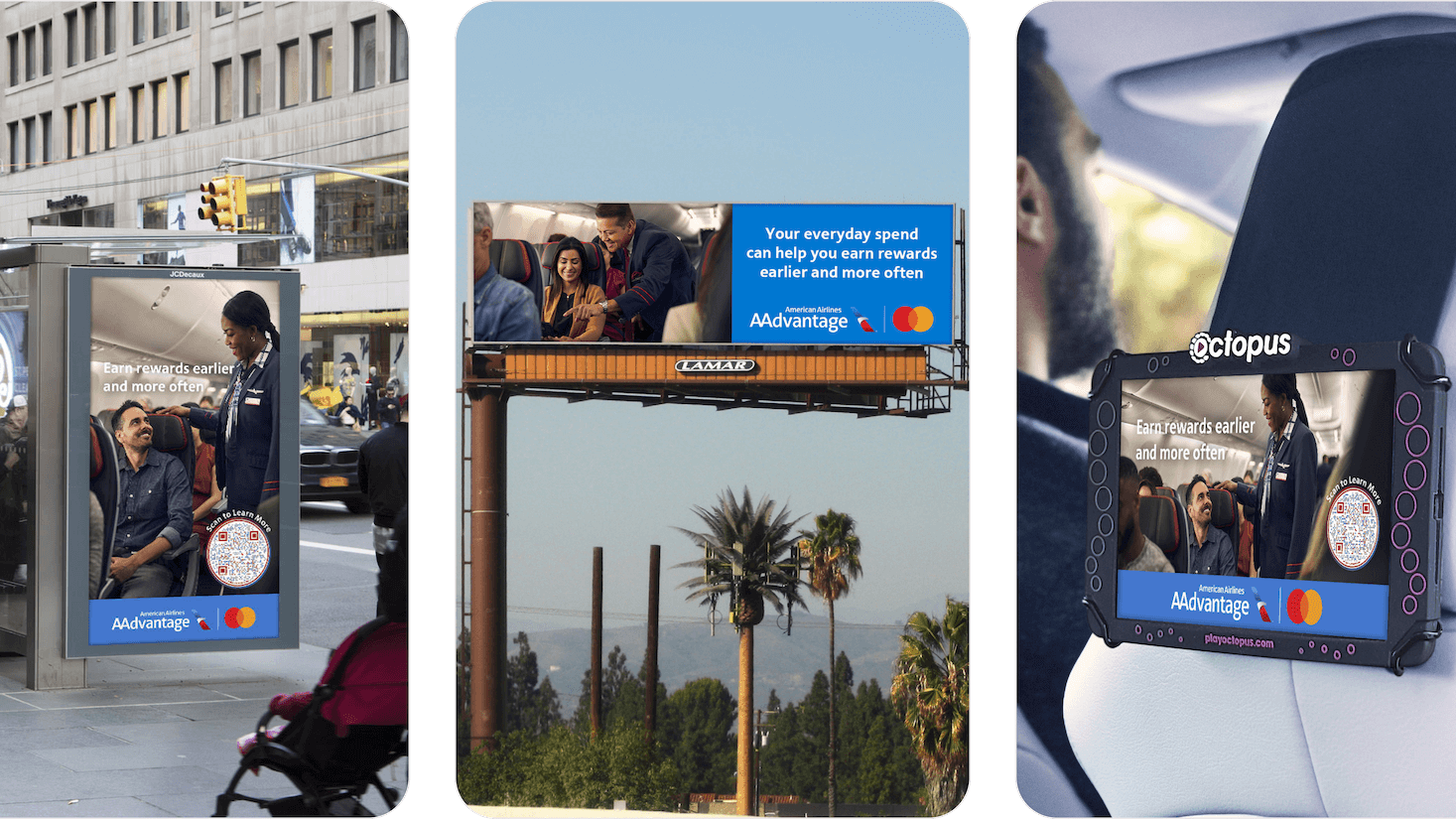
Different objectives require different OOH formats. Billboards are ideal for mass visibility, reaching up to 70,000 people per day in busy locations, while bus shelters and street furniture work well for repeated exposure in local neighborhoods. Transit media such as buses, metros and autos provide mobility and frequency, allowing brands to reach commuters multiple times a week.
Selecting the right formats is a core part of any OOH advertising planning checklist. Brands should consider visibility, dwell time, audience proximity and message complexity when choosing formats. A well-balanced media mix can increase campaign effectiveness by 30% or more, ensuring the brand message reaches the right audience in the most impactful way.
4. Choose Strategic Locations
Location selection plays a major role in the success of OOH campaigns. High footfall areas, commuting routes, business districts, residential zones, and activity hubs ensure repeated exposure. Studies show that OOH ads placed in high-traffic locations can boost brand recall by up to 60%.
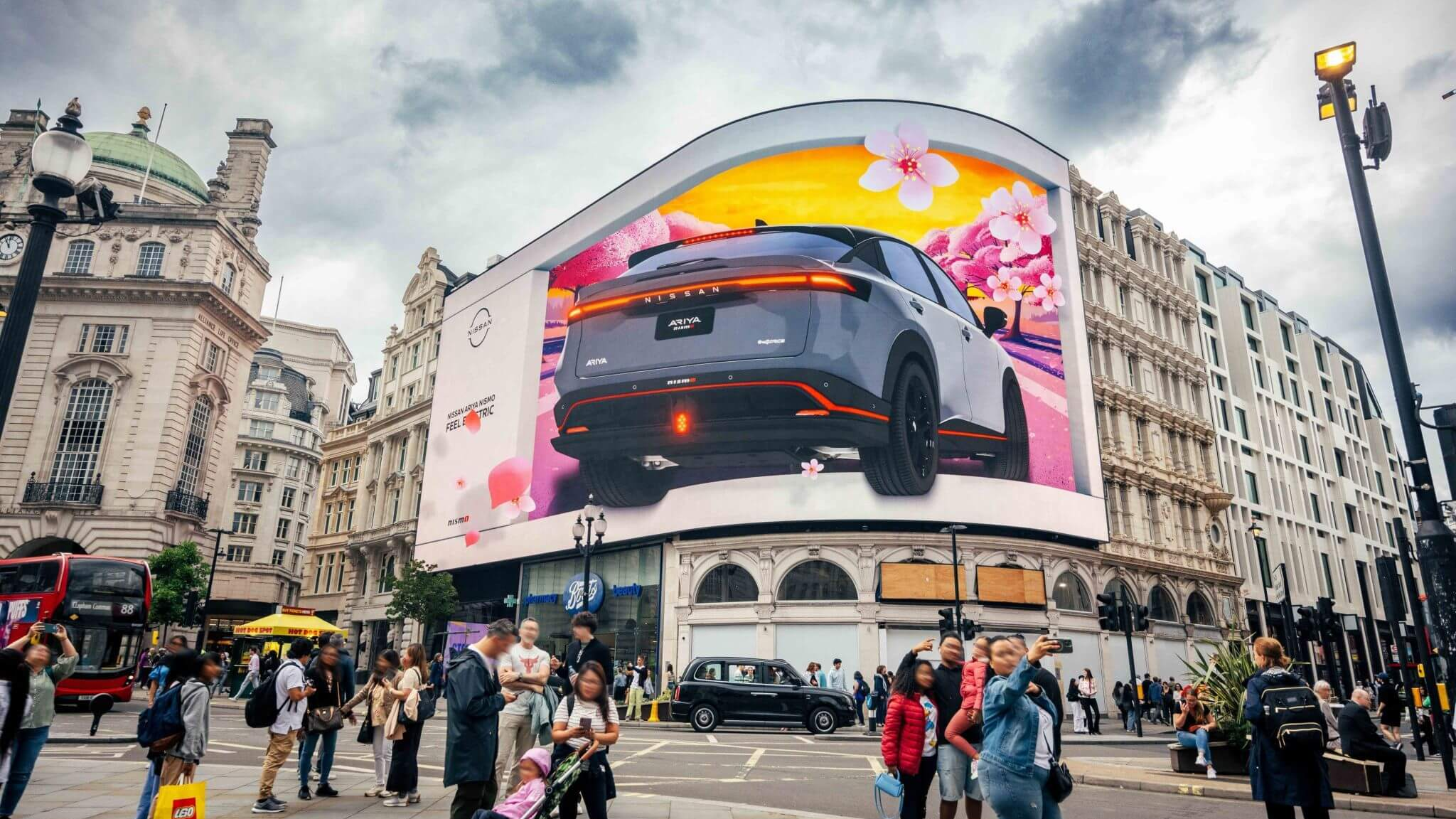
Strategic location planning supports effective advertising by improving recall and reducing wastage. Rather than choosing locations based on availability alone, brands should focus on relevance, traffic patterns and audience concentration. The right location can increase campaign impact by nearly 40%, helping brands get maximum results even with a limited budget.
5. Plan Campaign Duration and Timing
Campaign duration and timing influence how often audiences see an ad and how well they remember it. Research shows that OOH campaigns running for 4–6 weeks can increase brand recall by up to 50%, while longer-term placements help build familiarity and trust over time. Short-term campaigns are effective for product launches or events, giving a quick burst of visibility.
Timing should align with audience movement patterns, seasonal trends and business cycles. Properly planned duration ensures optimal exposure without overspending, making campaigns more efficient and impactful.

6. Design Clear and Impactful Creatives
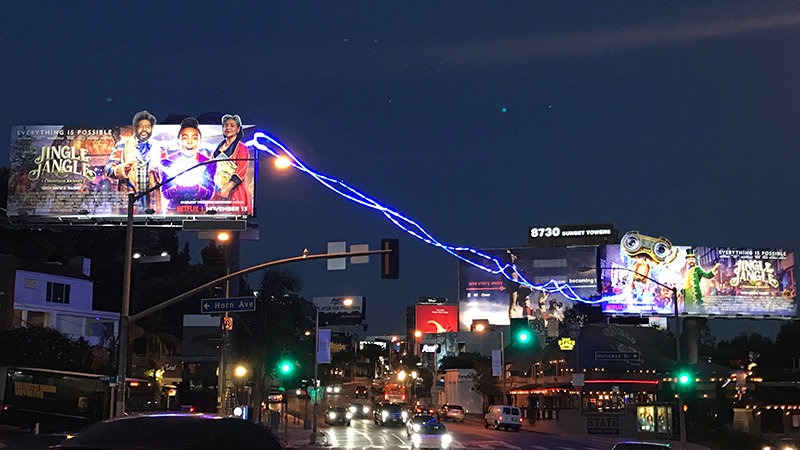
OOH creatives must communicate messages quickly and clearly. People usually view outdoor ads for only 3–5 seconds, so simplicity is key. Short messages, bold visuals, readable fonts and strong colour contrast are essential design elements.
Well-designed creatives can increase message retention by up to 70%, making the campaign more effective. Avoid clutter, excessive text or complex visuals. A strong creative ensures that the audience understands the message instantly, even from a distance, improving the overall impact of your OOH campaign.
7. Allocate and Control the Budget
Budget planning is an important part of any advertising checklist. OOH budgets typically include media costs, production expenses, installation, maintenance and monitoring. On average, media costs can account for 50–70% of an OOH campaign budget, while production and installation make up the rest.
Clear budget allocation helps brands avoid overspending and ensures smooth execution. Studies show that campaigns with well-planned budgets are 60% more likely to stay on track and meet objectives. Tracking costs across all stages allows better control and accountability, helping brands maximize visibility and results without unnecessary expenses.
8. Monitor Execution and Measure Performance
Monitoring ensures that OOH ads are installed correctly, remain visible and comply with agreed placements throughout the campaign. Studies show that regular monitoring can improve campaign effectiveness by up to 25% by preventing issues like damaged creatives or incorrect locations.
Measuring performance can include footfall analysis, brand recall surveys, location-based data and response tracking. Campaigns that track results are 40% more likely to achieve their marketing goals, providing valuable insights to improve future OOH advertising efforts. Proper monitoring completes the OOH advertising planning checklist and ensures each campaign delivers maximum impact.
Common OOH Advertising Planning Mistakes
Many brands underestimate the importance of planning in OOH campaigns. Common mistakes include choosing locations without audience relevance, using unclear creatives, ignoring campaign timing and failing to monitor execution. Research shows that up to 60% of OOH campaigns underperform due to poor planning.
Avoiding these mistakes improves OOH advertising planning and ensures campaigns deliver consistent results. Learning from past campaigns can increase effectiveness by 30–40%, helping brands refine strategies and achieve better long-term performance.
Benefits of a Structured OOH Advertising Planning Checklist
- Better alignment with campaign goals
- Improved media and location selection
- More efficient budget utilization
- Stronger message recall
- Smoother execution and coordination
- Better measurement and optimization
Frequently Asked Questions (FAQ’s)
1. What is OOH advertising?
OOH advertising (Out-of-Home advertising) refers to any form of advertising that reaches consumers outside their homes, such as billboards, transit ads, and street displays. It is widely used to build large-scale brand awareness.
2. What is an OOH advertising planning checklist?
An OOH advertising planning checklist is a structured guide that helps marketers plan campaigns effectively. It typically includes location selection, audience targeting, format choice, budgeting, and performance tracking.
3. What are the benefits of OOH advertising?
The key benefits include high visibility, wide audience reach, strong brand recall, geographic targeting, and continuous exposure in real-world environments.
4. What are the most effective OOH advertising strategies?
Effective strategies focus on selecting high-traffic locations, using clear and impactful messaging, leveraging creative visuals, and integrating campaigns with digital channels for better engagement and measurement.
OOH advertising is a powerful medium, but its success depends heavily on how well it is planned. A structured OOH advertising planning checklist helps brands approach campaigns with clarity, precision and purpose.
By following these eight steps, brands can strengthen outdoor advertising strategies, improve OOH campaign management and achieve consistent, measurable impact from their investments. With thoughtful planning and execution, OOH advertising delivers long lasting brand visibility and real business value.
Why Choose Ginger Media Group for Affordable Offline Marketing
Ginger Media helps startups execute affordable offline marketing campaigns with clarity, transparency and measurable impact. With strong expertise across outdoor, transit, print, and on ground activations, Ginger Media focuses on cost effective solutions that deliver real visibility without unnecessary spending. From planning and execution to monitoring and reporting, the team ensures startups get the best value from every offline campaign. By combining strategic media selection with on ground execution strength, Ginger Media enables brands to scale offline marketing efficiently and confidently.
]]>From campus billboards and canteen hoardings to transit advertising around colleges, these college advertising locations ensure consistent visibility and strong brand recall. For youth focused brands, being present in these spaces is not just about visibility, it is about becoming part of the everyday college experience.
In this blog, we’ll walk you through the Top 10 College Centric Advertising Locations in India from high-impact outdoor displays near campuses to buzzing hangout zones and hostel areas and explain how each location helps brands get noticed, talked about and remembered. Whether you’re a startup trying to create buzz or a big brand looking to sustain relevance, these insights will help you reach students at the right time and in the right place.
1. College Campus Entry and Exit Zones
Campus entry and exit points are where college life truly comes alive each day with students, faculty and visitors moving through during peak hours like 8–10 AM and 4–6 PM. On many campuses in India, over 5,000 students pass these gates two to four times daily, creating repeat brand visibility.
Among college-centric advertising locations, campus gates deliver exceptional recall because students repeatedly notice the same message while commuting between hostels, cafes and classrooms. Studies show repeated exposure can lift brand recall by nearly 60%, making this a high-impact student crowd advertising location for campus branding opportunities and youth marketing strategies.
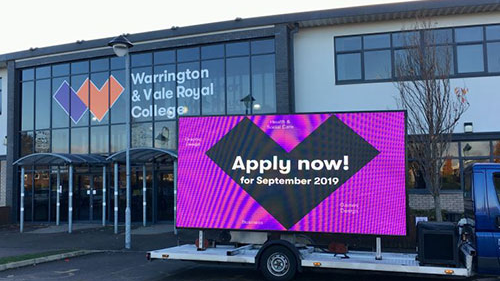
2. Nearby Cafes and Food Streets
Cafes and food streets around colleges are where friendships grow, ideas flow and hours quietly disappear over coffee and snacks. In India, students typically spend 30–60 minutes per visit in these zones, creating longer viewing time and stronger engagement than most outdoor formats.
Among college-centric advertising locations, these hangout hubs consistently rank as the best student crowd advertising locations for lifestyle, food and youth-driven brands, because ads blend naturally into real conversations, group moments and everyday campus routines.
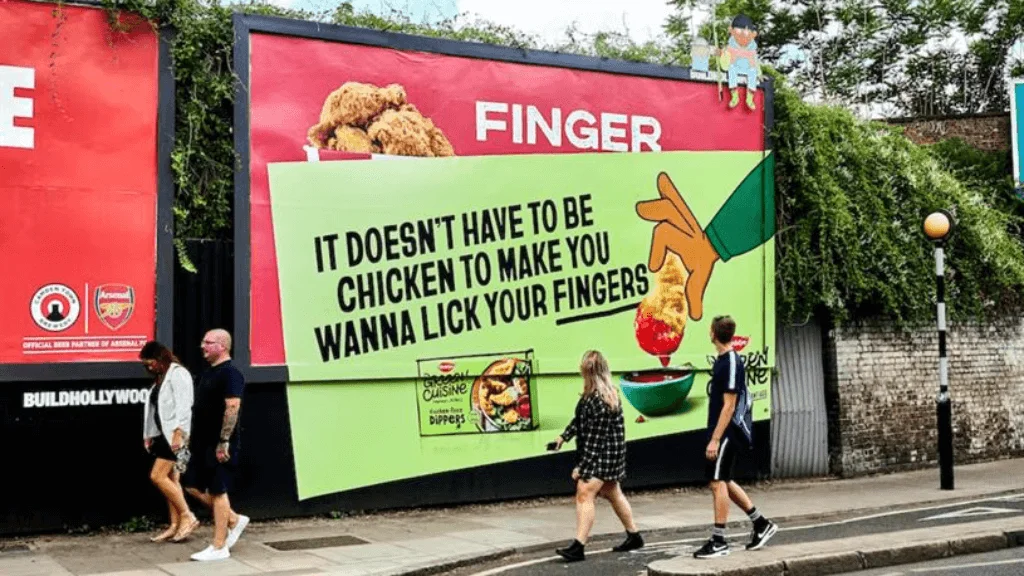
3. Bus Stops and Bus Shelters Near Colleges
Bus stops near colleges quietly become part of a student’s daily routine, rushed mornings, tired evenings and a few minutes of waiting in between. In India, student commuters typically wait 5–10 minutes per trip, giving ads here uninterrupted viewing time when phones are down and attention is naturally higher.
Among college-centric advertising locations, bus stops work especially well for brands targeting student commuters, because the same message is seen twice a day, five days a week, building fast familiarity, strong recall through simple and repeated exposure.
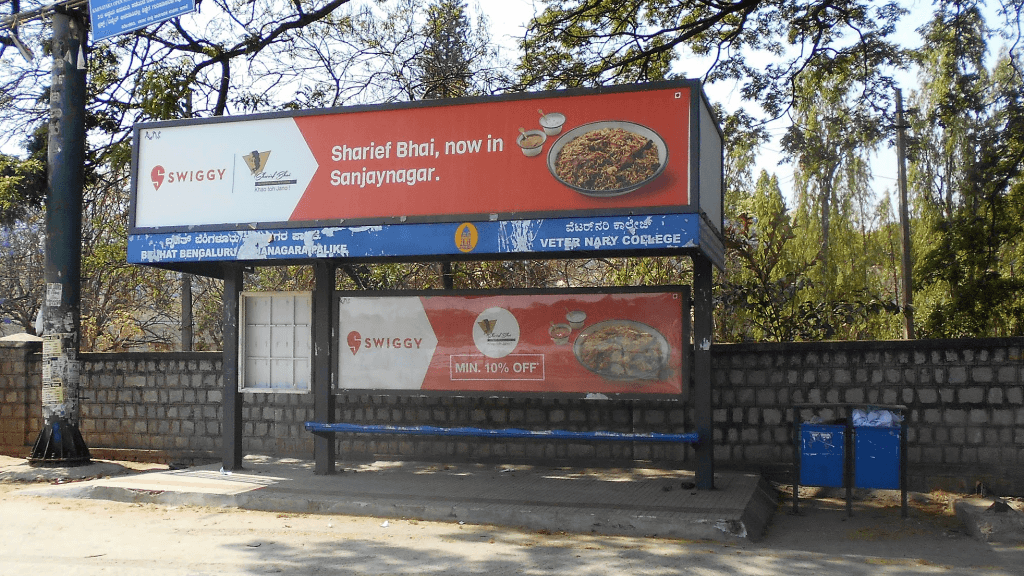
4. Metro Stations Serving College Hubs
Metro stations near college clusters see constant student traffic throughout the day, with some stations in India recording over 20,000 daily commuters, many of them college students. Formats like entry panels, stair branding and concourse ads stand out, capturing attention during short dwell times of 2–5 minutes while students wait or move between trains.
These stations are high-impact college-centric advertising locations in metro cities, offering repeated visibility as students pass through multiple times a day. Studies show repeated exposure at transit points can increase brand recall by up to 70%, making metro stations ideal for campus-focused marketing campaigns.
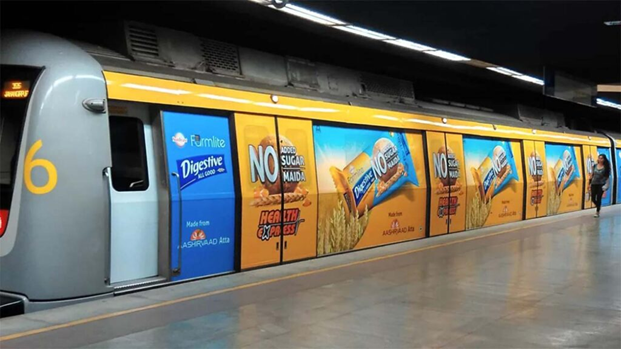
5. College Festivals and Cultural Events
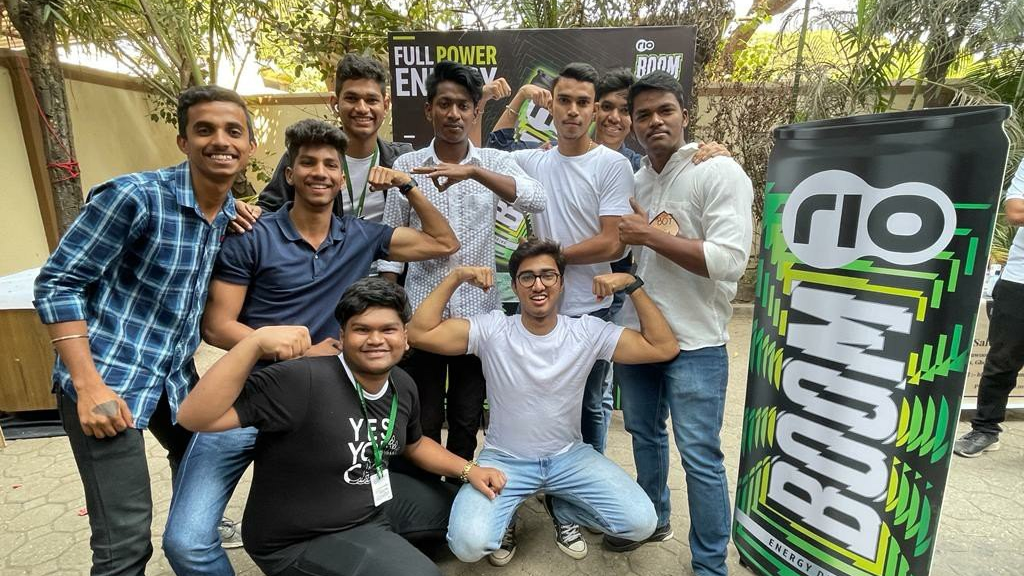
Annual college festivals bring together students from multiple institutions, creating lively, energetic environments with footfalls often exceeding 10,000 attendees in a single day. Advertising, banners and sponsorships at these events capture attention in real-time, generating high engagement and strong brand recall.
Such festivals are key college-centric advertising locations in India, offering brands the chance to connect experientially with students. Studies show that on-ground activations at events can boost brand affinity by over 60%, making festivals a vital part of any student-focused marketing strategy.
6. Hostels and PG Accommodation Zones
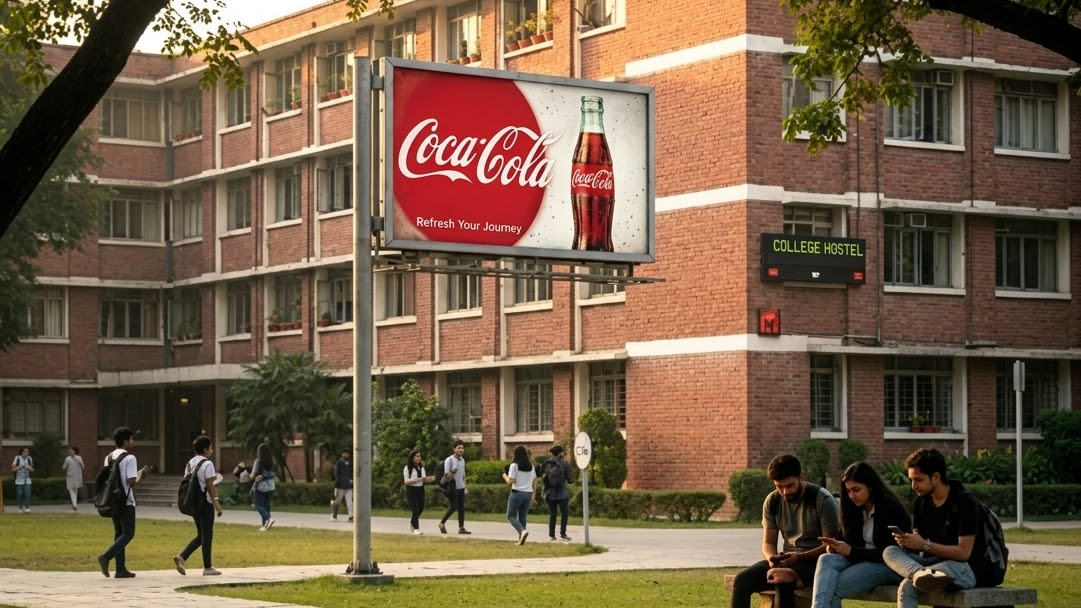
Hostels and PGs house thousands of students who spend 6–10 hours daily on-site, offering brands repeated, close-up exposure.
These residential zones are high-value college-centric advertising spots, ensuring consistent visibility and strong brand recall among students.
7. Coaching Centers and Training Institutes
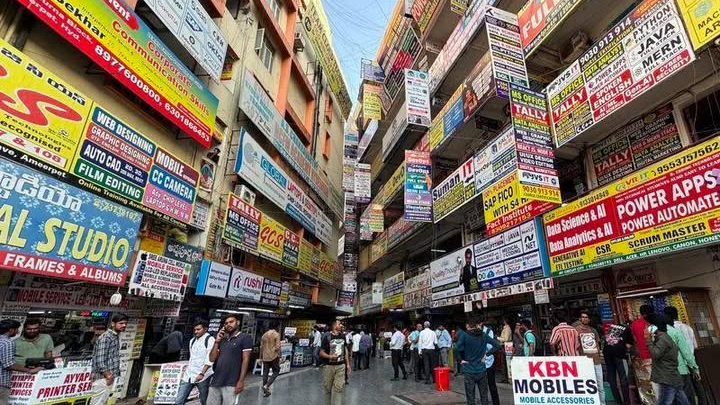
Coaching centers and training institutes attract students dedicated to career growth and skill development, with some top institutes in India seeing over 1,500 students daily.
Advertising here reaches a highly motivated and aspirational audience, making these spaces effective college-centric locations for education, technology and career-focused brands, where messages are seen by students actively seeking opportunities to upskill.
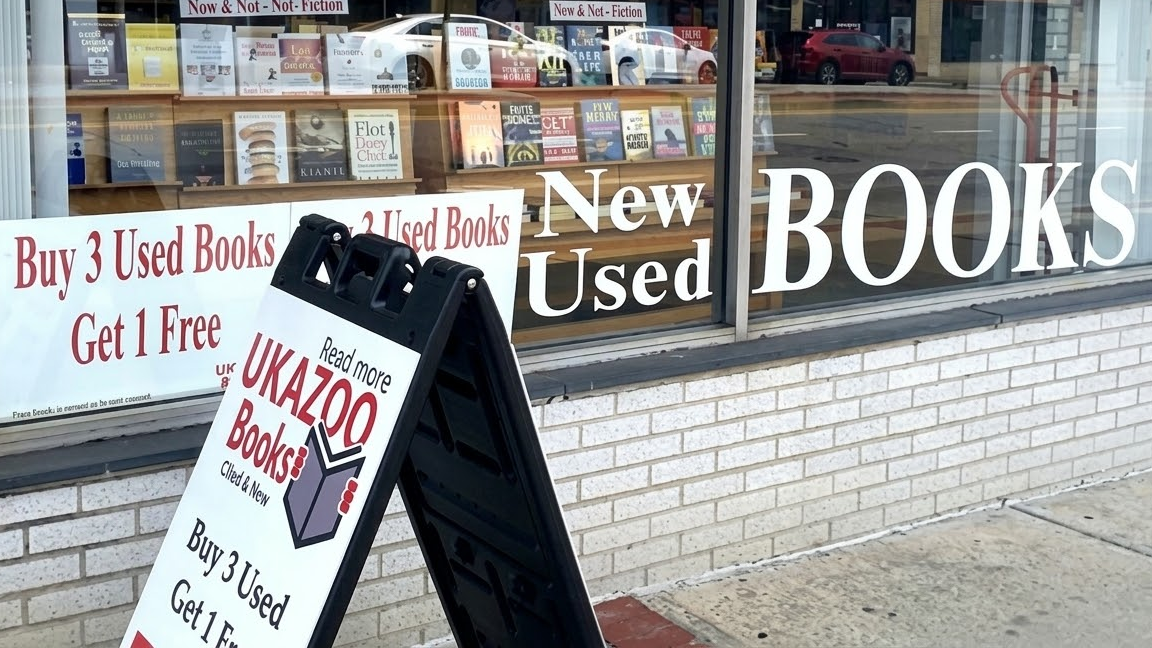
8. College Area Retail Stores and Bookshops
Retail stores and bookshops near colleges see heavy student traffic daily, with some outlets in India receiving 1,000–2,000 student visits per week.
In-store posters, standees and display ads perform well here, making these outlets top college-centric advertising spots for daily-use products and student-focused brands, ensuring high visibility and frequent engagement.
9. College Transportation Routes
Routes frequented by college buses, shared autos and student commuters see thousands of students daily, providing repeated brand exposure throughout the day. In India, popular corridors can witness 5,000+ student movements during peak hours.
Advertising along these routes reinforces brand presence continuously, making them strategic college-centric outdoor advertising locations that maximize visibility and recall among the student audience.
10. Student Activity Zones and Hangout Areas
Parks, gaming zones, and public spaces near colleges draw students during evenings and breaks, with some hotspots seeing 2,000–3,000 student visits weekly in India.
Advertising in these relaxed, informal settings helps brands connect naturally with students, making them ideal college-centric locations for boosting awareness, engagement and long-term recall.
How to Pick the Perfect College Spots to Reach Students
Choosing the right college-centric locations isn’t random, it depends on student density, daily routines and your campaign goals. The best results come from spaces where students naturally hang out, like cafes, hostels, bus stops or campus gates, because that’s where attention is highest.
Smart brands mix multiple locations to stay visible throughout the day, from classrooms to commutes to social hangouts. This approach ensures repeated exposure, stronger recall and a real connection with the student audience, turning everyday campus moments into meaningful brand interactions.
Benefits of College Centric Advertising
- High relevance among student audiences
- Strong peer driven brand recall
- Targeted exposure in focused locations
- Supports long term brand loyalty
- Strengthens youth-focused marketing efforts
Frequently asked Questions (FAQ’s)
1. What is college centric advertising in India?
College centric advertising in India refers to promoting brands in and around college environments such as campuses, hostels, cafes, transit points and student hangout areas. It helps brands directly reach Gen Z audiences where they spend most of their time.
2. Why is college advertising effective for youth brands?
College advertising is effective because it targets students in high engagement zones where trends start and decisions are influenced. Repeated exposure in daily routines helps improve brand recall and builds stronger connections with young audiences.
3. Which are the best locations for college advertising?
Some of the best college advertising locations include campus entry and exit gates, nearby cafes, bus stops, metro stations, hostels, college festivals and student hangout areas. These locations offer high footfall and consistent visibility.
4. How does college advertising improve brand recall?
College advertising improves brand recall through repeated exposure. Students see the same ads multiple times a day during classes, travel and social activities, which helps the brand stay top of mind.
5. What type of brands benefit most from college centric advertising?
Youth focused brands such as FMCG, food and beverage, fashion, edtech, fintech, telecom and lifestyle brands benefit the most from college centric advertising.
College-centric advertising isn’t just about putting up ads, it’s about becoming part of student life. When brands show up in the right spaces, whether at campus gates, cozy cafes, bustling bus stops or popular hangouts, they connect with young, trend-setting audiences in moments that truly matter.
From everyday commutes to social hangouts and vibrant college events, every location offers a chance to build visibility, recall and meaningful engagement. With smart planning and consistent presence, brands don’t just get noticed, they become part of the college experience, earning trust, loyalty and conversations that extend far beyond the campus walls.
Why Choose Ginger Media Group for Affordable Offline Marketing
Ginger Media helps startups execute affordable offline marketing campaigns with clarity, transparency and measurable impact. With strong expertise across outdoor, transit, print and on ground activations, Ginger Media focuses on cost effective solutions that deliver real visibility without unnecessary spending. From planning and execution to monitoring and reporting, the team ensures startups get the best value from every offline campaign. By combining strategic media selection with on ground execution strength, Ginger Media enables brands to scale offline marketing efficiently and confidently.
]]>If you’ve ever walked through a busy Indian city, you know how hard it is to ignore the billboards, bus ads and street displays around you. That’s the power of outdoor advertising. It’s everywhere and it works. In fact, the OOH market in India has grown nearly 13% in recent years and studies show that 71% of people actually notice these ads, with 40% taking action after seeing them. It’s a real-world way to get your brand in front of people, not just online.
The best part? You don’t need a huge marketing budget to make an impact. From street-level ads to transit media, there are cost-effective ways for startups, SMEs and regional brands to boost visibility, reach both local, mass audiences and get real results.
In this blog, we’ll walk you through the Top 10 Budget Outdoor Advertising Options in India That Actually Work, helping you pick the formats that give your brand the biggest bang for every marketing rupee.
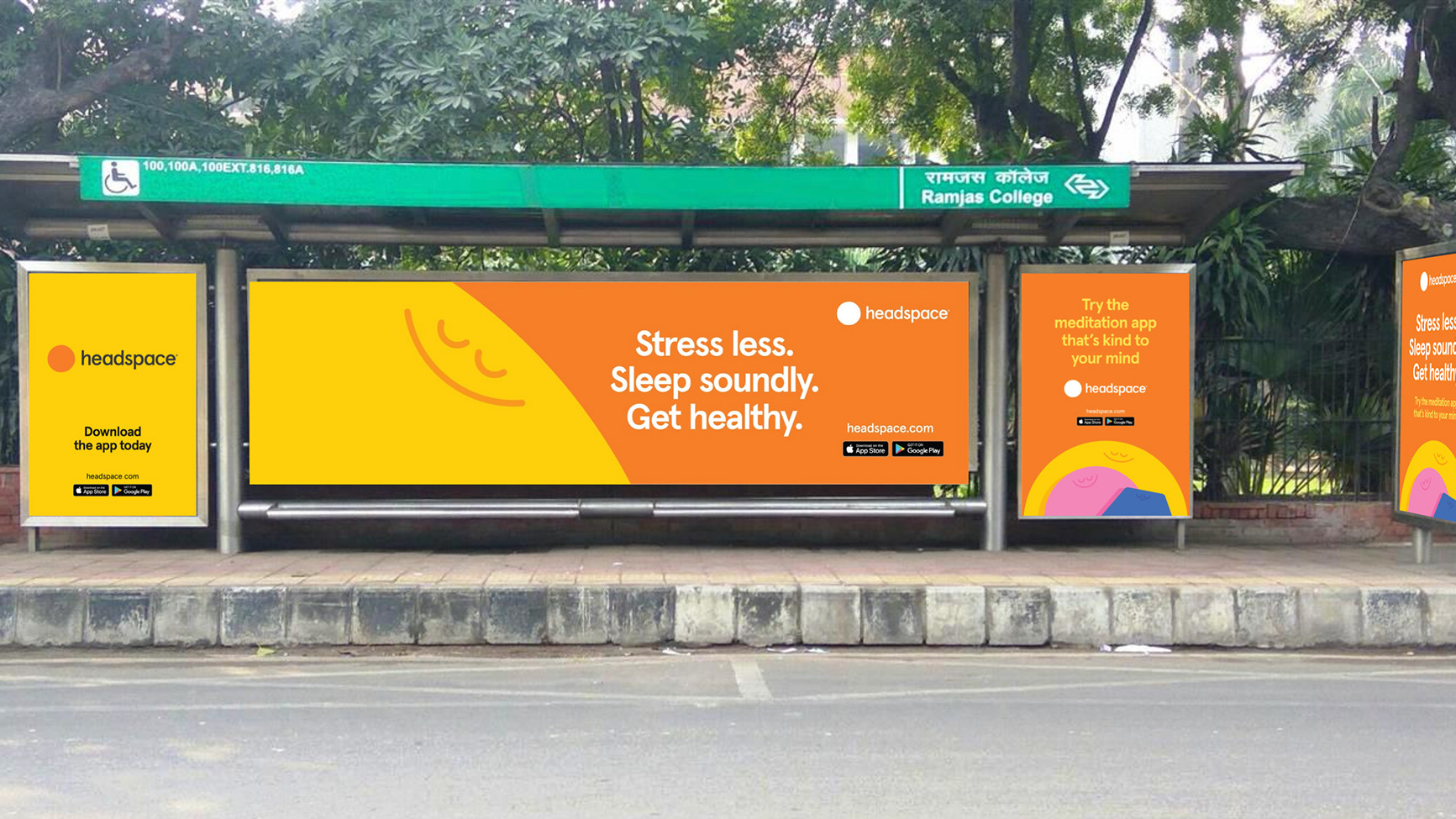
1. Bus Shelter Advertising
Bus shelter advertising works because people naturally pause, spending 5–10 minutes waiting daily. This gives brands repeated exposure, boosting recall by up to 70%, while reaching thousands of urban commuters every day.
Affordable yet high-impact, shelters turn idle moments into memorable experiences. Creative designs and interactive elements grab attention, making this format perfect for awareness campaigns that stick in people’s minds.
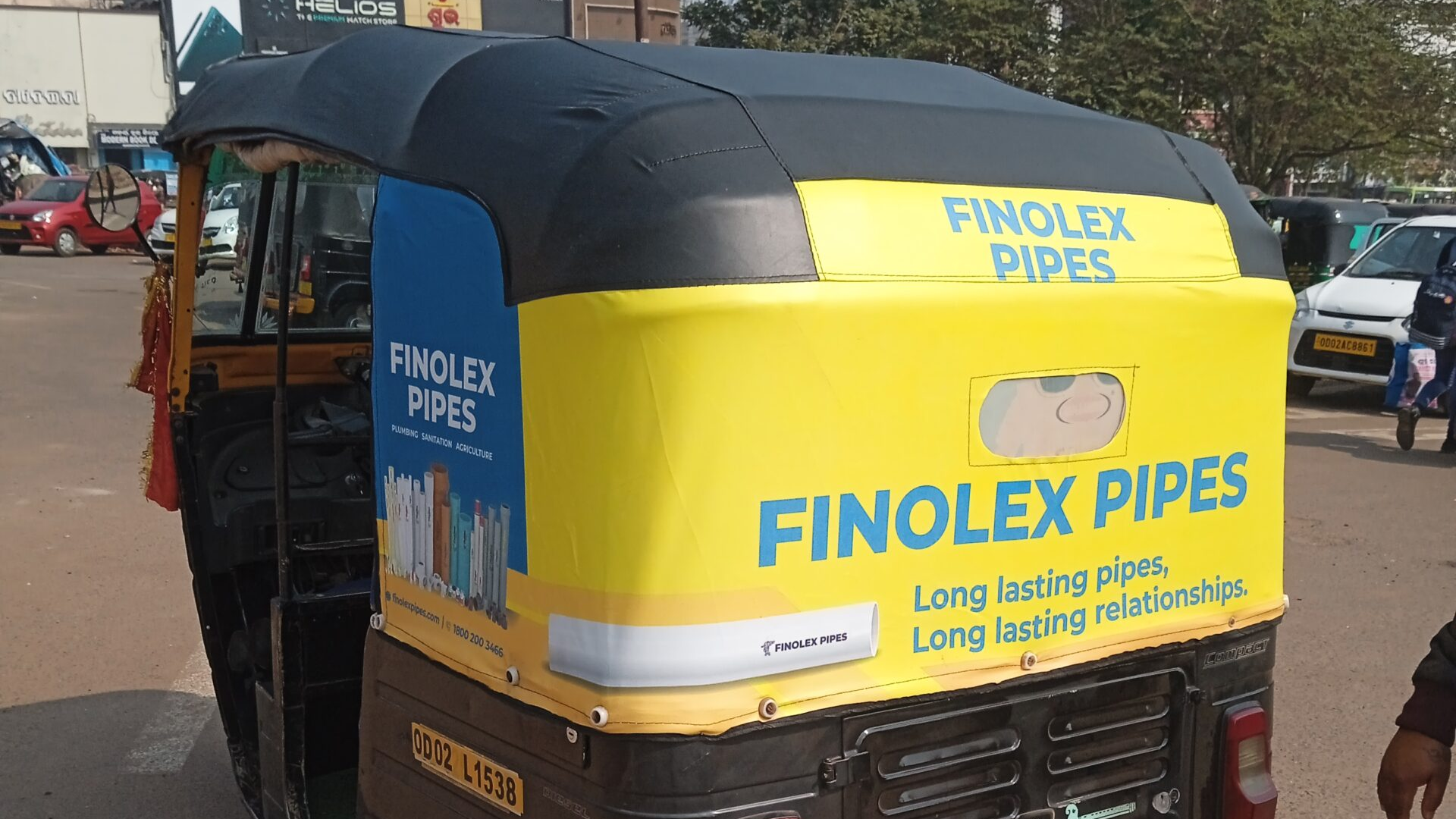
2. Auto and E-Rickshaw Branding
Auto and e-rickshaw branding snakes through Indian cities and towns, reaching over 60% of daily commuters in urban pockets. Affordable and constantly moving, it turns every ride into a mini billboard, exposing your brand to people on streets, markets and busy corners multiple times a day.
This format is ideal for hyperlocal campaigns, with studies showing that mobile outdoor ads increase brand recall by up to 50% in targeted neighborhoods. Every stop, turn and ride becomes an opportunity to make your brand visible, memorable and part of daily life, all without a hefty investment.
3. Metro Train and Station Advertising
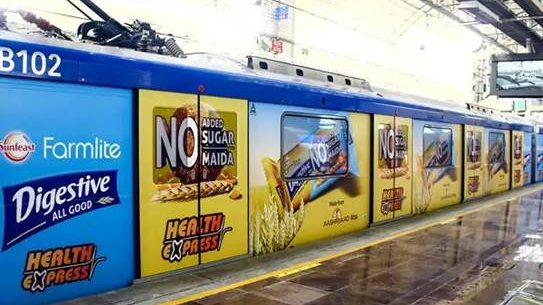
Metro advertising connects with thousands of daily commuters and office-goers in major cities, reaching people where they spend 30–60 minutes every day. From inside train panels to station branding and digital screens, your message is seen repeatedly, turning travel time into a high-impact opportunity.
With a mix of wide reach and consistent visibility, this format is one of the most cost-effective outdoor options in urban markets. Every ride, every station stop and every glance at a digital screen helps your brand stay top-of-mind, making daily commutes a moment for connection.
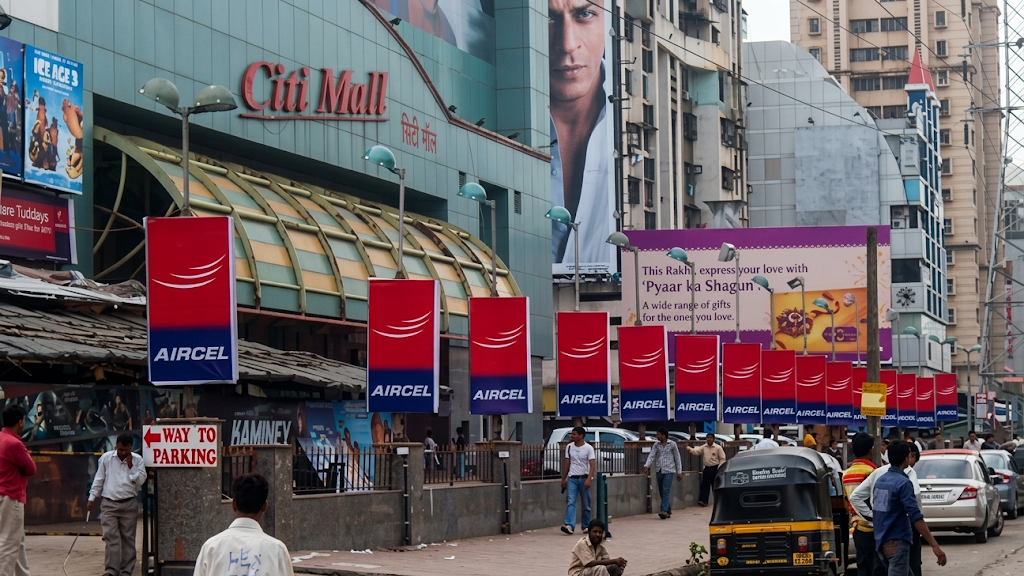
4. Hoardings in Strategic Locations
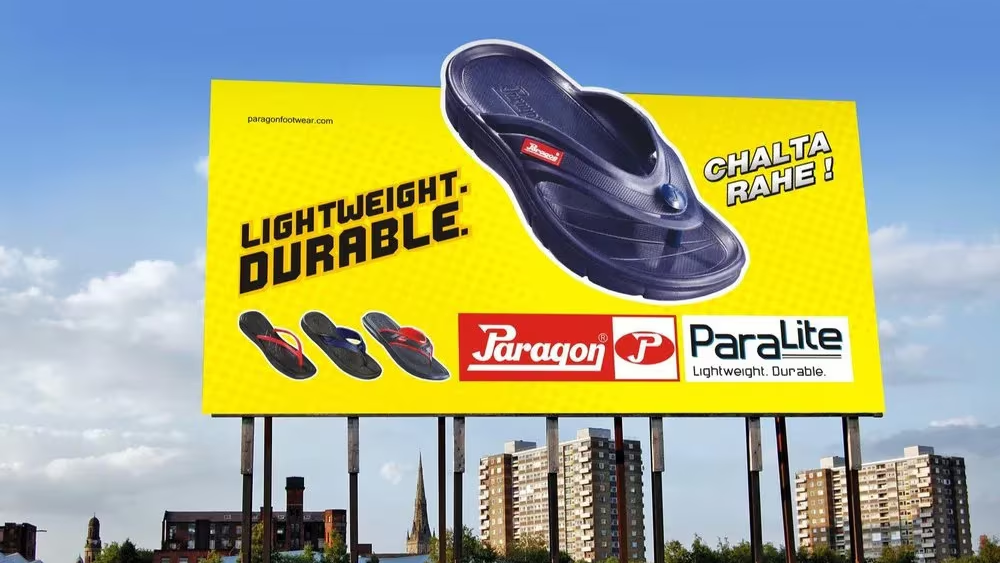
Premium hoardings in metro cities can be costly, but strategically placed ones in tier-2 and tier-3 cities offer high visibility at a fraction of the price. These spots see heavy footfall and vehicle traffic, turning every glance into a potential brand impression.
When selected wisely, hoardings become a reliable and cost-effective outdoor advertising tool, giving brands a chance to stand out, be noticed and leave a lasting impact without breaking the budget.
5. Bus Branding
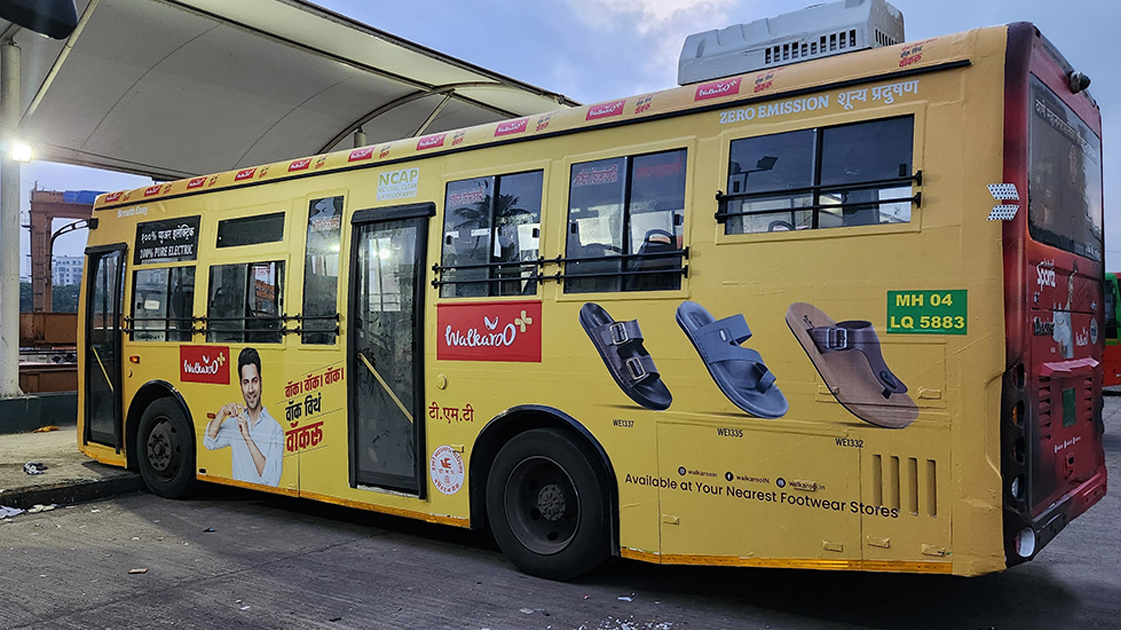
Bus branding through full wraps, side panels and rear panels turns everyday public buses into moving billboards. Operating on fixed routes daily, they provide consistent exposure to thousands of commuters across neighborhoods, markets and busy streets.
This makes bus branding one of the most practical and cost-effective outdoor channels, letting brands achieve city-wide visibility while keeping budgets under control. Every route, stop and turn becomes an opportunity for your message to be seen and remembered.
6. Wall Paintings and Murals
Wall paintings remain a tried-and-true outdoor medium in India, turning everyday walls into long-lasting brand canvases. Studies show these ads can be noticed by over 70% of local passersby regularly, offering months or even years of continuous visibility at a fraction of digital costs.
For brands targeting semi-urban and rural markets, wall paintings are ideal. They reach communities directly where people live, work and shop, making them one of the most reliable and cost-efficient outdoor options that leave a lasting impression and build brand familiarity over time.

7. Pole Kiosks and Street Furniture
Pole kiosks, lamp post ads and other street furniture turn everyday streets into brand touchpoints at eye level, reaching thousands of pedestrians and drivers daily. Studies show that ads placed in high-traffic areas are noticed by up to 65% of passersby, offering repeated exposure without heavy costs.
Affordable and effective, these formats are perfect for building local brand awareness, helping brands stay visible in neighborhoods, markets and busy streets. Every glance, stop and walk-by becomes a chance for your message to stick in people’s minds.
8. Mobile Van Advertising
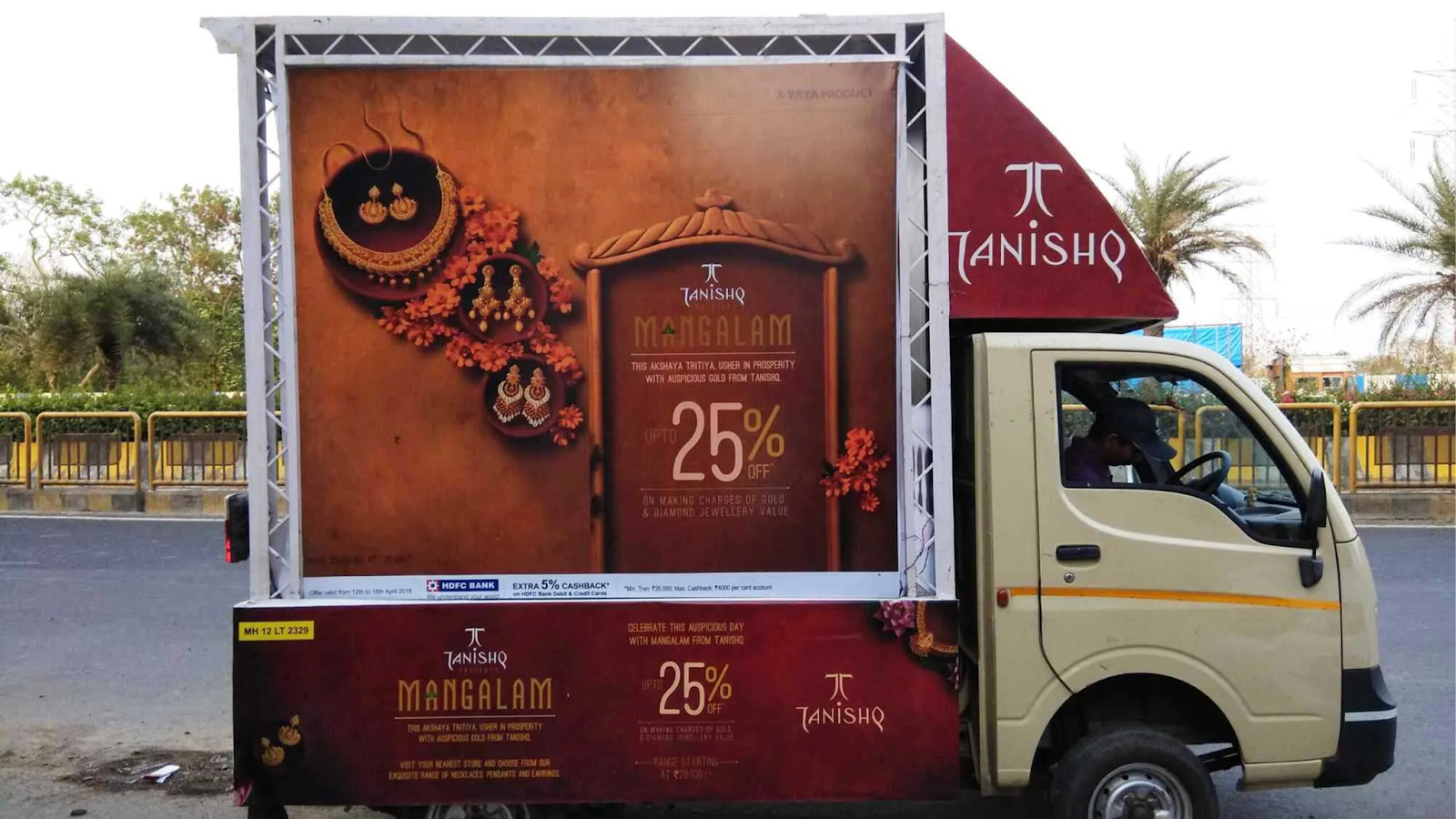
Mobile van advertising lets brands bring their message straight to the people, moving through residential areas, busy markets, events and city streets. With each route, vans reach hundreds to thousands of potential customers daily, making every drive a live billboard in motion.
This flexibility and reach make mobile vans a powerful and cost-effective outdoor advertising tool, turning neighborhoods, events and streets into opportunities for your brand to be seen, remembered and talked about, wherever your audience is.
9. Transit Media at Railway Stations
Railway station advertising connects with thousands of passengers every day, turning platforms, entry gates and waiting areas into high-visibility brand spaces. Studies show that commuters often notice ads while waiting, with up to 65% recall in high-traffic stations.
Compared to airports, railway stations offer a more affordable way to reach large audiences, delivering strong footfall and repeated exposure. Every train arrival, departure and pause becomes a chance for your brand to be seen, remembered and talked about by a diverse, urban audience.

10. Inflatable and On-Ground Activations
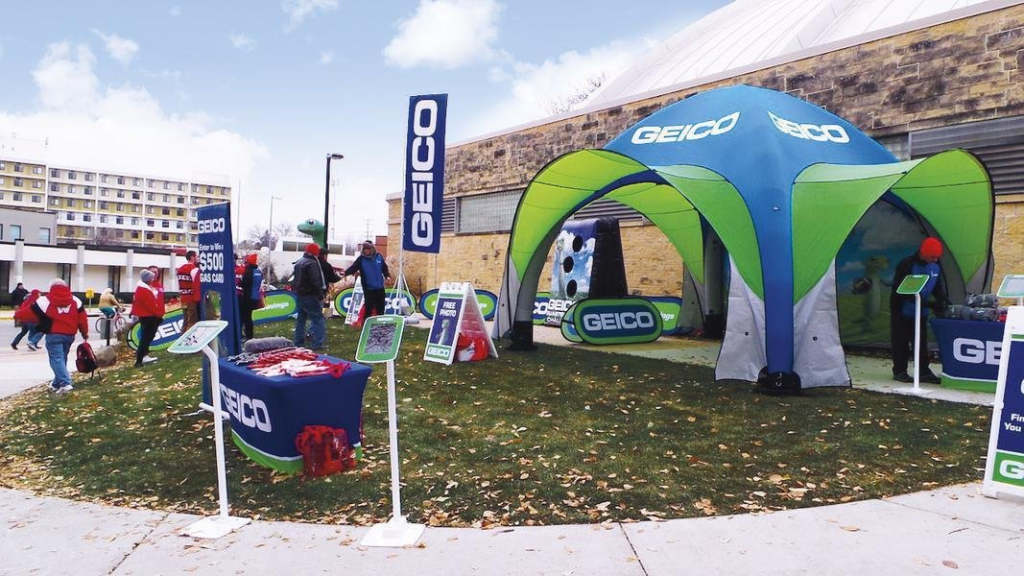
Inflatables and on-ground activations turn ordinary spaces into memorable brand experiences, grabbing attention instantly during product launches, promotions and special events. Studies show that over 70% of event attendees actively notice such activations, making them highly engaging in a short time.
This format is perfect for brands seeking impactful, engagement-focused outdoor advertising without long-term commitments. Every activation creates buzz, encourages interaction and leaves a lasting impression, turning crowds into excited, brand-aware audiences.
How to Choose the Right Outdoor Advertising Media
Picking the right outdoor advertising medium starts with understanding your audience, location, campaign goals and budget. Brands get the best results by choosing formats that truly connect with their target audience, rather than just going for the most expensive options.
Using a mix of outdoor channels like buses, billboards and street furniture, often works better than relying on a single format. Combining mediums ensures wider reach, repeated exposure and smarter use of budget, turning every touchpoint into a meaningful opportunity to be seen and remembered.
Benefits of Cost Effective Outdoor Advertising Media
- High brand visibility at lower costs
- Strong local and regional reach
- Consistent exposure in real world environments
- Better recall through repeated impressions
- Suitable for both startups and established brands
Outdoor advertising is a powerful medium for brands looking to build visibility across India. By choosing the right cost effective outdoor advertising media, businesses achieve strong reach without exceeding their budgets.
From transit-based advertising to street-level formats, India offers multiple cost-effective outdoor advertising options for brands of all sizes. With thoughtful planning and the right media mix, outdoor advertising delivers impactful and measurable results.
Frequently Asked Questions (FAQ’s)
- What are the most cost-effective outdoor advertising options in India?
Some of the most cost-effective outdoor advertising options in India include bus shelter ads, auto and e-rickshaw branding, wall paintings, pole kiosks, mobile van advertising, and bus branding. These formats offer strong visibility and local reach at relatively lower costs compared to premium billboards. - How much does outdoor advertising cost in India?
Outdoor advertising costs in India vary depending on the city, location, format, and campaign duration. Small formats like auto branding or wall paintings can start from a few thousand rupees, while larger hoardings or metro advertising placements can cost significantly more in high-traffic areas. - Is outdoor advertising effective for local businesses in India?
Yes, outdoor advertising is highly effective for local businesses because it provides strong hyperlocal visibility. Formats like wall paintings, pole kiosks, auto branding, and bus shelters help businesses reach nearby customers who frequently pass through those areas. - Which cities in India are best for outdoor advertising campaigns?
Major metro cities such as Mumbai, Delhi, Bengaluru, Chennai, and Hyderabad offer large audiences and high traffic for outdoor advertising. However, tier-2 and tier-3 cities often provide more affordable advertising options with strong local engagement. - How can startups use outdoor advertising on a small budget?
Startups can maximize impact by choosing cost-effective formats like transit media, auto branding, street furniture ads, and mobile van campaigns. Selecting high-footfall locations and combining multiple outdoor formats can help improve reach while staying within budget.
Why Choose Ginger Media Group for Affordable Offline Marketing
Ginger Media helps startups bring their offline marketing ideas to life with clarity, transparency and measurable results. With deep expertise across outdoor, transit, print and on-ground activations, the team focuses on cost-effective solutions that deliver real visibility without wasting a single rupee.
From planning and execution to monitoring and reporting, Ginger Media ensures startups get maximum value from every campaign. By combining smart media selection with strong on-ground execution, they help brands scale offline marketing efficiently, build presence and grow with confidence even on tight budgets.
Airport advertising is a powerful offline marketing channel for brands targeting premium audiences, including high‑income consumers and business travellers. In 2024, India recorded around 376 million air passengers, including both domestic and international flyers, reflecting a strong recovery and growth in aviation traffic. Passenger numbers continued to expand in 2025, with airports like Chhatrapati Shivaji Maharaj International Airport in Mumbai handling a record 55.5 million passengers that year. As of early 2026, industry data indicates continued demand with sustained passenger movement and airport traffic milestones being recorded. The number of operational airports in India has grown to over 160, supporting the country’s expanding air travel network.
This growth enables effective business travelers marketing and repeated exposure to key audiences. Compared with other offline marketing channels, airport media offers sustained passenger engagement , making it a top choice for impactful campaigns in India’s booming aviation market.
Airport Advertising in India: Market Overview
Airport advertising in India has grown significantly over the last decade, fueled by rising passenger traffic and major upgrades in airport infrastructure. Today, India operates over 140 airports, including domestic, international and regional hubs, making it one of the fastest-growing aviation markets globally.
For brands, airports provide access to business travelers, corporate decision-makers, high-income consumers and international audiences. With formats such as digital screens, airport advertising, hoardings, baggage trolley advertising and lounge branding.
Airport media offers premium exposure that few other offline marketing channels can match, ensuring high brand visibility and engagement.
How Many Commercial Airports Are There in India?
India currently has more than 30 commercial international airports and over 100 domestic airports handling scheduled passenger traffic. These airports are spread across major metros, tier-1 cities and fast growing regional hubs.
Ongoing airport development initiatives have increased advertising opportunities across the country. This wide network allows brands to plan large scale national campaigns as well as targeted regional airport advertising strategies.
Which Is the Biggest Airport in India?
The biggest airport in India, based on passenger capacity and overall scale is Indira Gandhi International Airport in New Delhi. It handles the highest passenger traffic in the country and functions as a major international aviation hub.
Due to its size and footfall, this airport offers unmatched advertising visibility and access to premium audiences. It is one of the top choices for both national and global brands.
Top 10 Airport Advertising Locations in India
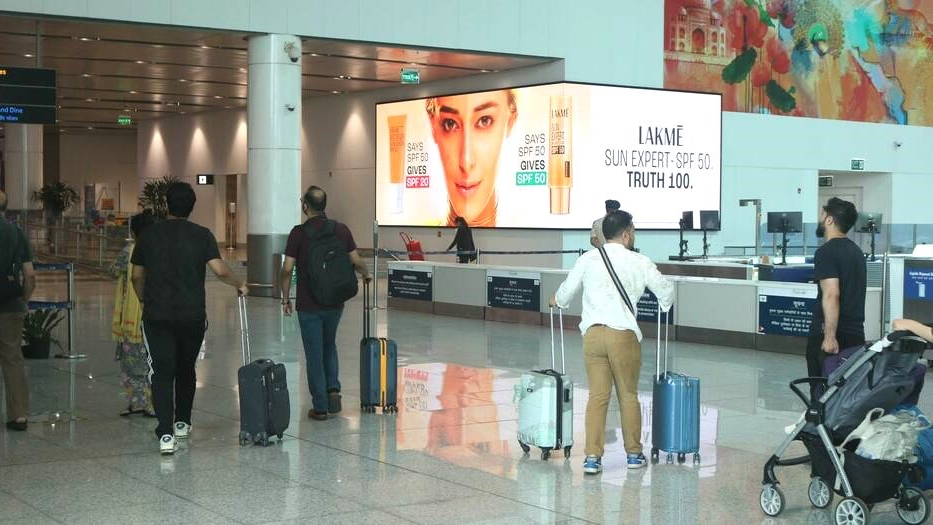
1. Indira Gandhi International Airport – New Delhi
Indira Gandhi International Airport is India’s busiest airport and a primary gateway for both International and domestic travel. With multiple terminals and consistently high footfall, it offers extensive advertising opportunities across arrival, departure and transit zones.
Brands advertising gain exposure to diplomats, corporate leaders, International travellers, and high spending consumers.
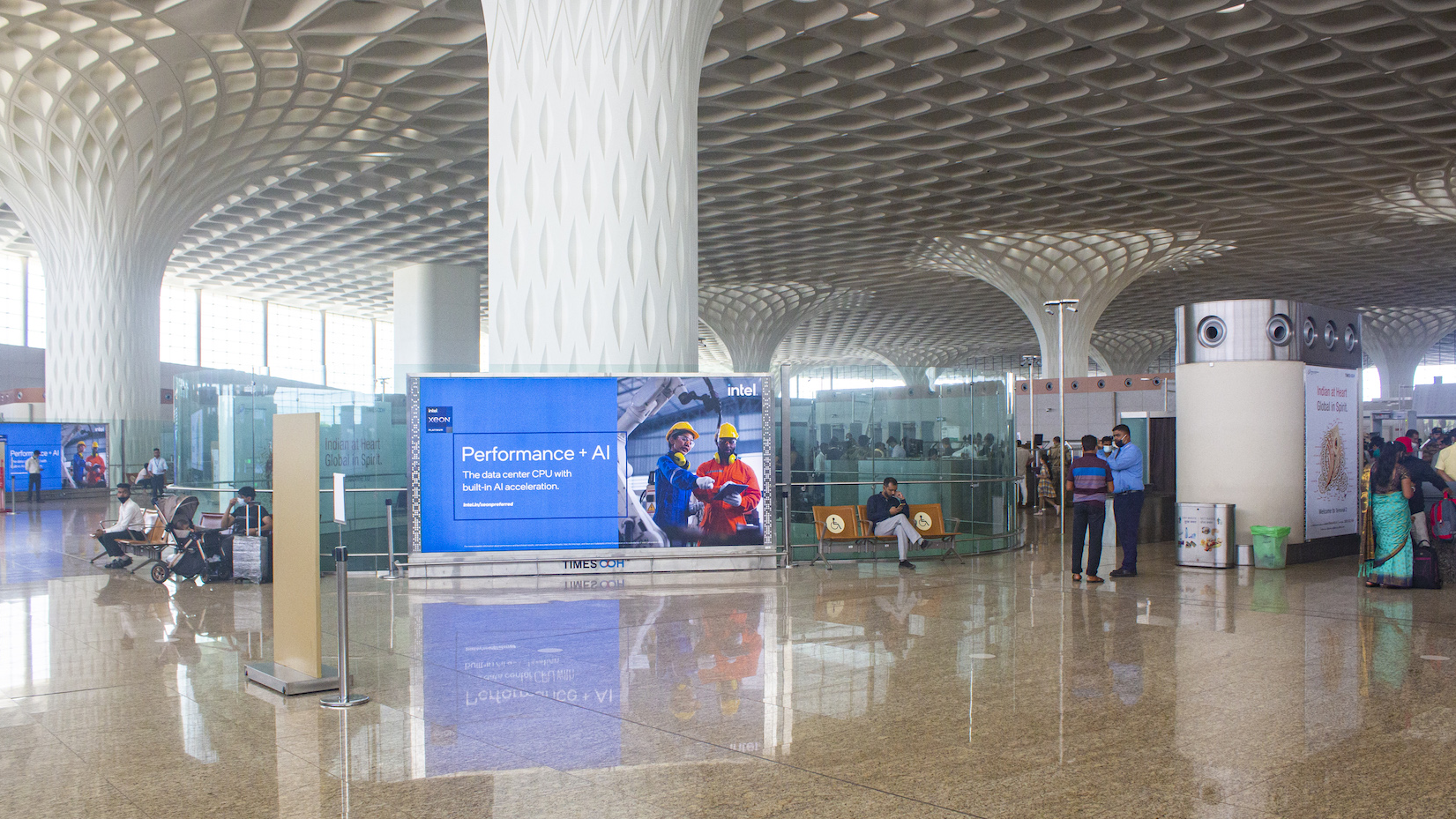
2. Chhatrapati Shivaji Maharaj International Airport – Mumbai
Mumbai’s international airport is one of the most premium airport advertising locations in India. Chhatrapati Shivaji Maharaj International Airport handled around 55.5 million passengers in 2025, including over 16 million international flyers, reinforcing its status as India’s busiest global gateway. As the financial capital of the country, it attracts business leaders, investors and global travelers, making it an ideal spot for brands aiming for premium audience advertising.
Advertising at this airport helps brands associate themselves with luxury, finance and corporate influence, while delivering sustained brand visibility to both domestic and International audiences in one of the highest‑footfall media environments in the country.
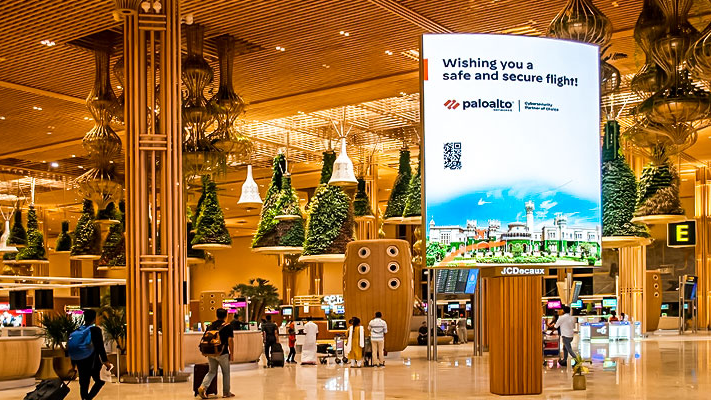
3. Kempegowda International Airport – Bengaluru
Kempegowda International Airport in Bengaluru, India’s technology and startup hub, handled over 41.8 million passengers in 2024‑25, including domestic and international travelers.
The airport attracts IT professionals, entrepreneurs, and business travelers, making it ideal for premium audience advertising. Brands can leverage digital screens, lounge branding and other formats to reach a digitally aware, innovation-driven audience and maximize brand visibility in one of India’s busiest aviation hubs.
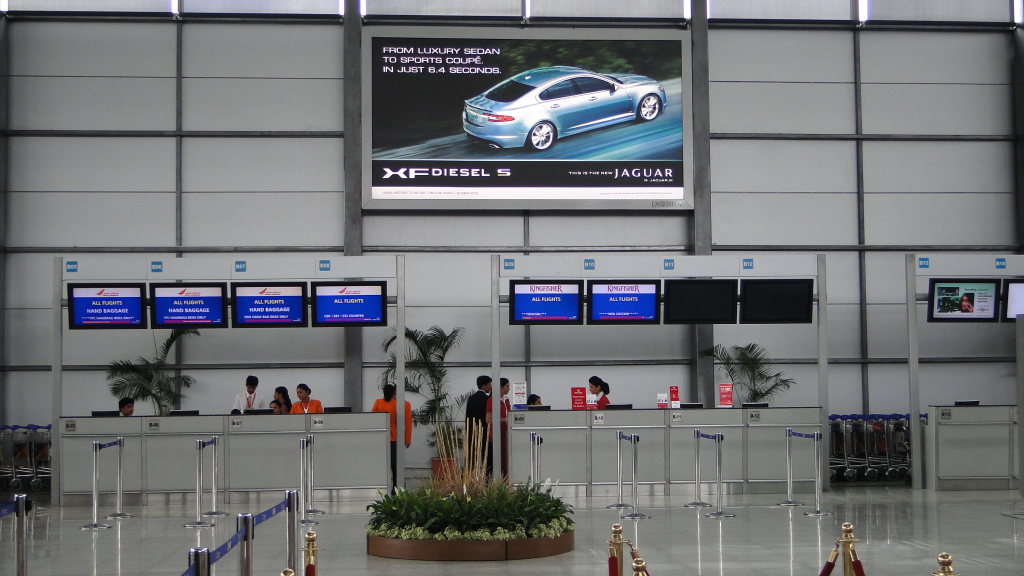
4. Rajiv Gandhi International Airport – Hyderabad
Rajiv Gandhi International Airport in Hyderabad handled over 24 million passengers in 2024‑25, serving both domestic and International travelers.
The airport attracts IT, pharmaceutical and corporate professionals, making it ideal for premium audience advertising. Brands can use digital screens, lounge branding and baggage trolley advertising to reach educated, high-income travellers and maximize brand visibility in one of South India’s fastest-growing aviation hubs.
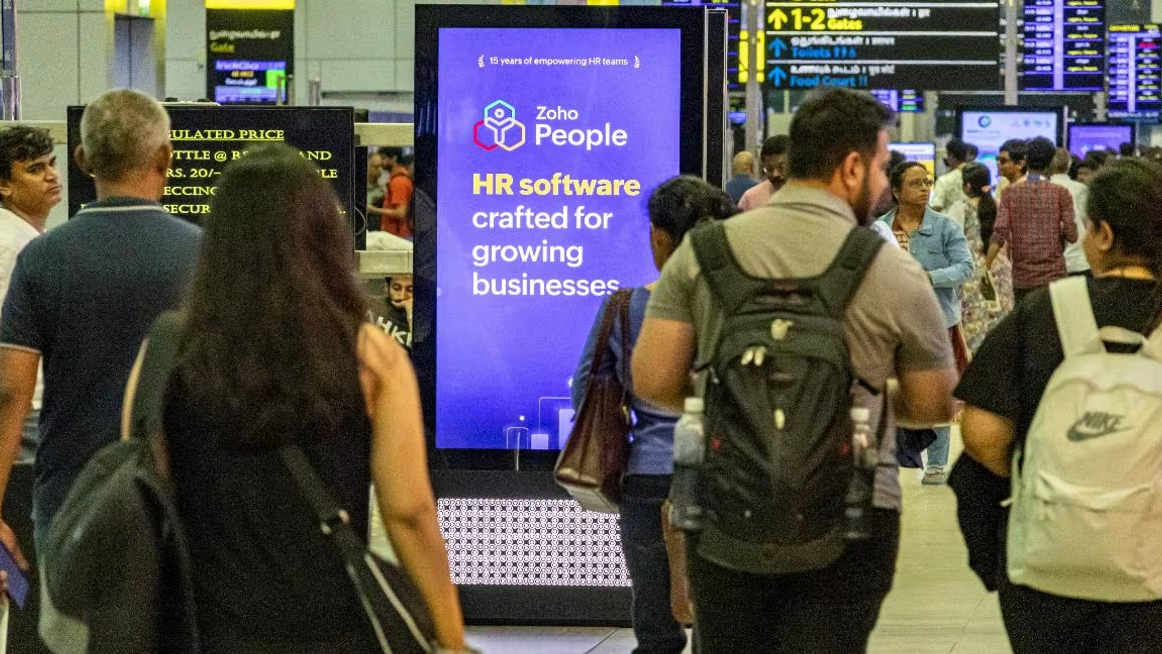
5. Chennai International Airport – Chennai
Chennai International Airport handled over 22 million passengers in 2024‑25, serving domestic and International travelers.
The airport attracts both business and leisure travelers, making it ideal for premium audience advertising. Brands can leverage digital screens, lounge branding and baggage trolley advertising to reach South Indian consumers and international passengers, ensuring strong brand visibility in one of the region’s key aviation hubs.
6. Netaji Subhas Chandra Bose International Airport – Kolkata
Netaji Subhas Chandra Bose International Airport in Kolkata handled over 24 million passengers in 2024‑25, covering domestic and international routes.
The airport attracts business travelers, cultural tourists and International flyers, making it ideal for premium audience advertising. Brands can use digital screens, lounge branding and baggage trolley advertising to strengthen brand visibility and establish a presence in Eastern India’s key aviation gateway.
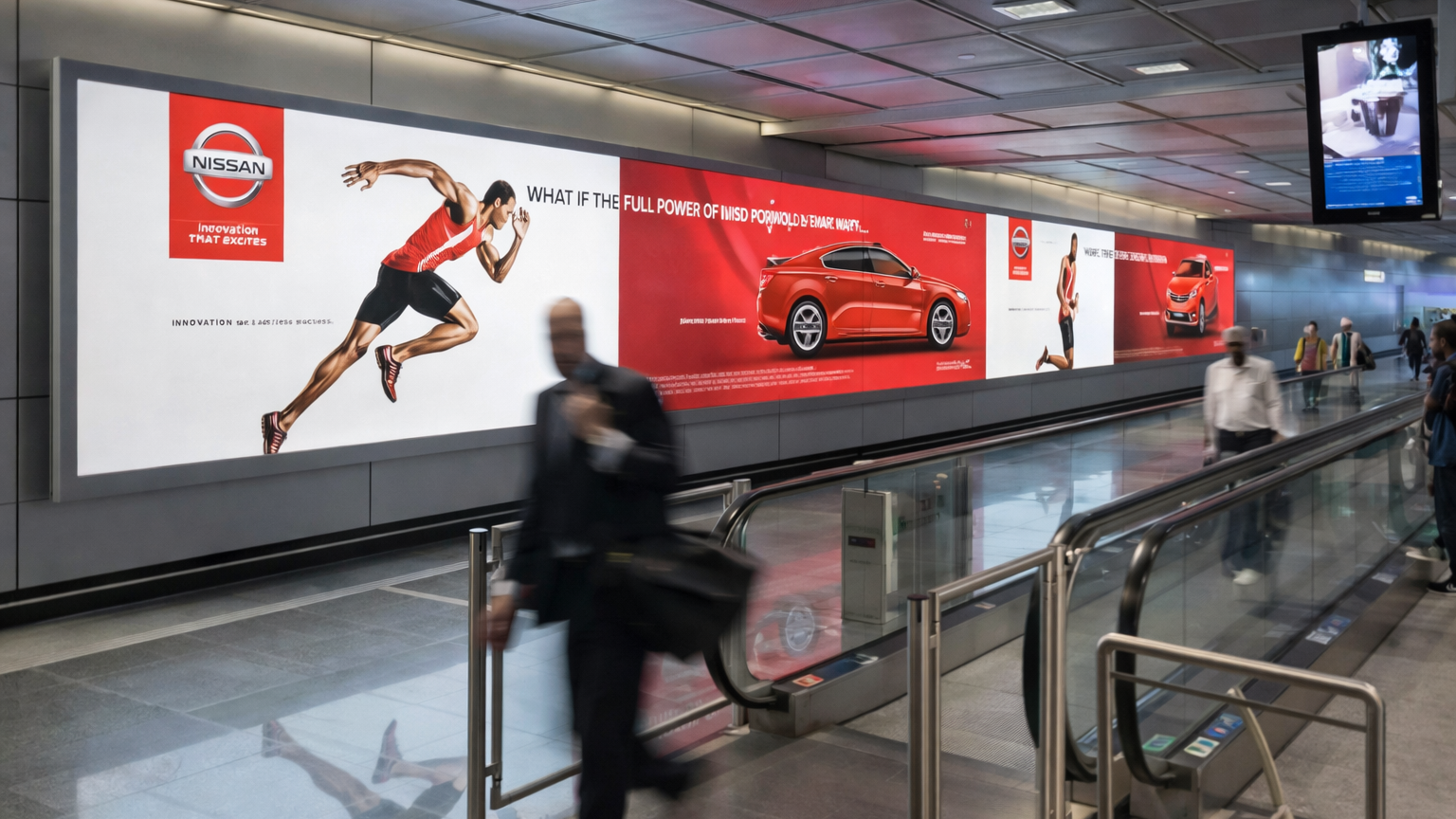
7. Cochin International Airport – Kochi
Cochin International Airport in Kerala handled over 10 million passengers in 2024‑25, with a significant portion of international travellers from the Middle East.
The airport attracts NRIs, international flyers and premium leisure travelers, making it ideal for premium audience advertising. Brands can leverage digital screens, lounge branding and baggage trolley advertising to maximize brand visibility in one of Kerala’s busiest aviation hubs.
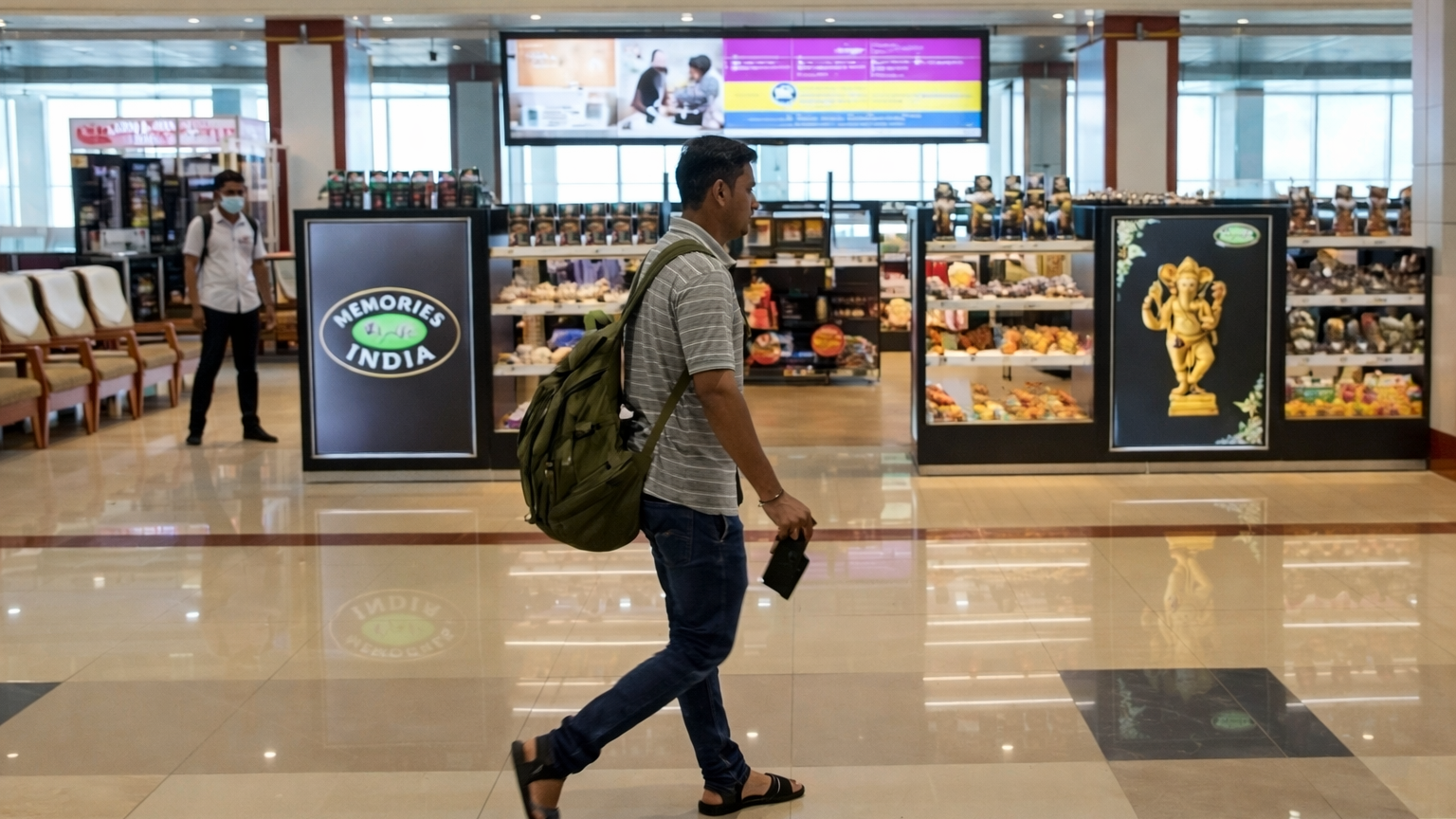
8. Sardar Vallabhbhai Patel International Airport – Ahmedabad
Sardar Vallabhbhai Patel International Airport in Ahmedabad handled over 9 million passengers in 2024‑25, serving domestic and International travelers.
The airport attracts business travelers from manufacturing, textiles, trade and industrial sectors, making it ideal for premium audience advertising. Brands can use digital screens, lounge branding and baggage trolley advertising to reach business-oriented and industrial audiences, ensuring strong brand visibility in western India’s key commercial hub.
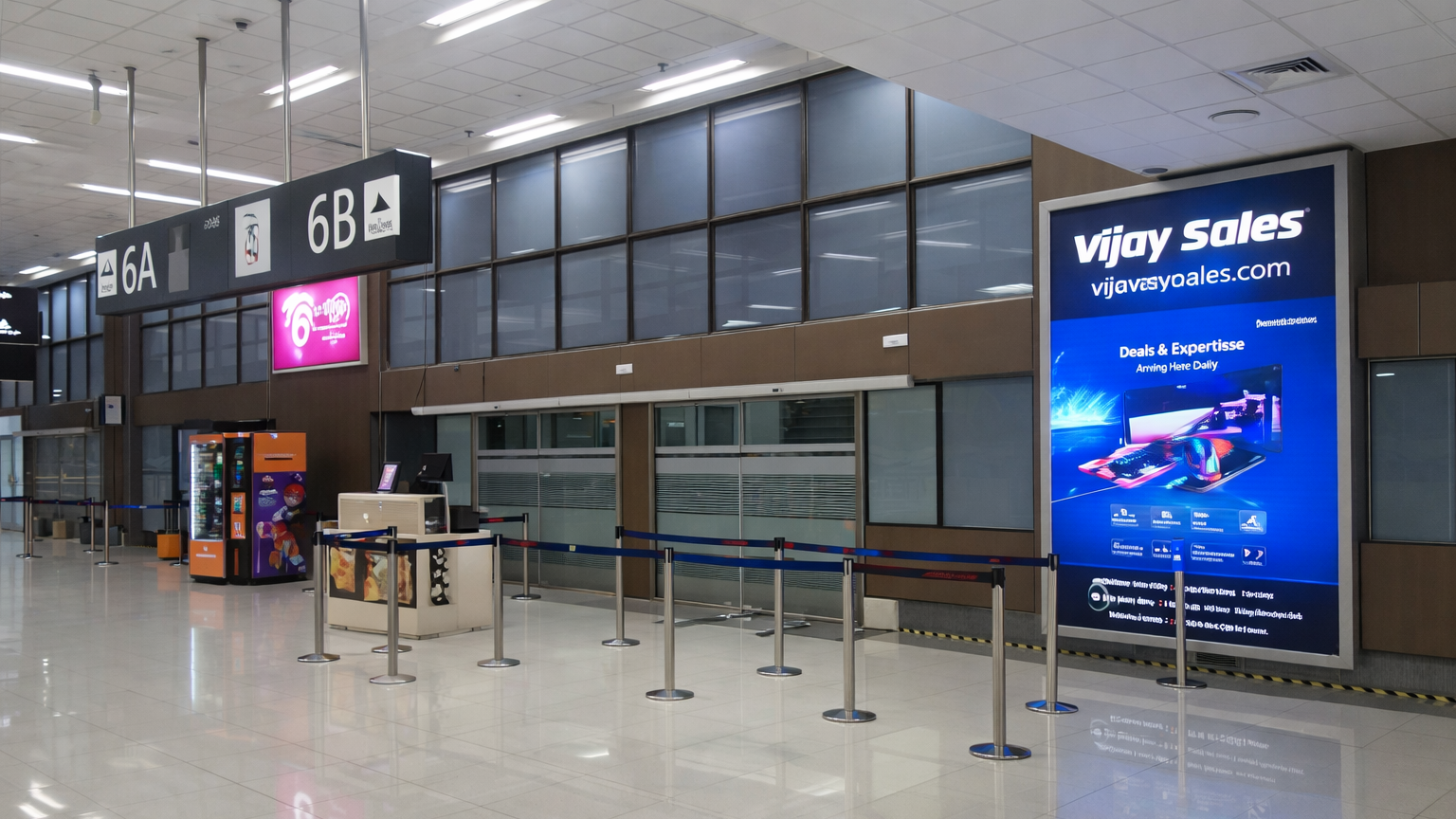
9. Goa International Airport – Goa
Dabolim Airport in Goa handled over 7 million passengers in 2024‑25, including domestic and international travelers.
The airport attracts leisure travellers and tourists year-round, making it ideal for premium audience advertising. Brands in travel, hospitality, lifestyle and consumer sectors can leverage digital screens, lounge branding and baggage trolley advertising to engage relaxed, highly attentive audiences and maximize brand visibility in one of India’s top tourist destinations.
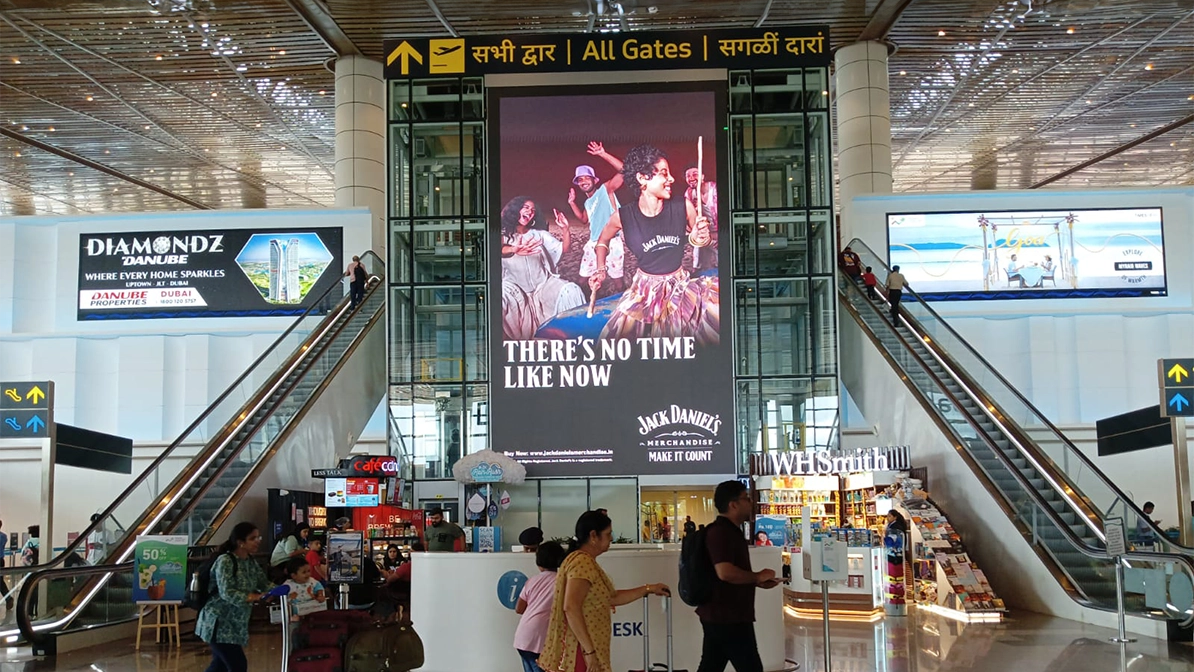
10. Pune International Airport – Pune
Pune International Airport handled over 5 million passengers in 2024‑25, serving domestic and international travelers.
The airport attracts professionals, students and business travellers, making it ideal for premium audience advertising. Brands targeting young professionals, IT employees and urban consumers can leverage digital screens, lounge branding and baggage trolley advertising to maximize brand visibility in one of Maharashtra’s fastest-growing aviation hubs.
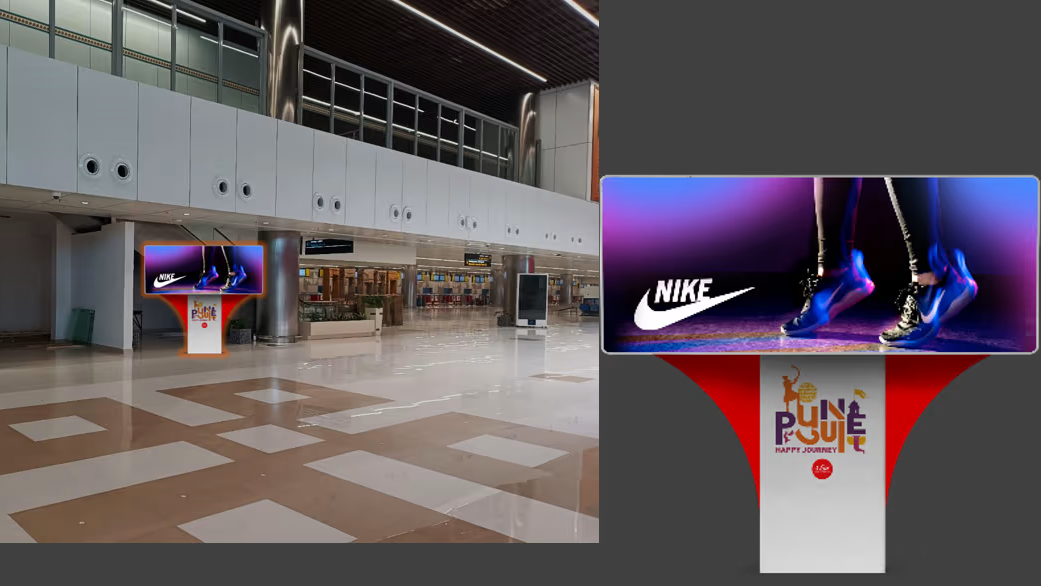
Role of an Airport Advertising Agency in India
Partnering with an airport advertising agency in India allows brands to plan and execute campaigns efficiently. These agencies handle airport selection, media planning, permissions, creative placement and on-ground execution.
An experienced agency ensures brands choose the right airports, advertising formats such as digital screens, lounge branding, baggage trolley advertising and optimal campaign durations. This maximizes brand visibility, engages premium audiences and maintains consistency across multiple locations, making airport advertising a highly effective offline marketing channel in India’s growing aviation market.
Airport advertising is one of the most premium and impactful offline marketing channels in India. With over 140 commercial airports and growing passenger traffic, brands have multiple high-visibility locations to showcase their campaigns.
By choosing the right airport advertising locations and partnering with a professional airport advertising agency in India, brands can reach influential, high-income audiences, maximize brand visibility and build long-term brand value across the country’s expanding aviation market.
Frequently Asked Questions (FAQs)
Q1. How much does airport advertising cost in India?
Airport advertising costs vary depending on airport location, format, and campaign duration. Premium metros like Delhi and Mumbai are priced higher than regional hubs.
Q2. Which airport is best for advertising in India?
Indira Gandhi International Airport and Mumbai International Airport offer the highest passenger footfall and premium audience exposure.
Q3. Is airport advertising effective for luxury brands?
Yes. Airports attract high-income travelers, corporate decision-makers and international audiences, making them ideal for luxury and premium brands.
Q4. What formats are available for airport advertising?
Digital screens, lounge branding, baggage trolley ads, wall wraps, escalator branding and experiential activations.
Why Choose Ginger Media Group for Affordable Offline Marketing
Ginger Media helps start-ups execute affordable offline marketing campaigns with clarity, transparency and measurable results. With expertise across outdoor, transit, print and on-ground activations, Ginger Media focuses on cost-effective solutions that deliver real brand visibility without unnecessary spending.
From planning and execution to monitoring and reporting, the team ensures startups get the best value from every campaign. By combining strategic media selection with strong on-ground execution, Ginger Media enables brands to scale offline marketing efficiently, reach their target audiences, and achieve measurable impact with confidence.
]]>Restaurants and QSRs operate in competitive, fast-moving markets where decisions are impulsive and visibility matters. Nearly 78% of QSR customers say marketing influences their order decisions and 70% of diners are more likely to visit a restaurant with a strong social media presence showing how strategic media shapes choice. Effective advertising strategies, backed by media planning for restaurants and QSR brands, use a mix of location-based and outdoor advertising to boost visibility.
By integrating digital, offline and omnichannel advertising, brands strengthen recall and drive footfall. These approaches help shape food choices, build strong media touchpoints and support growth.
What Is 8 Best Advertising Media for Restaurants & QSRs
Advertising media are the channels through which restaurants reach potential customers. For food brands, timing and repetition are critical making the right exposure at the right moment essential to influence spontaneous choices. Effective formats focus on three outcomes: visibility near the outlet, recall during hunger moments and reinforcement across touchpoints. Backed by strong media planning for QSR brands and point of sale advertising for QSRs, the following 8 quick service restaurant marketing channels deliver consistent recall and sustainable growth:
1. Outdoor Hoardings Near Catchment Areas
Hoardings placed near residential clusters, office zones, or high traffic junctions are a strong advertising medium for restaurants.

They are most effective when situated within a short walk or drive from the outlet. Frequent exposure enhances brand recall, keeping the brand top of mind during dining choices.
Local advertising boards help QSRs create buzz and establish a strong presence in new areas.
2. Transit Advertising Around Commute Routes
Transit advertising leverages high-traffic areas like metro stations, bus routes and key junctions. With over 60% of urban commuters passing these spots daily, even brief glances add up and repeated exposure boosts brand recall by up to 70%.
For restaurants and QSRs, transit ads create consistent visibility, keeping the brand top of mind during meal decisions.
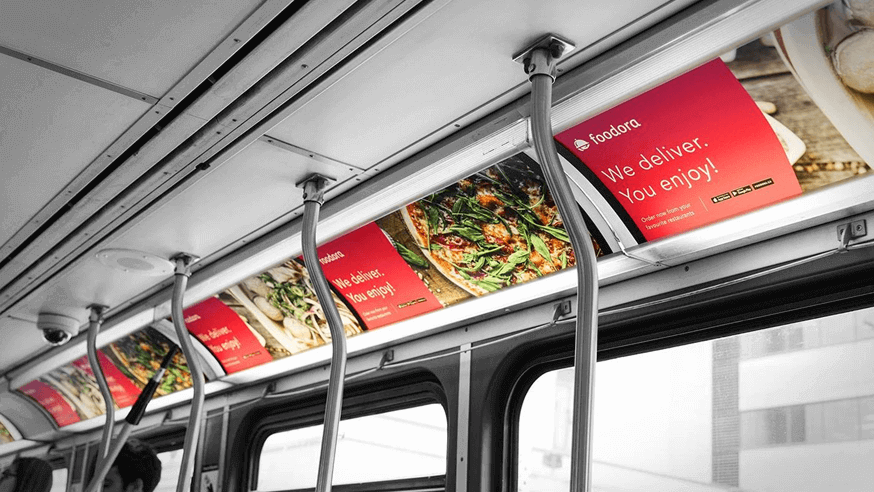
QSRs targeting office goers and students benefit significantly from this medium.
3. Food Delivery App Visibility & In App Media
Food delivery platforms are a key discovery and conversion channel for restaurants and QSRs. With in-app banners, sponsored listings, and featured placements, these platforms influence users actively searching for meals. Sponsored listings can boost visibility by over 50%, while restaurants using ads often see order increases of 30% within a month.
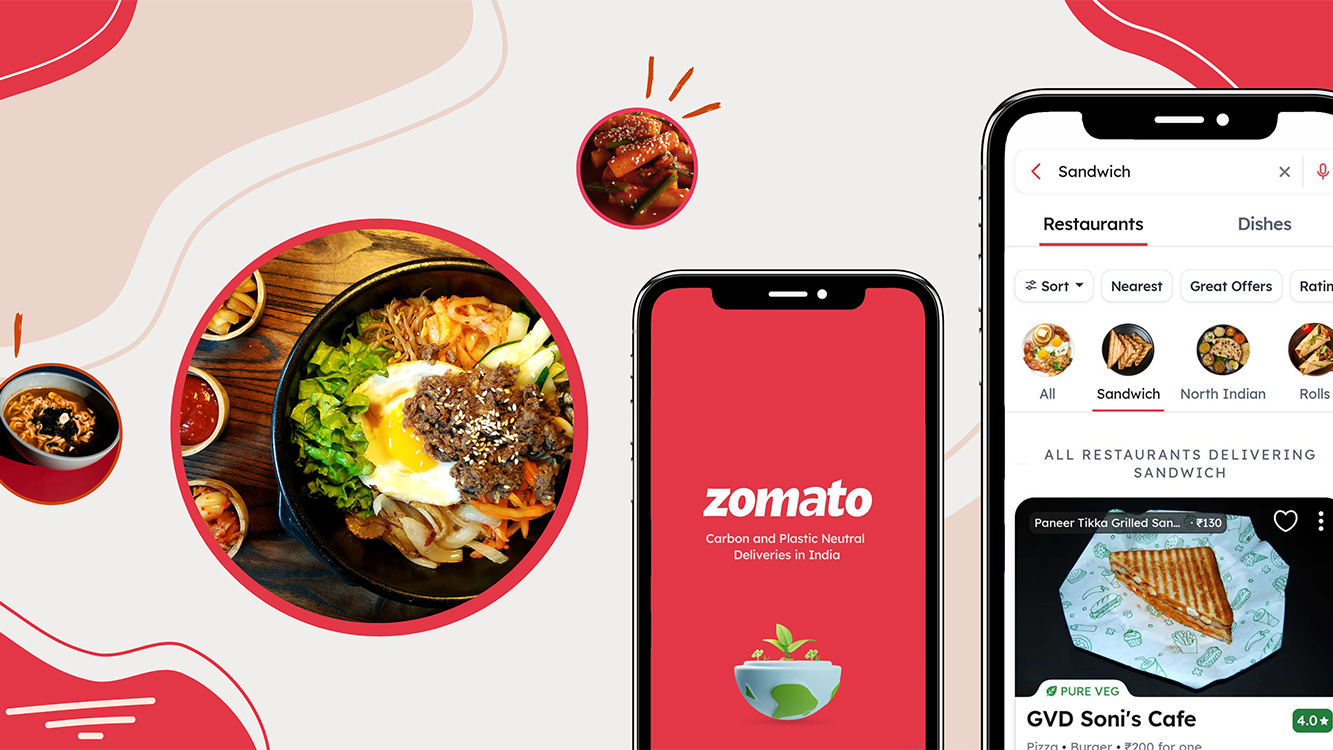
It is supported by offline visibility, ensuring Brand recognition when seen on the app.
4. Micro Influencers & Hyperlocal Content Collaborations
Micro influencers and food reviewers help restaurants reach local audiences effectively. Studies show that 35% of diners make restaurant choices based on online reviews, and 83% of consumers trust recommendations from bloggers and local content creators more than traditional ads, making these voices highly credible.
Restaurants collaborating with micro-influencers often see up to 40% higher local footfall and significantly increased engagement on social media. With 74% of consumers using social media to decide where to eat, authentic content from trusted local voices helps build trust quickly and drives both orders and visits.

For new or local restaurants, this approach drives awareness and trust in targeted neighbourhoods.
5. In Store and Point of Sale Advertising Media
In-restaurant advertising like standees, menus, table tent and digital screens.
Influences add-ons, combos, and repeat purchases. Around 70% of diners notice in store promotions and menu-based upselling can increase average order value by 15–20%.
These formats work best when customers are ready to order, with digital screens and table tents driving up to 30% higher engagement and boosting immediate sales.
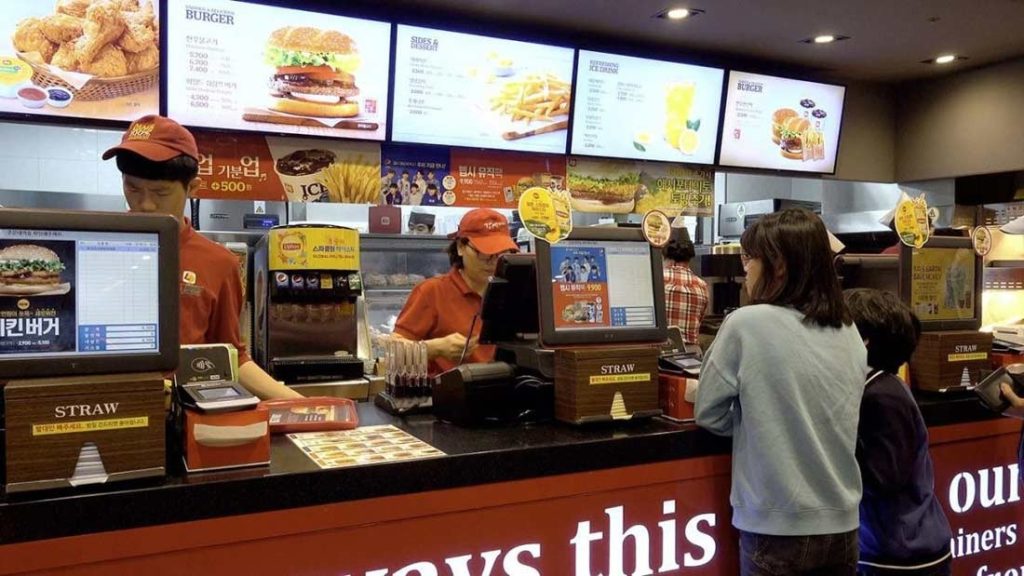
QSRs use in store media to increase average order value without additional customer acquisition costs.
6. Geo Targeted Mobile Advertising
Mobile advertising is highly effective when paired with location targeting. Ads triggered within a defined radius around restaurants can double engagement and conversion rates compared to generic campaigns. Studies show location-based ads drive 80% more store visits, and consumers exposed to nearby ads are 30% more likely to visit the outlet.

Restaurants using geo targeted media have walk-ins when campaigns are aligned with lunch, evening, or late night hours.
7. Cinema & Mall Advertising Media
Malls and cinema complexes draw audiences already ready to eat or socialize. Placing ads in food courts, mall corridors and cinema lobbies captures attention at the perfect moment, reaching consumers in a receptive mindset. This strategic exposure not only builds brand recall but also drives footfall directly, making these high-traffic locations ideal for restaurants and QSRs looking to turn intent into action.

QSRs and casual dining brands use this medium during weekends and festive periods.
8. Local Radio & Audio Advertising
Radio is a relevant advertising medium for restaurants operating at the city or regional levels.
Short, repetitive audio spots recall brand names and locations and are provided during commute hours. Radio works for promotions and limited time deals.

Why Advertising Media Choice is Critical for Restaurants & QSRs
Restaurants and QSRs operate in highly competitive markets with thin margins; every marketing rupee counts. Choosing the wrong advertising channel can waste up to 30% of your spend and deliver low returns, while the right media drives visibility, engagement, and sales.
The most effective channels are contextually relevant, targeting hunger moments, commute routes, and nearby locations. Outdoor media builds awareness, mobile and app ads capture intent, and in store displays increase order value, creating a seamless customer journey that drives footfall and repeat visits.
Frequently Asked Questions (FAQs)
Q1. What is the best advertising medium for restaurants?
Outdoor hoardings, transit advertising, and geo targeted mobile ads are among the most effective channels for driving local footfall.
Q2. How do QSRs increase footfall through advertising?
By combining location-based outdoor media, food delivery app promotions, and in store advertising, QSRs create multiple brand touchpoints.
Q3. Is digital advertising better than outdoor advertising for restaurants?
Both work best together. Outdoor builds awareness while digital captures intent and drives immediate orders.
Choosing the right advertising media is crucial for restaurants and QSRs to boost visibility and drive footfall. In a category fueled by impulse and proximity, the right media can influence decisions within minutes.
For restaurants, success comes from being visible where customers already are. Carefully selected advertising channels help build recall, trust, and encourage repeat visits. Start by understanding customer movement and meal-time behavior. This ensures your brand stays relevant, competitive, and top of mind in a crowded and fast-moving food market.
Why Choose Ginger Media Group for Affordable Marketing
Ginger Media helps startups execute affordable marketing campaigns with clarity, transparency, and measurable impact. With strong expertise across outdoor, transit, print, and on ground activations, Ginger Media focuses on cost effective solutions that deliver real visibility without unnecessary spending. From planning and execution to monitoring and reporting, the team ensures startups get the best value from every offline campaign. By combining strategic media selection with on ground execution strength, Ginger Media enables brands to scale offline marketing efficiently and confidently.
]]>Indian cities are moving faster, smarter, and more connected than ever and brands are looking beyond personal screens to reach consumers in the real world. The city itself has become a powerful canvas for communication, where every street, transit hub, and lifestyle space offers an opportunity to connect.
Digital Out-of-Home (DOOH) advertising is transforming these urban spaces, turning commutes, shopping trips and daily routines into meaningful brand moments. With inventory expanding rapidly across transit hubs, residential zones, retail environments and lifestyle destinations, DOOH offers visibility that is both dynamic and contextually relevant.
The top 10 DOOH advertising formats in India, explained clearly for practical planning.
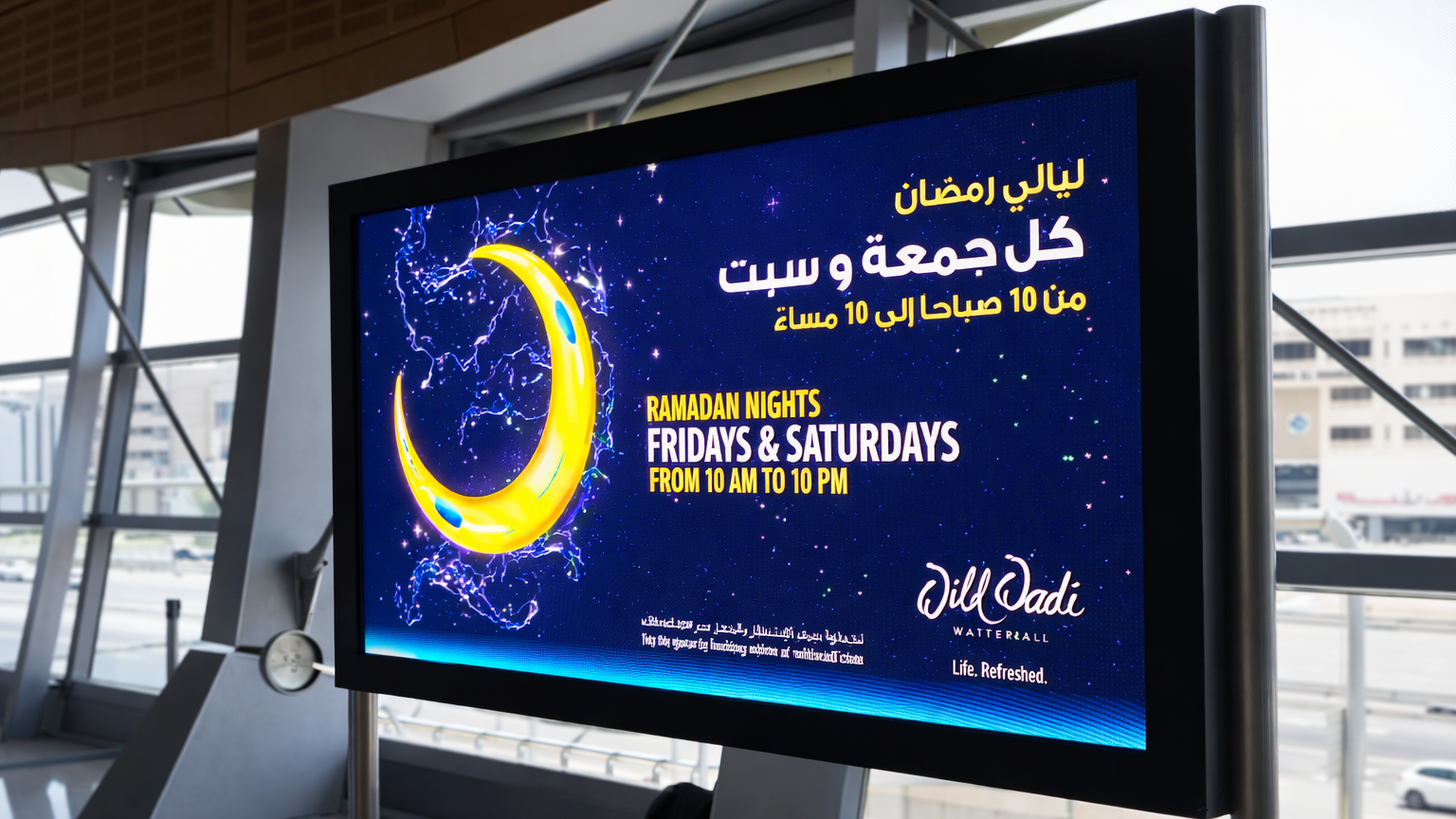
1. Metro Station Digital Screens
Metro stations are among the most effective DOOH advertising formats in India. Commuters walk, wait and pause multiple times within station premises, providing high dwell time for ads.
Digital screens placed near entry gates, ticketing areas, staircases and platforms benefit from repeated daily exposure, with over 500,000 commuter impressions per day at busy stations like Delhi Metro’s Rajiv Chowk, Mumbai Metro’s Andheri, and Bengaluru Metro’s Majestic. This frequency helps brands build strong recall and reinforce messaging over time.
Metro DOOH advertising works in cities such as Delhi, Mumbai, Bengaluru and Hyderabad, where commuter volumes remain consistently high, making these formats ideal for mass visibility and engagement.
2. Fuel Station (Petrol Pump) Digital Screens
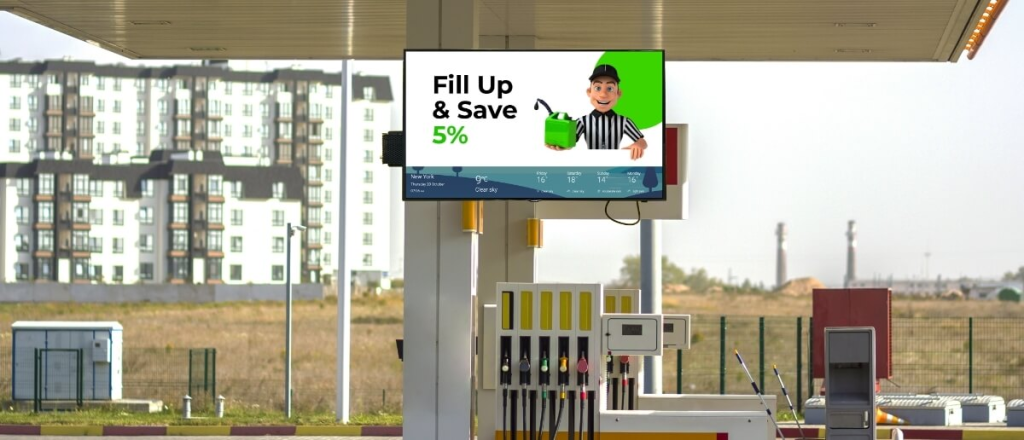
Fuel stations are a unique DOOH advertising environment with guaranteed attention windows. Drivers and passengers spend time refuelling, making payments or waiting briefly.
Digital screens near fuel pumps, billing counters and convenience stores capture attention in a controlled, uncluttered environment, making every second of exposure highly effective.
Although viewing time is short, these screens deliver focused impressions, reaching 10,000 to 50,000 consumers daily at busy urban locations.
This DOOH format works best for FMCG, automotive, fintech and consumer service brands targeting urban audiences, providing high-frequency, contextually relevant visibility.
3. Mall Digital Screens
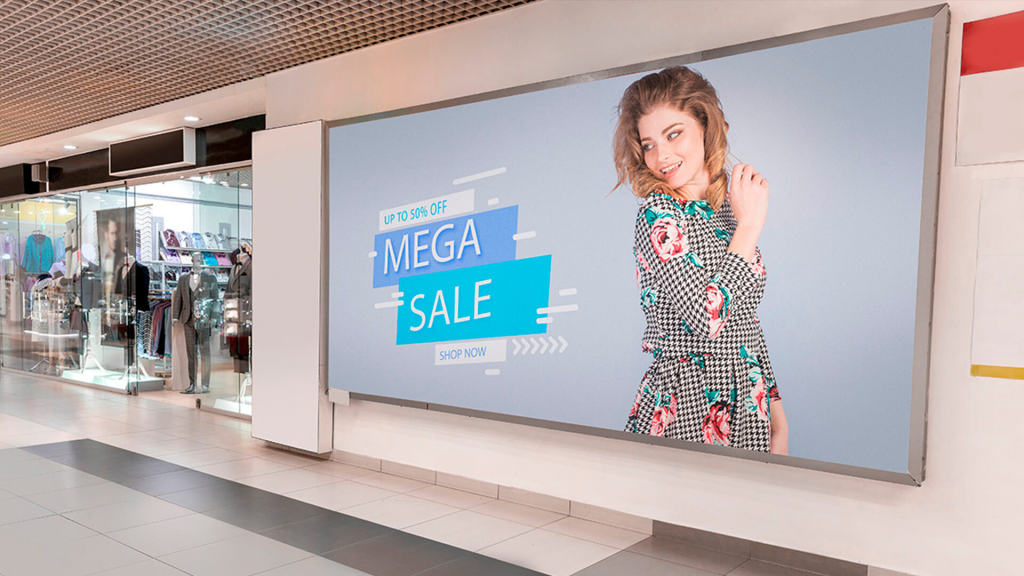
Malls are high-impact DOOH advertising locations with footfall often exceeding 50,000 visitors per day and longer dwell times.
Screens placed at entrances, corridors, escalators, food courts and multiplex lobbies reach shoppers in a browsing or buying mindset, with exposure happening across multiple visits, helping brands build strong recall.
For retail, lifestyle and entertainment brands, mall DOOH advertising formats support discovery and brand reinforcement effectively.
4. Residential Society & Gated Community Digital Screens
Residential societies and gated communities are emerging as powerful DOOH advertising formats in India.
Screens placed at society entrances, lift lobbies, clubhouses, and parking areas reach over 5,000 to 20,000 residents daily, including families, working professionals and decision makers in a trusted, captive environment.
This format works for brands giving daily use products, local services, education, healthcare and real estate solutions.

5. Airport Terminal Digital Displays
Airport terminals are premium DOOH advertising environments with extended dwell time.
Travellers spend significant time at check-in, security, boarding gates and baggage claim areas, providing 10,000 to 50,000 daily impressions at busy airports like Delhi, Mumbai and Bengaluru. Digital screens in these zones allow brands to communicate effectively without distractions, building high recall and premium brand perception.
Airports such as Delhi, Mumbai, and Bengaluru are key hubs for DOOH advertising formats in India, for brands targeting business travellers and affluent audiences.

6. Digital Billboards on Roads and Flyovers
Large-format digital billboards on highways, arterial roads and flyovers deliver city-wide visibility, reaching 50,000 to 150,000 vehicles daily in busy corridors.
DOOH formats allow time-based or event-led creative updates without reprinting costs and messaging can be simplified for fast-moving traffic, ensuring maximum impact in short exposure windows.
Digital billboards work for brand awareness and recall, for launches, festive campaigns and mass market communication.

7. Digital Screens in Hospitals & Healthcare Facilities
Hospitals and healthcare facilities offer high dwell time and focused attention, with patients and attendants spending 20 to 60 minutes on average in waiting areas.
Screens placed in waiting lounges, OPDs, pharmacies and diagnostic centres reach 3,000 to 15,000 viewers per day at busy urban facilities, making this DOOH format highly effective for clear, trust-led brand messaging.
DOOH advertising format works well for healthcare brands, insurance, wellness products, and services targeting families.
8. Railway Station Digital Screens
Railway stations are among the busiest public spaces in India, with the Indian Railways network handling over 20 million passengers every day across major and mid-sized cities.
Digital screens at station entrances, platforms, foot overbridges and waiting areas deliver 20,000 to 60,000 daily impressions at high-traffic stations.They reach daily commuters and long-distance travellers, with 10 to 40 seconds of viewing time per pass, helping build strong and consistent brand recall.
The format builds mass awareness and is a strong pillar of DOOH advertising in India.
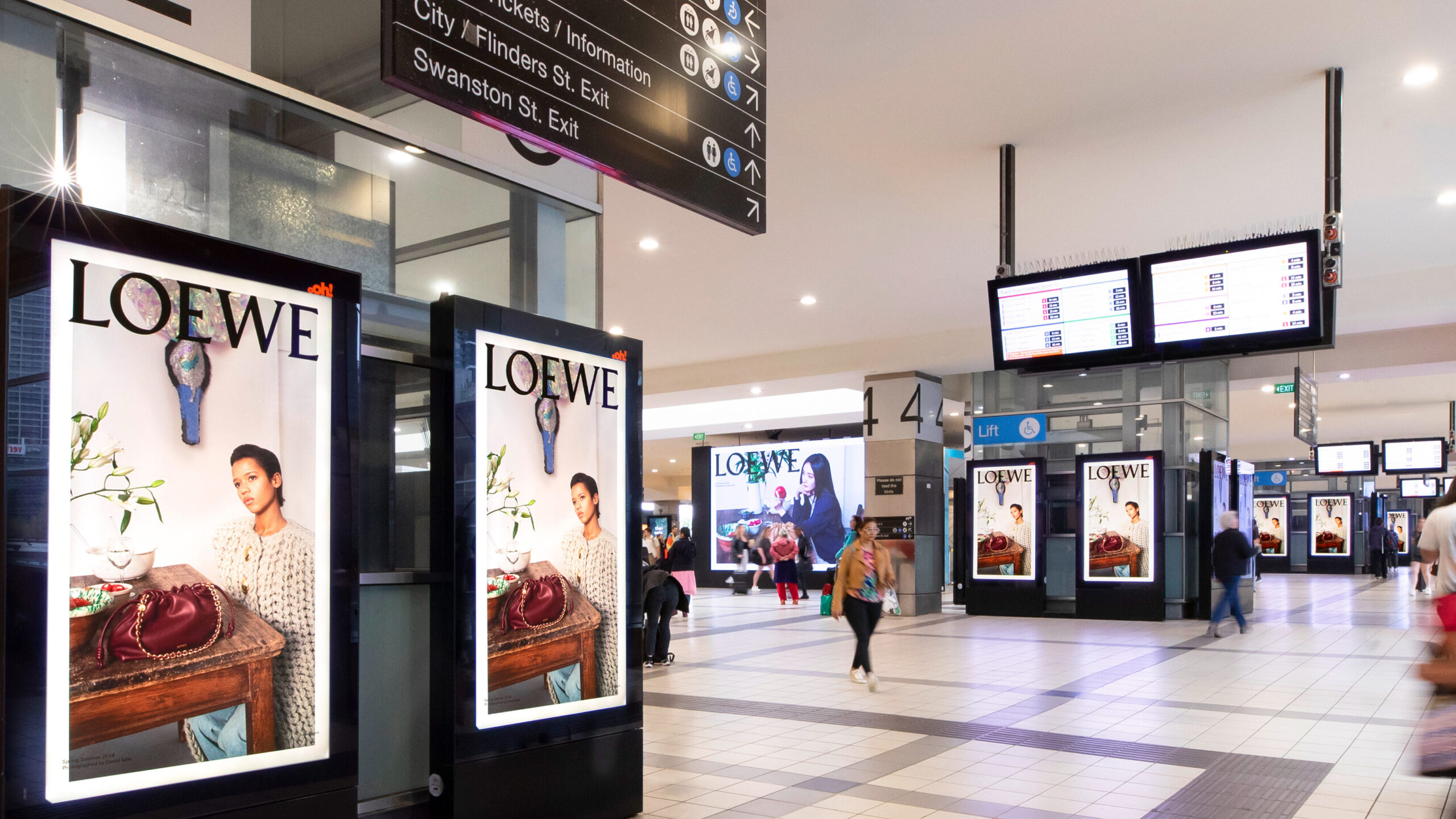
9. Cinema & Multiplex Digital Screens
Cinema and multiplex environments offer highly captive audiences before screenings, with viewers spending 10 to 25 minutes on average in pre-show and waiting zones.
Digital screens in ticketing areas, lounge zones and food courts capture attention with limited distractions, delivering high message absorption and stronger brand recall.
DOOH advertising format works for entertainment, FMCG, mobile apps, and lifestyle brands seeking strong recall.
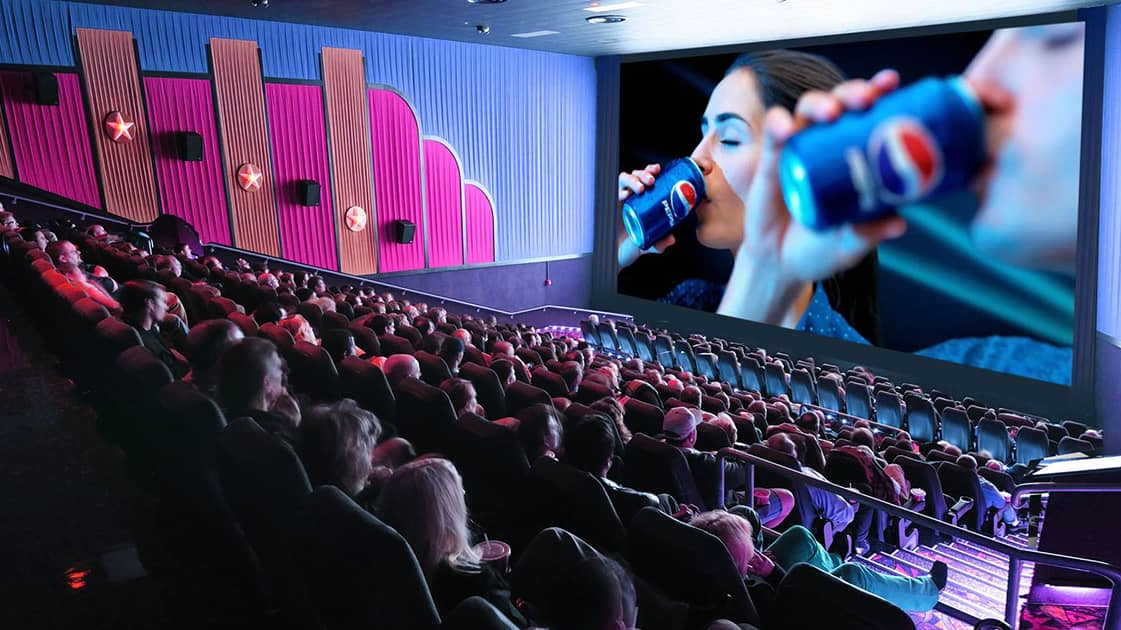
10. Hospitality & Leisure Space Screens
Hospitality and leisure spaces such as hotels, gyms, cafes, co-working spaces and entertainment venues offer high-attention environments, with visitors spending 30 to 90 minutes on average per visit.
Digital screens in these venues can deliver 2,000 to 8,000 daily impressions per location, making them effective for focused brand visibility and contextual messaging.
Screens in these environments reach audiences during relaxed or downtime moments. Brands use this DOOH advertising format to build contextual relevance.
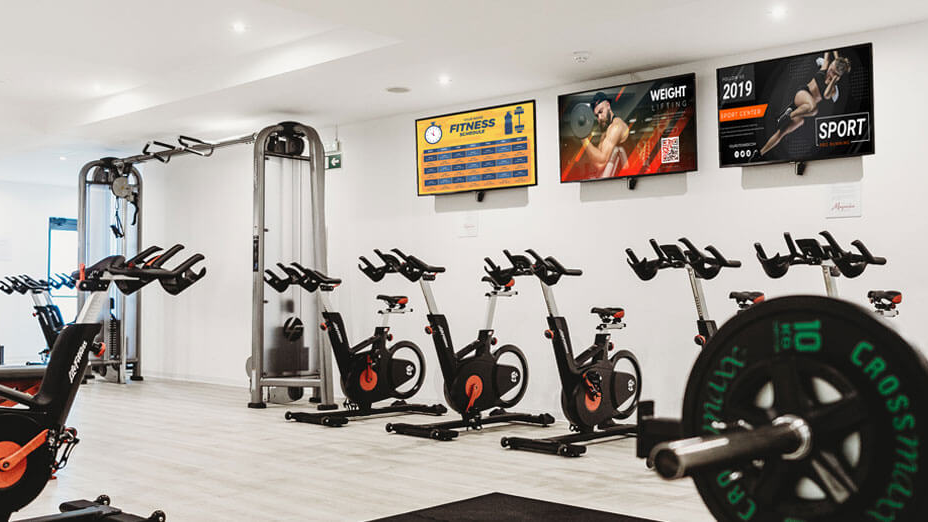
Why Choosing the Right DOOH Advertising Format Matters
Many brands view DOOH advertising as a single category. The DOOH advertising format serves a different objective.
Transit heavy formats drive frequency and scale. Residential, healthcare and hospitality formats build trust and familiarity. Retail and cinema formats influence consideration.
Effective DOOH advertising strategies focus on format alignment. This delivers stronger outcomes.
DOOH advertising is a strategic media that blends physical presence with digital flexibility. The effectiveness of DOOH advertising lies in choosing the right formats for specific audience moments.
For DOOH advertising formats in India, understanding how people move, wait and engage in real world environments. Well chosen formats deliver consistent visibility, contextual relevance and long term recall.
Exploring DOOH advertising as part of your media, start by mapping customer journeys across the city. Identifying the right DOOH advertising formats helps your brand stay visible, credible, and relevant.
Why Choose Ginger Media Group for Affordable Marketing
Ginger Media helps startups execute affordable marketing campaigns with clarity, transparency and measurable impact. With strong expertise across outdoor, transit, print and on ground activations. Ginger Media focuses on cost effective solutions that deliver real visibility without unnecessary spending. From planning and execution to monitoring and reporting, the team ensures startups get the best value from every offline campaign. By combining strategic media selection with on ground execution strength, Ginger Media enables brands to scale offline marketing efficiently and confidently.
]]>Outdoor advertising is still one of the most powerful ways to build mass awareness in Mumbai. Every day, over 12 million commuters navigate the city’s roads, highways and transit hubs but many brands miss the mark by picking hoardings based on availability rather than strategy. In a fast-moving city, the right placement means your ad isn’t just seen but it’s noticed, remembered and acted upon, increasing brand recall by up to 30%.
In the world of outdoor media, location isn’t just a spot on a map, it’s the difference between a passive billboard and a high-impact marketing tool. The right hoarding can:
- Grab visibility: Prime locations reach 50,000+ impressions daily.
- Capture attention: Busy commuter routes make messages hard to ignore.
- Boost impact: Top spots can increase audience engagement by 20–25%.
In this guide, we’ll uncover why location makes or breaks your outdoor campaign, how it directly affects visibility and attention and reveal the top 10 hoarding locations in Mumbai that brands swear by to maximize reach and create lasting impressions.
What Is Top 10 Hoarding Locations in Mumbai for Maximum Brand Visibility
Hoarding locations are specific outdoor sites where large format billboards are installed to capture public attention. These locations are chosen based on traffic flow, sightlines, dwell time and the type of audience passing through.
In Mumbai, hoarding locations perform differently based on traffic flow. Ads on fast-moving flyovers reach over 50,000 commuters daily, delivering quick impressions, while hoardings at traffic signals enjoy longer viewing times of 30–60 seconds, allowing messages to sink in. The true effectiveness of a hoarding depends on how naturally it fits into daily travel patterns, ensuring repeated exposure and increasing brand recall by up to 30%.
The top 10 hoarding locations in Mumbai consistently deliver high visibility, reaching 100,000+ people daily across both residential and commercial zones, making them prime choices for brands seeking maximum awareness and engagement.
1. Bandra Kurla Complex (BKC)
BKC is the hoarding location in Mumbai. It attracts corporate professionals, business leaders, and high income audiences.
Hoardings on BKC roads benefit from slow-moving traffic and long signal stops, giving commuters 20–60 seconds of dwell time which is enough for messages to sink in and boost brand recall. This makes BKC a hotspot for brands in finance, real estate, luxury and technology, as these hoarding locations offer credibility-driven visibility and connect with a premium, professional audience.
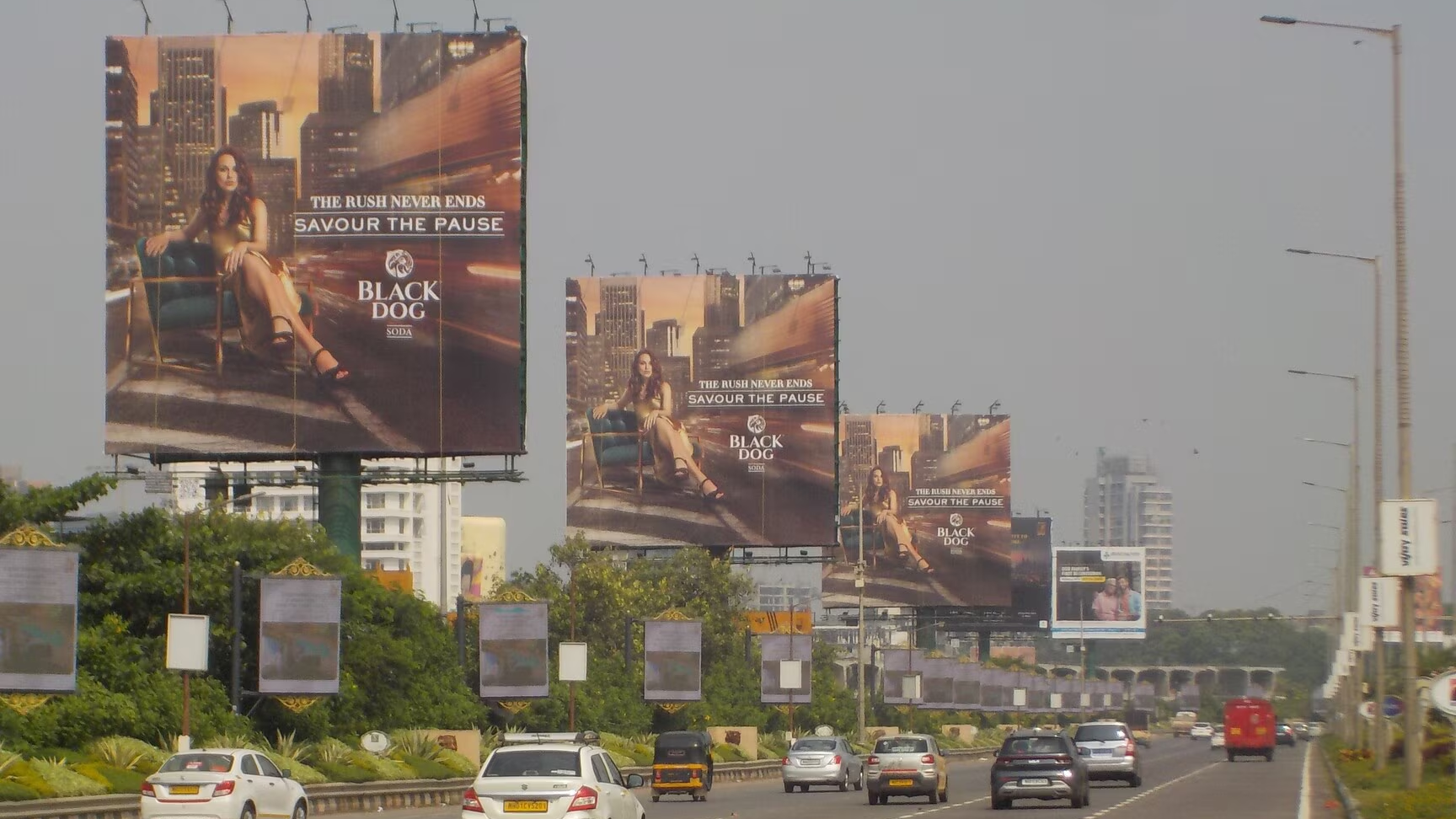
2. Western Express Highway
The Western Express Highway is one of the best hoarding locations in Mumbai for city wide exposure. It connects the residential areas to South Mumbai and carries heavy daily traffic
Hoardings in high-traffic areas deliver thousands of impressions every peak commute hour and while viewing time may be short, repeated exposure throughout the day strengthens message recall by up to 30 percent. These locations are ideal for mass-market brands, new product launches and city-level campaigns, helping messages reach a wide audience quickly and effectively.
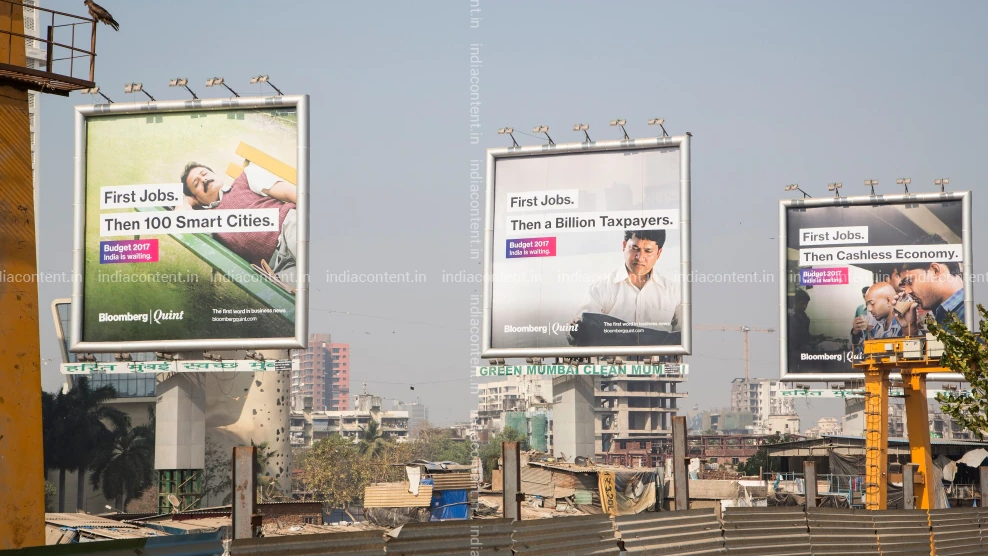
3. Andheri East West Link Road
This corridor links residential areas with commercial hubs and offices. Traffic congestion during peak hours makes it a high-impact hoarding location with over 40,000 vehicles passing daily.
Hoardings near junctions and signal-heavy stretches gain extended visibility, giving commuters 20 to 60 seconds to notice the message. The audience includes working professionals and daily commuters, making it ideal for brands targeting city professionals.
For brands seeking balanced reach across income segments, this is a reliable option for Mumbai hoarding sites.
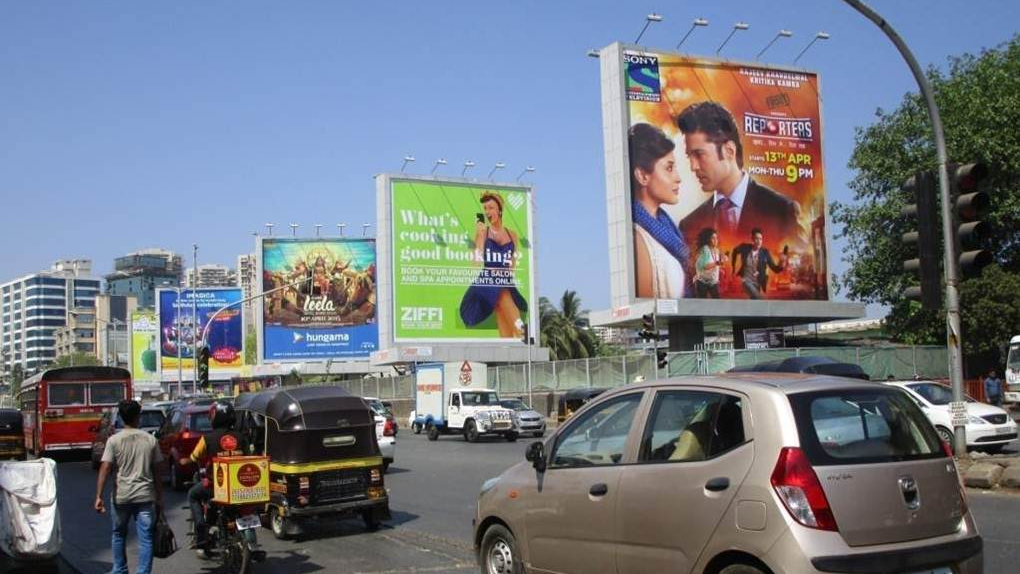
4. Lower Parel and Worli Stretch
Lower Parel and Worli represent the Mumbai commercial and lifestyle zones. These areas attract office goers, shoppers, and nightlife crowds.
Hoarding locations near malls, offices and arterial roads in this stretch deliver strong visibility on weekdays and weekends.
These locations are preferred by brands targeting urban consumers, helping to build aspirational brand recall.
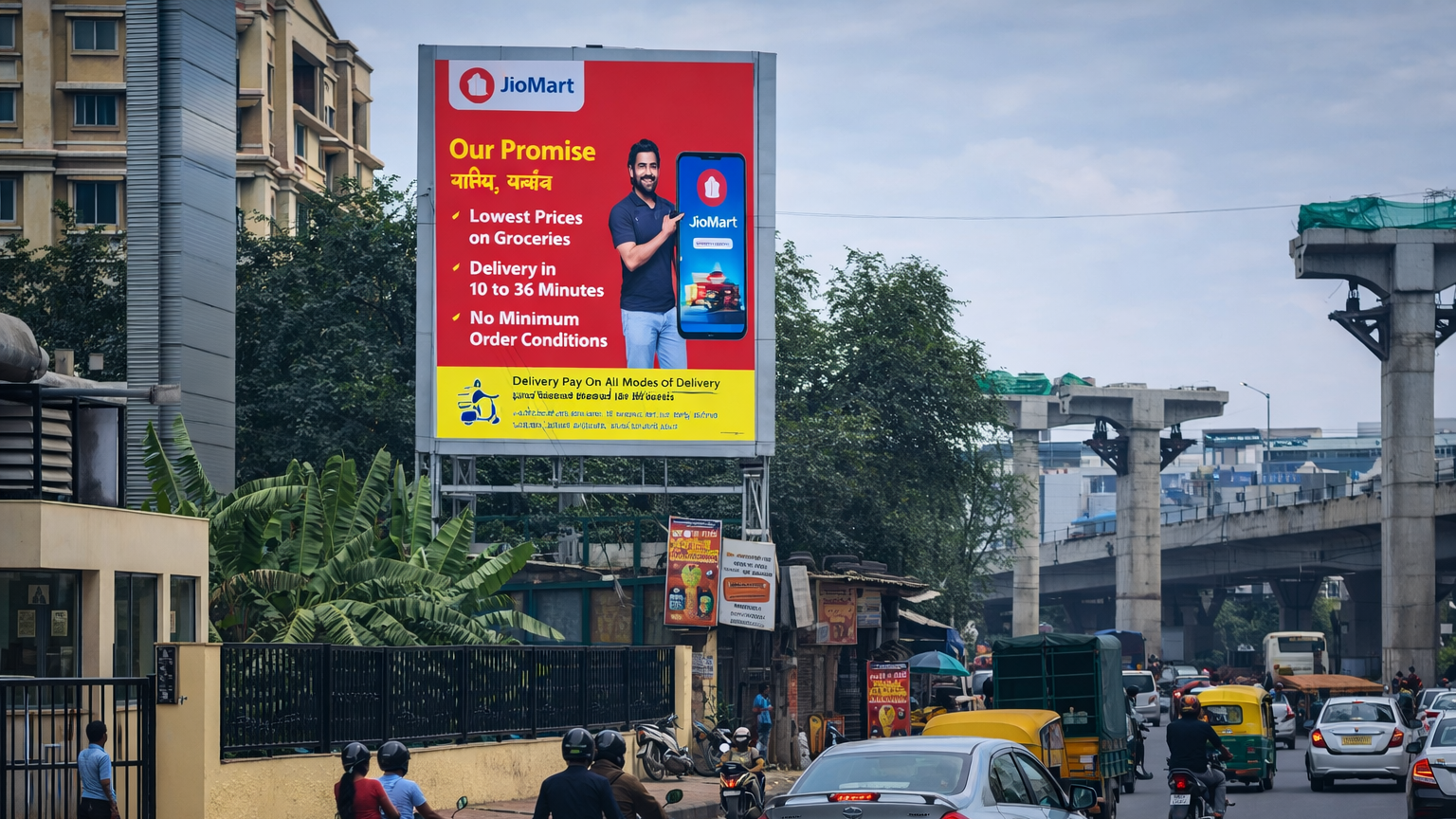
5. South Mumbai (Marine Drive, Churchgate, CST)
Hoarding locations in South Mumbai deliver long-term brand value. Areas like Marine Drive, Churchgate and CST see consistent pedestrian and vehicular movement, with over 30,000 daily footfall and 50,000+ vehicles passing by.
Hoardings benefit from iconic surroundings and longer attention spans during non peak hours.
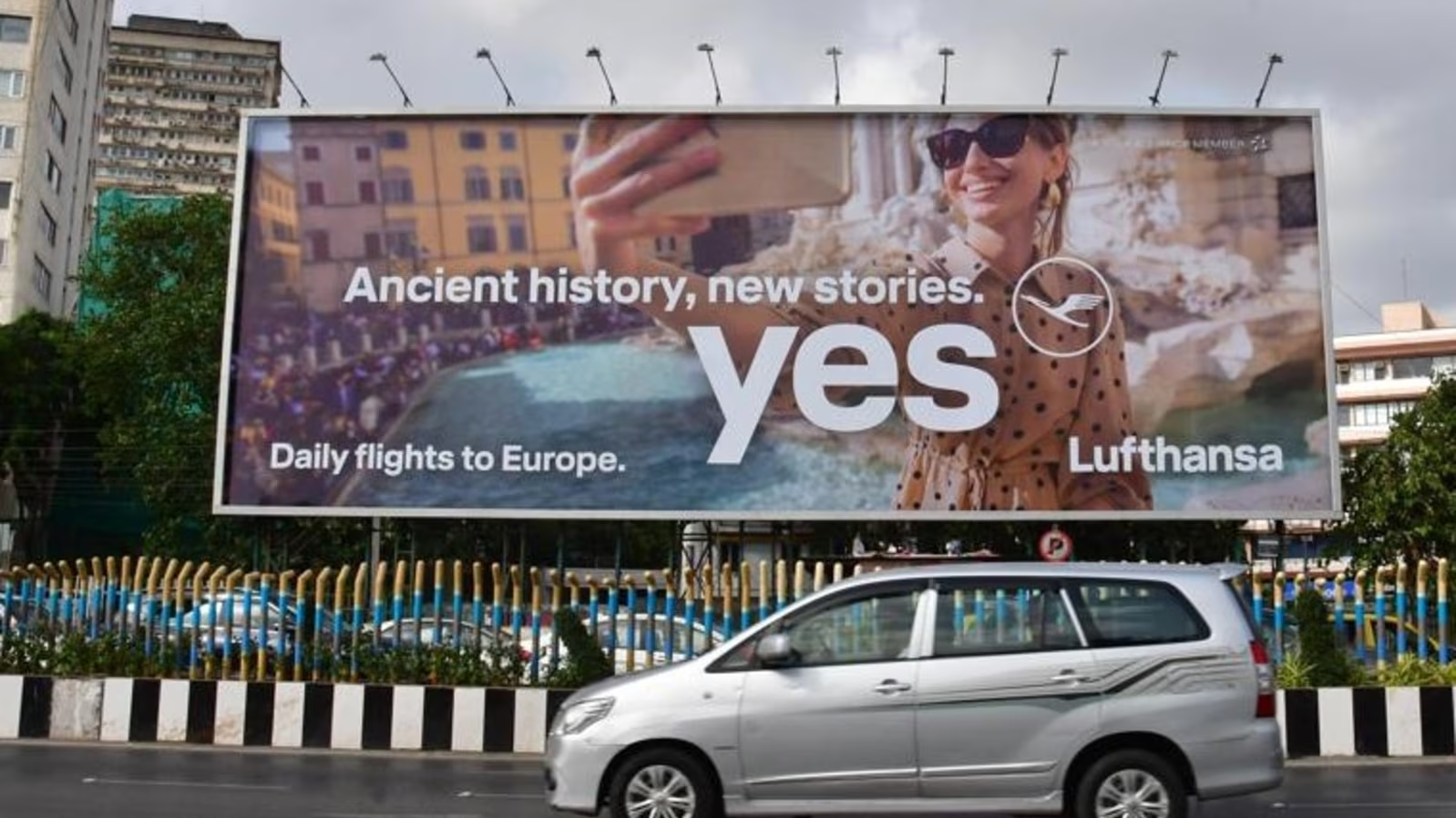
6. Jogeshwari Vikhroli Link Road (JVLR)
JVLR connects the western and eastern areas and handles over 60,000 vehicles daily with heavy cross-city traffic throughout the day.
Hoardings here benefit from slow-moving traffic during office hours, giving commuters 20 to 45 seconds of viewing time and boosting brand recall.
Brands for deep daily impressions across diverse audiences, JVLR is a strong hoarding location.
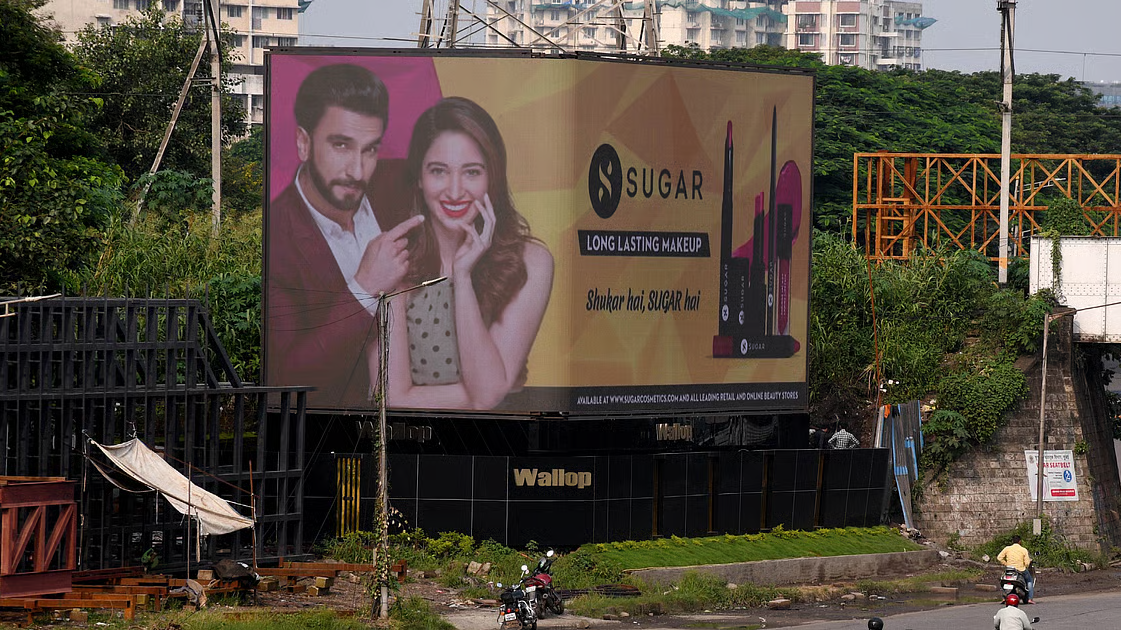
7. Goregaon and Malad Link Road
This area is surrounded by residential societies, IT parks, malls, and studios. It combines workday and weekend traffic effectively.
Hoarding locations in South Mumbai deliver long-term brand value. Areas like Marine Drive, Churchgate and CST see over 30,000 pedestrians and 50,000+ vehicles daily, ensuring constant exposure.
These hoardings are ideal for brands targeting urban professionals and premium audiences, helping build strong and lasting brand recall.
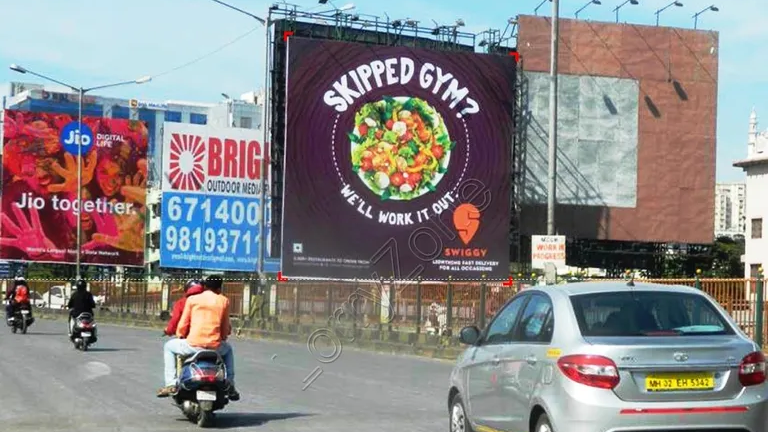
8. Eastern Express Highway
The Eastern Express Highway is a key transit corridor connecting central areas to South Mumbai, handling over 80,000 vehicles daily.
Hoardings near exits, flyovers and traffic junctions benefit from slower traffic movement, improving message clarity and recall for commuters.
For brands with western areas exposure, this is the top advertising location in Mumbai.
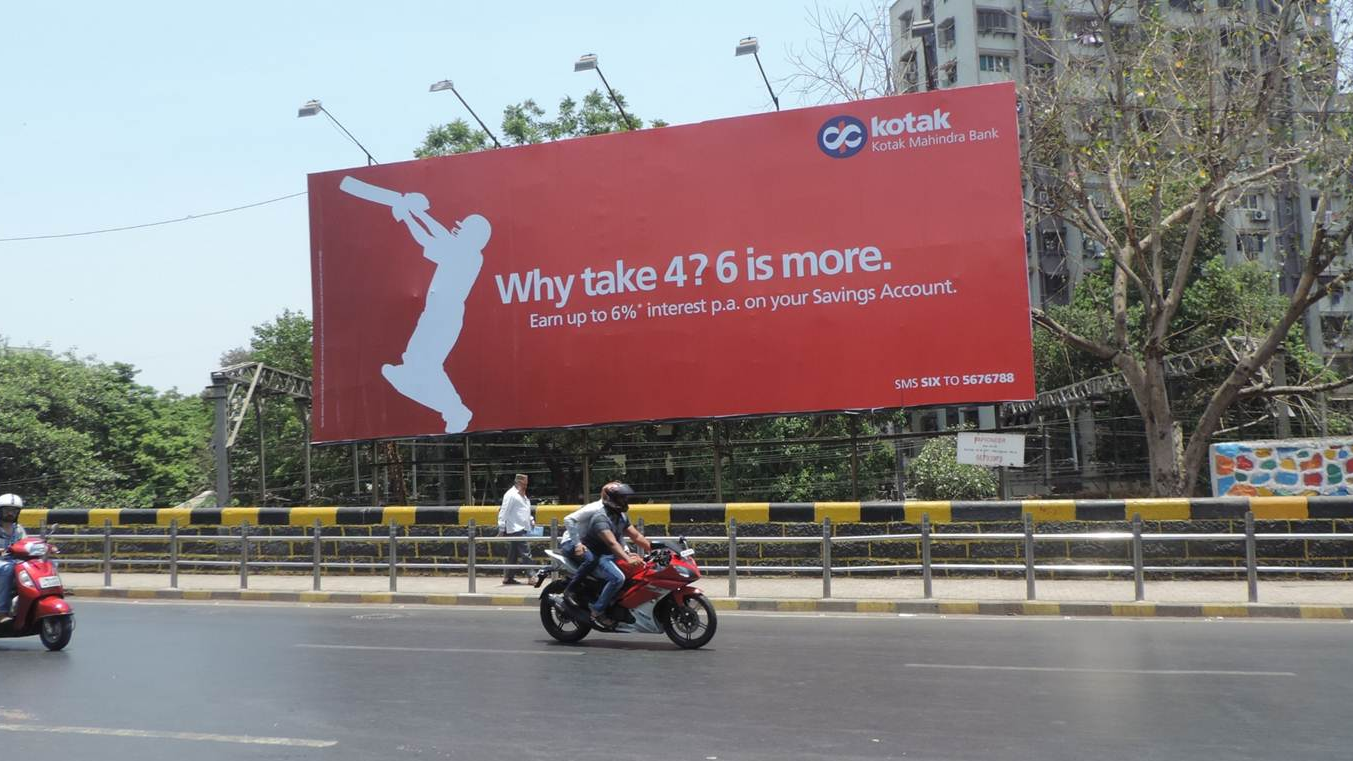
9. Near Railway Stations (Dadar, Andheri, Kurla)
Railway stations are daily convergence points for millions of commuters. Hoarding locations near station exits and approach roads see repeated exposure.
These locations benefit from pedestrian traffic, auto queues and signal stops, reaching over 25,000 people daily.
The audience is broad and diverse, making station-adjacent hoardings ideal for brands aiming for mass awareness in Mumbai.
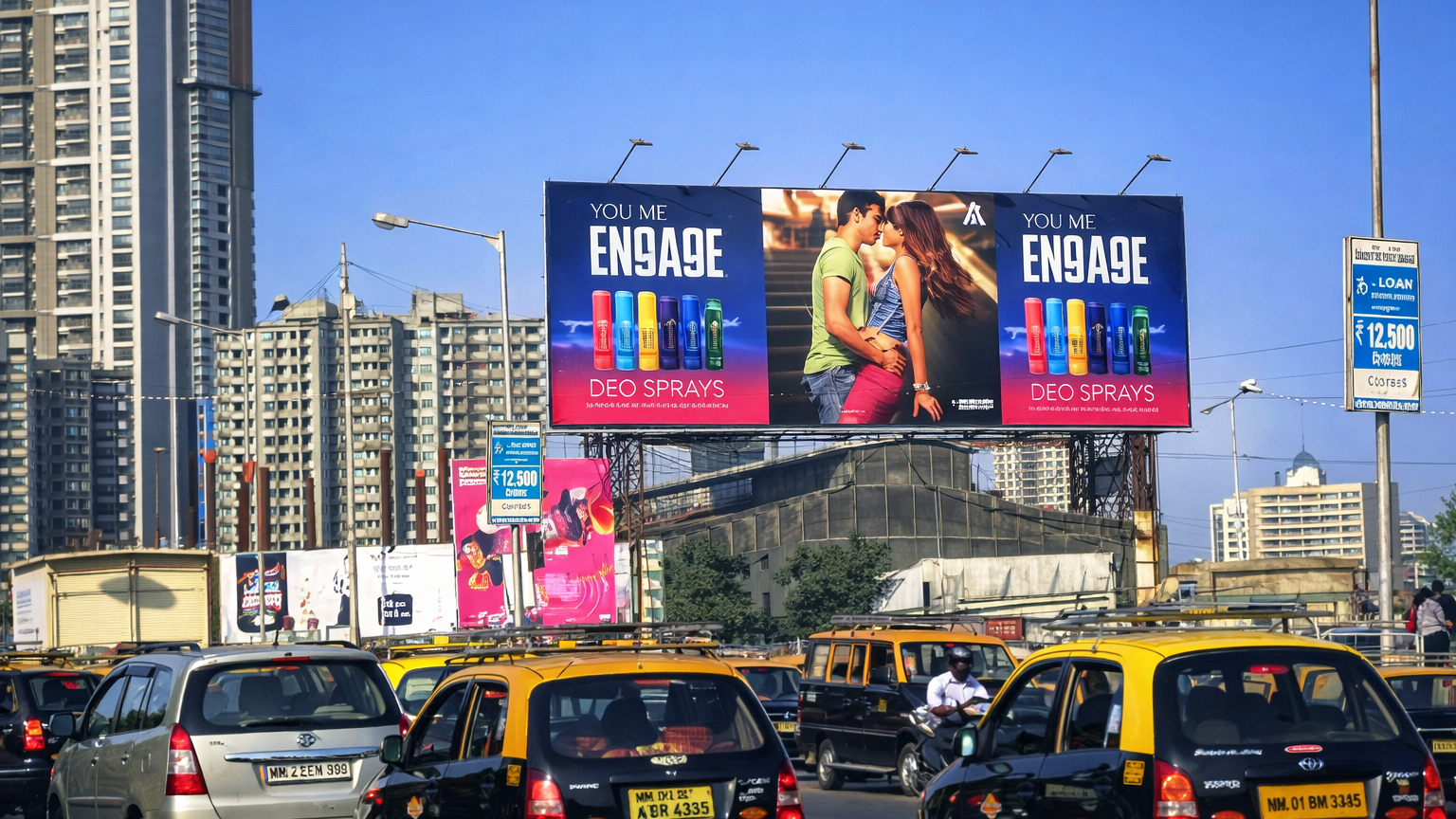
10. Major Flyover Junctions and Signal Intersections
Signal heavy intersections and flyover entry points create natural pauses in movement. This makes them effective hoarding locations.
Drivers and passengers have 10 to 45 seconds to notice, read and process messages at these locations. Effectiveness depends on clear design and strong visual contrast, which boosts attention and recall by up to 30 percent.
These hoardings are ideal for simple, bold brand messaging focused on high recall and quick recognition among commuters.
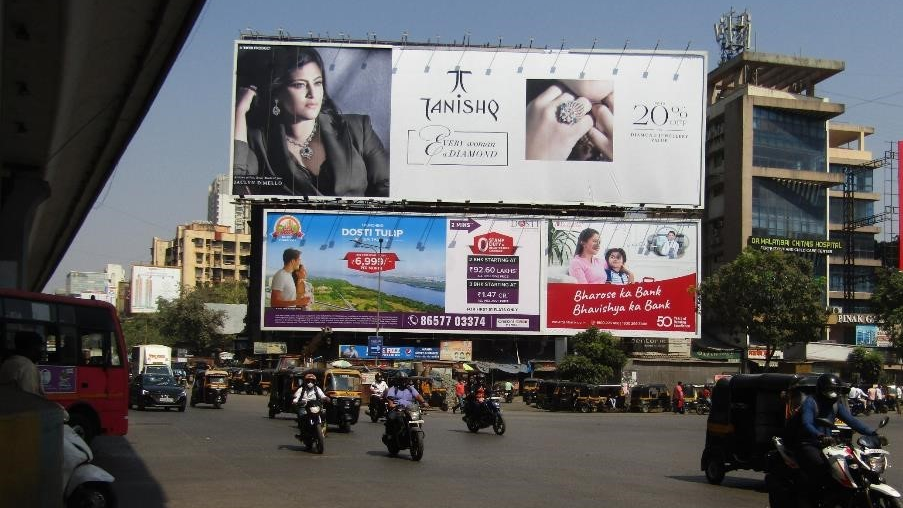
Why Hoarding Locations Matter More Than Hoarding Size
Many brands assume bigger hoardings mean better results, but location matters more than size. A well-placed hoarding at a traffic signal can outperform a larger one on a fast-moving road. Factors like visibility, angle, lighting and repetition play a key role in effectiveness.
Smart brands evaluate hoarding locations based on how people move, stop and wait to ensure their message reaches the right audience at the right time, boosting recall and engagement by up to 30%.
Outdoor advertising success in Mumbai depends on choosing the right hoarding locations. Effective placements consider traffic flow, audience behavior and viewing conditions to ensure maximum impact.
For brands planning outdoor campaigns, understanding Mumbai hoarding dynamics and selecting the right location delivers consistent daily impressions, helping messages stick.
Hoarding strategy starts by mapping where your audience travels and pauses, then identifying high-frequency locations that keep your brand visible, memorable and relevant in a highly competitive advertising market.
Why Choose Ginger Media Group for Affordable Marketing
Ginger Media helps startups execute affordable marketing campaigns with clarity, transparency and measurable results. With expertise across outdoor, transit, print and on-ground activations, the team delivers cost-effective solutions that generate real visibility without unnecessary spending.
From planning and execution to monitoring and reporting, Ginger Media ensures startups get maximum value from every offline campaign. By combining strategic media selection with strong on-ground execution, the agency enables brands to scale offline marketing efficiently and confidently.
]]>Ready to talk with a marketing expert?

A Pragmatic and innovative way to enthrall your target group is just a click away!
Get in Touch
Rukmini Knowledge Park, Kattigenahalli, SH 104, Srinivasa Nagar, Bengaluru, Karnataka 560064
+91-990 247 8800
contact@gingermediagroup.com
Popular in Television Advertising
Udaya TV AdvertisingSun TV AdvertisingStar Plus AdvertisingTV 9 AdvertisingZee TV AdvertisingNDTV India AdvertisingColors TV AdvertisingPopular in Airport Advertising
Spice Jet AdvertisingMumbai Airport AdvertisingDelhi Airport AdvertisingEmirites AdvertisingIndiGo Airlines Domestic India AdvertisingPopular in Newspaper Advertising
Deccan Herald AdvertisingPrajavani AdvertisingThe Hindu AdvertisingEconomic Times AdvertisingDainik Jagran AdvertisingHindustan Times AdvertisingPopular in Magazine Advertising
Forbes AdvertisingCosmopolitan AdvertisingBusiness World AdvertisingVogue Magazine AdvertisingPopular in Sports Advertising
IPL AdvertisingPopular in Outdoor Advertising
Billboard AdvertisingBus Shelter AdvertisingMetro Pillar AdvertisingUnipole Advertising© Ginger Media Group 2025. All Rights Reserved.