In NGO advertisements, the goal is to touch hearts and motivate people to make a positive impact. These ads aren’t just about sharing information; they tell stories that resonate with everyday folks, showcasing how even small acts of kindness can bring about significant change. When a person sees a child getting an education in these ads, it sparks a sense of hope.
A successful NGO communicates its mission clearly, ensuring everyone understands why it matters. It’s not just about throwing facts around; it’s about introducing the faces and stories behind the cause. By being transparent about how donations are used, the ad builds trust.
A powerful NGO ad goes beyond mere information; it weaves narratives that elicit empathy. It’s a call to action, an opportunity for individuals to play a role in creating a positive change, emphasising that even the smallest acts of kindness can have a profound impact.
The importance of NGO advertisement

NGO advertisements are crucial in raising awareness and support for social causes. These ads are powerful tools to communicate the organisation’s mission, prompting viewers to engage and contribute. Using simple language and compelling visuals, NGOs can effectively convey the urgency and significance of their work.
Furthermore, these ads serve as catalysts for social change by highlighting poverty, education, and healthcare issues. They inspire individuals to take action through donations, volunteering, or spreading the message. NGO advertisements also educate the public about the impact of their contributions, creating a ripple effect that extends beyond immediate support.
NGO advertisements are essential in building a compassionate and informed society where people are motivated to make a positive difference. By simplifying complex issues and making them relatable, these ads empower individuals to be part of a collective effort towards a better world.
What is the Impact of NGO Advertisements on People?
NGO advertisements are crucial in shaping public awareness and fostering social change. These messages often highlight pressing issues like poverty, education, and healthcare, urging people to contribute towards positive transformation. The impact of NGO advertisements on people is profound, as they catalyse empathy and action.
Firstly, these ads raise awareness by vividly depicting the challenges faced by marginalised communities, prompting viewers to empathise with the struggles of others. This emotional connection often translates into increased public support and donations.

Secondly, NGO advertisements inspire individuals to take action. By showcasing success stories and illustrating the impact of collective efforts, these ads motivate people to contribute time, resources, or expertise to charitable causes. NGO advertisements wield significant influence by enlightening the public about social issues and inspiring tangible contributions.
9 Steps to Create an NGO Advertisement that Will Inspire People to Donate or Volunteer!
Here are the 9 steps to create an NGO advertisement to inspire people to donate or volunteer!
Define Your Cause

In crafting an NGO advertisement to inspire people to donate or volunteer, the cause must be presented with clarity and passion. The first step involves identifying a compelling issue, such as environmental conservation, healthcare accessibility, or education for the underprivileged. Clearly articulate the problem and emphasise its impact on real lives.
Next, spotlight success stories or tangible outcomes from past donations or volunteer efforts. Showcasing positive change creates a sense of efficacy and encourages potential donors and volunteers to envision their impact.
Finally, create a compelling call to action stating how individuals can contribute or get involved. Whether through financial support or hands-on volunteering, provide easy-to-follow steps. Use a positive and hopeful tone, emphasising that every contribution, no matter how small, makes a meaningful difference.
Identify Target Audience

Identifying the target audience is a crucial first step to craft a compelling NGO advertisement inspiring donations and volunteers. The audience comprises individuals with shared values and interests aligning with the NGO’s mission. Understanding this demographic ensures the message resonates effectively.
For instance, if the NGO focuses on environmental conservation, the target audience could include environmentally conscious individuals. The ad should highlight the impact of their contribution towards a greener future. Alternatively, if the NGO aids underprivileged children, the target audience may be compassionate individuals passionate about child welfare.
By tailoring the message to the specific concerns and motivations of the audience, the NGO creates a more personal and persuasive appeal. A gateway to meaningful change lies open, awaiting the benevolent spirit of those eager to contribute.
The NGO beckons supporters to become the architects of transformation, extending an invitation to partake in the noble pursuit of philanthropy. Whether emphasising the tangible outcomes of their donations or the meaningful experiences gained through volunteering.
Compelling Visuals

Creating a compelling NGO advertisement that inspires people to donate or volunteer involves a strategic blend of imagery and messaging. To start, captivating visuals are key. Begin with a powerful image that evokes emotion, such as a smiling child benefiting from the NGO’s work. Next, employ vibrant colours to convey hope and positivity. A gateway to meaningful change lies open, awaiting the benevolent spirit of those eager to contribute.
Incorporate concise, impactful text that outlines the organisation’s mission and its positive impact on lives. Use simple language to ensure broad understanding. Highlight success stories to demonstrate the tangible outcomes of donations and volunteer efforts.
Employ a clear call-to-action, urging viewers to donate or volunteer. Utilise relatable images of volunteers in action to inspire trust and community involvement. Lastly, maintain a cohesive visual theme to reinforce the NGO’s identity. By combining emotive visuals with a straightforward message, the advertisement will resonate with viewers, encouraging them to contribute to a meaningful cause.
Tell Personal Stories
Crafting a compelling NGO advertisement that inspires people to donate or volunteer involves weaving personal stories that resonate emotionally. Begin by introducing relatable individuals whose lives have been positively impacted by the organisation.
Next, emphasise the collective impact achievable through donations or volunteer efforts. Illustrate how every contribution, big or small, is pivotal in changing lives. Donating or volunteering encourages viewers to envision themselves as part of the positive change.
Conclude with a call to action, urging viewers to be different and join the cause. Appeal to their sense of compassion and altruism. By incorporating personal stories, the advertisement becomes a powerful narrative that inspires empathy and motivates people to contribute to the NGO’s mission of making a lasting impact in the lives of those in need.
Mission Communication

A compelling NGO advertisement to inspire people to donate or volunteer involves a strategic blend of emotion and information. Begin with a captivating introduction that highlights the organisation’s mission and impact. Share real stories of individuals positively affected by the NGO’s work to create a personal connection.
Incorporate visuals such as heartwarming images or success stories to evoke empathy. Clearly outline the various ways people can get involved, whether through donations or volunteering and emphasise the collective impact of community support. Utilise a call-to-action that urges viewers to be part of the positive change.
End with gratitude and a sense of urgency, emphasising that every contribution, big or small, makes a meaningful impact. Keep the message concise, sincere, and relatable, encouraging viewers to join hands for a better tomorrow.
Call to Action
In altruism and societal betterment, a rallying cry echoes for collective action. A gateway to meaningful change lies open, awaiting the benevolent spirit of those eager to contribute. The NGO beckons supporters to become the architects of transformation, extending an invitation to partake in the noble pursuit of philanthropy.
Through financial contributions, individuals can weave the fabric of hope, stitching together a future enriched by compassion and opportunity. Simultaneously, the call extends to those willing to invest their time, embracing the role of active participants in the NGO’s endeavours. Volunteering becomes a conduit for societal synergy, where diverse talents converge for the greater good.
In this narrative of communal upliftment, the absence of personal pronouns does not dilute the essence of involvement; rather, it amplifies the universal appeal for collaboration in the service of humanity’s shared welfare. A silent nod to action resonates—engage, contribute, and collectively forge a legacy of positive impact.
Testimonials and Trust-Building

These heartfelt accounts, shared by those directly touched by the organisation’s benevolence, instil trust and inspire action. Picture Maria, a single mother, expressing gratitude for the educational support her child received, or John, a volunteer, narrating the transformative experiences during community outreach.
Such testimonials create an emotional connection, showcasing tangible results and the genuine impact of donations and volunteer efforts. Trust-building is paramount in fostering a supportive community. Highlighting success stories builds credibility, assuring potential donors and volunteers that their contributions make a tangible difference.
This advertisement weaves these testimonials seamlessly, inviting viewers to be part of a compassionate network that transforms lives. With shared stories and genuine voices, the NGO beckons individuals to join hands, emphasising that their involvement matters. Together, they can be the driving force behind positive change.
Highlight Impact

In crafting an impactful NGO advertisement, the crucial step lies in showcasing the tangible impacts of contributions. By highlighting the “Impact-Building” step, the narrative must vividly portray how donations or volunteer efforts directly transform lives. Illustrate success stories and real-world examples to make the impact relatable.
Use compelling visuals to emphasise the positive changes brought about by the NGO’s work, making it tangible for potential donors or volunteers. This step bridges the gap between intention and action, offering a clear path for individuals to see how their involvement translates into meaningful outcomes.
When people witness the direct influence of their support, they are more likely to feel inspired and motivated to contribute. Focusing on the Impact-Building step ensures that the advertisement resonates emotionally, driving a genuine connection and fostering a community committed to making a difference.
Follow-Up Information

A compelling NGO advertisement requires a thoughtful blend of emotion and information to inspire support. Begin with a captivating headline that highlights the organisation’s mission.
Incorporate concise, heartfelt language to evoke empathy and emphasise the urgency of the cause. Clearly outline how donations directly contribute to positive change and emphasise the simplicity of volunteering. Include a call to action, urging viewers to make a difference by donating or volunteering.
Utilise visuals effectively, such as before-and-after photos or success stories, to strengthen the message. End with a powerful slogan or tagline that encapsulates the NGO’s purpose. Through this approach, the advertisement will inspire individuals to contribute actively, fostering a shared responsibility for creating a better world.
Final Thoughts
In NGO advertising, empowering change is vital. Following these steps can craft compelling messages that inspire kindness, encouraging people to donate or volunteer. Remember, cause matters, know the audience, use impactful visuals, tell personal stories, communicate mission, provide a clear call to action, etc. Together, these steps create a powerful recipe for inspiring positive change and making a difference.
]]>In the marketing industry, billboard advertising is a towering presence, but understanding its expenses can be just as tall as the buildings themselves. Knowing how much money to spend on billboard advertising requires a thorough analysis that takes into account many different aspects.
Every component affects the total cost, from length and visibility to billboard size and location. We break down the many moving parts that make into billboard advertising cost in this extensive overview. Examine the changing landscape of expenses related to various billboard formats, from digital and mobile billboards to more conventional static displays.
Discover how geography affects prices and acquire knowledge about extra expenditures like manufacturing and design fees. Discover the meanings underlying the figures, arming yourself with information that will enable you to successfully negotiate the world of billboard advertising.
Whether you’re an entrepreneur looking for effective marketing methods or an academic interested in learning more about the complexities of advertising economics, this breakdown offers valuable information about the costs associated with this massive marketing medium.
How Much Does Billboard Advertising Cost?
The cost of billboard advertising in india can vary greatly based on a number of variables, including the location, size, length, and attractiveness of the area. Prices may be higher in large cities like Bangalore, Delhi, or Mumbai because of increased visibility and demand.
A approximate estimate would be thousands of rupees each month for larger, more prime locations in major cities, or a few thousand rupees per day for smaller billboards in less conspicuous locales. For precise and current pricing information, it’s usually preferable to get in touch with advertising agency or billboard firms directly in the area you’re interested in.
The approximate price range for a small, conventional billboard in a few major Indian cities is as follows: Tier 1 cities (like Bengaluru, Delhi, and Mumbai): ₹15,000 to ₹50,000 or more per month, contingent on visibility and location. Cities in Tier 2 (Pune, Hyderabad, Ahmedabad, etc.): ₹7,000 to ₹20,000
When You Should Consider Ads On Billboard
Whether or not to use billboard advertising depends on a number of criteria, most notably your campaign’s objectives and target demographic. Billboards are excellent at reaching a large audience and raising brand recognition.
Billboards are the most visible option when you want to make a big impression in a certain region. When introducing a new business, service, or product in an area that your target market frequents, take billboards into consideration.
Furthermore, the content of your statement is important. Your message can quickly capture the attention of onlookers if it is clear, powerful, and visually appealing. Consider employing billboards for ads that aim to quickly capture attention or that convey a memorable picture or statement.
The immediate impact of billboards is advantageous for seasonal advertising or messages that must be seen quickly, particularly during peak travel times. For example, advertising a limited-time deal or a holiday sale might draw attention and encourage action.
Additionally, billboards can strengthen brand presence when used in conjunction with a strong digital strategy. By incorporating QR codes or website connections, offline visibility can be turned into online interaction and sales by driving traffic to online platforms.
In the end, balance the expense of billboard advertising with its potential impact and reach. Billboards can be a potent addition to your advertising mix if your goals line up with their advantages, high visibility, instant effect, and geographic targeting.
Important Elements Of An Cost-Efficient Billboard Ads
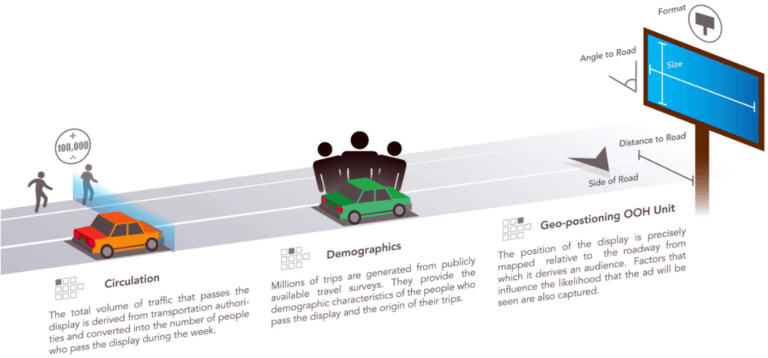
The price of a billboard advertisement might change depending on the sort of billboard you buy, its size, and your location. Advertising companies typically bill based on impressions, or the quantity of times a viewer views your advertisement. Billboard impressions are calculated using factors like population density, speed restrictions, and the time of day the advertisement is run.
A quote you receive may be expressed in terms of cost per mile, or CPM. An agency establishes an out-of-home rating (OOH) that includes the following information in order to calculate your CPM:
1. Demographics
Key information about the individuals most likely to see your advertisement is found in their demographics. The age, gender, and socioeconomic status of the persons commuting through the area are all considered demographics.
To place your billboard in front of the kind of clients you deal with, you might employ a demographic strategy. If you own a women’s apparel store, for instance, you may conduct research to determine a place where more women are likely to pass before investing in a billboard.
2. Strategic Timing

When it comes to billboard advertising, strategic timing is all about matching your campaign to times when your target audience is most responsive or engaged. Holidays, peak seasons, and occasions that inherently attract a larger audience are a few examples of this.
For example, advertising beachwear in the months before summer or holiday sales in the weeks before Christmas can greatly increase the impact of your billboard advertisements.
It’s critical to comprehend the behavioral patterns of your audience. Do you know which days of the week or what times of day they are more likely to be out and about? Optimising the display schedule to align with these periods of high traffic increases visibility and possible impact.
3. Digital Billboards
Digital billboards are a revolution in advertising because they provide quickly updated, targeted, dynamic, and visually appealing material. Because of its adaptability, numerous advertisements can rotate, increasing exposure and allowing for the inclusion of various messages in one place.
Additionally, they draw considerably more attention from onlookers than static billboards because of their capacity to show animations, films, or dynamic imagery. Real-time adjustments made possible by the digital format let advertisers customize their messaging according to the time of day, the weather, or regional events.
This adaptability improves relevance and raises the possibility of connecting with the target audience. Furthermore, digital billboards frequently give comprehensive metrics that provide insights into interaction and impressions, enabling improved ROI assessment and well-informed campaign decision-making.
4. Circulation
Traffic that is most likely to pass by your advertisement is known as circulation. Traffic authority information can be used to calculate circulation. They are able to supply the overall traffic volume at the site of your billboard.
Determining circulation aids in estimating your advertisement’s possible exposure. Traffic authorities can help estimate the number of people who are likely to observe the billboard by providing useful data on traffic volume specific to the place. When it comes to placing ads for optimal visibility and impact, this information is essential.
5. Impressions
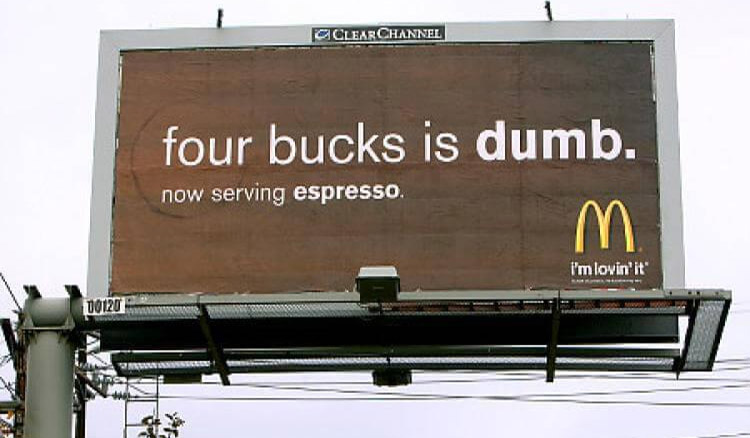
The estimated number of people who are expected to see the advertisement depends on the size, location, and even the speed restriction of the billboard. The impact of impressions on your billboard cost is significant. For instance, buying advertisements in crowded city districts is more expensive than doing so in rural areas..
Conclusion
Location, size, duration, visibility, and other factors all affect how much billboard advertising costs. When these components are broken down, a wide range becomes apparent, with costs drastically differing between areas and demographic groups.
Higher traffic and visibility in larger cities and great locations translate into higher charges. Similarly, because digital billboards are so dynamic and eye-catching, they frequently cost more.
In addition, the length of your campaign has a big impact on costs. Comparing longer campaigns to short-term leases, the monthly fees are usually higher. The manufacturing costs for the advertisement design also need to be taken into account, since they may have an effect on the total budget.
The possible return on investment (ROI) of billboard advertising is still very strong in spite of these factors. The costs can be justified by its capacity to reach a large audience, leave enduring impressions, and increase brand visibility.
Even though billboard advertising might have very different costs, its suitability for a given marketing strategy can be ascertained by carefully evaluating the objectives, target market, and available funds. In order to maximize the effectiveness of billboard advertising within a larger marketing strategy, it is imperative to balance the costs with the possible reach and impact.
Frequently Asked Questions
1. How Long Is A Billboard Advertisement Appropriate?
There is no set length of time that is appropriate for a billboard to be up. The answer will change based on your budget and the objectives of your marketing strategy. The majority of billboard campaigns run several months, however they usually remain up for at least four weeks.
2. Do Billboards Truly Make A Good Financial Investment?
Depending on where it is located, billboard rentals might range significantly in price. Nonetheless, the advantages of billboards and the quantity of prospective clients they introduce you to almost always outweigh the expense.
3. What Makes Certain Billboards So Expensive?
Real estate is essentially what a billboard is. The building in question is a standing one that symbolizes both capital investment and commercial potential, or the capacity to make a profit. Building and maintaining them is expensive.
4. Are Billboards a Necessity?
Businesses have a rare opportunity to connect with a wide variety of customers through billboards. Although there are other advertising tactics that may offer more focused advertising alternatives, billboards have the potential to reach individuals you were unaware of and who may be in need of your goods.
]]>Customers today require a consistent brand experience across all media. You can give your customers a seamless experience and earn their trust by combining your offline and online marketing activities.
The best part? By combining the benefits of traditional and online marketing activities, you can develop a more comprehensive marketing strategy that addresses the specific demands and preferences of your target audience. You may combine offline and online advertising in several ways to develop a truly effective marketing strategy. So, are you ready to take your marketing strategy to the next level? Let’s dive into how you can successfully integrate offline and online advertising for a multi-channel approach!
What are Offline Marketing and Online Marketing?
With the development of digital technology and the expansion of the internet, digital marketing has experienced a significant transformation over the past several decades. It is today primarily divided into two categories: offline marketing and online marketing.
The term “offline marketing,” which is also referred to as “traditional advertising,” refers to strategies like billboard and sign advertising, direct mail marketing, print advertisements in newspapers and magazines, and television and radio advertisements. These are marketing strategies that don’t rely on the internet or other modern technology. These approaches may seem outdated, but they nonetheless have a wide influence.
Online marketing, on the other hand, refers to a variety of strategies created especially for digital mediums. They include techniques including pay-per-click (PPC) advertising, social media marketing, email marketing, and search engine optimization (SEO). According to eMarketer, global spending on digital marketing is anticipated to reach $389 billion by 2021, which reflects the increasing popularity of online advertising.
What is the Difference Between Offline Marketing and Online Marketing?
While these two strategies have many things in common, there are also some significant differences that marketers need to be aware of. The following list contains 10 differences between offline and online marketing:
- Target audience: While online marketing can reach a worldwide audience, offline marketing typically targets a local demographic.
- Interaction: Unlike physical marketing, which frequently is one-way, online marketing allows for a two-way connection between firms and customers.
- Timing: Online marketing may be executed instantly, however, offline marketing can take longer to prepare and distribute.
- Flexibility: Online marketing can be quickly modified and updated, while offline marketing can be more challenging to change once it has been distributed.
- Personalization: Online marketing enables personalised communication with customers, while offline marketing is more on the generic side.
- Tracking: While offline marketing relies on more conventional monitoring techniques, online marketing enables real-time tracking of consumer behaviour and engagement.
All this being said, it is crucial to keep in mind that before curating a marketing strategy, organisations must clearly define their target market, budget limit, and objectives to make the most of their campaigns.
Why integrate Offline and Online Advertising For A Multi-Channel Approach
Both offline and online marketing have benefits and drawbacks, and the most successful marketing plans usually combine both. Building an effective marketing strategy that reaches your target audience and promotes business growth requires an understanding of the advantages and disadvantages of each strategy. Here we have mentioned some key reasons why companies today need to focus more on the multi-channel marketing approach:
- Creating a more impactful campaign: Businesses may develop a more impactful, comprehensive, and effective marketing plan that aids in the achievement of their corporate objectives by combining both traditional and digital marketing platforms.
- Reaching the audience of all age groups: Marketing campaigns that leverage both online media channels and offline tools reach a wider audience because they target both tech-savvy youngsters and the older generation who might not use the internet much.
- To maximize the return on investment (ROI): Purchase decisions are not solely influenced by marketing messaging or commercials. As a result, no single marketing channel can satisfy all needs. To maximise return on investment, a multi-channel strategy is required.
- To stand out from the competition: By offering a more holistic brand experience and taking into account the particular demands and preferences of their target audience, integrating both marketing tactics can help firms stand out from the competition.
- To conduct efficient monitoring and evaluation: Companies can acquire and analyse data from different sources to assess the efficacy of their marketing campaigns and make informed decisions regarding future plans.
How to Integrate Offline and Online Advertising For A Multi-Channel Approach?
Here are some effective strategies that can be used to effectively combine online and offline marketing activities:
Consistency is the key


Targeting customers through both offline and online marketing channels requires consistency. Regardless of the medium, consistent branding across all marketing initiatives helps people recognise your brand.
To make your brand instantly recognisable across both platforms, use the same typography and colour scheme. Make sure your website accurately reflects your physical presence and keep your branding and language uniform across both platforms. Consistent branding develops confidence among your target audience and encourages customers to purchase through both channels.
Run cross-channel campaigns


Cross-promotional strategies can undoubtedly improve results for your brand. Social media can be used, for instance, to increase the reach of a planned TV advertisement through countdowns, previews, or banner advertising.
Similar to online channels, offline ones like print advertisements might entice users to go to a particular landing page to collect contact information. Results can be maximised by offering value in the form of free digital resources.
Unify both marketing campaigns with the help of custom tracking URLs

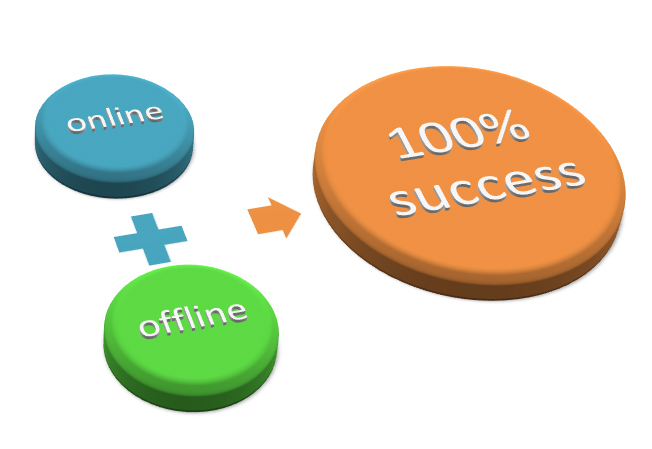
Combining offline advertising with online marketing has several benefits since it makes it possible to create a campaign that flows naturally between the two. Combining your offline and online marketing is effective when done using specific tracking URLs.
With the help of custom tracking URLs, marketers can easily link the two campaigns and track and examine user behaviour. Employ different URLs for different ad kinds, such as print, outdoor, and TV commercials, to make it simple to identify the approach that drives the most traffic and conversions.
Motivate your offline following to try online

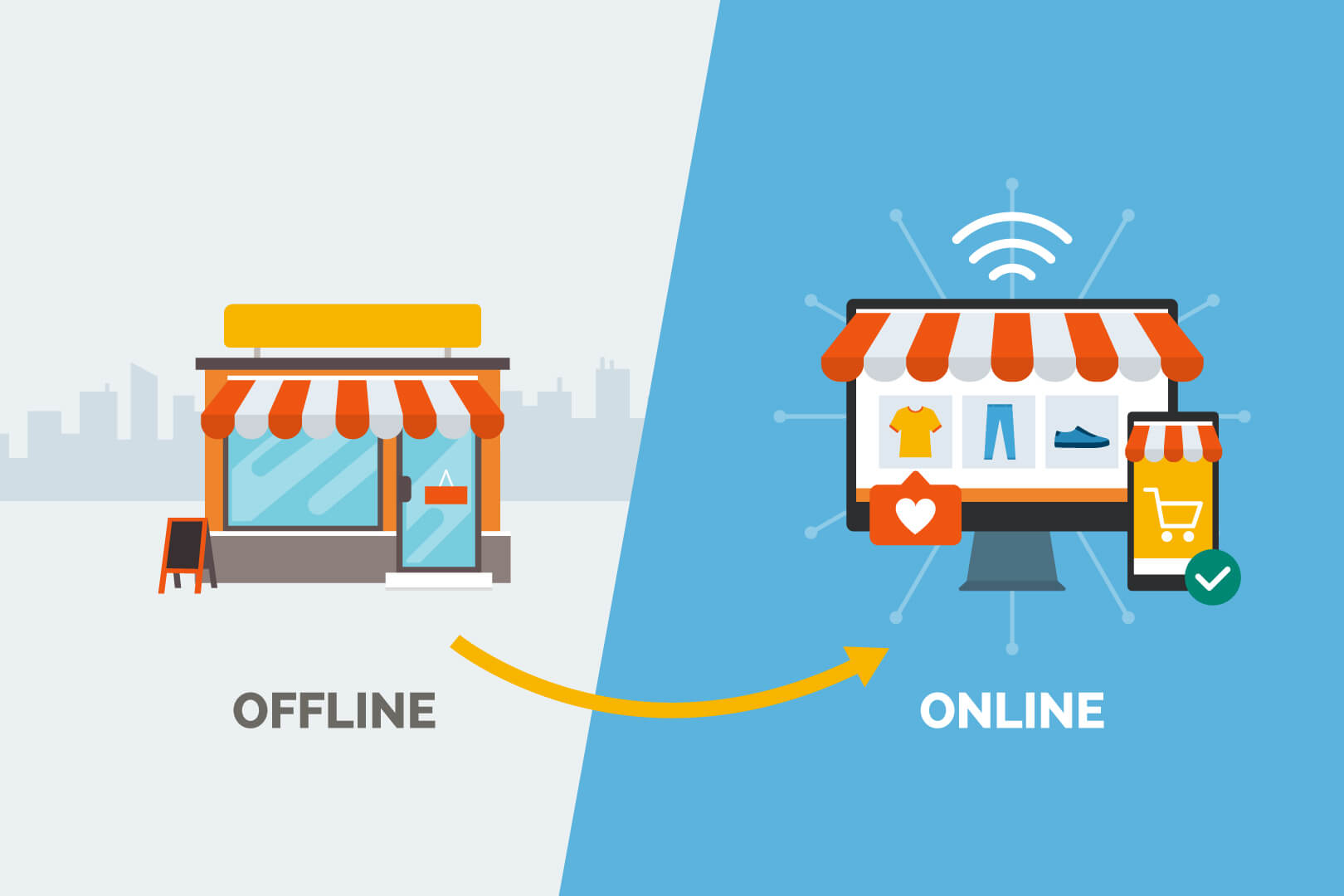
Ensure that your offline marketing integrates with your online strategy by providing information that directs people to your online channels. To improve engagement, add QR codes and links to your social media profiles on your printed ads. You can manage “real-life” leads more effectively by digitising them using internet solutions.
Add social network names and website URLs to receipts, and banners, and provide in-store discounts to those who interact with your business online to entice customers to interact with it online. This fosters connections and encourages continued participation.
Encourage your online customer base to take part in your next offline promotion


Use social media to interact with your audience to determine the ideal artwork for your print campaigns, events, or competitions. Make them feel like they are a part of your brand by collecting their opinions through online polls. To easily track the campaign’s progress, you can also build a direct mail campaign that implores your audience to post selfies on social media using certain hashtags.
For instance, when students posted selfies with their acceptance letters at Indiana University, the hashtag #IUsaidYes quickly became popular. Use this strategy for event visuals, posters, and other print materials.
Merge the data collected from both online and offline resources


To create a thorough customer profile and obtain insights into their journey, it’s essential to integrate your offline CRM data with your online analytics data. You may use this integrated data to guide your marketing strategy and develop targeted campaigns.
Separate departments that handle online and offline sales operations might create data barriers, which can result in cluttered communications and less effective marketing. These bottlenecks are eliminated by centrally storing all client data, which also makes it possible to identify actions that generate income and provide a uniform customer experience.
You may combine your offline and online advertising efforts using these clever tactics to develop a multi-channel strategy that reaches a larger audience and produces results for your company.
Some Successful Campaigns By Brands That Leveraged The Multi-Channel Approach
- Vivo V23 campaign:


The Vivo V23 series campaign was able to successfully combine offline and online marketing efforts by enlisting the help of social media influencers and users to post selfies and stories utilising real-time location-based Instagram on Tagtalk at renowned bars and cafés. It became a viral campaign when the most popular brand hashtag posts were aired live on Street DOOH in strategic areas. Vivo also gave out discount coupons to the participants.
- Myntra EORS campaign:


To reach a larger audience, Myntra EORS (End of Reason Sale) uses a multi-channel marketing strategy. To create excitement before the sale, they make use of social media sites like Instagram. They advertise deals and offers during the sale using a variety of platforms, such as print ads and TV advertising. After the sale, they keep clients interested and encourage repeat business by using email and SMS marketing. This holistic approach assures maximum reach and engagement.
- JioSaavn “We are India” campaign:


The “We Are India” marketing campaign from JioSaavn celebrated India’s rich musical heritage through a multi-channel marketing strategy. The campaign featured billboards in major cities, social media advertisements, a music video with well-known Indian musicians, and even an augmented reality experience in shopping centres. This initiative helped JioSaavn establish itself as a dominant player in the Indian music streaming business.
- Cadbbury “Kuch Meetha Ho Jaye” campaign:


Cadbury’s multi-channel marketing campaign in India, “Kuch Achha Ho Jaaye, Kuch Meetha Ho Jaaye” aimed to present Cadbury as a brand that celebrates good times and happiness. The campaign was launched across various media channels, including TV, digital, print, and outdoor. In order to communicate with its audience and motivate them to share their happy moments, Cadbury also collaborated with well-known social media influencers and launched interactive contests.
The Bottom Line
An efficient marketing plan may be developed by combining offline and internet advertising to assist companies to connect with their intended consumers. At the same time, they can provide useful data insights to enhance campaigns and spur company growth. Hence, whether you run a little business or a major organisation, combining offline and internet advertising can help you advance your marketing plan and accomplish your company goals.
]]>In comparison to TV, radio, and print, outdoor advertising generates 4 times more online engagement per dollar invested, claims a report by the Outdoor Advertising Association of America. This is due to the fact that offline branding activities, such as billboards and posters, can target a variety of populations in a certain area.
But it’s not simply about getting in front of as many people as you can. Reaching the right audience is important. By doing so, you can make the most of your marketing budget and achieve better results. In this article, we’ll explore the importance of location and demographic targeting in offline advertising and how it can benefit your business.
What is Offline Advertising?


Have you ever seen a billboard while driving down the highway or received a flyer in your mailbox? If so, you’ve been exposed to the realm of offline branding. Any marketing effort executed offline, such as billboards, posters, print ads, and even television commercials, is referred to as offline advertising.
Businesses can reach a larger audience, including individuals who might not spend a lot of time online. Also, it can be challenging to establish familiarity and trust through online advertising alone, but seeing a physical advertisement in the real world can help. The ability of offline advertising to forge a more intimate bond between the customer and the business is one of its main advantages.
Offline advertising comes in a variety of formats, each with special advantages. In high-traffic locations, billboards and posters can be useful for reaching a large audience. Newspaper and magazine print ads may be aimed at a specific audience, such as an age range or area of interest. TV ads have the potential to stick in people’s minds and increase brand recognition. Hence, when developing your marketing strategy, don’t undervalue the effectiveness of location targeting in offline advertising!
How to Target Audience Based on Location and Demographic Basis

Your offline marketing strategies may be more successful if you target your audience according to their region and demographics. Using this technique you might design more effective advertising campaigns and improve your chances of reaching your ideal clients.
Here are some pointers on how to go about it:
- Carry out comprehensive market research: To identify service gaps that your product can solve, look at the market research for your sector. Focus more on your product’s distinct value after looking at trends for comparable items to determine where others are putting their efforts.
- Get feedback from your clients: Making wise choices regarding where and how to advertise can be aided by having a thorough understanding of your target audience and their activity patterns. This can be efficiently carried out with the help of customer feedback surveys and forms.
- Examine the target audience of your competitors: Checking at competitors to find out who they frequently sell to and how they approach it may teach advertisers a lot about their target audience.
- Create different customer segments: A customer profile gives a brief description of your ideal customer, including their demographics, interests, key concerns, and purchasing patterns. Using this data will enable you to generate psychographic information, which will reveal the products and brands that your clients value the most.
The Importance of Location and Demographic Targeting in Offline Advertising
For companies trying to get the most out of their offline advertising campaigns, location and demographic targeting in offline advertising can be a game-changer. These are 6 reasons why location and demographic targeting are essential for effective offline advertising.
Boosting the conversion rates


Targeting based on location and demographics can dramatically increase offline advertising’s conversion rates. The possibility of conversion can rise as a result of increased engagement and attention from prospective customers. Businesses can maximise their advertising effectiveness and return on investment (ROI) and raise profits and business success by choosing the appropriate locations and audiences.
The fast food restaurant giant McDonald’s is a fantastic example of this, as it employs location-based billboards to advertise its goods and provide localised promotions to customers in particular locations. McDonald’s reported higher sales and foot traffic in the locations where the billboards were put, demonstrating the great success of this strategy.
Saving bucks on marketing expenses


Businesses can reduce their marketing expenditures by using location and demographic targeting in offline advertising. Businesses can save money on advertising by focusing on specific areas and demographic groups that are likely to be interested in their goods and services. As a result, advertising budgets may be used more effectively, and ROI will increase.
Targeted advertising also enables companies to develop more individualised and meaningful advertising messages that are more likely to catch the attention of their target audience and increase the number of conversions and engagement. Businesses may optimise their advertising spend and obtain better results by generally opting for high-traffic areas for their offline advertising campaigns.
Improving customer experience


By offering clients relevant and individualised experiences based on their unique requirements and preferences, location and demographic targeting can dramatically enhance the customer experience. Businesses can provide location-based promotions, localised information, and personalised recommendations that are catered to the customer’s particular needs by targeting clients in particular regions.
Additionally, demographic targeting in offline advertising enables companies to comprehend spending patterns and consumer behaviours, which enables them to create more specialised marketing campaigns that speak to their particular requirements and interests. By giving customers a seamless and pleasurable experience that caters to their specific needs, this strategy enables organisations to increase customer engagement and forge positive connections with them.
Increasing foot traffic and sales


By deploying targeted offline marketing like billboards, fliers, and limited-time offers to consumers in their area, location-based marketing can assist businesses in increasing foot traffic and sales. This is especially helpful for establishments that depend on foot traffic, such as eateries, shops, and entertainment venues.
For instance, a restaurant may advertise a complimentary snack to guests using printed flyers and distribute them to people who are within a specific distance of their location. Customers may be persuaded to go to the restaurant as a result, which may result in a sale.
Gathering valuable insights and feedback

Targeting clients based on their location and demographics is an effective way to gain insightful feedback from them. Consumer preference for individualised shopping experiences is high—73%, according to a Deloitte study—and firms may meet this demand with the use of demographic targeting. Additionally, location targeting can yield important information because, according to a Verve analysis, 80% of consumers are more inclined to make a purchase from a company that runs location-based campaigns.
Businesses may make data-driven decisions that boost customer loyalty, customer satisfaction, and revenue growth by acquiring insights and feedback from certain consumer base segments. Also, it can be successfully applied in the creation of marketing plans and the curation of client interaction programmes.
Creating a competitive advantage

Through offline advertising, firms can get a competitive edge by using location and demographic targeting. Businesses can beat their rivals and capture a larger portion of the market by sending more potent advertising messages to specified demographics and places. A Posterscope analysis claims that location-based out-of-home advertising can raise brand awareness by up to 45% and ad recall by up to 58%.
Nike’s “You Can’t Stop Us” advertising campaign is a wonderful illustration of this; it targeted urban athletes and fitness enthusiasts by placing billboards in highly frequented locations like gyms and sports training facilities. Nike was able to enhance sales and brand recognition among its target market thanks to this method.
Key Takeaways
In today’s noisy digital world, don’t undervalue the effectiveness of offline advertising. Even if online advertising has grown in popularity recently, offline advertising still has a lot of value. Successful offline marketing campaigns must focus on location and demographic targeting. You may enhance the success of your marketing efforts by knowing your target audience and contacting them where they are. So, go ahead and take advantage of location-based advertising and see how it can help your business grow and revenues skyrocket!
]]>Have you ever gotten stuck in traffic and seen an eye-catcher plastered on a bus, subway, or taxi? You probably have already encountered transit media advertising. Such ads catch your attention in high-traffic areas and brand the product in front of commuters daily.
This article will go into detailed coverage of transit media advertising, examine why it is among the top choices for many brands, and give you ten thrilling reasons to consider it for your business in 2024.
What Do You Mean By Transit Media Advertising?
On transit media, advertisements are attached to public transport vehicles, within buses and subways, and even at transportation terminals. Such types of outdoor media are based on the mass appeal and accessibility of public transport, hence reaching broader audiences. Whether it is a side-plastered bus or a subway car advertisement, these ads capture people’s attention while commuting, sightseeing, or walking.
Key Features of Transit Media Advertising
- Visibility: Transit advertisements can quickly reach a broad audience of commuters and pedestrians.
- Mass Exposure: These ads reach people from all walks of life who travel or cross by public transport.
- Frequency: Commuters view these ads several times during the day, thus reinforcing the brand message.
- Cost-effective: Transit advertisements provide high exposure with minimal price tags in comparison with other modes of advertising.
Transit media advertising is quite effective in bustling cities. So many people pass through public transportation – like bus stations and routes – daily. Thus, besides other advantages, it’s easy to contact enormous crowds of commuters with transit media advertising.
Key Benefits:
- Captive Audience: Unlike other media, captive audiences look at all the advertisements on transit media. People in the waiting category are also more likely to view these ads.
- Strategic Placement: Under transit advertising, the placement can be very flexible to the brands. Brands can target specific neighborhoods and routes and even a particular demographic segment.
- Creative Options: Large formats and dramatic large designs can be used across buses and trains and even on the platforms of stations.
Leading Brands Opting for Transit Media Advertising
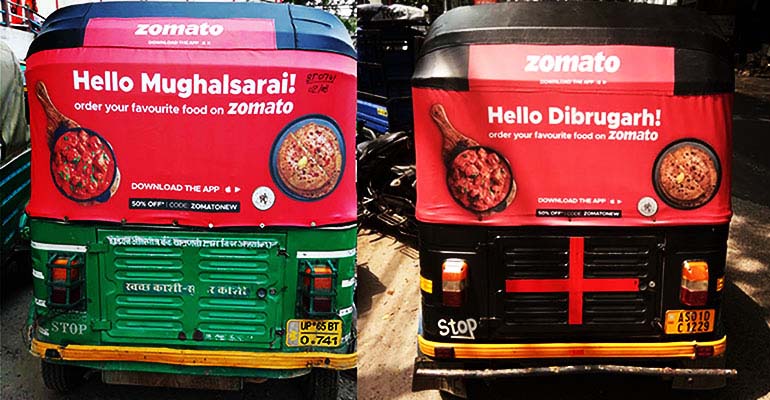
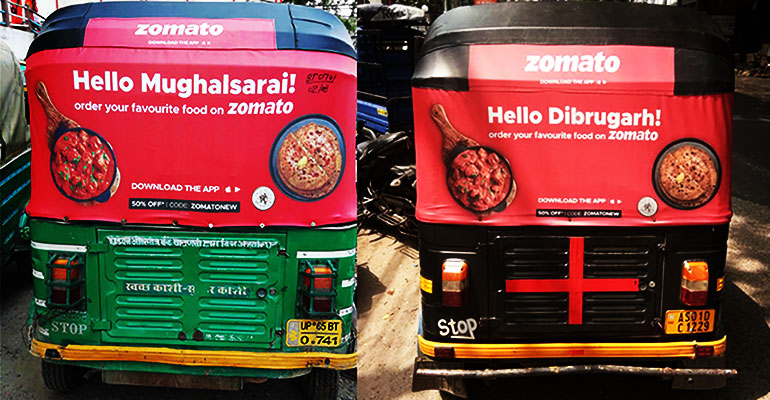
Many top brands have discovered the power of transit media advertising. Whether a small business is looking to expand its local wing or an international brand making a powerful statement, sticking to transit media usually brings about consequential results. Amongst others are always Coca-Cola, McDonald’s, and Apple, but not only big players; many local businesses, startups, and nonprofits are also tapping into transit media.
Why Brands Prefer Transit Media:
- Reach Multi-Billion-Dollar Audiences: People traveling through public transport belong to all classes of society, making this a great way to reach out to many different groups.
- Increase Brand Awareness: Passengers traveling by public transport often are exposed to the ads several times, thus giving a greater chance of a customer recalling the brand name.
- Cost-Effective: Transit advertising is a marketing move that allows significant income generation even with minimum expenditure. Transit media is cost-friendly for a business, be it large or small.
Some of the great campaigns are as follows:
- McDonald’s Bus Wraps: McDonald’s uses bus wraps to promote its new menu items. Bright colors and strong graphics ensured the ad was noticed in traffic, making the brand immediately visible.
- Apple’s iPhone Ad: Apple used subway ads to communicate its newest camera features with the iPhone. The perfect target crowd for this ad is the technologically astute commuter who uses public transportation frequently.
- Starbucks’ Transit Ads: Starbucks has used transit ads to promote seasonal drinks. The image of hot coffee during cold winter mornings is the perfect fit for morning commuters who desire a hot drink.
10 Top Reasons for Transit Media Advertising 2024
Now that you know what transit media advertising is, let’s dive into the 10 top reasons why it’s a must-try strategy in 2024.
More Time Exposure


One spends their fair share of time commuting on public transport. Research suggests that the average commuter travels on public transport for about 45 minutes daily. The higher the exposure, the higher the chances of an ad being seen multiple times in a commute cycle, thereby making the ad memorable.
Why It Matters:
- The more time a person is exposed to the ad, the greater the possibility of their remembering it.
- The same advertisement a commuter sees every day reflects that there will be a repetition of brand recall.
- As time progresses with further exposure, more people will eventually interact because of familiarizing themselves with the brand.
Effective Geographical Coverage


One of the key advantages of using transit media advertising is that it encompasses a large geographic area. Unlike a static billboard, which stands in one place for a long time, transit ads move across various neighborhoods and districts, thus exposing your brand to many people.
Benefits of Geographical Coverage:
- Reach a Large Number of People: You can reach people spread all over the city by taking up transit advertisements.
- Localized Advertising: You can target specific routes to suit your desired audience based on their daily commute pattern.
- Many Points of Impressions: The same billboard is seen by the same consumer in different city locations, creating top-of-the-mind brand awareness.
Cost-Effectiveness


Transit advertising is highly cost-efficient compared to other OOH ad forms, such as hoardings or television commercials. This factor makes it economical for business entities with small budgets.
Why Transit Ads Are Cost-Effective:
- Value for Money: Transit ads offer the highest exposure at a fraction of what other media charges.
- Extreme ROI for the level of exposure: For small businesses, it is very ROI-friendly.
- Scalable: Start with a small campaign on a few buses and scale up as you need more.
Targeted Marketing

Transit media advertising is perfect if your goal is to reach a particular audience. You can advertise specific routes targeting commuters based on which part of town they live, how much money they make, or their specific interests.
Benefits of Targeted Marketing:
- Demographic Targeting: You can target the ad to students, professionals, or families.
- Route-Based Advertisement: Target the ad specifically on routes, especially along which the transit passes through residential areas of targeted customers or by working places.
- Localized Message: Create messages that talk to and respond to the needs of people in a given location.
Flexibility in Advertising


Transit media marketing offers a much more significant scope for the advertising campaign’s size, location, and time frame. You can execute a whole bus wrap, put posters in stations, advertise in digital form inside the vehicles, or small ads on taxi rooftops.
Why Transit Ads Are Flexible:
- Format Options: They come in all shapes and sizes – from big bus wraps to small posters inside subway cars.
- Creative Freedom: The canvas for creative experiments with graphics, Text, and colours.
- Flexible Campaigns: Transit ads can turn quickly or be changed to suit the changing nature of the market or new product launches.
Inescapable for Commuters
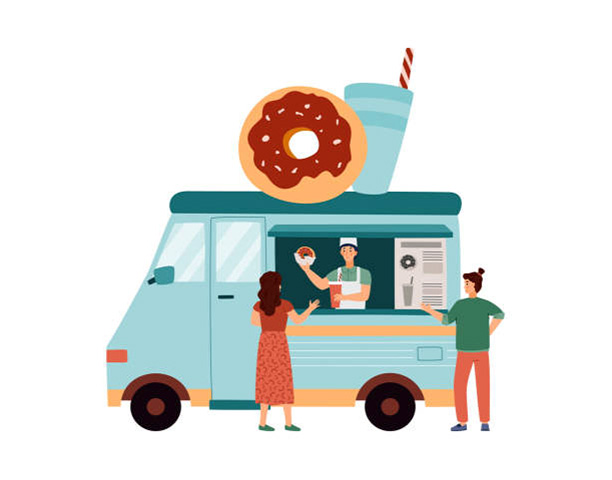

Transit ads must be noticed. Unlike other media where users might skip or fast-forward an ad, the transit ad cannot be evaded. Commuters tend to look for something to concentrate on, thus engaging with the ad.
Critical Points of Captive Audience:
- Captive Audience: The commuters with very little distraction will likely notice the ad.
- High Attention Rates: Studies show that the attention rates in transit ads are higher than recorded for digital ads.
- Repeated Exposure: Commuters are exposed to the same ads daily through their daily routines.
Creative Freedom


Transit ads give complete creative freedom to brands. Brands can opt for innovative designs, bright colors, and attractive content to attract the attention of commuters. The more an ad is appealing, the more it will remind commuters.
Why Creative Freedom Matters:
- Creative Pliability: Transit ads allow brands and marketers to imagine out of the box and create visually scintillating campaigns.
- Movement, Color, and Innovative Layouts: Execute movement, colorful, and innovative layouts to attract attention.
- Memorable Messages: Creative transit ads can remain engraved in commuters’ minds long after reaching their destination.
Lasting Impressions


Transit ads take time to be seen, which allows businesses to make a long-lasting impression. Since commuters travel a lot, transit ads can build better brand recall.
Lasting Impressions Benefits:
- Constant Brand Presence: Ads stay long enough to build lasting impressions among travelers.
- Higher Recall Rates: Due to the repetition of exposure, there is always higher brand recall from transit ads.
- Saturation with Regularity: The more a person views the same ad on a daily commute, the higher the rate at which they will ultimately act on the advert.
Social Proof for Branding
When people see ads on public transportation, there’s a specific validation that comes from it. For example, ads on taxis, buses, and train stations make the product appear legitimate and reliable.
Social Proof Branding Benefits:
- Trust Factor: If a brand is visible at multiple points in the city, it strengthens trust in commuters’ minds.
- Create Popularity: Seeing the product displayed in multiple spots reflects that the brand is well-known and widely appreciated.
- Strengthen Branding: It provides recognition and strengthens the company’s overall image.
Versatile Audience
Transit ads can target multiple groups of people at the same time, reaching every demographic through comprehensive commuter coverage.
Benefits of Targeting Versatile Audiences:
- Broad Audience Reach: Reaches every segment of society regardless of age, profession, or lifestyle.
- From Youngsters to Elders: Transit media appeals to everyone, including children, adults, students, professionals, and retirees.
- Multi-Demographic Campaigns: This allows the brand to create campaigns targeting various demographics.
Final Thoughts
Transit media marketing is a major tool for ensuring brand visibility in 2024. As a marketer, utilizing such a vast spectrum can make your brand stand out while providing a cost-effective solution to grow your business. Try transit media marketing today if you’re considering expanding your advertising reach.
Key Takeaways:
- High Exposure: Transit ads get a lot of eyes due to their positioning in public spaces.
- Cost-Effective: With low costs compared to other mediums, transit media offers value.
- Targeted Campaigns: Advertisers can reach specific demographics through route targeting.
- Lasting Impressions: These ads leave a strong recall due to repetition and audience engagement.
- Versatile Reach: Transit ads appeal to a wide variety of people, making them ideal for broad campaigns.
In this article, we are going to discuss in detail radio advertising, which comprises its types, advantages, and disadvantages, best practices, and more.
Why Use Radio Advertising?

Radio advertising is one of the most exciting options in the market today for these reasons:
- Emotional Appeal
The radio experience definitely triggers deep feelings and connections for listeners. The voice of humans and every other sound can create vivid pictures that move more with words instead. - Versatile Targeting of Audiences
Different stations are engineered to appeal to various audiences and interests. Tones or advertising messages can also be targeted so as to reach an ideal target audience, from local communities to niche markets. - Flexibility of Time and Content
Radio offers versatility in the scheduling and content of the ads. Different timeslots and program types are available, allowing businesses to choose an option that works well with their campaign goals and budget. - Cost-Effective
Compared to other forms of media, radio advertising often proves a more affordable alternative. Advertisers can attain substantial reach without television or print costs for production and airtime. - Involved Listeners
People are often more cognitively involved when listening to the radio compared with other media forms. Such involvement may result in higher recall for brands and action by consumers.
Radio advertisement is more than putting a message on air; it reaches out to the audience in such a manner that they feel and think.
Types of Radio Advertising
There are various forms of radio ads, and these help allow brands to effectively engage with listeners. There are several common forms of radio advertising, including:
Jingle
A jingle is that particular, catchy tune that one always associated with a brand’s message. The short songs help build an everlasting relationship between the audience and the brand since the hook or tagline will always be in the listener’s head.
Time Check
Time checks are those short lines within ads announcing the time to the listener. They play a dual role: informing listeners about the current time, while subtly telling them about the brand.
Sponsorship by Radio
Brands can sponsor specific radio shows or programs. With such an association, brands can align themselves with content that might be relevant for that target audience. It’s a type of advertisement where credentials are also gained because the brand is associated with popular shows.
RJ Mentions
Radio jockeys (RJs) can talk about products or services while delivering their programs. It lends it an added human element to the ad. The RJ endorsement can, thus, increase trust and possibly have an enhanced consumer relationship, thus making the ad much more impactful.
Live Reads
Live reads are spontaneous references to products or services by the RJ during the show. In this way, it provides the feel of a sense of urgency and authenticity because listeners perceive that it is part of the conversation.
Each one of them serves the purpose of grabbing the attention of the audience by allowing the brands to bring to the fore and craft messages more profoundly.
Advantages of Radio Advertising

Radio commercials have emerged as a key part of modern marketing plans because they provide exclusive benefits. Here are some advantages of advertising on the radio:
- Mass Reach
Radio covers thousands of people, including road travellers, working people, and home-bound listeners. Brands can reach their target audience with an appropriate message and targeting. - Cost-Effective
Radio commercials are cheaper compared to other advertisement forms. This way, target marketing can be achieved without wasting amounts on production and airtime, hence being accessible for budgeted budgets. - Interactive Service
Radio ads can incorporate sound effects, soundtracks, or voices to enable interaction. This may make adverts memorable since impressions are created on potential clients. - Brand Awareness
Effective radio adverts increase the awareness of a brand besides heightened recognition. A good advert may become catchy and drive listeners to opt for a brand they get to hear frequently over other competitors. - Targeted Advertisement
Radio has afforded the ability to target appropriate demographics. The brand can reach their intended audience who may be interested in their services or products by choosing the appropriate stations and their convenient time slots.
Its strength lies in engaging, binding, and informing audiences at a relatively lower cost. Radio is an essential element for marketers to hold on to.
Disadvantages of Radio Advertisements

Despite its several advantages, radio advertisements also have disadvantages. Here are some of them:
- Needs Repetition
Radio commercials need to be heard regularly to achieve certain goals. Since the listeners tune in only from time to time, the message needs to be transmitted regularly enough to raise awareness of the brand. - One Size Doesn’t Fit All
Even with sharp targeting, no single radio station can touch everyone. In some markets, one or more supplemental media channels must be included to effectively influence highly niche audiences. - Half-Engaged Audiences
Listeners may switch stations or do something else while listening during commercials. Thus, most or even all of the advertisements might go unheard or ignored. This means the whole effort may go waste. - Poor Research Data
Contrary to both television and print, there is hardly any data available for radio, given its age and history. Though technology helps in measuring activities to a greater extent, advertisers have less data to make available for strategic assistance.
Another drawback for advertisers is the flood of advertisements. Thus, there is a voice crowd; listeners cannot follow even the most fascinating advertisements. In this world, how does one differentiate his or her advertisement from so many competing messages?
To understand these challenges helps the advertisers be aware, in advance, of what is coming ahead and therefore be much better prepared to optimize radio marketing.
How to Successfully Do Radio Advertising

A great piece of radio commercial or advertisement calls for creative and strategic thinking. This is the best practice for effective radio advertising:
- Use Imagery with Your Voice
Audio elements can create vivid mental images, especially through sound effects and narration, so that listeners can see the scenes. This way, the ad will become memorable and interesting. - KISS – Keep It Super Simple
Since radio ads usually run between 30 and 60 seconds, it’s crucial to keep your message direct and simple. A strong opening in the first 3 to 5 seconds arrests the attention of the listener quickly. - Grab the Interest of Listeners
Make your ad worthwhile by providing distinctive value. Highlight the unique selling points of your product or service, including the factors that distinguish your offer from others so that the listeners notice your ad. - Integrate a Punchy Call to Action
Clearly articulate what you want listeners to do after listening to the ad. A good call-to-action is one that incites consumer behaviour, such as visiting a website or purchasing. - Test and Adapt
Track the performance of your radio ads and collect feedback for an understanding of the impact these ads are making. You’ll then use this data to inform the changes in messaging as well as the strategies you may be bringing to play constantly.
Implementing these best practices will add more effectiveness to your radio advertising campaigns and bring better audience engagement and outcomes.
Final Thoughts
Radio Advertising and its Examples
Well, in a nutshell, radio advertising is still a very vibrant medium and comes with various kinds of benefits as well as opportunities for businessmen. This all-encapsulating article has spoken about various aspects of radio advertising starting from understanding types, advantages, and disadvantages to the implementation of best practices for effective campaigns.
- Emotional Connection: The ability associated with the radio is that it creates a deep emotional connection within the minds of listeners.
- Casting Different Varieties of Audience: Radio can reach different varieties of audiences through timely, specific messages.
- Effective Mass Communication Media: Radios provide low-cost mass communication media.
- Interesting Format: Radio advertisements are made with sound effects and music that leave a big impact on the minds of the audience.
- Targeted Advertising: The message can be sent to the desired audiences at the right radio station and at the right time.
With radio evolving every single day, those who know the art and play to its strengths can create memorable brand experiences with their audience. Holding all this in mind, the marketer will be in the position to harness radio as a medium of advertising using the knowledge acquired from this guide, and through it, messages reach and impact the right listeners.
Radio advertisement is a channel through which one conducts the process of communication; however, it also shapes, bringing feelings and relations. Using the proper strategy and having some pros and cons notions in mind, businesses can use radio advertisement to its fullest in engaging people’s full minds.
- Creativity: The catchy innovative advertisements will not only attract people’s notice but also develop loyalty for the brand.
- Focus on Clarity: Your message should be clear and easy to follow.
- Monitor Performance: Track your campaign using numbers that tell you how effective it was.
- Be Flexible: Be willing to change course based on listener input.
- Invest in Quality Production: A well-produced ad will make more impact and is much more memorable.
Automobile advertising has evolved into a powerful medium that captivates the market in whatever form. This guide will delve into various strategies—from mobile billboards to branded vehicle wraps—and discuss their benefits and creative possibilities.
Unlock the actual potential of the vehicle advertising process on its path to marketing success, whether you are a businessman or a marketer looking to enhance creativity in methods to engage consumers.
What is Vehicle Advertising?

Vehicle advertising is an active and innovative marketing method that uses mobile vehicles to communicate with a large and diverse number of people. It can be termed the mobility of all kinds of transport, such as cars and trucks, and public transport systems, such as moving hoardings.
- Moving Hoardings: Vehicles are used as moving billboards, making attention possible on the road.
- Variety of Styles: It is available in many styles, from full car wraps to lettering.
- Diverse Exposure: Offers exposure to various neighborhoods and demographics as cars drive by.
- Non-Intrusive Concept: The messages provided do not necessarily disturb the consumers.
- Customisable: This can be changed according to any brand identity and message.
There are several reasons, among them a common one is how easily a car advertisement’s appeal becomes catchy regarding its designs, slogans, and advertisements. Due to this fact, such an advertising policy also stands flexible enough, hence transmitting messages everywhere across various cities, towns, and even rural localities efficiently to many people.
Why is Vehicle Advertising Effective?

The idea of a billboard as an immobile or unchangeable sign outside would discourage its potential demand within the community. In contrast, an on-road billboard is a more mobile signage that attracts increased attention from many consumers due to constant motion.
Major Elements
- Increased Reach: With more customers reaching the moving vehicle, it catches more splendid sight than static billboard hoarding.
- Affordable: Such billboards are less than red to an OOH (Out of Home) display.
- Targeted Reach: It reaches particular vehicles and forms of traffic along the traveled route.
- Engaging Medium: Vehicle-based advertising makes the consumer’s eyes more engaged.
Although vehicle advertising is the most expensive in terms of use, it is the most cost-effective form of outdoor advertising. The rationale follows existing public space that requires fewer funds than infrastructure development.
Categories of Vehicle Advertising
With this in mind, let’s explore other vehicle advertising options catering to more audiences and prospects. Here are some of the most common types of vehicle advertising:

- Vehicle Wraps: These are massive vinyl graphics that cover the outside of a vehicle, creating designs ranging from simple to elaborate. Vehicle wraps are cost-effective and can be applied to any form of brand identity, making them great for large audiences.
- Buses: Public and privately owned buses are significant avenues for vehicle advertising. Their size and diversity of routes can allow for the exposure of several people in urban and suburban areas.
- Cars: With the high number of private vehicles in the market, car ads provide an avenue through which brands can access diverse customers. This strategy is more intimate because one can view ads at different times.
- Trucks: As most trucks cover long distances, they can even reach business and B2B markets. Trucks often stop over at places central to logistics and delivery routes. Hence, truck advertising is quite suitable for achieving a focused market.
- Electric Vehicle Advertising (EVAs): As the electric vehicle market grows, so does its advertisement potential. Those who convey eco-friendly messages will look to associate their products with electric vehicles.
Car Graphics
Car graphics are a much simpler form of car lettering. In this, you must include your company’s name and most vital contact information. That is basically the idea—this method will let your audience know you are serious, while your ad will not become too difficult.
Benefits of Car Advertisement

Car advertisements have many advantages that enhance your marketing power. Here are some benefits:
Things to Think
- Wider Coverage: Cars travel through various neighborhoods, and thus, businesses are able to reach a cross-section of people from all walks of life. Such exposure gives greater exposure to the brand, hence increasing interest in the products.
- Cost-Effectiveness: This form of advertisement is cost-effective compared to the usual forms. Since it uses existing traffic and public spaces, it will not burn a hole in the pockets of the business venture seeking maximum utilization of marketing budgets.
- Targetability: Car advertising enables businesses to reach the right audience. Ads can be strategically placed on the right kinds of vehicles and routes for the right target audience.
- Flexibility: Vehicle advertising is flexible. It meets the needs of different types, whether small startups or large corporations. Options such as car wraps, decals, and magnets allow a business to align marketing efforts with specific business goals.
- Creativity: Vehicle advertising’s dynamic nature stimulates creative design that actually attracts attention. Businesses are afforded the opportunity to be a little more experimental with their forms and messages, setting them apart in an ever-crowded marketplace.
Best Practices for Vehicle Advertising

It is important to consider these best practices to ensure a successful vehicle advertising campaign. They will assist in maximizing visibility and impact.
- Obtaining the Right Permits and Licenses: Ensure you get the proper permission and license for vehicle advertising. Local laws vary, especially on size and design specifications, so be sure to check your local regulations so as not to incur penalties.
- Keeping Your Advertising Clean: Ensure your vehicle and advertising materials are clean and well-maintained to present a professional image. Regular cleaning and inspections prevent damage to graphics and prolong the life of your advertising materials.
- Measuring Campaign Impact: Establish clear goals for the campaign so that you can gauge its success. Include leads generated, website traffic, and other brand exposure metrics in your measurement.
- Selecting the Right Vehicle: Select a vehicle that mirrors your brand image and target audience. The type of vehicle you choose will influence the result of your advertisement; therefore, size, visibility, and viewership should be assessed.
- Captivating Graphics: Design catchy graphics that reflect your brand message and attract many eyes. Your advertisement must catch eyes from afar and be easily identified for brand visibility.
Additional Best Practices
In addition to the critical points outlined above, consider these additional best practices to elevate your vehicle advertising strategy:
- Frequency of Display: Regularly showcase your vehicle advertisement in high-traffic areas to ensure maximum exposure.
- Time of Day Consideration: Plan your vehicle routes during peak hours when potential customers will most likely be out and about.
- Event Participation: Leverage community events or local gatherings to showcase your branded vehicles, enhancing visibility and engagement.
- Digital Integration: Consider integrating QR codes or social media links on your vehicle ads, which will allow consumers to engage with your brand instantly.
- Feedback Loop: Encourage customers to provide feedback on your vehicle advertisements, which will help you refine your strategy over time.
Conclusion: Final Thoughts
Vehicle advertisement provides a dynamic, massively cheaper means of enhancing brand reach and attracting vast market coverage. This resource offers information on various areas such as types, aspects, stages, and most recommended practices in executing vehicle advertisements.
Points to Remember
- Great Exposure: Vehicle advertisement generally possesses broad exposure, guaranteeing effectiveness for different ranges of brands.
- Covers Much Ground: Relatively fewer costs are incurred than other traditional advertisements. Since the target audience may include the masses, companies and businesses can strategically determine focus areas.
- Flexible Options: Various formats will help businesses personalize their method of advertising.
- Creative Potential: The dynamic nature of vehicle advertising encourages creative designs and messages.
Using this guide to understand what’s in it, you’re now geared to start your journey in vehicle advertising and fully reap its benefits for your business’s success!
]]>We must understand television advertising and its language. There is only so much radio, TV, and online advertising available. Radio and television ads are significant examples of broadcast advertising.
Broadcast media, such as television and radio, reach a larger target audience than print media. General media is anchored by radio and television professionals and is meant for native or international usage.
A Quick Introduction to Broadcast Advertising
The definition of broadcast advertising has mostly stayed the same over the years, and this is what companies depend on when using it to reach their target markets and ultimately sell products or services. The format of TV advertising has evolved over the years, but its efficacy certainly hasn’t.
So basically, advertising television is an indispensable tool for businesses working to reach a large and diverse audience.
While it is an expense, many businesses find it worthwhile because it effectively grows brand loyalty, increases sales, and raises brand awareness.
Broadcast Advertising 101: Types of Broadcast Advertising

TV campaigns are where strategy meets psychology and creativity in a combination destined to appeal to viewers.
They can take the form of commercials, long-form advertising, PSAs, product placements, infomercials, and sponsored programming.
We have the broadcast media advertising:
Commercials
Of course, commercials are the foundation of TV advertising—a short video that captures viewers’ attention in around half a minute to two. In order to capture viewers’ interest, evoke emotions, and convey a relevant message quickly, advertisers have to come up with innovative ideas.
Long-Form Advertising
This is the type that would be seen in lifestyle programs and infomercials. It allows for a detailed review of the product. It educates the audience and ensures they know the product’s specificities, which builds trust and connection with them.
PSAs
While commercials focus on selling a product or service, PSAs promote awareness of and solutions to social problems. They address critical issues from racing safety, public health, and community programs.
Product placement

It is a discreet way of advertising that also efficiently brings a company’s goods or logos into TV shows. It enhances the viewer experience by using on-screen characters to interact with the advertised items and alter their customer’s purchasing behavior.
Infomercials
A larger format of 30-60 minutes, it combines entertainment and advertising. It transports the viewer to a foreign land, fills them in with all the details, and highlights all the benefits of a product.
Sponsored programming
This is a unique viewing experience that blends content with advertisers. The program or segment is sponsored by businesses that underwrite production in return for playing their commercial breaks.
Let’s Now Explore Parts of Broadcast Advertising

Elements of Advertising Copy in Broadcasting
Broadcast copy is an example of broadcast advertising. The advertising copy, or the main text in each ad, is designed to do one thing and one thing only: sell.
Well-done advertising copy drives sales, whether it’s to announce a new product or to direct traffic from landing pages with special deals or TOFU descriptions on e-commerce sites.
Broadcast Copy: The Components in Advertising
A Stated Goal
- The aim of the advertisement material should be evident right from the start. The more the copywriter knows about the aim of the copy, the better, as he has guidance with that. All advertisements will serve their purpose with the targeted pathway. Creative endeavors have a specified aim, and they show the copywriter how to unify the team and get everyone on the same page.
A Powerful Message
- So, the second element of successful advertising writing is a compelling message. In whatever form it takes, a good example here might be that you have a punchy title and then some rich textual information expanding on the title.
The heart of all advertising material is the message. It does more than simply capture the gist of what you are telling; it sticks in the minds of your audience.
Proof of Actual Benefits
- The ad delivers a solid and apparent reason for customers to want things by pinning down positive, measurable outcomes.
It helps people visualize the benefits of the good or service. Advertisers develop a powerful connection with the audience, get them willing to act, and show how these needs you want are satisfied.
An Attractive Offer

- Advertising copy must be strong and contain a powerful offer. The hook is what attracts readers and makes them curious about the offer, which is the groundwork of the writing.
- Obviously, a compelling offer is more than merely describing a product or service; it also speaks to inspiration, what truly motivates people’s decisions.
A Clear Tone
- The tone of the advertisement conveys the message and mood you wish to provoke in your audience. We must find a balance between the incentives and values of our target.
Confidence and trust. The power of presence. The professional confidently moves among business professionals, dropping confidence left, right, and center.
Yet, when you talk about popular leisure activities among Millennials, you should find a tone that resonates with their everyday life, showcases what they think of as fun and games, and maybe even something on the comedic or more accessible side.
A Clear Call to Action
- The last part of the copy – your call to action (CTA)! By turning a customer’s curiosity into commitment and guiding it in a desired direction that aligns with their objectives.
CTAs with direct and action-oriented verbs such as “grab the deal,” “act now,” or even “start your journey” provide more motive to take an immediate step.
A Means of Feedback
- Providing a short and relatable answer is basically the beginning of your company’s conversation with prospective clients. It conveys the intention to activity, be it a navigational landing page, an 800 number, or local retail premises.
This responsive link offers an easy click without all the hassle, providing customers with the experience and accessibility they seek.
Broadcast Advertising: Best Practices
Learn the ins and outs of broadcast advertising with these best practices, designed to help you increase your market effectiveness and capture your audience.
Start Small
- TV commercials are expensive, so you must be with a BETTER ONE and track how they perform well before throwing in more money. The basic idea then becomes to put up a few quick ads just to test them (I would run one or two simultaneously) and see how well they work and what works best in your first ad… you can build on it.
The Significance of Timing
- There are peak seasons in the television industry, just like in any other industry. The more people who tune in to see your ad, the more likely someone will notice your commercial.
When you are advertising, it is essential to take into consideration your landing season.
Place Quality First
- When making a commercial, pay attention to production quality. Even the most original and entertaining commercial will fall flat if a viewer expects it to sound impressive but cannot find the “volume” or epic picture quality from a television spot.
These are things that, although it may seem cheaper to start with lesser equipment and just buy higher time slots, you could invest in the shorter, high-quality commercial rather than cutting costs.
Budget-Friendly Branding
- Reaching your target audience is of the utmost importance for any marketing effort, but these peak viewing hours come with a big price tag.
They allow station staff to make innovative placement plans that stretch your cash during peak viewership and get your message in front of the people you want to see.
Last but not least, learn how to navigate broadcast advertising with confidence using best practices that include telling better stories and understanding data-driven insights.
Final Thoughts
Television Advertising and Us
We have touched base on several types of television advertising. Specifically, we observed the six major types of broadcast commercial advertising and the benefits and challenges of each. We appreciate the nuance of TV advertising, whether you go wide or take a soft touch with it.
With the proper knowledge, this high-impact crossover of creativity, technology, and audience might benefit your brand or message. There are many strategies for broadcast advertising, but the real trick is to understand and tailor one or more of them to your goals.
Frequently Asked Questions
1. The Effectiveness of Broadcast Ads
- Video results are similar to Media Science’s comparison of TV broadcast vs. streamed compared to mobile when it comes to Broadcast Advertising. Ads on the larger TV screen drive a 2.2x times increase in unaided recall and a 1.3x lift in purchase intent; ads on every other device led to an 18% lower unaided impact, for example.
2. How Broadcast Advertising Reaches a Target Audience
- A marketing strategy that employs media like radio and television to achieve identifiable target audiences using the transmission paths of air. Broadcast media advertising remains the most expensive form of reaching the largest audiences.
3. Which Approach to Marketing Strategy Does Broadcast Work Best With
- Market segmentations help create more active interactions with viewers without antagonizing them. With broadcast marketing, you work with brands to create more helpful material for raw visual needs. Broadcasting delivers on these.
Important Issues to Discuss
- What is electronic advertising?
- Definition, scope, and meaning of electronic advertising.
- Knowledge of offline advertising.
- Differential reach and targeting.
- Cost comparison of both kinds of advertisement.
- Both strategies have a behavioral impact on consumers.
- Compelling comparison study of both techniques.
What is Electronic Advertising?
Electronic Advertising is the promotion of products or services through digital media channels. All the online channels, social media, newsletters, and advertisements displayed are part of electronic advertising. With international coverage, even small businesses can connect with diverse audiences diversified through different demographics. Some of the defining characteristics are:
- Global Reach: The electronic medium has made it possible to create an international platform that transcends geographical boundaries. Businesses can now reach markets in previously inaccessible regions through the internet and connectivity stretching worldwide.
- Targeted Marketing: Data Analytics Power enables precise targeting based on demographics, interests, and behavior of the user. This segmentation toward specific audience targeting allows advertising to reach maximum engagement and boast high conversion rates.
- Economic Solutions: From the cost perspective, electronic marketing is cheaper than traditional marketing. With many electronic marketing channels now creating adaptive pricing models, a business can budget while using performance metrics to filter out their spending.
- Measurable Outcomes: Electronic advertisements are trackable in real-time and can be analyzed immediately. This implies that advertisers can easily monitor engagement levels, click-through rates, conversions, and all the other data that informs the decision.
- Adaptability: One of the best characteristics of electronic advertising is that it can change according to market flow or audience preference in a matter of time. The ads can change instantly, and marketers try out different formats or messages to determine which works best.
Advantages of Electronic Advertising
- The Internet Reaches a Larger Number of People: The Internet reaches billions of people, making it easier for companies to reach more potential customers.
- Low Cost: In the case of digital campaigns, investments are significantly more minute compared to those of conventional campaigns.
- Targeting: Advertisers can target in ways that increase how relevant and convertible their ads are likely to be.
- Flexibility: Campaigns can be tailored through real-time data and feedback, allowing rapid adjustment.
- Interactive Content: Social media and other digital channels allow users to engage with audiences immediately, fostering communities around brands.
What is Offline Advertising?

Offline advertising refers to traditional, non-digital marketing strategies. It involves the broadest possible range of media—from billboards to print ads in newspapers or magazines, direct mail, and TV and radio commercials. Here’s a closer look at the defining aspects of offline advertising:
- Physical Presence: Offline advertisements take a physical form, which may fascinate a customer. A board hoarding right across the street or handbills stuck on the walls of a tiny, local coffee shop might appeal to the audience.
- Wider Reach: While electronic marketing may easily target niches, offline advertisements can target audiences without access to the Internet or who are older and far removed, for example.
- Credibility: Traditional advertisements are generally more credible. The consumer can be more prone to believe a print ad or a TV commercial running on a renowned media channel.
- Creativity and Interaction: Offline ads, like stand-out designs or interactive display, can be much more creative and even interactive. For instance, experiential marketing events have a lasting impact on people attending.
- Long-Term Effect: Offline media such as pamphlets or leaflets denote a long-term influence on consumer behavior as they stay with the customer for a long time, providing maximum visibility to the brand.
Benefits of Offline Marketing
- Tactile Communication: Physical advertisements help create a tactile impression, which improves the chances of recalling the brand.
- Extensive Demographic Reach: Offline techniques can reach customers who are not online, so they tend to provide extensive coverage.
- Prestige, Trust, and Reliability: Traditional advertisements carry a long history, thus creating prestige, trust, and reliability among the clients.
- Creative Scope: Offline media can create varied creative works that appeal to audiences through the physical experiences they create.
- Long-Lasting Impression: Print materials remain with the customer; hence, they can create long-lasting impressions of the brand for the client for extended periods.
Electronic vs. Offline Advertising

Electronic and offline forms of advertising are two different kinds of media that, when used appropriately, can complement each other. Essential differences are as follows:
Reaching and Targeting the Audience
- Electronic Advertising allows targeting based on demographics, interests, and behavior. Marketers can follow the online behavior of a target audience to communicate effectively with potential customers.
- Offline Advertising is mass communication, spreading out to reach more people, including those not using the internet, but it does not achieve the accuracy that electronic targeting does.
Budgeting & Cost
- Electronic Marketing is a much cheaper option by which any company can perform various activities within a flexible budget. The ROI on a real-time basis helps optimize the campaign spending.
- Offline Advertising: Print and broadcast media-based advertisements are often more costly but help develop a more credible brand image because they are established mediums.
Tangibility and Brand Perception
- Offline Advertising is highly tactile and allows the customer to better understand and perceive the brand being represented. It gives a pictorial depiction and is more likely to leave imprints in a consumer’s memory. Examples include printed hoardings, newspaper ads, or other print advertisements.
- Electronic Advertising does not touch but comes alive with interactive content. Consumers will perceive the brand in a very different way if the interactions take place only in the digital space.
Flexibility and Adaptability
- Electronic Advertising: Campaigns can change overnight based on market shifts or consumers’ needs. Fluidity dictates that brands may be able to stay relevant.
- Offline Advertising requires longer lead times for design and dissemination. Although not agile, offline advertising does support long-term branding activities.
Analytics and Metrics
- Electronic Advertising has deep analytics through which a marketer tracks user behavior, engagement, and conversion in real time.
- Offline Advertising: Effectiveness is hard to measure with traditional metrics. Generally, a campaign’s success depends on indirect indicators like sales or customer feedback.
Summary of Major Differences
- Reach Accuracy: Electronic advertising is more accurate as it is focused on the target and reaches a larger audience than offline advertising.
- Cost: Electronic methods seem to be cheaper, in contrast to the investment required for in-store and out-store advertising.
- Brand Image: Offline advertisements are more tangible, whereas electronic ads are more interactive.
- Flexibility: Updating electronic campaigns seems easy. However, making changes to in-store and out-of-store advertising takes some time.
- Analytics: Offline advertisement is only trackable a little.
Impact of Offline and Electronic Advertising

Offline and electronic advertisements differ in their effects on consumer behaviour and perception of the brand name. The awareness of this impact enables businesses to design their respective strategies more resourcefully.
Impact of Offline Advertising
- Creating Long-Lasting Imprints: Print media or billboard ads linger long in consumers’ minds, increasing brand recall.
- Building Trust and Credibility: Offline marketing builds trust, as traditional media is often perceived as more reliable than digital marketing. According to Nielsen, print ads have a trust factor of 56% among consumers.
- Reach to Local Audiences: Offline advertising reaches local markets, helping brands connect with communities and develop loyalty through localized efforts.
- Multisensory Connection: Offline ads touch multiple senses, which helps to create stronger emotional bonds with the brand.
- Supporting Brand Awareness: Offline strategies support long-run brand awareness and back up online efforts.
Impact of Digital Advertising
- Instant Gratification: Digital advertising grabs customers’ attention instantly, as it includes videos, polls, or other interactive tools that create instantaneous awareness.
- Feedback: This type of digital advertising helps give organizations instant feedback, which enables them to make proper changes according to customers’ feelings in their campaign strategies.
- Measurable Outputs: Organizations can measure the campaign’s output with real-time analytics; based on the output data, they can alter the strategy of future campaigns accordingly.
- Increased Global Reach: Electronic adverts allow a brand to access audiences worldwide across geographical and cultural lines.
- Cultivation of Brand Loyalty: Content relevant to the viewer’s life, such as targeted ads, helps create brand loyalty and goodwill in the long run.
Electronic vs. Offline Advertising: Which Way Does One Turn?

Electronic advertisement is often compared to offline advertisement, which raises questions about how businesses need to position themselves in light of both methods. There are several questions to be asked in which companies look into how each format would improve their bottom line.
Key points businesses must consider while deciding their advertising mix include:
- Consumer Base: Brands focusing on younger, tech-savvy audiences will want to invest more in digital channels. Businesses with older or local clientele should also look to traditional outlets.
- Campaign Goals: Brands must clarify whether they want quick engagement and immediate results (electronic) or longer-lasting brand recognition (offline).
- Resources: Budgets, staffing, and tools available will impact the effectiveness of one channel over the other.
- Integration Potential: Both channels could work in an integrated campaign, such as blending social media with TV and billboard ads.
- Industry Standards: Market trends will dictate which direction to take more heavily, depending on what’s successful for competitors and the industry overall.
Conclusion
Electronic and offline advertisements are major platforms various industries use to communicate with potential customers. Companies should weigh the benefits of each channel based on their target audience, budget, and business goals. Consider utilizing both approaches in tandem for a holistic strategy, tapping into the strengths of each. Offline advertising helps reinforce brand trust, while electronic advertising maximizes reach and interaction through cost-effective, interactive, and measurable means. Whether a company leans towards traditional or digital campaigns, or a mix of both, depends mainly on how well it understands its audience and objectives. Balancing both methods ensures that brands achieve widespread visibility and meaningful engagement.
]]>In this blog, we will outline the importance of commercial advertising images, their advantages, the types of images advertisements use, and how Indian brands use the medium for success. Commercial advertisement images exceptionally capture eyes, carry messages, and ultimately influence consumers’ choices. With creativity, emotional appeal, and visual storytelling, brands can make these images create memories.
Key Points
- Engage Audiences: Commercial advertisement images are the first tool to captivate the attention of possible customers.
- Cultural Significance: Images often come with cultural nuances, and therefore, such images relate to specific audiences.
- Emotional Effect: Well-constructed images are considered emotional, which can shift buying decisions.
- Cross-platform: The same images can be used across digital and print media. This increases the reach significantly.
- Brand Asset: Images define and fortify brand identity, making it easier to recall or recognise.
Going deeper into the role of commercial advertisement, images can introduce how images contribute to the world of ads and ultimately help brands maximize their impact.
What Are Commercial Advertisement Images?

Commercial advertisement images are pictures meant to advertise a product, service, or brand. They are indispensable in advertising because they can draw eyes, convey messages, and impact the consumer. Such images are highly versatile and can be applied across all platforms, from print advertisements to digital marketing.
Key Points
- Realistic Representation: Commercial advertisement pictures portray their products very realistically, making it easier for people to associate with the product. Realism increases people’s trust in the product, and it’s often used to represent its quality.
- Primary Tool of Advertising: Images strike a consumer’s first impression of any advertisement. The use of images is considered to be a fundamental tool through which brands communicate with their potential customers.
- Cultural Relevance: Images can represent society’s cultural values and norms. When aspects of the audience’s life are included in the advertisement, it will be more relatable.
- Emotional Relevance: Most advertisements aim to evoke emotions like happiness, nostalgia, or excitement. By including images in the ads, brands create emotional connections with audiences, which can stimulate buying.
- Cross-Media Use: Commercial advertisements can be used on television, print, the Internet, and even social media, helping the campaign reach as many people as possible.
Brands in India widely use commercial advertisement images for communication purposes. Visual media plays a vital role in Indian advertising since cultural, social, and emotional factors play a significant role in the purchasing decision.
Benefits of Advertisement Images in Commercial Advertisements

Commercial advertisement images offer many benefits, so they remain one of the primary components of any advertising campaign. These include engagement, creating long-term impressions, and much more about the brand’s communication strategy.
Key Points
- Visually Interesting: One of the primary advantages of using images in advertisements is that they are visually attractive. The human mind takes more time to process images than text; hence, it finds an easier way to target them in comparison to text. Vibrantly composed images can make the run-of-the-mill ad a captivating experience. Brands like Tanishq, advertising their marvellous jewellery, have easily used high-resolution images to attract their target customers.
- Authentic Brand Storytelling: Image brands can tell stories for their target audience. Surf Excel is very effective at emotionally touching its consumers through commercials featuring children and family values. Such relevant imagery allows it to connect to its consumers emotionally with an underlying message of love and care.
- Higher Engagement Rates: Today, engagement rates are much higher; compared to pure texts, people are more interested in the content shared by an image. In social media, more likes, shares, and comments are seen in pictures rather than mere texts. Brands like Coca-Cola have effectively used colourful images and commanded higher interaction rates.
- Easy Information Transfer: Images can convey complex information and very simple ideas in much less time. For example, firms such as Dabur Pharmaceuticals can describe how a specific drug will work using images. This is particularly true in industries with technical issues that must be conveyed to the masses.
- Memorability: Well-designed images are likely to be remembered by consumers. For example, Airtel has adopted consistent visual themes in its ads, and hence, it is quickly and easily identified as a brand. In the long run, the images evoke a strong brand identity that consumers will remember.

Types of Commercial Advertisement Images
There are also many different commercial advertisement images, each for a specific marketing campaign. The type of image depends on the brand message and target audience, and it can range from product photography to lifestyle imagery.
Key Takeaways
- Product Photography: Product photography shows a product’s features and details. For example, jewelry brand Tanishq widely uses this when it wants to show craftsmanship in the making of its ornaments. Quality product photography can make a product look attractive, and people will be motivated to buy it.
- Lifestyle Imagery: Lifestyle imagery depicts a product’s position in a consumer’s life. For example, Titan Watches shows people wearing their watches at different stages of life and develops an aspirational image that revolves around such appeals to its target audience. Such imagery allows the consumer to think about how the product might enhance or change their life.
- Infographics: Infographics are graphical visualisations of information or data. On Zomato, you find their menu, prices, and critical client reviews in infographics. This simplifies complex information into easily understandable form, and hence, they really help brands reach their underlying needs to communicate lots of information quickly.
- Explainer Graphics: An explanation graphic visually explains how a product or service works. The Indian ed-tech company Byju describes how the learning app works in this explainer graphic. This could explain to potential customers the worth of the product and thus convince them to purchase it.
- User-Generated Content: These are images or videos created by consumers, and popular brands like Coca-Cola encourage customers to share their experiences with the products on their social media pages. The kind of content added to the brand can make it look more authentic andcreate a sense of community among the customers.
Elements of Commercial Advertisement Images

Several critical elements must be combined for the commercial advertisement images to be successful. These help communicate a thorough, compelling message that appeals to the audience.
Key Points
- Image Element: In an advertisement, the image acts as the central visual stimulus. The image could be a product, a human being, or even a scene that embodies the brand itself. For instance, Tanishq uses images of jewellery in the context of an Indian wedding for her target audience.
- Copywriting and Text: The text complements the imagery, but the power of excellent copy has yet to be tapped to build the message. Brands like Bajaj seamlessly combine powerful copy and visuals to convey just how robust and efficient their products are. So, a combination of visuals and text only creates a comprehensive experience in advertising.
- Branding Elements: Brand elements, whether logotype and colour combinations or slogans, complete the building of brand identity. Its red and white colour scheme is as iconic as Coca-Cola, and there is little question about what an ad is for with that swift glance at the red and white. Consistent branding elements across various campaigns will only help to ingrain the robustness of brand recognition.
- Call-to-Action: A good CTA pushes a consumer to undertake a measurable action, like visiting the website or buying. Brand Amazon and others employ influential, clear, and persuasive calls to action in their advertisements so that conversion happens on the spot. With a compelling call-to-action, conversion rates may effortlessly shoot up.
- Emotional Appeal: Emotional appeal has been one of the most effective advertising tools. Companies such as Dove use storytelling’s emotional feel to connect with their audience on a different level. They create loyalty and trucustomer loyalty and trustlow self-esteem and body positivity.
Top Indian Brands Using Commercial Advertisement Images

Many Indian brands have perfected commercial advertisement imagery to bring forth their messages from the sleeves. Indeed, these brands have consistently demonstrated impressive skills in using visual storytelling to reach out and influence consumer behavior.
Tanishq: Celebrate Your Relationship

One of the most prominent jewelry brands in India, Tanishq has created many heart-stirring and eye-catching commercials that focus on relationships and evoke deep emotions among Indian audiences.
- Family-Centric Themes: Tanishq advertisements often revolve around familial bonds, such as when a mother-in-law surprises her daughter-in-law with a beautiful necklace.
- Emphasis on Values: The brand focuses on showcasing its products and instilling Indian family values.
- Emotional Impact: These ads have a powerful impact, resonating deeply with viewers’ emotions.
- High-Quality Imagery: Commercial photography enhances the print quality, making these images memorable and impactful.
This combination of visual appeal and emotional storytelling has cemented Tanishq as a brand that celebrates relationships.
Cadbury Dairy Milk

Cadbury Dairy Milk has remained a beloved brand in India, partly thanks to some of the most iconic advertisements. Their commercials capture happy moments and celebrations, often with a purple Dairy Milk bar at the center.
- Focus on Festivity: The ads showcase moments of joy and celebration, resonating with the Indian concept of sharing happiness.
- Brand Message: The core message, “Kuch Meetha Ho Jaye,” or “Let’s Have Something Sweet,” connects with audiences nationwide.
- Simple Imagery: Cadbury uses relatable images that convey happiness and festivity.
- Brand Recognition: These images make Dairy Milk synonymous with joy, creating a memorable brand identity.
Cadbury Dairy Milk promotes its products as a source of happiness through uncomplicated yet effective visuals.
Amazon India

As a leading e-commerce company, Amazon India uses commercial advertisement images highlighting its wide range of products.
- Product Variety: Ads often showcase diverse product categories, ensuring customers recognise the platform’s versatility.
- Clear Visuals: The images are well-composed to highlight product features and benefits, enhancing the shopping experience.
- Informed Choices: Attractive visuals help potential customers make informed decisions about purchases.
- Market Success: The effective use of images has contributed to Amazon’s success in the Indian market.
Amazon India’s commercial images emphasise quality and clarity, making online shopping more appealing.
Pepsi

Pepsi has a long history in commercial advertisement imagery, showcasing the spirit of fun and pop culture that resonates with Indian youth.
- Youthful Vibe: Pepsi ads are full of bright colors and energetic young people, reflecting a youthful lifestyle.
- Iconic Branding: The brand’s blue and red cans stand out, symbolising fun and refreshment.
- Pop Culture Connection: Pepsi ads tap into current trends, making the brand relevant to youth culture.
- Refreshing Appeal: Pepsi’s imagery captures the excitement and the brand’s emphasis on an invigorating experience.
Through vibrant visuals, Pepsi connects deeply with India’s youthful, fun-loving audience.
Surf Excel

Surf Excel has carved out a niche in the Indian ad space with heartfelt and emotional campaigns.
- Storytelling: Their ads tell stories of warmth and unity, like the memorable campaign featuring a Hindu girl and a Muslim boy.
- Messages of Harmony: The imagery of children sharing in each other’s festivals promotes unity in India’s diverse culture.
- Emotional Resonance: These ads have touched millions, emphasising the brand’s message of social harmony.
- Compelling Imagery: Surf Excel communicates strong, impactful stories using commercial images.
Surf Excel’s advertising approach combines emotional storytelling with visually engaging ads, promoting unity and social values.
Vodafone India
Vodafone India, now part of Vodafone Idea Limited, has used commercial images to create some of the most memorable campaigns.
- Pug Mascot: One of their popular campaigns features a loyal pug following a young boy wherever he goes.
- Brand Symbolism: The pug became synonymous with Vodafone, symbolising the network’s reliability and consistency.
- Relatable Imagery: This relatable imagery created a personal connection with customers.
- Brand Identity: The ads strengthened Vodafone’s brand image as a dependable network provider.
With compelling visuals and memorable characters, Vodafone’s ad campaigns achieved a lasting impact in India.
Conclusion
To sum up, commercial advertisement images are crucial in shaping marketing strategies and connecting with consumers in today’s world. They capture the essence of brand stories, provide informative content, evoke emotions, and influence various advertising platforms. Indian brands are harnessing the power of imagery to solidify their presence in consumers’ minds and boost their sales strategies. With the continuing advancements in technology and creative storytelling, the importance of commercial advertisement images is likely to evolve further, leading to even more innovative marketing strategies.
]]>Ready to talk with a marketing expert?

A Pragmatic and innovative way to enthrall your target group is just a click away!
Get in Touch
Rukmini Knowledge Park, Kattigenahalli, SH 104, Srinivasa Nagar, Bengaluru, Karnataka 560064
+91-990 247 8800
contact@gingermediagroup.com
Popular in Television Advertising
Udaya TV AdvertisingSun TV AdvertisingStar Plus AdvertisingTV 9 AdvertisingZee TV AdvertisingNDTV India AdvertisingColors TV AdvertisingPopular in Airport Advertising
Spice Jet AdvertisingMumbai Airport AdvertisingDelhi Airport AdvertisingEmirites AdvertisingIndiGo Airlines Domestic India AdvertisingPopular in Newspaper Advertising
Deccan Herald AdvertisingPrajavani AdvertisingThe Hindu AdvertisingEconomic Times AdvertisingDainik Jagran AdvertisingHindustan Times AdvertisingPopular in Magazine Advertising
Forbes AdvertisingCosmopolitan AdvertisingBusiness World AdvertisingVogue Magazine AdvertisingPopular in Sports Advertising
IPL AdvertisingPopular in Outdoor Advertising
Billboard AdvertisingBus Shelter AdvertisingMetro Pillar AdvertisingUnipole Advertising© Ginger Media Group 2025. All Rights Reserved.