- Environment and Surroundings: Indoor advertising takes place in ant, whereas environment outdoor advertising takes place in open spaces in public areas.
- Targeting Audience: There is an indication of a demographic affinity, whereas the reach is wider in the case of outdoor advertisements.
- Cost: Indoor advertisements are less expensive, but it is costlier to give increased coverage with outdoor advertisements.
- Time Spent in Attention: Indoor advertisements capture attention for extended periods, while outdoor advertising has to hold the viewer’s attention even within a fraction of a second.
- Content Intensity: Indoor advertisements are likely to be more verbose than outdoor ones, which usually tend to be short but highly creative.
Your choice between indoor and outdoor advertising depends on the nature of your product, your target audience, and even the desired impression. For instance, indoor ads enjoy a captive audience and a more focused environment. Outdoor ads take advantage of communicating to a broad audience using all their preferred exposure. This blog deeply deeply deeply explores some key differences between indoor and outdoor advertising—including unique characteristics, benefits, and ideal use cases.
For marketers, choosing the suitable medium is more than just visibility—crafting a message that resonates in the right setting. As such, each form of advertising has its strengths and limitations, and drawing the most appropriate one depends on a very detailed understanding of how each environment affects consumer behaviour. Let’s take a step forward and examine the critical differences between indoor and outdoor advertising.
Critical Differences Between Indoor and Outdoor Advertising
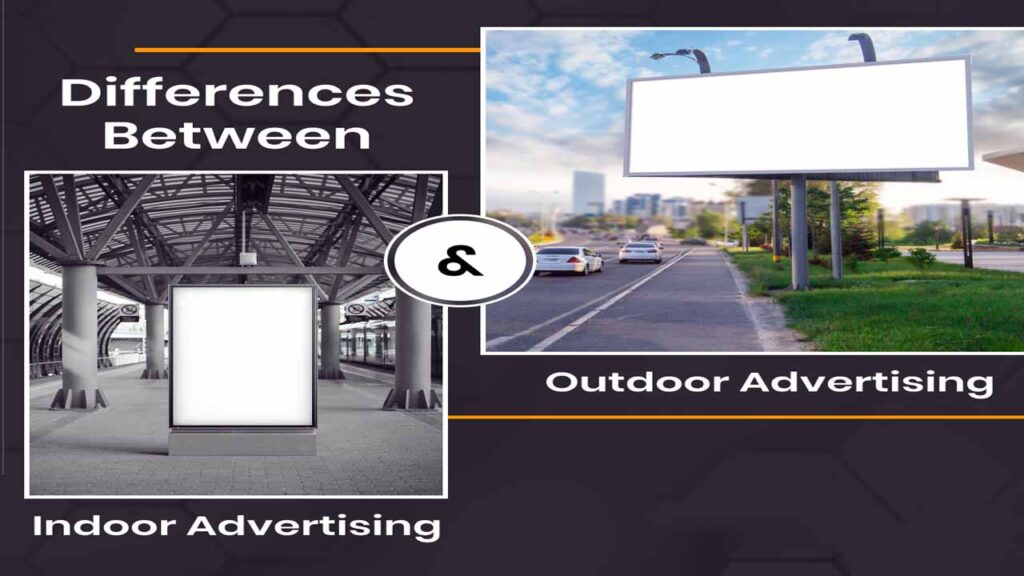
1. Surround and Environment
The environment that an advertisement receives would make the audience perceive it in a particular manner. Indoor advertising is performed within controlled surroundings—shopping malls, restaurants, gyms, and corporate buildings. Such an environment allows for more elaborate and intricate advertisements because the recipients are static and have much time to focus on the message. This ranges from typical indoor displays with digital screens, posters, and standees that offer a variety that easily integrates with the theme and ambience of the surroundings.
- Controlled Environment:
It is placed in regions where focus can be charged and executed with details. - Sophisticated Messaging:
The advertisements can bear longer messages and complicated designs to allure the viewers. - Audience Engagement:
Because they are stuck in place, the viewers have ample time to engage with the advertisement. - Integration with Environment:
Indoor large-format advertisements are designed to integrate correctly with the surrounding environment where they will be situated, providing a cohesive experience for the viewer. - Tapping Technology:
Digital display mediums, due to their dynamic content, contribute more to engagement opportunities.
On the other hand, outdoor advertising is distributed across open public places like highways, roads, transport stations, and city squares. In such cases, the primary goal of outdoor advertising is to be seen quickly since there is not enough time to read and comprehend the advertisement. Standard outdoor advertising comes in hoardings, posters, and transit ads, as their specialty encompasses broad visual activity supported by short messages. The environment is less controlled, and the ad must stand out against interfering elements like traffic, buildings, and other outdoor advertisements.
- High Visibility:
There is generally a much higher view of outdoor advertising, often a glance. - Short Message:
Since time is usually the constraint, messages must be short and catchy. - Active Content:
Outdoor billboard messages normally are action-grabbing, first-impression stimuli. - Competition:
In many ways, outdoor advertisements compete with the environment. So, images have to be striking. - Diverse Locations:
Such billboard messages can appear at various places, giving the advertisement more exposure to mixed crowds.
The environment also decides the content that will go well with it. Indoor advertisements can be detailed and subtle in their message, while outdoor advertisements must be relatively short and catchy. It is vital to understand the characteristics of the environment in which the advertisements are spread out, as this aspect will determine a flawless ad for an audience within each environment.
2. Targeting and Engagement with the Audience

One of the significant differences between indoor and outdoor advertising is the ability to target and engage specific audiences. Indoor advertising is targeted and allows strategic placement in locations where the target audience spends more time. For instance, pasting an advertisement on the walls of a gym for fitness enthusiasts or utilising digital signs in a technology store for branding the newest gadgets are examples where indoor advertisements may be crafted and tailored toward a targeted audience. This narrowed detail targeting could translate to more significant campaign involvement; the ads speak more directly to what the listener has within immediate space and interest.
- Location-specific Adverts:
It can be displayed indoors where the target demographics are more likely to view it. - Contextual Relevance:
Content can become relevant to the needs and interests of an audience in that particular setting. - Tailoring Opportunities:
The demographic present determines the type of tailoring indoor adverts may experience. - Interaction Opportunity:
The more extended exposure opportunity offers more elaborate messaging and possible interactions.
On the contrary, outdoor advertising aims to attract the attention of as many individuals as possible. It is primarily for mass awareness rather than individual targeting. This is because the demography spreads through outdoor ads, making it well-suited for products and services targeting a mass level. For instance, a national fast-food company can use billboard advertising to introduce a new menu item. People in private and public transport and pedestrians will be exposed to the billboard. Since one may have a concise exposure window to outdoor advertisements, creating a memorable visual with taglines is necessary.
- Highly Visible:
The target audience will be a diverse range of potential customers. - High Mass Appeal:
Fits products or services of broad market relevance. - Fast Impact:
Messages have to reach audiences quickly since they are often in motion. - Memorable Design:
The focus of outdoor advertising is on visual elements that are as influential as possible and, therefore, attention-grabbing. - Low Interaction:
By the nature of the exposure, low interaction can only be achieved with quick impressions, making visuals very critical.
The engagement levels also differ from one medium to another. An indoor ad benefits from a more engaged audience who may spend several minutes or more near the ad, while outdoor ads must make an impact within seconds. That is where the difference lies, and accordingly, the design and message in each ad type differ from one another: depth and detail for the indoor ads and simplicity and colour appeal for the outdoor ads.
3. Cost and ROI
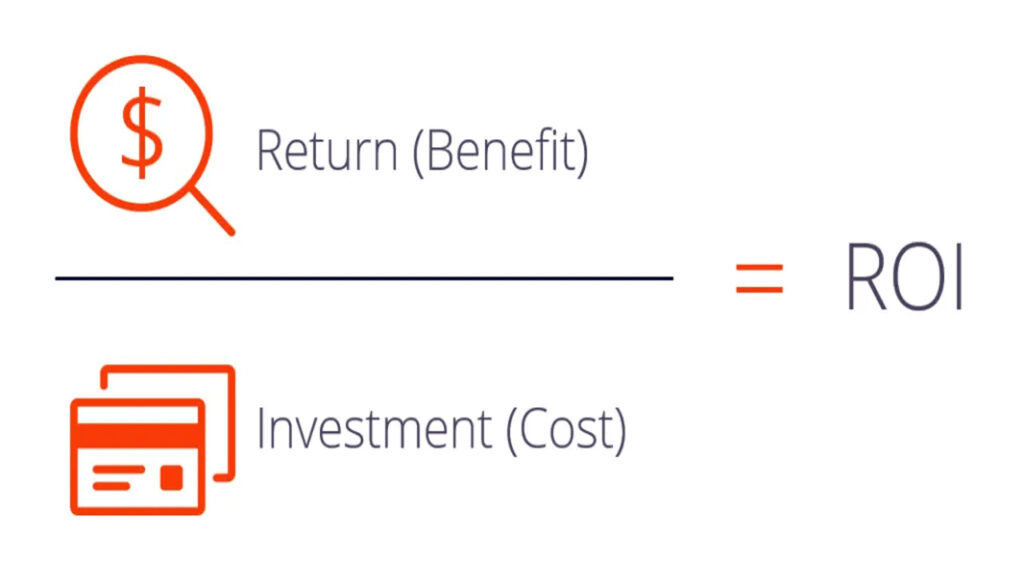
Indoor and outdoor advertising have an excellent cost disparity, whereby return on investment tends to be affected. Indoor advertising is relatively cheaper as it uses smaller advertisements within actual locations. The price will depend on factors such as the display size, the campaign duration, and niche targeting; indoor advertising would be a good fit for small businesses or local brands because it is cheaper and has a more effective return on investment.
- Low Overhead:
Indoor advertising productions tend to have a lower overhead. - Small Placements:
Targeted spending on focused demographics can be conducted through small placements. - Higher ROI:
Showing tailored messaging will yield higher conversion rates. - Budget Flexibility:
Brands can budget for targeted indoor spaces for specific periods. - Potential for Local Marketing:
For most local businesses, a successful strategy in indoor advertising would prove cost-effective.
Online advertising is simply the replacement. A billboard costs significantly more, especially when there is a lot of traffic and at strategic locations. However, the higher cost is justifiable through large-scale cover and brand reinforcement. In the case of giant corporations or national campaigns, outdoor advertising can generate high mileage through appreciation of solid brand awareness and top-of-the-mind recall.
- Higher Upfront Costs:
The initial investment for outdoor advertising is much higher. - Greater Reach Justification:
The cost is justifiable with broad exposure to the audience. - Brand Awareness:
Once the advertisement is blatant, it will likely increase the recall and recognition of the brand. - Large-Campaign Placement:
Outdoors work well when brand awareness strategies are used over a long period. - Market Saturation Opportunities:
Outdoor ads saturate specific regions for increased visibility and presence.
Deciding whether to use indoor or outdoor advertisement is critical as it means businesses should weigh their budgets, campaign goals, and the impact they anticipate getting for each. Indoor ads are usually more engaging; however, outdoor ads are where more awareness and visibility are made in deciding; therefore, much lies in choosing a style of advertisement that will give you the most return on investment and reach the goals set out during marketing.
Final Thoughts
Understanding the differences between indoor and outdoor advertising will guide any business in adequately using the media. The importance of intensive messaging through indoor ads works very well in places where people have enough time with the content. Outdoor ads—prominent, reaching a broad target audience—are used to spread large-scale awareness about the brand.
- Application of Purpose:
The choice between indoor and outdoor advertisements must match a particular marketing objective. - Behaviour of the Audience:
Understanding the impact of the environment on consumer behaviour is the only way forward. - Hybrid Approaches:
An amalgamation of indoor and outdoor ads is an all-inclusive approach to market coverage. - Choosing Ad Types:
The company has to evaluate the budget and expected return on investment. - Effectiveness Measurement:
The performance of the advertisement is measured constantly. This is a crucial step for devising advertising strategies.
Both indoor and outdoor advertising offer different advantages, and a business must choose according to its goals, budget, and ideal target group. A mix of the two can provide an all-around approach, reaching consumers at different stages of their day-to-day living. Whether in the form of a strategically positioned poster at a retail store or a gigantic billboard placed along a bushighwaywa ehighwahighway, retirement has a specific function within the rationale of a more extensive campaign.
]]>Ready to talk with a marketing expert?

A Pragmatic and innovative way to enthrall your target group is just a click away!
Get in Touch
Rukmini Knowledge Park, Kattigenahalli, SH 104, Srinivasa Nagar, Bengaluru, Karnataka 560064
+91-990 247 8800
contact@gingermediagroup.com
Popular in Television Advertising
Udaya TV AdvertisingSun TV AdvertisingStar Plus AdvertisingTV 9 AdvertisingZee TV AdvertisingNDTV India AdvertisingColors TV AdvertisingPopular in Airport Advertising
Spice Jet AdvertisingMumbai Airport AdvertisingDelhi Airport AdvertisingEmirites AdvertisingIndiGo Airlines Domestic India AdvertisingPopular in Newspaper Advertising
Deccan Herald AdvertisingPrajavani AdvertisingThe Hindu AdvertisingEconomic Times AdvertisingDainik Jagran AdvertisingHindustan Times AdvertisingPopular in Magazine Advertising
Forbes AdvertisingCosmopolitan AdvertisingBusiness World AdvertisingVogue Magazine AdvertisingPopular in Sports Advertising
IPL AdvertisingPopular in Outdoor Advertising
Billboard AdvertisingBus Shelter AdvertisingMetro Pillar AdvertisingUnipole Advertising© Ginger Media Group 2025. All Rights Reserved.