Key Takeaways to Be Mentioned in the Introduction
- Deeper Insight in Making Decisions: RTB gives advertisers vital information regarding audience behavior and market dynamics, thus affording them a choice of where and when to invest their budget.
- Efficiency in Costs: RTB manages to identify areas of possible savings by allowing advertisers to place bids on ad spaces based on real-time data and keeps optimizing the human resources spent on dollar expenditures, thus leading to dollars being spent at their best impact.
- Better Customer Value: RTB aligns advertising activities with customer value by targeting relevant ads to the right people at the right time, improving the overall customer experience.
- Continuous Improvement: Since RTB happens in real time, regular analysis and alteration of the directions of the advertisements with some performance metrics will be done to promote continued optimization and improvement.
- Strategic Planning: RTB offers highly data-driven insights, which help corporations forecast better and make long-term decisions for directing their next moves in advertising campaigns.
In this blog, we will discuss the principles of Real-Time Bidding, why it is important today, and how an organization can take advantage of this process to improve advertising efficiency. Let’s share insights and practical ways to add RTB to your digital advertising campaign.
What is RTB Full Form?

RTB, or Real-Time Bidding, is a digital advertising concept based on an auction process for online ad space in real time. By utilizing user identification and behaviour patterns, organisations can target their ads more effectively to the right groups of people and with the right interests. This, therefore, results in more efficient usage of marketing budgets along with higher engagement from the target audiences.
Key Elements of RTB

- Demand-Side Platform (DSP):
A DSP platform enables users to manage multiple ad and data exchange accounts using a single interface. Its importance lies in the fact that it makes automated purchases, and users place advertisements on ad spaces in real-time by using user information to maximise relevance. - Supply-Side Platform:
SSPs help publishers optimise their ad space inventory to maximise revenue generation. Through them, the multiple ad exchanges allow publishers to reach the correct demand for their ad placements and, therefore, the potential for revenue maximisation. - Ad Exchanges:
An ad exchange is an entity where buyers and sellers interact on the price of ad space. Publishers are sellers, and advertisers are buyers, negotiating on price. Such exchanges also support the execution of RTB because the real-time auction process allows buyers and sellers to achieve optimal outcomes in terms of ad placements and prices.
Benefits of RTB
- Improved Decision Making:
RTB further aids decision-making by providing real-time user engagement and bid results statistics. For example, an e-commerce seller of attire can analyse which ads work best for demographics and rapidly switch campaigns to maximise returns on investment through RTB. - Cost Effectiveness:
RTB improves cost efficiency by automating the buying process and enabling advertisers to pay only for impressions that meet their targeted criteria. Organisations set budgets that optimise their spending and pay only for ads most likely to increase conversions. - Increased Communication and Coordination:
RTB enhances collaboration and openness between marketing and sales teams. Sharing real-time information and results helps these teams align strategies better to ensure cohesive campaigns that drive engagement and sales.
Core Principles of RTB
- Activity-based Approach:
Understanding user-specific activities is central to understanding RTB. If ads are targeted against users’ actions and interests, the campaigns tend to be more effective as advertising becomes more focused and successful. - Association of Activities with Costs:
Cost-related user activities associated with the advertiser allow the person to know the cost of running each advertisement. This is crucial in deciding on budget and campaign optimisation. - Constant Improvement:
The main feature of RTB is the assessment of performance metrics on continuous evaluation and feedback. This method adjusts campaigns according to performance metrics to make the advertising strategy work throughout the campaign period.
How to Put RTB Into Action
- Review current activities:
Observe traditional buying processes to identify where RTB can create more value. Analyse past campaign performances and user engagement behaviours. - Define Cost Drivers:
Determine your cost drivers, such as audience segments, the time of day bidders are likely to drive prices, and ad formats so there is an optimal bidding strategy and resource usage. - Leverage Performance Metrics:
Set up and monitor performance metrics to gauge the effectiveness of each ad campaign. Click-through rate and conversion rate are just two of the metrics that define effectiveness. - Engage Employees:
Get employees to collaborate with the RTB process to foster collaboration and innovation. The team should be encouraged to develop suggestions to improve strategies based on first-hand experiences and data insight. - Leverage Technology:
Utilise technology tools and platforms that facilitate the RTB process: machine learning algorithms and data analytics advance targeting and bidding.
Real-World Examples of RTB
- Case Study of an E-commerce Giant:
One e-commerce giant used RTB to promote specific products during the prime shopping seasons, resulting in a conversion rate that was 40% higher than that of similar traditional campaigns. - Automotive Industry Success:
For instance, one of the world’s biggest automobile manufacturers used RTB to target potential car buyers effectively effectively effectively. It supplemented the ads according to user behaviour’s search patterns, thus leading to a massive hike in leads and sales calls. - Travel Agency Application:
A travel agency used RTB to give dynamically priced travel deals to online users based on their behaviour. It yielded a 35% increase in bookings over a quarter.
Final Thoughts
RTB is an invaluable approach for organisations seeking to upgrade their digital advertising efficiency and reach. A good understanding of core concepts like audience targeting, bid management, and data analysis will allow businesses to run their activities resource-friendly while always being oriented towards improvement, thus unlocking much potential in operational processes and decision-making strategies.
Application of the principles of RTB in your business can lead to:
- Better Ad Targeting: You could hit the perfect target market by correctly identifying viewers to ensure that your advertising dollar is utilised to full effect.
- Better ROI: Maximize returns on your advertisements with real-time insights and data-driven strategies.
- Better Competitive Advantage: Automated bidding processes would allow you to stay ahead of market changes.
It is time for you to take advantage of RTB and its transformational impact on your business: start optimising your digital advertising approach now.
]]>Largest Contentful Paint (LCP) plays a pivotal role in measuring the success of online advertising. It affects the user experience, engagement, and conversion rates, making it essential for advertisers to optimise. LCP is critical because:
- It impacts the user experience by measuring how fast the most significant content on a webpage loads.
- A slow LCP can significantly reduce user engagement and lead to higher bounce rates, potentially causing a loss in potential conversions. This underscores the urgency for advertisers to address LCP optimization.
- Optimizing for faster LCP not only improves advertising success but also boosts SEO rankings, making it a crucial factor for online advertisers to consider.
- LCP directly influences user retention and conversion rates, making it a key factor in determining the success of an advertising campaign.
- LCP optimisation boosts campaign performance.
What is the Largest Contentful Paint (LCP)?
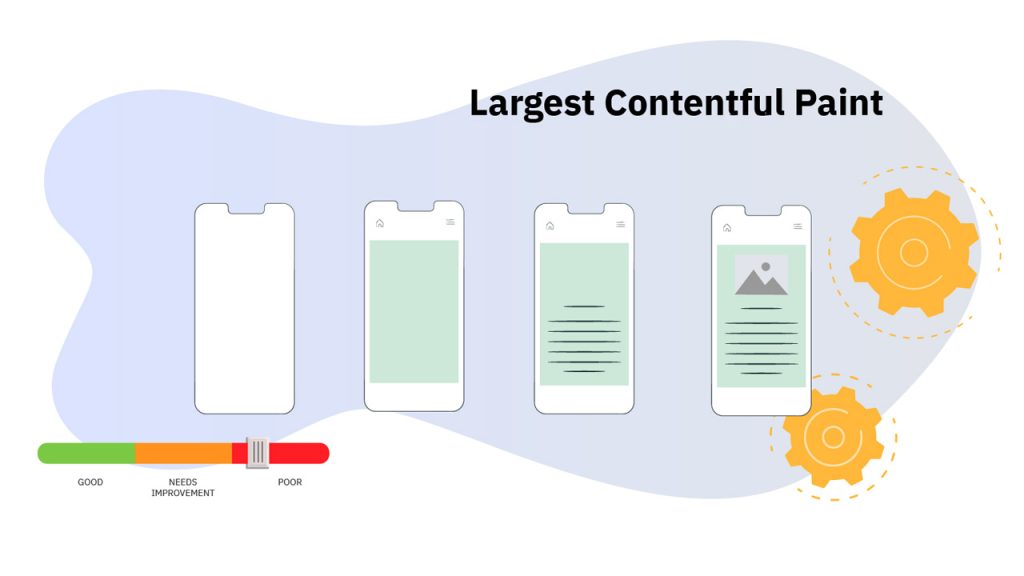
Largest Contentful Paint (LCP) refers to the time it takes for the most significant element in a browser’s viewport, such as an image, video, or block of text, to fully load. It is one of the three key metrics in Google’s Core Web Vitals and measures how quickly the main content becomes visible to the user.
- LCP Full Form: Largest Contentful Paint.
- LCP Google: It is a core web vital that affects search engine ranking.
- LCP SEO: Directly influences your website’s visibility in search results.
- LCP Content: Includes images, videos, and large blocks of text.
- LCP Performance: Determines how fast the most important content on your page loads.
When LCP takes more than 2.5 seconds, the user experience deteriorates. For advertisers, ensuring LCP remains under this threshold is vital to keep users engaged and avoid high bounce rates.
LCP’s Role in Advertising
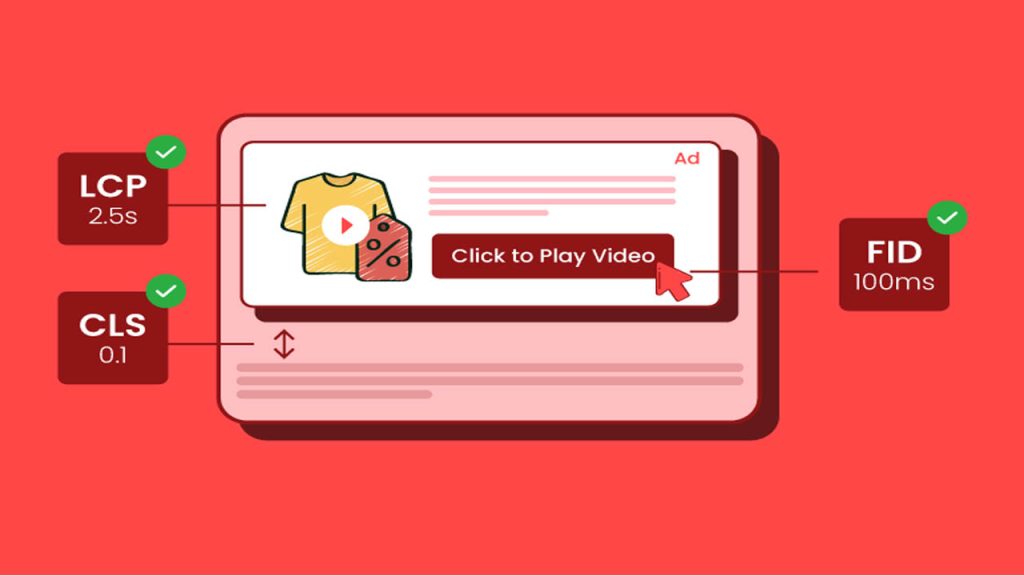
In advertising, LCP is crucial because it directly impacts user experience and the performance of a marketing campaign. If a page takes less time to load, users may abandon the site before interacting with the content, affecting engagement and conversions. Key points include:
- LCP Full Form: Largest Contentful Paint is critical for advertisers to understand.
- LCP SEO Impact: A faster LCP increases your site’s search rankings.
- User Retention: The higher the LCP, the more difficult it is to engage users.
- Conversion Rates: A slow LCP results in lower conversion rates.
- Ad Spend Efficiency: A poor LCP can save advertising budgets, leading to high bounce rates.
Optimising LCP ensures a faster page load time, which is essential for increasing engagement, improving SEO performance, and boosting advertising ROI.
Methods to Optimize LCP for Advertising Success
Improving Largest Contentful Paint (LCP) involves several optimisation strategies. These include optimising images, server response time, and render-blocking resources. Below are five essential methods to improve LCP:
1. Image and Video Optimization
Optimising images and videos is one of the most impactful techniques to enhance LCP. Large files can slow down the entire loading process. To improve LCP, you can:
- Compress images without losing quality.
- Use next-gen formats like WebP.
- Optimise video size and enable lazy loading for videos.
- Avoid large background images that slow down loading.
- Use appropriately sized images for all devices.
Optimising media files ensures faster loading times, improving the user experience and reducing bounce rates.
2. Minimize Server Response Time
Reducing server response time directly affects LCP. By cutting down on delays, advertisers can significantly enhance performance. Key strategies include:
- Use a Content Delivery Network (CDN).
- Optimise your web server settings.
- Enable browser caching.
- Serve content from a server closer to the user to reduce latency.
- Use HTTP/2 for faster content delivery.
A faster server response time improves the overall user experience and ensures the most significant content loads quickly.
3. Use Lazy Loading
Lazy loading delays the loading of non-critical elements until they are needed. This optimisation ensures the main content loads first, improving LCP. To implement lazy loading:
- Defer loading non-essential aspects like images and iframes.
- Prioritise loading content above the fold.
- Use lazy loading with HTML5 or JavaScript libraries.
- Ensure the primary content loads before secondary elements.
- Implement lazy loading across the site to optimise performance.
Lazy loading allows access to crucial content faster, improving user satisfaction and engagement.
4. Minimize Render-Blocking Resources
Render-blocking resources, such as CSS and JavaScript, can delay the loading of the page’s primary content, negatively impacting LCP. To minimise these delays:
- Optimise CSS and JavaScript files.
- Defer or async non-critical scripts.
- Minimise external stylesheets.
- Inline small CSS snippets for quicker rendering.
- Remove unused CSS and JavaScript.
By optimising render-blocking resources, you can significantly reduce LCP and improve page load speed.
5. Optimize Web Hosting
The quality of web hosting plays a significant role in determining LCP. Low-quality hosting can neutralise other optimisations, leading to poor performance. To improve hosting:
- Choose a fast and reliable hosting provider.
- Use managed hosting services for better performance.
- Regularly monitor uptime and response times.
- Upgrade to dedicated or VPS hosting.
- Conduct regular audits on hosting performance.
A reliable hosting provider ensures your website performs optimally, reducing load times and improving user experience.
LCP and SEO
LCP is one of the core components of SEO because it directly affects Google rankings. Websites with poor LCP scores are penalised, leading to reduced visibility and traffic. The impact of LCP on SEO includes:
- LCP Full Form: A core metric in Google’s SEO ranking factors.
- LCP Google: It serves as a page experience ranking signal.
- Bounce Rate: A slow LCP leads to a high bounce rate, negatively affecting SEO.
- Conversion Impact: Faster-loading sites convert better and rank higher organically.
- LCP SEO Best Practice: Improving LCP directly enhances SEO performance.
By optimising LCP, advertisers can improve user experience and enhance their SEO strategy, leading to better search engine rankings and more organic traffic.
LCP Performance Monitoring and Testing
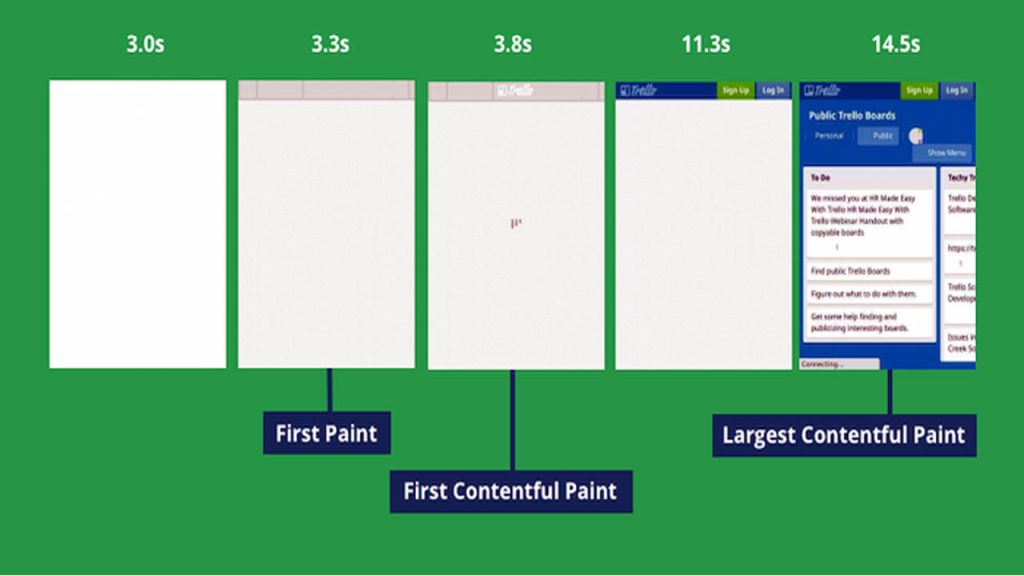
To maintain a healthy LCP score, advertisers must consistently monitor and test their website’s performance. Several tools are available to check LCP and identify areas for improvement:
- Use Google PageSpeed Insights for detailed LCP analysis.
- Periodically test performance with Lighthouse.
- Identify slow-loading elements with Chrome DevTools.
- Set performance budgets to guide LCP improvements.
- Utilise real-user monitoring tools for accurate data.
Continuous testing and monitoring are crucial for maintaining optimal LCP performance and ensuring successful marketing campaigns.
Final Thoughts
The largest Contentful Paint (LCP) is a critical element in the success of online advertising and SEO performance. It directly affects user experience, conversion rates, and search rankings, making it essential for advertisers to optimise. Key takeaways include:
- LCP Google: A core web vital that affects SEO ranking.
- User Satisfaction: Faster LCP improves user experience and engagement.
- Improved Conversion: Optimizing LCP leads to better conversion rates.
- LCP SEO Directly impacts your website’s rank and visibility.
- Long-Term Success: Consistent monitoring and testing help ensure continuous improvement.
By improving your website’s LCP, you can enhance meaningful engagement with your audience, increase brand loyalty, and drive business growth.
]]>Ready to talk with a marketing expert?

A Pragmatic and innovative way to enthrall your target group is just a click away!
Get in Touch
Rukmini Knowledge Park, Kattigenahalli, SH 104, Srinivasa Nagar, Bengaluru, Karnataka 560064
+91-990 247 8800
contact@gingermediagroup.com
Popular in Television Advertising
Udaya TV AdvertisingSun TV AdvertisingStar Plus AdvertisingTV 9 AdvertisingZee TV AdvertisingNDTV India AdvertisingColors TV AdvertisingPopular in Airport Advertising
Spice Jet AdvertisingMumbai Airport AdvertisingDelhi Airport AdvertisingEmirites AdvertisingIndiGo Airlines Domestic India AdvertisingPopular in Newspaper Advertising
Deccan Herald AdvertisingPrajavani AdvertisingThe Hindu AdvertisingEconomic Times AdvertisingDainik Jagran AdvertisingHindustan Times AdvertisingPopular in Magazine Advertising
Forbes AdvertisingCosmopolitan AdvertisingBusiness World AdvertisingVogue Magazine AdvertisingPopular in Sports Advertising
IPL AdvertisingPopular in Outdoor Advertising
Billboard AdvertisingBus Shelter AdvertisingMetro Pillar AdvertisingUnipole Advertising© Ginger Media Group 2025. All Rights Reserved.