Measuring success is the need of the hour in the fast-paced arena of advertising that acquires firms with competition. The concept of Key Performance Indicators (KPIs) has emerged as a catalyst for ineffective advertising strategies. KPIs can be defined as measurable values that enable advertisers to assess the success of their campaigns, optimise strategies, and achieve the desired outcome. Know the complete form along with the meaning of KPIs in order to enlighten an advertiser about practical decisions that bring performance and ROI.
The term “Key Performance Indicators” best describes what these metrics are: they are the key figures that reflect how effectively a business is achieving its objectives. In relation to advertising, the KPIs are of significant importance as indicators of campaign success and general marketing success. Most areas of advertising are illuminated through KPIs, including:
- Audience engagement
- Conversion rates
- Brand awareness
- Return on advertising spend (ROAS)
In this blog, we will be discussing what KPIs mean, their relevance in the advertising world, and which of those metrics should draw advertisers’ attention to up their marketing game. Once you have read through this piece of exploration, you will be convinced of how KPIs can revolutionize your strategic advertising moves and lead to better results.
Key discussion points:
- KPIs definition: Key Performance Indicators
- Measures: Advertising Success
- Optimisation: Improve strategy with data
- ROI Focus: Maximize Return on investment
- Company Line-of-Sight: Align marketing to the company’s overall objectives
What Are KPIs?

KPIs are short for Key Performance Indicators. They are specific, measurable values that reveal just how effectively the firm is in achieving its key business objectives. They are more of a guide that ensures advertisers are on course to their goals and allows them to mark the progress they have made on their way. To an advertiser, KPIs will inform him if an advertising campaign is working for him or not.
The KPIs may vary greatly based on the campaign objectives. Take a brand, like those that focus their campaigns on increasing traffic to their websites. Such brands will find it important to be tracking metrics like Click-Through Rate and impressions. A company focused on sales will be more concerned about conversion rates and ROI. Advertisers must know which of the many KPIs to keep an eye on because these are not only good indicators of how successful campaigns have been but also guide adjustments in strategy to deliver better results.
Key considerations
- Accuracy: KPIs are chosen metrics that focus on business objectives.
- Measurability: KPIs measure data to analyse.
- Focused goals: Campaigns vary, as do the KPIs needed for every one of them.
- Directional: A KPI provides a direction or course for adjustments to yield better results.
- Types: KPIs can either be leading or lagging indicators.
Leading and lagging indicators: KPIs can be described as either leading or lagging indicators. A leading indicator will inform you of what is going to happen and is associated with future performance, while a lagging indicator accounts for past performance and the results. High CTRs are a leading indicator of good campaigning, whereas increased sales figures might be considered a lagging indicator of how good your campaign has been. Both these types of KPIs are required in order to understand advertising performance on a whole level.
KPIs in Advertising
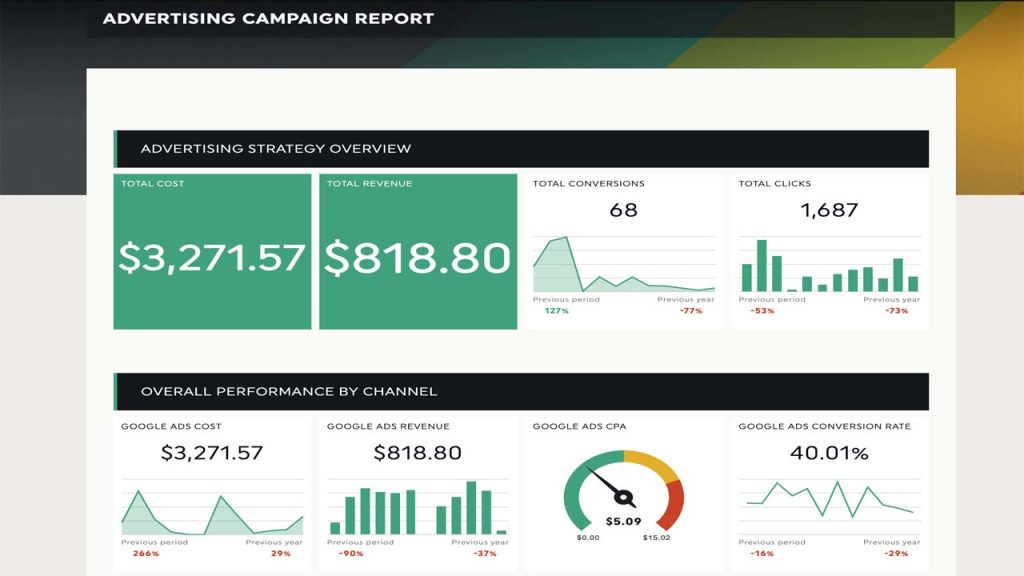
KPIs are regarded as crucial advertisement tools because they come with the following reasons:
- Measure Performance: KPIs enable advertisers to measure campaign success against the objectives set at the beginning of the project. Businesses can, thus, know whether their advertising is doing what was expected or not. In doing this, they are able to detail which parts of the process are working and at what points things are failing to get better. With the analysis of KPIs, better-informed decisions occur. Trends may be caught, and what works is distinguished from what does not. Campaigns may be adjusted through data-driven means for peak performance. As an illustration, the advertiser might take the poorly performing ad and adjust the strategy to give more effective wording.
- Accountability and Transparency: KPIs promote accountability among the ad team. Knowing from the very beginning what was needed for the campaign to succeed enables everyone involved to measure their contribution to the whole goal of the campaign. Such transparency fosters teamwork and ownership.
- Strategic Alignment: The alignment of KPI with business objectives ensures that advertisers use campaigns that create intended results in support of broader marketing and organizational goals, enhancing focus and efficiency towards realization of desirable outcomes and making communication of objectives and results of stakeholders easy.
- Resource Allocation: KPIs allow businesses to know which campaigns or channels yield the highest return on investment. With performance data, advertisers can make better resource allocations. This means that their money is being used on the most impactful efforts.
Key Considerations
- Performance Measurement: Campaign success determinant
- Informed Decisions: Data-driven adjustments for performance improvement
- Team Accountability: Clear transparency, collaboration
- Strategic Alignment: Aligns with wider business initiatives
- Resource Allocation: Budgeting effectively
Key Advertising KPIs to Watch
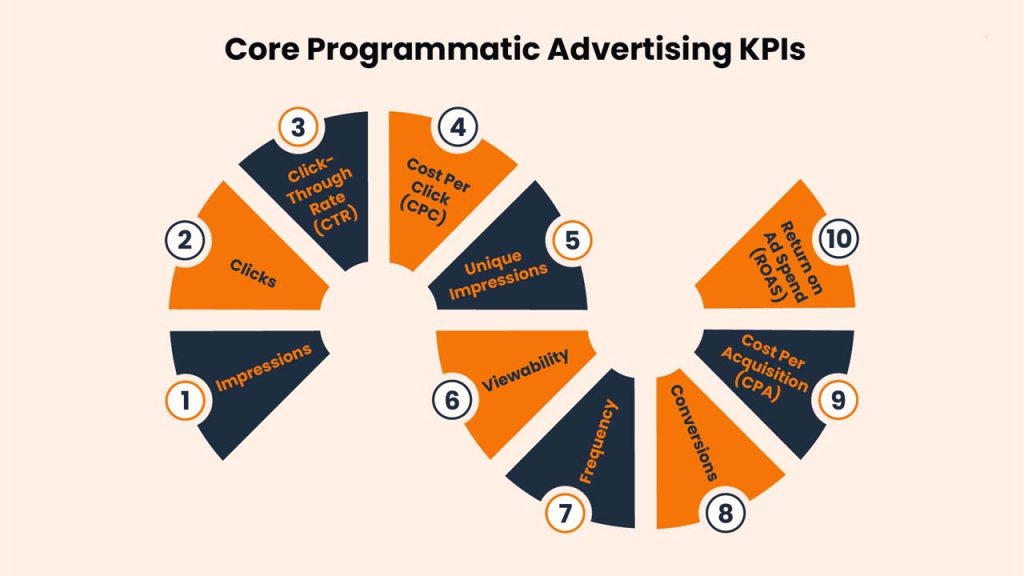
More than one KPI is required for effective measurement of advertising performance. Some of the KPIs include:
- Click-Through Rate: It refers to the click-through rate of an ad, that is, the percentage of people who clicked on the advertisement after they saw it. This is an ad creative effectiveness and targeting metric. In case the CTR is high, the ad is related to the target audience. If the CTR is low, it may indicate a need to optimise. For example, a 5% CTR means that for every 100 people viewing that ad, 5 of them clicked the ad. Over time, following CTR can show an advertiser and his campaign a pattern of how the audience may engage with the said ad.
- Conversion Rate: This tells you the percentage of people who, after viewing any given ad, ended up doing the desired action — whether buying the product or signing up for a newsletter. For instance, a 10% conversion rate means that 10% of the people who click on the ad perform the action desired after clicking. Therefore, a good conversion rate will indicate effective messaging and targeting, whereas a low conversion rate may show areas that need improvement.
Other metrics:
- Return on Advertising Spend (ROAS): It is the revenue for every dollar spent on advertising. It is another important performance indicator to analyse whether or not an advertising campaign is profitable at large. A positive ROAS will reflect a successful campaign, while a negative ROAS demands strategic realignment. For instance, if the budget for the advertisement was $1,000 and $5,000 were generated through the advertisement, then the ROAS would be 5:1. An advertiser needs to have a ROAS that could fit with the business requirements and profit margins of the company.
- Customer Acquisition Cost: CAC calculates the total cost incurred in acquiring a new customer through the advertisement campaign. This is achieved by dividing all marketing costs by the number of new customers gained in a period. For instance, through CAC, the advertiser can find whether his or her marketing plan is working as it should be or not and evaluate whether the method applied for a customer acquisition plan is worthwhile or not. A lower CAC means that a business acquires customers more cheaply.
- Engagement Rate: This KPI measures the interaction users have on an ad — likes, shares, comments, and how much total engagement there is. The higher one’s engagement rate is, the more meaningful the ad is for the target audience and helps to encourage meaningful engagements. For quite a few social media ads, engagement rate might be the most crucial metric in determining the interest of the audience in the advertisement.
Key Takeaways
- CTR: It measures effectiveness based on the click-through rate.
- Conversion Rate: Measures success based on user actions.
- ROAS: Measures campaign profitability.
- CAC: Measures customer acquisition efficiency.
- Engagement Rate: This KPI measures how much an audience is interacting.
Challenges with Measuring KPIs

While very helpful in measuring the success of an ad campaign, KPIs pose some challenges to the business in tracking and interpreting:
- Data Overload: With such vast volumes of data generated today, it sometimes gets confusingly overwhelming for advertisers to find the right set of KPIs most relevant to them. The key here is prioritization — to narrow down metrics that are in alignment with campaign goals.
- Attribution Issues: On this aspect, attributing a conversion and the performance to an effort that actually was responsible for this conversion can be quite tricky. Thus, it necessitates effective tracking by advertisers for right attribution. Using tools like Google Analytics will help in understanding the customer journey and impact coming from different channels.
- Evolutionary Metrics: Advertisements change landscapes, making some of the existing KPIs inappropriate at some point in time. The job of advertisers is to observe such changes and respond appropriately by modifying their KPI frameworks. The birth of social media and digital advertising changed the scenario and systems for brand measuring.
- Consistency of measurement: Consistency in the measurement and reporting method of data is essential for the effective analysis of KPI. It will confuse the right results and move wrong conclusions if not a proper method to measure.
- Interpreting Context: It’s critical to understand the context behind numbers because KPIs do not live in a vacuum. Any market trend, seasonal fluctuations, or economic changes could influence KPI, and without such factors being considered, it could lead to jumping wrong conclusions.
Key considerations:
- Overwhelming Data: Identify pertinent KPIs in oceans of data
- Attribution Challenges: Measure several channels’ performances
- Metrics Maturation: Helps one evolve in ad landscapes
- Consistency: Ensure accurate data gathering.
- Contextual Insight: Evaluate what is happening in the environment and how that influences KPIs.
Best Practices for Measuring KPI

To measure KPI in an ad campaign, follow these best practices:
- Clearly Define Objectives: Clearly define the objectives of a campaign along with the relevant KPIs. This helps focus on efforts for measurable goals. For example, if the objective is to increase brand awareness, likely KPIs will include impressions and engagement rate.
- Regular Monitoring: Tracking KPIs should be done continually. Trends and shifts in performance will be seen only if tracked properly. Regular analysis helps make the necessary adjustments and optimizations as early as possible. Dashboards help in tracking KPIs in real time, making the decision-making process faster.
- Data-Driven Decisions: Make data-driven decisions. Analysis of KPI data accompanied by market insights guides an advertiser in refining his strategy and improving outcomes. For example, if a particular campaign is lagging behind, a data-driven approach can pinpoint which areas need attention.
- Cross-Channel Tracking: Track cross-channel to understand campaign effectiveness across channels. That way, one can have a more comprehensive view of performances, which can better contribute to understanding the behaviour of the audience. Integrated tracking tools that may combine data from other sources will also give one such overview.
- Comparison with Competitors: Use industry KPI benchmarks to understand how well your performance is relative to others. Benchmarking helps to pinpoint areas for improvement and comparative advantage.
Key Considerations:
- Clear Objectives: KPIs should always relate to the campaign objectives.
- Regular Monitoring: KPI should be tracked periodically in order to derive performance information.
- Data-Driven: The information derived should be utilized so that decisions can be made based on knowledge and pure empirical evidence.
- Cross-Channel Tracking: Understand performance across platforms
- Benchmarking: Compare performance with industry standards
Final Thoughts
In a nutshell, KPI is a must-have tool for advertisers to measure success and optimise strategies to achieve the marketing objectives. Understanding the full form of KPI and focusing on the right key metrics such as CTR, conversion rate, ROAS, CAC, and engagement rate will help improve advertisement efforts and drive meaningful results.
KPI measurement needs clear strategic navigation, constant surveillance, and data-driven decision-making. The advertising landscape continues to change, and understanding the right mix of KPIs will better equip businesses to adapt, survive, and thrive in a more competitive marketplace.
Using KPIs correctly can transform a lowly advertising campaign into the best business booster and means of success. Continuous tuning and optimisation of campaigns in support of KPIs ensure that marketing dollars bring home the highest return on investment.
Key Takeaways:
- Measure Your Success: The KPIs help measure campaign success.
- Optimise Your Strategy: Apply enhanced advertising tactics using KPIs.
- Pursue Success Metrics: Moves toward progression.
- Adapting and Thriving: Staying up to date with the latest industry trends.
- ROI Maximization: Ensuring marketing effectiveness and efficiency delivery.
- Diverse Media: It includes differentiated media from television and radio to the digital media, including social media.
- Consumer Interaction: Not just about selling a product; it’s about forming some meaningful relationships between the consumer and the brand.
- Data-Driven: Analytics, along with data, play an essential role in targeting and personalizing advertisements.
- Constant Strategy Changes: Advertising strategies may evolve on a daily basis because of fast changes in technology.
- Business: Advertising would play a significant role in increasing the visibility trust from consumers, and growth of your business.
Changing Channels of Advertising

The use of advertising channels has instead changed positively with digital technologies. Old channels such as print, television, and radio are effective, but digital alternative media can coexist with them. This calls for agility in firms’ advertising strategies by changing old and new channels to reach their market.
- Traditional vs. Digital: Though an important tool, print media has been replaced by digital in terms of reach and effectiveness. Digital ads are set during the execution process in real time.
- Influence of Social Media: Today, Facebook, Instagram, and TikTok are more of the new frontier for advertising. Example: Influencer marketing with Facebook, Instagram, and TikTok tends to increase engagementa.
- Targeting in Digital: This is a boon, and the advertiser would target all three consumers according to their demographic, behavioral, or interest-wise preference, which makes the ad more personal and effective.
- Presence on Multiple Channels: Presence on multiple channels is currently a basic tool firms use to increase brand awareness. This will thereby help ensure that all their advertisements reach them wherever they are.
- Video Dominance: Video messages, particularly on social media applications, which include YouTube and TikTok, are currently at the top in advertising for it provides an immersive way for brands to communicate with their audience.
The Role of Consumer Psychology in Advertising

Given the importance of advertising effectiveness, consumer psychology would play a key role. How consumers think and feel would contribute to a better creation of some campaign that the business would engage in communication with their audience. Consumers’ emotions and motivations are what most advertisers use to attract attention and enforce action. Often, an advertisement will offer emotional appeal through happiness, fear, or even nostalgia.
- Behavioral Targeting: The data analytics process provides the facility for forecasting consumer behavior. This helps the advertiser decide on the right medium for advertising campaigns that will bring maximum impact for them.
- Brand Loyalty: By establishing campaigns that repeat without failure, advertising builds the loyalty feel among one-time buyers to become repeat customers.
- Molding Perception: Through strategic messaging, advertising can mold the perception of consumers toward the brand and its value.
- Call to Action: Good ads show a clear strong call to action that will take customers to wanted behaviors such as buying or signing up to use a service.
Role of Metrics and Measurement in Advertising

Measuring advertising is like flying blind without instruments. Metrics show us exactly where we stand in terms of how effectively our campaign is working and whether we are well within or out of reach in meeting the intended goals. Right now, many types of analytics tools exist to measure the effectiveness of advertising—from any engagements’ range of metrics to return on investments.
- Return on Investment (ROI): ROI measurement is absolutely necessary in determining the financial effectiveness of an advertising campaign.
- Engagement Metrics: These would include likes, shares, comments, and clicks to establish how many people are paying attention to an ad.
- Conversion Rates: By taking note of how many customers become after seeing an ad, the advertisers will be able to know the ROI generated by their campaigns.
- A/B Testing: In A/B testing, one can use more than one version of the ads to better understand what kind of content best appeals to the targeted audience.
- Attribution Models: These help advertising identify which touchpoints matter most in influencing consumer decisions.
Regulatory and Ethical Considerations in Advertising

As advertising progresses, so do its regulations and ethical practices. An advertiser needs on several laws and industry standards ensure that the campaigns are set or implemented legally and responsibly, especially now that consumers have increasingly become worried about data privacy and ethics in practice.
- Privacy Laws: These are laws, such as GDPR in Europe and CCPA in California, that offer protection for consumer data; thus, advertisers must be transparent about information collection and use.
- Truth in Advertising: This means that advertisers will not make misleading claims or claims which may be misrepresented in their communications. They will have to ensure that their advertisements are truthful and factual.
- Environmental Sustainability: Most consumers today expect the brand to contribute to social responsibility through advertisement. Greenwashing will violate a brand’s reputation.
- Cultural Sensitivity: Advertisers should remain sensitive to the differences between cultures and ensure they do not use campaigns that may passively offend or alienate them.
- Ethics of Targeted Advertising: While targeted adverts succeed in conversion, brands cannot leverage sensitive consumer information or exploit vulnerable groups.
Final Thoughts: The Expanding Scope of Advertising
The field of advertisement is on an ever-evolving plane. As time goes by, new technologies evolve, consumer tastes and preferences shift, and so do notions of what is proper or improper in ethical issues; advertisers must be more agile and innovative to be up to date. When companies want to connect with their audience meaningfully, it’s high time they embrace every means available in advertisement.
- Flexibility: Brands must be generally flexible and change their strategies to be relevant in a fast-moving marketplace.
- Data-Based Decision: Data is essential in creating targeted personal ads and speaking to customers.
- Consumer Centricity: The consumer must always remain in the advertising campaign’s center—their perception of trust and loyalty towards a brand matters.
- Innovation in Creativity: Effective advertising is nothing but creative and innovative methods that can punch holes in the noise and give way to achieving the desired effect.
- Long-Term Gains: Advertising can never be a silver bullet; it plays a critical role in long-run brand growth and sustenance.
Ready to talk with a marketing expert?

A Pragmatic and innovative way to enthrall your target group is just a click away!
Get in Touch
Rukmini Knowledge Park, Kattigenahalli, SH 104, Srinivasa Nagar, Bengaluru, Karnataka 560064
+91-990 247 8800
contact@gingermediagroup.com
Popular in Television Advertising
Udaya TV AdvertisingSun TV AdvertisingStar Plus AdvertisingTV 9 AdvertisingZee TV AdvertisingNDTV India AdvertisingColors TV AdvertisingPopular in Airport Advertising
Spice Jet AdvertisingMumbai Airport AdvertisingDelhi Airport AdvertisingEmirites AdvertisingIndiGo Airlines Domestic India AdvertisingPopular in Newspaper Advertising
Deccan Herald AdvertisingPrajavani AdvertisingThe Hindu AdvertisingEconomic Times AdvertisingDainik Jagran AdvertisingHindustan Times AdvertisingPopular in Magazine Advertising
Forbes AdvertisingCosmopolitan AdvertisingBusiness World AdvertisingVogue Magazine AdvertisingPopular in Sports Advertising
IPL AdvertisingPopular in Outdoor Advertising
Billboard AdvertisingBus Shelter AdvertisingMetro Pillar AdvertisingUnipole Advertising© Ginger Media Group 2025. All Rights Reserved.