This blog will discuss the critical aspects of PPR advertising, its applications, and how it furthers advertising strategies in today’s competitive landscape.
Key Topics Covered:
- What is PPR Full Form in Advertising?
- Importance of PPR in Digital Marketing
- Applications of PPR in Advertising Campaigns
- Benefits of PPR for Advertisers
- Final Thoughts
What is PPR Full Form in Advertising?
In advertising, PPR is the model where businesses pay advertising platforms or agencies based on specific outcomes like conversion, sales, or sign-ups. Compared with traditional models like PPCs, where advertisers pay each time a click is made, PPR pays only for what has been achieved, making it performance-oriented and more cost-effective for running advertisements.
Key Features of PPR in Advertising:
- Performance-Based: Advertisers are paid only for actual results regarding completed purchases and submitted leads.
- Risk Mitigation: Advertisers spend less budgets on non-converting traffic.
- Goal-Oriented: Campaigns are optimized toward driving specific, measurable outcomes.
Why is PPR Significant in Digital Marketing?

An always-evolving digital marketing channel demands higher ROI with lower unnecessary costs. PPR is gaining importance because it allows for a direct relationship between the marketing budget and the campaign’s success.
Benefits of PPR in Marketing:
- Cost Effective: By paying only for desired results, businesses avoid paying for non-converting traffic, maximizing their marketing budget.
- More Accountability: PPR leads to more accountability among advertisers because it ties success metrics to actual outcomes, making it easier to gauge campaigns’ impact.
- Better Decision Making: PPR allows marketers to gain actionable data insights, enabling them to optimize their campaigns and effectively utilize available resources.
Why Does PPR Matter?
- Measurable Success: It allows marketers to measure success with tangible, quantitative metrics like leads, conversions, or sales.
- Less Financial Risk: Unlike other models where you pay for clicks and impressions, PPR ensures every dollar invested has value.
- Flexibility: Campaigns can scale with advertisers’ performance, allowing strategies to adjust accordingly.
- Improved ROI: Emphasizing performance, PPR allows advertisers to manage costs better and maximize ROI.
- Targeted Marketing: PPR helps businesses refine their audience targeting and conversion goals, leading to more focused, successful campaigns.
Applications of PPR in Advertising Campaigns
PPR can be implemented across various advertising campaigns, from e-commerce to lead generation and app installations. It is versatile and flexible in terms of marketing objectives.
Main Areas Where PPR is Used:
- E-commerce Campaigns: Retailers use PPR to track completed purchases but only pay when a sale is made.
- Lead Generation: Businesses pay based on successful lead conversions, making it ideal for B2B marketing.
- Mobile App Installs: Advertisers pay for successful app downloads or in-app purchases, ensuring efficient app-based advertising.
- Email Marketing Campaigns: PPR also applies to email marketing campaigns, where businesses pay for email sign-ups or conversions, not impressions or clicks.
Example of PPR in Action:
- Retailer Advertising: A retail company can use PPR to run a promotion, paying only when customers order and ensuring that money is spent on actual results.
- Real Estate: In the real estate sector, PPR generates leads for homebuyers, and payment is only made for valid inquiries.
- Subscription Services: A subscription service might display sign-up-focused ads, paying only for subscription users.
Advantages of PPR to Advertisers
PPR models offer numerous benefits, particularly for advertisers seeking to optimize their advertising spending. With performance-based metrics and specific goals to chase, advertisers can fine-tune their campaigns for maximum returns.
Key Benefits:
- Cost Management: Costs are better controlled as payments are tied directly to outcomes, leading to better returns for advertising spend.
- Opportunity for Optimization: Real-time performance data enables advertisers to continually refine their campaigns for high-yield segments.
- Higher Conversion Rates: Since PPR focuses on specific outcomes, advertisers achieve higher conversion rates by honing in on effective strategies.
- Accountability and Transparency: PPR offers clear metrics, allowing advertisers to track spending and measure campaign effectiveness.
- Improving Long-Term ROI: Campaigns based on actual outcomes significantly improve long-term ROI.
Strategic Advantages of PPR:
- Budgeting Effectiveness: Advertisers can allocate their budget to campaigns that drive measurable success.
- Data-Driven Insights: PPR provides data that allows advertisers to make informed decisions.
- Less Risk: Advertisers avoid paying for clicks or impressions that don’t convert, reducing financial risk.
- Focus on Customers: PPR ensures campaigns are aligned with the needs and desires of the target audience.
- Continuity of Improvement: Regular analysis of PPR campaigns allows marketers to improve strategies over time.
Final Thoughts
The PPR model in advertising represents a shift towards performance-based marketing, where advertisers pay only for actual results. As companies look for ways to increase the ROI of their marketing efforts, PPR introduces cost-effectiveness and transparency to achieve their goals. Whether in e-commerce, real estate, or mobile app development, PPR can be a powerful tool for enhancing advertising strategies.
Key Takeaways:
- Performance-Based: PPR is result-based, ensuring advertisers spend only on what delivers outcomes.
- Data-Powered: PPR provides valuable data for campaign improvement.
- Risk Mitigation: Advertisers only pay for results, minimizing financial risks.
- Increased ROI: PPR ensures that every penny spent on advertising is put to good use.
- Scalability: Businesses can scale efforts for a more significant impact based on the campaign’s success.
The time has come to adopt PPR and revolutionize your advertising strategies for better success in the digital world.
]]>The need to understand professional advertising arises from the ever-evolving landscape of consumer behaviour and technological advancements. As consumers become more discerning, businesses must adopt a strategic approach that leverages data analytics, audience segmentation, and creative storytelling to connect with potential customers. Implementing professional advertising allows companies to enhance brand awareness, generate leads, and foster customer loyalty.
Moreover, a professional advertising approach ensures consistency across various channels, reinforcing the brand message and improving overall recognition. By investing in high-quality advertising initiatives, businesses can differentiate themselves from competitors and establish credibility in their industry.
In conclusion, understanding and implementing professional advertising is not just beneficial—it’s essential for any business aiming to thrive in a dynamic marketplace. It is an investment that can lead to increased visibility, customer engagement, and business growth.
Overview of Professional Advertising
Professional Advertising refers to marketing strategies and promotional efforts designed to reach professionals in various industries. This includes targeted campaigns aimed at doctors, lawyers, engineers, and specialists who often make purchasing decisions based on specific expertise and knowledge. Professional advertising can take many forms, including trade publications, industry conferences, and online platforms tailored to professionals.
Importance of Knowing Professional Advertising
Understanding professional advertising is crucial for businesses that engage with niche markets effectively. Here are a few key reasons why knowledge of this term is impactful:
- Targeted Outreach: By recognising the nuances of professional advertising, companies can tailor their messages to resonate with their audience’s unique needs and preferences. This targeted approach increases the likelihood of conversion.
- Building Credibility: Effective professional advertising helps establish a brand’s credibility and thought leadership in its sector. By presenting information that addresses professionals’ specific challenges and interests, businesses can position themselves as trusted resources.
- Strategic Decision-Making: Knowing the implications of professional advertising allows organisations to make informed marketing decisions. Companies can allocate resources effectively by analysing industry trends and audience behaviours and creating campaigns that drive results.
- Enhanced ROI: Businesses that understand professional advertising techniques can create more efficient marketing strategies that deliver higher returns on investment. This is particularly relevant in competitive sectors where every dollar spent needs to be justified.
Professional Advertising: Definition, Purpose, Function, and Application
Definition
Professional advertising is the strategic use of promotional content to persuade a specific audience to utilise professional services. Unlike general advertising, which can target broader consumer demographics, professional advertising focuses on highly specialised fields such as medical, legal, financial, engineering, and other professional services. The advertising can take various forms, including digital marketing, print media, social media campaigns, and direct outreach, all geared toward enhancing the visibility and reputation of a professional service provider.
Purpose
Professional advertising primarily aims to communicate the value of a particular service or professional expertise to potential clients. Some key objectives include:
- Brand Awareness: To establish and increase brand recognition among target audiences.
- Lead Generation: To attract potential clients seeking specific professional services.
- Reputation Building: To enhance credibility and trust in the services offered, especially important in fields where clients rely on expertise.
- Encouraging Action: Prompt potential clients to make decisions, such as booking a consultation or availing themselves of the services.
- Market Differentiation: To highlight unique selling propositions (USPs) that differentiate a professional from competitors.
Function
Professional advertising functions through well-crafted strategies that align with business goals. Key functions include:
- Market Research: Understanding the target audience’s needs, preferences, and pain points effectively to tailor the advertising message.
- Message Development: Crafting compelling messages and narratives that resonate with the audience, emphasising outcomes and benefits.
- Multi-Channel Approach: Utilizing various platforms and media (like websites, social media, newsletters, and seminars) to reach professionals and clients effectively.
- Performance Analysis: Monitoring and evaluating the effectiveness of advertising campaigns through metrics such as engagement rates, conversion rates, and return on investment (ROI).
Application in Real-World Scenarios
Here are several examples showcasing the application of professional advertising in different industries:
- Healthcare Advertising
Scenario: A dental clinic wants to attract new patients.
Application: The clinic runs targeted social media campaigns showcasing patient testimonials, before-and-after photos, and special check-up promotions. It also uses search engine marketing (SEM) to appear in search results when potential patients look for dental services in its area. - Legal Services
Scenario: A law firm specialising in personal injury cases.
Application: The law firm invests in content marketing by publishing articles and case studies that educate potential clients about their rights. It also engages in community seminars where it offers free legal advice, advertising its services and expertise in the process. - Financial Consulting
Scenario: A financial advisor looking to reach high-net-worth individuals.
Application: The advisor uses targeted email marketing to share insightful financial tips, market updates, and invitations to exclusive seminars. Additionally, they leverage LinkedIn for networking and sharing expert insights, establishing themselves as a thought leader in the financial services sector. - Engineering Services
Scenario: An engineering consulting firm aiming to secure bids for large construction projects.
Application: The firm positions itself through professional presentations, industry publications, and attending relevant trade shows. It uses case studies to demonstrate past projects, emphasizing innovation and successful outcomes for prospective clients.
The Importance of Understanding Professional Advertising for Business Success
In today’s highly competitive business landscape, understanding professional advertising is crucial for organisations aiming to thrive and maintain their market presence. Effective advertising strategies can significantly impact brand awareness, customer engagement, and profitability. Here’s why mastering professional advertising is essential for any business:
- Building Brand Identity
Professional advertising helps businesses create a distinct brand identity that resonates with their target audience. By effectively communicating the brand’s values, mission, and unique selling propositions, companies can differentiate themselves from competitors and develop a strong emotional connection with consumers. A well-defined brand identity fosters trust and loyalty, vital for long-term success. - Expanding Reach and Exposure
In an era of abundant information, standing out is imperative. Understanding professional advertising allows businesses to craft campaigns that increase their visibility across various platforms, including social media, print, and digital channels. By utilising strategic advertising techniques, companies can reach a broader audience, engaging potential customers who may need to become more familiar with their products or services.
Final Thoughts
Professional advertising is integral to promoting specialised services and connecting businesses with a discerning clientele. It allows companies to thrive and achieve long-term success through strategic planning, understanding market trends, and creating compelling narratives. The examples and insights provided demonstrate that effective advertising is not just a tool but a powerful driver of brand recognition, customer engagement, and business growth.
]]>- Visibility: Billboards are constructed as significant, easy-to-read screens posted along highways, making them visible to pedestrians and drivers at intersections.
- Brand Awareness: They are rapidly positioned to notify and introduce the target group to the definite brand.
- Local Reach: Great for regional businesses attracting customers from the immediate area.
- Cost-Effectiveness: The value derived from loyal daily viewers more than matches the initial amount invested.
Do you know that outdoor advertising records the highest recall among all types of media—47%? In a world where everyone is bombarded with digital noise, finding out the cost and benefits of billboard advertising can be the key to having powerful marketing strategies that touch your audience. This is a strong instrument that should not be overlooked.
Understanding the Cost of Billboard Advertising: An In-Depth Analysis
Billboard advertising is the ultimate marketing strategy, which is robust and adaptable. The way it is creates an opportunity for the brand to attract the attention of more than a thousand potential customers on the go. However, to contemplate installing any advertising campaign with the help of billboards, it is imperative to acknowledge how pivotal the associated costs are. Through this write-up, we will dissect various determinants of billboard advertising and how you can get the best deals on ROI.
What is Billboard Advertising?

Billboard advertising is a marketing concept where large outdoor advertisements are used in places frequented by many people. The idea is to attract as much public attention as possible. Traditional paint billboards and digital displays with changeable content inhabit such intervals. Billboard advertising aims to cultivate brand identification, convey brief descriptions, and attract customers to store costs.
Knowledge about the elements that affect digital billboard advertising costs is one of the key things you must note when you decide to use this type of advertising essential company. Here are some of the most prevalent factors determining how much businesses pay for billboards.
Location
- High-Traffic Areas: The advertising houses of billboards on the main roads in the city’s heart or well-frequented highways set higher prices than the others because they can be seen from afar or many times.
- Target Audience: Billboard advertising wisely placed in locations visited frequently by your target audience will drive more customer engagement, even though it is usually a bit more expensive than other outdoor advertising methods.
- Competitor Presence: If your rivals have ads at the exact location, the cost of this ad will be higher because there will be more demand, pushing the prices up.
Size and Format
- Size: Billboard advertisers charge a higher price for these ads for a larger space and to enjoy larger sighs than those in smaller formats.
- Digital vs. Static: Digital billboards are often more expensive than static ones, as they may be displayed more flexibly, showing different ads on a rotating basis. This may attract more customers at certain periods of time, thereby offering more value.
- Special Formats: Unlike general formats, such as 3D or interactive ones, which can easily capture the public’s eye but at a higher fee.
Duration of the Campaign
- Short-term vs. Long-term Ads: While a short-term campaign may be cheaper initially, it can be more costly daily. A long-term contract can, on the other hand, reduce costs, which may result in lower daily rates.
- Seasonality: Prices are changed seasonally and are higher at peak times (e.g., holidays).
Design and Production Costs
- Creative Development: The cost of a billboard advertisement can be huge, and the cost of its design, which, in turn, might differ depending on the extent of the creativity and the agency or designer.
- Installation Fees: The company may offer a separate installation fee and maintenance fee, which might be within your budget.
- Lighting and Technology: Additional expenses may include the screen and illumination systems required at night, as digital billboards sometimes require these technologies. They are vital for good visibility.
Average Costs for Billboard Advertising

Static Billboards
- Typical Rates: Due to size and location, static billboard tariffs generally fluctuate from $750 to $2,500 monthly.
- Cost Factors: The size of cities, the level of visibility of billboards, and their proximity to major roads can increase the cost of static billboards.
Digital Billboards
- Typical Rates: A regular price for a digital billboard is $1,200 to $15,000 every month.
- Flexibility: An important advantage is frequent ad rotation, which can raise the engagement level. The ability to change the ad frequently can lead to higher engagement.
Additional Costs
- Production: Production costs can be as low as a few hundred or even as high as a few thousand, depending on the design complexity.
- Installation and Maintenance: If needed, installation and maintenance costs should be included in the advertisement party’s budget.
Maximizing Your ROI on Billboard Advertising
Of course, throwing money into a billboard ad campaign can significantly impact the campaign. Hence, the most crucial homework is ROI optimization. Here are strategies to get the most out of your advertising dollar:
Define Clear Goals
- Brand Awareness: First of all, let us make it clear from the very beginning what the objectives of our campaigns are, for example, whether it is about the discipline of awareness building, the driving of sales, or the promotion of a particular event.
- Target Audience: These are the demographics that you want to exchange with, and before they see the ad, make sure that the placement of the billboard aligns with these people.
Craft a Compelling Message
- Simplicity: The rule of thumb here is to keep the message simple and direct so that anybody can understand it. Just remember that less is more- limit yourself to using no more than seven words for the message.
- Call to Action: Offering a direct call to action to your visitors to join your brand, for instance, going to the site or making a call, would be helpful in the long run.
Monitor and Analyze Performance
- Use Tracking Codes: Use specially designated tracking codes, or if that is not possible, try specially designated URLs to measure the effect of your billboard campaigns on your sales rate.
- Audience Insights: Moreover, you can also exploit the advantages of analytics applications to gather data on views, engagement, and conversion rates, which will, in turn, help you adjust strategies as needed.
Additional Considerations for Billboard Advertising
When budgeting for billboard advertising, consider additional expenses that can influence your total cost:
Regulatory Fees
- Permits: The billboards need permissions, and the fees can vary by region. You will have to consider them in your budgeting.
- Compliance: Your advertisement sign should comply with the regulations and codes set by the local government to avoid penalties and ad removal.
Local Market Trends
- Economic Conditions: Local economic changes, such as recessions or booms, can also affect ad costs, so paying attention to market conditions is a good idea.
- Seasonal Demand: Monitor the advertising trends that reflect public holidays and seasonal changes where you live for potential price changes.
Competition Analysis
- Market Saturation: Reviewing the number of companies contending for the billboard space in your chosen region will help you know how to price and which strategy to adopt.
- Innovative Strategies: Mind tactics such as GREENERETING your ad through creativity, message, or placement will attract more customers than the rest of the break, resulting in creative differentiation from the rest of the competitors.
Get Started with Your Billboard Campaign
If you plan to experience out-of-home advertising, forget caution and contact us, where a media-buying professional will guide you.
Final Thoughts
- Understanding Costs: Being updated with the advertising costs that are on the rise nowadays is a must if one wants to gain the most for the least in terms of quality and quantity.
- Unique Benefits: Billboards provide plenty of visual space to brands, and they are types of massive outdoor media that boast a large audience who engage in print advertising. This is catching all the extra customers in firms that are finding it difficult to compete in the market.
- Location: Advertising the product in high-traffic places may cost you more than advertising in other areas, but it will bring more customers.
- Size and Type: The materials and technologies to be used when the billboard is to be created should be considered in the context of prudent budgeting.
- Additional Expenses: At the same time, you should not leave out the design and periodic expenses.
- Importance of Location: For an advertisement to be practical against competitors, it should be located at the intersection of high traffic and your target market.
- Digital Billboards: The dynamic nature of digital screens enables real-time updates to be displayed, boosting interaction rates. Initially, it will be more expensive, which is the main factor in this analysis, so most businesses will go for it after evaluating whether the costs and objectives are realistic.
- Strategic Planning: A thorough understanding of billboard advertising, strategic planning, and research can guarantee a profitable return on investment.
- Creating Impactful Campaigns: Proper billboard deployment aligned to the target audience and the use of those well-known design strategies constitute critical components of the campaign so that they elicit a response from your audience.
Conclusion
Billboards are still the most powerful marketing tool for companies. Whether you want to be synonymous with your brand or you are launching a particular product, estimating the costs and basing your decisions on the best practices will guide you to success in your marketing endeavours.
Get Started with Your Billboard Campaign with Ginger Media Group
Are you interested in finding out what unique possibilities billboard advertising offers? Now that you have the desire to act on this matter, it might be perfect for you. Ginger Media Group is fully aware that billboard marketing can be a significant step for your brand, and we will guide you every step of the way.
Why Choose Ginger Media Group?
- Experience Unplugged: Our team consists of professionals focused only on outdoor advertising. Our years of experience in the market have given us a unique understanding of what is effective, and we adapt our strategies according to the target audience’s needs. We are dedicated to guiding you through the complexity of billboard advertising so your investment will provide the most benefit.
- The All-Embracing Discussion: Once you have contacted us, we guarantee that you will receive not only a proper consultation but also one that deals exclusively with your business’ special requirements. We will discuss your goals, budget, and target demographic to devise a tailored billboard advertising approach that is in line with your main marketing mission.
- A Clear Explanation about the Costs: The first impression can sometimes be terrifying, even more so if you have an idea of the costs. Nevertheless, they are justifiable when you realize the medium’s true power in attracting and retaining customers. Our expert staff will explain the current status of billboard advertising.
You will find information about the size and location of the billboards, as well as extra charges, such as design and maintenance. This knowledge will increase your power to make wise decisions, which will, in turn, result in the optimized use of your advertising budget.
]]>Measuring success is the need of the hour in the fast-paced arena of advertising that acquires firms with competition. The concept of Key Performance Indicators (KPIs) has emerged as a catalyst for ineffective advertising strategies. KPIs can be defined as measurable values that enable advertisers to assess the success of their campaigns, optimise strategies, and achieve the desired outcome. Know the complete form along with the meaning of KPIs in order to enlighten an advertiser about practical decisions that bring performance and ROI.
The term “Key Performance Indicators” best describes what these metrics are: they are the key figures that reflect how effectively a business is achieving its objectives. In relation to advertising, the KPIs are of significant importance as indicators of campaign success and general marketing success. Most areas of advertising are illuminated through KPIs, including:
- Audience engagement
- Conversion rates
- Brand awareness
- Return on advertising spend (ROAS)
In this blog, we will be discussing what KPIs mean, their relevance in the advertising world, and which of those metrics should draw advertisers’ attention to up their marketing game. Once you have read through this piece of exploration, you will be convinced of how KPIs can revolutionize your strategic advertising moves and lead to better results.
Key discussion points:
- KPIs definition: Key Performance Indicators
- Measures: Advertising Success
- Optimisation: Improve strategy with data
- ROI Focus: Maximize Return on investment
- Company Line-of-Sight: Align marketing to the company’s overall objectives
What Are KPIs?

KPIs are short for Key Performance Indicators. They are specific, measurable values that reveal just how effectively the firm is in achieving its key business objectives. They are more of a guide that ensures advertisers are on course to their goals and allows them to mark the progress they have made on their way. To an advertiser, KPIs will inform him if an advertising campaign is working for him or not.
The KPIs may vary greatly based on the campaign objectives. Take a brand, like those that focus their campaigns on increasing traffic to their websites. Such brands will find it important to be tracking metrics like Click-Through Rate and impressions. A company focused on sales will be more concerned about conversion rates and ROI. Advertisers must know which of the many KPIs to keep an eye on because these are not only good indicators of how successful campaigns have been but also guide adjustments in strategy to deliver better results.
Key considerations
- Accuracy: KPIs are chosen metrics that focus on business objectives.
- Measurability: KPIs measure data to analyse.
- Focused goals: Campaigns vary, as do the KPIs needed for every one of them.
- Directional: A KPI provides a direction or course for adjustments to yield better results.
- Types: KPIs can either be leading or lagging indicators.
Leading and lagging indicators: KPIs can be described as either leading or lagging indicators. A leading indicator will inform you of what is going to happen and is associated with future performance, while a lagging indicator accounts for past performance and the results. High CTRs are a leading indicator of good campaigning, whereas increased sales figures might be considered a lagging indicator of how good your campaign has been. Both these types of KPIs are required in order to understand advertising performance on a whole level.
KPIs in Advertising
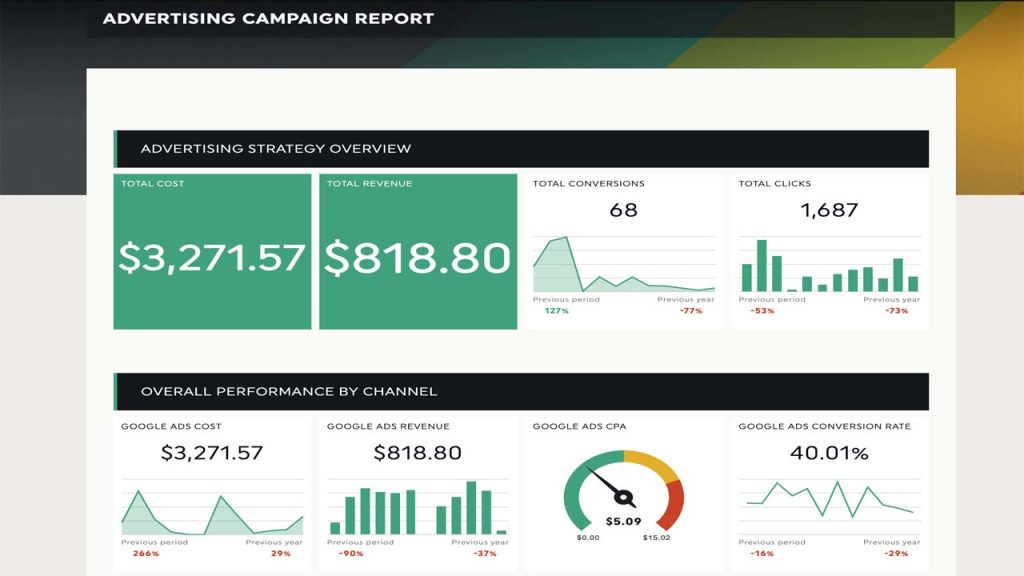
KPIs are regarded as crucial advertisement tools because they come with the following reasons:
- Measure Performance: KPIs enable advertisers to measure campaign success against the objectives set at the beginning of the project. Businesses can, thus, know whether their advertising is doing what was expected or not. In doing this, they are able to detail which parts of the process are working and at what points things are failing to get better. With the analysis of KPIs, better-informed decisions occur. Trends may be caught, and what works is distinguished from what does not. Campaigns may be adjusted through data-driven means for peak performance. As an illustration, the advertiser might take the poorly performing ad and adjust the strategy to give more effective wording.
- Accountability and Transparency: KPIs promote accountability among the ad team. Knowing from the very beginning what was needed for the campaign to succeed enables everyone involved to measure their contribution to the whole goal of the campaign. Such transparency fosters teamwork and ownership.
- Strategic Alignment: The alignment of KPI with business objectives ensures that advertisers use campaigns that create intended results in support of broader marketing and organizational goals, enhancing focus and efficiency towards realization of desirable outcomes and making communication of objectives and results of stakeholders easy.
- Resource Allocation: KPIs allow businesses to know which campaigns or channels yield the highest return on investment. With performance data, advertisers can make better resource allocations. This means that their money is being used on the most impactful efforts.
Key Considerations
- Performance Measurement: Campaign success determinant
- Informed Decisions: Data-driven adjustments for performance improvement
- Team Accountability: Clear transparency, collaboration
- Strategic Alignment: Aligns with wider business initiatives
- Resource Allocation: Budgeting effectively
Key Advertising KPIs to Watch
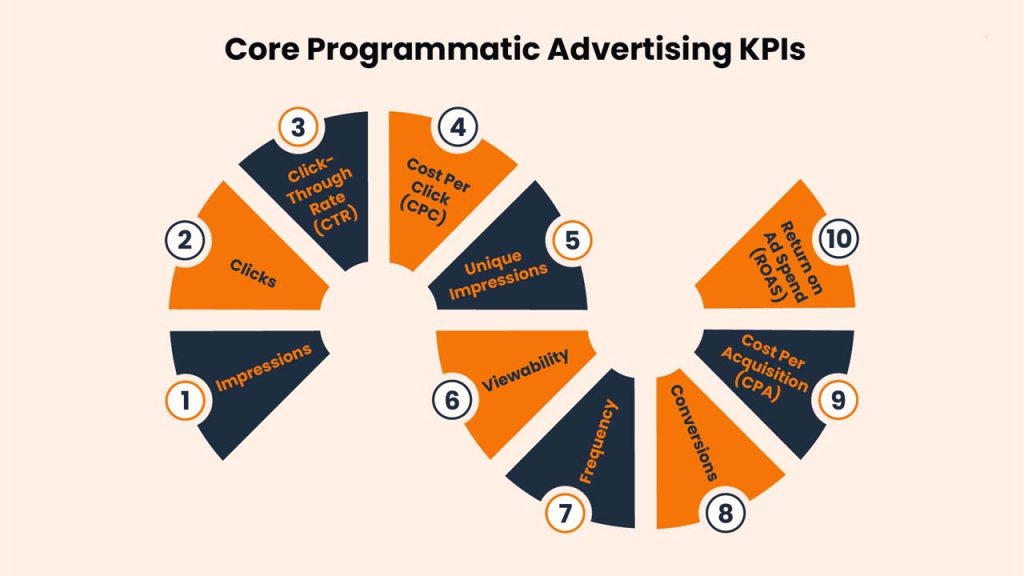
More than one KPI is required for effective measurement of advertising performance. Some of the KPIs include:
- Click-Through Rate: It refers to the click-through rate of an ad, that is, the percentage of people who clicked on the advertisement after they saw it. This is an ad creative effectiveness and targeting metric. In case the CTR is high, the ad is related to the target audience. If the CTR is low, it may indicate a need to optimise. For example, a 5% CTR means that for every 100 people viewing that ad, 5 of them clicked the ad. Over time, following CTR can show an advertiser and his campaign a pattern of how the audience may engage with the said ad.
- Conversion Rate: This tells you the percentage of people who, after viewing any given ad, ended up doing the desired action — whether buying the product or signing up for a newsletter. For instance, a 10% conversion rate means that 10% of the people who click on the ad perform the action desired after clicking. Therefore, a good conversion rate will indicate effective messaging and targeting, whereas a low conversion rate may show areas that need improvement.
Other metrics:
- Return on Advertising Spend (ROAS): It is the revenue for every dollar spent on advertising. It is another important performance indicator to analyse whether or not an advertising campaign is profitable at large. A positive ROAS will reflect a successful campaign, while a negative ROAS demands strategic realignment. For instance, if the budget for the advertisement was $1,000 and $5,000 were generated through the advertisement, then the ROAS would be 5:1. An advertiser needs to have a ROAS that could fit with the business requirements and profit margins of the company.
- Customer Acquisition Cost: CAC calculates the total cost incurred in acquiring a new customer through the advertisement campaign. This is achieved by dividing all marketing costs by the number of new customers gained in a period. For instance, through CAC, the advertiser can find whether his or her marketing plan is working as it should be or not and evaluate whether the method applied for a customer acquisition plan is worthwhile or not. A lower CAC means that a business acquires customers more cheaply.
- Engagement Rate: This KPI measures the interaction users have on an ad — likes, shares, comments, and how much total engagement there is. The higher one’s engagement rate is, the more meaningful the ad is for the target audience and helps to encourage meaningful engagements. For quite a few social media ads, engagement rate might be the most crucial metric in determining the interest of the audience in the advertisement.
Key Takeaways
- CTR: It measures effectiveness based on the click-through rate.
- Conversion Rate: Measures success based on user actions.
- ROAS: Measures campaign profitability.
- CAC: Measures customer acquisition efficiency.
- Engagement Rate: This KPI measures how much an audience is interacting.
Challenges with Measuring KPIs

While very helpful in measuring the success of an ad campaign, KPIs pose some challenges to the business in tracking and interpreting:
- Data Overload: With such vast volumes of data generated today, it sometimes gets confusingly overwhelming for advertisers to find the right set of KPIs most relevant to them. The key here is prioritization — to narrow down metrics that are in alignment with campaign goals.
- Attribution Issues: On this aspect, attributing a conversion and the performance to an effort that actually was responsible for this conversion can be quite tricky. Thus, it necessitates effective tracking by advertisers for right attribution. Using tools like Google Analytics will help in understanding the customer journey and impact coming from different channels.
- Evolutionary Metrics: Advertisements change landscapes, making some of the existing KPIs inappropriate at some point in time. The job of advertisers is to observe such changes and respond appropriately by modifying their KPI frameworks. The birth of social media and digital advertising changed the scenario and systems for brand measuring.
- Consistency of measurement: Consistency in the measurement and reporting method of data is essential for the effective analysis of KPI. It will confuse the right results and move wrong conclusions if not a proper method to measure.
- Interpreting Context: It’s critical to understand the context behind numbers because KPIs do not live in a vacuum. Any market trend, seasonal fluctuations, or economic changes could influence KPI, and without such factors being considered, it could lead to jumping wrong conclusions.
Key considerations:
- Overwhelming Data: Identify pertinent KPIs in oceans of data
- Attribution Challenges: Measure several channels’ performances
- Metrics Maturation: Helps one evolve in ad landscapes
- Consistency: Ensure accurate data gathering.
- Contextual Insight: Evaluate what is happening in the environment and how that influences KPIs.
Best Practices for Measuring KPI

To measure KPI in an ad campaign, follow these best practices:
- Clearly Define Objectives: Clearly define the objectives of a campaign along with the relevant KPIs. This helps focus on efforts for measurable goals. For example, if the objective is to increase brand awareness, likely KPIs will include impressions and engagement rate.
- Regular Monitoring: Tracking KPIs should be done continually. Trends and shifts in performance will be seen only if tracked properly. Regular analysis helps make the necessary adjustments and optimizations as early as possible. Dashboards help in tracking KPIs in real time, making the decision-making process faster.
- Data-Driven Decisions: Make data-driven decisions. Analysis of KPI data accompanied by market insights guides an advertiser in refining his strategy and improving outcomes. For example, if a particular campaign is lagging behind, a data-driven approach can pinpoint which areas need attention.
- Cross-Channel Tracking: Track cross-channel to understand campaign effectiveness across channels. That way, one can have a more comprehensive view of performances, which can better contribute to understanding the behaviour of the audience. Integrated tracking tools that may combine data from other sources will also give one such overview.
- Comparison with Competitors: Use industry KPI benchmarks to understand how well your performance is relative to others. Benchmarking helps to pinpoint areas for improvement and comparative advantage.
Key Considerations:
- Clear Objectives: KPIs should always relate to the campaign objectives.
- Regular Monitoring: KPI should be tracked periodically in order to derive performance information.
- Data-Driven: The information derived should be utilized so that decisions can be made based on knowledge and pure empirical evidence.
- Cross-Channel Tracking: Understand performance across platforms
- Benchmarking: Compare performance with industry standards
Final Thoughts
In a nutshell, KPI is a must-have tool for advertisers to measure success and optimise strategies to achieve the marketing objectives. Understanding the full form of KPI and focusing on the right key metrics such as CTR, conversion rate, ROAS, CAC, and engagement rate will help improve advertisement efforts and drive meaningful results.
KPI measurement needs clear strategic navigation, constant surveillance, and data-driven decision-making. The advertising landscape continues to change, and understanding the right mix of KPIs will better equip businesses to adapt, survive, and thrive in a more competitive marketplace.
Using KPIs correctly can transform a lowly advertising campaign into the best business booster and means of success. Continuous tuning and optimisation of campaigns in support of KPIs ensure that marketing dollars bring home the highest return on investment.
Key Takeaways:
- Measure Your Success: The KPIs help measure campaign success.
- Optimise Your Strategy: Apply enhanced advertising tactics using KPIs.
- Pursue Success Metrics: Moves toward progression.
- Adapting and Thriving: Staying up to date with the latest industry trends.
- ROI Maximization: Ensuring marketing effectiveness and efficiency delivery.
Ready to talk with a marketing expert?

A Pragmatic and innovative way to enthrall your target group is just a click away!
Get in Touch
Rukmini Knowledge Park, Kattigenahalli, SH 104, Srinivasa Nagar, Bengaluru, Karnataka 560064
+91-990 247 8800
contact@gingermediagroup.com
Popular in Television Advertising
Udaya TV AdvertisingSun TV AdvertisingStar Plus AdvertisingTV 9 AdvertisingZee TV AdvertisingNDTV India AdvertisingColors TV AdvertisingPopular in Airport Advertising
Spice Jet AdvertisingMumbai Airport AdvertisingDelhi Airport AdvertisingEmirites AdvertisingIndiGo Airlines Domestic India AdvertisingPopular in Newspaper Advertising
Deccan Herald AdvertisingPrajavani AdvertisingThe Hindu AdvertisingEconomic Times AdvertisingDainik Jagran AdvertisingHindustan Times AdvertisingPopular in Magazine Advertising
Forbes AdvertisingCosmopolitan AdvertisingBusiness World AdvertisingVogue Magazine AdvertisingPopular in Sports Advertising
IPL AdvertisingPopular in Outdoor Advertising
Billboard AdvertisingBus Shelter AdvertisingMetro Pillar AdvertisingUnipole Advertising© Ginger Media Group 2025. All Rights Reserved.