Statistics have revealed that companies using event marketing could ensure up to a 20% increase in brand awareness and 21% more sales leads. As companies continue striving in a crowded landscape, working with seasoned event advertising agencies can help raise promotional activities to greater heights.
Why look past event advertising?
Maximize brand visibility by creating unique and engaging events.
- Use expert knowledge to reach the target audience.
- Use access to resources and platforms for enhancing marketing.
- Form valuable partnerships and networks to lead to other opportunities.
- Use the appropriate strategy to suit your specific goals.
In the following article, we have reviewed the top 10 event advertising agencies in Kolkata to illustrate their offerings and success stories. We discussed crucial points regarding specializations of particular organizations, known clientele they have been involved with, and what is best about an organization for other people, so that selections regarding a preferred service provider in a particular campaign might be properly considered.
Best 10 Event Advertising Agencies in Kolkata
Kolkata is known for its rich culture and vibrant festivals and is the home of many event advertising agencies. These firms are adept at conceptualizing engaging, effective advertising campaigns that make an event unforgettable. From the management of corporate functions to luxurious weddings and grand festivals, no agency is better equipped than these agencies.
In this article, we’ll explore the top 10 event advertising agencies in Kolkata, detailing their strengths, specialties, and unique offerings. This guide will help you find the right agency to ensure your event stands out.
Why Choose an Event Advertising Agency?
Selecting an event advertising agency can elevate your event experience. Here are some compelling reasons to consider:
- Event Planning Expertise: Agencies possess years of experience and creativity, making sure your event is a smooth one.
- Access to Resources: They have established contacts in the industry that will give you access to unique venues, vendors, and insights.
- Customized Solutions: Each event is different, and agencies will tailor their services to suit your vision, goals, and budget.
Selection Criteria for an Event Advertising Agency
When partnering with an event advertising agency, consider the following:
- Portfolio: Review past events they’ve worked on to assess their style and capabilities.
- Reputation: Look for online reviews and testimonials from previous clients.
- Services Offered: Ensure the agency provides comprehensive services, including event management, advertising, and marketing.
Now, let’s dive into the top 10 event advertising agencies in Kolkata.
1. Ginger Media Group

Overview
Ginger Media Group is a leading company in event advertising. They specialize in campaigns that generate interest in audiences and linger in their minds.
Service Offered
- Event Management: Event ideas, planning, and management for corporate and social events, and weddings.
- Digital Marketing: Expertise in online promotions, including SEO, PPC, and social media advertising.
- Brand Activations: They develop creative strategies to drive brand visibility through events.
Why Choose Ginger Media Group?
- Track record of winning campaigns for several clients.
- A team dedicated to understanding the subtleties of event advertising.
- Creative concepts as per individual client requirements.
2. Event Masters

Introduction
Event Masters are known for their incredible experience designs. They are one of the companies that have creatively blended creativity with flawless execution.
Services Provided
- Full-Service Event Planning: Conceptualization to post-event analysis.
- Entertainment Management: Coordinating the performance of artists, speakers, and other entertainment activities.
- On-Site Management: They manage the event operations on-site to make sure everything goes smoothly.
Why Event Masters?
- Great experience in dealing with big corporate events.
- Top-notch customer service with a sense of satisfaction of clients.
- A team that can manage events with all kinds of budgets without compromising quality.
3. WOW Events

Description
WOW Events is great for out-of-the-box solutions for events. They are suitable for those looking for something fresh.
Services Provided
- Thematic Decorations: Creative and personalized decoration solutions for various event styles.
- Tech Integration: Incorporating the latest technology for a modern event experience.
- Vendor Management: Managing all suppliers, ensuring quality service and delivery.
Why Choose WOW Events?
- A team of enthusiastic professionals with a passion for event management.
- Focus on sustainability and eco-friendly practices.
- Flexible and adaptive to client requirements.
4. Event Here

Overview
Event Here is focused on creating a memory through meticulous planning and innovative ad campaigns.
Services
- Corporate Events: Themed conference, seminar, or product launch experience.
- Wedding Planning: All-round wedding management service – theme, and vendor coordination.
- Cultural Events: The event here is the cultural festival and fair organizer.
Why Event Here?
- They are successful with varied events.
- They keep proper communication open, so their clients are updated at all times.
- In-depth knowledge of local culture and preferences.
5. 3D Events
Overview
3D Events blends creativity with technical skills to provide total event management solutions.
Services Offered
- 3D Visualization: Visualizing the setup of the event in 3D to plan better.
- Audio-Visual Production: The latest in lighting and sound for an experience that is a class apart.
- Logistics Management: Ensuring a smooth flow of all aspects of the event.
Why 3D Events?
- Technology innovators in event planning.
- Dedicated to high-energy, dynamic experiences.
- Extensive network of local suppliers and technicians.
6. Graphiti Events

Summary
Graphiti Events specializes in tailoring unique events full of creativity and details.
Services
- Personalized Experience Design: Themed and conceptual creation for every occasion.
- Brand Management: Building brand image through consistent event solutions.
- Marketing Strategy: A strong brand marketing strategy to reach wider audiences.
Why Go for Graphiti Events?
- High visual strength and depiction enhance the entire event.
- Very creative and novel themes for events.
- Approach client-centric with transparency and communication.
7. Cine Magic Events

Description
Cine Magic Events is an event company that uses the entertainment and film industry to enhance event experiences.
Services Provided
- Film & Media Integration: Tying up with film professionals for one-of-a-kind event elements.
- Celebrity Management: Ensuring the presence of popular personalities at events.
- Custom Event Branding: Unique branding initiatives for specific clients.
Why Choose Cine Magic Events?
- The long history of celebrity-driven events.
- A unique approach that marries entertainment with advertising.
- High-profile events can be executed with accuracy.
8. Zephyr Events

Overview
Zephyr Events is an event planning organization that provides innovative solutions for a range of events.
Services Offered
- Corporate Services: All-inclusive corporate events and conference management.
- Theme Parties: Creative décor and entertainment for social gatherings.
- Digital Marketing: Digital as an advertising medium for events.
Why Choose Zephyr Events?
- Highly acclaimed and high-end profile list of previous clients.
- Fresh, riveting event ideas that make it stand out from others.
- High emphasis on client engagement at every stage of planning.
9. A1 Events

Overview
A1 Events is committed to excellence in the advertising of events and event management.
Services
- Exhibition Management: Proper management of trade shows and exhibitions.
- Social Events: Private parties, engagements, weddings, etc.
- Event Marketing: Integrated marketing for extensive promotion of events.
Why A1 Events?
- High knowledge of market trends and consumer choice.
- Flexible price structures to accommodate various budgets.
- High satisfaction from customers with multiple positive reviews.
10. Creativity Events

Description
Creativity Events boasts about its unique and lavish parties and events tailored to the customer’s needs.
Services
- Theme Planning: Creative thematic ideas that resonate with clients’ vision.
- Technology Solutions: Proper use of technology for seamless execution of events.
- Post-Event Evaluation: Comprehensive reviews to improve future events.
Why Choose Creativity Events?
- Strong focus on personalizing experiences for every client.
- Passionate about pushing creative boundaries in event planning.
- Inclusive approach considering client input at every stage.
Conclusion
Event advertising agencies in Kolkata are the perfect choice for you to make your event a successful one. Each of the agencies mentioned above has a unique thing that they bring along. As you ponder over your decision, take time to review portfolios and engage with representatives from the agency to clarify all your expectations of the event. In this way, you can make sure that your event not only meets but also exceeds every expectation.
You can turn any event into a memorable one, and whether it is a corporate event, wedding, or cultural festival, the vibrancy and culture Kolkata holds will have a story to tell with one of these top event advertising agencies as your partner.
Conclusion
Within today’s vibrant event marketing landscape, the right advertisement agency can make or break your event. Our research in the top 10 event advertising agencies in Kolkata illuminated the diverse nature of expertise and innovative approaches that these firms bring to the table. Starting from carefully planned marketing strategies, and immersive brand experiences, and going further, each of these firms is dedicated to taking your event to remarkable heights.
The agencies featured in this post, their special strengths, and specialties reflect the dynamic nature of Kolkata’s event advertising sector. Whether you want a full-service agency to take care of everything about your event or a specialized team focused on specific areas such as digital marketing or public relations, Kolkata has it all for you.
As we navigate through creative concepts and strategic execution tailored for diverse audiences, it is clear that collaboration with a competent agency can drive engagement, amplify brand visibility, and ensure memorable experiences for attendees. The right partnership not only enhances your event but also aligns with your marketing goals, ultimately resulting in a rewarding return on investment.
Consider contacting any of the listed top agencies and get to learn about them, study their portfolio in line with the vision you’re trying to implement; and then go through the journey. Remember that solid ground for holding a successful event must be set forth by good selection and effective partnership. Don’t underrate the effect of the knowledge of skilled professionals on how to incorporate storytelling into the fabric of an event and make every little detail connect with your audience.
Outline
- Agency Expertise and Specializations: Each of the agencies covered in our study is distinguished by unique expertise: for instance, there’s one specializing in experiential marketing, another that does a great deal of digital promotion, and some doing significant work in public relations. So no matter your requirement, be it creativity or structure to strategic thinking, each agency has shown a talent to transform the space.
- Client Testimonials and Success Stories: Highlighting success stories and testimonials from clients tell you how the agencies have transformed their clients’ events. Case studies of actual events demonstrate the strength of their strategies. It will help to establish credibility and trust as you study the ways by which each agency has handled different challenges, customized the event goal, and finally, delivered high-impact results.
- Selection of the Right Agency is Important: This is not a decision to be taken lightly; every agency has a different approach to event marketing and, therefore, requires each individual or group’s vision and talent, in tandem with it. Understanding your goals and thorough research on the agencies will help and enable you to make better decisions. Remember, often the ability to collaborate and be creative can make your event a success or failure.
Why Ginger Media Group for Advertising
- Years of Industry Experience: Ginger Media Group has been in the business of event advertising for years, so it knows the ins and outs of what makes an effective marketing strategy for any event.
- Creative Strategy Development: Our team takes pride in developing unique advertising strategies that capture the essence of your event, ensuring that your message resonates with the target audience.
- Comprehensive Service Offerings: Digital marketing, social media promotion, print advertising, and PR are all included in the comprehensive suite of services that we have compiled to enhance your event’s visibility.
- Strong Media Relationships: We have developed robust relationships with media outlets, influencers, and industry leaders. Through these relationships, we can best utilize our connections for maximum exposure.
- Data-Driven Approach: Utilizing analytics and market research, we assess the performance of advertising campaigns in real time, enabling us to pivot strategies effectively.
- Client-Centric Philosophy: Our success is driven by our clients’ success. We work closely with you to understand your goals and tailor our services accordingly.
- ROI Focused: At Ginger Media Group, we ensure tangible results. The strategies we execute are designed to deliver measurable returns on the investment of your advertisements.
Selecting Ginger Media Group for its event ensures a reliable partner dedicated to making your event a resounding success through innovative and effective advertisement solutions.
]]>The new marketing landscape includes many means to ensure that the targeted audience is reached. Among these methods is magazine advertising, which has been utilised as a powerful means by brands to achieve targeted audiences. However, magazines use diverse types of ads. Thus, marketers need to understand the various ad types, their purposes, functions, and real-world applications. This guide will explore each ad type, enabling businesses to employ whatever knowledge they obtain to improve their advertising strategies.
Overview of Different Forms of Magazine Advertisements
Magazine marketing is a tremendous method through which companies can convey their messages. The form of advertisement will determine all the differences in visibility and interaction between the brands and the target market. In that respect, there are a few things to look out for:
- Multi-Formats: From full-page spreads to classified lists, magazine ads provide each business’s unique marketing needs.
- Reaching the Target Possibility Audience: Different ad types can target different demographics, so marketers have to know their possibilities.
- Resource Budget: Knowing which ad type will benefit them in what way allows decision-makers to budget their resources wisely.
Why the Knowledge of Various Kinds of Magazine Ads Is Important

Knowing various kinds of magazine ads empowers marketers and business leaders to create efficient advertisement strategies. The following is why knowledge in this regard is essential:
- Sophisticated Strategy: There are full-page and partial ad types for branding and lead generation, among other marketing goals. Depending on their preferences and consumption behaviour, ads can interest their consumers.
- A knowledgeable selection of an appropriate ad can deploy resources more efficiently and increase the return on investment.
Types of Magazine Ads: Purpose, Role, and Application
1. Full-Page Advertisements
- Definition and Objective:
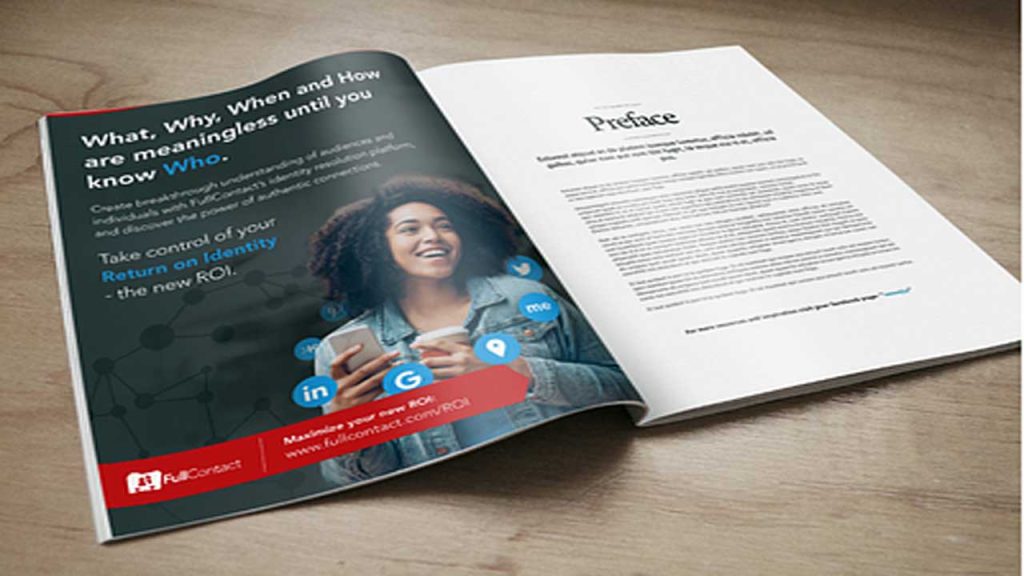
Full-page ads take the whole page of a magazine, meaning maximum visualisation. Since they are done strategically, one gets caught immediately to attract the reader’s attention through bold imagery, great headlines, and tremendous content. Due to their size, they help brands convey detailed information to convey a powerful message. - The most effective way these ads can successfully deliver comprehensive messages or brand stories to target audiences. These can be used to unveil a new product, announce an event of great importance, or launch a marketing campaign. The expansive space allowed for creative freedom, enabling brands to articulate their narratives using vivid visuals and engaging texts.
- Real-World Application:
A luxury car manufacturer with its latest model can run an open-page advertisement in a glossy lifestyle magazine. The two-pager, by way of analogy, would be equivalent to using glamorous pictures of the car in scenic locales, paired with compelling copy centred on excellent technology and performance, to reach affluent consumers with the message to help them become brand lovers.
2. Half Page Ads
- What is a half-page ad? What is its purpose?
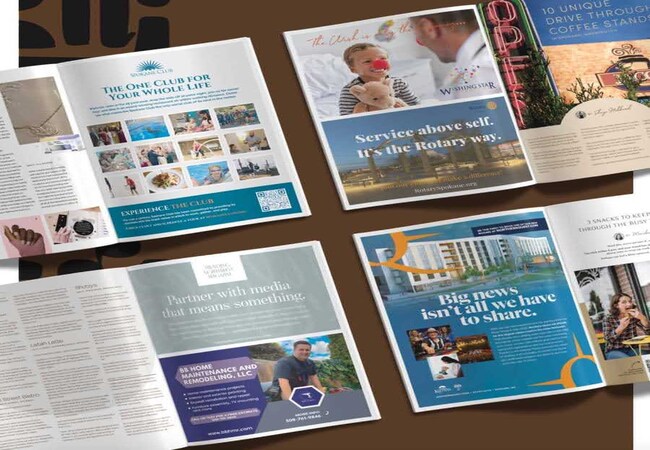
Half-page advertisements take up half the magazine’s page; therefore, there is a balance between visibility and costs. This is the right size for an ad to say whatever needs to be told without putting too much strain on the reader’s eye or budget. - Purpose:
Advertisements are meant to convey particular messages fairly succinctly. These may include promotions, special events, or product launches. Because of goals, this means that this advertisement can offer flexibility. - Practical Application:
A fashion retailer may use half-page advertising within a lifestyle magazine to feature its seasonal collection. The advertisement may be highly graphic, exhibiting the prevailing trends and a special discount valid only for a certain period of time. Such a form is markedly effective for catching the attention of the audience and putting them immediately into consumer action, such as visiting a store or shopping.
3. Quarter-Page Ads

- Definition and Purpose:
Quarter-page ads take up only a small section of the magazine page, making them cheaper yet effective in communicating your message. They are also short, but they catch the reader’s attention. - Application:
Local businesses can use quarter-page ads to promote something or an event. They serve with the delivery of the message in due time, thus ideal for time-to-time offers or announcements about events happening in the community. - Realistic Usage:
A tiny coffee shop would place a quarter-page ad for its latest seasonal latte in the community magazine. The ad can appeal to the aesthetics of the drink by publishing some very attractive images and might have a great tagline; if the shop offers a discount, that should also go up. That is how a business engages its community through advertising while driving foot traffic into the shop.
4. Advertorials

- Definition and Purpose:
Advertorials are specially created ads written in the style of an editorial to blend informative content with merely promotional content. This format enables brands to reach readers more meaningfully by incorporating value while subtly marketing their products or services. - Usage:
Advertorials are primarily used to inform and engage readers through a blend of informative content and promotion. Therefore, in their narrative form, a brand can build trust and credibility about what it’s offering. - Real-Life Use Case:
A skincare company would publish an advertorial in a health and wellness magazine discussing the benefits of using organic skincare products. The article would cover topics like organic natural skin care regimes but without overtly focusing on them and using the names of the company’s products within the text. Thus, it would educate the readers and gently push them towards considering the brand for their skin care needs.
5. Sponsored Content

What Is It?
It is sometimes called paid or branded content and must be labelled.
Sponsored content is a valuable information source or storytelling subtly intertwined with a brand message. Unlike traditional ads, this format focuses on the relevance and engagement value of the material presented to the reader.
- Function:
Sponsored content aligns readers’ interests with relevant topics while advancing the product or service being pushed. It gives brands the chance to be thought leaders and to create an aura of truthfulness. - Real-World Application:
For example, a financial services company can establish content under the category “Smart Investing Tips for Millennials,” which gives the reader a practical finance tip while subtly tucking the services inside the article. This way, the brand is more effective in connecting to a much younger crowd, building credibility, and urging the readers to follow through on their offerings.
6. Classified Ads

- Definition and Purpose:
Classified ads are text-based small adverts grouped into categories such as jobs, real estate, or personal services. Compared to other means of advertising, classified ads are relatively cheap and provide businesses and individuals with an easy way to reach targeted customers. - Purpose:
The basic function of classified ads is to connect buyers with sellers through brief information. Most of the adverts contain grouped contact data as well as short descriptions that enable the interested party to reach the adverts. - A small business can advertise a classified ad in a community magazine to list job openings and even briefly describe the position. The company can also list its contact information. This simple method makes it easier for businesses to reach their community and attract potential applicants.
7. Back Page Ads
- Definition and Purpose:
Back-page ads are placed on the rear page of the magazine, marked with high visibility and prominence. They are mostly used for high-budget campaigns and premium brands to ensure maximum visibility of the ad. - Purpose:
They are meant to catch the eye of the reader, as they are placed at the highest place. They are often used in brand launching campaigns, especially in special promotions or the release of significant announcements with which to leave a long-term impact. - Real World Example:
A blockbuster movie release can be advertised on the back page of an entertainment magazine, creating suspense among its spectators for when it will hit the theatres. The ad can include very dramatic scenes from the movie, a short, enticing slogan, and an invitation to readers to go watch it. This kind of ad receives maximum exposure and is sure to be remembered by potential viewers.
History of Magazines Used in Advertising

This is an aspect that business people also need to focus on.
- Engagement by Ad Type
- There are different types of ads which are suited to different demos and interests.
- Knowledge about various types of ads helps brands to ensure that their communication is targeted correctly.
- Branding Position
- Ads in magazines help develop images for brands.
- Differing levels of engagement across the various ad types influence consumer perception.
- Cost Effective
- Knowledge about ad types will help develop an efficient budget.
- Proper choice of ad type leads to better returns on investment.
- Creative Ideas
- Every ad type provides different opportunities to be creative.
- Engaging visuals helps to create brand recall and persuasion.
- Ability to Track and Measure
- There are various kinds of advertisements with numerous tracking options.
- Measuring engagement aids in guiding future advertising directions.
- Long-Term Success in Consumer Relationships
- Advertising in magazines holds more credibility than internet ads.
- Success in the type of ad used leads to long-term relationships with consumers.
Final Thoughts
Understanding types of magazine ads and their configuration translates to the appropriate usage of the configurations to aid in business growth. Summary of main points covered:
- Reach and Engagement: The choice of ad type can better relate to the target population, thereby boosting engagement.
- Brand Positioning: All forms of advertising work toward building a brand image in the consumer’s mind.
- Cost Efficiency: Different types of ads have cost implications. The budget can only be optimal. Making appropriate choices can only optimize the budget. Unique kinds of ads allow the value proposition to be communicated uniquely.
- Tracking/Measurement: Understood ad types can be used to aid in determining strategies’ effectiveness.
- Long-Term Consumer Relationships: Magazine ads that work build credibility and induce customer loyalty over the long term.
Conclusion
Understanding the distinct forms of magazine adverts is necessary for a business to maximise the potential of unutilised print media. Once the appropriate advert type has been selected, the marketing objectives will be achieved, the business’s advantage will stand out in a highly competitive marketplace, and growth will ensue.

Social Media Optimization (SMO) has become a strategy that companies utilize today to enhance their online presence and reach the right target audiences. Organizations use SMO to create a community, enhance brand loyalty, and drive significant traffic to their websites.
- Improved Decision-Making: Analysis of social media metrics helps companies make informed content and engagement choices.
- Cost Efficiency: SMO identifies the best-performing content, reducing wasted marketing costs.
- Customer-Oriented Approach: Social media activities focus on customer interests to increase content relevance.
- Always Measuring and Learning: Engagement metrics are frequently analyzed, promoting adaptation and optimization.
- Strategic Planning: Better analysis of audience interactions leads to improved market trend prediction and long-term success.
In this article, we delve deeper into SMO, explaining its significance in current business practices and outlining steps organizations can take to implement it in their digital marketing strategies.
What Is SMO?
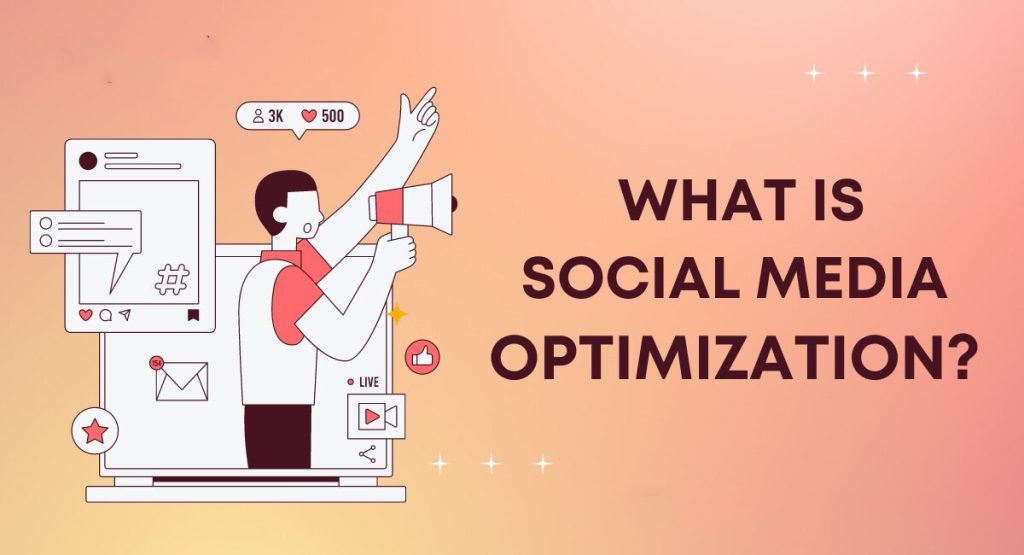
Social Media Optimization (SMO) is a strategy designed to increase visibility and engagement within the social media sphere. It aims to generate website traffic and increase brand awareness. Organizations can effectively market products or services by analyzing audience behavior and preferences through social interactions.
Key Elements of SMO
- Content Quality: High-quality, engaging, and shareable content is crucial. Content that attracts and inspires shares significantly raises reach.
- Social Engagement: Engaging with follower posts builds community loyalty and encourages brand sharing.
- Choosing the Right Social Media Platform: Selecting the correct platform based on the intended audience ensures the content’s effectiveness.
- Analytics: Performance measurement tools help marketers adjust strategies based on audience preferences.
- Brand Consistency: A uniform brand voice across platforms generates awareness and trust among target audiences.
By focusing on these elements, businesses can establish a strong SMO foundation that enhances audience engagement and loyalty.
Benefits of SMO
- Improved Decision Making: Analytics tools reveal what resonates with the audience, helping refine content.
- Cost Effectiveness: Organic reach reduces marketing expenses and customer acquisition costs.
- Effective Communication: SMO promotes two-way communication between brands and customers, fostering collaboration and community.
- Increased Brand Recognition: Quality content and engagement boost brand awareness across social media.
- Improved Website Traffic: Optimized social media channels drive more website traffic, enhancing conversion rates.
SMO can greatly impact a brand’s visibility and engagement, delivering real-world value.
The Basic Principles of SMO
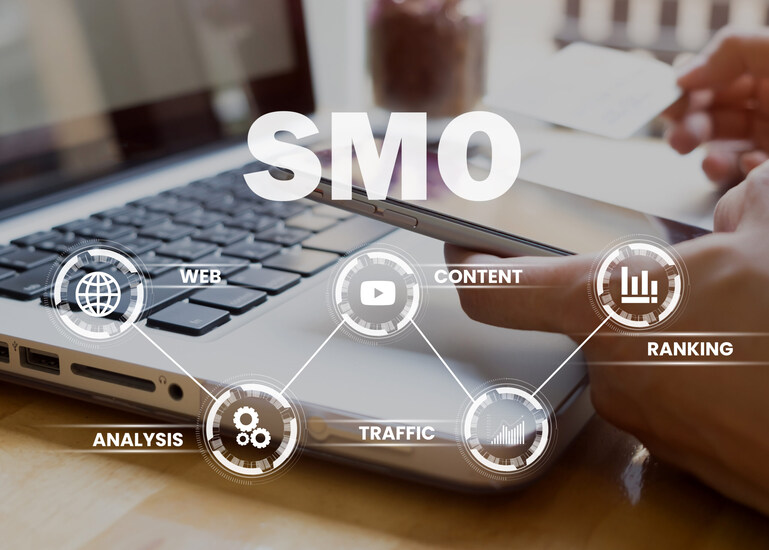
- Focus on Activities: Target specific social media activities, like posts and shares, to increase engagement.
- Link Activities to Metrics: Connect social media actions with metrics, such as engagement rates and conversions, to analyze effectiveness.
- Continuous Improvement: Regularly analyze trends and audience feedback to make strategic adjustments.
- Incorporate User-Generated Content: Encourage followers to create content, adding authenticity and fostering community participation.
- Use Paid Advertising: While organic reach is essential, paid ads help scale SMO and target demographics accurately.
Understanding these factors helps businesses build a robust SMO strategy that drives engagement and strengthens the brand.
How to Leverage SMO
- Review Current Activities: Assess your social media presence to identify strengths and weaknesses.
- Cost Drivers: Identify cost drivers, such as ad spends and content creation costs, to manage the social media budget effectively.
- Introduce Performance Metrics: Define metrics like click-through rates and engagement ratios to measure success.
- Empower Employees: Encourage employees to share company-related content and interact with customers, expanding brand reach and authenticity.
- Leverage Technology: Use social media management tools for automation, timely posting, and engagement data analysis.
These steps have proven useful for organizations in executing effective SMO campaigns that boost engagement and visibility.
Real-Life Examples of SMO
- Example 1: A retail brand launched a hashtag campaign encouraging customers to share their outfits on social media, increasing user-generated content and engagement by 150%.
- Example 2: A software company posted targeted content on LinkedIn, which boosted website traffic by 200% and increased lead generation.
- Example 3: A local restaurant shared daily specials on Instagram stories, which led to a 50% increase in footfall and bookings, demonstrating the effectiveness of real-time engagement.
These examples show how successful SMO can lead to positive business outcomes.
Final Thoughts
In a nutshell, SMO is an effective strategy for organizations aiming to increase their online presence, engagement, and brand recognition. By leveraging social media knowledge, allocating resources for content creation, and consistently improving, businesses can unlock immense potential in their operations and decision-making processes.
With SMO principles, organizations can achieve:
- Higher Brand Awareness: Expanding brand presence across social media channels.
- Greater Customer Interaction: Building meaningful relationships with customers fosters loyalty and community.
- More Traffic: Optimized social media channels drive more traffic to websites, potentially boosting conversion rates.
Now is the ideal time to adopt SMO for organizational growth. Start today to transform your digital platform into a driver of successful business results!
]]>- Visibility: Billboards are constructed as significant, easy-to-read screens posted along highways, making them visible to pedestrians and drivers at intersections.
- Brand Awareness: They are rapidly positioned to notify and introduce the target group to the definite brand.
- Local Reach: Great for regional businesses attracting customers from the immediate area.
- Cost-Effectiveness: The value derived from loyal daily viewers more than matches the initial amount invested.
Do you know that outdoor advertising records the highest recall among all types of media—47%? In a world where everyone is bombarded with digital noise, finding out the cost and benefits of billboard advertising can be the key to having powerful marketing strategies that touch your audience. This is a strong instrument that should not be overlooked.
Understanding the Cost of Billboard Advertising: An In-Depth Analysis
Billboard advertising is the ultimate marketing strategy, which is robust and adaptable. The way it is creates an opportunity for the brand to attract the attention of more than a thousand potential customers on the go. However, to contemplate installing any advertising campaign with the help of billboards, it is imperative to acknowledge how pivotal the associated costs are. Through this write-up, we will dissect various determinants of billboard advertising and how you can get the best deals on ROI.
What is Billboard Advertising?

Billboard advertising is a marketing concept where large outdoor advertisements are used in places frequented by many people. The idea is to attract as much public attention as possible. Traditional paint billboards and digital displays with changeable content inhabit such intervals. Billboard advertising aims to cultivate brand identification, convey brief descriptions, and attract customers to store costs.
Knowledge about the elements that affect digital billboard advertising costs is one of the key things you must note when you decide to use this type of advertising essential company. Here are some of the most prevalent factors determining how much businesses pay for billboards.
Location
- High-Traffic Areas: The advertising houses of billboards on the main roads in the city’s heart or well-frequented highways set higher prices than the others because they can be seen from afar or many times.
- Target Audience: Billboard advertising wisely placed in locations visited frequently by your target audience will drive more customer engagement, even though it is usually a bit more expensive than other outdoor advertising methods.
- Competitor Presence: If your rivals have ads at the exact location, the cost of this ad will be higher because there will be more demand, pushing the prices up.
Size and Format
- Size: Billboard advertisers charge a higher price for these ads for a larger space and to enjoy larger sighs than those in smaller formats.
- Digital vs. Static: Digital billboards are often more expensive than static ones, as they may be displayed more flexibly, showing different ads on a rotating basis. This may attract more customers at certain periods of time, thereby offering more value.
- Special Formats: Unlike general formats, such as 3D or interactive ones, which can easily capture the public’s eye but at a higher fee.
Duration of the Campaign
- Short-term vs. Long-term Ads: While a short-term campaign may be cheaper initially, it can be more costly daily. A long-term contract can, on the other hand, reduce costs, which may result in lower daily rates.
- Seasonality: Prices are changed seasonally and are higher at peak times (e.g., holidays).
Design and Production Costs
- Creative Development: The cost of a billboard advertisement can be huge, and the cost of its design, which, in turn, might differ depending on the extent of the creativity and the agency or designer.
- Installation Fees: The company may offer a separate installation fee and maintenance fee, which might be within your budget.
- Lighting and Technology: Additional expenses may include the screen and illumination systems required at night, as digital billboards sometimes require these technologies. They are vital for good visibility.
Average Costs for Billboard Advertising
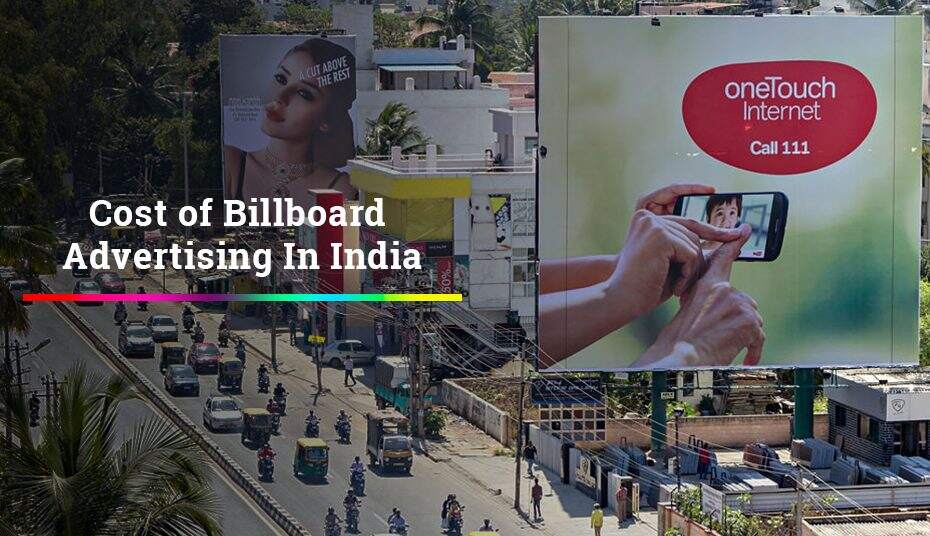
Static Billboards
- Typical Rates: Due to size and location, static billboard tariffs generally fluctuate from $750 to $2,500 monthly.
- Cost Factors: The size of cities, the level of visibility of billboards, and their proximity to major roads can increase the cost of static billboards.
Digital Billboards
- Typical Rates: A regular price for a digital billboard is $1,200 to $15,000 every month.
- Flexibility: An important advantage is frequent ad rotation, which can raise the engagement level. The ability to change the ad frequently can lead to higher engagement.
Additional Costs
- Production: Production costs can be as low as a few hundred or even as high as a few thousand, depending on the design complexity.
- Installation and Maintenance: If needed, installation and maintenance costs should be included in the advertisement party’s budget.
Maximizing Your ROI on Billboard Advertising
Of course, throwing money into a billboard ad campaign can significantly impact the campaign. Hence, the most crucial homework is ROI optimization. Here are strategies to get the most out of your advertising dollar:
Define Clear Goals
- Brand Awareness: First of all, let us make it clear from the very beginning what the objectives of our campaigns are, for example, whether it is about the discipline of awareness building, the driving of sales, or the promotion of a particular event.
- Target Audience: These are the demographics that you want to exchange with, and before they see the ad, make sure that the placement of the billboard aligns with these people.
Craft a Compelling Message
- Simplicity: The rule of thumb here is to keep the message simple and direct so that anybody can understand it. Just remember that less is more- limit yourself to using no more than seven words for the message.
- Call to Action: Offering a direct call to action to your visitors to join your brand, for instance, going to the site or making a call, would be helpful in the long run.
Monitor and Analyze Performance
- Use Tracking Codes: Use specially designated tracking codes, or if that is not possible, try specially designated URLs to measure the effect of your billboard campaigns on your sales rate.
- Audience Insights: Moreover, you can also exploit the advantages of analytics applications to gather data on views, engagement, and conversion rates, which will, in turn, help you adjust strategies as needed.
Additional Considerations for Billboard Advertising
When budgeting for billboard advertising, consider additional expenses that can influence your total cost:
Regulatory Fees
- Permits: The billboards need permissions, and the fees can vary by region. You will have to consider them in your budgeting.
- Compliance: Your advertisement sign should comply with the regulations and codes set by the local government to avoid penalties and ad removal.
Local Market Trends
- Economic Conditions: Local economic changes, such as recessions or booms, can also affect ad costs, so paying attention to market conditions is a good idea.
- Seasonal Demand: Monitor the advertising trends that reflect public holidays and seasonal changes where you live for potential price changes.
Competition Analysis
- Market Saturation: Reviewing the number of companies contending for the billboard space in your chosen region will help you know how to price and which strategy to adopt.
- Innovative Strategies: Mind tactics such as GREENERETING your ad through creativity, message, or placement will attract more customers than the rest of the break, resulting in creative differentiation from the rest of the competitors.
Get Started with Your Billboard Campaign
If you plan to experience out-of-home advertising, forget caution and contact us, where a media-buying professional will guide you.
Final Thoughts
- Understanding Costs: Being updated with the advertising costs that are on the rise nowadays is a must if one wants to gain the most for the least in terms of quality and quantity.
- Unique Benefits: Billboards provide plenty of visual space to brands, and they are types of massive outdoor media that boast a large audience who engage in print advertising. This is catching all the extra customers in firms that are finding it difficult to compete in the market.
- Location: Advertising the product in high-traffic places may cost you more than advertising in other areas, but it will bring more customers.
- Size and Type: The materials and technologies to be used when the billboard is to be created should be considered in the context of prudent budgeting.
- Additional Expenses: At the same time, you should not leave out the design and periodic expenses.
- Importance of Location: For an advertisement to be practical against competitors, it should be located at the intersection of high traffic and your target market.
- Digital Billboards: The dynamic nature of digital screens enables real-time updates to be displayed, boosting interaction rates. Initially, it will be more expensive, which is the main factor in this analysis, so most businesses will go for it after evaluating whether the costs and objectives are realistic.
- Strategic Planning: A thorough understanding of billboard advertising, strategic planning, and research can guarantee a profitable return on investment.
- Creating Impactful Campaigns: Proper billboard deployment aligned to the target audience and the use of those well-known design strategies constitute critical components of the campaign so that they elicit a response from your audience.
Conclusion
Billboards are still the most powerful marketing tool for companies. Whether you want to be synonymous with your brand or you are launching a particular product, estimating the costs and basing your decisions on the best practices will guide you to success in your marketing endeavours.
Get Started with Your Billboard Campaign with Ginger Media Group
Are you interested in finding out what unique possibilities billboard advertising offers? Now that you have the desire to act on this matter, it might be perfect for you. Ginger Media Group is fully aware that billboard marketing can be a significant step for your brand, and we will guide you every step of the way.
Why Choose Ginger Media Group?
- Experience Unplugged: Our team consists of professionals focused only on outdoor advertising. Our years of experience in the market have given us a unique understanding of what is effective, and we adapt our strategies according to the target audience’s needs. We are dedicated to guiding you through the complexity of billboard advertising so your investment will provide the most benefit.
- The All-Embracing Discussion: Once you have contacted us, we guarantee that you will receive not only a proper consultation but also one that deals exclusively with your business’ special requirements. We will discuss your goals, budget, and target demographic to devise a tailored billboard advertising approach that is in line with your main marketing mission.
- A Clear Explanation about the Costs: The first impression can sometimes be terrifying, even more so if you have an idea of the costs. Nevertheless, they are justifiable when you realize the medium’s true power in attracting and retaining customers. Our expert staff will explain the current status of billboard advertising.
You will find information about the size and location of the billboards, as well as extra charges, such as design and maintenance. This knowledge will increase your power to make wise decisions, which will, in turn, result in the optimized use of your advertising budget.
]]>- Definition: Media vehicles are specific channels through which advertising messages are delivered.
- Diversity: Different media vehicles, such as television, radio, print, and social media, cater to varied demographics.
- Targeting: Choosing the right media vehicle ensures the intended audience receives the message.
- Cost-Effectiveness: Selecting appropriate media can optimize advertising budgets and enhance return on investment.
- Performance Measurement: Understanding media vehicles helps assess marketing strategies’ effectiveness.
Overview of Media Vehicle
A media vehicle refers to a specific channel or platform from which the advertising message is delivered to the audience. Examples of media vehicles include:
- Television shows
- Radio stations
- Newspapers
- Magazines
- Websites
- Social media platforms
The audience demographics and reach for each of these media vehicles differ, so selecting the right car is essential for advertisers to convey their intended message effectively.
Importance of Knowing Media Vehicles
Understanding media vehicles is essential for marketers and strategic decision-makers. Key areas of importance include:
- Target Audience Reach: Different media vehicles reach different audiences. Knowing which vehicles resonate with specific demographics enables brands to tailor their advertising efforts more effectively.
- Cost-Effectiveness: Choosing a suitable medium helps optimize budget spending. A well-chosen media vehicle can maximize reach with less expenditure, improving ROI.
- Message Compatibility: Each media vehicle has unique characteristics that affect how people perceive a message. Ensuring message compatibility with the chosen vehicle maximizes its effectiveness.
- Performance Measurement: Evaluating media-vehicle performance allows marketers to measure engagement rates, conversions, and other metrics, directly influencing future strategies.
- Strategic Decision Making: Staying informed about changes in media vehicles helps businesses make more innovative, adaptive decisions in the dynamic media space.
Understanding the Term
Media Vehicle Definition
A media vehicle is the medium or channel through which a message reaches its intended audience. Examples of media vehicles include:
- Television
- Radio
- Print (newspapers, magazines)
- Outdoor advertising
- Digital media (social media, websites, email)
Each of these media vehicles has unique characteristics, audience demographics, and levels of engagement, making it crucial for marketers to choose the right one for their objectives.
Purpose and Function
The primary purpose of a media vehicle is to act as a channel for delivering advertising messages to a target audience as effectively as possible. Key functions include:
- Audience Targeting: Different media vehicles target different population segments. For example, social media platforms like TikTok are ideal for reaching younger audiences, while older demographics may be more receptive to traditional TV or newspaper ads.
- Message Delivery: Media vehicles serve as the medium for delivering marketing messages. Advertising text, video, or audio, are adapted to fit the vehicle’s presentation.
- Brand Awareness: Repeated exposure through effective media vehicles enhances brand recognition and recall, reinforcing messages across multiple channels.
- Interactivity and Involvement: Many media vehicles, especially digital ones, allow for interaction. Brands can engage with their audience through comments, shares, or direct messages, building stronger relationships and gaining valuable feedback.
- Measurement and Analytics: Digital media vehicles offer advanced analytics, allowing businesses to track impressions, clicks, and conversions. This data helps shape future marketing strategies and define budget allocations.
Real-Life Examples of Media Vehicles

Media vehicles are applied across various industries and marketing campaigns:
- Product Launches: A new beverage brand may use TV commercials to create awareness while running social media ads targeting specific demographics. Outdoor advertising in high-traffic areas can further attract attention.
- Election Campaigns: Politicians often use a mix of television spots for broad reach, radio for local engagement, and social media to target specific voter groups.
- Event Promotion: For a music festival, organizers might use radio stations for ticket giveaways, social media for interactive promotions, and local entertainment magazines for detailed event coverage.
- Content Marketing: Brands use blogs as digital media to share valuable information. They then amplify this content through social media, email newsletters, and influencer partnerships to drive traffic to their website.
- E-commerce Promotions: Online retailers leverage media vehicles like email newsletters, social media ads, and influencer collaborations to drive website traffic and boost sales.
Importance of Understanding Media Vehicles: The Key to Success for Businesses

In today’s digitally driven marketplace, understanding media vehicles is vital for successful audience engagement. Key reasons include:
- Engagement with Target Audience: Selecting the right media vehicle ensures the message reaches the intended audience. Different demographics interact with media vehicles in unique ways. For example, younger consumers may prefer social media, while older demographics connect more with traditional media like TV or newspapers.
- Cost-Effectiveness: Knowing the most influential media vehicles helps businesses allocate their advertising budgets wisely, ensuring the highest ROI. Local businesses might find local radio ads more cost-effective, while national brands may benefit from digital strategies.
- Brand Awareness and Visibility: Strategically utilizing multiple media vehicles ensures a consistent message reaches the consumer across various touchpoints. A multi-channel approach increases brand visibility and recall.
- Market Trend Alignment: As the media landscape evolves, businesses must stay informed about emerging vehicles and their effectiveness. This adaptability allows businesses to remain competitive and take advantage of new opportunities.
- Measuring Effectiveness: Media vehicles allow businesses to measure campaign impact through metrics such as reach, engagement, and conversion rates. Analyzing this data helps refine marketing strategies for future campaigns, driving better overall performance.
Final Thoughts
Understanding media vehicles is a fundamental aspect of any successful marketing strategy. Selecting the right media vehicle ensures that messages reach the appropriate audience, maximize budget efficiency, and boost brand recognition. As the media landscape continues to evolve, businesses must stay informed and adaptable to leverage the full potential of media vehicles and ensure long-term success. By focusing on the strengths of each media channel, companies can enhance their marketing efforts and connect with their customers more effectively.
]]>- Strategic Communication: Advertising is not about conveying a message but rather creating a story that gives the user power.
- Emotional Engagement: Advertising alone can be an effective device for emotional engagement between a brand and a consumer.
- Long-term Impact: Advertising is not about short-term sales; it is a vehicle for building brand identity and loyalty over the long haul.
As we examine this topic, it becomes clear that advertising goes beyond a message; it is a multidimensional approach designed to communicate value and create lasting ties.
Functions of Advertising
1. Building Brand Awareness

Brand awareness is always at the root of a successful marketing plan. Without that, even the greatest products and services can remain in obscurity. It is through advertising that a brand becomes visible and therefore acknowledged by its target audience. Here are three must points regarding brand awareness:
- Target Audience Identification:
Identification of the target group based on demography, interests, and behaviour is equally significant. To achieve this, detailed market research, surveys, and data analysis about the consumer are essential. Using tools like Google Analytics and insights from social media, brands can obtain valuable information related to customers’ preferences and online behaviour. - Compelling Messaging:
A compelling message that communicates with the audience must be created once the target audience is defined. It needs to indicate how the USPs of the brand have helped it uphold its core values and what benefits it has effectively offered to them. - Strategic Channel Selection:
Selecting social media, TV, print, or digital platforms through which the message can be amplified makes the effectiveness of advertising more profound. Maximum reach and impact will then enable that brand to top the consumer’s mind.
Brand awareness builds a foundation for future interactions. Familiarity is of the essence in a competitive marketplace.
2. Persuasion and Influence

Persuasion and influence are intrinsic to advertising. It’s constructed to not only inform but influence the attitudes of, and eventually the behaviour of, the target consumers. There are three primary characteristics of that function:
- Emotional Appeals:
Appeals that create a sense of happiness, nostalgia, or sympathy make the consumer develop a stronger bond between the consumer and the appeal. For example, an advertisement where a family enjoys their food as a family can be felt in the warmth it evolves and then the consumer associates the latter with the brand. - USPs – Clear Difference Communication in Advertisements:
Advertisers must clearly communicate in their ads what differentiates the offering from a competitor in terms of quality, newness, and service. Comparative advertising has its own value if done judiciously. - Validation by Testimonials:
Testimonials, endorsements, and user-generated pieces of evidence are powerful tools with which a brand’s claims are validated. It gives credence, makes it attractive, and influences the consumer’s way of thinking about the offering.
Advertising functions therefore include persuasion and influence as it acts to shape consumers’ views of the brands and their offerings.
3. Production of Sales and Revenue

The very point of advertising is to create sales and revenue. In this respect, three points summarize the above function:
- Creating Urgency:
Terms like “limited-time offer” or “exclusive discounts” appeal to the customer’s fear of missing out. This strategy is most effective, though, during promotions and seasonal sales. - Long-Term Brand Loyalty:
A good advertisement campaign can definitely increase direct sales, but it can also help in long-term brand loyalty and repeat purchases. Continuous messages, quality goods, and concern for customer satisfaction may lead to sustained business growth. - Measuring Success:
Through the use of metrics like return on investment (ROI) and customer lifetime value (CLV), brands can determine how successful their advertising has been, depending on the sales and revenues it yielded. This also means that in future strategies, those metrics and values could be utilised to alter and improve the advertising campaign.
General Purpose of Advertising:
The most obvious main purpose of advertising is to increase sales and revenue for a business. This is what keeps and expands a business.
4. Communication to the Target Markets
Communication with the target markets involves education through advertisement. While the primary job of advertising is to induce sales, educating the target group is another very important task. Here are three essential characteristics of educative advertising:
- Informative Messages:
Advertising can communicate valuable information to audiences for intelligent decision-making. This is especially helpful when new products are launched or complex offerings are involved.
Educational advertising does a lot of work in showing why a product should be bought based on its features and benefits. For example, a technology company can have its ads demonstrate how to use a new gadget while highlighting unique functionalities and ease of use. - Positioning as a Subject Matter Expert:
Helpful content—tutorials, guides, or explainer videos—boosts the trustworthiness and credibility of a brand with the target audience. That is to say, it will not only educate them but also empower their reputation virtually.
Educational advertising and consumer decision-making
Educational advertising often results in an empowered consumer decision and thus enriches the experience of a customer.
5. Customer Loyalty
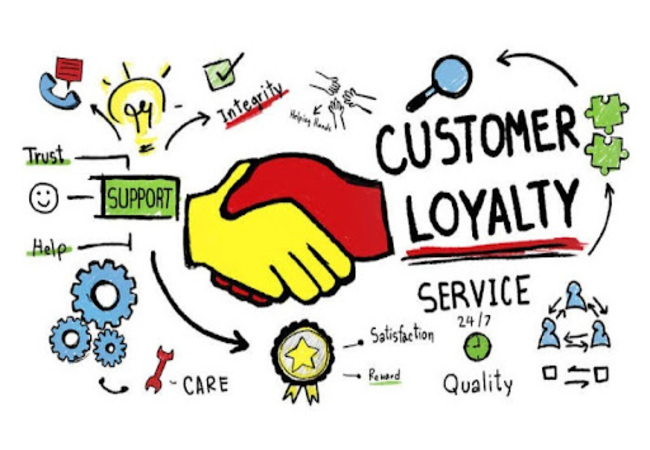
Customer loyalty is the foundation upon which long-term business success is built, and advertising can be critical in developing it. Here are three points on customer loyalty through advertising:
- Loyalty Programs:
Advertising schemes for loyalty programs such as points-based schemes, exclusive discounts, or pre-sale access to sales increase repeated purchases and, in turn, customer retention. These schemes give a feeling of belonging. - Consistent Messaging:
Customers are bound to love the brand because consistency on all channels begets loyalty. When a customer sees an ad that speaks to his belief system and his very life, he is likely to identify with the brand. - Creating Advocates:
After some time, the emotional attachment will culminate into loyalty, and happy customers become advocates for a brand, referring other people by word of mouth. This organic source of promotion can do wonders to extend the reach and credibility of a brand.
Emotional loyalty through advertising not only brings repeat business but also helps the consumer become a passionate advocate for the brand.
Final Thoughts
The functions of advertising are highly diverse. Each purpose has a very specific role that fits under marketing’s vast purview. Here are three final takeaways:
- Integral Marketing Strategy:
Understanding the diverse functions of advertising helps brands create integral marketing strategies that cater to consumers’ various needs. - Strategic Integration:
A firm’s message across all channels will be consistent with an effective marketing approach through the use of advertising functions. - Long-term Success:
Good advertising will communicate value, inspire trust, and will eventually have a brand that is more meaningful to the consumer in the long run.
Suppose the real core functions of advertising are understood and effectively applied. In that case, it is possible to handle the intricacies of consumer behaviour, increase brand presence, and cause long-run growth. Taking on board these functions of advertising will enable the brands to reach even better connections with the target audience, thus resulting in more success for themselves in the competitive marketplace.
]]>Importance and Relevance:
Global digital advertising spending tiptops the mark of trillions of dollars, so marketers should focus on how the landscape works before embarking on digital advertising strategies. Being a small business or working with one of the big firms, internet advertising is central to ensuring that your message emerges from the cacophony of the market space. In a period when customers were already used to shopping digitally, if you can engage your audience in a targeted way, your brand can be made or broken.
What You Can Expect to Learn
In this paper, we will deploy many points about internet advertising that will walk you through its concept, significance, types, and best ways of implementation. The review will consider the role of digital marketing techniques/tools in brand success. Finally, through this analysis, you will acquire a comprehensive knowledge of internet advertising, the methods used to make an advertisement effective, and the key performance indicators marketers use.
Key Concepts and Frameworks
Throughout the post, we will introduce “directing concepts” that are usually the footnotes of internet ad promotion, such as:
- Focus on targeting and segmentation: Tracking buyers’ movements and defining the types of purchases.
- Make-Turn-On-Point Pay-Per-Click (PPC) Advertising: The explanation of the bidding and the matched phrases and their relation to clicks and sales.
- Search Engine Optimization (SEO): The synergism of SEO and business to achieve exposure through advertising.
- Return on Investment (ROI): A comparison of different procedures to give air a green light to your promotion activities.
Involving yourself in these thought sets and models will help you gain knowledge that can be quickly used in your advertising campaigns, which will help in brand familiarity, customer interactions, and user moves. Help us volcano the stompy but at the same exciting realm of internet advertising.
Understanding the Fundamentals of Internet Advertising

Net advertisement, also called online or digital ads, includes various registered methods for promotion. One can access products and services at any time via the Internet. Among the primary objectives of online promotions is to find potential clientele using the instruments provided by the specific network.
Important Aspects:
- Types of Internet Advertising: There are various Internet advertising formats, including display ads, social media ads, search engine marketing (SEM), native advertising, and email marketing. Each type serves different purposes and is aimed at a particular audience.
- Statistics: According to a recent Statista report, $500 billion will be spent on internet advertising globally by 2023, and modern marketing strategies are critical.
- Frameworks: The AIDA model, also known as Attention, Interest, Desire, and Action, is one of the basics that are commonly used in internet advertising strategies to monitor people’s interests and lead them effectively.
The Role of Targeting in Internet Advertising

A significant asset of the Internet advertising industry is the ability to single out individual audiences according to different criteria, making the customers find the advertisements more relevant.
Key Considerations
- Targeting Techniques: Marketers can benefit from demographic targeting, behavioral targeting, contextual targeting, and geolocation targeting, by which they can narrow down their choices and distinguish clientele at high precision.
- Benefits: The accurate focus makes it easier to reach conversion targets; thus, the amount of advertising probably spent is smoothly set by merely choosing the most profitable ones.
- Challenges: In fact, too-advanced targeting technology and behavior analysis are what develop in people’s nightmares. Companies must consider both the privacy settings and the precision of the targeting to ensure that all parties are satisfied.
Emerging Trends in Internet Advertising

In line with the development of technology, online advertising is constantly revised and remodeled, introducing fresh techniques and strategies to interact with users.
Current Developments:
- Programmatic Advertising: Programmatic ad buying is an automated process that allows advertisers to acquire commercial time directly from the media outlet without contacting a human seller.
- Influencer Marketing: Partnering with social media influencers has become more popular as brands try to attract niche viewers.
- Sustainability and Ethical Advertising: Consumers are growing more aware of the different sustainable methods. Brands that encourage social responsibility in advertising are the most likely to make a bridge to their customers and thus give them a competitive edge while doing it.
- Implications for Businesses: The trend of businesses breaking away from traditional advertising is crucial since these companies would not be able to maximize advertising impact or strengthen brand loyalty. This means doing things differently will not only attract more customers but also position the firm as a strong force in the digital beast.
Conclusion
In the current era of digital media, internet advertising is the key factor in the effectiveness of marketing tactics. Its importance cannot be emphasized enough because increasing visibility and reaching new levels fosters engagement and leads to conversions. On the part of businesses, through the comprehension and application of the ever-advancing sides of internet advertising, they can quickly and comprehensively be in charge and strongly associated with the target audience, build the brand, and get empirical evidence of the results. The main components of Internet advertising are such as:
- Targeted Advertising: Presenting ads to specific groups and areas to increase their fascination and engagement.
- Cost-Effectiveness: Providing more budget plan options and bringing companies of all sizes in creates a win-win situation for all players.
- Diverse Formats: Bringing out various ad looks like display advertising, social media posts, video advertising, and many others, thus contributing to brand creative message conveyance.
- Real-Time Analytics: Making these analysis reports gives us insights into the performances of these metrics. Hence, marketers can tweak strategies and maximize the ROI.
- Mobile Optimization: Ads are available on mobile devices and take the most advantage of users accessing the Internet through mobile devices. Internet advertising is a must for a company competing online and wants to be successful. By employing its elements properly, brands can accomplish their marketing objectives and ensure sustainable development.
Understanding Buzz Marketing
Buzz marketing is a promotional strategy whose primary goal is to activate a high interest level by spreading the word about a product or service. Social interaction is the main way that the brand’s platform and sharing information about it expect to get a vibrant and viral buzz that will immediately catch the eye of the respective customers. Charging the launched platform of the brand is by getting influencers engaged and users involved by messaging them informally and speaking candidly about the brand.
The Power of Word-of-Mouth
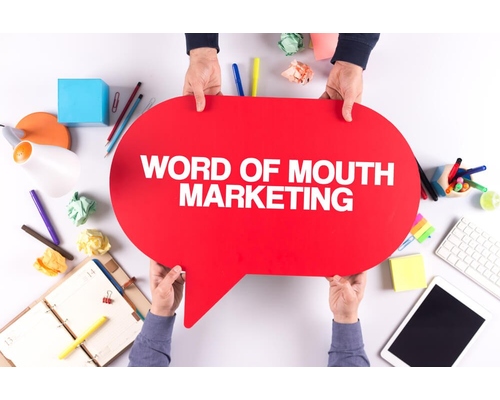
Buzz marketing’s main focus is thus not on creating awareness about the product but spreading the same via word-of-mouth marketing. On this occasion, personal recommendations would be sourced from friends, quite different from advertised brands.
- Importance of Trust: At best, 92% of consumers consider recommendations from friends and family the best way to find a good product or service. This may partly explain WOMM’s extreme impact on the consumer’s decision-making process.
- Case Study: The Ice Bucket Challenge, reaching the ultimate point of viralness, was not limited to the support of awareness for ALS, but it was an involvement of users, mostly the ones who either donated to this cause or shared their experiences online, which demonstrated that buzz through other techniques to set up a product marketing can make a moment.
- Frameworks: The “Hype Cycle” Carries people along on a new ride, another method to increase usage. They may try a new technology before they hear anyone endorse it. The Early Peak learns in buzz marketing, whether organizing short-lived promotions or going viral by creating real experiences and attention.
Creating Engaging Experiences

The second principle of buzz marketing consists of creating experiential perceived as engaging individuals to share the brand’s activity, usually in the kids and families demographic.
- Successful Campaigns: A few brands, even Nike, have connected people through regional events or sports campaigns, and the users are inspired to submit their content on social media. To illustrate, shoes not available year-round always lead to a successful launch because buyers are eager to share their experiences.
- Challenges: The most prominent buzz marketing issue is controlling the narrative. If you are not careful, negative views can spread as fast as positive ones. Companies must effectively handle crises that could make them look bad while staying calm.
- Strategies for Engagement: Brand promotion through memes or videos and user-generated content will be the best option for individuals to create buzz. Influencers are a good strategy because they can widen the outreach and improve the campaign’s reliability.
The Role of Digital Platforms

On a global scale, as we undergo digitalization, the role of online platforms is always of paramount importance in the buzz marketing process.
- Emerging Trends: Brands now use social media platforms such as TikTok and Instagram to target and communicate with customers differently. Quick, meaningful content that people can connect with is often so liked that it becomes a trend and thus leads to great publicity.
- Data Insights: A Sprout Social survey revealed that most consumers are highly likely to share information about a product with others if they come across it on social media. This may be done online to provide all the participants with one-of-a-kind attendance moments and open up a wide consumer base.
- Implications for Brands: Understanding platform dynamics and consumer behavior can help marketing teams design strategies. Providing interactive content, such as polls or live Q&As, will boost consumer engagement and raise interest in the brand.
To put it briefly, buzz marketing is an important method that produces a feeling of awe and inspires people to share their experiences. By being a repository of trust, sharing enthralling content, and maximizing digital networks, companies can successfully create a “buzz” that markets products and establishes a relationship with clients.
Conclusion
Buzz marketing is a breakthrough approach that capitalizes on word-of-mouth marketing to build excitement, anticipation, and engagement around the brand, product, or service. In the rapid digital revolution era, where many choices and advertisements swamp consumers, productive buzz marketing stands out. This method is naturally inclined to humans’ desire to share engaging opinions and suggestions, making it a vital part of today’s marketing tactics.
The main themes and components of buzz marketing include:
- Viral Content: Creating captivating and shareable content that users connect with and want to share.
- Social Media Engagement: The efficient and effective use of social media platforms, such as Instagram, Twitter, and TikTok, to bring out the best conversations and interactions users have with their peers.
- Influencer Partnerships are the practice of developing relationships with influencers to build the brand’s social proof and gain more public attention.
- Experiential Marketing: Creating experiences that grab the consumer’s attention and motivate them to share the excitement with others triggers word-of-mouth promotion.
- Community Building: The act of building or bettering a community by including your target community in engaging activities that will initiate more natural buzz. Competition of these elements allows various organizations to compete with each other to find the buzz due to their offerings, make them more noticeable on the market, and allow them to attract and keep their customers.
Nowadays, in a typical advertising disagreement}, you might get a glaze-eye treatment going; buzz marketing, on the other hand, is one of the strategies that cannot be different and efficient when getting consumers’ attention and getting them to stick to brands.
]]>This blog post’s purpose is to reveal the selling point of product advertising—what it is, why it matters, and how it has changed in the prevailing digital era. We will disclose the underlying principles of successful product promotion strategies and investigate the details that make the difference to only partially successful campaigns.
They will learn from the article the strategies advertising can include, such as publications in traditional media and television, as well as new methods, such as social media advertising and partnering with influencers. Additionally, we will take a closer look at valuable concepts like the AIDA (Attention, Interest, Desire, Action) model—a principle that guides the creation of persuasive messages that your audience can relate to.
Through the article, you will hold a full-fledged review of product advertising along with its strategic role in the campaigns of the present time. You will be knowledgeable about practical ideas that will enable you to make the right decisions, whether you are a marketing person, a business owner, or just a curious person who wants to discover how products are delivered to customers. Let’s go more profound as we look at this essential aspect of the marketing world!
Understanding Product Advertising: Definition and Significance
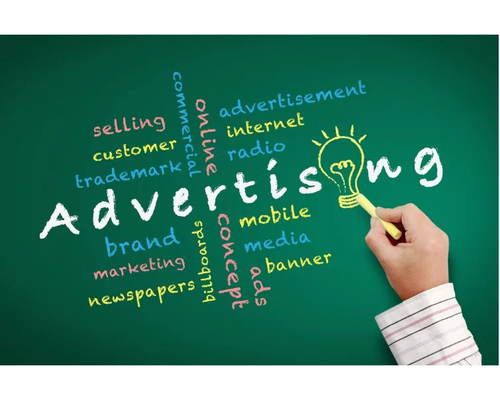
Product advertising merely discusses promotional communications that seek to sell specific items to specific audiences. One of the main objectives is to inform and persuade consumers to buy one product by providing information about the product’s pros, the product’s-product’s distinctive features, and unique selling points that others do not have. This process, therefore, intensifies the consumers’ level of interest and promotes their purchase behaviors.
The Importance of Product Advertising

One primary function of product advertising is to develop brand awareness and change consumers’ perceptions.
- Customer Awareness: Product advertising guides buyers in identifying brand and product images in a labyrinthine marketplace. For instance, even the most watched brand giants like Apple and Coca-Cola spend fortunes on advertising to ensure their domination of the consumers’ psyches.
- Case Studies: Brands like Nike have effectively engaged in marketing campaigns that push their brand products and create strong emotional connections with customers, thus rendering customer loyalty and more sales from repeat business.
- Statistics: The American Association of Advertising Agencies reports that the average business that invests in ads sees a $2 return for each dollar spent on advertising, explaining why it is so successful.
A well-organized product advertising plan often consists of various models, such as the most competent AIDA model (Attention, Interest, Desire, Action), that marketers use to develop catchy lines to lead consumers through the purchasing process.
Crafting Effective Product Advertising Campaigns

Designing an advantageous product advertising campaign needs a good understanding of the target audience and the competitive landscape.
- Segmentation and Targeting: Companies mostly use market segmentation to identify certain consumer groups as characteristics of an advertising tactic. For example, the luxury brand Gucci targets high-income individuals by making them feel special in its advertising approach.
- Real-World Applications: Reflect on the advertising methods that companies are using at the time, such as the Christmas ones by giants such as Walmart, which promote family-oriented product launch deals.
- Challenges and Benefits: Although advertising is the main reason businesses are doing well, we must also discuss the obstacles associated with ad fatigue or ad-blocking software. Brands must communicate the proper message in a way that is not only creative but also clear to get the consumer to engage at the maximum level.
- Practical Strategies: One primary way brands can do this is by using social media platforms to push ads to targeted users. This results in higher ad efficiency, as the ad is seen by the desired customer.
Emerging Trends in Product Advertising
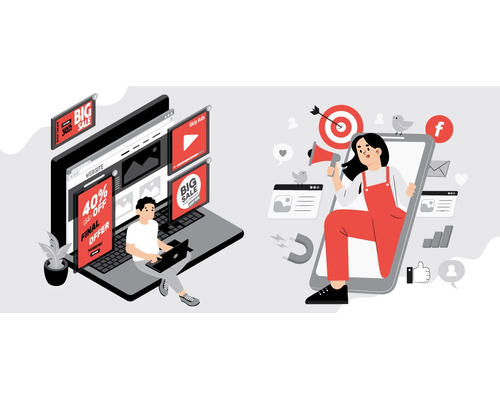
That is how digital marketing and the fast-changing digital sphere develop, and advertising approaches must adapt to new trends and strategies.
- Personalization: The audience expects to be featured in personalized experiences by the brands being talked about with ads about what they are looking for or their interactions with the brand. Amazon, for instance, refers to this fact as its plethora of algorithms that show three items similarly worth buying from one’s past purchase experience.
- Influencer Marketing: The use of social media influencers in product advertising is now seen as a highly effective tool. Companies can access a larger free pool of potential customers, as influencers usually have a number of fans who listen to their recommendations.
- Trends: Recent research proved that sustainable advertisement also reflects changing consumer behaviors. These days, retailers are deploying eco-friendly technologies in their products and services to make an emotional connection with their environmentally concerned customers.
- Industry Outcome: This calls for companies to be adaptable and dynamic by continuously tuning their promo style based on these new consumer demands and market factors.
Overall, successful product advertising is an intermediary between the customers and the product. The practice of product advertising, from the formulation of a strategic plan to its execution, therefore, plays a considerable role in the apprehension of the concept by brand elements and the building of customer communities.
Conclusion
The role of product advertising in the current sales-driven industry is undeniable as it helps market products visually, through the customers, and, finally, to achieve sales. The guidelines of product advertising are down to earth as to the empathic or affective domains of consumer behavior in the context of norms, communication, and advertising. To write differently, the definition of an effective product involves a product that is different from other products, but the funny part is that connections on an emotional level so the brand can hold its market
Key Takeaways:
- Definition and Purpose: It aims to stimulate sales by promoting (a/) a single product. The concept generates awareness of the product, stimulating the buyer’s interest and even the muscle to buy it.
- Target Audience: Marketing intelligently with the exact match for the kind of people we want to reach is a must.
- Advertising Channels: Different platforms, such as TV, radio, social media, and print media, offer diverse opportunities for advertising to be effective and efficient.
- Creative Messaging: Messaging that is attention-grabbing and easy to relate to the audience gives the consumer a helping hand in decision-making by making them more likely both to patronize the advertisement and persuade them to buy the product.
- Measurement of Success: Advertisers achieve the objective of measuring ad effectiveness against metrics such as reach, engagement, and conversions, leading to the maintenance of improvement and optimization.
To sum up, mastering the art of product advertising is crucial for companies planning to do well in an environment that changes frequently, as it influences their ability to attract and maintain clients.
]]>Traditional marketing was the name given to the channels and methods through which products and services were advertised before the digital age seized the central position in the marketing universe. It’s a mix of campaigns that use material things and methods of the business to approach the consumers. The main examples are in the print media such as newspapers and magazines, the people getting in their mailboxes through direct mail campaigns, telemarketing, advertising on radio and television, and billboards outdoor advertising. Traditional marketing is still an effective tool for marketing, although the use of digital marketing has been increasing.
Importance of Knowing Traditional Marketing

Understanding traditional marketing is vital for several reasons:
- Holistic Marketing Strategy: To explore Generally, the acquaintance of the classical marketing methods helps businesses in providing a full control to designs dual marketing strategy, i.e., uses traditional and new digital to come up with the audience.
- Target Audience Engagement: The enrollment of the smaller customer base in traditional marketing is currently normal. Even for older customers, who are incomprehensible to the current digital technology, utilize traditional media in their day to day life. What we can witness here is that traditional marketing is still relevant to the people of this age.
- Credibility and Trust: Traditional marketing still remains one of the most trustful means of promotion. The misunderstanding applicants hold for their method of filling the online application form is partly a result of their inexperience with the completion process. Meanwhile, traditional advertising methods such as print ads and television commercials which are perceived as being more trustful to the opposite influence can show the customer’s loyalty to the caring brand if used selectively.
- Measurable Impact: Marketing through traditional means enables businesses to keep track of what their clients are doing at a place of business and adjust their marketing strategies accordingly. A common example of this would be tracking the effectiveness of direct mail as a method of finding out the desires of the customers and their shopping behavior that might in the future help the company in identifying its client segment and creating more targeted marketing strategies.
Relevance in Strategic Decision-Making

Today’s technology-based society has strayed away from the traditional strategies of marketing, and the digital medium must be included in the company’s approach to the market because it is with that new environment that all marketing must cope. The paragraph should specify the relevance of traditional marketing within the scope and type of financial data to the given scenario. You should assign applicable terms to the last two examples accordingly.
- The company has to know the type of marketing that is bringing about the most profits and expenses. Therefore, the information they have gathered allows them to elaborate on the most effective way to spend their limited resources on the different media used in the marketing plan.
- Visual communication is also present in traditional marketing, which gives the thought that the burrowing or the pilfering is a legitimate one. A company can also carry out a market study to determine if its product is better than that of a competitor.
- The brand must be solidified and the community must be engaged through earned and social media platforms. The client’s satisfaction and engagement with the company via the web will be possible only by consistent efforts from the traditional and new team members. In addition, the company could prepare a customer satisfaction survey and send it to the clients to evaluate how well they can maintain consistency in the brand online. Everything that is a part of traditional marketing puts the customer and the target audience at the heart of things.
In conclusion, understanding the traditional marketing principles is an important element for any organization to be able to make sound strategic decisions and keep a competitive advantage in the multifaceted advertising environment of today. Despite the sweeping trend of digital marketing, traditional marketing still is a very powerful tool that, if managed properly, can significantly improve the marketing campaign.
Traditional Marketing: Definition, Types, and Examples
Definition
Traditional marketing is the type of marketing practice and the type of marketing tactics that were used before the digital revolution in promoting products or services. It includes different offline methods that are used to engage with potential customers through direct interaction, print media, broadcast, and outdoor advertising. Mainly, traditional marketing is to set up the brand in the minds of the target customers, to bring in customers through communication means and to persuade them to buy the product.
Purpose of Traditional Marketing

Traditional marketing main purposes are the following:
- Brand Awareness: During the preliminary stage, traditional marketing not only is responsible for establishing a new product in the market but also for informing consumers of the product.
- Target Audience Engagement: Using traditional marketing, companies can interact directly with their audience, which helps not only in forming but also in building trust together.
- Sales Generation: The main objective is to motivate consumers to make a purchase to convert prospects into sales.
- Market Segmentation: Businesses can use marketing strategies to divide consumers geographically and demographically with particular messages.
- Building Reputation: Regular repetition of brands in usual publicity can raise their credit and position as a leader in the business world.
Types of Traditional Marketing

- Print Advertising:
- Newspapers: Companies can select specific newspapers for their promotions based on previous sales in specific locations.
- Magazines: Specialist journals go to the smaller niche markets making them indispensable in contexts such as brand segmentation.
- Brochures and Flyers: Mailing printed information to the public or both existing and prospecting clients to event sites can get the audience involved and attentive.
2. Television Commercials:
- Television is a powerful medium because there are so many people that can be reached, and a large segment of the population can be communicated to in the specific timeframe allotted.
3. Radio Advertising
- Local stations can attract businesses through time slots or programs’ preferences so as to target their desired audience. Thus they can interact with the audience through audio.
4. Outdoor Advertising:
- Billboards: Large billboards are strategically located in the most crowded places to maximize exposure.
- Transit Ads: Displaying advertisements in buses, taxis, railway stations, and the like is an excellent way to bring in the attention of corporate people.
5. Direct Mail:
- Maximin says got postcards, catalogs or promotional letters sent directly to the mailbox, and these trick came on the stage which pretend to be a way to form a perfect bond.
6. Events and Sponsorships:
- Unfortunately, fostering brand engagement and friendship through organizing sponsorships and staging one-of-a-kind events are strategically more effective.
7. Trade Shows and Exhibitions:
- Businesses are taking part in trade shows and exhibitions to publicize their products and services and thus, they are also getting in contact with the right people to do the job.
Real-World Applications

- Retail Stores:
- People do printing marketing, specifically flyers to send it out by mail and place coupons for shoppers to scrap on community newspapers to alert them weekly sales and coupon offers in a grocery store located in the area.
- Automotive Sales:
- The usual behavior of car dealerships is directing TV commercials in sport events or prime-time shows to capture the attention of the people followed by radio ads that talk about the monthly deals.
- Healthcare Marketing:
- Doctor offices might opt for direct mail advertising to distribute information on health services and tips to specific neighborhoods and hence, try to run ads in magazines for specialized doctors.
- Restaurant Promotions:
- Restaurants can use billboards and transit ads to attract new customers outside as well as direct mail campaigns with discount offers.
- Non-Profit Organizations:
- As for now, NGOs practice traditional marketing methods such as public events and the local paper to advertise their causes for raising money.
Conclusion
Traditional marketing is often forgotten among the digital marketing mix, it still constitutes a significant and effective method that spurs sales and interacts with the public in many sectors. Through matching mastery of the different kinds of traditional advertising and the right application, businesses can build a versatile marketing approach that will introduce more potential customers, create brand awareness and increase the market share of the brands.
The traditional mode of advertising is a fundamental practice for companies among other advantages, as it is the basis upon which contemporary advertising approaches are built. Here’s a thorough exposition of how understanding the definition, types, and examples of traditional marketing can bring a real value to a business.
]]>Ready to talk with a marketing expert?

A Pragmatic and innovative way to enthrall your target group is just a click away!
Get in Touch
Rukmini Knowledge Park, Kattigenahalli, SH 104, Srinivasa Nagar, Bengaluru, Karnataka 560064
+91-990 247 8800
contact@gingermediagroup.com
Popular in Television Advertising
Udaya TV AdvertisingSun TV AdvertisingStar Plus AdvertisingTV 9 AdvertisingZee TV AdvertisingNDTV India AdvertisingColors TV AdvertisingPopular in Airport Advertising
Spice Jet AdvertisingMumbai Airport AdvertisingDelhi Airport AdvertisingEmirites AdvertisingIndiGo Airlines Domestic India AdvertisingPopular in Newspaper Advertising
Deccan Herald AdvertisingPrajavani AdvertisingThe Hindu AdvertisingEconomic Times AdvertisingDainik Jagran AdvertisingHindustan Times AdvertisingPopular in Magazine Advertising
Forbes AdvertisingCosmopolitan AdvertisingBusiness World AdvertisingVogue Magazine AdvertisingPopular in Sports Advertising
IPL AdvertisingPopular in Outdoor Advertising
Billboard AdvertisingBus Shelter AdvertisingMetro Pillar AdvertisingUnipole Advertising© Ginger Media Group 2025. All Rights Reserved.