The need to understand professional advertising arises from the ever-evolving landscape of consumer behaviour and technological advancements. As consumers become more discerning, businesses must adopt a strategic approach that leverages data analytics, audience segmentation, and creative storytelling to connect with potential customers. Implementing professional advertising allows companies to enhance brand awareness, generate leads, and foster customer loyalty.
Moreover, a professional advertising approach ensures consistency across various channels, reinforcing the brand message and improving overall recognition. By investing in high-quality advertising initiatives, businesses can differentiate themselves from competitors and establish credibility in their industry.
In conclusion, understanding and implementing professional advertising is not just beneficial—it’s essential for any business aiming to thrive in a dynamic marketplace. It is an investment that can lead to increased visibility, customer engagement, and business growth.
Overview of Professional Advertising
Professional Advertising refers to marketing strategies and promotional efforts designed to reach professionals in various industries. This includes targeted campaigns aimed at doctors, lawyers, engineers, and specialists who often make purchasing decisions based on specific expertise and knowledge. Professional advertising can take many forms, including trade publications, industry conferences, and online platforms tailored to professionals.
Importance of Knowing Professional Advertising
Understanding professional advertising is crucial for businesses that engage with niche markets effectively. Here are a few key reasons why knowledge of this term is impactful:
- Targeted Outreach: By recognising the nuances of professional advertising, companies can tailor their messages to resonate with their audience’s unique needs and preferences. This targeted approach increases the likelihood of conversion.
- Building Credibility: Effective professional advertising helps establish a brand’s credibility and thought leadership in its sector. By presenting information that addresses professionals’ specific challenges and interests, businesses can position themselves as trusted resources.
- Strategic Decision-Making: Knowing the implications of professional advertising allows organisations to make informed marketing decisions. Companies can allocate resources effectively by analysing industry trends and audience behaviours and creating campaigns that drive results.
- Enhanced ROI: Businesses that understand professional advertising techniques can create more efficient marketing strategies that deliver higher returns on investment. This is particularly relevant in competitive sectors where every dollar spent needs to be justified.
Professional Advertising: Definition, Purpose, Function, and Application
Definition
Professional advertising is the strategic use of promotional content to persuade a specific audience to utilise professional services. Unlike general advertising, which can target broader consumer demographics, professional advertising focuses on highly specialised fields such as medical, legal, financial, engineering, and other professional services. The advertising can take various forms, including digital marketing, print media, social media campaigns, and direct outreach, all geared toward enhancing the visibility and reputation of a professional service provider.
Purpose
Professional advertising primarily aims to communicate the value of a particular service or professional expertise to potential clients. Some key objectives include:
- Brand Awareness: To establish and increase brand recognition among target audiences.
- Lead Generation: To attract potential clients seeking specific professional services.
- Reputation Building: To enhance credibility and trust in the services offered, especially important in fields where clients rely on expertise.
- Encouraging Action: Prompt potential clients to make decisions, such as booking a consultation or availing themselves of the services.
- Market Differentiation: To highlight unique selling propositions (USPs) that differentiate a professional from competitors.
Function
Professional advertising functions through well-crafted strategies that align with business goals. Key functions include:
- Market Research: Understanding the target audience’s needs, preferences, and pain points effectively to tailor the advertising message.
- Message Development: Crafting compelling messages and narratives that resonate with the audience, emphasising outcomes and benefits.
- Multi-Channel Approach: Utilizing various platforms and media (like websites, social media, newsletters, and seminars) to reach professionals and clients effectively.
- Performance Analysis: Monitoring and evaluating the effectiveness of advertising campaigns through metrics such as engagement rates, conversion rates, and return on investment (ROI).
Application in Real-World Scenarios
Here are several examples showcasing the application of professional advertising in different industries:
- Healthcare Advertising
Scenario: A dental clinic wants to attract new patients.
Application: The clinic runs targeted social media campaigns showcasing patient testimonials, before-and-after photos, and special check-up promotions. It also uses search engine marketing (SEM) to appear in search results when potential patients look for dental services in its area. - Legal Services
Scenario: A law firm specialising in personal injury cases.
Application: The law firm invests in content marketing by publishing articles and case studies that educate potential clients about their rights. It also engages in community seminars where it offers free legal advice, advertising its services and expertise in the process. - Financial Consulting
Scenario: A financial advisor looking to reach high-net-worth individuals.
Application: The advisor uses targeted email marketing to share insightful financial tips, market updates, and invitations to exclusive seminars. Additionally, they leverage LinkedIn for networking and sharing expert insights, establishing themselves as a thought leader in the financial services sector. - Engineering Services
Scenario: An engineering consulting firm aiming to secure bids for large construction projects.
Application: The firm positions itself through professional presentations, industry publications, and attending relevant trade shows. It uses case studies to demonstrate past projects, emphasizing innovation and successful outcomes for prospective clients.
The Importance of Understanding Professional Advertising for Business Success
In today’s highly competitive business landscape, understanding professional advertising is crucial for organisations aiming to thrive and maintain their market presence. Effective advertising strategies can significantly impact brand awareness, customer engagement, and profitability. Here’s why mastering professional advertising is essential for any business:
- Building Brand Identity
Professional advertising helps businesses create a distinct brand identity that resonates with their target audience. By effectively communicating the brand’s values, mission, and unique selling propositions, companies can differentiate themselves from competitors and develop a strong emotional connection with consumers. A well-defined brand identity fosters trust and loyalty, vital for long-term success. - Expanding Reach and Exposure
In an era of abundant information, standing out is imperative. Understanding professional advertising allows businesses to craft campaigns that increase their visibility across various platforms, including social media, print, and digital channels. By utilising strategic advertising techniques, companies can reach a broader audience, engaging potential customers who may need to become more familiar with their products or services.
Final Thoughts
Professional advertising is integral to promoting specialised services and connecting businesses with a discerning clientele. It allows companies to thrive and achieve long-term success through strategic planning, understanding market trends, and creating compelling narratives. The examples and insights provided demonstrate that effective advertising is not just a tool but a powerful driver of brand recognition, customer engagement, and business growth.
]]>
Social Media Optimization (SMO) has become a strategy that companies utilize today to enhance their online presence and reach the right target audiences. Organizations use SMO to create a community, enhance brand loyalty, and drive significant traffic to their websites.
- Improved Decision-Making: Analysis of social media metrics helps companies make informed content and engagement choices.
- Cost Efficiency: SMO identifies the best-performing content, reducing wasted marketing costs.
- Customer-Oriented Approach: Social media activities focus on customer interests to increase content relevance.
- Always Measuring and Learning: Engagement metrics are frequently analyzed, promoting adaptation and optimization.
- Strategic Planning: Better analysis of audience interactions leads to improved market trend prediction and long-term success.
In this article, we delve deeper into SMO, explaining its significance in current business practices and outlining steps organizations can take to implement it in their digital marketing strategies.
What Is SMO?
Social Media Optimization (SMO) is a strategy designed to increase visibility and engagement within the social media sphere. It aims to generate website traffic and increase brand awareness. Organizations can effectively market products or services by analyzing audience behavior and preferences through social interactions.
Key Elements of SMO
- Content Quality: High-quality, engaging, and shareable content is crucial. Content that attracts and inspires shares significantly raises reach.
- Social Engagement: Engaging with follower posts builds community loyalty and encourages brand sharing.
- Choosing the Right Social Media Platform: Selecting the correct platform based on the intended audience ensures the content’s effectiveness.
- Analytics: Performance measurement tools help marketers adjust strategies based on audience preferences.
- Brand Consistency: A uniform brand voice across platforms generates awareness and trust among target audiences.
By focusing on these elements, businesses can establish a strong SMO foundation that enhances audience engagement and loyalty.
Benefits of SMO
- Improved Decision Making: Analytics tools reveal what resonates with the audience, helping refine content.
- Cost Effectiveness: Organic reach reduces marketing expenses and customer acquisition costs.
- Effective Communication: SMO promotes two-way communication between brands and customers, fostering collaboration and community.
- Increased Brand Recognition: Quality content and engagement boost brand awareness across social media.
- Improved Website Traffic: Optimized social media channels drive more website traffic, enhancing conversion rates.
SMO can greatly impact a brand’s visibility and engagement, delivering real-world value.
The Basic Principles of SMO
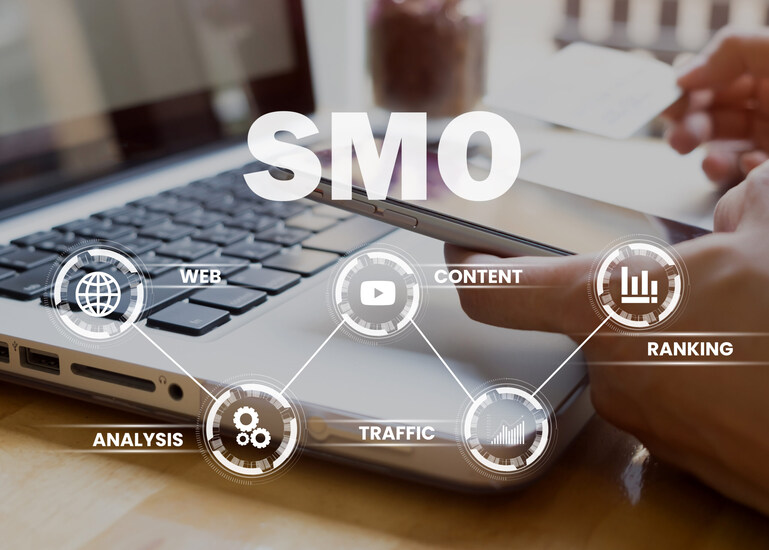
- Focus on Activities: Target specific social media activities, like posts and shares, to increase engagement.
- Link Activities to Metrics: Connect social media actions with metrics, such as engagement rates and conversions, to analyze effectiveness.
- Continuous Improvement: Regularly analyze trends and audience feedback to make strategic adjustments.
- Incorporate User-Generated Content: Encourage followers to create content, adding authenticity and fostering community participation.
- Use Paid Advertising: While organic reach is essential, paid ads help scale SMO and target demographics accurately.
Understanding these factors helps businesses build a robust SMO strategy that drives engagement and strengthens the brand.
How to Leverage SMO
- Review Current Activities: Assess your social media presence to identify strengths and weaknesses.
- Cost Drivers: Identify cost drivers, such as ad spends and content creation costs, to manage the social media budget effectively.
- Introduce Performance Metrics: Define metrics like click-through rates and engagement ratios to measure success.
- Empower Employees: Encourage employees to share company-related content and interact with customers, expanding brand reach and authenticity.
- Leverage Technology: Use social media management tools for automation, timely posting, and engagement data analysis.
These steps have proven useful for organizations in executing effective SMO campaigns that boost engagement and visibility.
Real-Life Examples of SMO
- Example 1: A retail brand launched a hashtag campaign encouraging customers to share their outfits on social media, increasing user-generated content and engagement by 150%.
- Example 2: A software company posted targeted content on LinkedIn, which boosted website traffic by 200% and increased lead generation.
- Example 3: A local restaurant shared daily specials on Instagram stories, which led to a 50% increase in footfall and bookings, demonstrating the effectiveness of real-time engagement.
These examples show how successful SMO can lead to positive business outcomes.
Final Thoughts
In a nutshell, SMO is an effective strategy for organizations aiming to increase their online presence, engagement, and brand recognition. By leveraging social media knowledge, allocating resources for content creation, and consistently improving, businesses can unlock immense potential in their operations and decision-making processes.
With SMO principles, organizations can achieve:
- Higher Brand Awareness: Expanding brand presence across social media channels.
- Greater Customer Interaction: Building meaningful relationships with customers fosters loyalty and community.
- More Traffic: Optimized social media channels drive more traffic to websites, potentially boosting conversion rates.
Now is the ideal time to adopt SMO for organizational growth. Start today to transform your digital platform into a driver of successful business results!
]]>What is 3D Advertising?

The concept of 3D advertising is a fresh hit in marketing. It uses three-dimensional visuals to establish a connection with potential customers and thus strengthen their engagement with the brand. This kind of advertising involves the impression of depth and perspective and sometimes incorporates interactive elements. Only such a setup can hold their feelings while ensuring creativity. With the numerous entities feeding the market, businesses must be keen to use 3D advertising to connect with the audience and invite their participation through memorability, among other factors.
The Power of Immersive Experiences

One of the most critical aspects of 3D advertising is its ability to be a fascinating and interactive product that engages the user. A recent study reveals that ads with 3D can have a higher engagement rate of up to 80%. Viewing such a product that is not two-dimensional but instead has depth and dimension causes people to be drawn to it and not just view the advertisement without interacting with it.
- Case Study: AR took off when IKEA employed it in their advertising campaign to customers, offering them the facilities for visualizing a 3D model of a particular piece of furniture in their homes, which led to an increase of 30% in the store’s conversion rates.
- Frameworks: The employment of the “Immersive Framework” in 3D advertising enumerates that the goal of the approach is to create user-centric contact that is highly personalized, emotionally striking, and interactive to the audiences. In doing so, a brand can excel in setting itself apart from its competitors by developing products and services that are not replaceable.
Challenges and Considerations in Implementation
Although the AR benefits of using 3D advertising are innumerable, some businesses are facing several implementation hurdles. The technical challenges are colossal, be it in 3D modelling or incorporating it in advertising, but innovation is reducing the obstacles for smaller companies to combat.
- Challenges: Production costs and the need for specialist-skilled personnel could sometimes lead to a fall-off. Further, the inclusion of technology trends should be equally emphasized.
- Practical Advice: Brand owners should consult agencies with expertise in 3D technology or explore new 3D software tools that make saving for tech self-taught programs. Along with SEO, it is important to include digital marketing elements in the DOM for the campaign to reach far and wide.
Emerging Trends in 3D Advertising

Moreover, advancements in 3D technologies encourage a variety of new AR applications. These trends strongly suggest a shift towards completely digital worlds and a rise in the usage of VR and AR to introduce more engaging, creative, and interactive advertising.
- Trends: Metaverse platforms’ popularity continues to grow, which means brands can now come up with 3D advertising solutions not only in reality but within virtual environments as well. Companies are experimenting with integrating brand experiences in these digital spaces, creating opportunities for customer interaction at another level.
- Implications: For marketers, keeping up with these changes is mandatory to cope with the new realities. As consumers get used to more complex advertising forms, 3D ad formats will likely be brands leading the market. Going along with such modifications entails investment in innovative technologies and a quest to learn more about captivating audiences in a 3D digital world. Consequently, 3D advertising is now more than just the latest fashion; it is a different way for brands to connect with their audience. By offering immersive experiences, finding solutions to technological issues, and predicting future trends, corporations can harness the full potential of 3D advertising to drive engagement and develop brand loyalty.
Conclusion:
The Significance of 3D Advertising
In the ever-dynamic data space, one-off shots of 3D ads are now spawning as the sole force leading the realm of ads captivating and sending messages to men and women. By turning classic advertising into a more visual and emotional experience, 3D advertising not only achieves a high level of perception but also touches the minds of potential customers at an emotional level. As technology advances, the importance of 3D elements in the marketing mix becomes manifest, and thus, brands have more freedom to create differentiation in otherwise competitive market scenarios.
Key Components of 3D Advertising:
- Enhanced Engagement: 3D visuals lead to interactive experiences that keep viewers engaged longer than traditional ads do.
- Realism and Detail: Using lifelike designs and motion, 3D ads offer a more detailed view of products through motion that enables the consumers to see them in their own lives.
- Brand Differentiation: Using 3D advertising technology, brands can set themselves apart from the competition and create a unique image in consumers’ minds.
- Cross-Platform Versatility: 3D content can be easily adapted to work well on various platforms such as social media, websites, and even virtual reality environments, thus reaching a broad audience.
- Improved Conversion Rates: The revolutionary nature of 3D advertising is usually the reason for the increase in conversion rates, as customers are more likely to engage with and recall visually appealing content.
Focusing on these elements, companies can use 3D advertising to empower their marketing strategies and increase their awareness and loyalty toward their target audience. Being open to this novel approach is the key to competitiveness in today’s rapidly changing advertising industry.
]]>Trust and credibility, rather than just stiff competition, are the prerequisites for businesses seeking success. This is where EAT-FULL-FORM Advertising has come in as a key framework for building online credibility and engagement by the acronym for Expertise, Authoritativeness, and Trustworthiness. Consumers are working towards getting reliable information. Thus, knowing and putting into practice EAT affects the image, prominence, and general marketing value of the brand. Following are the reasons why EAT-FULL-FORM Advertising is the essence of today’s marketing:
- Consumer Trust: In an information era where too much information floods the internet, brands have to work their way into gaining consumer trust via reliable content that speaks to their target audience.
- Search Engine Optimization (SEO): As it forms a content basis on EAT principles, hence it will enrich the website to be more visible for search results.
- Engagement with the Audience: A piece of content demonstrating expertise and authority is mostly engaging and helps in building a better relationship with the customers.
EAT-FULL-FORM is a principle of advertising that lets the business be appealing to its customers and retain them in a competitive market as well.
What is EAT in Advertising?

To design a successful advertisement, it is crucial to know what EAT is. EAT is an acronym for Expertise, Authoritativeness, and Trustworthiness.
Expertise

Definition: Expertise represents the level of knowledge or skill a content provider holds concerning his area of expertise so that he would be able to deliver accurate and relevant information.
- Content Development: Using subject matter experts to create and review the content assures the audience that the information they are looking for is reliable and meets their requirements.
- Industry Relevance: Content with a great deal of expertise serves to appeal to target audiences, build credibility, and ensure customer loyalty.
Authoritativeness
Definition: Authoritativeness is the perceived credibility of a brand or person behind the content that impacts how a target audience perceives them.
- Brand Endorsement: Brands that boast endorsement from industry leaders or are already known as good sources of credible information increase their degree of trust and stature.
- Impact on Consumers: Consumers are more loyal and become advocates of a brand if it is perceived to be authoritative in a given space.
Trustworthiness

Concept: Being reliable, transparent, and fair to the customers forms the basis of any relationship with customers.
- Relationship Building: Trusting more would help customers to be loyal for a long time as they seek a positive experience as well as repeat business.
- Security and Transparency: A secure website along with providing non-error and bias content attracts the trust factor and further provides closer relationships with customers and an easier form of branding for the company preferred.
Benefits from EAT-FULL-FORM Advertisement
The implementation of EAT principles within an advertising strategy has some advantages that have a direct influence on the performance of a brand in the market:
- Better Decision Making

- Consumer Knowledge: EAT rules permit organizations to come up with information that guides and educates customer choice-making thus making effective decisions.
- Informed Decisions: A financial advice website that cites reliable sources is a strong platform because it empowers the target population with informed decisions to be made about their finances, creating trust in the brand.
- Long-Term Trust Developments: Ongoing ability of useful content will create a sense of trust in customers as they will be coming back for more knowledge and advice.
- Cost Effectiveness

- Resource Optimization: Spending on excellent quality relevant content will minimize reversal rates and improve experiences of customers as a whole.
- Return Prevention: A credible product review website will prevent customers from making a wrong buying decision, and hence both time and money are saved to the business.
- Lower Marketing Costs: Quality content generates free organic traffic, and hence, paid advertisement costs are drastically reduced.
- Enhanced Communications and Collaboration

- Transparency: EAT encourages an environment of openness and transparency in communications when building partnerships and alliances.
- Legitimate Partnerships: Brands that do great content generation always attract, partner, and be part of other legitimate sources that make them gain more credibility.
- Increased Reach: Partnerships by power players increase reach and credibility in the advertising world, resulting in mutual positive impacts.
- Continuous Improvement

- Continual Evaluation: EAT causes continuous evaluation and feedback, which means organizations look into changing their marketing plan in terms of improving on consumer demand.
- Meeting Consumer Expectations: Checking strategies regularly against shifting consumer expectations and preferences is key to staying in step with the times.
- Flexibility: The easier it is to change in response to feedback, the more likely a company will be able to remain relevant in a competitive marketplace, keeping ahead of the curve.
Strategies to Implement EAT-FULL-FORM Advertising
To implement EAT principles into your advertising plan, follow these actionable strategies:
- Evaluate Current Activities
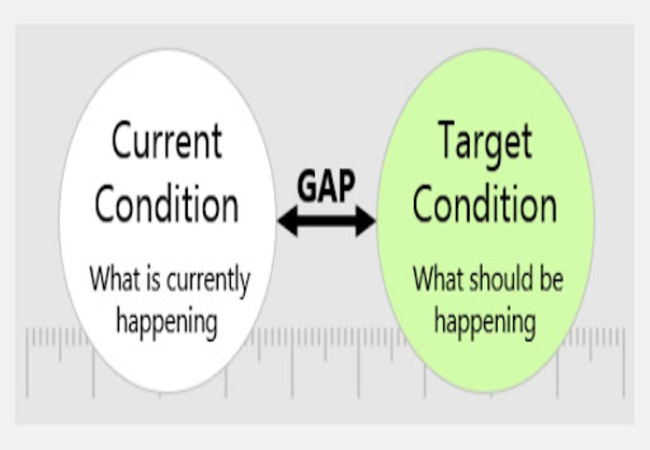
- Content Audit: Review your existing content to see if it is expert, authoritative, and trustworthy.
- Gap Identification: Find out where it is lacking and requires improvement to build overall credibility as well as engagements.
- Benchmarking: Track the baseline so that you can measure improvements over time for better EAT performance.
- Cost Drivers

- Identify Drivers: The first step is to identify factors driving your cost in advertising and content production that include manpower, media, distribution channels, etc.
- Budget Optimization: With the identification of drivers, the marketing effort will now be streamlined where resources are used effectively with optimum amplification impact.
- Cost-Benefit Analysis: A cost-benefit analysis will help you choose the best utilization of marketing resources and hence rank the initiatives working towards the results.
- Use Performance Measures
- Develop KPIs: Develop the key performance indicators such as engagement rates, bounce rate, and conversion rates to measure how effective EAT-related strategies are.
- Data-Driven Decisions: Use data to make strategic decisions and reshape content to fit audience engagement and feedback.
- Monitor Performance Metrics: Continuously monitor performance metrics concerning success achieved with EAT-related initiatives and tweak as necessary.
- Engage Employees

- Team Engagement: This can be attained by engaging teams to produce content as well as strategize to ensure ownership and commitment toward EAT principles.
- Training Facilitations: Educate the employees with EAT principles to enable them to engage efficiently towards the production of content and the brand messaging.
- Collaboration: A culture of collaboration, where opinions and feedback will not be isolated due to reasons such as contract submissions from a previous work, would be allowed creativity and effectiveness in general.

- Leveraging Digital Tools: Use more advanced digital tools for content of high quality, smooth processes, and to measure performance.
- Automation: Ensure there is available free time from which tactical initiatives aiming at better EAT principles are undertaken.
- Analytics Tools: Analytics tools will be used to monitor user engagement, know areas that need improvement, and hence shape content strategies accordingly.
Real-World Examples of EAT in Advertising
Example 1: Healthline
- Expert Employment: Healthline rightly uses EAT with the employment of medical professionals who create and edit content so that it is always reliable and accurate.
- User Trust: It has built user trust enough to, besides accumulating massive organic traffic, prove that expertise plays a huge role in content development.
- SEO Success: The fact that their website contains a proven expert expands their authority, which helps them enhance their SEO capabilities and gain higher visibility.
Example 2: WebMD
- Collaborative Authority: In order to come out as more authoritative, WebMD works in collaboration with healthcare professionals and industry experts.
- Cited Content: Their trusted content is always cited by all other related websites; hence, it puts them at the top of healthy information sources.
- Health Resource: This, in turn, increases traffic and engagement, which promotes their market position and enhances user trust.
Example 3: Moz
- Industry Authority: Moz is a leader in the tech involved with SEO and, through that, demonstrates E-A-T within its writing since such work is done by professionals in the industry to establish authority.
- Quality: Moz has shown for many years to stand on quality and thus has established itself as a leader as an authoritative source within digital marketing.
- Visibility and Authority: This combined with its knowledge makes it qualified to stand at the forefront of the SEO business.
Final Thoughts
In a nutshell, EAT-FULL-FORM Advertising is one of the strategies whereby firms can uplift the interactivity with their brands and the loyalty of consumers to their brand and popularity at large in the market. By achieving a comprehensive vision of its prime components—Expertise, Authoritativeness, and Trustworthiness—and appropriately applying resources to exploit its premises, businesses can tap into tremendous potential in their operational processes and decision-making strategies.
Advantages of Using EAT
- Boosted Customer Trust: Displaying high expertise and authority thus creates a high level of trust in the target audience, which makes them more prone to choose your brand over the rest.
- Brand Awareness: Consistently enforcing the EAT principles within your organization can bring credibility to your industry as a leading authority, thus resulting in better brand recognition and loyalty.
- Qualitative Engagement and Conversion: Producing value-driven, information-content attracts potential customers toward your engagement and therefore increases the conversion rates.
Now is the right time to shift to EAT-FULL-FORM Advertising, and it is the perfect time to feel the organizational impact it can make for you. Take that first step toward making your brand credible and effective in the marketplace today!
]]>Ready to talk with a marketing expert?

A Pragmatic and innovative way to enthrall your target group is just a click away!
Get in Touch
Rukmini Knowledge Park, Kattigenahalli, SH 104, Srinivasa Nagar, Bengaluru, Karnataka 560064
+91-990 247 8800
contact@gingermediagroup.com
Popular in Television Advertising
Udaya TV AdvertisingSun TV AdvertisingStar Plus AdvertisingTV 9 AdvertisingZee TV AdvertisingNDTV India AdvertisingColors TV AdvertisingPopular in Airport Advertising
Spice Jet AdvertisingMumbai Airport AdvertisingDelhi Airport AdvertisingEmirites AdvertisingIndiGo Airlines Domestic India AdvertisingPopular in Newspaper Advertising
Deccan Herald AdvertisingPrajavani AdvertisingThe Hindu AdvertisingEconomic Times AdvertisingDainik Jagran AdvertisingHindustan Times AdvertisingPopular in Magazine Advertising
Forbes AdvertisingCosmopolitan AdvertisingBusiness World AdvertisingVogue Magazine AdvertisingPopular in Sports Advertising
IPL AdvertisingPopular in Outdoor Advertising
Billboard AdvertisingBus Shelter AdvertisingMetro Pillar AdvertisingUnipole Advertising© Ginger Media Group 2025. All Rights Reserved.