As cab Advertising continues to evolve and push the boundaries of traditional advertising, it exemplifies the fusion of creativity, mobility, and innovation in the ever-evolving landscape of modern marketing.Here, we look into the world of cab branding, exploring its various types, benefits, design considerations, challenges, and the exciting future it holds in the realm of modern advertising.
Why Cab Branding?
Unavoidable Visibility
Cabs are strategically positioned in high-traffic urban areas, ensuring that the brand’s message is virtually impossible to ignore. Passengers, pedestrians, and motorists alike are exposed to the brand, creating an extensive reach and making a lasting impression.
Mobile Billboards
Cabs essentially become moving billboards, maximising brand visibility throughout the city. This mobile nature allows brands to engage with diverse audiences in various neighbourhoods, creating a broader impact.
Targeted Reach
Brands can strategically choose routes and areas where their target audience is likely to be present, ensuring that their message resonates with the right demographics and aligns with specific campaign objectives.
Experiential Marketing
Cab branding provides an immersive and interactive brand experience for passengers during their journey. This engagement fosters a stronger connection between the brand and its audience.
Cost-Effective
Cab branding offers a cost-effective alternative to traditional forms of outdoor advertising like billboards and hoardings. Brands can achieve significant visibility and impact at a fraction of the cost.
Social Media Amplification
Passengers often capture photos of engaging cab advertisements and share them on social media, leading to user-generated content that amplifies the campaign’s reach and engagement.
Types of Cab Branding
Full Vehicle Wraps
Imagine a cab transformed into a canvas, showcasing your brand’s message from bumper to bumper. Full vehicle wraps envelop cabs with vibrant graphics, ensuring your message travels far and wide.
Top Car Advertising
The roof of a cab becomes a captivating space for brand visibility. Top car advertising leverages elevated platforms to catch the eye of those looking down from tall buildings and bridges.
Inside Cab Branding
Engage passengers within the cab itself. Creative seat covers, headrest branding, and interactive displays make for an immersive brand experience during the journey.
Digital Cab Displays
Seamlessly integrate technology into your cab branding. Digital displays create dynamic content that evolves with the journey, ensuring maximum impact.
With the rise of mobile advertising in the modern marketing landscape, cab branding has taken the concept of “out of home” (OOH) advertising to new heights. Cabs, serving as moving billboards, seamlessly integrate promotional content into the everyday lives of people. This approach capitalises on the unavoidable visibility that cabs offer in busy streets, traffic jams, and even at rest. As commuters and pedestrians go about their daily routines, cab branding inserts itself into their consciousness, creating a unique blend of impact and familiarity.
Real-Life Cab Branding Success Stories
Red Bull’s Mini Cooper Fleet
Red Bull employed a fleet of Mini Coopers wrapped with its distinctive logo and slogan. These compact vehicles travelled through urban areas, distributing samples and creating a dynamic mobile presence. The campaign effectively reached a wide audience, enhancing brand recognition and creating a buzz around the energy drink.

Domino’s Pizza Delivery Cars
Domino’s transformed its delivery vehicles into mobile advertisements, displaying enticing images of their pizzas. These branded cars not only reinforced the brand’s presence in local neighbourhoods but also served as a reminder of the convenience of pizza delivery, effectively driving orders and increasing sales.

Amazon Prime Video’s “Entertainment on the Move” Cab Branding
Amazon Prime Video creatively leveraged cab branding by adorning cabs with captivating visuals of its popular TV shows and movies, accompanied by the tagline “Entertainment on the Move.” This innovative approach not only visually engaged passengers and pedestrians but also prompted passengers to explore the platform for their entertainment needs. The campaign’s success extended beyond the streets as passengers eagerly shared photos of the branded cabs on social media, generating organic buzz and reinforcing Amazon Prime Video’s brand association with on-the-go entertainment.
McDonald’s “Ride-Thru” Cab Branding
McDonald’s cleverly utilised cab branding to promote its drive-thru service by transforming cabs into mobile “Ride-Thru” advertisements. The branding showcased images of McDonald’s iconic menu items alongside the slogan “Grab a Bite on the Go.” By effectively highlighting the convenience of the drive-thru experience, the campaign not only created a visual impact but also encouraged passengers to consider McDonald’s as a quick and accessible dining option, resulting in increased footfall at drive-thru locations.
Nike’s “Run the City” Cab Branding
Nike’s cab branding campaign, themed “Run the City,” strategically integrated motivational messages and images of athletes on cabs, inspiring urban dwellers to embrace an active lifestyle. By reinforcing the connection between Nike and fitness, the campaign effectively resonated with audiences’ daily routines and urban environments.
The cab branding created an immersive Nike-branded environment during passengers’ rides, fostering a sense of inspiration and association with a fitness-oriented mindset, aligning perfectly with Nike’s brand ethos.

Coca-Cola’s Taxi Roof Advertising in India
Coca-Cola’s ingenious cab branding strategy in India involved transforming taxi roofs into dynamic advertising spaces. By strategically placing vibrant and iconic imagery, including the brand’s red and white colours and refreshing visuals, on taxi roofs, Coca-Cola captured the attention of a diverse urban audience during their daily commutes. The campaign not only showcased the brand’s ubiquitous presence across cityscapes but also created memorable impressions that resonated with passersby. Through a blend of creative design and strategic placement, Coca-Cola turned taxi roofs into captivating billboards, effectively enhancing brand visibility and fostering a stronger connection with consumers on the move.
Wrapping Up
Cab branding emerges as a powerful tool to reach, engage, and captivate audiences on the move. With its ability to turn ordinary cabs into mobile billboards, cab branding transforms city streets into avenues of brand storytelling.
By selecting the right cab partner, designing eye-catching ads, navigating legal considerations, and measuring effectiveness, brands can harness the unique advantages of cab branding. As the advertising landscape continues to evolve, cab branding stands poised to evolve alongside it, embracing technology, sustainability, and creativity to connect with audiences in meaningful ways.
]]>Critical Benefits of Cab Advertising for New Ventures
- Reaches a massive and diverse population because of the route taxis take through cities, achieving top-notch visibility.
- Solid and long-lasting visual impact will make the brand stick in customers’ minds.
- More frequent exposure than other media as the ad is easily seen for extended periods.
- Specificity in targeting areas allows enterprises to target a specific local market.
- Cost-effective reach, ensuring businesses save money while getting maximum exposure.
What Is Cab Advertising?

Cab advertising is a new type of outdoor advertising in which the business places its advertisement on the exterior side of a cab, van, or bus. The ads are applied to different body parts with vinyl decals or full vehicle wraps—roof, sides, and windows. Through these adverts, the business’s reach is wide, and it can reach many people, especially in urban cities where a cab passes by the city streets often.
Distinguishing Features of Cab Advertising
- Cost-effective: Cab advertising is cheaper than traditional media like TV or billboards.
- High visibility: Cabs tour around high-traffic points, enhancing the chances of your ad being seen by passersby and commuters.
- Targeted reach: Businesses can target specific locations or demographic profiles based on the operations of the cabs.
- Long-term exposure: Unlike paper advertising, vinyl wraps last longer, giving continuous exposure.
- Flexible forms: Ads can be displayed on various car sections, offering flexibility in design and message.
Top Brands Opt for Cab Advertisement

Many top brands across various sectors use taxi advertising to reach their customers. The popularity of such an advertising medium increases due to its ability to capture the attention of passing commuters and pedestrians. Some of the brands leading in this form of advertisement include:
- MTR
- MAX Life
- Swiggy
- Pizza Hut
- Kalyan Jewelers
- Paytm
Why Top Brands Use Cab Advertising
- Pricing effectiveness: Cab advertising is more cost-effective than traditional media, offering broad exposure.
- Broad reach: Cabs move through different locations, ensuring brand messages reach diverse groups of people.
- Branding reinforcement: Frequent exposure to commuters through cab advertising increases brand recall, boosting consumer awareness.
- High visibility: Colorful and high-impact branding on cabs creates memorable and fascinating visuals for commuters.
- Effective for political campaigns: Cab advertising is leveraged to increase voter turnout due to its wide-reaching nature.
Top Reasons for Cab Advertising in 2024
As companies try different means to capture audience attention, cab advertising will continue to rise in popularity. Here’s why cab branding will be a potent form of advertisement in 2024:
1. Cost-Effective Advertisement

- Cheaper than other media: Cab advertisements cost less than TV or radio ads.
- Bulk order discounts: Cab companies offer discounts on long-term deals or bulk orders.
- High ROI: Cab ads have a high return on investment due to broad exposure to the public.
- Small business access: Cab advertising allows small businesses to reach more people at low-cheaply-time exposure. Vinyl wraps last long, ensuring continuous exposure without extra costs.
2. Wider Accessibility

- Door-to-door service: Cabs operate across cities and towns, making cab advertising ideal for reaching larger audiences.
- Geographic reach: Cabs travel through urban, suburban, and other areas, ensuring comprehensive coverage.
- Max exposure: The more cabs on the road, the greater the exposure your brand will get.
- Perfect for local campaigns: Cab ads can target specific neighborhoods or regions, making them ideal for local campaigns.
- Round-the-clock visibility: Cabs run all day, giving your ad constant exposure.
3. Brand Awareness

- Increased reach: Large, mobile cabs reach vast audiences, increasing brand awareness.
- Impressive ads: Eye-catching cab wraps create interest and lasting impressions.
- Repetition: Cabs running the same routes daily help with brand recall.
- Continuous exposure: Cab ads stay visible for months, reinforcing your brand identity.
- New customer reach: Cab ads allow businesses to reach customers who might not be exposed to other media.
4. Targeted Audience Reach

- Accurate targeting: Cabs can operate in areas where your target audience is most present.
- Customized message: Businesses can tailor campaigns based on local audience preferences.
- Flexible location: Ads can be displayed on cabs traveling through business centers, malls, or residential areas.
- Geo-localized programs: Cab ads can be programmed to appeal to local events, products, or services.
- Efficient targeting: Businesses can avoid wasting resources on uninterested audiences by targeting specific regions.
5. Flexibility and Customization

- Flexible design: Cab ads can be complete or partial wraps, offering flexibility in design and messaging.
- Custom messaging: Businesses can feature specific promotions or events tailored to their target audience.
- Easy to replace: Cab ads can be easily updated to reflect new messages or campaigns.
- Adaptable to marketing needs: Cab ads can suit a variety of marketing objectives, from product launches to promotions.
- Stand out in crowded areas: A well-designed cab ad helps your business stand out, especially in congested cities.
Final Thoughts
Cab advertising will be a prominent form of outdoor advertising in 2024, offering businesses multiple benefits such as cost-effectiveness and extensive reach. Cab advertising captures attention, creates brand awareness, and delivers focused messages to target audiences. It has proven an effective tool for businesses to increase their market share.
Key Takeaways:
- Cost-effective: Cab advertising is an affordable way to reach diverse audiences.
- Flexible and targeted: Cab ads allow businesses to focus on specific marketing objectives.
- Long-term exposure: Vinyl wraps ensure your message stays visible for extended periods.
- Brand recognition: Cab advertising enhances brand recall and awareness among consumers.
- Mainstream strategy: By 2024, cab advertising will remain essential for businesses looking to expand their reach.
You must have heard this statement at some point in your life. Well, this is where advertising and branding come into play! The surprising fact is that in the modern era, even automobiles are contributing to spreading brand awareness.
Jeez, you’re reading it correctly!
We all know that our dependence on automobiles has increased with time. And that has led to a new form of marketing that is Vehicle Branding or CAR BRANDING when talking about using cars for advertising purposes!
In other words, digital marketing is essential for brand awareness, but what if you can create a buzz for your product offline? Sounds interesting.
But have you ever wondered how this is possible? Well, worry not as Car advertising is the perfect solution for us.
So, if you’re a business owner looking forward to promoting your products or services offline and want to know more about Car Branding, then continue reading this blog.
What Is Car Branding?

Let’s begin with the basic definition of this term Car branding. So, it can be explained as a promotional strategy involving a wide range of tactics but typically around wrapping ads on cars in some way or another. Car branding is a low-cost form of advertising that can benefit the establishment of your brand within the marketplace.
Origin Of Car Branding
Do You Know: In 1898, the first automobile advertisement appeared. The heading said, “Dispense with a horse.” The virtues of the Winton Motor Carriage were being brought up.
Is it surprising for you? Well, if you are someone who used to believe that car advertising is a new concept, then you’re mistaken. Yes, as said above, vehicle advertising or branding entails placing an advertisement on a car (or any vehicle) that is visible to everyone regularly.
But this is not a revolutionary concept as you must have seen public transportation buses serving as rolling hoardings for everything from tv programs to legal firms everywhere. And those are some of the best car advertisement examples.

The uniqueness is that it is now full-fledged promotions that include domain names, catchphrases, and other branding approaches that are becoming more common. Earlier it used to be just the company name or logo on the side of a vehicle.
Although you’re not aware, you should know that even marketing firms hire personal vehicles to display advertisements for businesses. Hard to believe? Well, it happens. Don’t distract yourself, and keep reading.
Why Do You Need Car Branding?
Do You Know: Were you aware that around 3000 people per hour can notice vehicle ads in a crowded area?
When it comes to the question “why one should go for car branding,” you don’t have to think much for the answer after looking at this data. No doubt, there are multiple ways to elevate brand recognition. But not to ignore the fact, car advertisement is one exciting method for promoting any product and service in the marketplace.
Yes, you’re getting it right, as car ads are one of the most impactful marketing strategies for getting people to notice your brand. Proper car branding leads to increased brand impressions. Just imagine people in every nook and cranny will get an insight into your brand. Whoa, fantastic, right?
We are visual creatures. Visual things stay put, whereas sounds fade.
- Steven Pinker
So true as visuals attract human beings the most. It also suggests that words and sounds can fade in one’s mind, but visuals often make the best impression in our minds.
Benefits Of Car Branding
Covers Larger Audience

Car wraps stimulate between 50,000 and 70,000 everyday impressions. Whether you have one or several vehicles in your fleet, marketing on wheels can reach a larger audience than buying a huge banner. Even if you use your car for the same purpose, you will undoubtedly get a larger audience daily.
Consistent Brand Marketing

A car wrap or promotion includes social media and other advertising strategies. But the best thing about it is that it remains consistent with your branding initiative. Car wraps can be used to encourage a long-term advertising campaign.
Less Expensive

Unlike radio advertisements or billboards, car advertisements are less expensive. No, you’re not dreaming! So if you use your own personal/commercial car for branding, it would only be a one-time deposit. If you want to use some other public transport such as a cab/bus, which usually involves a monthly fee, it would still be less expensive than other online and offline advertising.
Types Of Car Branding
Are you confused about which car advertisement method you should choose for your marketing purpose? Well, have a glance at the mentioned points to understand better.
Car Stickers
Car stickers are self-adhesive and can be applied and removed immediately from your business. Undoubtedly, vinyl lettering and graphics offer a simple and quick advertising solution. Custom car stickers can be produced quickly, making them ideal for marketing events and ad hoc use.
Car Wraps
Car wraps serve as vibrant and eye-catching branding that conveys a pleasant perception of your brand. It can be removed after an advertising campaign or the end of the vehicle’s useful life.
What Is Material Used In Car Branding?
Different types of Vinyl can be used when it comes to Car Branding. Read on to know all about it.
- Vinyl

The original paint is safeguarded from harm with Vinyl. It is a highly durable substance that is adequately pristine to give the car remarkable graphic and color variations. The sticky surface has air egress passages that allow air bubbles to disappear between the wrap and the automobile’s body, giving it a freshly painted, silky appearance.
Other types of Vinyl are used for the same such as Chrome Vinyls, Carbon Fiber Vinyls, and Matte Vinyls. The variations are just related to durability for each type.
- Metallic Vinyl
It’s a terrific material if you want your product ads to get noticed because it has a reflecting sheen that gives the appearance of a clear topcoat.
- Vinyl Carbon Fiber
Carbon Fibre Vinyl offers a rougher feel and a textured 3D appearance as opposed to Chrome Vinyl, which gives it a more dramatic image.
- Vinyl Matte
Matte Vinyl is another type of non-glossy but has a striking appearance.
Car Branding Cost
Nothing compares to a set price estimate of how much car branding will cost. Specifically, car advertisement costs start at Rs……….and can go as high as Rs…….. Small vehicle graphics projects are typically within any organization’s budget. The most expensive costs usually come from applying premium vinyl on advertising buses.
5 Things To Keep In Mind While Using Car Branding
Once you decide that you’re up for car branding as your next marketing strategy, always keep the below-mentioned tips in mind.
Don’t Just Fill It Up

The first thing that makes car branding successful is never overdoing car wrap ads. Always consider what information is vital for promotion. This should include your contact information, business name, and a gist of what you do. This does not imply plastering a list of every service you provide all over your vehicle.
Keep It Readable

The next thing you should always keep in mind is choosing a font that is easy to read from a distance. While your first instinct may be to choose a unique font, look for something much easier to read. Sometimes keeping it simple is the key so that you can go ahead with fonts like Calibri.
Choose Clear Images For Promotion

The next tip is always to use a professional photographer for your car wrap images (images related to the products you sell). Even if your car is small, use large images to be easily visible to the spectators. Honestly, a grainy photo of a car would appear too unprofessional.
Well, who would not want branding on your vehicle to reflect the high quality of your work? So, keep in mind this tip and get clear images for car ads.
Make Use Of Back Portion
Never leave the back section because, when your car is halted in traffic, the people sitting in the automobiles behind you do nothing but read what is in front of them.
Don’t Make It Boring

Lastly, never make it too dull for the audience. Always keep in mind that you have to be as creative as anyone could be for car branding. Make it so that people turn back and try to look at what the piece of the ad is telling them.
Bottom Line
Car branding is one of your most effective marketing strategies for attracting local and international customers. Your vehicle’s advertisement does more than merely attract new clients. Additionally, it can help retain old clients.
Also, car branding may spread brand awareness and reach customers when they least expect it. Although it is challenging to quantify, your team can practice by asking prospective clients where they first encountered the brand.
Well, are you looking forward to trying our car branding for your business or (some advertising on your car)? If yes, then Ginger Media Group is the best option available in front of you.
We are a creative organization with a natural desire to delve deeply. Our crew thinks creatively and gives their all when it comes to offline marketing. By providing insights and ideas that even you didn’t realize were feasible to elevate your brand, we help brands stand out in today’s cluttered marketplace. Contact us to learn all about our car branding services.
]]>What is outdoor and transit media branding?

Outdoor media is a form of media advertising which takes place outside the homes of people. That is, it is displayed in the form of billboards at flyovers, kiosks, digital billboards, hoardings, and signals near the road at the pedestrian path, the outdoors to be viewed by a mass population.
On the other hand, transit media branding also advertises outside, but it places advertisements on vehicles or transits which is why it is called transit media advertising. It is one of the prevalent ways of advertising for brands today.
Outdoor advertising differs from transit media advertising
1. Billboard Advertising
It is found that around 83% of people do remember the OOH advertisements they view 30 mins before shopping. Billboard advertising is on a rise. We view it as constantly evolving and changing advertising. In a highly digital world, hoarding advertising is done to provide a more realistic, immersive, and engaging brand experience to consumers. Billboard advertisements are stationary whereas transit advertisements like bus ads, auto rickshaw ads, or metro ads are non-stationary.
2. Street furniture
Street furniture is another popular form of OOH advertising that targets public-use furniture. For example, covering the sides of benches or a telephone booth. It is located in proximity to places where the brand’s target audience is present and gives customers an eye-level marketing experience. Street furniture advertising which is a form of guerilla marketing is restricted to specific places or residences. Whereas, transit ads are constantly moving in and around the city, traveling to the deepest corners of it.
3. DOOH Advertising
Looking at the emergence of digitalization in India, digital billboards are slowly making space for themselves in the Indian OOH industry and are allowing space for advertising that is even more striking and offers more space for innovation and creativity to brands. DOOH billboards have instilled customer engagement and interactivity over time. They display real-life graphics in simple yet super-engaging ways that connect with the human emotions of the average consumer. DOOH ads can be dynamic and can even be placed on transit vehicles. However, the majority of DOOH ads in India currently are non-transit ads and mainly cater to billboards, kiosks, or digital online ads.
Explore more outdoor advertising options you can invest in today
Types of transit media branding
1. Auto branding

Auto branding is a transit media branding done on auto-rickshaws. The brand is covered in the form of a printed flex around the auto-rickshaw. Auto branding advertisements are also called auto-hood advertisements. An average auto rickshaw in India runs 150 km and records more than 10,000 impressions a day making it one of the ideal choices of advertising for emerging brands and businesses. Vehicle advertising is shown to boost your brand name by 15 times as compared to other OOH advertising media
2. Metro branding
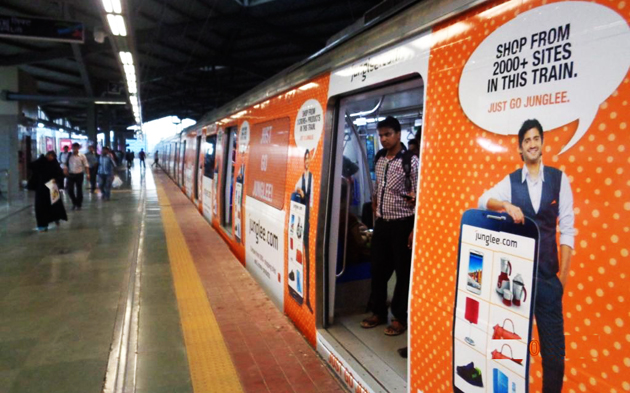
Metro and train advertising is a public transit branding method that involves advertising that is done in and outside metros or onto metro station assets. Metro station branding, metro full-wrap branding, and inside metro branding are great ways to target a more urbanized population. Commuters who regularly travel in metros and even trains for commutation purposes, tend to notice the vehicle’s outside branding wrapping. Be it while waiting at the platform or while looking around, metro and train branding is an effective way to catch your target audience’s attention and build a strong top-of-the-mind brand recall.
Metro branding is one of the forms of transit media advertising. If you wish to target even more commuters or corporate, working crowds, you can consider station branding as well.
3. Bus branding
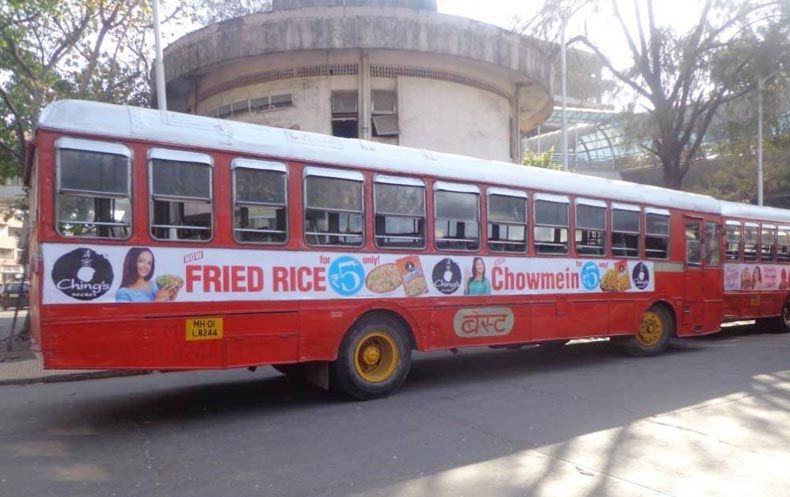
Bus branding is another kind of advertising wherein private and public buses aid in promoting the brand throughout the city or country. Bus branding is done through branded bus posters, bus wraps, backlit panel advertisements, advertising on bus sides, and bus seats. Also, a digital screen could be fitted inside the bus to engage even more consumers. An average urban bus travels around 150 to 300 kilometers per day covering 50K to 60K miles a year. The advertising mileage buses have proven to give is one of the main reasons why you will mostly see large-sized brands such as LIC, HDFC, Sony TV, or even top FMCG companies like Nestle, Hindustan Unilever doing regular bus branding campaigns to reach their target market.
4. Cab branding

Cab branding is a way of advertising your brand through cabs such as Uber or OLA or taxis. Cabs can act as mobile billboards, helping you target a more corporate audience. Cab branding is done by wrapping a poster or flex at the back, side panels, front or whole body of the cab. It increases brand visibility and helps in creating a better and stronger brand identity. Cab advertisements such as Uber or OLA ads are relatively less costly as compared to other transit media branding options such as metro branding or train advertising.
Advantages or benefits of Transit Media Branding
1. Transit media branding has a geographical plus point
Transit advertising is a wiser and smarter choice when it comes to local branding. Brands can make more out of their marketing budget by doing local branding to reach their target market.
They can select the market portion they desire to target and then place their ads on buses or trains in that specific region. Transit advertising is one of the highly classified mediums of advertising which is powerful for targeting the local consumer of a region. When a business decides to place transit advertisements in a select location, it is actively reaching out to people of a select demographic characteristic and background. For instance, a local restaurant advertises special offers on a bus stand that the customers often visit to reach that locality. This would help them be aware of the offers and products the place offers. This would in turn increase the customer footfall.
2. Transit media branding is cost-effective
Transit media advertising is like a large blanket spreading over a larger proportion of potential customers. It allows greater customer activation and acquisition at a lower cost. Therefore, transit media branding is one of the highly chosen methods of advertising for brands and businesses of all sizes. Unlike billboard advertising, you don’t need lakhs of rupees of budget to get started.
3. Provides you with long brand exposure time
While traveling in a bus or a plane, it is observed that people spend time noticing the brand around. For example, if you are on a seven hours flight and you see a brand wrap on the front seat, then you are likely to give it your attention both consciously and subconsciously. This is how it works. Even if it is a bus stand or a metro ride that displays your brand and that people use every day for traveling to work or other commutes, it aids in granting a longer exposure period. This would in turn make people refer to and choose your brand the next time they go shopping. Train advertising with full wraps is highly beneficial for brands. People following the same path would get your brand inside their minds without any effort, simply because it is displayed every day.
4. The coverage area is large in transit outdoor branding
Be it a bus or a cab, it is used by people for traveling almost all the time of the year. So when they enter or travel different streets or follow a particular route each day, so does your brand and that helps build a strong mind recall among your target audience. Transit media advertising facilitates effective brand activation through vehicles. For example, a bus with full wraps would display the brand in large size making it almost impossible to unsee for your target customers. Also, transit vehicles in India travel an average of 40 to 60 KM a day giving thousands of impressions. Transit media branding can help you spread your brand across a large geographical horizon repeatedly to build a good brand recall
Disadvantages or Cons of Transit media branding
1. Transit media branding depends on the public’s state of mind
We are humans and thus a collection of emotions. It is quite possible that at one point, an individual may not be in the mood to reflect upon and look around an advertisement. For example, a person sits on the bus and goes on to read a novel or take a nap. In this case, the purpose of transit media could remain quite defeated.
2. Routes may change overtime
A mode of public transport may not always take one way. According to the needs of the current times, the path of public transport is likely to change. During this time, it may not be able to cover a particular segment of the population.
3. Limitation on the creative front
Transit media cannot be highly customized and that is a disadvantage if we look the other way around. It is quite possible that at times the people who view the transit media advertising may not have a certain perception, need, or behavior of purchasing the particular product. For example, if a sports products ad is displayed to old-aged people, then they would never have the lifestyle of playing a sport actively at the age of 80. This is where there lies a boundary.
Conclusion
From the above key points, we can infer that while transit media advertising brings with it certain disadvantages, it is still quite effective in the long run. And today, various brands as discussed above are taking the help of transit media advertising to make their brand known to both local and non-local audiences. Transit media is not restricted to reaching one segment of the population but spreads the message throughout. Also, the cost involved is less compared to other advertising methods. Transit media acts as a moving brand billboard and it cannot be switched just like a television ad or even a digital online ad. It is seamless and offers brand visibility and brand activation in many ways!
Ginger Media Group is an established marketing agency that has done offline marketing for giant companies like OYO, Uber, Gillette, Unilet, & a lot more
Our agency focuses on a 360 degrees marketing approach that is customized to fit the requirements of our customers.
Checkout our transit media branding services
CONTACT
If you want to run an effective transit media campaign for your brand
Then contact us at,
+91 990 247 8800 or email at – contact@gingermediagroup.com
]]>Ready to talk with a marketing expert?

A Pragmatic and innovative way to enthrall your target group is just a click away!
Get in Touch
Rukmini Knowledge Park, Kattigenahalli, SH 104, Srinivasa Nagar, Bengaluru, Karnataka 560064
+91-990 247 8800
contact@gingermediagroup.com
Popular in Television Advertising
Udaya TV AdvertisingSun TV AdvertisingStar Plus AdvertisingTV 9 AdvertisingZee TV AdvertisingNDTV India AdvertisingColors TV AdvertisingPopular in Airport Advertising
Spice Jet AdvertisingMumbai Airport AdvertisingDelhi Airport AdvertisingEmirites AdvertisingIndiGo Airlines Domestic India AdvertisingPopular in Newspaper Advertising
Deccan Herald AdvertisingPrajavani AdvertisingThe Hindu AdvertisingEconomic Times AdvertisingDainik Jagran AdvertisingHindustan Times AdvertisingPopular in Magazine Advertising
Forbes AdvertisingCosmopolitan AdvertisingBusiness World AdvertisingVogue Magazine AdvertisingPopular in Sports Advertising
IPL AdvertisingPopular in Outdoor Advertising
Billboard AdvertisingBus Shelter AdvertisingMetro Pillar AdvertisingUnipole Advertising© Ginger Media Group 2025. All Rights Reserved.