Advertising Media:
- Television: AUDIOVISUAL content that provides reach to a large audience, usually during prime-time shows or events.
- Radio: Audio commercials that are likely to influence listeners when commuting or performing other tasks effectively.
- Print Media: Newspapers, magazines, and pamphlets focused on a particular subgroup and print.
- Digital Media: The Internet-working across websites, search engines, and other forms of social media to communicate to a digitally literate target group.
- Social media: Interacting with customers on Facebook, Instagram, and Twitter, among others, through targeted advertisements and interactive campaigns.
Sales Promotion:

A Sales Promotion is typically defined as an incentive for the customer to buy a product or service within a limited timeframe, such as:
- Discounts: A reduction in the price for some time or some period to attract more and more customers.
- Coupons: Coupons promising a reduction for subsequent purchases, prompting consumers to buy now or later.
- Loyalty Programs: Reward systems encourage repeat business by offering points or rewards for continued purchases.
Why you should know Advertising and Sales Promotion
- To Maximize Marketing Strategies:
Gaining awareness of the role of advertising and sales promotion can help one hone and adapt marketing strategies effectively.
- Correct Communication:
Knowing the target audience helps organizations create messages that resonate deeper within their intended population, thus making them more likely to be adopted by their targeted audience.
- Generation of Sales Revenue:
Knowledge of advertising and sales promotion is highly integrated with sales increases. A well-crafted campaign turns a probable customer into a repeat customer.
- Customer Loyalty:
The only way to achieve this is through practical and well-planned advertising and promotional strategies. Businesses can create good relationships with their customers, and they will want to buy from them repeatedly. These notions call for developing a competitive advantage in the marketplace.
Relevance in Strategic Decisions
- Market Analysis: Understanding advertising and sales promotion tools can help businesses understand market trends and the patterns of consumers’ behaviors in the target market. Campaign strategies can then be planned accordingly.
- Budget Allocation: Companies are equipped to allot resources effectively since this information on how to use marketing tools effectively facilitates full returns on investment and minimization of waste.
- Competitive Advantage: This knowledge of advertisement and sales promotion details gives firms the advantage of moving ahead of saturated markets as firms develop unique selling propositions that attract and retain customers.
- Performance Measurement: Understanding advertising effectiveness metrics and metrics about sales promotion programs helps companies measure their effectiveness, thus constantly trying to improve themselves.
Understanding advertising and promotional sales is essential for making strategic decisions. It gives any business the tools to effectively communicate with its customers, stimulate demand, and drive sales while remaining competitive.
Advertising and Sales Promotion: Purpose, Function, and Applied Practice
Purpose: Advertising aims to generate consciousness in customers’ minds regarding a specific product or service. It tries to communicate the features or benefits of the product or service and how and where to get it-simply put a buy signal.
Sales promotion creates a sense of urgency for consumers to buy now and not later. In other words, it promotes consumption without requiring the consumer’s involvement in the planning process. Examples are discount offers, coupons, contests, and free samples. It aims to prompt short-term consumer activity, increase sales volume, and enhance product visibility.
Functions
- Building Brand Awareness Advertising aims to make potential consumers aware of brand identity and values.
- Consumer Involvement: Effective advertisement attracts intense consumer interest by tugging at the heartstrings, telling a story, and through multichannel approaches, social media, broadcast television, and print.
- Generating Demand: Promotions enhance the likelihood of buying. The sale of a commodity can be complemented with incentive ties such as buy-one-get-one-free or any other form that will heighten consumers’ interest and anxiety levels.
- Sales Volume Increase: Promotions increase quantity to peak sales for a short period and clear the stock in the shortest period. This aspect will help achieve the set period.
- Creating Customer Loyalty: Advertisements and promotions can help build brand loyalty. Long-term customer relationship building is possible through constant interaction with customers through advertising and rewarding buyers through promotions.
Day-to-Day Applications:
Retail Business:
- Advertising: Retailers use television commercials and social media advertisements to inform about new arrivals or season sales. As the back-to-school season arrives, stores publish ads regarding their product line and competitive prices.
- Sales Promotion: For example, “Buy One, Get One 50% Off” on clothes and “Flash Sales” that are good for a limited time encourage impulse buying and clear seasonal inventory.
Consumer Electronics:
- Marketing: Consumers typically go through a phase of pre-launch exposure for electronic products. For example, electronics such as Apple iPhones have big ad pushes through various media outlets once new iPhones are released.
- Sales Promotion: Hi-tech companies can offer trade-in offers or bundle two products together to induce sales in food and beverages, as Coca-Cola did during the Super Bowl of a particular year, or make emotionally resonant commercials to strengthen their identity and bond with consumers.
- Sales Promotion: Seasonal campaign in the form of holiday-line products, special discounts,, or loyalty schemes, which reward with points to further support sales generated and maintain customer interest.
Services Industry:
- Advertising: Airlines and hotel service industries use Internet advertising and focused marketing to ensure that customers are captured during a travel season or festival.
- Sales Promotion: Flash sales on airline tickets for limited times for a stay at the hotel lure customers into booking, thereby luring them into promotional pricing.
To conclude, advertising and sales promotion are complementary interrelations that grow business marketplace visibility and, therefore, advertise sales in various industries. Knowing their definitions, purposes, and functions would help the business plan ahead for the effective accomplishment of marketing goals and develop an enhanced relationship with its consumers.
The Importance of Understanding Advertising and Sales Promotion for Businesses

In today’s marketplace, where competition reaches peaks and attention spans are dropping every minute, it’s imperative to know about advertising and sales promotion for sustainable success. The two go at the heart of marketing strategies, impacting brand visibility, customer engagements, and revenue growth. We discuss why mastery over advertising and sales promotion must be crucial for business and its impact in the sections below:
- Boosting Brand Visibility: Advertising communication creates a level of awareness among consumers that makes potential customers aware of a company’s products or services. Awareness is the first step to making a customer loyal and trusted.
- Customer Experience: Sales promotions involve customer engagement through incentives that are, by nature, immediate, such as discounts and offers. At a certain level of analyzing consumer behavior, businesses can formulate tactics of promotions that make sales, deepening relationships between the brand and consumer.
- Increases Sales and Revenue—Effective advertising may significantly increase sales. Firms will know when to organize promotions in relation to the buying peak based on their knowledge of market trends, thus maximizing revenue.
- What Makes the Business Stand Out—Defines Unique Selling Propositions: A thorough understanding of advertising and sales promotion aids a business in creating a niche for itself in the marketplace. Businesses can target their intended audience using different USPs and promotional methods.
- Adapting to Changes in the Market: The business environment keeps changing, meaning that businesses need to prepare advertisements and conduct sales promotions to alter or adapt to them. This means there will be relevance as well as competitiveness.
- Performance Measurement: Measuring effectiveness and ROI is part of a good advertising and sales promotion strategy. Data analysis helps companies measure ROI by judging marketing efforts so that informed decisions are made.
- Advertising and Sales Promotions: A sharp understanding of advertising and sales promotion provides insight into consumer behavior, prompting business houses to formulate targeted campaigns that will drive purchasing decisions.
Examples of Effective Advertising and Sales Promotion Campaigns in Real Life
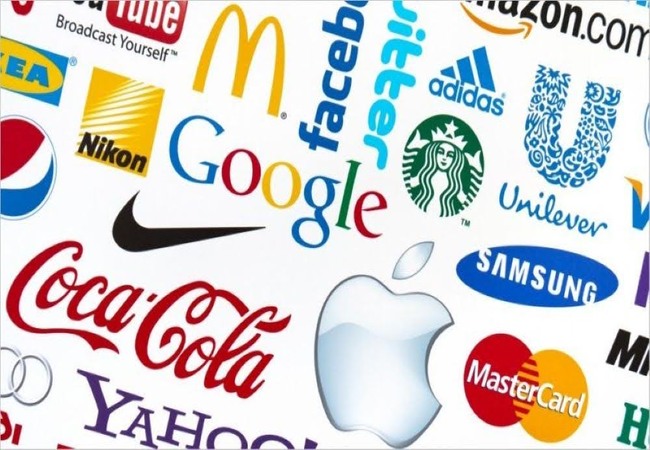
- Coca-Cola’s “Share a Coke” campaign provoked consumers to look for personalized bottles, leading to a 2% increase in sales.
- Nike’s “Just Do It” Promotion: This encourages participation and has sustained sales volumes, particularly during significant events.
- Old Spice’s “The Man Your Man Could Smell Like”: This hilarious campaign revitalized the brand and had sales increase by as much as 125%
- McDonald’s Monopoly Promotion: The thrill of winning has repeatedly kept customers coming in for these prizes.
- Amazon’s Prime Day: This is the biggest shopping day of the year, and it is unique to Amazon.
- Apple Product Launch Events: Expectation and excitement over the product leads to tremendous sales on the launch day
- Dove’s Real Beauty: Dove is an advertisement campaign that helped raise its sales and reputation.
- Starbucks Loyalty Program: The reward program encourages repeat business and retention as well as sales
- Guinness’ “Made of More”: Using compelling stories for advertising emotionally helped raise brand loyalty and market share.
- Target’s Seasonal Sales: Seasonal offers contribute significantly to the sales volume of peak shopping seasons.
These are a few examples of how good advertisement and sales promotion can increase brand awareness, customer retention, and sales in each field.
Final Thoughts
Advertising and promotion are not additional to a company’s marketing arsenal but an integral part of a comprehensive business plan. Mastering these essential components can help organizations increase brand recognition, encourage engagement, increase sales, differentiate themselves from the competition, adapt to market changes, and measure their effectiveness, ultimately manipulating the consumer’s behavior. Those who decide to prioritize their advertisement and sales promotion strategies will thrive since the marketplace continues to grow ahead.
]]>The holiday season isn’t just about festive decorations and joyful gatherings; it’s a crucial time for businesses to boost sales. For many, it’s the busiest and most profitable period of the year. People are in a generous mood, looking for gifts and special treats.
Boosting sales during the holidays is vital for a company’s financial health. The increased revenue can offset slower periods during the year and contribute significantly to annual profits. Moreover, a successful holiday season can create loyal customers who return throughout the year.
The holiday spirit also presents an opportunity for businesses to connect emotionally with customers. By offering special promotions and creating a joyful shopping experience, companies can leave a lasting positive impression. , capitalising on the holiday season is not just about making money; it’s about building relationships and securing the long-term success of a business.
Importance of Boosting Sales During the Holiday Season

Elevating sales during the holiday season is crucial for businesses. This festive period brings a surge in consumer spending, making it a prime opportunity for companies to boost their financial well-being. The increased sales not only contribute significantly to yearly profits but also help offset slower times.
Moreover, the holidays foster a spirit of generosity and gift-giving, creating an ideal environment for businesses to showcase their products or services. Successfully capitalising on this season not only means immediate gains but also the chance to gain loyal customers who may continue to support the business year-round.
Beyond financial benefits, the holidays provide a unique chance for companies to connect emotionally with customers. By offering special deals and creating a joyful shopping experience, businesses can build positive relationships, fostering customer loyalty. , the importance of boosting sales during the holiday season extends beyond short-term gains, influencing long-term success and customer connections.
How to Craft a Successful Christmas Campaign
Crafting a successful Christmas campaign involves capturing the festive spirit and connecting with your audience in a meaningful way. Start by understanding your customers’ desires and tailoring your message to resonate with the joy of the season. Use creative visuals and heartwarming storytelling to evoke emotions.
Offering special promotions or exclusive holiday deals can attract attention and encourage purchases. Make sure your campaign is easily shareable on social media, leveraging the power of word-of-mouth marketing. Personalisation is critical—address your customers individually, making them feel valued. Additionally, consider incorporating a charitable aspect, aligning your campaign with the spirit of giving.
Learn from successful examples, adapting strategies that have resonated with audiences in the past. By combining creativity, personalisation, and a touch of holiday magic, your Christmas campaign can stand out and create a lasting impact.
Top 8 Christmas Campaigns to Learn from
Here are the top 8 Christmas campaigns!
SBI Life Insurance – Main Se Hum Campaign
SBI Life Insurance’s “Main Se Hum” campaign is a heartwarming example of connecting with people on a personal level. The campaign, with its simple yet powerful message, emphasises the importance of relationships and shared moments in life.
Using relatable scenarios, the campaign portrays life’s journey and highlights how insurance can be a pillar of support during unexpected events. It beautifully captures the essence of togetherness and protection.
The use of everyday experiences makes the campaign easily understandable for a broad audience. SBI Life Insurance successfully communicates that they are not just an insurance company but a companion in life’s journey. , “Main Se Hum” stands out for its simplicity, relatability, and emotional resonance, making insurance feel like a thoughtful and caring choice for individuals and families alike.
Big Bazaar – Bano Kisi Ka Santa Campaign
Big Bazaar’s “Bano Kisi Ka Santa” campaign is a delightful initiative that embodies the true spirit of Christmas. The campaign encourages everyone to become someone’s Santa by spreading joy and kindness.
Through special offers, discounts, and festive promotions, Big Bazaar transforms the shopping experience into an opportunity for gift-giving. The campaign cleverly combines the joy of receiving with the joy of giving, creating a sense of community and celebration.
The message is clear: each person has the power to bring happiness to others during the holiday season. The campaign not only promotes shopping but also highlights the joy of sharing and making a positive impact on the lives of those around us. “Bano Kisi Ka Santa” is a heartwarming campaign that redefines the holiday shopping experience, turning it into a meaningful and joyous occasion for both the giver and the receiver.
Faasos – What If Wishes Came True Campaign
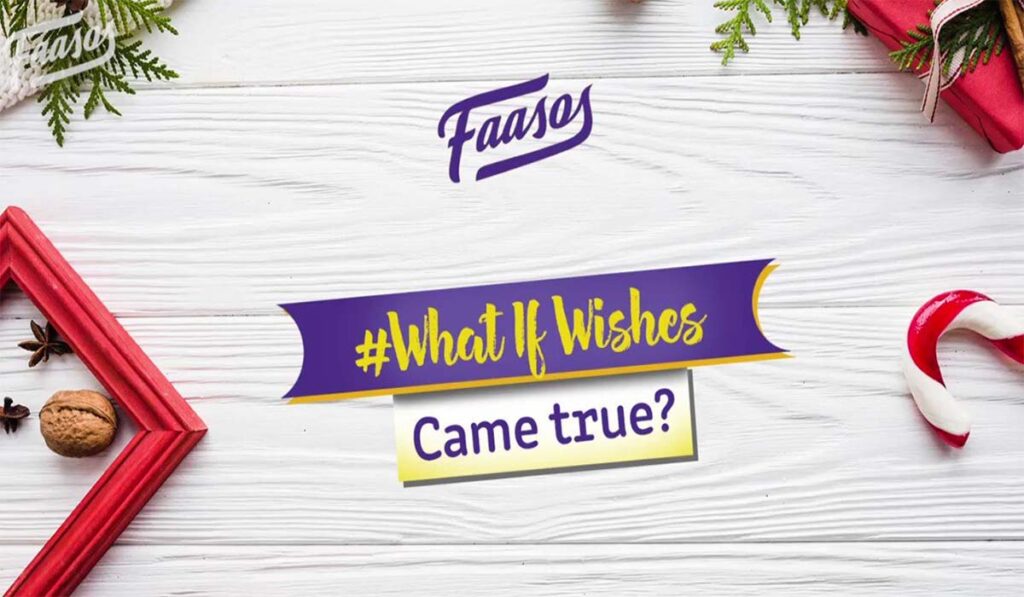
Faasos’ “What If Wishes Came True” campaign is a whimsical and imaginative approach to the holiday season. The campaign sparks the imagination by asking a simple yet powerful question: What if your wishes could come true?
Through this concept, Faasos not only promotes its food offerings but also taps into the magical and wishful spirit of Christmas. The campaign cleverly connects the joy of fulfilling cravings with the pleasure of fulfilling wishes.
By combining a playful narrative with enticing visuals and tempting food imagery, Faasos creates a campaign that stands out and resonates with a diverse audience. The simplicity of the message and the universal theme of wishes make it relatable and engaging. “What If Wishes Came True” is a delightful campaign that adds a touch of magic to the holiday season, making Faasos a tempting choice for those looking to turn their food wishes into reality.
Coca-Cola – This Christmas, Give Something Only You Can Give Campaign
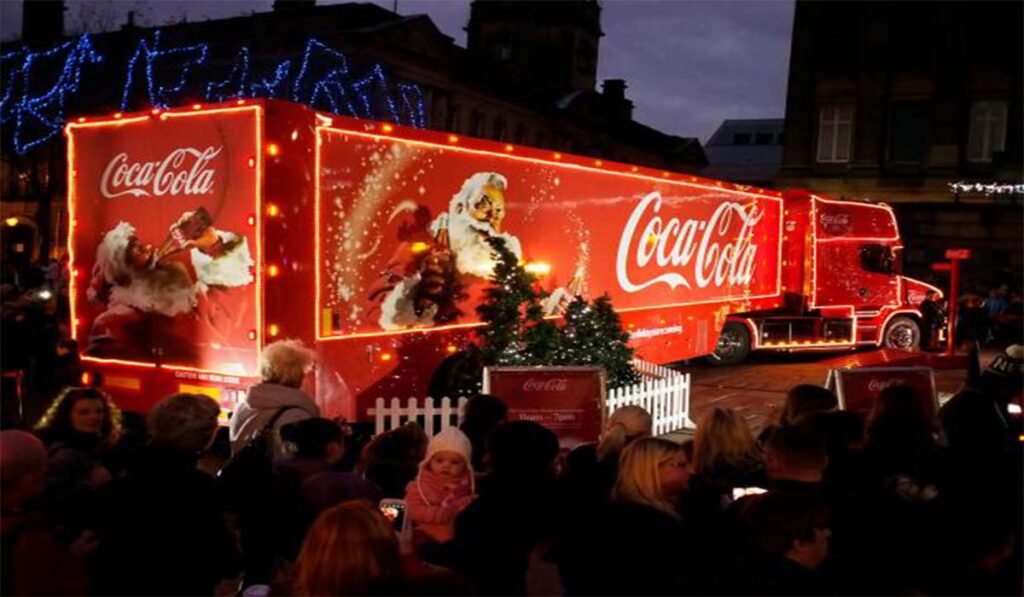
Coca-Cola’s “This Christmas, Give Something Only You Can Give” campaign embodies the spirit of generosity and personal connection during the holiday season. The campaign emphasises the unique and heartfelt nature of gift-giving, encouraging people to give something unique and personal.
By associating the act of giving with the joy and happiness that Coca-Cola represents, the campaign establishes a warm and emotional connection with the audience. It goes beyond the product itself, focusing on the idea that the most meaningful gifts come from the heart.
The simplicity of the message, combined with festive visuals and the familiar Coca-Cola brand, makes the campaign easily relatable. Coca-Cola successfully captures the essence of Christmas as a time for sharing and creating special moments with loved ones. Ultimately, the campaign reinforces the idea that the most memorable gifts are those that reflect the giver’s unique thoughtfulness and care.
Google – Santa Tracker Campaign
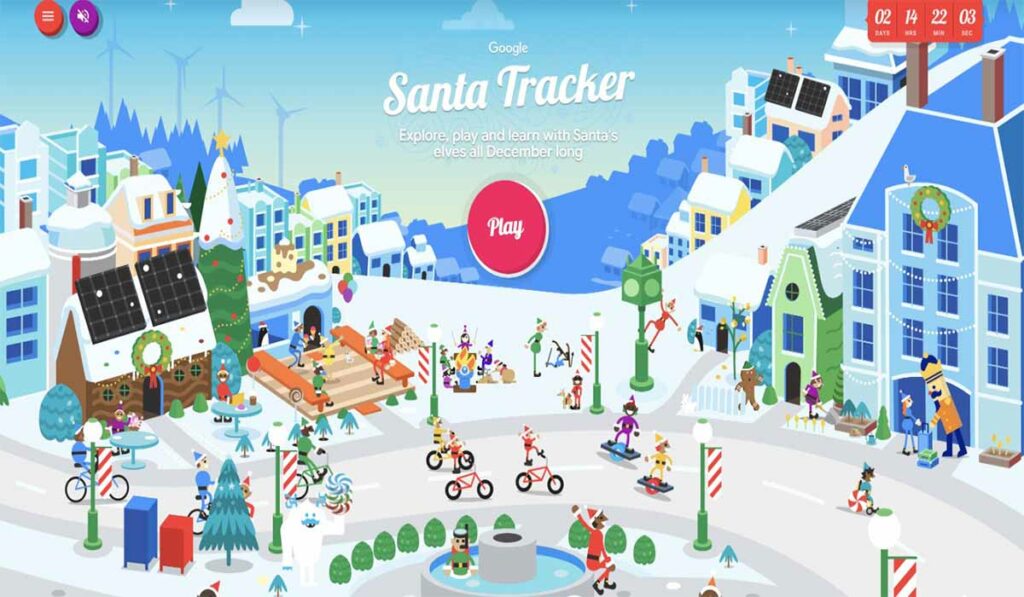
Google’s “Santa Tracker” campaign is a festive and interactive way to celebrate the holiday season. The campaign leverages technology to create excitement and anticipation among people, especially children, as they eagerly await Santa’s journey around the world.
The Santa Tracker provides real-time updates on Santa’s whereabouts, allowing users to follow his magical journey on Christmas Eve. The interactive features, such as games and activities, engage users of all ages in the holiday spirit.
By combining the magic of Christmas with the innovation of technology, Google’s campaign not only showcases its capabilities but also brings joy and wonder to people globally. It reinforces the idea that technology can be a source of festive fun and adds a modern twist to the traditional excitement of tracking Santa’s sleigh. Google’s Santa Tracker is a delightful and accessible campaign that brings a touch of magic, creating a memorable experience for users during the holiday season.
Heineken – 12 Days of Christmas Campaign
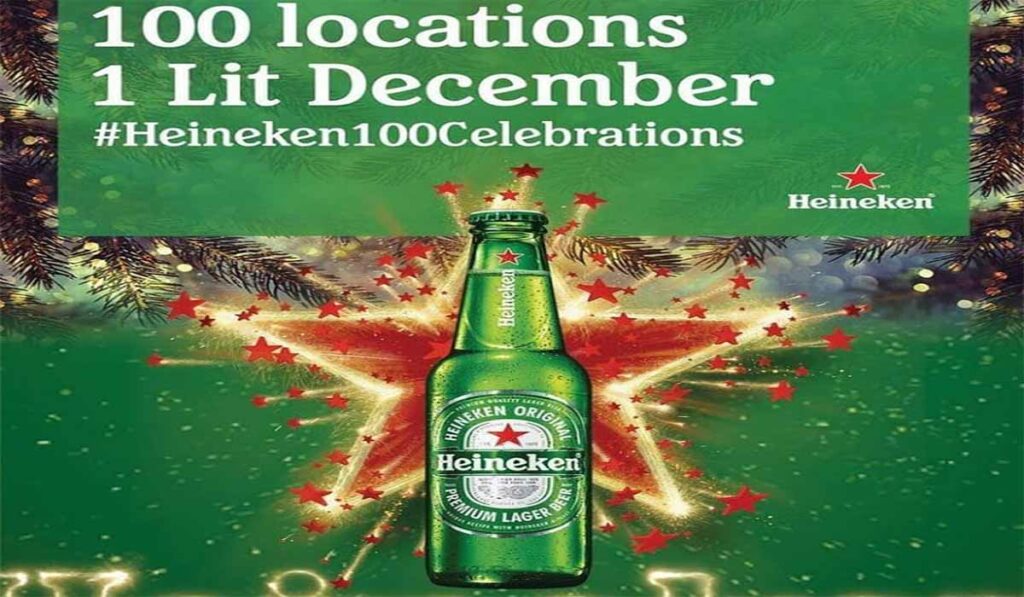
Heineken’s “12 Days of Christmas” campaign adds a touch of festive cheer to the beer brand. The drive cleverly takes inspiration from the classic holiday song and transforms it into a series of joyful and surprising events.
For twelve days, Heineken offers special promotions, events, or giveaways, creating a sense of excitement and anticipation among consumers. The campaign encourages people to celebrate the holiday season with Heineken in a fun and engaging way.
By aligning the brand with the festive spirit and incorporating the element of surprise, Heineken effectively connects with its audience during this particular time of the year. The campaign not only promotes the product but also positions Heineken as a brand that values celebration and brings people together. The “12 Days of Christmas” campaign is a festive and lighthearted approach to marketing, making Heineken a part of the holiday celebrations and creating positive associations with the brand.
Mercedes – A Lot Will Change. Except Christmas Campaign

Mercedes’ “A Lot will Change. Except Christmas” campaign captures the enduring and timeless nature of Christmas traditions amidst a changing world. The campaign cleverly emphasises that, despite the fast-paced changes around us, the joy and magic of Christmas remain constant.
By showcasing the iconic Mercedes vehicles in a holiday setting, the brand associates itself with the idea of timeless elegance and reliability. The message conveys that while technology evolves and trends shift, the spirit of Christmas and the enduring quality of Mercedes vehicles endure.
This campaign creates a sense of continuity and reliability, positioning Mercedes as a brand that understands and values tradition. It resonates with consumers by blending the sophistication of the brand with the warmth and familiarity of the holiday season. “A Lot Will Change. Except Christmas” reinforces the idea that some things, like the joy of Christmas and the reliability of Mercedes, stand the test of time.
McDonald’s – Not So Secret Santa Campaign
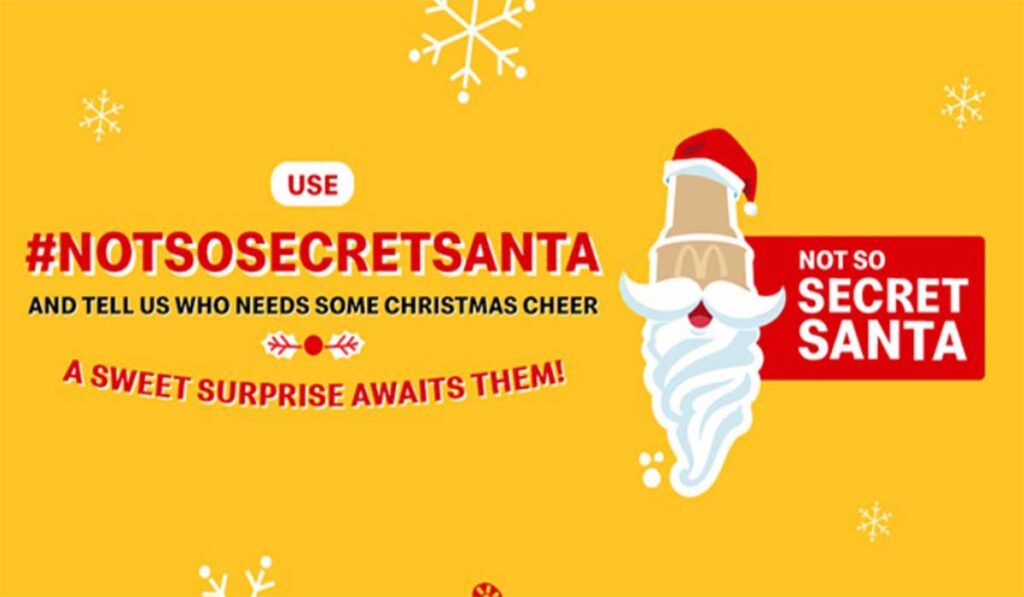
McDonald’s “Not So Secret Santa” campaign is a festive and inclusive approach to spreading holiday joy. The campaign embraces the spirit of giving by offering special deals and surprises, making everyone feel like a part of the celebration.
Through this campaign, McDonald’s encourages customers to become “Not So Secret Santas” by sharing the joy with friends and loved ones. The element of surprise and the festive theme create a sense of excitement and warmth. By incorporating the holiday spirit into its promotions, McDonald’s not only attracts customers but also positions itself as a brand that cares about creating positive and enjoyable experiences.
The “Not So Secret Santa” campaign embodies the idea that simple acts of kindness, coupled with delicious treats, can make the holiday season even more special for everyone. McDonald’s creates a sense of community and festive cheer, making the brand a joyful part of customers’ holiday celebrations.
Future Trends in Christmas Marketing

Looking ahead, future trends in Christmas marketing are poised to embrace technology and sustainability. Augmented reality experiences, interactive social media campaigns, and personalised digital content are likely to play a significant role. Brands may use immersive storytelling to create engaging and memorable connections with consumers during the festive season.
Moreover, there is a growing emphasis on eco-friendly initiatives. Christmas campaigns may increasingly focus on sustainability, with companies adopting environmentally conscious practices in their messaging and product offerings. Consumers are becoming more mindful of their ecological impact, and brands that align with eco-friendly values are likely to resonate positively.
The future of Christmas marketing lies in leveraging technology for engaging experiences and incorporating sustainability into the festive narrative. Brands that stay innovative, interactive, and environmentally conscious will likely stand out and connect effectively with consumers during the holiday season.
Final Thoughts
The holiday season is a time for businesses to spread joy, connect with customers emotionally, and boost sales. Crafting creative campaigns that resonate with the festive spirit is critical. Learning from successful examples and staying attuned to future trends ensures relevance and effectiveness. As we navigate the changing landscape, embracing simplicity, personalisation, and a touch of magic can make holiday marketing efforts memorable and impactful.
]]>This blog takes a glimpse into FMCG advertising, providing insights into its very nature, what may drive the trend, and what it may influence in the Indian consumer market.
How to Use FMCG Advertising for the Best Results

FMCG advertising in India determines consumer behavior and brand positioning. It creates market trends and leaves a long-lasting effect on consumer choices. Some of the ways by which FMCG advertising can be used to its fullest are as follows:
Brand Awareness
- In a very competitive Indian market for FMCG, brand recognition plays a big role. Successful advertisements are those that first introduce the consumer to the brand and then firmly plant it in their minds. A great example is Amul, which has been making the brand a household name in India for decades because of its sleek campaigns that are witty and timely enough to help carry forth the know-how from generation to generation.
Consumer Behavior
- FMCG advertisements really influence the behavior of consumers to a great extent. An excellent example would be the “Swachh Aadat, Swachh Bharat campaign” by Hindustan Unilever, which, instead of selling soap, encouraged hygiene habits, especially in the rural belts. Such campaigns enhance societal well-being while promoting the product, clearly depicting how FMCG advertising can inspire a change in positive behavioral modifications.
Competitive Advantage
- FMCG brands operate in a saturated market; therefore, they need to come up with a unique proposition. Dettol, from Reckitt Benckiser, has positioned itself as synonymous with hygiene and disinfection due to constant and effective advertising campaigns, which give it an edge in the market.
Product Innovation
- FMCG advertising trends are as much about inspiring innovation as selling existing products. Baba Ramdev-led Patanjali has transformed the FMCG advertising landscape in India by branding its products natural and Ayurvedic. This, in turn, has led other FMCG majors to come up with similar product lines, thus triggering a step toward product innovation.
Market Share
- Market share is the most important thing for any FMCG brand. Through advertisements, brands are going to achieve and maintain a share of the market. A classic example of this is the competition between Colgate and Pepsodent toothpaste categories. The two brands have splurged money in advertisements to keep their brands alive, hence capturing most market shares.
Top 10 Best FMCG Advertising Campaigns

Amul’s “Utterly Butterly Delicious”
- Amul is so synonymous with butter and milk that for years, people have referred to it as the ‘Taste of India.’ Out of a plethora of iconic campaigns in India, it must be Coca-Cola’s “Share a Coke.” It’s extremely popular due to the witticism and the humorous takes on current events and the social commentaries that make Amul’s brand timeless-appealing to all generations.
Coca-Cola’s “Share a Coke”
- Coca-Cola has taken personalization to new heights with “Share a Coke,” replacing the iconic logo with popular Indian names. The brilliant campaign allowed people to find bottles with their names or loved ones’ names and experience an emotional bond. It not only boosted sales but also made Coca-Cola’s brand image even stronger as it emerged as a symbol of both togetherness and individuality.
Surf Excel’s “Daag Achhe Hain”
- Surf Excel’s “Daag Achhe Hain” (Dirt is Good) campaign is a masterclass in storytelling. It’s built around children playing and getting dirty. Besides pointing out that stains are part of a child’s growth, the emotional narrative hits a chord with Indian parents, consequently underlining both the effectiveness of the product and emotional bonding with families.
Fevicol’s “The Unbreakable Bond”
- Fevicol has given the world “The Unbreakable Bond,” synonymous with humorous ads. It has enlarged scenarios where Fevicol keeps things glued with humor and absurdity and is memorable for Indian consumers. The campaign brings out the strength of the brand through humor, making the impact last.
Cadbury’s “Kuch Meetha Ho Jaye”
- Cadbury’s “Kuch Meetha Ho Jaye” campaign has been tugging at Indian consumers’ hearts since 1995. The message delivers the culture of sharing sweets on happy occasions so that the product becomes synonymous with any Indian celebration and happiness. It captures the emotional connection that consumers feel towards the brand.
Dettol’s “Dettol Ho Wala Hai Na”
It was the trusted hygiene and disinfection brand Dettol, with its “Dettol Ho Wala Hai Na” campaign that spoke well to the Indian consumer.
- The ‘Dettol Ho Wala Hai Na’ campaign was created in 2019 as an endeavor to spread awareness among the common masses regarding hand hygiene, especially during the flu season.
- It became one of the successful ones because of its attractive jingle and the easily relatable story, not only in increasing Dettol’s sales but also spreading awareness over hygiene practices in India.
Maggi’s “2-Minute Noodles”
Maggi, through its campaign called “2-Minute Noodles,” practically changed the Indian perception towards instant food.
- It was at the end of the 1980s that the campaign was introduced, emphasizing how quickly it is to cook Maggi noodles.
- It became a household name, especially among the students and working professionals.
- Even after much controversy and a temporary ban, Maggi loyal customers stood strong, which resulted from effective advertising for the FMCG sector, allowing it to continue for such a long time.
Parle-G “G for Genius”
Parle-G biscuits have been a part of the Indian home for decades. The “G for Genius” advertising campaign ran for years and portrayed the brand in a subtle yet perfect light, as the very need to get along with your growing years.
- The subliminal perception that eating Parle-G biscuits could make children smart was just enough to win the hearts of parents across the country.
- Such a successful and loving campaign has always kept Parle-G at the head of the biscuit market.
Fair & Lovely’s “Fairness Cream”
For years, Fair & Lovely’s advertisements were built around the notion that fairness is beautiful and leads to success.
- However, in 2020, the brand repositioned itself by changing its name to “Glow & Lovely”, with a message to celebrate diversity and inclusivity.
- It was not a mere change in the positioning of the product but an alignment with developing sociological norms and consumer opinions.
Titan’s “Celebrate Life”
Titan, the premium watch and jewelry company, has always emotionally captured the hearts of Indians with their advertisements through good storytelling.
- The “Celebrate Life” campaign is a very impressive advertisement featuring the role of relationships and the importance of the products while creating memorable events.
- Example: The advertisements of Titan products range from birthday celebrations to wedding ceremonies, highlighting how Titan products are part of life’s significant moments.
Example: Influence of Advertisement on FMCG Products
Advertising is one of the most critical drivers for FMCG products. Here are some reasons why advertising helps FMCG brands:
Brand Recall
- Advertising makes FMCG products, such as the Titan watch, memorable through stories. Their “Celebrate Life” campaign focuses on making memories for special occasions, planting them in the minds of the consumer during huge life events.
Consumer Trust
- Commercials like “Dettol Ho Wala Hai Na” build consumer trust through an ad on the reliability and hygiene of the product. This advertisement not only improved the sale of Dettol but also made people realize that hygiene should be maintained. It was one of the most successful FMCG campaigns.
Emotional Connection
- Campaigns like Maggi’s “2-Minute Noodles” are emotionally connected with the consumer. There is a campaign for working professionals and students who need Maggi as a quick meal for sustenance. Even during the controversies and ban on the product, Maggi’s loyal customers stood their ground because the brand had a very high emotional appeal.
Cultural Relevance
- The Parle-G “G for Genius” campaign positioned Parle-G as supporting the growth of children. It helped create an understanding of the brand as necessary for growth, keeping Parle-G at the top of the biscuit market and making it iconic in Indian households.
Emerging Trends
- When the FMCG brand Fair & Lovely became “Glow & Lovely” in 2020, it embraced societal changes. This change echoed the voice of a diverse and inclusive society, reflecting the mindset of the consumer and keeping the brand fresh in this fast-changing era.
Final Thoughts
- The Indian FMCG market heavily relies on creative and effective ads to reach consumers.
- Storytelling, emotional appeal, and cultural relevance help FMCG brands build strong connections with their audiences.
- FMCG advertising needs to evolve as consumer preferences and advertising trends shift.
- Advertisements that resonate with cultural changes help maintain a brand’s market share.
- FMCG brands need constant advertising investment to secure their market share and stay top-of-mind.
Critical Points That This Blog Discusses:
- Understand Key Digital Advertising Elements
- Explore the Advantages of Digital Advertising
- Analyzing a Successful Digital Advertising Campaign
- Learn About the Winning Digital Ad Strategy
- Highlighting Evolving Digital Landscape
3 Key Elements Of Advertising
Audience-Centric Approach
Audience-centricity in digital advertising gets to the core of their target audiences’ needs, wants, and behaviors. Brands can find a way to deeply resonate with an audience for specific aspirational desires that are valued or considered painful challenges. This leads to stronger relationships, increased engagement, and a higher conversion rate.
- Pain Point Identification
Knowing what pain point your audience has helped craft messaging that is personalized to that audience. - Behavior Analysis
Understanding how a user behaves through data can lead to the execution of a campaign strategy. - Segmented Messaging
Pre-crafted messages for targeted audience segments can be prepared to make the messages relevant. - Feedback Loop
Engage your target audience to gain insight into which tactics to refine in the future. - Long-Term Relationships
Establishing trust leads to customer loyalty and repeat engagement.
An audience-centric approach leads to campaigns that feel personal and relevant, increasing the chances of successful engagement.
Marketing Through Storytelling
Storytelling is probably one of the best tools used in digital advertising, as it helps to achieve emotional connections with the audience. The bridge translates values and messages into something consumers can relate to, thus making engagement with consumers and building brand loyalty possible.
- Emotional Engagement
Storytelling appeals to the feelings that cause people to reminisce about and connect with their experiences and dreams. - Relatability
Stories that reflect a consumer’s experiences and aspirations help a consumer connect with the story. - Memorability
Stories are more memorable than facts and statistics, which help build brand recall. - Brand Identity
A strong narrative delivery conveys the heart of the brand’s values and personality. - Advocacy
When a customer forms an emotional bond with a brand’s story, it is more likely the customer will relate this to another customer.
In short, through their ability to tell stories well, brands create a memorable connection and emotionally interact with their audiences.
Authenticity and Transparency
Authenticity and transparency are the hallmarks of today’s digital landscape. Consumers demand authentic connections with brands that actually relate to their values and practices. Brands that embrace transparency will be able to establish trust and an emotional bond with the public.
- Open Communication
The successes and failures are honest and authentic. - Consumer Trust
Such types of transparent brands tend to earn the trust of consumers as well as loyalty. - Community Building
Authentic brands express honesty that fosters a sense of community among customers. - Differentiation
Authenticity allows the brand to stand out in a crowded market. - Long-Term Relationships
Transparency fosters long-term customer relationships, which amounts to loyalty toward the brand.
Authentic brands approaching transparency with respect can foster their loyal customer base and establish long-term relationships.
Benefits of Digital Advertising
Digital advertisements bring with them several advantages over the traditional methods of marketing. This benefit is also visible and alluring in attracting business organizations, whether big or small, to make it their marketing medium. The benefits of digital advertising that can be pointed out are as follows:
Cost-Effective
One of the most significant advantages of digital advertising is its inexpensive. It is much cheaper compared to other traditional channels to advertise products. TV and print ads can be expensive, but digital platforms offer many options at budget-friendly prices so that any business can create an effective campaign.
- Lower Starting Investment
Digital advertising generally has a lower starting investment than the old-fashioned methods. - Wide Accessibility
Digital advertising is accessible to all big companies as well as startups. - Competitive Edge
Small businesses can compete with giant brands without amassing huge debts. - Performance-Driven Spending
Advertisers can allocate budgets to ads according to the campaign performance, maximizing ROI.
This revolutionizes marketing, giving other businesses of all sizes opportunities to embrace perfect advertisement strategies.

Reach the Targeted Audience
Digital advertising can efficiently reach the target audience. Platforms such as Facebook, Google Ads, and LinkedIn provide age, gender, geographic, and behavioural targeting features that help advertisers maximise their campaigns and reach the most targeted audience.
- Precision Targeting
It is possible for an advertiser to tighten down on a defined target segment and increase its relevance. - Behavioral Insight
People behave differently. Hence, it’s possible to take proper ad placement by studying behavior. - Geographic Targeting
Brands can narrow their campaign to select a region and focus on reaching local customers. - Customization of Ad Format
The variety of ad formats will appeal to the varied preferences of the target audience. Thus, increasing engagement. - Higher Conversion
The targeted ads increase the likelihood of conversion as users interested in the content have been reached.
Effective targeting increases the prospects of meaningful engagement and maximizes the efficiency with which ad spends are utilized.
Measurable Performance
Easy Measurability The performance of digital advertising can easily be measured. So, there is always scope to know what can be improved in future campaigns. Brands can track such metrics with the help of analytical tools and, therefore, plan adjustments in their strategies to optimize return on investment.
- Real-Time Analysis
Immediate feedback enables brands to understand their campaign performance in real time. - Key Metrics Tracking
Monitoring key metrics like the click-through rate and conversion rate allows informed decision-making. - Campaign Optimization
Developing campaigns based on the data regarding performance drives better results. - Cost Management
Through performance analysis, one can optimize ad spending for greater returns. - Creating Future Marketing Strategies
Data-driven analysis helps in creating future marketing strategies.
Measuring performance allows a company to refine their advertising efforts and improve the effectiveness of campaigns in general.
Flexibility and Customization
Digital advertising affords advertisers flexibility and unprecedented opportunities for customisation. With access to performance insights, one can change the campaign quickly to maximise its effectiveness.
- Dynamic Content
The ads can be altered in real-time to keep up with the audience more effectively. - Multiple Formats
There are various ad formats so that the brands may pick the most effective presentation style. - A/B Testing
In digital advertising, the best ads are evaluated by comparing different types of ads. - Adaptive Strategies
Campaigns can be adapted as consumer behavior or market trends change. - Creative Freedom
In digital platforms, the brands have the freedom to test innovative approaches, leading to higher engagement.
The flexibility of digital advertising guarantees the campaigns will change over time in relation to the audience and market dynamics.
Global Reach
Digital advertising and internet intervention present an opportunity for brands to transcend geographical barriers. Digital advertising has made it possible for brands to tap into international markets—an accomplishment previously considered impossible.
- Cross-Border Marketing
Businesses can reach multiple countries simultaneously. - Cultural Adaptation
Brands can tailor their messages to resonate with varied cultural audiences. - Increased Access to New Markets
Internet technologies present easier, relatively less invasive ways of accessing a new market. - Always Available
Online advertising positions the brand as always available to the consumer. - Brand Awareness
International campaigns make the brand and the customer more prominent in other markets.
The global reach of digital advertisement opens the avenues for brands to have direct access to new markets and increase their clientele bases dramatically.
Examples of Digital Advertising
Now, let’s look at some exemplary digital advertising campaigns and how they innovatively leveraged innovative strategies to come up with unexpectedly great results.
Digital Advertising Examples
Campaign: Airbnb — Live Anywhere on Airbnb
- Airbnb offered a year of living anywhere, turning wanderlust into reality.
- The campaign was built on the idea of aspiration, attracting people drawn to a nomadic lifestyle.
- It utilized a combination of high-quality videos, strong visuals, and user-generated content.
- The campaign highlighted Airbnb’s core values of community and adventure.

Nike’s “You Can’t Stop Us”
- Nike’s ad featured split-screen visuals seamlessly linking athletes together.
- The ad showcased diversity, emphasizing that sports unite people of all backgrounds.
- The emotional impact and powerful imagery portrayed courage and resilience.
- It reinforced Nike’s brand message of motivation and the pursuit of greatness.

Burger King’s “Moldy Whopper”
- The campaign featured an image of a moldy Whopper to showcase the absence of artificial preservatives.
- It aimed to highlight the brand’s commitment to using real, natural ingredients.
- The ad was revolutionary for its transparency, debunking fast-food myths.
- It appealed to health-conscious consumers by showcasing Burger King’s shift towards clean ingredients.
Apple’s “Shot on iPhone”
- An ongoing campaign that features user-generated content shot on iPhones.
- The campaign celebrates the iPhone’s camera quality and its ability to capture stunning visuals.
- It encourages users to showcase their photography, making the campaign interactive and engaging.
- The real-life imagery provides authentic proof of the product’s capabilities.

Old Spice’s “The Man Your Man Could Smell Like”
- Old Spice used a humorous and charismatic spokesperson in this campaign.
- The ad featured witty and nonsensical scenarios, capturing the audience’s attention.
- It successfully reinvented the brand image, appealing to a younger demographic.
- The campaign went viral, creating significant buzz and brand recognition.
Coca-Cola’s “Share a Coke”
- The campaign personalized Coca-Cola bottles with popular names.
- It encouraged customers to find bottles with their names or those of their friends and share them.
- The campaign promoted social sharing, increasing engagement on social media platforms.
- It fostered a sense of community, making the brand experience personal and memorable.
Dove’s “Real Beauty Sketches”
- The campaign explored how women view themselves versus how others see them.
- It featured a forensic artist drawing women based on their own descriptions and then based on others’ descriptions.
- The powerful visual message highlighted the gap between self-perception and reality.
- It aimed to boost women’s self-esteem and align with Dove’s message of celebrating real beauty.
Always’ “Like a Girl”
- The campaign challenged gender stereotypes associated with the phrase “like a girl.”
- It aimed to redefine “like a girl” as a positive and empowering expression.
- The ad was part of a broader effort to promote gender equality and empowerment.
- It resonated strongly with viewers, sparking important conversations about gender biases.
Google’s “Year in Search”
- Google’s annual video highlights the top searches of the year, capturing global trends.
- The campaign features significant events, personal victories, and moments of unity.
- It creates an emotional and genuine narrative, showcasing real-life moments.
- The campaign reinforces Google’s role as a tool for connecting people and providing information.
Red Bull’s “Stratos”
- Red Bull sponsored a live-stream event featuring Felix Baumgartner’s record-breaking skydive from the stratosphere.
- The campaign embodied Red Bull’s brand image of pushing the limits and taking risks.
- The live-stream attracted millions of viewers globally, creating a viral sensation.
- It showcased Red Bull’s commitment to extreme sports and adventure, solidifying its brand identity.
Conclusion
In conclusion, as evident, digital advertising continues to evolve and grow in significance. The right digital strategy, combined with effective storytelling, audience-centric approaches, and embracing authenticity, creates impactful campaigns. These notable examples of innovative campaigns show that brands are successfully connecting with their audiences while driving significant business results.
Final Thoughts
The landscape of digital advertising is ever-changing, with continuous advancements in technology. Staying updated with trends, embracing creativity, and being aware of audience expectations is key for brands to thrive in this space. By taking inspiration from successful campaigns, advertisers can develop innovative strategies to engage audiences effectively and elevate their brand presence.
- Digital advertising is more effective than traditional methods.
- Successful campaigns leverage emotional connections with audiences.
- Personalisation and authenticity are crucial for brand loyalty.
- Innovative storytelling enhances audience engagement.
- Staying relevant in digital advertising requires adaptation to trends.
Over the years, numerous magazine ads have succeeded remarkably by ingeniously blending storytelling with imagery. These ads harness the power of storytelling to forge emotional connections, leaving an indelible mark on readers’ consciousness.
From iconic campaigns to thought-provoking visuals, magazine advertisements continue to showcase the art of persuasion, shaping brand identities and consumer perceptions in ways that are both timeless and impactful. This article will highlight the 15 best advertisements in magazines.
What is a Magazine Advertisement?

An advertisement magazine is a promotional content piece featured within the pages of a magazine. It aims to showcase products, services, or brands to the magazine’s readership. These advertisements are strategically designed and placed to capture the audience’s attention and convey a compelling message about the products for advertisement. Examples of magazine advertisements include visually captivating displays of various products for advertisement, creative use of imagery and text, and endorsements from well-known figures or experts.
Advertiser’s examples often lead to successful campaigns, highlighting the best practices for creating an effective advertisement magazine that resonates with the target audience. These products for advertisement serve as a means to increase visibility and engage with potential customers within a specific magazine’s content.
Benefits of Magazine Advertisement

The benefits catered by the best advertisement in magazines are many. Some benefits received by advertisers examples are:
- Extended Lifespan: Unlike newspapers, magazines have a longer shelf life, allowing advertisements to be engaged over an extended period. This longevity ensures that the message resonates with readers long after publication.
- Visual Appeal: Magazines offer high-quality printing and intricate visuals that leave a lasting impression on readers. The visual richness enhances the overall impact of the advertisement, making it more memorable and captivating.
- Targeted Reach: Magazines cater to specific interests, providing advertisers with a platform to target their niche audience precisely. This focused approach ensures the message reaches the right demographic, increasing the advertisement’s effectiveness.
- Prestige and Credibility: Magazines are often associated with prestige, authority, and expertise in their respective fields. When a product is featured in a magazine ad, it benefits from the publication’s credibility, lending authenticity and trustworthiness to the advertised product.
- Geographic Precision: Magazine circulation can be tailored to specific regions or demographics, aligning with advertisers’ target markets. This geographic precision allows for a highly targeted approach, ensuring that the advertisement magazine reaches potential customers where it matters the most.
Top 15 Best Magazine Advertisement
Many small or large businesses advertise through magazines to achieve greater consumer reach. Let’s discuss some examples advertisement of successful brands in their advertisement magazine campaigns. The top 15 advertisers examples are:
Nike’s Iconic Swoosh

Nike’s legendary “Just Do It” campaign, originating in the 1980s, achieved resounding triumph by confronting the psychological barriers athletes often face. The memorable four-word phrase, coupled with inspirational advertisements, not only catalysed Nike’s revenue growth by a staggering $8 billion over ten years but also struck a profound chord with viewers.
The campaign ingeniously fostered a sense of relatability by urging action despite internal hesitations, forging powerful personal connections and etching itself as an enduring beacon of motivation and determination in sports and beyond.
Coca-Cola’s Share a Coke

Coca-Cola’s groundbreaking “Share a Coke” campaign, introduced in 2011, completely transformed the landscape of audience engagement in marketing. The ingenious strategy involved enabling customers to personalise Coke bottles with their preferred names, skillfully capitalising on individuals’ profound emotional bond with their identities.
This inventive approach swiftly attained viral status, triggering a domino effect that broadened the brand’s customer base and significantly elevated sales figures. The campaign’s success underscored the power of personalised experiences and storytelling in forging deep connections between consumers and brands.
Old Spice – “Smell Like a Man”

Old Spice’s iconic “Smell Like a Man” ad campaign, starring the charismatic Isaiah Amir Mustafa, marked a triumphant achievement in the 21st-century advertising landscape. Launched strategically during the Super Bowl season, the campaign exhibited remarkable resonance across genders, capturing attention and sparking conversations.
The impact was palpable as Old Spice experienced an astonishing 60% surge in sales within four months, surpassing their initial target of 15%. This campaign revitalised the brand’s image and showcased the prowess of a well-timed and creatively executed marketing approach.
Nissan’s COVID Ad

Nissan’s innovative COVID prevention magazine advertisement demonstrates the power of subtle wit in conveying a significant message. Although the ad doesn’t overtly highlight Nissan’s vehicles, it brilliantly harnesses the brand’s identity to inspire individuals to stay home during the pandemic.
By ingeniously utilising its image, the advertisement magazine cleverly encourages responsible behaviour without overt self-promotion. This creative approach showcases Nissan’s brand ingenuity and underscores its commitment to societal well-being during challenging times.
Mcdonald’s McMobile Ad

McDonald’s innovative McMobile magazine advertisement masterfully harnesses the power of creative humour. The initial illusion of hands gripping a delectable breakfast sandwich cleverly mirrors a smartphone’s screen, ingeniously highlighting McDonald’s mobile app.
This captivating visual trick showcases their technological offering and injects a delightful element of amusement. The seamless blend of perception and playfulness exemplifies the brand’s ability to engage its audience uniquely and memorably.
Pedigree’s Magazine Advertisement

Pedigree’s impactful magazine advertisement strikes a chord with emotion by skillfully juxtaposing solitude on one side and the heartwarming companionship a dog provides on the other. This compelling visual dichotomy serves as a poignant reminder of the profound joy a canine companion can bring into one’s life.
With a heartfelt plea for adoption, the ad underscores Pedigree’s unwavering dedication to enriching lives through the profound bond between humans and their beloved furry companions, ultimately encapsulating the brand’s ethos in a single evocative image.
KFC’s Is It Ikea

KFC’s ingenious “Is It Ikea?” magazine ad campaign, crafted by Madrid’s PS21 agency, masterfully leveraged the potency of brand association. With a touch of humour, the campaign skillfully teased the unexpected connection between the iconic fast-food chain and the renowned furniture retailer.
This creative approach captured attention, ignited discussions, and piqued curiosity among audiences. The campaign is one of the prime examples of advertisement magazines of how innovative advertising can spark engaging conversations and forge memorable connections between disparate brands.
Nivea’s Magazine Advertisement

Nivea’s magazine advertisement masterfully taps into the sensibilities of its target demographic – middle-aged men. Infused with a delightful touch of humour, the ad cleverly resonates with the relatable challenges of parenting that many in this group face.
Amidst the everyday chaos, Nivea’s skincare products emerge as a soothing respite. This adeptly crafted campaign not only showcases the brand’s understanding of its audience but also effectively communicates the value and comfort that Nivea brings to the lives of these men.
Febreze’s Pictorial Ad

Febreze’s magazine ad campaign showcases a masterful use of visual communication. Employing a clever onion pie chart design, the advertisement skillfully addresses the issue of unpleasant odours. The design ingeniously aligns the concept of combating bad smells with the negative space, cleverly resembling the spray emitted from a Febreze bottle.
This creative approach captures attention instantly, effectively conveying the product’s purpose while adding an element of intrigue. The ad’s brilliance lies in its ability to visually represent the solution in a way that resonates with viewers.
Jeep’s See What You Want to See

Crafted by Leo Burnett France, Jeep’s magazine ad campaign masterfully encapsulates the spirit of adventure. Through the tagline “See what you want to see,” the ads depict animals seamlessly morphing into entirely different creatures when tilted sideways.
This creative approach vividly communicates that a Jeep empowers exploration across varied terrains and sensations. The campaign ingeniously captures the transformative essence of owning a Jeep, inspiring individuals to embark on journeys that traverse diverse landscapes and unlock limitless experiences.
Heinz: Pass the Heinz Magazine Advertisement

Heinz’s ingenious magazine ad campaign masterfully employs the art of visual storytelling. The campaign’s strategic brilliance lies in its minimalistic approach, presenting only the iconic ketchup bottle without any accompanying food. This deliberate omission sparks consumer engagement by inviting them to conjure up their cherished culinary pairings mentally.
The tagline “Pass the Heinz” is a clever prompt, urging audiences to complete the picture with their personal food preferences, effectively forming an emotional connection and imprinting the brand in their minds.
Burger King: Meat?

Burger King’s ingenious magazine ad campaign exemplifies its knack for creativity and humour, drawing viewers with an engaging twist. The ad employs a clever optical illusion that masterfully challenges traditional meat enthusiasts.
At first glance, the advertisement presents the Plant-Based Whopper in a way that strikingly resembles conventional animal meat. This captivating approach captures attention and prompts thought about plant-based alternatives, effectively merging humour and messaging to leave a lasting impression on the audience.
Bonn’s Minimalist Ad

Bonn Bread’s advertisement magazine ad campaign masterfully demonstrates the strength of simplicity in design. The strategic implementation of clean lines and subtle imagery results in a visually captivating composition that effortlessly captures attention.
The minimalist approach exudes an aura of elegance, allowing the viewer to focus solely on the product. The ad balances aesthetics and communication by eschewing unnecessary details, proving that less can be more effective visual communication.
WWF’s What If They Were Gone Magazine Advertisement

WWF’s impactful “What if they were gone?” magazine ad campaign employs imagery that resonates deeply. The ads skillfully depict various animals, once vibrant and alive, gradually transforming into dust.
This thought-provoking visual metaphor starkly highlights the dire consequences of desertification – a phenomenon often overlooked. By evoking emotions through these powerful visuals, the campaign prompts viewers to confront the grim reality of habitat degradation and the potential loss of our planet’s precious biodiversity.
WMF’s “Sharper than you think.”

WMF’s “Sharper than you think” full-page magazine ads masterfully communicate the remarkable sharpness of their knives. Through a compelling visual, the ad portrays a knife effortlessly slicing through everyday objects, showcasing the product’s unmatched efficiency in the culinary realm.
This campaign artfully merges imagery with a concise yet powerful tagline, imprinting a memorable mark on readers’ minds. The combination of a visually striking depiction and straightforward messaging ensures a profound and lasting impact, reinforcing WMF’s position as a leader in kitchen essentials.
Final Thoughts
In marketing, magazine advertisements continue to captivate audiences with their storytelling prowess. From Nike’s motivational “Just Do It” campaign to Coca-Cola’s personalised “Share a Coke” approach, these examples of advertisements redefine persuasion. Successful campaigns like these reflect the power of relatable messaging and creative design. With benefits like extended lifespan, visual allure, and targeted reach, the allure of magazine advertising is undeniable.
]]>In this blog, we will dig deeper into the following areas to analyze the importance and effectiveness of offline marketing deeply.
- What is Offline Marketing?
- Why Choose Offline Marketing?
- Top Offline Marketing Campaigns of All Time
- Final Thoughts on the Importance of Offline Marketing
Offline marketing is not dead and buried, as many of the best-known pieces of advertising of all time have been executed using this method. Let’s see how, even today, it forms a vital part of the marketing mix.
What is Offline Marketing?

Offline marketing, also known as traditional marketing, refers to any type of marketing that does not involve the Internet or digital media. Offline marketing is as old as tradition, and most global brands have reached success through these methods. On the other hand, digital marketing seems ubiquitous and is soaking in more of the world’s attention and marketing dollars. In some cases, however, offline marketing is still perfectly acceptable because it focuses on niche audiences or local markets.
Critical Characteristics of Offline Marketing:
- Off-line Media: This type of marketing media does not apply to electronic mass media, like the Internet. However, its only sources are traditional media: television commercials, radio, print advertisements, billboards, and outdoor advertisements.
- Reach for the Target Group: Offline marketing will allow an organisation to reach messages to a targeted geographical area or a particular group within society to give meanings they can understand and appreciate.
- Customer Contact: Often, prominent people perceive offline campaigns as more concrete and tangible, giving credence to the brand and creating a more profound attachment to customers.
- Brand Awareness and Loyalty: Many consumers may recall a catchy jingle running on television or see that billboard strategically placed long after the online ad fades to oblivion, giving offline marketing staying power that some digital campaigns sometimes don’t.
- Part of Digital Marketing: Offline marketing campaigns can complement online efforts to create maximum visibility and brand recognition through a multi-channel strategy.
Benefits of Offline Marketing
- Broader Reach: The more traditional marketing instruments involve easier ways to reach people who might not be interested in interactive and engaging web-based communications.
- More Intense Experience: Paper-based ads, pamphlets, and hoardings are more memorable compared to their online version.
- Trust: TV and print media ads, among many others, are considered much more trust-provoking than any form of internet-based communication.
- Less Clutter: There is such a solid push to explore digital marketing. Therefore, the offline channels face lesser clutter and competition to grab anyone’s attention.
Offline marketing can be as effective as digital marketing, especially targeting specific demographics or local markets. It has helped significantly in developing customer loyalty and trust.
Why Offline Marketing?

Now that we know offline marketing, we should ask ourselves why businesses continue investing in it despite this tidal wave of digital influence shaping today’s business world. Offline marketing offers too many benefits, making it an integral part of a total marketing system.
- Building Strong Local Connections
Target locality using offline marketing, but businesses will also be able to support the community sense among locals. Businesses establish credibility and brand familiarity in targeted regions Through simple billboards, flyers, and even sponsoring local events.
Example: A dealership of cars uses radio commercials or mailed invitations for car sales events to increase exposure for the customer within proximity of the location. - Target Niches
Offline advertising is also very effective for niche targeting by interest. Companies can reach a narrow section of their customers through sponsoring events, speciality magazine advertising, or direct mail.
Example: An outdoor gear luxury brand might sponsor a local hiking event or advertise in specialized adventure magazines to focus on avid hikers. - Brand Awareness
TV commercials, hoardings, and other offline marketing elements tend not to be forgotten and have a better chance of provoking brand recall. Since most consumers enjoy iconic ads that ran several years ago when they were young, offline marketing is less likely to reach saturation.
Usage Example: The “Share a Coke” Coca-Cola campaign facilitated branded labels to speak directly to the masses; hence, the brand was recalled instantly. - Fewer Saturation Channels
Offline channels are no longer as cluttered as they once were with the onslaught of digital marketing. Thus, there is less competition for an offline marketer in terms of competing for consumers’ attention. An effective running of an offline marketing campaign shall attract brand attention, considering that the clutter is better than other channels.
Example: The exact number of or half that number of advertisements is pretty easy to grab with a billboard pasted on a traffic thoroughfare compared to a digital advertisement competing online. - Building Trust and Credibility
The messages of offline advertisements would most likely ring as more believable to consumers. That is the case mainly if they feature on television, radio, or print. Companies can tap into that trustworthiness by harnessing the history of media to help build credibility through a sound brand image.
Example: A law firm can use advertisements on local news stations on TV to set credibility before the public while attaining the target audience who trusts the former.
Offline marketing is effective simply because, in many situations, it can achieve a degree of credibility that digital marketing cannot. Thus, any effective marketing campaign must integrate offline marketing. Offline marketing enables businesses to ensure that people hear their intended message by supporting their digital efforts.
Top Offline Marketing Campaigns Ever
While most of the marketing campaigns clicked pretty amazingly online, it was from the world of offline marketing that some of the most legendary campaigns have struck the charts. Eight of the most successful offline marketing campaigns have left an impact.
Uber: ‘Safer For Each Other 2.0’

To supplement these efforts, Uber has carried out several safety measures, such as car walls and always disinfecting cars for the protection of their clients and drivers. The company launched ‘Safer For Each Other 2.0,’ which is the second phase of its advertisement campaign to win the trust of passengers.
- Uber’s ‘Safer For Each Other 2.0’ program intends to place a daily automobile safety icon behind the drapes of the firm.
- The campaign used print, radio, and other amplification channels for a 360-degree approach, letting as many people hear about Uber’s commitment to safety.
Coca-Cola’s “Share a Coke”

Another of the greatest marketing campaigns of all time is Coca-Cola’s “Share a Coke.” This managed to connect the company on a personal level with the customer, which compelled people to share bottles of Coke with their friends and family.
- It brought in a personal connection with customers while also making them feel part of the Coca-Cola family.
- The commercial raised sales of Coca-Cola products because the consumers were encouraged to buy several bottles and share them with their loved ones.
- The campaign fostered brand loyalty, as consumers felt compelled to continue buying the products after exposure to the “Share a Coke” campaign.
Toyota’s Offline Campaign: “Oh, What a Feeling”

The advertisement had an ear-sticking jingle, “Oh, What a Feeling,” in the TV, radio, and print ads. The ad jingle was focused on the message of fun with a Toyota Corolla.
- A catchy melody adorned the commercial that featured a young couple and their new car, promising fun times ahead.
- The campaign was extremely successful and catapulted Toyota to the pinnacle of the automobile industry overnight.
- It was effective at building brand recognition and loyalty, and sales of the Corolla soared after the advertisement aired.
Marlboro: “The Marlboro Man”

The Marlboro Man is the legendary embodiment of the American West and its pioneering spirit. With an increase in the number of male smokers in the United States, the iconic Marlboro Man was created to capture their attention.
- The Marlboro Man changed the face of cigarette sales in the United States.
- He became a stereotype of the American cowboy, a look that was effectively used to sell both cigarettes and the associated culture.
L’Oréal: “Because You’re Worth It”

One of the most classic marketing campaigns in history, L’Oréal’s “Because You’re Worth It” campaign, epitomizes a well-crafted slogan and message.
- The campaign made the public believe in the value and worthiness of the product.
- It gave consumers a sense of power and reminded them that they are worth the extra money spent on a luxury item.
- This approach brought great success and helped make it one of the most recognizable and successful marketing campaigns of all time.
Apple: “Get a Mac”

Apple Inc. developed a series of commercials in which two actors play the roles of a PC and a Mac, targeting Windows users.
- The campaign was one of the most celebrated and influential campaigns ever created.
- It established the modern branding paradigm, making it a commonly used marketing strategy that remains effective today.
- The creativity and innovation of this campaign are still appreciated, making it a standout example of effective advertising.
Geico: “So Easy a Caveman Can Do It”

Among the most successful offline marketing campaigns of recent years, Geico’s “So Easy a Caveman Can Do It” was a standout.
- The campaign’s success was due to its clever writing and humor, poking fun at caveman stereotypes such as being uneducated or primitive.
- The comprehensive campaign included television commercials, as well as print, radio, and outdoor advertising.
- The print and radio commercials featured cavemen telling jokes, while outdoor commercials showcased large billboard pictures accompanied by slogans about cavemen.
Dove: “Real Beauty”

Dove’s “Real Beauty” campaign is one of the most remarkable offline advertising campaigns ever. It challenged traditional beauty ideals portrayed in commercials and encouraged women to love and embrace their bodies.
- The campaign included workshops, seminars, and even beauty pageants, all aimed at celebrating women as they are and promoting body positivity.
- It was a very successful campaign, promoting women’s empowerment and inclusion, and remains an iconic example of impactful marketing.
Final Thoughts
The best campaigns stand the test of time. So long as offline marketing still engages audiences and creates powerful emotional connections, it remains essential.
If the past decade has taught us anything, the most successful advertising campaigns marry the digital with the tangible. Offline marketing holds the keys to connecting deeply with your target audience, which will keep you in a competitive position in any industry.
- Offline marketing is not dead; it’s thriving and can achieve remarkable success.
- It builds trust and credibility among customers by being more concrete and tangible.
- There is less clutter in offline channels, making them more effective for grabbing attention.
- Successful campaigns are memorable and can resonate with consumers for years.
- Integrating offline marketing into your overall strategy can enhance brand awareness and loyalty.
By fusing offline and online marketing strategies, we can ensure brands leap new territories.
]]>Marketing campaigns are the voice of the company expressed through various media channels: print, radio, television, and digital. In the saturated markets, many spend millions of dollars on campaigns so that their sales are strengthened and brand identity is cemented.
Effective marketing campaigns go a long way in developing the identity of a brand with both customers and potential customers. Marketing today is so technologically savvy that campaigns come up more creative than they are successful. This is the one way large corporations have found to send messages to their markets to anchor the positioning of their brands and extend its reach.
What Are Marketing Campaigns?

A marketing campaign is essentially designed sets of coordinated activities by organizations to execute a marketing campaign by a company. The said designs could include brand promotion and launching a new product along with increasing sales from existing products, in addition to fighting bad news of a company.
Marketing Campaign’s Goals May Include:
- Product Launches: In this, the new or already available products are presented before the target audience.
- Brand Promise Reinforcement: It establishes the brand’s presence in the market.
- Consumer Attraction: It attracts customers who are likely to buy the brand and thus increases sales.
Technically, a well-designed marketing campaign is a strategy for creating awareness, getting the consumer involved, and eventually leading to sales.
Why Do Brands Need Marketing Campaigns?

One of the most significant reasons why businesses do marketing campaigns is to reach new customers and increase the popularity of the brand. These are some of the main benefits of marketing campaigns. Brands invest in marketing campaigns because of the following reasons:
- Customer Engagement: Campaigns will provide opportunities for consumer contact, which creates loyalty and bonding.
- Reputation Building: A successful campaign adds to the creation of a good brand image.
- Market Updates: They keep their target market abreast of new and updated offers.
- Revenue Generation: A campaign that drives sales will always add to the profitability of a brand.
- Highlighting Features: Campaigns effectively showcase product features and the company’s values.
In today’s competitive landscape, marketing campaigns are the only way through which businesses can differentiate themselves and connect with consumers meaningfully.
Top 30 Marketing Campaigns of All Time
Marketing campaigns that have made a significant impact often reshape industry standards. Here are 30 of the most inspiring marketing campaigns by big companies:
#ShareTheLoad – Ariel Matic

Since 2015, Ariel has been trying hard to end gender inequality through its award-winning campaign called #ShareTheLoad. The campaign changed the scenario of traditional advertisements to a new one that emphasizes shared responsibility of household chores. Showing some relatable family circumstances, Ariel makes the case of equality relevant to current society.
#ShopForShopsless – Cadbury

During Diwali, Cadbury #ShopForShopsless aims to support street vendors through technology. The campaign, where through voice call or video call, one can shop through a registered user, allows a street vendor to run business without having an actual structure. This campaign not only helps the local community but also puts Cadbury on a socially responsible brand page.
#WeMissYouToo – Maggi

Maggi was banned from the Indian market in 2015; however, after its market re-entry, Nestle launched the #WeMissYouToo campaign through testimonials by passionate fans. This worked well and revived the emotional bonding of consumers towards Maggi’s products and brands and their house presence.
#ItsJustAPeriod – Stayfree

Stayfree #ItsJustAPeriod campaign advocates for normalizing conversations around menstruation by encouraging parents to talk about periods with their sons. The company, through partnerships with educational bodies, promotes menstrual hygiene management and encourages open discussions, challenging societal taboos surrounding menstruation.
#TodoNaiJodo – Fevikwik

The concept of Fevikwik #TodoNaiJodo campaign is excellent as it comically promotes the concept of harmony and peace at large, mainly in the situation of the India-Pakistan World Cup cricket match. The campaign establishes bonding among people using Surf Excel as a reliable adhesive for a deeper cause in society.
“Daag Acche Hai” – Surf Excel

Surf Excel’s “Daag Acche Hain” campaign broke all the advertising norms by making a stigma out of stains as a representation of adventure and learning. The message that Surf Excel depicts is that imperfections exist in life, which enables it to fortify brand identity as a family-related product.
Zoo Zoos By Vodafone

Vodafone’s Zoo Zoos were playful characters used in the promotion of value-added services. These became a cultural phenomenon in India and represented the inexpensive animated character meant to say complex things in simple words, greatly contributing to Vodafone’s brand visibility and market presence.
Amul Butter Girl Marketing Campaign

The butter girl, famously known as the “utterly butterly girl,” has been Amul’s very own iconic mascot since 1966. The current events and cultural references used in the advertisement by Amul are done in such a manner that they generate humor and give a similar feel to the taste of its consumerswhile carrying a consistent image of the brand.
“Ghar Ka Khana” – Fortune Oil

Fortune Oil’s theme is based on an emotional bonding of home-cooked food. The ad story revolves around a grandmother and her ailing grandson; it conveys the simplicity and joy that “Ghar ka Khana” encompasses, thus placing Fortune Oil at the family’s doorstep.
“Sabun Slow Hai Kya???” – Lifebuoy

Lifebuoy’s catchy tagline, “Bunty, tera sabun slow hai kya?” has become synonymous with its brand. Through relatable and child-centric advertisements, Lifebuoy successfully conveys the importance of hand hygiene while ensuring brand recall among consumers.
“Jaago Re” – Tata Tea’s Marketing Campaigns

Tata Tea’s “Jaago Re” campaign promotes social awareness and civic responsibility. By focusing on issues such as voting and corruption, Tata Tea has emerged as a brand that is concerned about societal values, thus connecting with socially conscious consumers.
“Dimag Ki Batti Jala De” – Mentos

Mentos’ tagline, “Dimag Ki Batti Jala De,” is the epitome of creativity and smart thinking. The campaign is full of parallel worlds that illustrate how Mentos can make it easy for people to tackle mundane situations, making it all the more true that the product can make life more enjoyable.
“Start A Little Good” – HUL Campaign

Hindustan Unilever’s “Start A Little Good” theme rests in water conservation as well as environmental concerns. The thought-provoking video invites viewers to create a little meaning of change for the earth. Brands become aware that HUL brands will also look for some positive sense related to a more responsible future.
Lays India: Smiling Face Packaging

Lays’ innovative “smiling face” campaign called for encouraging consumers to smile while increasing the sale of different flavor chips. Customers were made to engage themselves by the invitation of being part of a light-hearted contest; thereby they helped drive the sales of the brand as well as brand loyalty.
Flipkart Kids and “Kids Are Back” Campaign

Flipkart’s “No Kidding No Worries” was a promise to create an atmosphere of trust for the consumers with its promise for quality and service. Light-hearted advertisements with kids managed to connect with Flipkart audiences through humor and its trust factor as an e-retailing platform.
#MyFevicolAd Contest – Fevicol

The #MyFevicolAd campaign pushed internet user to its creative limits as they requested the audience to develop ads for the brand themselves. The participation from this responsive campaign included audience participation as they made innovative methods of promotion for Fevicol, cutting across ad spending.
#KanyaMaan Campaign – Manyavar Mohey

Manyavar Mohey #KanyaMaan campaign was based on gender equality at weddings. The brand is positioned as a change catalyst by marrying the emotions attached to marriage rituals with social issues.
Share a Coke Advertisement Campaigns – Coca-Cola

He transformed personal branding using the #ShareACoke with the most popular names appearing on the bottle. Here was a very clever marketing scheme where people were emotionally bonding to share moments with friends and family and hence the viral effect of the campaign.
#FaithNotForce – Bournvita

#FaithNotForce by Bournvita promotes progressive parenting by cultivating the potential of children. Such campaigns depict the legacy status of the brand and appeal to the modern ideas behind parenting, which enhances Bournvita’s commitment to the growth of children.
“Voice of Hunger” Campaign – Swiggy

Swiggy’s “Voice of Hunger” campaign was an engagement effort on Instagram through voice notes to have fun with it. The company rewarded participants through food vouchers and successfully integrated user-generated content into its marketing efforts while raising brand visibility with the promotion of their services.
“Not Everyone Gets It” Campaign – CRED

This CRED campaign comes with nostalgia by bringing the Bollywood stars of the 1990s in an unexpected situation. This brings out a memory in the minds of the audience and simultaneously propagates the value proposition of CRED in a humorous manner.
“Flag Without Colour” Campaign – MP Birla Cement

In an unconventional ad, MP Birla Cement removed the colors from the Indian flag to promote the nation and its people while also promoting its commitment to construction with strength.
“There’s a Playlist for That” Campaign – Spotify India

Spotify is a media service and international audio streaming service. “There’s a Playlist for That” was launched by Spotify India in 2019. Although the ad was mainly OOH, it received more than 72,000 internet shares.
All these efforts are towards the aim of Spotify to deeply localize its brand and improve user engagement. The makers of the campaign knew that cultural differences change every few kilometers in India. This means that even people who live in neighboring cities may have different understandings of the same song.
#MallAtACliQ Campaign – Tata CLiQ

The house of brands Tata CLiQ launched the #MallAtACliQ marketing campaign. During the lockdown, this company constructed a four-story virtual mall on its Instagram feed with all the required shops, eateries, and gaming businesses. Now, the mall was in the market’s hands.
During the brand campaign:
- Four influencers guided their followers on what type of shoes, clothes, or jewelry to choose.
- Having an online mall with visuals was an exciting way to get accustomed to internet shopping during the pandemic.
The idea was perfect for the prevailing social scenario when it was first introduced.
#DontLetYourDreamsWait Campaign – P&G Shiksha

Since 2005, the company P&G Shiksha has attempted to enhance access to good education for underprivileged children. The story of Bittu motivated the marketing campaign, #DontLetYourDreamsWait.
The marketing campaign highlights the school life of Bittu and the fact that he has to wait for some years, even until he is 75 years old, for schooling.
#BolneSeSabHoga Campaign – Google India

A new Google India campaign has highlighted the utility of the Mic button and the “Okay Google” command, allowing users to make use of voice search services. The ad features Indian actor Gajraj Rao and emphasizes the intuitive working of the app.
Together with the video campaign #BolneSeSabHoga, Google India is inviting users to voice their search queries to better their lives. Google developed its campaign around the typical Indian behavior of asking for help.
#StopTheBeautyTest Campaign – Dove

A leading personal care company Dove created a marketing campaign named “Stop The Beauty Test” to raise awareness about matrimonial statistics in India to address arranged marriages. In this social media campaign, the world becomes aware of the harsh reality of how Indian women are rejected due to their appearance.
Dove appeals to women to respect beauty beyond physical characteristics and color schemes. Compared to Dove’s previous social media initiatives, this marketing effort is its strongest.
“More Together” Campaign – Facebook

Facebook India published a movie celebrating Diwali in 2021 for the company’s More Together initiative. This social campaign was quite impactful as it showcased how people can be resilient during critical periods.
Facebook’s “More Together” campaign aims to show how users can do more as a group using the platform’s connections and mutual support.
#AbHarDinHuaAasan Campaign – Amazon Pay

The #AbHarDinHuaAasan campaign by Amazon Pay is a digitally-led initiative. It highlights how easy and seamless digital payments are on the platform, benefiting millions of Indian consumers.
As part of the campaign:
- A digital video was launched, explaining the evolution of money and business practices, including the use of cash among generations.
- It shows how Amazon Pay enabled street vendors and small businesses to accept electronic payments easily.
#SmileOutLoud – Colgate Visible White

Colgate launched the #SmileOutLoud campaign, where several social media influencers spoke about self-love and self-confidence. Colgate-Palmolive (India) initiated the “Smile Out Loud” marketing campaign for its new product, Colgate Visible White O2, a whitening toothpaste.
The campaign shares inspiring stories of real women who express their confidence in being authentic, reaffirming that beauty cannot be defined by unrealistic standards.
Conclusion
Effective marketing campaigns are integral to a company’s overall strategy. The campaigns listed here have not only driven sales but also shaped the cultural landscape, built brand equity, and created lasting emotional connections with consumers. Brands that master the art of storytelling and engage their audience meaningfully will continue to thrive in an ever-competitive market.
Final Thoughts
- Marketing campaigns are vital for brand visibility and customer engagement.
- Innovative and relatable campaigns have a lasting impact on audiences.
- Emotional storytelling can significantly enhance brand loyalty.
- Companies must adapt to changing consumer needs and preferences.
- Social responsibility in marketing fosters a positive brand image.
Any digital display you see in public is known as DOOH advertising or digital out-of-home advertising.
If you look around, you will find this almost everywhere you go. Stadiums, malls, airports, hospitals.
The opposite of what static billboards are seen as today, digital billboards in this form of marketing may be the kind of novelty that marketers are looking for.
The DOOH market was estimated to be worth $41.06 billion in 2020, and the neuron, a statistical website, predicts that it will continue to grow, reaching an estimated $50.42 billion by 2026.
Additional relevant statistics about visibility and DOOH can be found on the website.
Here are a few examples:
Consumers detect digital out-of-home advertising in 49 per cent of cases.
52 per cent of viewers pay attention to all street-level digital out-of-home advertisement
The top 3 benefits of DOOH advertisements
DOOH advertisements have several benefits because of their programmatic nature.
2. Dynamic ads
3. More audience engagement
4. Real-time messaging
A networked computer can make simple changes to digital outdoor advertisements. For instance, the commercials may alter depending on what is happening in the match if you are in Mumbai and India and Australia are playing in the Wankhede Stadium.
Every time Dhoni hits a six, there may be drumrolls, and when someone is out, there may be a sad emoji.
McDonald’s made a clever move.
People received a free MC flurry when the temperature reached the target they set on a DOOH that recorded the temperature.
Check out this link on how they did it! So creative!
Dynamic ads
Digital out-of-home advertising has just started to realize its capabilities and the ads can be changed with respect to a lot of parameters, like recognizing voice, temperature, facial expressions
Imagine getting something for free based on your facial expressions. And, on top of that, a yawn!
Douwe Egberts coffee created just that.
They installed Digital out-of-home ads at airports, where people usually are jet-lagged and sleepy and many of them are yawning.
The coffee brand asked its users to come in front of the digital billboard and yawn. The algorithm captured this yawn and there they got a free cup of steaming hot coffee
Check out this link to see what went down at the airport with their digital out-of-home ads
Douwe Egberts – Bye Bye Red Eye
Audience engagement
Engaging with our audience is something that we all want our brands to do, right? But, a lot of times, we don’t always get the results we want.
The most important thing is to understand where your audience is because, in this case, the audience will be interacting with your advertisement ‘in person.’
Let’s take the example of the coffee ad mentioned above. People drink coffee to get energy and not fall asleep while working or studying.
Now, if Douwe Egberts Coffee had decided to implant that same advertisement in a mall, it would not have been as effective right?
They figured out exactly where people are sleepy the most (I would say company meetings if they’re boring. But we can’t advertise there anyways)
So they figured out the next best location, an airport. And their brand DOOH advertising campaign turned out to be successful.
Another example of a digital out-of-home advertisement that engaged with its audience is Coca-Cola.
Coca-Cola created a drinkable advertisement that creates the illusion that you actually taste the campaign. Helping the audience enjoy a Coke Zero with the help of technology.
Viewers see Coke Zero pouring into the screen of their smartphones, filling a glass, which ends up into an actual free Coke Zero that can be redeemed in big retail stores across the US.
Check out this link to see how it turned out.
Coca-cola Creates First Ever Drinkable Advertising Campaign
If you pay attention to the details like we do, you will notice something similar in all the above ads that I shared as examples.
“They all give away free stuff.”
The Mc Flurry, the Coffee, the Coca-Cola.
But, in turn, these brands received massive social media coverage for free, many people interacted with the brand’s DOOH advertising, people felt valued, and all in all, it was a huge win for all of them.
In conclusion, given the flexibility of what one can promote, how they can, or whether they can change it with a few clicks, digital out-of-home advertising is slowly taking the center stage in the world of offline marketing.
And with platforms facilitating the easy purchase of DOOH ads, it is not surprising to see that many have predicted huge markets for DOOH ads in the future years.
While we are on this topic, a common question might that you may have is:
Is DOOH better than OOH?
The critical difference between the DOOH and OOH is the letter “D”, or the word digital.
When you think of OOH ads, you immediately think of billboards. Something static. Now the major change is that digital out-of-home ads are dynamic, they are moving billboards, capturing the attention of viewers.
The ads can be changed via a networked computer, and algorithms can be created to change the ads based on a person’s behaviour (a smile, or a yawn)
So, does this mean DOOH ads are better than OOH ads?
We would say yes in some cases. For example, if your marketing strategy requires a programmatic element to it, then DOOH ads may be the best as compared to OOH ads.
But, if your marketing strategy or campaign is simple, or if you’re a small-sized brand, then OOH ads are the best for you as they tend to give higher ROI with less investment.
Many retail businesses & e-commerce businesses tend to do OOH advertising as it has proven to generate good ROI.
We recently published an article on how retail businesses can increase their walkins. Feel free to read the article.
Also, be sure to follow us on LinkedIn @Ginger Media Group, to receive insights, news, and ideas on offline marketing, OOH advertising, and innovative branding.
]]>