- KOL is the full form of a Key Opinion Leader.
- KOLs affect certain niche markets.
- Experts or enthusiasts who have credibility.
- These are very valuable endorsements.
- Modern marketing is changing its role.
In this blog, we examine the importance of KOL marketing strategies and how they can be useful for companies that want to collaborate with KOLs in today’s competitive environment.
Key Components of KOL Marketing

To capitalize on KOL marketing, companies should concentrate on the main aspects that outline a successful campaign; this is the idea of the strategy.
Identifying Suitable KOLs
First and foremost, it is crucial to pinpoint a suitable key opinion leader who shares the company’s principles and target users.
- Interrogate the possible KOLs.
- Look at the relevancy and authority of the subject.
- Ascertain their actual engagement with followers.
- Forecast their demographics and followers’ sentiment using squared data charts and maps.
- Scan their activities to verify if they like the brand’s mission.
For example, the skincare brand could be associated with a dermatologist who is very concerned about the product’s ingredients and authenticity, making the collaboration between the KOL and the distributor quite airtight.
Establishing Genuine Relationships
High-quality KOL marketing can only be achieved by creating authentic connections with these influencers.
- Explain the main intentions of the KOL campaign to the influencers.
- Help the influencers to communicate information innovatively.
- Know what exactly a KOL is standing for.
- Form deliberate partnerships to benefit both.
- Improve the KOL’s idea by making your product a part of the message, but let them design the mode of expression.
Allowing the KOLs to voice their opinions and communicate impactfully with their followers will make the partnership more credible, and consumers will trust them more.
Creating Collaborative Content
Content is the king of Kol marketing. Cooperations with KOLs equate to relevant, authentic, and diverse content that the audience likes.
- Blog posts, social media posts, videos, and podcasts.
- The KOL’s style should be used to write the content and provide the reader with the KOL’s style, and readers should write content entertainingly.
- The promotional effort should focus subtly on a brand’s consciousness.
- In discussing personal topics, the KOL must maintain personal authority in the content.
For example, a fitness brand may collaborate with a fitness coach to create a training video, and the brand will be shown.
Measuring Campaign Success
Businesses will then be able to elucidate the efficiency of KOL marketing, and for this, they must keep monitoring the appropriate KPIs.
- Engagement rates (likes, comments, shares).
- The extension and visibility of posts.
- Conversion of visitors (clicks, sales).
- The reaction and feelings of the viewers about their audience.
- Overall brand sentiment improvement.
These analytics compel businesses to introduce and test new options based on data-driven insights.
The Benefits of KOL Marketing
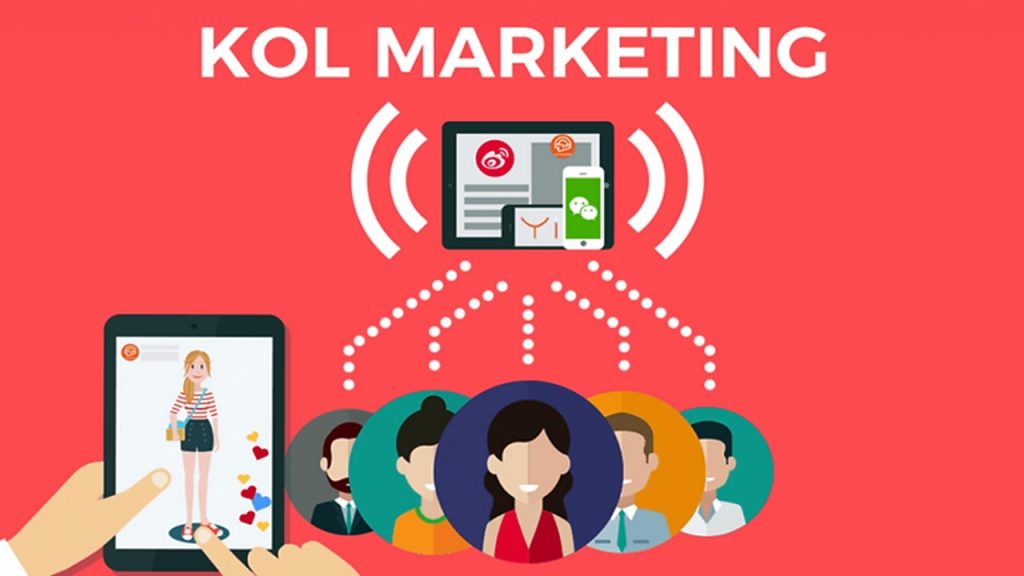
A KOL advertising strategy has many benefits, which is why it is a vital component of marketing nowadays.
Increased Brand Credibility
Teaming up with well-known KOLs is a winner for the brand’s credibility.
- KOLs are credible professionals in their industry.
- Followers see the endorsed brand as being trustworthy.
- It is a foundation of the confidence of consumers in a product recommendation.
- Results in better customer satisfaction.
- Rises the frequency of re-order.
Take, for example, a famous chef promoting a kitchen tool. People then easily believe the appliance and the brand’s sales rise.
Enhanced Reach and Visibility
KOLs are crucial to the growth and expansion of a brand’s appeal.
- They are of new target audiences through the association with influencer stars.
- Makes the brand visible through niche markets.
- The company can display the KOL on its social media channels, which is an effortless way to get more followers and get known by your target audience.
- An excellent means of introducing new items into the market.
- Increasing the company’s brand awareness in the sectors they are concerned with.
Working with a KOL with a strong bond in a given area also increases the chances of reaching potential customers.
Targeted Engagement
KOLs are making it possible for brands to target largely unattainable demographics effectively.
- An opportunity for the company to reach niche market segments through specialized KOLs.
- Create messages that are tailor-fit to the audience they speak to.
- Developing a customer’s personality and using non-verbal signs in selling).
- Align the brand’s beliefs with the preferences of the audience.
- Deepen the relationship with specific demographics on a long-term basis.
For example, one may collaborate with a KOL from a jewellery community who is a sustainability advocate, resulting in the message reaching eco-conscious consumers.
Consumer Trust Enhancement
KOLs contribute to regaining the trust of consumers who are increasingly sceptical of traditional advertisements.
- KOLs are usually seen as down-to-earth as well as genuine.
- Their recommendations are thought of as authentic.
- Implies they bond better with the buyers.
- Stimulates long-term customer loyalty to the brand.
- Bolster’s word-of-mouth marketing.
With the help of KOLs, businesses can establish trust and nurture stronger and more intimate relationships with their desired customer base.
Challenges of KOL Marketing
While Kol marketing presents various advantages, it also brings tough times. Brands must manage these issues effectively to get customers to cooperate with them for their campaigns.
Choosing the Right KOLs
A critical choice of KOL is the one that guarantees the message is the same as the target audience.
- Thoroughly research their background.
- Be sure of their marketing potential and their shared brand values.
- Before deciding, make sure you understand customer engagement and audience sentiment.
- Give priority to the ones that have expertise and are actively involved in the topic.
- Try never to be in a situation lacking the right message, which can influence the company’s image.
For instance, a discrepancy between a KOL’s value system and that of a brand might lead to a negative customer viewpoint.
Maintaining Authenticity
One of the adverse consequences of over-commercializing KOL marketing is a possible loss of reliability.
- Consumers do not like advertising products.
- Ensure the right marketing channel is designed to promote the right link with the energetic social media influencers.
- Each KOL should be free to speak their mind in their publications.
- Stay clear and open in partnerships to prove transparency.
- Refrain from requesting a considerable amount of product offers.
An authentic approach in marketing activities backed by authenticity ensures long-term successful relationships with the client.
Navigating Data Privacy Concerns
Data confidentiality is becoming more and more the top priority in Kol marketing.
- Be very careful with personal data protection laws and regulations.
- Let people know how you gather the data and give them the option not to participate.
- Ask for people’s consent and ensure they give it only after they have read the necessary information and agreed to the terms.
- Carry out stringent data protection measures.
- Sustaining adherence and observance of laws is very vital.
Case Studies of Successful KOL Campaigns
The analysis of the case studies gives an example of the power of specific kendo (KOL) marketing strategies that can be a major winning factor for brands.
Estée Lauder’s “The Estee Edit” Campaign
Estée Lauder’s collaboration with beauty influencers in its “The Estee Edition” campaign totally impressed younger audiences, and the results were positive.
- Targeted younger consumers through beauty influencers.
- Exhibited products through tutorials and reviews.
- Resulted in increased brand visibility.
- Boosted engagement and sales.
- Enhanced authenticity with genuine endorsements.
By partnering with the top KOLs, Estée Lauder made a deep link with their target group, significantly leading them to a sigh of success due to the powerful partnership.
Glossier’s Community-Driven Marketing
Glossier” target=”_blank”>https://www.glossier.com/, a startup reshaping KOL marketing within the beauty industry, has risen to fame for its community-driven approach, which includes the active participation of beauty enthusiasts.
- Built the community approach to marketing.
- Individuals willing to ask KOLs and producers about their products are those they work with.
- Vergara said they earned the trust of the people they follow by being themselves.
- In reality, the customer base already existed, and that was the kind of people who bought Glossier as the family brand.
- Apart from the products, Glossier as a company also became much more approachable.
The social proving strategy helped the company become a favourite in the beauty community.
Adidas’s Partnership with Influencers
On the other hand, Adidasadidas’ Thenright, 2021 collaboration with athletes and fitness KOLs was such a significant opportunity that they did not let it go without re
- Increased Adidas’s brand visibility within the fitness community.
- Strengthened Adidas’s brand loyalty through authentic partnerships.
- Drove Adidas’s sales by tapping into fitness enthusiasts.
One of the reasons Adidas remained one of the best brands was the use of authentic influencer partnerships.
Final Thoughts
To sum up, KOLs (Key Opinion Leaders) are the new wave in marketing; their work methods can potentially change modern marketing.
- KOL full form: Key Opinion Leader.
- Connects deeply with niche audiences.
- Builds consumer trust and authenticity.
- Enhances brand credibility and reach.
- Plays a pivotal role in influencer marketing.
Nowadays, organizations and industries are increasingly aware of the important role that KOLs play in marketing and seek to use their services to reach their target customers (social media is a list of platforms businesses can use to gain clients). The marketing of KOLs shows personal opinions that can be experienced with services offered by enterprises. It holds rewards and challenges as well. An attractive option for brands that wish to use KOL marketing in the long term can be a deep understanding of the workings of KOL strategies and the ability to master the possible difficulties as brands go through an increasingly competitive business environment.
]]>What is Covert Advertising?

Covert advertising, sometimes known as stealth marketing, is a method by which businesses communicate their offerings without distracting or interrupting the addressee. In Full contrast to standard marketing, which dispatches direct and thereby aggressive messages, stealth advertising is embedded into the content without causing it to stand out or seem bothersome to consumers.
Importance of Covert Advertising
Covert advertising is a way of advertising that can effectively replace “desensitized” traditional marketing tactics. Research by Nielsen discovered that 84 percent of people around the world think that online ads are intrusive, while covert advertising, selling things discreetly, socializes and promotes the products subtly through relatable content and, therefore, is the preferred way.
Case Studies and Examples
- Product Placement in Film and TV: Product placement in movies and TV series has been happening since the industry-entertainment business was recognized; for example, the Coke intro in every episode of The Friends Show series subtly spreads brand awareness. Let the audience see and make a decision.
- Influencer Endorsements: Influencers are known to incorporate product mentions into their daily posts and stories without them being the main topic. This is one way for them to engage their followers without implicitly promoting the products. The relatedness and trustworthiness of the influencer’s relationship to the product will make a difference.
Frameworks Guiding Covert Advertising
Your customers hold particular beliefs. Business people may get various psychological ideas understood, such as the Elaboration Likelihood Model (ELM), which tells how to make people agree by either the deep cognitive process or the superficial cues. Stealth advertising focuses mainly on the peripheral route, assuming previous knowledge and emotions precede logic.
Benefits and Challenges of Covert Advertising

Although the accomplishment of covert advertising lies in producing engagement and relatability, the task of being secret while doing this also brings some challenges.
Benefits:
- Enhanced Consumer Trust: Some people can think of it as less of an intrusion and more of a genuine consumer approach. Thus, they will develop stronger bonds with the brands.
- Increased Recall: When a brand is integrated into captivating stories, readers are more likely to remember it.
Examples:
- One of the well-known YouTube channels describing a specific skincare routine mostly incorporates into practice products endorsed by the creator without the hint that it is an advertisement. Such viral videos create sufficient interest and even convert some viewers to buyers.
Challenges:
- Transparency Issues: Transparency issues can occur in cases where truthfulness is not obtained because consumers do not even know what they are consuming.
- Regulatory Scrutiny: Brands that are not transparent about marketing may face public backlash as the public is more likely to act on the word of mouth of their trusted peers or family members who they have a good relationship with or even for what a stranger said who gained their trust -influencers and their followers in particular.
Practical Strategies:
- Balance Authenticity and Disclosure: Companies must carefully distinguish between openness and subtleness; customers must know when a post sponsor is involved.
- Leverage User-Generated Content: Having a loyal fan base to encourage your audience to exchange their stories is the main target of covert advertising while creating a community, yet another way to do this.
Emerging Trends and Implications for Covert Advertising
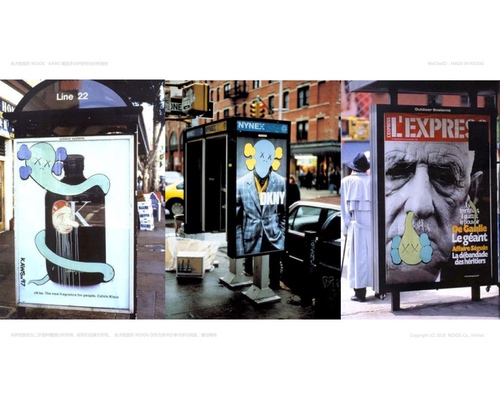
As consumers become smarter, the landscape of covert advertising is changing. For brands, knowledge of the latest is important for adapting their strategies effectively.
Current Trends:
- Social Media Integration: The new trend is that platforms like TikTok are popular with influencers who create exciting content for brands, combining the individual’s creativity with the topic’s virality to get consumer attention.
- Augmented Reality (AR) Experiences: The ongoing development of AR brands is trial and error. Companies are currently trying to develop virtual products that engage and inform their customers rather than just advertise.
Implications for the Industry:
With changes in gadgetry, so is the art of disguise commercials; advertisers must use the credibility of customers responsibly and respect their privacy in the marketing process. Brands that embrace consumer intelligence are bound to form a strong connection and, therefore, have an edge in a market with numerous competitors. To sum up, covert advertising opens up a new space for companies to connect with their customers more deeply. By understanding the strategies, considering the pros and cons, and looking at cutting-edge techniques, firms can make this landscape manageable and maintain a bond with their customers.
Conclusion
Today’s marketplace is driven by companies striving to establish authentic relations with their audiences through knowledge of covert advertising and the skills to modify such strategies if necessary. Covert advertising, which is the non-intrusive integration of promotional content into entertainment or media, is a great way for the brand to be known and involved in communication with consumers. Determine the probable consequences of the ethics and practical considerations of these actions and thus produce the kind of promotion that speaks to the demographic effectively.
Key Takeaways:
- Definition: Covert advertising subtly integrates promotional material into content to make it more agreeable for the consumer and less noticeable than traditional ads.
- Strategies: Successful covert advertising, which includes product placement, influencer partnerships, and narrative-driven advertising that is sales without being obvious to the target of the advertisement, is non-aggressively successful clandestine advertising.
- Implications: The effectiveness of the employed method might provoke ethical debates about transparency and trust in honesty, with the customer making a moral choice between these two.
- Examples: The best campaigns that use undercover marketing are known to be the ones by Coca-Cola in Hollywood, Nike with their endorsements of athletes, and media streaming companies that show brands in the scenes of the series without disturbing the flow of the stories.
The key to covert advertising involves companies that want to continue attracting new customers in a dynamic media ecosystem while building and sustaining healthy relationships with existing customers.
]]>Key Points:
- Impact on Consumer Behaviour: Advertising significantly influences the marketing of products and services.
- Persuasive Communication Strategies: More strategies will be talked over that capture attention in an attempt to try out sales.
- Ethical Requiring Situations: Responsible practices in advertisements need honest and transparent terms.
Consumers are getting increasingly choosier, demanding brands that interpret themselves along with values. That said, it challenges companies to strategize on ethical aspects of advertising that resonate well with socially aware consumers. By this, more morally driven branding attracts more emotions from consumers. This will lead to brand loyalty and eventually promote profitability.
- Conscious Consumers: Today’s consumers want brands that support their value proposition.
- Emotional: Ethical advertising generates more relationship-building for brands with customers.
- Financial: Companies committed to ethical practices usually experience customer loyalty and increased sales.
Persuasion is the thin line between great art and manipulation. Though persuasive advertising is necessary to help drive sales, it must be used carefully not to tread any lines beyond ethical territories. The list should always include ensuring a strategy does not take advantage of consumer vulnerabilities or distribute false information. The goal should be an enlightening and inspiring marketing campaign rather than a deceptive one that manipulates consumers.
Ad Ethics
Advertising ethics is the morality approach to advertisement creation and distribution. Most of these aspects relate to issues such as truthfulness, fairness,, and respect toward the audiences. Ethical advertisements promote products or services without misleading customers or taking advantage of the vulnerable population.
Key Points:
- Moral Principles: Advertising ethics includes honesty, fairness, and audience respect.
- Enforcement of Responsibility: Advertisers should be mindful of the broader consequences of their advertisements.
- Influence through Regulation: Adherence to codes contributes to developing responsible advertising.
Feeling responsible is the most critical concern of advertisement ethics. It’s not just to the clients but certainly to society that advertisers have been entrusted with a responsibility to understand and take cognizance of the more tremendous implications of their messages and their ramifications on public perception or behavior. As media consumers evolve further, the ethical environment becomes more confusing, challenging advertisers to proactively deal with possible ethical dilemmas that develop out of advertisements.
In addition, the regulatory environment, to a large extent, dictates the ethics of advertising. Agencies and organizations establish norms that will ensure the industry embodies ethical behavior. The advertiser needs to be informed of the general direction of the regulations and strive to adapt to them, yet do more than the bare minimum from the law. By engendering an ethical culture within themselves, the advertisers contribute to how consumers perceive the marketplace; the more trust there is in the market, the easier it is to build consumer confidence.
Necessity of Ethics in Advertising
Building Consumer Confidence

Trust is one of the main parameters behind any healthy business relationship. Ethical advertising builds trust between brands and the consumers. If customers believe the brand to be honest and transparent, then they will want to spend time with that brand and buy it again and again. Conversely, unethical advertising can cause a lot of damage to the brand’s reputation while inviting customer dissatisfaction and loss of loyalty.
Key Take Away:
- Trust Building: Ethical practices lead to repeat purchases or repeat customers.
- Social Media Ripple Effect: The consumers share experiences promptly, making the ethical advertisement force multiply expeditiously.
- Long-Term Investment: Trust built through ethical advertisement may ensure significant returns.
It is an age where, with endless information at their disposal, consumers express their feelings—whether negative or positive- on social media. This time-sensitivity piques the opportunities for responsible, ethical advertisement. The brands that emphasize honesty build positive talk among the customers, as honesty generates conversations naturally. Otherwise, unethical maneuvers can land a brand in a situation of swift backlash; thus, harm can remain for a longer time and extend beyond transactions to the brand experience. Whenever consumers trust that a brand is running ethical affairs, they can easily endorse the brand to other consumers; this makes positive brand equity. Hence, creating trust through ethical advertisement is an investment in the long run, which fetches high returns.
Building Brand Prestige

A sound ethical ground not only builds trust but also strengthens a brand’s reputation in the marketplace. Most importantly, consumers are increasingly drawn to companies that operate on social responsibility and ethics. Ethical advertisements will help companies stand out and attract socially responsible consumers away from their competitors.
Key Take-Aways:
- Differentiation: Ethical advertisement makes a difference in a competitive marketplace.
- Positive Asset: A sound reputation is an asset that will help brands hold out against crises and fluctuations in market conditions.
- Ethical Practice: Leads to higher employee morale and retention.
A good reputation is a valuable asset to a brand. The better the reputation, the easier it is for a company to overcome market conditions and other crises. Brands with a questionable reputation will find it hard to regain consumer trust even when they have cleared their names from any crime. Ethical advertisement is thus necessary to ensure a good reputation for a brand in the long term.
Fair advertising practices lead to higher employee satisfaction and retention rates. Employees would be proud to work for brands that reflect their values. Such an atmosphere at work would be reflected in authentic brand messages, furthering the brand’s esteem in the consumer’s eyes.
Promoting Fair Competition

Ethical advertising promotes fair competition in industries. The reason is that when brands follow the same principles of truthfulness and transparency, a level playing field exists. Unethical practices like false advertising or deceptive marketing would be a blow to competition and thus create an uneven marketplace.
Key Points:
- Level Playing Field: Ethical standards ensure fair competition between brands.
- Encourage Innovation: Genuine value-based differentiation drives ethical practices among brands.
- Adherence to Ethical Standards: Promotes industry credibility through regulatory enforcement.
Competition and fairgrounds support innovation and creativity because brands must create grounds for differentiation based on real value rather than pseudo strategies. Healthy competition may lead to better products and services; hence, consumers’ welfare is incorporated into the effects. Ethical advertising would spur success for individual brands and the health of the market at large.
In addition, there are cases where regulatory agencies demand that different ethical practices to the standards be adopted so that equal competition is received and enjoyed by all. Whatever ethical practice an advertiser adopts ensures that the industry is credible. This joint adoption of ethics establishes consumer confidence and a marketplace where businesses compete on merit and value.
Promoting Social Responsibility

Advertising will influence the attitudes and behaviors of society. Therefore, an advertiser can bring social change by building campaigns based on ethical values. Examples include advertisements on inclusivity, diversity, or environmental sustainability issues that go a long way as consumers are emotionally charged to act.
Key Points:
- Positive Influence: Ethical advertising yields social change and responsibility.
- Identity with Movements: Brands that align with leading causes align with the socially conscious consumer.
- Building Community: This ethical approach towards advertising might bring a sense of belonging and connection with consumers.
Using responsible social advertising, brands can have their voice in initiating those conversations about issues that need to be discussed and align themselves with movements that call for change. Sustainability would be an excellent example of that—it creates a brand image and endangers consumers’ consumption choices. It creates a domino effect where people are inspired enough to make that change in their lives, too.
Socially responsible advertising also creates a group feeling among consumers. Brands that engage with social causes express concern for their audience’s values and concerns, growing the emotional bond between the brand and its customers. This association will increase loyalty and advocacy as consumers are empowered to support brands sharing their values.
Critical Ethical Issues in Advertising
False and Misleading Claims
False and misleading ads are among the most significant ethical issues advertising faces. There may be the exaggeration of the benefits of a product made by an advertiser, critical information may not be added in the ads, or ambiguous language might be used against consumers to mislead them. Such practices are unethical and have legal repercussions under the law of consumer protection.
Key Takeaways:
- Legal Consequences: False and misleading advertisements may lead to potential legal action against it and also give space for branding its reputation.
- Consumer Awareness: The Scourge of Social Media Increases Scrutiny of Advertising Claims.
- Cultural Shift: Brands Must Champion Truthfulness to Protect Industry Integrity.
The invention of social media has made it easier for consumers to vocalize their opinions; therefore, the scrutiny of advertisements is higher than in previous years. Misleading brand practices are mainly exposed by consumers, which destroys their reputations. In addition, regulatory agencies are becoming astute in enforcing stiffer punishments on brands that mislead consumers.
To address this issue, there has to be a cultural shift in the organization, establishing truth-telling as a norm when advertising to the public. Advertisers must develop robust verification processes to prove every advertisement claims one big lie. This would ensure consumer security, simultaneously strengthening the profession of advertising.
]]>Ready to talk with a marketing expert?

A Pragmatic and innovative way to enthrall your target group is just a click away!
Get in Touch
Rukmini Knowledge Park, Kattigenahalli, SH 104, Srinivasa Nagar, Bengaluru, Karnataka 560064
+91-990 247 8800
contact@gingermediagroup.com
Popular in Television Advertising
Udaya TV AdvertisingSun TV AdvertisingStar Plus AdvertisingTV 9 AdvertisingZee TV AdvertisingNDTV India AdvertisingColors TV AdvertisingPopular in Airport Advertising
Spice Jet AdvertisingMumbai Airport AdvertisingDelhi Airport AdvertisingEmirites AdvertisingIndiGo Airlines Domestic India AdvertisingPopular in Newspaper Advertising
Deccan Herald AdvertisingPrajavani AdvertisingThe Hindu AdvertisingEconomic Times AdvertisingDainik Jagran AdvertisingHindustan Times AdvertisingPopular in Magazine Advertising
Forbes AdvertisingCosmopolitan AdvertisingBusiness World AdvertisingVogue Magazine AdvertisingPopular in Sports Advertising
IPL AdvertisingPopular in Outdoor Advertising
Billboard AdvertisingBus Shelter AdvertisingMetro Pillar AdvertisingUnipole Advertising© Ginger Media Group 2025. All Rights Reserved.