
Public Relations (PR) has had an influential role in modern business, given the fast-paced, ever-changing business today. Press releases are not only about sending your press releases or getting media coverage but strategic communication that builds up and maintains as well as promotes a positive reputation. Whether you are a startup or a large corporation, use PR effectively to communicate with your stakeholders, improve your credibility, and prepare for crises.
Key Benefits of PR:
- Enhanced Trust: PR builds up trust as, every time, the right message reaches your audience.
- Low Cost: Compared to paid advertisements, PR is cost-effective for small businesses in order to grow their presence.
- Crisis Management: It gives ways to take care of public perception during difficult situations.
- Brand Awareness: PR helps increase brand visibility in ways that will resonate with the audience.
- Tailored Communication: It gets you messages that specifically address particular demographics hence outreach becomes more personal.
In this blog, we shall be discussing the full form of PR, why PR is very important in modern business practices, and how organizations can make proper use of its power for reputation and trust.
What is PR?
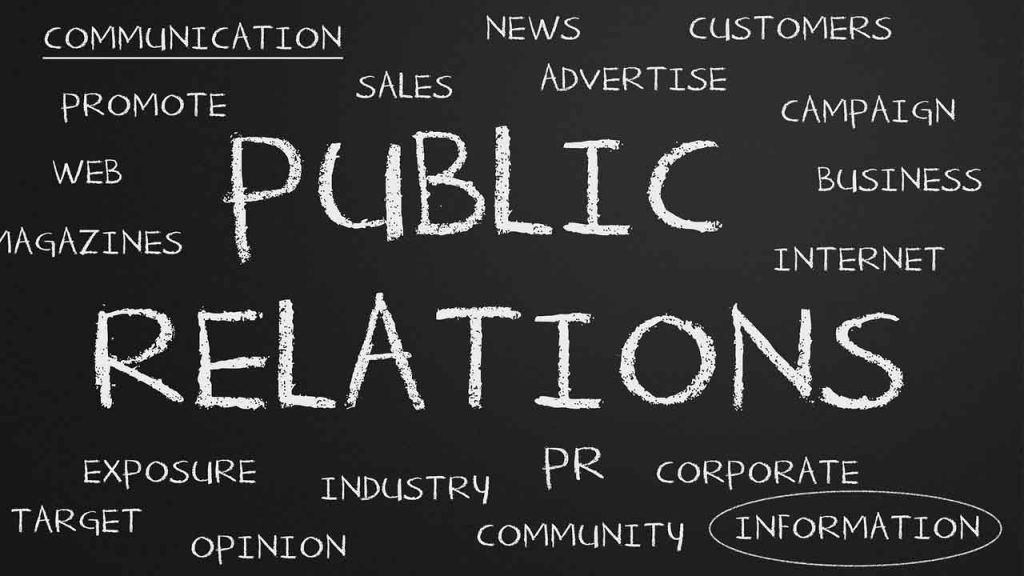
Public Relations (PR) is the art of strategic communication between an organisation and its audience. While direct advertising is targeted to appeal directly to consumers, PR works on earning media coverage along with creating goodwill through openness, storytelling, and engagement with stakeholders. Businesses use PR to create trust, manage crises, and shape public perception in their favour.
Key Elements of PR:
- Media Relations: Developing and nurturing a healthy relationship with journalists and the news ensures positive coverage.
- Crisis Communication: This is how potential PR disasters are managed, hence saving a brand’s reputation during bad times.
- Content Creation: Quality content, such as press releases, blog articles, and social media posts, conveys an organisation’s key messages.
- Community Engagement: Social initiatives are taken by PR to connect with the local community, build goodwill, and win their trust.
- Event Planning: Hosting or sponsoring events is an excellent PR tactic, where a company can exemplify its values and mission.
Benefits of PR:

- Better Media Relationship: Proper media relation gives coverage in reputed newspapers and magazines, which maintains the credibility of the brand.
- Brand Trust Building: In the long term, open communication with stakeholders by different media will develop trust of the brand.
- Crisis Communication: While following a proper PR plan, at the time of reputational challenge, a company can provide the minimum damage if it has a crisis communication plan.
- It is a cost-effective tool: Being time-consuming in nature, campaigns through PR often result in successful and long-term outcomes at a substantially lower cost than paid advertisement.
- Long-term Relationship Building: Unlike short-term paid ads, the focus for PR is on sustainable relationship building with customers, partners, and the public.
How PR Improves Decisions

Whereas one of the biggest benefits of PR to a business is that it allows them to gather public opinion which then would give them an informed view regarding their decisions. As such, when a company understands the sentiment of the audience, this gives room to adjust the messaging, fine-tune the strategies, and be aligned with customer needs.
The Effect of PR on Decision Making:
- Sentiment Analysis: PR helps gauge the public sentiment of a brand, thus ensuring that further campaigns yield the best possible results.
- Feedback Loop: Through public opinion, PR ensures that decision-makers get essential information to craft responses.
- Data-Driven Messaging: PR enables data gathering from the media and audiences to enhance the communication and response processes.
- Strategic Planning: Insights from PR efforts prove to be a roadmap for making effective communication strategies that are well-targeted.
- Crises Prevention: Using PR analysis, issues can be identified proactively and thus prevented before they might turn into a full-blown crisis.
Benefits of PR in Decisions:
- Improving Focus on Customers: Using the sentiments of changing and adapting to customer preferences, business can stay properly aligned.
- Economies of Cost: Properly optimizing the resource use by focusing on PR channels that will give the best return on investment.
- Continuous Improvements: PR campaigns help in continuous improvement and the messaging strategy.
- Better Messaging: Organizations can create better messaging with the help of data from PR campaigns.
- A Proactive Response: Companies can create a proactive response through PR. Such things happen when damage to the reputation can be avoided when there’s a crisis.
Integration of PR in Business Strategy

To integrate PR into your business strategy, you must understand its entire scope. From planning your campaigns to handling reputational risks, there are several components of PR that help them blend together to increase brand visibility.
Steps for Integration of PR:
- Audit Current Activities: Review of current communication activities to identify areas for improvement and strengths.
- Establish Performance Metrics: Media reach, sentiment analysis, and engagement rates being the Key Performance Indicators.
- Engage Stakeholders: Involving employees, customers, or other relevant stakeholders to create a sense of community and collaborative effort.
- Leverage Technology: Using social media analytics and PR software.
- Monitor and Adjust: Continuously monitor and adjust PR strategies according to customer feedback, market trends, and media coverage.
Advantages of Having a Strategic PR Approach:
- Improved Internal Cooperation: Proper PR promotes interdepartmental collaboration between the different departments of a company so that they are well-coordinated regarding communication.
- Better Stakeholder Relationship: The strategic PR approach helps a better relationship with all stakes, including customers and the media.
- Brand Visibility: PR facilitates an image that a brand can own, which is solid, consistent, and positive through media coverage.
- Management of Crisis: Proactive PR equips businesses with a strategy for potential reputation risks to manage.
- Scalability: PR strategies adapted as scale ensure consistent messaging and outreach.
Real-World Examples of PR Success

This, in turn, can be useful in justifying the relevance of PR in real-life scenarios. Here are a couple of examples of how PR has been the sole contributor to increasing brand trust and visibility.
Example 1: Global Food Company’s Sustainability Campaign
A global food group used PR to promote its cause-based sourcing message. Digital engagement with influencers and media outreach contributed to building affinity for the brand, hence to customer engagement. This is how companies should go about using PR to raise social awareness.
Example 2: Crisis Communication Strategy of the Technology Firm
A technology company victimized by a cyber attack made positive use of its PR function by taking the control of the messaging of this incident and, in regular time, updates to the stakeholders about the incident. Consequently, they regained trust from customers sooner and consequently avoided damage to their reputation in the long run.
Example 3: Awareness Campaign by Non-profit Organization
A not-for-profit organization conducted a successful campaign of PR related to mental health awareness. They published press releases and were in collaboration with local media, which led them to wide coverage in the media, and this further increased the donations and volunteers involved.
Example 4: Planning for Tech Start-up Organization Product Launch Event
A start-up organization planned and was able to conduct a product launch and had invited key media for coverage. The event generated positive media coverage to their reputation and further increased customer interest.
Example 5: Green Initiative of the Fashion Brand
A fashion brand has undertaken green production. It communicated its green initiatives through the PR and received a good share of coverage in the media besides retaining customers. This example thus effectively presents a value-based PR campaign.
Final Thoughts
Public relations is a tremendous tool any organization would want to enhance reputation, build customer loyalty, and maintain stakeholder communication. This way of public relations, either in media relations, crisis management, content creation, or other activities, allows building trust and credibility.
Key Takeaways:
- Build Brand Reputation: Proper PR creates a trusted and reputable image of the brand.
- Manage Crisis: A strong plan in PR ensures better preparedness during crisis events that protect the brand from reputational damage.
- Savings: PR is relatively cost-effective compared to traditional advertisement in building brand awareness.
- Healthy Stakeholder Relationships: PR will help in healthy relationships with customers, partners, and the media.
- Long-Term Success: A strategic approach towards PR can ensure long-term success with proper communication and engagement.
Finally, the right time has come for you to invest in PR to grow and sustain your business.
]]>This section shall:
- Understand the dimensions of newspaper advertisements.
- Explain how advertising sizes relate to the potential for optimum reach and ROI.
- Share case studies on effective advertising strategies using newspaper ads.
- Illustrate how ad sizes relate to effective budgeting and audience targeting.
- Guide how to integrate newspaper advertisements into your overall marketing plan.
Let’s enter the world of newspaper advertising and learn how to make the best use of display advertising.
1. Importance of Newspaper Display Ad Size

Knowing the various sizes of newspaper display ads is crucial for a successful advertisement campaign. From classifieds to full-page displays, advertisers can choose the best size that effectively contains their content.
Problem with Sizing That Should Be Considered:
- Standardization: Newspaper adverts are standardized to facilitate the selection of space that would fit their content. Some of the sizes are full-page, half-page, quarter-page, and small spots.
- Visual Impact: The more visible ads are, the more attractive they look and grab attention; thus, they can suit eye-catching promotions.
- Cost Implications: Pricing structures typically depend on size, and more prominent ads usually attract more costs; knowing this helps firms budget appropriately.
- Ad Size and Reach: Full-page ads in major sections will likely be read, while smaller ads would suit niche markets.
- Creative Latitude: A full-page or larger ad allows for more creativity and details, whereas more minor ads suit only short messages but can still create an impact.
A business can get the correct dimensions for a display ad size so that the advertisement in a newspaper matches its budget, target audience, and campaign goals.
2. Maximizing Exposure and Interaction
The most important reason for choosing newspaper advertisements is to create mass exposure. Bigger ad sizes usually have a more eye-grabbing effect for campaigns focused on brand awareness or higher promotional impact.
Why Visibility and Engagement Matter:
- Larger Ad Sizes: Full-page ads hold the most visual real estate and can be used for launching new products, promoting events, or delivering brand messaging that must stand out.
- Headline Placement: Ads in high-traffic sections, like the front page, will attract more eyeballs and significantly increase engagement rates.
- Visually Appealing Graphics: Innovative and aesthetic ads will likely be remembered by readers, primarily when published in big formats.
- Repetition and Frequency: Repeating the same large-format ad in the same newspaper enhances the opportunity for your message to be seen multiple times by your audience.
- Niche Targeting: Ads of smaller sizes may prove helpful when utilized in relevant areas (classifieds or industry-specific supplements) to target readers more specifically.
From this perspective, advertisers can determine the ad size that better influences readers to take action and improve their chances of creating a successful newspaper advertising campaign.
3. Working Examples of Successful Newspaper Ad Campaigns
Many companies have used newspaper display ads in very successful advertising campaigns, employing different sizes and placements to maximize their return on investment. Below are a few examples demonstrating why the right size for your newspaper display ad is essential.
Ad Successful Campaigns:
- Regional Pizza Chain: A regional pizza chain ran a full-page ad to advertise a game-day special during Super Bowl season. It increased sales by 25% that month, catching the eye of football enthusiasts with its extra-large ad.
- Auto Dealership: An automobile dealer ran half-page ads for a year-end clearance sale, boosting foot traffic by 30% and test drives.
- Fitness Studio: A fitness studio printed quarter-page ads inviting people for a free trial, attracting 40% of visitors as paying members.
- Home Improvement Store: A season-specific campaign by a home improvement store to promote spring deals through large, colorful ads attracted 50% more foot traffic.
- Charity Fundraiser: A local charity ran a full-page ad for its annual charity gala, which resulted in a 35% increase in donations and attendance.
These examples demonstrate the versatility of newspaper ad sizes and how businesses can use this advertising medium in different ways to achieve desired marketing results.
4. Cost-Effectiveness, Audience Focus
Choosing the right size for your display ad impacts its visibility and significantly affects budget efficiency. Though more expensive, more prominent ads often return a higher investment if strategically placed and targeted.
Advantages of Budget Efficiency and Targeting:
- Cost per Impressions: Larger ads cost more but generate more impressions, making them a good investment for reaching large audiences.
- Niche Market Targeting: Medium and smaller ads in targeted sections or supplements (sports, business, real estate) can effectively reach specific audiences at a lower cost.
- Frequency Over Size: Sometimes, running smaller ads more frequently can outperform a single large ad due to continuous exposure to the target audience.
- Seasonal Discount: Newspapers often offer seasonal deals on ad sizes, especially when combined with digital advertising options, stretching marketing budgets further.
- Geo-Targeting: Regional editions of newspapers allow businesses to geographically target their placements for maximum reach in front of the right local audience.
By combining budget efficiency and audience targeting, businesses can maximize their newspaper advertising investment while minimizing costs.
5. Executing Newspaper Ads as a Part of an Overarching Marketing Plan
While newspaper ads remain effective for attracting customers, they should be part of a holistic marketing campaign that includes digital and offline channels. This ensures the brand message is harmonized across platforms, maximizing the overall effectiveness of marketing efforts.
How to Streamline Newspaper Ads:
- Align Digital Advertising: Print ads can drive traffic to a website, social media page, or online offer. QR codes or short URLs in newspaper ads help bridge print and digital.
- Brand Consistency: The design, language, and message of the newspaper ad should align with your digital ads, social media, and other marketing materials. Consistency across channels builds brand recognition.
- Measurable Results: Use promo codes or dedicated phone numbers in newspaper ads to evaluate ROI.
- Cross-Promotions: Run sales promotions or events using both print and online platforms. The more touchpoints you provide your target audience, the greater their engagement.
- Targeting Off-Line Audiences: Newspaper advertising works well for older populations or geographic areas where mobile devices are less prevalent.
By ensuring newspaper advertising aligns with your overall campaign, businesses can balance their approach, providing every opportunity for engagement is noticed across different channels.
Final Thoughts
Newspaper advertising remains integral to the modern marketing mix, providing a unique platform to reach desired audiences and generate engagement. Understanding the various sizes of display ads and their use can help maximize advertising efforts while maintaining cost efficiency and effectiveness.
Key Takeaways:
- Know Your Ad Sizes: Full-page spreads and small classified ads serve different purposes. Knowledge of each type, function, and cost is vital for an effective campaign.
- Maximize Visibility: Bigger ads attract more attention, but smaller ads can be placed more effectively when strategically placed.
- Optimize Your Budget: Align ad sizes with campaign goals and budget to achieve the best results without overshooting the mark.
- Integrate with Digital: Newspaper ads should support and complement other digital strategies.
- Track the Outcome: Use promo codes, QR codes, and dedicated contact points to measure ROI from newspaper ads.
These strategies will support your newspaper advertising campaign, promising impactful audience engagement and lead generation that can translate into business growth.
]]>Key Points in Introduction
- Importance of Newspaper Advertising:
Newspapers are one of the viable mediums connecting a business to its target audience. They are tangible in terms of presence, something online platforms cannot possibly provide. - Diverse Audience Reach:
Newspapers cater to different audiences, and therefore, they are an ideal advertising medium for targeting different audience groups. This diversity helps lever advertisement executions. - Cost-Related Factors:
The cost of placing advertisements in the newspapers depends on factors like circulation, ad size, placement, or the decision to target specific people. Knowing such subtleties can help an advertiser plan and budget for such advertisements. - Regional versus National Publications:
National dailies, like the Times of India, are way more expensive than regional newspapers. Such varied expenses make the advertisement available to cater to all-sized budgets for businesses; thus, the platform choice depends on the target market. - Seasonal and Promotional Rates:
The seasonals or a bulk purchase offer scope to save to some of the advertisers. Knowing these will make the use of advertising budgets quite effective.
Factors Influencing Newspaper Ad Costs
Several significant factors govern the prices of newspaper ads in India, whether significant business concerns or small enterprises.
1. Circulation and Readership

The More the Circulation, the Dearer it is
It is often the case that newspapers with more significant readership also charge more. For instance, national dailies like The Times of India have crores of followers. A full-page ad in such papers runs between ₹2 lakh to ₹10 lakh.
- Local Focus:
Regional newspapers: targeting specific groups of audiences charge lower prices. Regional advertisements may also be priced as low as ₹5,000 to ₹50,000 for small enterprises. - Effect on ROI:
Circulation is known and determines which paper will be published. More readership increases its visibility or exposure, thus determining its return on investment. - Group of Audience:
While more prominent media outlets tend to reach a larger audience, local newspapers give access to more niche markets, allowing marketers to target their messages more precisely toward targeted consumer segments. - Advertising Effectiveness:
Cost per circulation is proportional to effectiveness. The brand should determine if the size of the audience warrants the price in light of its marketing objectives.
2. Ad Size and Placement
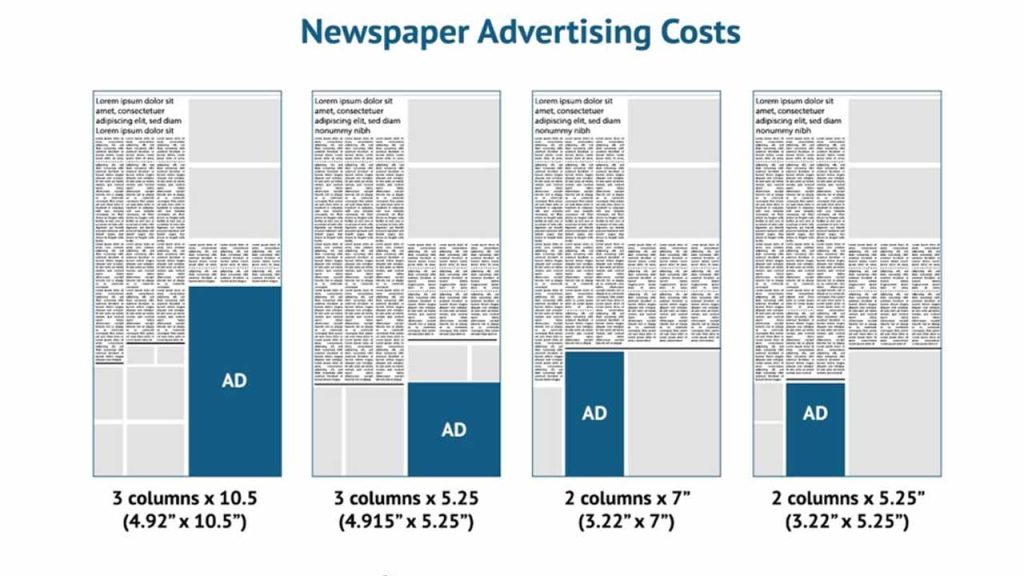
Size Matters
Newspapers come in all sorts of ad sizes: full page, half page, quarter page, and classified. Of course, the bigger the ad, the more expensive it will be, and the better placements will cost more.
- Prime Locations:
Ads in prime locations, such as the front or back page of the newspaper, also carry a premium price simply due to the visibility. The advertiser needs to consider whether the premium is justified for the objectives. - Color vs. Black-and-White:
Colour ads are generally more costly than black-and-white ads. A decision between the two formats largely depends on the play between creative need and budgetary necessity. - Strategic Placement:
Where the ad is placed within the publication can also influence how it commands attention among the readership. High-impact placements add brand recall and recognition. - Budgeting for Size:
Knowing the cost implications of size can be very useful in allowing businesses to tailor their budgets to get the most exposure without overexposure.
3. Timing and Frequency

Seasonal Demand
Given the increased demand, advertisements during holidays or special events will naturally cost more. Advertisers must strategise in such a way as to spend less during campaigns.
- Discounts for Frequency:
Many newspapers provide frequency discounts where multiple ad placements are done within a certain period. Long-term commitments may save advertisers money. - Campaign Duration:
Advertisers should view the extended-term effects of maintaining constant visibility. A consistent impression of advertisement builds an impact on brand awareness. - Ad Timing:
Effectiveness also relies on the correct timing. In such a case, if the reader goes out in hordes, it can be maximised during peak reading times. It, therefore, puts a significant emphasis on planning. - Promotional Opportunities:
Self-monitoring promotional opportunities or special discounts can assist a company in reducing costs while maintaining the efficacy of the ads.
The Cost Range for Various Categories of Newspapers
Newspaper advertisement costs differ in India, as publications can be categorised broadly into different types.
1. National Dailies
High Range Pricing
The national dailies, for example, are charged a premium like The Times of India and Hindustan Times. A full-page colour ad would cost anything between ₹3 lakh and ₹10 lakh, which is a significant pay-off for reach.
- Ad Size Variation:
The half-page ads in the above media houses would vary between ₹1.5 lakh to ₹5 lakh. Quarter-page ads could go between ₹50,000 to ₹1.5 lakh. - Cost vs. Reach:
Brands have to offset steep costs against possible exposure and audience interaction. - Value of National Exposure:
For national exposure, brands require spending in quality publications that yield rich returns as high-profile readers’ outlets commonly attract a cross-section of readers. - Performance Indicators:
Ad performance indicators and rates of audience interaction in national dailies shall help plan future advertising activities and budget allocation in national dailies.
2. Local Newspapers
Least Expensive
Regional publications are available at relatively cheaper rates and are suitable for regional businesses. An advertisement falling between ₹20,000 to ₹1 lakh can easily feature on a full page.
- Targeted Reach:
Newspapers enable brands to reach target-specific audiences in geographic and demographic segments, where one finds better engagement. - Classified Ad Pricing:
Classified ads in regional dailies also cost between ₹1,000 to ₹10,000 and are mostly suited for lower-budget businesses. - Community Connection:
Regional papers empower local organisations to develop a robust corporate identity, which rewards better customer retention. - Cost-Effectiveness:
The cost structure of regional papers gives advertisers the scope to achieve cost-effectiveness, inequality and budget.
3. Special Supplements
Thematic Advertisement
Particular supplements are written on broad themes such as health or education, effectively targeting a specific target:
Advertisements in the themed sections become costlier but can mean higher relevance and responsiveness.
- Creative Opportunities:
Special supplements allow brands to tell themselves in different ways, so to speak, thereby carrying specific messages that resonate with particular audiences. - Value Proposition:
Returns on investments generated through thematic advertisements can help guide future advertising strategies and budget plans. - Positioning for Success:
Using special supplements will strengthen brand positioning and credibility. Hence, special supplements are an add-on that every advertising strategy needs.
Final Thoughts
Newspaper advertisements in India require a broad understanding of the various factors which come into play to determine this cost, of which circulation, size of the ad, place of publication, and the time of publication are also relevant.
Take Aways:
- Understanding the Costs:
Understanding how newspaper advertisements are impacted is highly necessary for an advertiser looking to maximise their expenditure. - Effective Targeting:
Understanding the demographics and selecting the relevant publication will significantly enhance the ad’s effectiveness and response. - Print and Digital Balancing:
Businesses face the challenge of balancing the benefits of print advertising with that of increasingly prominent digital media within the changing nature of media. - Strategic Campaigning:
Advertisers need to plan their campaigns strategically because ad frequency and seasonal trends may vary, as well as the nature of creative placement for impact. - Message is Important:
Whereas cost is an essential factor in an ad, its message and, more importantly, its reach to the target audience determines its effectiveness.
In the face of newspaper advertising, actual effectiveness lies not only in its cost but also in the message it conveys and the audience it reaches. How media and consumer preferences continue to evolve will determine the effectiveness of brands. Hence, it becomes essential to understand the nuances of newspaper advertising within India’s diverse and dynamic market.
]]>Understanding Electronic Advertising
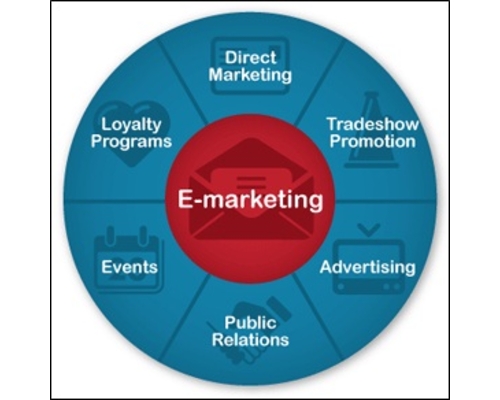
Electronic advertising, synonymous with digital advertising, refers to all marketing techniques that use electronic gadgets and digital channels. This marketing sector is the one that found new ways of operating the industry through new technology, which incidentally is the major focus of the current digital age. This sector is the one in which marketing practice itself has changed. Businesses now provide customers with such a way of buying products that they won’t even have to buy their homes. At present, the ease of purchasing a product can be felt not only by the customers but also by the businesses. Electronic advertising is a part of the marketing strategy that mainly aims to promote the selling of products or services. It is an important section because advertising companies make the consumers come to their business, while the customers make the companies come for their products. Their profit source comes from advertising companies.
- Important Information: Based on Statista’s information to the public, the global digital advertising expenditure is predicted to be around $500 billion in 2021, which means it is becoming increasingly crucial in marketing.
- Case Studies: Electronic advertising is an approach by brands (such as Nike and Coca-Cola) to the complex problem of creating campaigns that engage most audiences and increase brand awareness. Such advertising lets most companies successfully enter the minds of their consumers, thus evoking high brand recall and customer retention. As an illustration, Nike’s customized email campaigns can break the email list based on customers’ purchase behaviors, allowing them to have a high conversion rate.
- Frameworks and Theories: One of the most important things in electronic marketing is the AIDA model (Attention, Interest, Desire, Action), which directs electronic marketing and enables marketers to create content that develops a strong relationship with the audience.
Strategies for Effective Electronic Advertising

For digital advertising to be effective, the business must include a synchronized campaign or touchpoint strategy of various brands’ appropriate digital channels.
- Specific Examples: Google Ads allows technology marketers to promote their products by paying for them to be displayed in the top sections of Google’s search engine, which is search engine marketing. Also, Facebook ads are employed for social media targeting and picture sharing, which are Facebook’s unique offerings, and YouTube is used to create and upload video channels. Alongside this, each platform gives marketers features that target the precise audience’s memory. Hence, there is an increase in ad reach.
- Challenges and Benefits: The digital marketing capability to personalize marketing and its cost-effectiveness through precision targeting and measurement. Proving its trackability dilemma, is there (i.e., ad fatigue and ad block direct follow-up), or is it just a matter of customer annoyance? Marketers need to minimize this disturbing phenomenon by promoting a faster connection or something that attracts their eyes.
- Practical Advice: Businesses’ adoption of analytics is an essential prerequisite for generating successful ads, and positioning the A/B testing before ad creatives will give brands a means to shape their message according to the most persuasive ones. Sales teams also have the option to slice audience segments and analyze the real-time data, which will help a lot.
The Future of Electronic Advertising

The electronics advertising landscape changes as technology continues to evolve. Among the latest trends, artificial intelligence (AI), augmented reality (AR), and voice search will define the future of this industry.
- Emerging Trends: AI is used during ad bidding and purchasing to revolutionize how ad placements are managed, thanks to the dynamic response of companies in the market. Furthermore, AR is among the commodities making creating interactions that are extremely similar to reality possible; for example, users of the Oracle Retail cloud are trained through virtual simulations and can try on outfits without physically stepping into the store.
- Implications for the Industry: Electronic advertising takes the issue of privacy seriously because tight regulations are in place, and consumers are aware of their rights. The only important thing is ensuring the consumer knows everything you are doing and acquiring his consent.
- Insights for the Audience: In this space, companies’ use of these technologies, particularly those in marketing, will be a main factor in the digital conversion process. The companies will have to resort to technologies and legal regulations as solutions to these changes.
Electronic advertising is a changing and necessary instrument within everyday marketing strategies. As you transform your business, you will analyze the past, learn useful tools, and follow the most important trends.
Conclusion
Admittedly, electronic advertising is the most outstanding tool used in the digital environment today, and businesses have to make it a priority if they want to achieve their goals. Each component of electronic advertising, from search engine optimization to social media marketing, could equip the participants in the market with the techniques needed to compete in a competitive environment. Today, new advertising possibilities and methods have appeared with technological progress. By applying these pioneering techniques, businesses are, on the one hand, able to extend their scope and, hence, easily reach far and wide across the globe. On the other hand, they can build strong, long-lasting bonds with customers, bring more sales, and hence, have sustainable business development.
Key Takeaways:
- Broad Reach: Digital advertising assists companies in reaching out to people worldwide outside the traditional advertising channels.
- Targeted Campaigns: Sophisticated targeting possibilities offer marketers personalized strategies relatable to their chosen demographics.
- Cost-Effectiveness: Unlike traditional advertising, electronic methods are often cheaper and deliver reliable evidence of return on investment.
- Real-Time Feedback: By analyzing the results using the given tools, we can make snap decisions and reach out to our target audience with the most effective campaigns.
- Enhanced Engagement: The technology of augmented reality has taken off since the advent of Web 3.0, and it has increased the focus of the audience on getting immersed in the content, engaging with it, and spending more time on it.
To sum up, it is clear that digital advertising is not just a choice for contemporary enterprises; it is a vital prerequisite for those who aim to expand their business and stay relevant in today’s global market.
]]>What is Classified Advertising?
Classified advertising is a form of ad advertising in which advertisers buy space in a known section of a paper, newspaper, or online source, which will be used to sell the specified product/service (service sales, job notices, etc.). These are usually short and laconic texts that present various products, services, sales, or job opportunities to the public. The main function of classified advertising is to facilitate a transaction between the buyer and the seller in the simplest way possible. They are, therefore, typically categorized as reviewing jobs, real estate, services, and goods for sale.
Types of Classified Advertising
- Recruitment Ads
- Companies go for the recruitment classified ads to get the right employees they are looking for. Such ads usually contain a job title, a brief description of the company’s roles, requirements, and contact details.
- For example, a local business can post an ad in a newspaper’s “Jobs” section with the following content: “We need a part-time barista. Please apply by sending your qualifications and experience to this email,” along with the qualifications.
- According to a common survey of the main portion of employers, 54% still argue that traditional print ads are the most convenient tool for recruiting, especially for local jobs. Experience is still at the top of the demand list.
- Real Estate Listings
- Real estate ads are designed to inform readers about properties for sale and mainly deal with renting properties. They often include the property’s price, location, features, and photos.
- For example, a real estate classified ad in a newspaper might say that there is a two-bedroom apartment for rent in a good community that has nice features like a big garage and a short distance to schools where the students can go.
- According to the National Association of Realtors, 67% of home buyers search for their homes online, implying g that the digitally classified market is an important part of real estate marketing.
- Services Offered
- Classified ads can also display various services, from plumbing to tutoring. Ads related to services outline the offerings, the prices, and how to contact the provider.
- A local plumbing service that is local could advertise its discount for the funding for a new system such as geothermal cooling or heating.
- Among other types, this kind of marketing often faces the obstacles of tight competition and the requirement that companies be present both in print and online formats, thus causing the companies to resort to adopting digital marketing strategies.
Benefits of Classified Advertising
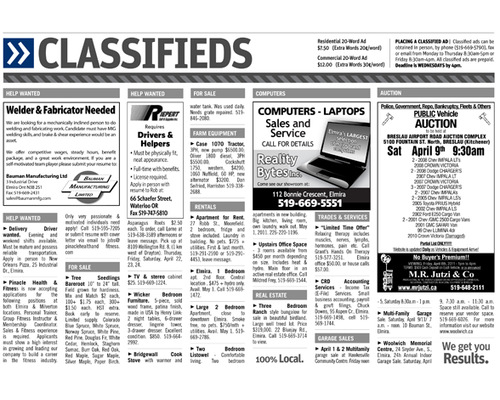
Classified ads can provide advantages not only for businesses but also for individual advertisers.
- Cost-Effectiveness: Compared to other methods like billboards and television commercials, classified ads are typically cheaper. This is particularly essential for small businesses or individuals who want to reach a local audience without spending much money.
- Targeted Audience: Classified ads are often divided into categories, making it possible for advertisers to reach the exact audience they are targeting. A strategically placed advertisement in the community section of a local paper will attract customers who are likely to be just searching for the product that is on offer.
- Convenience and Accessibility: Online technology has simplified the advertising process for promoters. They can post classifieds and update or modify them in real-time. This incredible feature assists businesses in keeping their information timely, like prices for products or service availability.
Emerging Trends in Classified Advertising

As the technological era flourishes, the classified advertising space also advances, giving rise to many upcoming trends like digitalization. Following are some of the upcoming trends:
- Digital Platforms: Digital markets, such as Craigslist, Facebook Marketplace, and specific job boards, are now the dominant form of classified advertising. Online advertisements are more effective and involve more people than traditional print ads.
- Multimedia Content: Advertisers can now take advantage of multimedia materials such as videos and images, which makes classified ads more engaging. Lloyd (2018) reports that such user-generated material with rich photos and graphics facilitates higher engagement rates, mostly because visual communication is perceived as more effective in conveying messages. There is a direct need to understand this and work on creating rich media from within the local environment.
- Mobile Optimization: Apart from but not including mobile screen ad consumption, marketers need to respond to the rising number of users. Mobile devices have taken a significant share in people’s viewing, making it essential to have mobile-friendly ads. The conventionally accepted trends for successful classified advertising now include a responsive design and a mobile application integration.
Conclusion
Classified advertising is an indispensable tool for businesses and individuals to approach their target audiences. Only through traditional print materials or advanced digital platforms can the types, benefits, and market trends of classified advertising use be understood, along with creating advertising campaigns that would take advantage of the medium. By identifying and adopting the current trends, you will be able to use new technologies to minimize the impact of the threats and, at the same time, to improve the strength of the advertising sector in a dynamic environment. It goes on to say that classified advertising continues to occupy a place of particular importance within the marketing and communications landscape. For example, in the classical Juarez model, you can be a small business owner who wants to sell your regular item. This individual wishes to dispose of a personal item, or a professional wants to build contacts to increase your job prospects. Classified ads areient and incredibly effective since they can reach people based on their demographics. Using different kinds of classified ads and their applications will guide you in accomplishing your advertisement and conferring your triumph.
Key Points:
- Definition and Purpose: Classified advertising uses different promotional mediums to convey information about products or services by an individual or an entire company in a particular category. It gives you a precise, specific audience, and you can focus on that audience effectively. The ad managers can achieve this by providing potential clients with full contact information, including that they are selling real estate; they can also create marketing flyers.
- Types of Classified Ads: They could be jobs, real estate, services, for sale, and personal ads, all of which are meant for different purposes or to satisfy the needs of various audiences. The news of having a good job is an attractive offer since it is intended for all people from different professions. These ads are used for entertainment, selling products, getting to know social issues, finding partners, etc.
- Accessibility: Classified newspaper advertising cannot be ignored when discussing popular local newspapers with consumers, businesses, classified advertisers, and advertising agencies. Being a small-scale establishment or an individual with a somewhat tight marketing budget, you can rest assured that minimal cash will be paid to access this advertisement.
- Targeted Reach: These ads are fashionable to be local; hence, you will only reach local customers or those interested in specific services that are nearby.
- Examples in Action: By defining online platforms like Craigslist or Facebook Marketplace and print media, the examples should be provided so that the advertisement can be displayed in various other formats to allow you to advertise as you wish. In general, fully understanding the details of classified advertising and utilizing its parts can increase awareness, increase sales opportunities, and build a stronger bond with your targeted audience. Take advantage of the opportunities that classified advertisements bring; use them to strengthen your marketing strategy!
Ready to talk with a marketing expert?

A Pragmatic and innovative way to enthrall your target group is just a click away!
Get in Touch
Rukmini Knowledge Park, Kattigenahalli, SH 104, Srinivasa Nagar, Bengaluru, Karnataka 560064
+91-990 247 8800
contact@gingermediagroup.com
Popular in Television Advertising
Udaya TV AdvertisingSun TV AdvertisingStar Plus AdvertisingTV 9 AdvertisingZee TV AdvertisingNDTV India AdvertisingColors TV AdvertisingPopular in Airport Advertising
Spice Jet AdvertisingMumbai Airport AdvertisingDelhi Airport AdvertisingEmirites AdvertisingIndiGo Airlines Domestic India AdvertisingPopular in Newspaper Advertising
Deccan Herald AdvertisingPrajavani AdvertisingThe Hindu AdvertisingEconomic Times AdvertisingDainik Jagran AdvertisingHindustan Times AdvertisingPopular in Magazine Advertising
Forbes AdvertisingCosmopolitan AdvertisingBusiness World AdvertisingVogue Magazine AdvertisingPopular in Sports Advertising
IPL AdvertisingPopular in Outdoor Advertising
Billboard AdvertisingBus Shelter AdvertisingMetro Pillar AdvertisingUnipole Advertising© Ginger Media Group 2025. All Rights Reserved.