Key Takeaways to Be Mentioned in the Introduction
- Deeper Insight in Making Decisions: RTB gives advertisers vital information regarding audience behavior and market dynamics, thus affording them a choice of where and when to invest their budget.
- Efficiency in Costs: RTB manages to identify areas of possible savings by allowing advertisers to place bids on ad spaces based on real-time data and keeps optimizing the human resources spent on dollar expenditures, thus leading to dollars being spent at their best impact.
- Better Customer Value: RTB aligns advertising activities with customer value by targeting relevant ads to the right people at the right time, improving the overall customer experience.
- Continuous Improvement: Since RTB happens in real time, regular analysis and alteration of the directions of the advertisements with some performance metrics will be done to promote continued optimization and improvement.
- Strategic Planning: RTB offers highly data-driven insights, which help corporations forecast better and make long-term decisions for directing their next moves in advertising campaigns.
In this blog, we will discuss the principles of Real-Time Bidding, why it is important today, and how an organization can take advantage of this process to improve advertising efficiency. Let’s share insights and practical ways to add RTB to your digital advertising campaign.
What is RTB Full Form?

RTB, or Real-Time Bidding, is a digital advertising concept based on an auction process for online ad space in real time. By utilizing user identification and behaviour patterns, organisations can target their ads more effectively to the right groups of people and with the right interests. This, therefore, results in more efficient usage of marketing budgets along with higher engagement from the target audiences.
Key Elements of RTB

- Demand-Side Platform (DSP):
A DSP platform enables users to manage multiple ad and data exchange accounts using a single interface. Its importance lies in the fact that it makes automated purchases, and users place advertisements on ad spaces in real-time by using user information to maximise relevance. - Supply-Side Platform:
SSPs help publishers optimise their ad space inventory to maximise revenue generation. Through them, the multiple ad exchanges allow publishers to reach the correct demand for their ad placements and, therefore, the potential for revenue maximisation. - Ad Exchanges:
An ad exchange is an entity where buyers and sellers interact on the price of ad space. Publishers are sellers, and advertisers are buyers, negotiating on price. Such exchanges also support the execution of RTB because the real-time auction process allows buyers and sellers to achieve optimal outcomes in terms of ad placements and prices.
Benefits of RTB
- Improved Decision Making:
RTB further aids decision-making by providing real-time user engagement and bid results statistics. For example, an e-commerce seller of attire can analyse which ads work best for demographics and rapidly switch campaigns to maximise returns on investment through RTB. - Cost Effectiveness:
RTB improves cost efficiency by automating the buying process and enabling advertisers to pay only for impressions that meet their targeted criteria. Organisations set budgets that optimise their spending and pay only for ads most likely to increase conversions. - Increased Communication and Coordination:
RTB enhances collaboration and openness between marketing and sales teams. Sharing real-time information and results helps these teams align strategies better to ensure cohesive campaigns that drive engagement and sales.
Core Principles of RTB
- Activity-based Approach:
Understanding user-specific activities is central to understanding RTB. If ads are targeted against users’ actions and interests, the campaigns tend to be more effective as advertising becomes more focused and successful. - Association of Activities with Costs:
Cost-related user activities associated with the advertiser allow the person to know the cost of running each advertisement. This is crucial in deciding on budget and campaign optimisation. - Constant Improvement:
The main feature of RTB is the assessment of performance metrics on continuous evaluation and feedback. This method adjusts campaigns according to performance metrics to make the advertising strategy work throughout the campaign period.
How to Put RTB Into Action
- Review current activities:
Observe traditional buying processes to identify where RTB can create more value. Analyse past campaign performances and user engagement behaviours. - Define Cost Drivers:
Determine your cost drivers, such as audience segments, the time of day bidders are likely to drive prices, and ad formats so there is an optimal bidding strategy and resource usage. - Leverage Performance Metrics:
Set up and monitor performance metrics to gauge the effectiveness of each ad campaign. Click-through rate and conversion rate are just two of the metrics that define effectiveness. - Engage Employees:
Get employees to collaborate with the RTB process to foster collaboration and innovation. The team should be encouraged to develop suggestions to improve strategies based on first-hand experiences and data insight. - Leverage Technology:
Utilise technology tools and platforms that facilitate the RTB process: machine learning algorithms and data analytics advance targeting and bidding.
Real-World Examples of RTB
- Case Study of an E-commerce Giant:
One e-commerce giant used RTB to promote specific products during the prime shopping seasons, resulting in a conversion rate that was 40% higher than that of similar traditional campaigns. - Automotive Industry Success:
For instance, one of the world’s biggest automobile manufacturers used RTB to target potential car buyers effectively effectively effectively. It supplemented the ads according to user behaviour’s search patterns, thus leading to a massive hike in leads and sales calls. - Travel Agency Application:
A travel agency used RTB to give dynamically priced travel deals to online users based on their behaviour. It yielded a 35% increase in bookings over a quarter.
Final Thoughts
RTB is an invaluable approach for organisations seeking to upgrade their digital advertising efficiency and reach. A good understanding of core concepts like audience targeting, bid management, and data analysis will allow businesses to run their activities resource-friendly while always being oriented towards improvement, thus unlocking much potential in operational processes and decision-making strategies.
Application of the principles of RTB in your business can lead to:
- Better Ad Targeting: You could hit the perfect target market by correctly identifying viewers to ensure that your advertising dollar is utilised to full effect.
- Better ROI: Maximize returns on your advertisements with real-time insights and data-driven strategies.
- Better Competitive Advantage: Automated bidding processes would allow you to stay ahead of market changes.
It is time for you to take advantage of RTB and its transformational impact on your business: start optimising your digital advertising approach now.
]]>Key Takeaways from SERP
- Improved Online Visibility: SERP optimization enables companies to maintain top positions on search engines.
- Cost Savings: Boosting organic search ranking will reduce the costs of being an ad-dependent corporation by probably acquiring dividends from search engine optimization.
- Customer-Centric Results: SERP demonstrates customers’ choices, allowing marketers to target particular audience segments.
- Informed Decision-Making: An SERP audit is a great method for redefining SEO strategies for organizations.
- Ongoing Optimization: Continuously measuring SERP performance is the best way to ensure that one is ahead of the competition in the market.
Hello everybody, welcome to our blog about how to SERP with the following blog post. Below, we have mentioned the following points that are completely covered: SERP components, SERP benefits, SERP principles, and simple real-world examples are provided to help you effectively optimize your digital presence.
What is the Meaning of the SERP Term in Digital Marketing?

SERP full form or Search Engine Results Page is the page the search engines show in response to the user’s search query. Knowing every SERP’s sense of SERP is the key to choosing good tactics to attract more users and improve rankings.
The Major Factors of the SERP
- Organic: The search results are not paid for and appear depending on the user’s query relevance. High-quality organic search outcomes serve as social proof and often attract the highest number of clicks.
- Paid Ads: Sponsored listings are marked as ads and appear at the top or bottom of the page. This listing form suits businesses needing skyrocketing visibility through a PPC advertising campaign.
- Rich Snippets: Rich snippets provide gratuitous content, such as an image, rating, or review, to jazz up the result’s cheerfulness and relevance. These enticements bring them both engagement and click-through rates.
- Knowledge: PanelIt is the anchored area on the page containing verified data related to any subjects, brands, or people. It is meant for quick answers and to establish the brands as reliable sources.
- Local Listings: Local listings are useful for small businesses because they display users’ addresses and contact information, making it easier to advertise products and services in the local area.
Each part of a SERP has its purpose. Moreover, it creates a connection between users and the resources they are looking for. Companies can also build authority, credibility, and Trust among their audiences with this communication.
Importance of SERP in Digital Marketing
Search Engine Results Pages (SERP) are crucial in digital marketing as they affect how people find and engage with a brand online. Awareness of its significance can alter a company’s presence and effectiveness in reaching the target audience.
How SERP Impacts Digital Marketing
- Increased Brand Visibility: Being ranked high on the search engine results page places a brand right in the face of potential customers, gives it a wide scope, and draws the attention of many more.
- Enhanced Website Traffic: AppearingTraffic Appearing high up in the search engine results leads to more web traffic, increasing the number of leads and, hence, conversions in the long run.
- Credibility and Trust: Credibility and Trust usually regard organic search results as more authentic and reliable, creating credibility and power in the entire industry.
- Improved User: ExperienceBusinesses use rich snippets and structured data to make data more user-friendly, thus raising the user experience.
- Competitive Advantage: By practising SERP optimization, businesses can easily find crowded markets, which is a great way to stand out from their competitors and improve their market share.
Explanation
Effective SERP optimization is an efficient way for a brand to appeal to more potent leads, improve user engagement, and strengthen the brand’s position as a market leader. This leads to an increase in organic reach and engagement rates and, thus, an improvement in revenue.
Key Aspects of SERP: Enhancing Decision-Making and Cost Efficiency
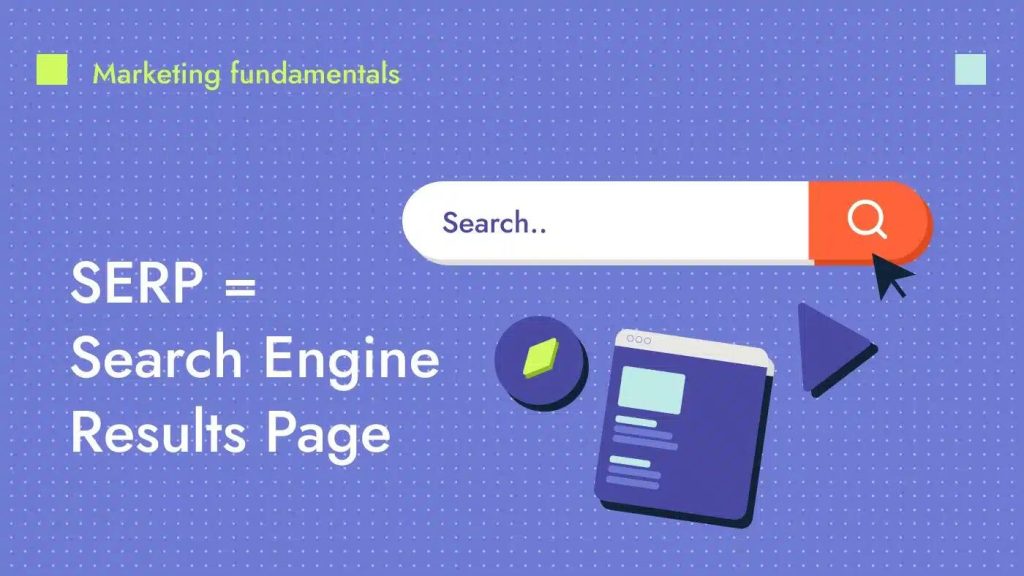
The information derived from the SERP on competitor rankings, keyword performance, and customer behavior is very helpful. It helps businesses make successful decisions by learning more about the market and enabling them to take advantage of different opportunities.
Key Aspects of SERP Optimization
- Data-Driven Decision Making: SERP gives data on the ranking performance, the number of clicks, and the user engagement, so the marketers get better perspectives about what the SEO strategies should be by informed decisions.
- Cost Efficiency: Companies concentrating on the outcomes of their pages can lead to the downsizing of partnerships with paid advertisements. Companies could spread resources through high-impact SEO strategies to create better ways of interacting with users.
- Customer-Centric Content: ContentThe adjustment of specific features, such as local listings and snippets, to the client’s needs and interests can lead to the clients getting what they are looking for. Moreover, this approach might be an excellent idea for many businesses local listings accept.
- Continuous Improvement: The regular examination of the search results page (SERP) makes the impact of different sales in the last few months visible. It ensures the wise use of SEO strategies in the future since the strategy needs to be new after every update.
- Strategic Long-Term Planning: SERP analysis is a marketing tool, a method of “to don” “e” that holds “s”ically shares how the team can maximize the effectiveness of their given SEO investment over a specific period. The method could be a focus group meeting, research, or survey.
Explanation
Employing a search engine result page (SERP) as part of the gameplay in the conversation of the companies with the customers would be so powerful that the companies using it could be enabled to not only keep their customers.
Benefits of SERP: Maximizing Business Impact
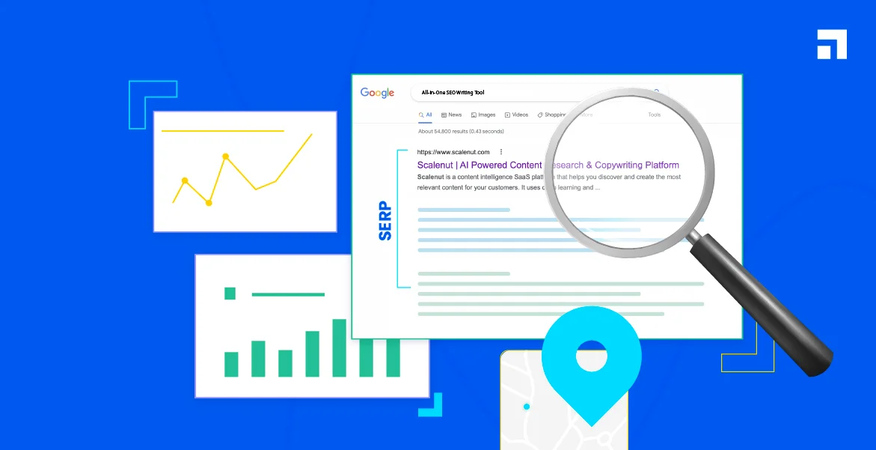
SERP optimization has many benefits, and it can likely help a business attract more targeted clients, reduce marketing costs, and establish a strong online presence.
Major Benefits of SERP Optimization
- Increased Traffic: Optimized rankings are the source of more website traffic, which improves website rankings and, as a result, stimulates revenue generation.
- Higher Click-Through Rates (CTR): Landscapes such as rich snippets and featured answers attract more people to click on the Website, leading to increased CTR and engagement.
- Cost Savings on Ads Successful: SERP optimization removes the dependence on paid ads, resulting in cost savings while maintaining visibility.
- Targeted Audience Reach: Ranking higher in SERPs means the content will reach the right users and users currently searching, enhancing lead quality.
- Better Brand Credibility: When a trademark appears in the organic search results as one of the top results, it creates Trust, and any brand can be viewed as a leader in the niche.
Explanation
Among the most valuable techniques that high search engine ranking pages suggest are those that help create an exact reach for a brand, make it reputable, and keep costs in check. These benefits are crucial for businesses looking to improve user engagement and long-term business growth.
Strategizing SERP Implementation for Long-Term Triumph
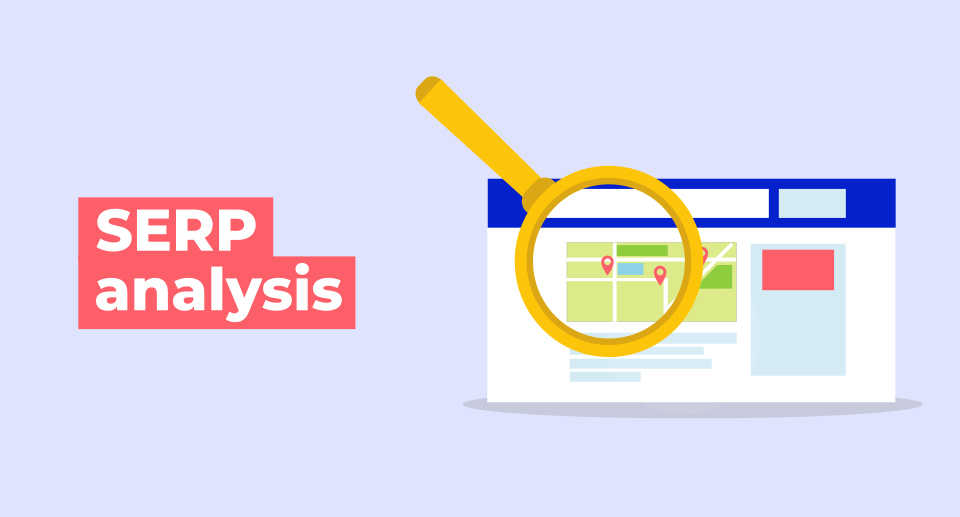
Successful SERP execution demands a thorough examination and game plan. Businesses can exploit this fact and use SEO effectively, when combined with consistently tracking the performance of their Website, to elevate their businesses to the top of the market.
Steps to Implement Effective SEO Strategies
- Evaluate Current SEO Practices: Begin by reviewing your current SEO strategies and identifying areas for improvement. For example, you can use Google Analytics to collect data and analyze it to identify problematic areas.
- Set Clear Performance Metrics: Define key values, including the Website’s higher rank, higher click-through rate, and engagement measurement, to track the effectiveness of your implemented SERP strategies.
- Optimize Keyword Targeting: To start with, you need to figure out which keywords have the least competition and are highly frequented to achieve the best SEO quality.
- Use Advanced SEO Tools: Engage in such tools that give details about your progress on SERP, where you are ranking, and the things that need your immediate attention to fix the performance in a positive direction.
- Encourage Team Collaboration: To improve a company’s SEO strategies, team members must be involved in properly communicating the right content, the right SEO, and the proper digital marketing channels.
Explanation
Organizations can pursue the ultimate efficiency improvement through technology and ensure the team’s reception goes hand in hand. They can also develop SEO implementation in alignment with other functions, including digital marketing goals, using the approach and adoption of advanced technologies to automate.
Real-World Examples of SERP Success
The following are examples of leading brands for which search engine optimization was successful and made them noticeable as they appeared on top of the market’s electronic search resumarket’se Studies in SERP Optimization.
- HubSpot: HubSpot HubSpot HubSpot has earned its place at the top of SERPs by spending money on content marketing, so it has been able to be more present in front of searchers without and for organic ads and for organic traffic.
- Moz: Moz utilized rich snippets to make content more attractive to the Audience, thus increasing CTR and the number of people viewing the content. Airbnb’s local SEO optimizationAirbnb’sy made its business appear among the first search results when people were looking for local accommodation. These events led to increased bookings and regional recognition.
- Amazon: The inclusion of structured data in the product listings improved the product’s image; the reviews and products supported it. As a result, click-through rates and engagement were increased.
- Nike: By implementing its SEO strategy, Nike could increase its visibility every time people search for sports brands with keywords carrying the Nike brand name.
Explanation
These companies show how strong SERP strategies can increase visibility, engagement, and credibility. These brands grew significantly and outperformed their rivals because they created the right content and improved SEO.
Final Thoughts on SERP
The SERP long-form Search Engine Results Page is fundamental and drives online visibility, credibility, and customer engagement in digital marketing. A correctly tuned and used SERP may bring in the following results:
- Higher Traffic Volumes: More organic Traffic is brought in by better visibility.
- Improved Conversion Rates: Good SERP content effectively calls users using related keywords and good quality content.
- Enhanced Brand Credibility: Being ever-present in the top results ensures trust-building on the client’s part.
- Cost-Effective Marketing: Using the organic path removes the need for extra costs of paid ads.
- Valuable Customer Insights: The SERP data is the primary source of user preferences and behaviour.
SERP Optimization is not a choice for companies that want to succeed in the digital market. It is only by paying attention to these points that businesses can achieve natural traffic generation, improve their audience involvement, and, in effect, be victorious in digital marketing.
]]>Key Aspects of UTM:
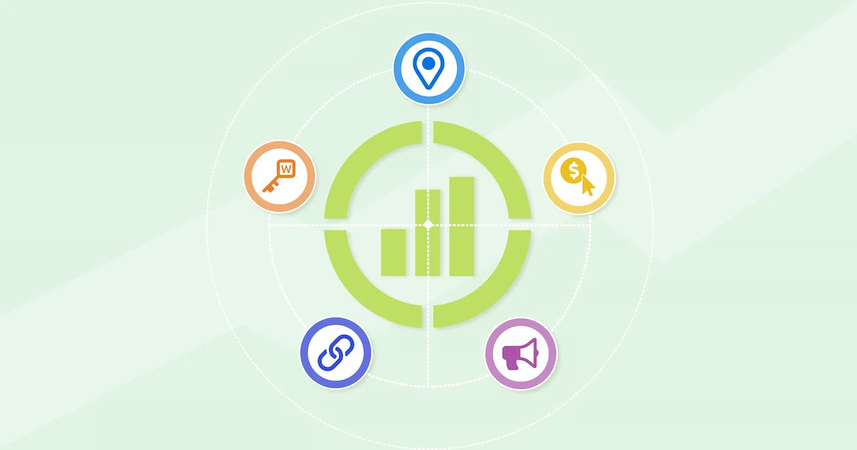
- Enhanced Decision-Making: Countless UTM parameters contribute to the identification of the best ads and channels, which in turn can be utilized for planning more effective marketing strategies.
- Cost Efficiency: Through clear performance goals and effective analytics, corporations can discontinue ineffective marketing tactics and redirect resources to more productive activities.
- Improved Customer Focus: UTM tracking ensures that promotional operations are marvelously targeting the right people whose preferences and behavior are close to the chosen marketing approach.
- Continuous Improvement: As brands analyze and take in UTM data consistently, they can lessen or wholly cut off particular marketing campaigns that the customers have little or no interest in and then promote products they are after.
- Strategic Planning: Companies can better predict how their campaigns will pan out and sketch out their long-term plans effectively since UTM data provides records of campaign performance over time. In this blog, we will shed light on the concepts of UTM, highlight the value of this contemporary marketing tool, and illustrate how companies can release their potential for enhanced marketing performance. Please take advantage of our blog, where we will reveal the most essential information and the easiest way to embed UTM into your marketing strategy. Join us as we uncover valuable insights and practical steps to integrate UTM into your marketing strategy!
What Is UTM?

UTM, the so-called Urchin Tracking Module, is a powerful tool for digital marketing implemented based on URL tracking parameters that are added to the links. Notably, the capabilities for traffic analysis are spoken of here. Marketers can benefit from detailed information, such as the exact traffic sources, the most successful campaigns, and user reactions to the content. Thus, their marketing strategy will be refined, and their performance will improve.
Key Components of UTM
1. Source
The source section states the webpage the user clicked the link from, such as one of the search engines, social media platforms, or direct referrals. Correctly understanding the source factor is essential because this element allows marketers to analyze the channels that bring substantial traffic and leads.
2. Medium
This component identifies the means of communication, such as email, social media, or cost-per-click (CPC). This helps the organization expand its reach by pointing out the specific platforms that produce the best outcomes.
3. Campaign
This piece enables the marketer to give his campaigns individual names, adding context to the traffic sources. It is fundamental to see which marketing drives are the most successful in garnering attention. Moreover, these results can help make strategic improvements.
Benefits of UTM
- Improved Decision-Making: UTM parameters and the knowledge acquired from the various return couriers explain specifically where the traffic originates and how it is used on a website. For example, if a business suddenly sees how a specific email campaign is driving so much traffic and conversions, it may want to give an extra push to such communications.
- Cost Efficiency: By interpreting UTM data, corporations can determine which marketing plans give the maximum return on their investment. For instance, a business can discover that Facebook ads are a better option than Google Ads, so it can use that as a strategic way to spend lower-cost resources on other methods.
- Enhanced Communication and Collaboration: Building UTM provides appropriate teams with the opportunity to clearly communicate the execution of the work and the responsibilities shared among all team members. The graphics of the data related to the campaign performance can be seen by all team members, who can thus coordinate their efforts in the name of transparency and common goals.
Core Principles of UTM
Focus on Activities: The first approach to tracking specific marketing activities, putting them into light, allows you to gain insight into lead and sales generation through various engagement methods.
Link Activities to Costs: Correlation between activities and expenses is a key budget and forecast process element. By combining the two, organizations will benefit from the maximum utilization of their marketing funds.
Continuous Improvement: UTM is an outcome that comes into being through continuous assessment and feedback. Time and again, teams improve their strategies and choose the best approaches as they focus on analyzing the performance of the marketing campaigns.
Steps to Implement UTM
Analyze Current Activities: In order to successfully implement UTM, companies should first focus on assessing their existing marketing activities and tracking methods. This will help disclose gaps and opportunities.
Establish Cost Drivers: Define the reasons for the different costs arising in various marketing channels. Gaining insight into these motivators will help defer resource allocation.
Implement Performance Metrics: Form a system of tags for tracking URL performance with UTM. Tools like Google Analytics are essential to cover all the metrics regarding the system.
Engage Employees: Involving the staff members in the implementation process is a key element for fostering a culture of data-based decisions. Furthermore, we can have training sessions as part of the formation of a knowledge base to enlighten the employees on UTM usage.
Leverage Technology: The employment of an app that has the authority to track software and marketing analytics enhances the UTM process. Technology integration guarantees the correct capture of data and the actualization of real-time monitoring.
Real-World Examples of UTM
1. HubSpot
HubSpot smartly utilized UTM parameters to track the success of its ebook marketing campaign. The composite analysis of lead sources showed that social media was the most fruitful marketing platform, as it delivered the best results among the people who were found there, while email campaigns were the second best choice. This made them go for social media marketing.
2. REI
REI tagged UTM for the holiday campaign they ran, and through this campaign, UTM became a real insight for them, as email newsletters brought 40% of the copied ads that the display ads copy got. Then, they reinforced material for email marketing.
3. Airbnb
Airbnb analyzed the UTM parameterized data to examine the effectiveness of the promotional channels. They figured out that the referral program was the most beneficial, and they kept their marketing in that direction of their marketing strategically.
Conclusion
UTM is necessary for organizations that want to track marketing metrics through data analysis and monitoring. Adroit use of UTM is the byword of tracking and improving geospatial accuracy and analysis. They will be very adaptive towards implementing UTM in spatial concept learning.UTM (Universal Transverse Mercator) is an invaluable approach for organizations that provides accuracy and analysis. Put the following steps to the accomplishments of a business through the employment of UTM:
1. Exactness in spatial data representation.
2. Integrating geospatial analysis into business strategy for evaluating spatial accuracy, precision, and modeling.
3. Making the GIS process standardized and effective.
Now is the time to adopt UTM and see the radical changes it can bring to your company. Start applying geospatial organizing today to initiate the process of optimization!
]]>Key Points About Google Tag Manager:
- Simplified Tag Management: GTM makes it easier since marketers can get access to managing and deploying tracking codes without necessarily having a significant amount of coding knowledge.
- One Central Place for Implementation and Management of Tracking Codes: End-users get a single point to apply and manage the various tracking codes—they might include Google Analytics and Google Ads Tag.
- Agility Speed: Marketing campaigns will live faster on the market since the tag’s automated deployment eliminates the developer’s participation in it.
- Improved Visibility: GTM provides advanced tracking capabilities, which help us closely understand user actions or behaviour and associated site performance.
- Friendly Solution in Cost: Moreover, being absolutely free, GTM is a budget-friendly option for businesses in a struggle to maintain the smooth operation of the digital marketing process.
Using GTM allows businesses to streamline their marketing processes, deploy tags efficiently, and gain deeper insights into their site’s performance. In this blog post, we will explore the full form of GTM, its functionalities, and its role in simplifying data management for businesses.
The key agenda of Google Tag Manager is to make tag management easy and efficient. Users will be able to run and, in fact, have control over their tracking codes, such as Google Analytics, Facebook Pixel, or other custom scripts within one place. This eliminates the hassle of making alterations individually on every page. The chances of errors are kept at bay, and the tag is implemented faster. With businesses indulging in data-driven marketing, a tool like GTM ensures their adaptability level and agility remain high.
Moreover, GTM’s automated deployment of tags allows businesses to set their marketing campaigns faster and measure with higher accuracy. This platform offers an easy interface that provides marketers with power to work on creating and editing tags without forcing them to involve the developer every single time for the change. This blog will look at the basics of Google Tag Manager, the benefits of Google Tag Manager in digital marketing, and why businesses today need to utilise this tool to maximise their online presence.
What is Google Tag Manager?
Google Tag Manager is a tag management system that helps manage and deploy marketing and analytics tags in websites or mobile apps without involving the underlying code. It acts as a central hub to add, edit, and manage tags, making it easier for marketers and developers to track user interactions on the site.
Main Features of Google Tag Manager:
- User Interface: This guarantees that the users can easily create and manage tags without needing technical skills.
- Tag, Trigger, and Variable Structure: This structure allows for customising tracking by first defining tags as little code snippets, triggers or activation rules, and variables or dynamic placeholders.
- Third-Party Tags Integration: GTM allows the integration with a wide range of third-party tools, especially Google Ads Tag and Facebook Analytics, which helps in further handling more extensive tracking across various platforms.
- Version Control: With GTM, users can create multiple versions of their tags. Thus, changes can be tracked easily, and previous configurations can be reverted to when necessary.
With these extended flexibility features, users can utilise customised HTML tags for more complex tracking solutions. GTM’s versatility and ease of use have been a major reason why businesses tend toward a better model that could help streamline their digital marketing operations. One of the strong features that defines GTM is its structure, which is called Tag, Trigger, and Variable.
- Tag: This means some code that will track the actions of the user being done on your website, such as page views, clicks, or form submission.
- Trigger: This means when and where the tag is activated. For example, the tag is activated the moment a user clicks the button.
- Variables: These are placeholders in terms of dynamic values to be used as part of tags or triggers.
This structure allows for so much flexibility that users are allowed to customize their tags even further in order to track any interactions of their choice and, in-depth, determine the behaviour of users. It also enables people to enable a great number of third-party tags, such as Google Ads, Facebook Analytics, and LinkedIn Insights. This means that GTM is yet another all-in-one solution through which different tools can be integrated to make life easier when managing all those tags and ensuring consistent data collection from all platforms. Using GTM is the best way that businesses can avoid confusion caused by manual coding by focusing on analysing the data to make meaningful marketing decisions.
Why Google Tag Manager Crucial for Digital Marketing?

Google Tag Manager is needed for digital marketing because it simplifies tracking user interactions and campaign measurement. The biggest benefit of GTM is that it reduces dependency on developers.
Why Does Google Tag Manager Help Marketers?
One of the most significant reasons GTM must find a place in the digital marketing toolkit is that it helps marketers reduce their dependency on Developers.
Reduced Dependency on Developers:
Tag management lets marketers create and manage their tags themselves, which really simplifies tracking processes and accelerates campaign launches.
Other Benefits:
- Improved Site Performance: GTM manages the firing of a number of tags on a website, thereby outgrowing the susceptibility to redundant or conflicting tags, which can hinder the speed of the webpage load times.
- Improved Tracking Capabilities: GTM permits the tracking of user involvement, such as video engagement and scroll depth. These will allow sophisticated insights into optimisation.
- Better User Experience: GTM ensures asynchronous tag firing, thereby improving page load times, which, in effect, improves the general user experience.
Another known cause is campaign measurement. Marketers could fine-tune their efforts by acquiring real-time data because the tool is highly accurate.
In traditional tag management, introducing or modifying tracking codes usually requires changes to the website’s source code; hence, it takes some time and is susceptible to errors. GTM has an interface that is easy to use, and marketers may come up with or deploy a tag without necessarily asking someone to do it for them, hence reducing time and reducing the likelihood of error.
Site performance is yet another benefit brought along with GTM. As it is easy to manage tags on the site that act, the chances of going to redundant or overlapping tags in areas where they are needed the least will slow down the page loading time. The tags in GTM fire asynchronously. So, the tags do not necessarily cause delays in site performance and ensure a responsive experience for users. This is even done through performance optimisation, which is essential since site speed is a prime ranking factor in both SEO and user satisfaction.
GTM also allows businesses to track even more complex interactions with customers, like video engagement, scroll depth, and e-commerce transactions. Companies may have a far more granular view of the way users interact with them if available data from these insights can be used appropriately. With more advanced features of GTM, businesses can create customized tracking solutions that resonate with their particular goals and better measure the success of their campaigns.
Key Features of Google Tag Manager
Google Tag Manager comes with indispensable features that could add tremendous strength to the hands of digital marketers and web developers.
Some of the Notable Features of GTM are as Below:
- Preview and Debug Mode: It has preview and debug modes for tags’ performance, where users can test their tags in real-time, even before deployment. He, regarding performance, says they get instant feedback.
- Built-In Tag Templates: GTM offers pre-configured templates for the most common tags. The simplicity of the implementation process saves marketers a lot of time.
- Version Control: Several versions of the user’s container are maintained so that changes can be tracked, and if something is wrong, other setups can be reverted to that version.
- Tracking Custom Events: GTM enables businesses to establish custom event tracking for particular user activities. This will provide a deeper view of engagement metrics.
- Cross-Domain Tracking: GTM tracks different domains necessary for the respective businesses using multiple web properties or sites.
Preview and Debug Mode are among the many features. Here, one can test their tags before deploying them live. This mode provides real-time feedback about how tags, triggers, and variables perform, ensuring that everything works just right before going live. The ability to preview and debug tags in a controlled environment lowers the risks of errors being committed and ensures that data is accurately acquired.
Another critical feature of GTM is Built-In Tag Templates. Building on Built-In Tag Templates allows the user to set up most common tags easily, such as Google Analytics, AdWords Conversion Tracking, and Facebook Pixel, among others Us.ing pre-..configured templates enables a marketer to avoid the need to write custom code in order to quickly set up tags, which is very convenient for marketers who are not programming experts but still implement complex tracking solutions.
Another use of GTM Version Control is to generate and maintain different versions of a container for its users. Whenever there is a change to the tags, triggers, or variables, GTM generates a new version that can be reviewed, tested, and rolled back if needed. Thus, a version control system of this kind also secures possible changes and reverts if required for added protection and flexibility. It also allows teams to test various tracking configurations without altering the existing configuration.
Getting Started with Google Tag Manager

Getting started with Google Tag Manager is effortless, especially for non-tech-savvy ones.
Steps for Setting Up GTM:
- Set Up a GTM Account: Navigate to the Google Tag Manager homepage, sign in using a Google account, and create a new account for your business.
- Create a New Container: After creating an account, create a container for your website or mobile app.
- Install the GTM Code on Your Website: After the container is created, GTM will provide you with a piece of code that needs to be added to your website.
- Configure Your Tags, Triggers, and Variables: Create the required tags, define the triggers for them, and set up variables as needed.
- Test and Publish: Use the preview and debug mode to test your tags and ensure they work correctly before publishing your container.
The first step to setting up Google Tag Manager is to sign up for an account with Google Tag Manager. The sign-up process is easy; one needs to sign in with their Google Account and create a new GTM account that they can later name after their business or website. The next step will be to create a new container in which users can house tags that will track user interactions on their website or app. GTM provides you with a unique code snippet that will need to be added to the website to begin tracking.
Once the GTM code is installed, it is a matter of creating tags and establishing triggers. In a nutshell, GTM provides users with easy and swift access to tag management, enabling them to streamline their marketing processes and gain insightful analytics.
Final Thoughts
Google Tag Manager is an indispensable tool that allows marketers to manage and deploy tracking codes efficiently without extensive coding knowledge. Its capabilities to streamline tag management, improve site performance, and enhance tracking accuracy make it essential for digital marketing efforts. Businesses should leverage GTM to optimize their marketing campaigns, gain deeper insights into user behaviour, and ultimately improve their online presence. By reducing dependency on developers and providing a user-friendly interface, GTM empowers marketers to take charge of their tracking needs and focus on making data-driven decisions.
]]>Advertising is constantly changing; as new concepts and strategies keep emerging to optimize marketing efforts, so does the level of engagement with the target audience. One concept that has taken centre stage in recent years is FCP. Advertising FCPs can have a variety of meanings, such as Full-Cycle Performance, Full Composition Picture, or Full Cost Pricing, and each yields a different view and style toward enhancing advertising performance. Regardless of which one it is, FCP, at the bottom line, ensures that better results are realised, resources are best allocated, and the overall marketing performance is enhanced.
Why FCP Matters:

- Holistic Strategy: FCP focuses on the advertising process, from planning to implementation and measurement, ensuring no piece is left hanging.
- ROI Enhanced: Businesses use the FCP philosophy to identify where changes need to be made, optimise resources, and maximise returns on investment.
- Data-Driven Decision Making: FCP adopts data-driven decisions using performance monitoring and analysis, enabling businesses to steer their strategy for constant improvement.
This blog will discuss the three critical understandings of FCP and how they have influenced today’s advertising strategies. We will break down the concept into three parts: how it is essential, what constitutes it, and the advantages of the main points.
1. Full-Cycle Performance in Advertisement

Full-cycle performance (FCP) is a holistic approach that considers every stage of the advertisement campaign—from its planning phase to its execution and analysis—to make strategic adjustments. It helps advertisers improve every step in the campaign’s lifecycle, maximising efficiency and effectiveness.
Core Components of Full-Cycle Performance:
- Enhanced Decision Making: Full-cycle performance enables advertisers to gather insights from data analysis to make informed decisions about campaign targeting, budgeting, and creative changes.
- Knowing which strategies yield the best results allows advertisers to focus on high-impact areas.
- Cost Efficiency: Analyzing the different stages of the campaign identifies areas of potential savings and better allocation, ensuring that every dollar spent is effective.
- It avoids wasteful spending and ensures investments are focused where people are engaged.
- Customer Alignment: FCP aligns advertising with customer choices, enhancing the ability to reach target audiences and potentially boosting brand loyalty.
- Brands can adapt their messaging to better connect with customers, fostering stronger relationships and long-lasting engagement.
- Continuous Improvement: Organizations can keep up with shifting market conditions and customer behaviour through regular strategy assessment and improvement.
- Campaigns are continuously optimised to meet the latest trends and audience expectations.
How to Implement Full-Cycle Performance:
- Plan Strategically: Set clear objectives and KPIs for the campaign.
- Track Progress: Measure performance metrics at every step of the campaign lifecycle.
- Data-Driven Adjustments: Make strategy tweaks based on insights gained from performance analysis.
2. Full Composition Picture in Advertising

Another interpretation of FCP is Full Composition Picture, a concept that focuses on delivering a cohesive and comprehensive message through various media formats. It ensures that every element of the advertisement—visual, textual, or auditory—harmonises into a unified message.
Critical Components of Full Composition Picture:
- Visual Elements: Visuals are crucial in capturing the audience’s attention. FCP emphasises the importance of explicit images, graphics, and videos that appeal to and reflect the brand’s personality.
- Maintaining visual coherence across platforms helps establish the brand’s identity and message.
- Narrative Structure: The storytelling style helps connect customers to the brand’s message. A good FCP tells a cohesive, compelling story that guides viewers on a journey aligned with the brand’s core values.
- A strong narrative ensures customers leave with a lasting memory of the advertisement.
- Brand Consistency: Message consistency and a unified tone and style across all channels are critical to establishing brand loyalty and recognition.
- FCP ensures that every advertisement’s visual, text and sound elements complement each other, reinforcing the brand’s identity.
Benefits of Full Composition Picture:
- Improved Audience Reaction: The advertisement’s cohesive storyline and strong visuals enhance it, encouraging the desired response from audiences.
- Simplified Production: FCP ensures creative aspects align with strategic goals, simplifying the management of multiple types of advertisements across various media platforms.
- Consistent messaging and visual cues help make the brand easier for the audience to remember.
3. Full Cost Pricing in Advertising
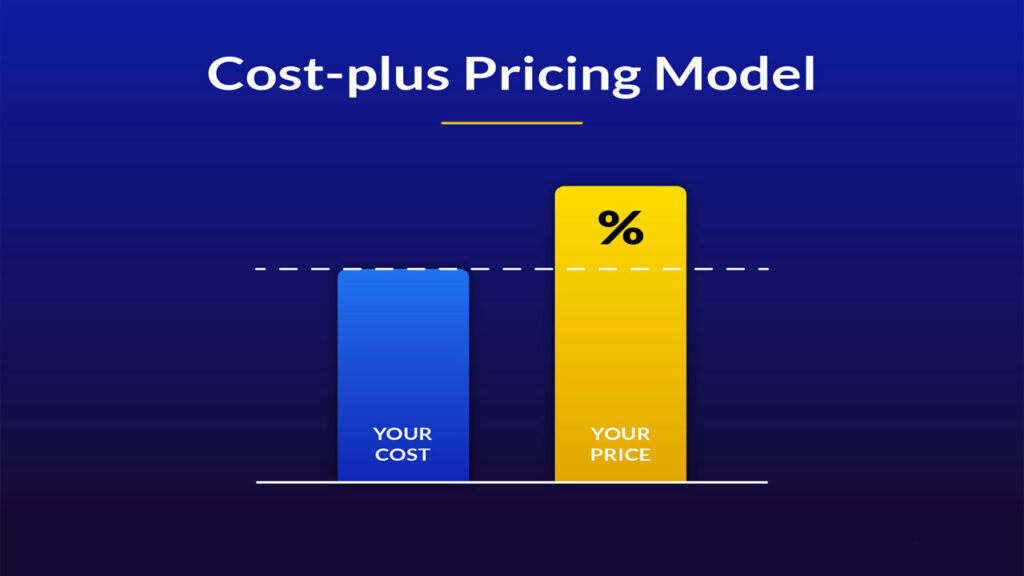
The third definition of FCP is Full Cost Pricing, which involves understanding all the costs incurred in advertising. This practice enables businesses to charge enough to cover total costs and generate profits for sustainable growth.
Critical Principles of Full Cost Pricing:
- Emphasis on Total Costs: Full Cost Pricing accounts for direct costs (e.g., media placements) and indirect costs (e.g., creative development, project management).
- Understanding the complete cost structure ensures campaigns are priced with profit margins in mind.
- Cost-Activity Relationship: Identifying the cost relationship between different advertising activities helps optimise resources and budgeting.
- Allows businesses to pinpoint cost-intensive areas that can be optimised for cost-efficiency.
- Profit-Based Pricing Strategies: With a clear understanding of costs, businesses can develop pricing strategies that maximise profitability without sacrificing campaign quality.
- Ensures long-term financial sustainability and better marketing practices.
Advantages of Full Cost Pricing:
- Adequate Budgeting: Helps organisations use resources more effectively, optimising budgets for a higher ROI.
- Higher Profit Margins: With full-cost knowledge, businesses can price their offerings to cover expenses and generate profits.
- Data-Driven Decision Making: Full cost pricing facilitates strategic budgeting, aligning financial goals with marketing decisions.
Final Thoughts
In conclusion, FCP offers three unique interpretations—full—cycle Performance, Full Composition Picture, and Full Cost Pricing—each providing valuable insights for optimizing advertising strategies. Applying these principles can lead to improved performance, increased customer satisfaction, and sustainable business growth.
- Full-cycle performance helps businesses analyse and improve each phase of the advertising cycle.
- Complete Composition Picture ensures coherent storytelling and visual consistency across all platforms.
- Full Cost Pricing provides a deeper understanding of campaign costs, enabling better budgeting and profitability.
Now that you understand the impact of FCP, you can begin transforming your advertising campaigns into more effective and impactful endeavours. Take the first step today and unlock your business’s full potential with FCP!
]]>Advertising: Definition and Fundamental Concepts
- Advertising is a strategic communication process to promote products, services, or ideas to a specific audience.
- It combines various methods, from traditional media, including print and television, to digital channels, such as social media and search engines.
- Advertising is not only meant to inform customers about product specifications; its primary function is to encourage them to buy the product or contact the company.
The Role of Advertising in Modern Business
Advertising has many vital roles in the corporate world. First, it is a leading marketing technique for creating a brand that people recognize so that those who can show a product and get a feeling of simulation would buy it. For example, companies like Coca-Cola and Apple rely on advertising to maintain world recognition and customer patronage.
- Statistics & Insights: As per Statist, global advertising expenditures were estimated to be more than $700 billion in 2021, representing the high valuation that businesses give to advertising in their overall marketing strategies.
- Frameworks/Methodologies: One of the most well-known models is the AIDA model (Attention, Interest, Desire, Action), which describes a series of steps a buyer takes before buying a good. By being conversant with the model, advertisers can develop focused messages that are relevant at every stage.
Types of Advertising and Their Applications
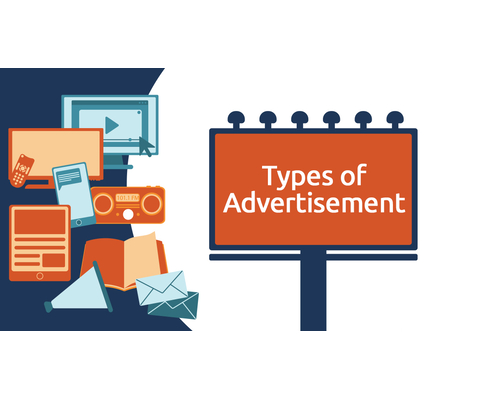
Advertising can take different forms and be designed to meet specific goals and target different groups of people. Traditional marketing encompasses print ads, TV commercials, and billboards, while digital marketing includes social media ads, search engine marketing, and email marketing campaigns.
- Real-World Applications: A good case is Nike, which employs digital advertising in conjunction with the influencers known on Instagram and TikTok to grab the younger generation’s attention. This illustrates how brands are adapting to digital trends.
- Challenges and Benefits: Advertising, on the one hand, is the best way to enhance a company’s visibility and revenue. Nonetheless, marketers have to be cautious because people could become tired of seeing the same ads all the time and might also be skeptical consumers. Advertisers primarily concentrate on personalization and targeted advertisements that use data analytics to ensure their effectiveness with consumers and minimize disturbances.
- Practical Strategies: To facilitate the creation of advertising, companies have to clear up the messages they want to send and pick the right mediums that best speak to their target groups. Another trick to using A/B testing that can dramatically improve ad performance is advertisers doing it to see which messages or formats work best.
Emerging Trends in Advertising

The advertising industry is developing mainly influenced by different trends that shape its future. One significant trend is the establishment of data-driven advertising, where companies use customer data in a very focused and tailored way to create ads.
- Insights and Trends: TikTok, a new platform, has introduced companies to video content, which is more interesting than a traditional picklist environment but needs user participation. In fact, the power of machine learning and AI can make real-time decisions and optimize complex targeting for any programmatic and automatic media buying, which is the most recent development in advertising space technology.
- Implications for the Industry: These shifts indicate that advertisers will have to be able to learn and evolve through listening to the clients and analyzing the market. On the other hand, companies that need to catch up on these issues may be refrained from the marketplace. For a business that aims to maximize the use of advertising, grasping its multiple characteristics is the first point. By reading the trendsetters and invigorating plans, firms can increase their visibility in all marketing channels, engage their audience, and push their businesses to grow.
Conclusion
Through the course of the conclusion, it is gradually mentioned that with the high pace of competition in the current marketplace, advertisers must become proficient in advertising. In the same way, they have to interact with their target audience closely. Advertising supplies the condition where creative ideas go hand in hand with strategy; this eventually drives how consumers react and allows brands to develop customer loyalty. By examining different aspects of advertising, such as types, business models, and psychological impacts, companies can develop creative campaigns that successfully meet customers and realize quantifiable outcomes.
Key Takeaways:
- Definition and Role: Advertising promotes products or services to sway a consumer’s perception and behavior.
- Components: It encompasses systematic planning, creative provision, messaging, and the proper media channels.
- Types of Advertising: Whether digital or traditional, all the types have their strength and are personalized for different audience segments.
- Targeting and Segmentation: Good commercial communication should include a clear understanding of the selected target group and then aim at catching the right people’s attention by just with the people who are being targeted to ensure their active participation.
- Impact on Consumer Behavior: Advertising influences customer choices and brand image, and thus, thinking about wording is very important.
- Cultural Relevance: Catchy advertising linked to the latest fashion fads and propriety values touches customers more personally. For businesses to integrate dynamic and fast-paced operations in the global marketplace, the essentials of advertising should be clear to them—business speak.
Businesses today have an imperative need to connect with the audience effectively. In such a fast-paced marketing world, the palette of techniques evolved significantly. Among these strategies, one that stands out and helps establish direct and personal communication with the consumer is Below the Line advertising. Unlike ATL, which is broad in approach and uses mass media like television, radio, and print to reach large audiences, BTL advertising is a form of direct communication that carries selected messages to the chosen audience. This leads to meaningful interaction with the brand as well as loyalty development.
- Definition: Below the Line (BTL) marketing efforts are directed by direct and personalized communication with a targeted group of audiences.
- Key Objective: BTL strategies strive to communicate an active relationship and trigger immediate consumer action.
- Comparison with ATL: The ATL processes use mass communication media as a channel. Unlike this, BTL includes more focused and trackable media, such as direct mailers, in-store promotion, and online marketing.
- Example: Digital campaigns, experiential marketing, direct mailers, and product sampling are some BTL advertisements.
BTL advertising in today’s value-oriented, consumer-driven market is of immense worth. Such a market enables companies to utilize these strategies best because they help understand audiences and tailor messages accordingly with a higher return on investment.
Critical Components of BTL Advertising
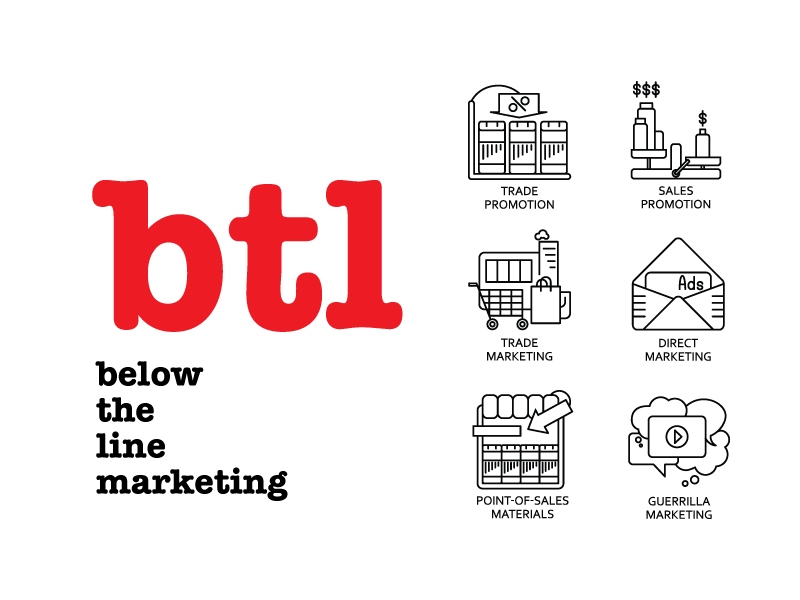
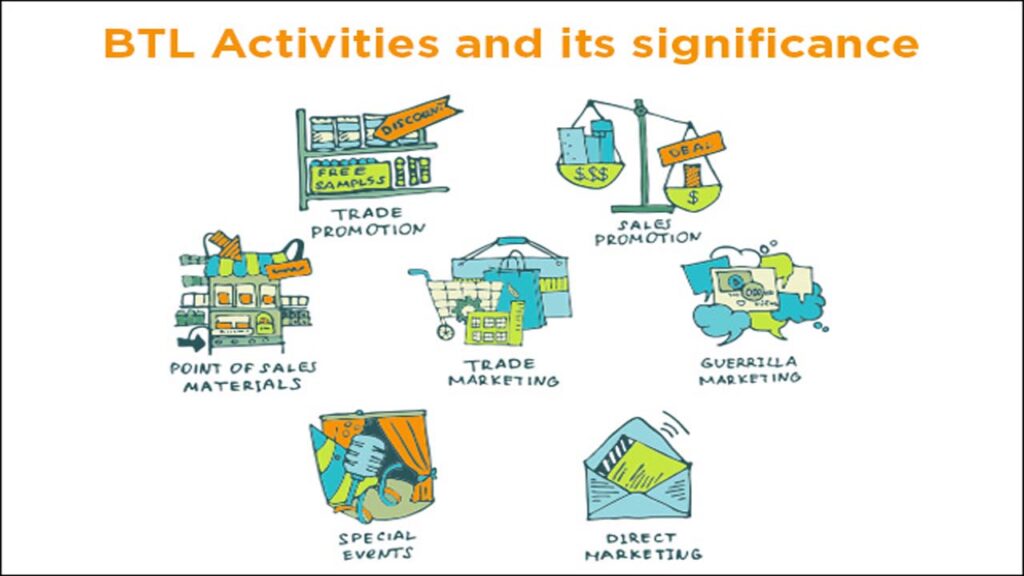
BTL advertising encompasses a variety of techniques, each tailored to interact directly with the audience. Here are some critical components of BTL strategies that help create a more personal and practical marketing approach:
- Direct Marketing
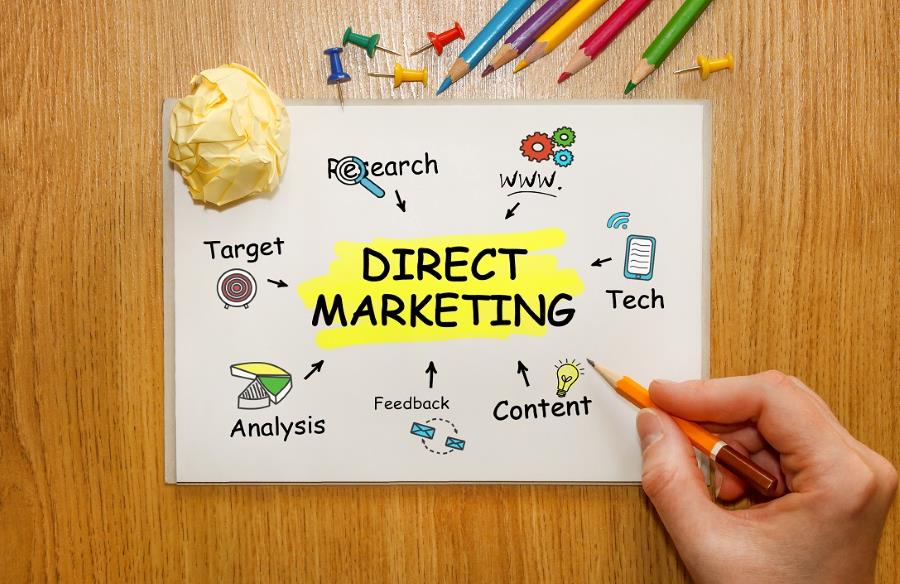
- Definition: Involves personalized communication through mail, telemarketing, or email.
- Targeted Messaging: Uses consumer data to create custom offers.
- Higher Conversion: Personalized coupons and offers boost engagement.
- Customer Loyalty: Tailored messages make consumers feel valued.
- Digital Integration: Combines physical and digital channels for a holistic strategy.
- Explanation: Direct marketing is a popular BTL method because it can reach specific customers with tailored messages. This results in higher engagement and conversion rates, making it an effective tool for generating sales and enhancing brand loyalty.
- Sponsorships and Events

- Brand Association: Aligns the brand with events, values, or specific audiences.
- Personal Interaction: Enables face-to-face engagement.
- Experience Creation: Events offer memorable, immersive experiences.
- Brand Visibility: Sponsorships increase brand recognition.
- Community Engagement: Builds stronger bonds through shared values.
- Explanation: Sponsorships and events allow brands to engage directly with their audience, creating positive associations and memorable experiences. Businesses can strengthen their brand presence by participating in community events or sponsoring relevant activities.
- Digital BTL Activities
- Social Media: Platforms like Instagram and Facebook enable targeted advertising.
- Influencer Marketing: Collaborations add authenticity and reach.
- Email Campaigns: Allows personalized, one-on-one communication.
- Real-Time Data: Provides metrics to measure campaign success.
- Interactive Content: Polls, quizzes, and videos engage audiences deeply.
- Explanation: Digital BTL strategies leverage modern platforms to reach consumers directly where they spend their time. Companies can tailor messages to consumer preferences and get instant feedback using tools like social media and email.
- Experiential Marketing
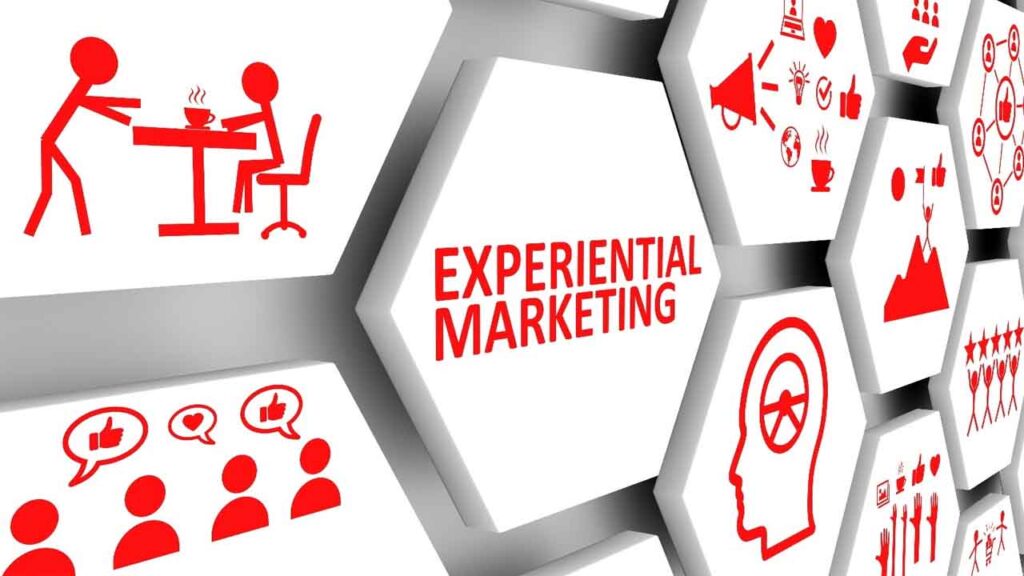
- Immersive Experiences: Interactive events encourage direct consumer participation.
- Emotional Connections: Create memorable moments that build loyalty.
- Word-of-Mouth Promotion: Satisfied participants spread positive experiences.
- Product Demonstrations: Consumers experience the product first-hand.
- Brand Differentiation: Unique experiences help brands stand out.
- Explanation: Experiential marketing engages consumers emotionally and creates a lasting impact by immersing them in unique brand experiences. This leads to stronger brand loyalty and increased consumer advocacy.
- Product Sampling and Trials

- Free Product Trials: Allows consumers to experience the product before purchase.
- In-Store Demonstrations: Showcases product features and benefits.
- Building Trust: Reduces consumer hesitation through hands-on experience.
- Immediate Feedback: Collects consumer opinions for improvement.
- Boosts Sales: Increases the likelihood of purchase through personal experience.
- Explanation: Product sampling and trials give potential customers a tangible experience of the product, increasing their confidence in making a purchase. This hands-on approach builds trust and enhances the likelihood of conversion.
Barriers to BTL Advertising

Despite the advantages BTL advertising can bring with it, it also poses several problems:
- Data Privacy Issues: Personalization has an intimate constituent as it is based on consolidating consumer data. Data privacy and transparency are the most significant.
- Budget Control: Small businesses will need a budget and, more importantly, the capability to use resources effectively when implementing a BTL campaign.
- Over-Saturation vs. Personalization: Too much messaging, too often, or too invasively can cause overexposure to a brand and lead to consumer fatigue.
Final Thoughts
- Meaningful Engagement: Personalized, direct messaging empowers enterprises to achieve meaningful engagements with their audience through BTL advertising.
- Data-Driven Approach: This approach keeps the BTL strategies aligned with the business objectives and is updated to meet changing customer needs.
- Future Relevance: Keep on doing BTL advertising as consumers’ preferences change, some sort of brand experience can be created, and continuing loyalty drives help.
Finally, BTL marketing goes beyond tactics, focusing on realistic relations with target consumers. By including BTL strategies in its marketing mix, an organization reinforces its brand presence and builds meaningful and lasting connections that deliver long-term success.
]]>Ready to talk with a marketing expert?

A Pragmatic and innovative way to enthrall your target group is just a click away!
Get in Touch
Rukmini Knowledge Park, Kattigenahalli, SH 104, Srinivasa Nagar, Bengaluru, Karnataka 560064
+91-990 247 8800
contact@gingermediagroup.com
Popular in Television Advertising
Udaya TV AdvertisingSun TV AdvertisingStar Plus AdvertisingTV 9 AdvertisingZee TV AdvertisingNDTV India AdvertisingColors TV AdvertisingPopular in Airport Advertising
Spice Jet AdvertisingMumbai Airport AdvertisingDelhi Airport AdvertisingEmirites AdvertisingIndiGo Airlines Domestic India AdvertisingPopular in Newspaper Advertising
Deccan Herald AdvertisingPrajavani AdvertisingThe Hindu AdvertisingEconomic Times AdvertisingDainik Jagran AdvertisingHindustan Times AdvertisingPopular in Magazine Advertising
Forbes AdvertisingCosmopolitan AdvertisingBusiness World AdvertisingVogue Magazine AdvertisingPopular in Sports Advertising
IPL AdvertisingPopular in Outdoor Advertising
Billboard AdvertisingBus Shelter AdvertisingMetro Pillar AdvertisingUnipole Advertising© Ginger Media Group 2025. All Rights Reserved.