Major Benefits of MCF
- Superior Decision-Making Capability: MCF attains comprehensive insight into the number and patterns of inventory sales and customer purchasing patterns, thus leading to exceptional stock management decisions and optimal resource allocation.
- Economical Savings: MCF emphasises resource areas to save or redistribute resources across other channels. This reduces the cost of business operations while increasing profitability.
- Improved Customer Focus: This model ensures that the activities are maintained in a way that is aligned with customers’ values. That positions the business to focus on fast delivery and reliance, essentially the hallmark of the modern market.
- Continuous Improvement: The MCF model creates an environment that encourages regular assessment and adaptation of fulfillment strategies toward ensuring innovation and response to market changes.
- Strategic Planning: MCF aids in better provision for the future and supports long-term decision-making as it provides data aggregation across all sales channels. This enables businesses to gauge what customers might need in advance and, accordingly, match their resources with that.
In this blog, we will explore the principles of Multi-Channel Fulfillment, its significance in modern business practices, and how organizations can harness its potential for enhanced operational efficiency and customer satisfaction. Discover valuable insights and practical steps to integrate MCF into your business strategy!
What is MCF Full Form?
MCF Full Form is “Minimum Conformance Fee,” which, as borne out of the regulatory framework and financial compliance in other industries, basically identifies the minimum standards of operation and financial practice that companies must adhere to while transacting business. It thus empowers companies to operate responsibly within the law and ethical standards while optimizing their operational efficiency. The framework, therefore, invites accountability and guides its way toward sustainable business practices.
Critical Components of MCF Full Form
- Regulatory Standards: Establishing regulatory standards is crucial because it provides a benchmark for compliance. An organisation needs to understand the requirements set by governing bodies to operate legally and prevent penalties.
- Good Financial Management Practices contribute to MCF’s higher efficacy as they form a foundation for proper resource allocation and sustainable financial management, thereby reducing risks of financial mismanagement.
- Reporting and Transparency: This aspect concerns how the compliance document assumes reporting and precision about transparency. Clear records are important because they allow an organisation to trace its adherence to MCF, easily demonstrate compliance at any time and as and when needed, and conduct audits.
Benefits of MCF Full Form
- Better Decisions: The MCF would help the company make a well-defined decision because of its platform for justifying and evaluating financial practices and compliance. Such help can be viewed while various options are compared with others to understand financial implications, so there is a chance of obtaining sustainable solutions.
- Cost Efficiency: MCF encourages cost efficiency by pointing out areas where waste might be generated and practices that could maximize resource utilization. Following the minimum conformance of the firms may simplify many operations, decreasing unnecessary costs.
- Improved Communication and Teamwork: MCF promotes teamwork and openness between the departments as they work together to meet compliance objectives. This helps to share best practices and improve organizational performance.
MCF Main Principles Full Form
- Activity Focus: It is essential to know certain activities to comply with. An organization must identify and prioritize the processes that impact its MCF compliance.
- Linking Activities with Costs: There is a good correlation between activities and costs because an organization needs to establish how such activities impact the overall expense. Awareness of such connections improves and manages operations and costs for an organization.
- Sustained Improvement: Continuous evaluation and feedback ensure that organizations change and enhance their compliance strategy over time.
Steps to Implement MCF Full Form
- Current Activities Analysis: The most appropriate place for an organization to start would be to analyze organizational compliance processes and determine where room for improvement exists.
- Identify Cost Drivers: An organization must observe which drivers create costs for it regarding compliance. In this manner, an organization can form strategies that help minimize these costs.
- Implement Performance Metrics: Establishing and tracking performance metrics is an essential part of determining how effective compliance will be. Further tracking of these metrics keeps the organization on track and in compliance with MCF’s requirements.
- Employee Involvement: Employee involvement in the compliance process increases ownership and the practice of MCF standards within an organization.
- Technology Leveraging: An organization’s MCF implementation fully utilizes technology and software solutions that automate compliance tracking, reporting, and documentation.
Real-Life Examples of MCF Abbreviation
- Example 1: A pharmaceutical major in the market implemented MCF to simplify the compliance process and save 20% of fiscal year compliance-related expenses. Thus, they were left with more time and resources for innovation rather than penalties.
- Example 2: For instance, there is the example of a manufacturing firm that adopted MCF practices, after which it realized better coordination between departments, which took the form of high data transparency and reporting accuracy. Therefore, it provided quick responses to the different queries from regulatory offices.
- Example 3: An IT services firm installs software that could tailor its operations to MCF. This has helped the firm to standardize reporting for compliance. Compliance scores increased not only due to this type of technology but also because of unlocked resources previously utilized by people in other crucial business activities, which enhanced the firm’s overall productivity rates.
Conclusion: Why is MCF Needed?
Thus, the Management Control Framework is an invaluable approach for organizations, one through which they might enhance their operational efficiency, strategic alignment, and performance measurement. It helps a business unlock tremendous potential in its operation processes and decision-making strategies by understanding its core aspects: planning, monitoring, and evaluating, with exact resource allocation and continuous improvement. As market pressures increase and competition grows, MCF investment will be the cornerstone for successful management practices.
Key Takeaways
- Improved Decision-Making: How do you decide on a particular course of action? Which one do you have to use? Your organization would make informed decisions about strategic goals through clear frameworks and processes.
- Optimization of Resource Use: MCF offers an equitable service use of resource distribution since, to each dollar, contribution to the bottom line is ensured.
- Performance Monitoring: Daily monitoring and review make it easy to identify weaknesses and strengths. This develops accountability at each echelon.
Join the Management Control Framework today and see how it can be the key to your organization’s well-being. Optimise your management practices starting today only!
]]>
Latent Semantic Analysis has been a critical component for organisations in a data-driven business environment, and this is currently an area of advantage whereby LSA would enhance decision-making, content analysis, or even operational productivity within companies. Indeed, in large datasets, LSA reveals relationships between latent terms and concepts and gives insight into whether the context enhances strategic planning and customer engagement. Organisations can apply LSA towards information retrieval optimisation in a time characterised by dominating competing demands from the audience.
Main LSA Benefits:
- Better Decision Making: Analyses complex data to help organisations make prudent decisions.
- Better Information Retrieval: Effectively helps identify data relevant to a query and saves precious time and resources.
- Reduced Costs: Streams the processes while cutting unnecessary expenses.
- Content Analysis: Helps in generating actionable insights from large databases for businesses.
- Continual Improvement: The process of continuance optimisation in operations and strategy.
What is LSA Full Form?
LSA is the abbreviation for Latent Semantic Analysis. In other words, it’s a natural language processing and text mining technique that attempts to discover the latent semantic relationship between the words in a set of documents so that meaningful insights can be drawn from unstructured text on behalf of an organization. It elaborates upon terms’ context as well as their co-occurrence, thus enhancing the business’s information retrieval, content organization, and customer feedback analysis.
Key Components of LSA
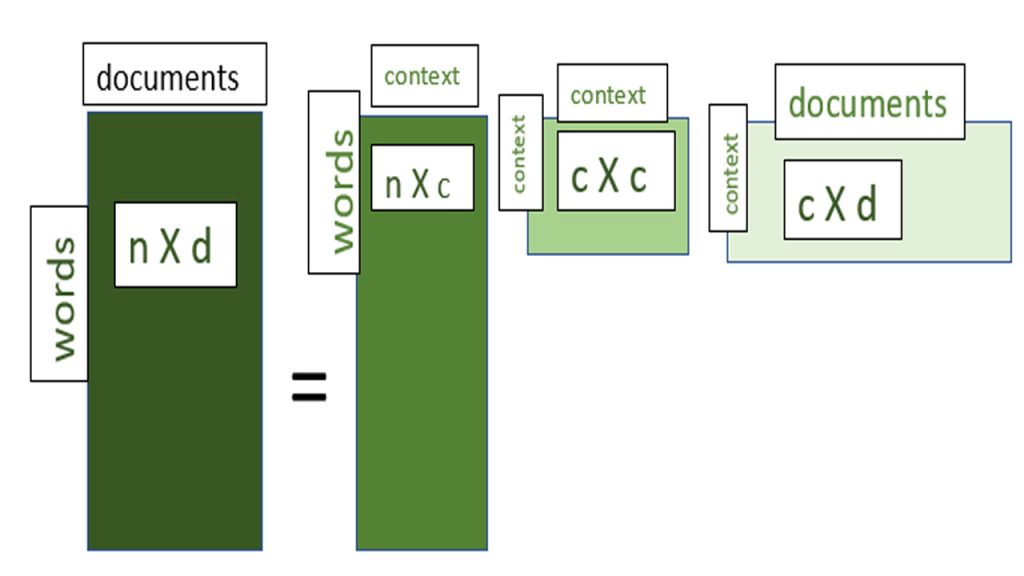
- Document-Term Matrix: This is the core form upon which LSA analysis is based. It captures term frequency across documents.
- Singular Value Decomposition (SVD): Dimensions within the document-term matrix are reduced by SVD, representing important relationships.
- Semantics: Relationships between words extend beyond direct matches and reveal more intrinsic meanings.
- Dimensionality Reduction: The technique reduces large datasets to highlight the most significant semantic patterns.
- Contextual Understanding: It explains terms concerning other contexts to improve the text’s understanding accuracy.
All these factors are important to ensure that businesses realize their latent Semantic Analysis potential and remain competitive in a market where insight into data is highly valued.
Some of the Key Issues in LSA
LSA helps other organisations, mainly those whose strategy is based on decision-making, resource allocation, and customer engagement. It helps businesses establish what lies at the core of the data and thus develops aligned strategies that support their goals and the market’s needs.
Superior Decision Making
- Data-driven insights: LSA allows the organisation to identify the dormant relationships between the terms, which enhances the decision-making process.
- Customer feedback analysis: With the use of LSA, a business can evaluate its strategies by tracing the customers’ sentiments, thus ensuring the provision of needs to the customers.
- Improved Forecasting: LSA helps to predict trends by analysing textual data.
- Strategic Planning: What LSA learns enables organisations to make strategic long-term planning and everyday operational decisions.
- Advenience over Competitions: Organisations use LSA to avoid the trend others cannot predict.
Now that the full form of LSA has been explained; businesses can focus on the ways in which it can be deployed to better advantage in making more effective, all-in-all decision-making processes.
Increased Efficiency in Cost through LSA
In the business world where cost-cutting remains the issue, LSA is very crucial because it helps minimize processes in an operation while ensuring proper resource allocation. It will help an organization avoid duplicated work to improve its efficiency in operations since overlaps are identified.
Cost-Saving Opportunities with LSA
- Streamlined Information Retrieval: LSA saves resources for the time taken to seek relevant data.
- Eliminated Redundancies: LSA eliminates unnecessary work since there are overlaps identified.
- Resource Allocation: It ensures that resources are always focused on the most valuable activities.
- Process Optimization: It identifies areas for improvement in the current workflows.
- Improved ROI: Helps increase return on investments by devising better strategies, a consequence of learning from LSA.
Incorporating Latent Semantic Analysis, companies can achieve cost efficiency, which goes on to help improve profitability and make business operations more sustainable.
How LSA Promotes Customer-Oriented Focus
Another significant implication of LSA is that it might help organizations focus on the requirements of customers through sentiment analysis and feedback analysis. Companies would gain a better understanding of what the customers want and make their efforts more focused, as per the preferences of the customers.
Using LSA for Better Customer Engagement:
- Sentiment Analysis: Analysis of customer reviews and feedback regarding trends and preferences.
- Targeted Marketing: It helps a business plan marketing campaignsdissonancee.
- Personalisation: With LSA, you can personalise product recommendations based on a customer is actions.
- Customer Satisfaction: It highlights points for better service towards the customer and provides a thorough improvement in overall satisfaction.
- Feedback Integration: This allows an organisation to update strategies continuously based on customer insight with LSA.
By carrying out content analysis, business houses can improve their strategies of customer engagement by keeping it in pace with consumer expectations.
LSA and Continuous Improvement
Businesses that are keen on staying competitive will require improvement to be continuous. LSA is easier to continuously optimize since it is data-driven and shall be used in informing strategy and identifying improvement areas. This ensures operations are reviewed in time to ensure business flexibility and agility.
Ways Towards Continuous Improvement:
- Continuous Review of Feedback Analysis: LSA will continuously review customer feedback concerning improvement points.
- Performance Monitoring: Identify and track performance measures to monitor LSA’sLSA’s impact on efficiency.
- Regular Review of Statistics: It monitors the consistency of strategies and helps maintain them according to changing circumstances.
- Flexibility: Flexibility within LSA helps a business revise its process based on changing situations in the market.
- Innovations: This kind of analysis leads to an innovative environment where organizations are prompted to explore new ideas within their grasp through deep insights drawn from the data.
A set of businesses developing a culture for change will be able to thrive well only when they share their corporate strategy with the help of Latent Semantic Analysis.
Strategic Management Through LSA
Good strategic planning is necessary for the survival of businesses in this fast-paced world. LSA aids in making such strategic planning for companies as it predicts trends, makes sense of consumer behavior, and creates long-term plans based on collected data insights.
LSA offers Key Contributions to Strategic Planning
- Trend Forecasting: LSA makes sense of newly emerging trends and market opportunities.
- Long-Term Decision-Making: It generates insights that provide information regarding product development and market expansion.
- Resource Optimization: Aids in optimising the use of resources to support strategic initiatives.
- Competitive Positioning: It ensures that the company is already ahead of its competitors due to timely insights into industry changes.
- Risk Management: LSA helps organisations anticipate potential risks by analysing data patterns.
Therefore, businesses can ensure informed, data-driven decisions that lead to sustainable growth and stick to strategic planning by using LSA’s full form.
Real-World Applications of LSA
LSA has been successfully applied to multiple industries to improve decision-making, content management, and customer satisfaction. Below are three case studies demonstrating the practical benefits of LSA.
1. E-commerce Platform
The E-commerce giant applied the idea of LSA to further analyze customer reviews and feedback. The analysis was useful for optimizing the inventory and marketing strategies designed based on the key themes and sentiments of customers. Out of this, the company achieved a 20% increase in sales in just one year.
- Customer Feedback Analysis: Explained customers’ preferences.
- Inventory Optimization: The company’s product offerings are aligned with customers’ demands.
- Increased Sales: Better decision-making translated into more targeted efforts.
- Enhanced Return on Investment: Efficient resource usage led to better financial results.
- Customer Satisfaction Increased: LSA supported them in shopping better.
2. Academic Research Institute
A college used LSA in helping them improve their digital library system. The documents were grouped based on relevance, therefore making related works easily accessible to researchers, leading to higher multi-disciplinary research collaboration.
- Enriched Information Retrieval: LSA provided scholarship with the opportunity to locate the most relevant information.
- Interdisciplinary Team Work: Introduced new interdepartmental interactions.
- Clustering of Content: The scholarly articles are clustered meaningfully.
- Lesser Time-Consuming: The hours it takes to search for research material are reduced.
- More Output of Research: More efficient research processes are provided through LSA.
3. Financial Services Company
A provider of financial services streamlined its process of client communication by using the application of LSA. In order to be better at its service provision, it assessed the questions and comments from clients with a view to improving its services. This process culminated in increasing satisfaction and retention rates of its clients.
- Improving responses to client queries: The company improved its ability to respond to client queries with the help of LSA.
- Improve service: The company would adjust its service options based on client feedback.
- Customer Retention: Client loyalty increased due to increased satisfaction rates.
- Operational Efficiency: The company streamlined processes, thus leading to shorter response times.
- Profit Growth: Better service helped with better retention and bottom lines.
The above case studies illustrate some tangible payoffs that Latent Semantic Analysis may bring to most sectors.
Final Thoughts
Latent Semantic Analysis, which would potentially be among the tools organizations might apply to improve data analysis, content management, and the decision-making process, enables businesses to make a step toward more efficient and cost-effective information retrieval by revealing a hidden relationship between terms and documents through meaning structures.
Key Takeaways:
- Information Decision Making: LSA yields data-driven insights that promote strategic decisions.
- Cost Efficiency: It streamlines and reduces redundant efforts.
- Increased Customer Centricity: Surveys of customer feedback make LSA ensure that the business remains up-to-date with the evolving needs of customers.
- Continuous Improvement: With LSA, businesses continue to optimise through time from time assessment and innovation.
- Strategic Advantage: With the inclusion of LSA within its planning, the business would not be lagging behind in this market and remain abreast with competitors.
Now is the time when businesses need to invest in LSA full form for operational success as well as overcome hurdles created by the persistently changing market.
]]>Ready to talk with a marketing expert?

A Pragmatic and innovative way to enthrall your target group is just a click away!
Get in Touch
Rukmini Knowledge Park, Kattigenahalli, SH 104, Srinivasa Nagar, Bengaluru, Karnataka 560064
+91-990 247 8800
contact@gingermediagroup.com
Popular in Television Advertising
Udaya TV AdvertisingSun TV AdvertisingStar Plus AdvertisingTV 9 AdvertisingZee TV AdvertisingNDTV India AdvertisingColors TV AdvertisingPopular in Airport Advertising
Spice Jet AdvertisingMumbai Airport AdvertisingDelhi Airport AdvertisingEmirites AdvertisingIndiGo Airlines Domestic India AdvertisingPopular in Newspaper Advertising
Deccan Herald AdvertisingPrajavani AdvertisingThe Hindu AdvertisingEconomic Times AdvertisingDainik Jagran AdvertisingHindustan Times AdvertisingPopular in Magazine Advertising
Forbes AdvertisingCosmopolitan AdvertisingBusiness World AdvertisingVogue Magazine AdvertisingPopular in Sports Advertising
IPL AdvertisingPopular in Outdoor Advertising
Billboard AdvertisingBus Shelter AdvertisingMetro Pillar AdvertisingUnipole Advertising© Ginger Media Group 2025. All Rights Reserved.