- Definition of outdoor advertising
- Purpose of outdoor advertising
- Why it matters for business purposes
- Examples in the real world that show why outdoor advertising is powerful
- How to successfully execute your campaigns
- Final thoughts on the full potential for outdoor advertising
Let’s step into the world of outdoor advertising examples and find their importance in modern marketing.
What Is Outdoor Advertising?

Outdoor advertising is any advertisement reaching consumers outside the walls of their home. It covers the most popular outdoor posters, including billboards, posters across bus shelters, and digital screens. Other forms of transit advertising include visible ones on buses, trains, or subway stations. Generally, outdoor advertisements are placed in prime locations to maximize visibility.
Key Characteristics of Outdoor Advertising
- Visibility: Outdoor ads are positioned at strategic locations that attract a large audience.
- Reach: It reaches consumers at the points of their daily activity. Therefore, it is likely to be most remembered.
- Creativity: Outdoor formats offer a vast canvas that can be used to create massive visuals that are striking.
- Different formats such as billboards, street furniture, and transit ads offer a lot of versatility.
- They often supplement digital campaigns in order to provide seamless brand experiences to consumers.
- It fulfills two missions that are crucial to an advertiser: building up the marketer’s brand image and prompting consumer action right away by grabbing the people’s attention at public areas.
Why Understanding Outdoor Advertising Matters for a Business
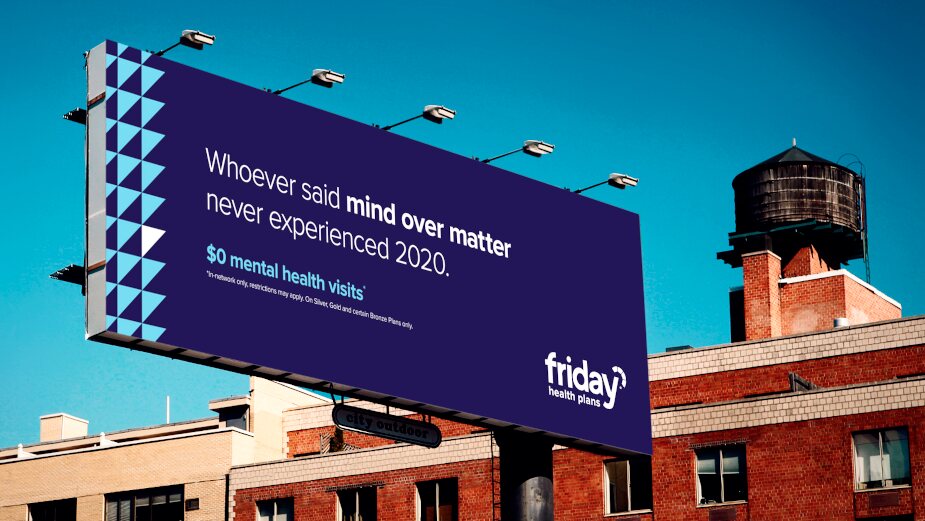
A business needs to stand out creatively in market competition today as it seeks to capture attention for its consumers. For example, outdoor advertising offers an excellent opportunity to stand out and have one’s brand placed in the minds of people.
Why should a business give much attention to outdoor advertising examples?
1. Higher Brand Visibility

Outdoor advertising provides unparalleled presence—the consumer is exposed to your advert outside his or her household in his or her natural environment. Whether it is a billboard on a busy highway or a transit ad in a bustling subway, outdoor advertising ensures that your brand will reach a great population.
- Reach maximization: Businesses get a chance to post their brand in highly trafficked areas.
- Recognition: Repetition of visuals drives brand recognition over time.
- Eye-catching visuals: At times, fantastic and innovative designs catch the eyeballs immediately.
- Sheer size: Advertisements outdoors mostly can offer great scopes for large format sizes so the message received will have an impact big time.
- Long-lasting impression: The people passing through are bound to remember due to the ad as they move ahead with their daily routine.
With these examples in place, brands can zero in on the right location and creative approach to garner the most attention.
2. Target Specific Demographics

The greatest benefit of out-of-home advertising is that it enables geographic and demographic targeting. Through savvy selection of location and time, brand messages can strike the desired target.
- Localized messaging: Every message may be primarily addressed to specific neighborhoods or territories.
- Demographic insight: Becoming aware of foot traffic demographics is an epiphany to strike the right cross-section, hence brands become all the more effective.
- Strategic locations: Advertising near shops, event premises, or transit centers may reach consumers better.
- Seasonal alignment: Outdoor advertising can be scheduled for seasons or events in which the message is likely to hold more importance.
- Behavioral targeting: Advertising near places of interest may generally cater to the habits and interests of a particular group.
Analysis of outdoor advertising examples enables businesses to find the right locations and tailor their campaign.
3. Ideas for Creativity

Out-of-home advertising is creative because the advertisements must be fast enough to catch a view. Inspiration from examples of outdoor ads gives businesses the motivation and leads them to stretch the bounds of creativity.
- Creative designs: Large-scale visuals can narrate a brand story or evoke emotions.
- Bold messages: The messages in outdoor ads must be simple and powerful enough to read in one’s time.
- Interactive elements: Some campaigns are integrated with QR codes or augmented reality to engage the passersby.
- Creative formats: There are digital screens, 3D elements, live installations, and so on, that can add a difference to outdoor advertisements.
- Team-up campaigns: Brands can get creative by collaborating with other brands or using cross-promotions.
How successful brands have creatively used outdoor advertising can help businesses devise campaigns that are more interesting.
4. Digital Campaign Integration
Outdoor advertising doesn’t have to stand alone. In fact, many companies mix their outdoor efforts with digital outreach, overall heightening reach and ensuring that the message makes a more significant impression across channels.
- Omnichannel marketing: The combination of out-of-home with digital marketing efforts creates an uninterrupted brand experience by channel.
- Hashtags and social media: Many out-of-home ads drive engagement on social media via specific hashtags.
- Mobile integration: Technologies with QR or NFC enable an individual to easily interact with advertisements using the cell phone.
- Cross-channel consistency: Consistency in messaging across outdoor media and digital outlets may be easier to leverage for the strengthening of brand recognition.
Also, the outdoor campaign will most likely get consumers onto the websites or social media pages, which in turn will enhance the reachability of the campaign.
By exploring examples of outdoor advertising that capture a seamless coexistence between the physical and the digital world, businesses can develop a coherent and effective strategy.
5. Impact Measurement and ROI

Excellent outdoor advertising campaigns will be highly innovative yet measurable as well. Analyzing case studies may help businesses understand how their campaigns would be tracked in terms of performance and returned on investment thereafter.
- Trackable results: Digital billboards and interactive ads will provide “live data” around engagement.
- Countable traffic: Companies will be aware of increased website traffic or foot traffic tied to their outdoor advertising effort.
- Analysis after the campaign: Campaign evaluation on outdoor advertising will ensure companies take lessons on future efforts.
- Informed campaign: Campaigns are created at times that will create an impression that is optimum in terms of audience behavior, ad placement, and formats.
- Long-term return on investment: There is a long-term impact on outdoor advertising as it influences the consumers much after the campaign is done.
With outdoor advertising examples, businesses might find ways to measure success for their campaigns and make decisions to improve their marketing efforts in the future.
Real-World Outdoor Advertising Examples
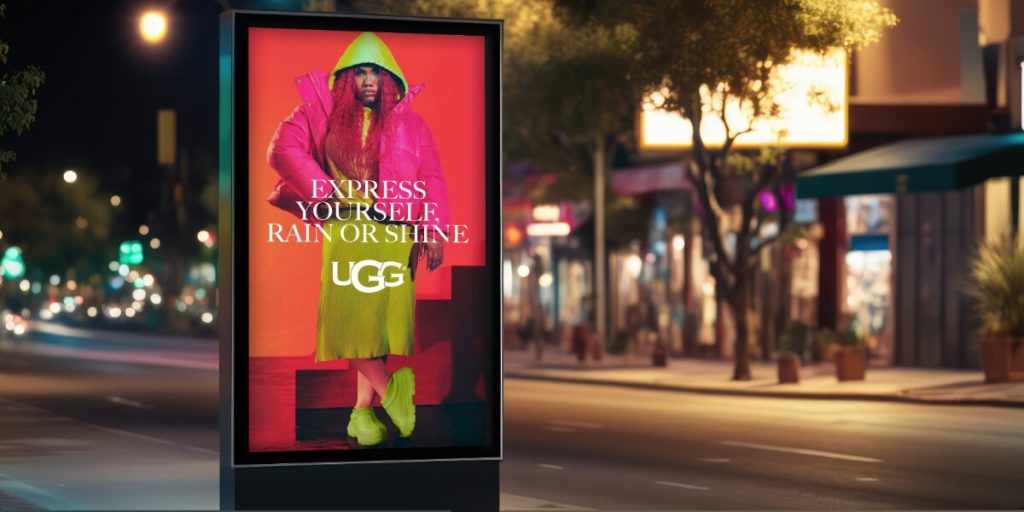
Let’s have some of the most notable examples of outdoor advertising campaigns that would really catch the attention of its target audience and spur brand engagement.
- Coca-Cola’s “Share a Coke” Campaign
Location: Worldwide
Description: Coca-Cola replaced its original logo with popular names on its bottles and extended the campaign on billboards. The personalization challenged people to “Share a Coke” with a friend whose name was on the bottle, and it caused a huge buzz.
Success: The brand engagement increased and recorded high sales growth. - McDonald’s Billboards
Location: Major highways
Description: Simple yet effective, McDonald’s billboards with its signature burger and fries. The idea is to attract the attention of passing car drivers and invite them for spontaneous visits to restaurants located at or near highways.
Success: Increased foot traffic at locations near highways. - Netflix’s “Stranger Things” Billboard
Location: Los Angeles
Description: In an attempt to get people excited about the fact that a new season of the show Stranger Things was coming out on Netflix, the company created a retro-style billboard that sent the crowd back into the 1980s. The campaign was going viral both online and offline.
Success: Spiking social media engagement and view on the television series. - Apple’s “Shot on iPhone”
Location: Cities around the globe
Description: Apple unveiled some amazing photographs taken with the iPhone on billboards in many countries. The campaign focused on the camera feature and also on the authenticity of the phone.
Success: Enhanced sales of iPhone and the confidence of consumers towards the product. - Spotify’s Hyper-Targeted Billboards
Location: Various cities
Description: Spotify utilized data regarding the playlists that its customers listened to, devising hyper-targeted billboards that reflected exactly what was listened to in each city, making this campaign feel hyper-relevant to every space.
Success: Increased user engagement and initiated conversations on Spotify’s innovative approach to outdoor advertisements.
These examples prove how impactful outdoor advertising can be when combined with creativity, strategic placement, and consumer involvement.
Final Thoughts
Outdoor advertisement is an important aspect of a marketing strategy where businesses are provided with a platform to enhance their visibility and engage with their target audiences while generating high brand awareness. As stated above through examples, a successful outdoor campaign is:
- With the advent of heavy traffic zones, visibility and impact.
- Creative design coupled with impactful messaging.
- Strategic placements in specific demographics.
- Integration with digital campaigns for a comprehensive brand experience.
- Measuring the impact and ROI and refining future campaigns.
By understanding outdoor advertisement examples with these strategies, businesses will be able to leverage this medium toward brand success.
]]>When a brand surpasses its marketing creativity, they create these tactics that they use to sell its product to the customer. Let us look at some brands who not only managed to surpass that creativity, but also turned their ideas into successful marketing campaigns, with superb imagination, and exact execution.
Here Are The 5 Examples Of Big Brands That Adopted New Marketing Trends
1. 5 Star and their Nothing Coins- Adopted New Marketing Trends
Envisioning a world, where you get awards for doing literally nothing, sounds unthinkable. Not any longer. With its all-new mission, Cadbury 5-star vows to give the clients exclusive rewards for sitting idle, or as they say, doing ‘nothing’.
Cadbury has forever been enthusiastic about executing innovative marketing techniques. Be it ‘Ramesh Suresh’ advertisements or its last brand campaign, where they needed us to do nothing.
However, this “no nothing” campaign backfired a little, there was this one comment that said, “if you do nothing all day, how will you earn?”
And, 5 stars came up with “nothing coins”!
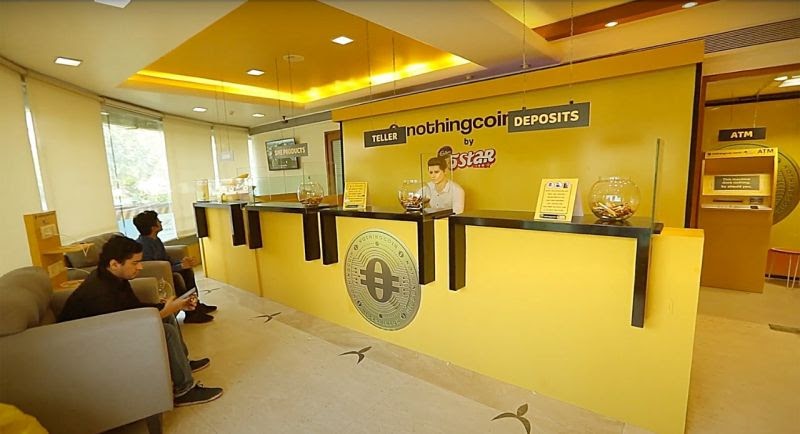
Nothing Coin is the Cadbury 5-star’s digital money. Clients can mine Nothing Coins by basically enrolling on the official site (selective for cell phones). Register yourself by filling in the necessary details. Once effectively enrolled, tap on the Start button. You want to not do anything on your phone to acquire Nothing Coins. Assuming you begin using your telephone for surfing or checking out pictures from your gallery, the mining consequently stops.
Although not genuine money, Nothing coins can be exchanged at elite 5-star digital shopping centres or be traded for Jio-mart vouchers. Indeed, they didn’t stop there. Cadbury ventured to such an extreme as to make their bank! Nothing Coin Bank sits directly before the SBI Headoffice, Nariman Point, Mumbai.
Without anyone else, the Nothing coin crusade appears to be encouraging. The tweets have begun coming in, and people are astonished by what Cadbury has sent off.
Notwithstanding encountering a reaction to its past ‘Do Nothing’ campaign, Cadbury’s 5-star has chosen to stay with it. Indeed, this time giving something as a trade-off for ‘doing nothing.
2. Flipkart and their Super Coins – Adopted New Marketing Trends
Flipkart Super Coins is what the e-commerce giant is calling, a “first of its kind rewards system as part of the Flipkart Plus program that can be used to redeem exciting rewards.” Basically, Flipkart awards you points, which can be redeemed on your next order, against vouchers, discounts on third-party websites, and a lot more.
Flipkart Super Coins are also different from reward programs by other merchants in the sense that they are not restricted to purchases on Flipkart. Flipkart SuperCoins can also be used to purchase OTT subscriptions, get flight discounts, book hotels, and order food, among others.
3. Grofers exploring DOOH advertising in Mumbai – Adopted New Marketing Trends
Grofers, an online delivery service, launched a first-of-its-kind in the industry, a digital out-of-home, or DOOH advertising.
Beginning with CSI Mumbai Airport, the campaign effectively presented DOOH screens as another environment for digital display advertising. In addition to the airport, they initiated campaigns reporting the Grand Orange Bag Day sale across the Mumbai railway and metro screens to target suburban workers. The organization’s data-driven way to deal with DOOH empowered online and offline behaviour experiences to be applied to the crowds that came to the Mumbai air terminal and across the city.
4. Shoppers Stop and their first VR dressing room
Each design addict’s fantasy is to take a stab at as many articles without undressing and dressing again to wear them all: dresses, shoes, accessories… envision you can see them on you just picking the ones you like from an inventory.
the new venture by Shoppers Stop, a retail company that includes 74 stores in various urban cities all over the nation and highlights additionally a major online presence. It’s most likely because of its adoration for the web and the virtual world, that the organization thought it was smart to make it easier for customers to pick items, giving them a shot virtually on account of augmented reality.
The framework is simple: you go into a changing area where there’s an expanded reality mirror, called “Magic Mirror”; through the mirror you can pick among 1500 items sold by the organization and in a second you can see them directly on you. You can likewise blend and match the items, wearing more than one at a time.
5. M&S Clothes running an exchange program
Tapping on the trend of sustainability, M&S accepts that old garments ought to have a future: they ought to be assembled for a decent goal and not simply tossed out. It is consequently requesting that its clients get their preloved attire of any brand to stores across India. In return, the clients will get an M&S voucher worth Rs 600 for their commitment.
The Clothes Exchange is intended to diminish the huge number and huge loads of clothing sent by people in general to landfills all over the planet every year. All the garments contributed will be reused and reused and not a single item will go to a landfill.
]]>Ready to talk with a marketing expert?

A Pragmatic and innovative way to enthrall your target group is just a click away!
Get in Touch
Rukmini Knowledge Park, Kattigenahalli, SH 104, Srinivasa Nagar, Bengaluru, Karnataka 560064
+91-990 247 8800
contact@gingermediagroup.com
Popular in Television Advertising
Udaya TV AdvertisingSun TV AdvertisingStar Plus AdvertisingTV 9 AdvertisingZee TV AdvertisingNDTV India AdvertisingColors TV AdvertisingPopular in Airport Advertising
Spice Jet AdvertisingMumbai Airport AdvertisingDelhi Airport AdvertisingEmirites AdvertisingIndiGo Airlines Domestic India AdvertisingPopular in Newspaper Advertising
Deccan Herald AdvertisingPrajavani AdvertisingThe Hindu AdvertisingEconomic Times AdvertisingDainik Jagran AdvertisingHindustan Times AdvertisingPopular in Magazine Advertising
Forbes AdvertisingCosmopolitan AdvertisingBusiness World AdvertisingVogue Magazine AdvertisingPopular in Sports Advertising
IPL AdvertisingPopular in Outdoor Advertising
Billboard AdvertisingBus Shelter AdvertisingMetro Pillar AdvertisingUnipole Advertising© Ginger Media Group 2025. All Rights Reserved.