Key Takeaways to Discuss in the Introduction:
- Creativity Catches the Eye: In the cacophony of multiple ads jostling for space in the media, creative content can bring a brand closer to its audience with one stroke.
- Cranks Up Emotional Connection: Creative campaigns elicit emotions and spark stronger connections between brands and consumers.
- Drives Brand Loyalty: Creative and engaging advertisements give confidence and create enduring loyalty.
- Provokes Action from Consumers: Creativity prompts consumers to interact, buy, and promote the brand.
- Keeping Pace with Market Trends: Creativity enables brands to be current by adjusting to changes in consumer lifestyle and trends.
What Is Creativity in Advertising?

Creativity is the backbone of successful advertising. It implies creating distinctive ideas that spark real, authentic feelings among consumers, not just mundane messages. The creativity in advertisement is different from the look-and-feel or the catchphrase. It is originality and storytelling. According to some studies published in Journal of Advertising Research, the most creative ads will likely reach the consumer’s recall and attention. Campaigns by Apple and Nike are the best examples of great creativity in forming memorable relations with consumers.
Key Elements of Creativity in Ads:
- Originality: Creativity refers to the generation of new, even bizarre ideas different from those reflected in any other brand.
- Explanation: Original content stands out in an otherwise cluttered marketplace and produces a deep impression on consumers and maximizes brand recall.
- Appeal to Emotions: The telling of emotional stories can facilitate an appeal to consumers’ emotions.
- Explanation: Tapping into people’s happiness, nostalgia, or empathy, creative ads help brands strike an effective relationship with their audience.
- Storytelling: Story-based advertisements hold depth and a sense behind the campaign.
- Explanation: Storytelling informs the customer of the values and mission behind the brand, so that he will believe and stick to the brand.
- Visual Communication: Beautiful visuals or smart graphics can powerfully express the message creatively.
- Explanation: Innovative visualization can catch the viewer’s attention and stands to say the message as short as possible while the message leaves a strong, long impression in the minds of the customers.
- Humor and Amusement: The consumers are likely to forward and remember more amusing and entertaining advertisements.
- Explanation: Something that makes one laugh is fantastic. Ads are made more enjoyable, therefore have a higher engagement which particularly in social media sites where the owners are sharing the contents because they think them funny.
The Elbow Room Between Creativity and Strategy
While creativity is paramount, it has to be aligned with strategic goals in order for the campaign to pay off. Creativity without strategy is useless, just like understanding the target market, brand goals, and market trends itself. An example would be Dove’s “Real Beauty” campaign, which creatively tackles societal standards of beauty to align with the core message of the brand. These strategic creative efforts helped propel them to drive sales and strengthen their brand.
Creativity vs. Strategy:
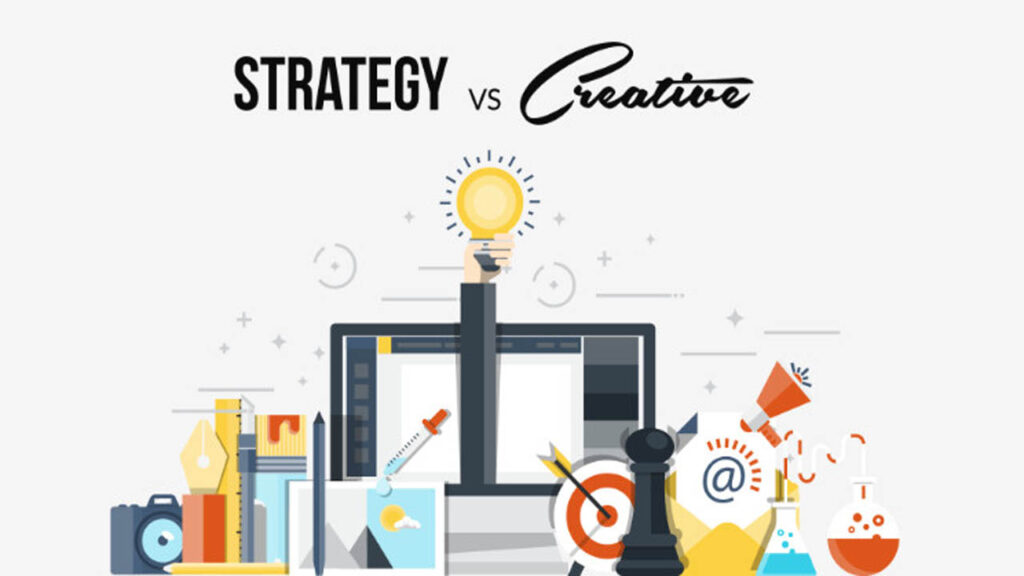
- Knowledge of Targeted Audience: The creative idea needs to strike a chord within the anticipated audience.
- Explanation: Knowing the demographics, preference, and behavior of the audience are important factors in devising creative campaigns that strike a chord with that group of people.
- Alignment with Brand Values: Innovative messaging needs to be sympathetic to the type of values from which the brand draws its central ideologies.
- Explanation: While an advertisement can be innovative, it should not lose its relevance because the brand operates on some kind of a mission and identity framework, thus giving it a clear message.
- Market Trends: The creativity must have a reflection on the current trends prevailing in the markets.
- Explanation: The use of market research would have let the advertisers take their creativity to markets at the right time and with an opportunity to acquire an evolutionary interest of the consumer.
- Goal-Oriented Creativity: The creative of the campaign must be aligned in support with business objectives.
- Explanation: Branding, customer interaction, or sales must be brought along with a cause or desired result in the creative advertisements.
- Measure Creativity: The refinements come in measuring creative ideas where creative works must be analyzed for effectiveness.
- Explanation: Creative campaigns have to include success measurements such as engagement rates, brand lift, and conversion to ensure creativity yields tangible business results.
The Future of Creativity in Advertising

As technology improves, so also is the advertising landscape changing. Therefore, there are quite many avenues for creativity that keep emerging in the field. The new trends include personalized advertising, augmented reality, and artificial intelligence that change the way brands interact with their consumers. For example, AR helps the consumer engage with products advertised through it, making advertisements very interactive and memorable. However, as campaigns rely so much on the use of these new technologies, they have to be intelligent in ensuring that their campaigns are genuine and interesting to consumers.
Evolving Trends in Creative Advertising:
- Customer-Centric Advertising: The usage of data to design targeted ads increases consumer involvement.
- Explanation: Personalized ads are often more relatable to consumers, and thus this can lead to a higher probability of engagement and conversion.
- Augmented Reality (AR): AR is an innovative opportunity for brands to interact with their audience through virtual, interactive experiences.
- Explanation: Experience through AR campaigns: Consumers have the ability to experience and engage with products in a light-hearted, fun, interactive way, opening up possibilities in advertising in a whole new way.
- Artificial Intelligence (AI): AI will be used to enhance ad targeting and campaign efficiency.
- Explanation: Brands will reach audiences more accurately with more data backing up the ads through the aid of AI. Satisfying consumer needs better, the creative process gets better at producing better results.
- Authenticity in High-Tech Campaigns: Authenticity in the High-Tech Campaign.
- Explanation: Admittedly, although having integrated new technologies into their campaigns, brands ought to stay authentic to their values as well as messaging in order to stay in the consumers’ hearts.
- Consumer Feedback in Creativity: Involving Consumers in the Creative Process.
- Explanation: By involving consumers in the creative process, brands may come closer to achieving their expectations.
Final Thoughts: The Role of Creativity in Advertising
Today, creativity becomes part of the important elements in the world of advertising. It grabs the attention of people, forms emotional attachment, and boosts brand loyalty in the saturated marketplace. Even though creative expression allows marketers to stand out with their brand, develop connections that really matter to consumers, and eventually stimulate calls for action. Additionally, while technology changes its role in the advertising industry, it is only through creativity that authentic yet appealing and successful campaigns are bound to be developed.
Key Importance of Creativity in Advertising:
- Captivates Audience Attention: Creativity cuts through the noise and grabs the attention of a consumer in a cluttered marketplace.
- Explanation: Since the creative content is unique and innovative, it has more chances of grabbing one’s attention and sustaining in the minds of consumers, thus achieving higher engagement.
- Builds Emotional Connections: Creative storytelling creates a very strong emotional relationship with the audience.
- Explanation: Emotions are involved in decision-making. Emotional appeals such as feelings of joy, nostalgia, or sympathy strengthen the connections between the customer and the brand.
- It Facilitates Brand Differentiation: Creative advertising enables brands to differ from other brands.
- Explanation: Brands that employ creativity can attract more market share and customer loyalty in a highly competitive market.
- Increases Consumer Engagement: Creative adverts enable consumers to not only participate in the content but also to share the same.
- Explanation: For example, creative work can lead to much higher engagement rates since most consumers like to share funny or thought-provoking advertisements, thus increasing brand awareness.
- Drives Results: Creativity ultimately drives better campaign performances and outcomes.
- Explanation: Creative ads often tend to drive higher conversions, sales, and overall brand success because of their appeal to an audience.
In today’s competitive marketplace, the characteristics of advertisements are useful and essential for businesses that hope to make an impression and engage their customers. Advertising is much more than just another sale. It is a clever mix of creativity, psychological insight into the consumers’ minds, and emotional appeal to them. As companies scurry for consumer attention, these characteristics should form part of a critical foundation for developing powerfully effective advertising strategies.
Here’s why knowing the characteristics of advertising is pretty important today:

- Engagement of Consumers:
The suitable ads stimulate interest, compelling people to talk and share with social media. - Defining Brand Identity:
Strong advertisement helps build a brand’s identity and distinguishes it from competitors.
A well-crafted advertisement can communicate an idea explaining a brand’s values, mission, and USPs. - More Sales Conversion:
In most cases, well-designed ads result in higher conversion rates and revenue.
Advertisements build urgency that makes the consumer behave or act for buying or subscription to a service. - Social Presence and Reputation Management:
Advertising has become an important tool for managing and establishing a business’s social presence in today’s digital world.
Strategic advertising is used to develop a good brand reputation, which may create loyalty and advocacy for the brand in the market. - Adaptation with Trends and Consumer Behaviour:
Knowledge of advertising features empowers companies to be sensitive to changing trends, consumer behaviour, and technological times.
Data analytics and market research enable brands to develop campaigns that speak directly to the target audience. - Communication of Value Propositions:
Advertising acts as a medium where value propositions for products or services are made visible.
A well-executed advertisement strategy may help consumers feel their questions are answered and alleviate concerns so that they can better understand the purchase. - Influencing Purchase Decisions:
Advertising is crucial in changing attitudes and perceptions, leading them towards purchase.
A well-written message can make people feel, believe, and act accordingly. Hence, advertising has become an essential tool in marketing.
Characteristics of Effective Advertising

As we go on reading this blog on advertising, it will address most of the following key points:
- Characteristics of effective advertising
- Storytelling in grabbing the audience’s notice
- Emotional appeals as decision-makers for consumer behaviour
- Clarity and Brevity in Communication
Did you know that 73% of consumers have had an adverse reaction to an ad due to lack of relevance? Let’s discuss the essential characteristics that make advertising effective and critical to any successful marketing campaign.
1. Purposeful Message
Advertising is deliberately designed by themselves. Each advertisement is intended for a particular purpose, aimed at achieving specific goals:
- Sales generation:
Most advertisements are designed to induce prompt purchases.
Certain CTAs encourage potential buyers to “buy now” or “act fast.” - Awareness creation for a product, service, or brand:
Advertisements bring awareness of the product, service, or brand available to prospects.
The advertisements help prospects learn what they possess as alternatives. - Knowledge Power:
Some ads educate the consumers about the new products, features, or benefits.
Ensures the target audience understands what is on offer and how it resolves their needs.
2. Target Audience Focus

Good advertising acknowledges that all consumers are not the same—customer messages need to be targeted towards specific groups:
- Demographic Targeting:
Sometimes, advertisements are crafted for particular demographics based on age, gender, income brackets, and geographical area.
The more focused the message becomes, the more the relevant group hears it. - Psychographic Profiling:
Good advertising considers the kind of interests, attitudes, and lifestyles the target audience may have.
Messages are developed based on their interests and habits. - Behavioural Segmentation:
Analysis of behaviour and purchase history further specifies the message.
Targeted and relevant ads enhance the chances of getting high-engaged views.
3. Creativity and Innovation

In a competitive marketplace, advertising alone and creativity are everything. Creative ideas catch consumers’ eye and also create an impression that the advertisement is remembered:
- Visual Attraction:
Attractive images and exciting visuals are vital things for viewer attraction.
Different colours, typography, and images capture the feelings of the viewer. - Storytelling:
Creative storytelling creates engagement and loyalty.
Successful advertising integrates stories the consumer will recall. - Humor and Emotion:
Using humour or “emotional” content makes an ad more memorable.
Tugging at emotions allows a brand to connect on a human level, building better memory and recall.
4. Channels and Mediums Diversification

Advertising approaches and mediums are diverse to reach out to its audience, so is each of them used for:
- Digital Advertising:
Nowadays, the foundation from the bottom of the funnel, social media, search engines, and websites are at the centre of all advertising strategies.
Internet ads are interactive and measured in real-time. - Print Advertising:
Newspapers, magazines, booklets, and fliers can still work well with regional markets.
Print advertising may provide tangible imagery that some customers will enjoy. - Broadcast Advertising:
TV and radio advertising can still be a mass-reach vehicle.
Both deliver the ability to communicate to a mass audience and often carry an air of credibility.
5. Measurement and Analytics

A data-driven society calls for measuring an advertisement campaign’s effectiveness in the present day. Businesses have been making investments in analytics to understand the return they get on such investments:
- Performance Metrics:
Return on investment (ROI), click-through rates (CTR), and conversion rates are metrics that help marketers understand a campaign’s efficiency. - Consumer Insights:
Data Collection tools provide insights into the preferences and behaviour of consumers.
Brands can now focus on perfecting the advertising strategy to get better results. - A/B Testing:
This method relies on comparing two versions of an ad to determine which performs better.
Data-driven decision-making leads to more optimised advertising strategies.
6. Consistency and Brand Voice
A good campaign should cultivate consistency and maintain the voice of the brand across all media:
- Brand Identity:
Each advertisement should relate to the core message of a specific brand’s values and personality.
A constant visual and verbal image makes consumers believe and trust. - Message Repetition:
Consistent exposure to a consistent message brands identify with.
Greater consumer awareness and remembrance occur through consistent communication. - Cross-Promotional Activities:
Incorporating advertisements into various media ensures the delivery of the same message about the brand.
Has a more significant impact and meaning.
7. Adherence to Regulatory Frameworks
Advertisements are subjected to several legislations and regulations through which the ethical messages are maintained:
- Advertisement Truthfulness:
Advertisements should not mislead or lie.
There should not be false statements or advertisements regarding the brands’ products or services. - Cultural Sensitivity:
Understanding and being sensitive to cultures does not make one suffer a backlash.
Messages in advertisements should not be hurting communities or demeaning them. - Data Privacy:
Using people’s data for digital advertising demands much stricter regulations, such as GDPR.
Keeping consumers’ information confidential is the most authentic way to build trust.
8. Flexibility

Gone are the days when advertising was merely a matter of stick and dough. The growth of advertising has to keep changing the guard to keep pace with the ever-changing world of trends and consumer behaviour:
- Trend Analysis:
Advertisements should be able to incorporate and adapt to the latest trends.
This keeps them relevant in the minds of the consumers. - Integration of Technology:
It can adopt technologies such as artificial intelligence (AI) and machine learning to enhance ad targeting and the overall effectiveness of the campaign. - Feedback Loops:
The mechanisms through which it can collect consumer feedback on the brand side would determine the changes in strategy.
Fast adjustments driven by an audience’s responses lead to effective outcomes.
Final Thoughts
In conclusion, understanding the nature of advertising is crucial for anyone navigating the marketing jungle. Below are the seven essential traits that make any advertisement effective: clarity, persuasion, relevance, creativity, emotion, consistency, and targeting. While these characteristics ensure an ad reaches people and affects them, each has an important role to play.
- Clarity:
Clarity is the first key to reaching an audience without affecting them. An advertisement might be handed over to the audience, but it wouldn’t affect people if its message is hazy and unclear.
Gives a clear understanding of the product or service being offered.
A straightforward message attracts attention and leads to higher engagement. - The Emotion Factor:
Relates the consumer to the brands.
Emotive adverts are more effective for memorable experiences that have higher loyalty levels. - Right Audience:
Success in advertising revolves around reaching the right target audience.
Message tailoring will likely lead to more excellent application, effectiveness, and return on investment.
As we take our steps forward in the world of fast movement and technology, we will consider all these elements of profile that help improve advertising strategies and enable businesses to create campaigns that are really meaningful to their target audience. Advertisements lean on these core features to promote enduring connections with consumers and boost sustainable growth for brands.
]]>Ready to talk with a marketing expert?

A Pragmatic and innovative way to enthrall your target group is just a click away!
Get in Touch
Rukmini Knowledge Park, Kattigenahalli, SH 104, Srinivasa Nagar, Bengaluru, Karnataka 560064
+91-990 247 8800
contact@gingermediagroup.com
Popular in Television Advertising
Udaya TV AdvertisingSun TV AdvertisingStar Plus AdvertisingTV 9 AdvertisingZee TV AdvertisingNDTV India AdvertisingColors TV AdvertisingPopular in Airport Advertising
Spice Jet AdvertisingMumbai Airport AdvertisingDelhi Airport AdvertisingEmirites AdvertisingIndiGo Airlines Domestic India AdvertisingPopular in Newspaper Advertising
Deccan Herald AdvertisingPrajavani AdvertisingThe Hindu AdvertisingEconomic Times AdvertisingDainik Jagran AdvertisingHindustan Times AdvertisingPopular in Magazine Advertising
Forbes AdvertisingCosmopolitan AdvertisingBusiness World AdvertisingVogue Magazine AdvertisingPopular in Sports Advertising
IPL AdvertisingPopular in Outdoor Advertising
Billboard AdvertisingBus Shelter AdvertisingMetro Pillar AdvertisingUnipole Advertising© Ginger Media Group 2025. All Rights Reserved.