Key Aspects of PPC
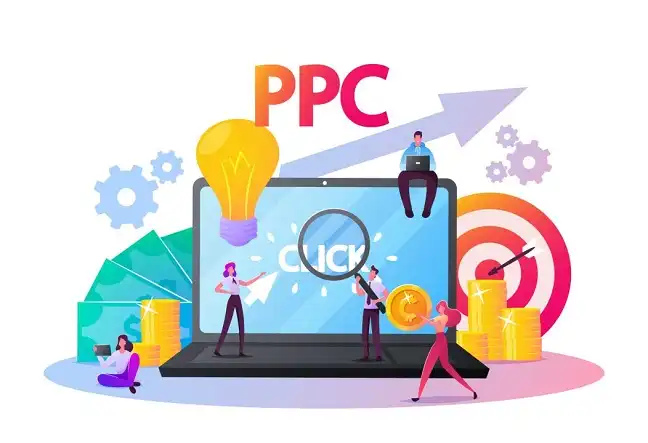
- Enhanced Decisions: PPC campaigns provide critical insights and data analytics, allowing businesses to make well-informed decisions about their marketing strategy and budget allocation.
- Cost Efficiency: PPC organisations can identify potential saving areas and spend smartly by fine-tuning bids and focusing on a high-value keyword.
- Improved Customer Focus: PPC ensures that marketing activities are aligned with customer value, prioritising ads that resonate with target audiences and drive conversions.
- Continuous Improvement: This model encourages ongoing review and adjustment of strategies so businesses can perfect their campaigns by assessing performance metrics against the flux in market dynamics.
- Strategic Planning: PPC maintains better prediction and long-range planning through real-time information related to the customer’s behaviour and market trends.
Uncover principles of PPC and their significance in modern business practice. Look for ways organisations can take full potential from leveraging an improved online presence and growth. Discover valuable information and practical steps to include PPC in your business strategy.
What is PPC?
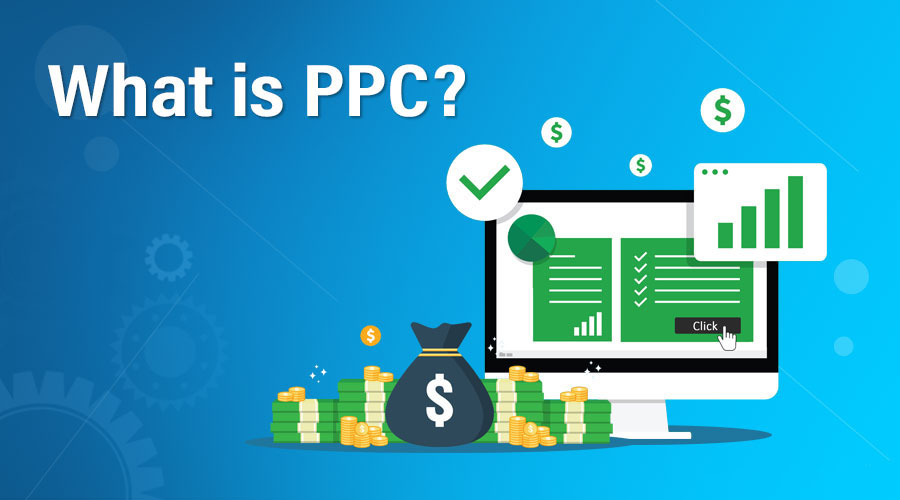
PPC, or Pay-Per-Click, is a web marketing strategy in which the advertiser pays a sum for every click of their ads. The central concept of the method revolves around buying visits to a website instead of earning through SEO. Organisations can immediately reach their target audience by identifying relevant keywords, driving traffic to their site, and eventually increasing conversions.
Critical Elements of PPC:
- Keywords:
Keywords are the backbone of any PPC campaign. They determine which searches trigger an ad to appear. Choosing the right keywords requires extreme care because they influence a campaign’s visibility and cost efficiency. - Ad Copy:
AAd copy consists of the message and creative elements shown in the ad. Good copywriting of attractive, relevant ad copy is essential to grab users’ attention and increase click-through rates. - Landing Pages:
It is to the landing page that the user goes through after clicking on the advert. A well-optimized landing page that aligns with the ad’s message and does not disrupt the user experience can maximize conversions.
Benefits of PPC:
- Better Decision-Making:
PPC campaigns provide instant insight into user behaviour and campaign performance. Such advertisers make relevant decisions based on metrics like click-through rates, conversion rates, or even return on ad spend. For example, if a keyword is not converting, changes can be made quickly to optimise the campaign. - Cost Effectiveness:
As an advertising strategy, PPC pays only when the intended user engages with the ad, making it relatively cost-effective. It allows for proper strategic budget distribution toward high-performance keywords and ads to ensure improved usage of marketing resources. - Improved Communication and Coordination:
PPC campaigns very often improve internal communication among marketing teams. Shared platforms and campaign dashboards that monitor performance result in information sharing and transparency, making the campaign cohesive.
Core Principles of PPC
- Focus on Activities:
Understanding specific activities that drive user engagement, such as keyword selection and ad placement, is vital for a successful PPC campaign. - Associating Activities with Costs:
The cost made by each activity is critical in PPC. It is determined by the cost per click that such organisations incur using various keywords, hence spending their resources effectively. - Continuous Improvement:
In PPC, ongoing assessment and optimisation are necessary. Regularly reviewing campaign performance and making data-driven adjustments can significantly improve results.
Steps to Implement PPC
- Discuss Current Activities:
Analyse existing digital marketing practices and indicate how PPC can complement these activities. - Create Cost Drivers:
Determine which factors contribute to click costs, including competition over specific keywords and ad quality scores. - Implement Performance Metrics:
All performance metrics like click-through rate, conversion rate, and cost per acquisition should be tracked in detail. - Engage Employees:
Involve the relevant team members in planning and implementing the campaign; that way, all aspects will be considered, and strategies will align. - Leverage Technology:
Utilise tools and platforms such as Google Ads and analytics software to optimise ad performance and targeting.
Real Examples of PPC
- Amazon:
It is doing the same today as Amazon. It also utilises PPC to its benefit, running targeted advertisements based on user searches to achieve higher visibility in the market and boost sales. - Zocdoc:
Zocdoc is an online medical appointment booking platform. It used PPC to attract users who wanted to find healthcare providers. Targeted keyword campaigns greatly increased its user base and appointment bookings. - Airbnb:
AirBnB was using PPC advertising to capture traveller leads searching for rental accommodations. With targeted campaigns, the travel company saw more bookings, thus showing that its strategic PPC efforts were practical.
By adopting these principles and strategies, organisations can maximise the value of their PPC campaigns, drive traffic, and achieve business goals efficiently.
Finding the Meaning of PPC Full Form and Importance
The general form of PPC and its importance for businesses working to enhance their marketing are pretty vital. PPC stands for Pay-Per-Click. This term embodies the nature of the cost structure of the ad model-it is only paid for when a person clicks on an ad. This strategy enables a direct measure of marketing effectiveness and allows people to manage their budgets.
The Why of PPC in Digital Marketing
- Cost Control:
One of the leading advantages of PPC is that advertising costs can be controlled. Businesses can set a daily budget, decide how much to bid on, and even set a spending allowance for whatever performance metrics they choose. Such flexibility means that marketing spending is optimised and better planned financially. - Immediate Results:
PPC campaigns can deliver results quickly, whereas natural search strategies take at least months to fully integrate. This would allow business owners to analyse and run their marketing fast. - Increased Brand Visibility:
This enables businesses to have more visibility on search engines and various social media platforms for their ad and targets them towards the end-user, thereby increasing brand awareness through recognition in the marketplace.
How PPC Works
- Auction System:
PPC operates on an auction system where advertisers bid on keywords relevant to their business; e bid am unt, and quality scores are determined by search engine results pages (SERPs). - Target Options:
PPC provides various targeting options, such as demographic, geographic, and behavioural. This ensures that advertisers can target specific audience groups and reach the right people with their messages. - Performance Monitoring:
PPC allows for good tracking capabilities so advertisers can track KPIs, such as CTR, conversion rates, and CPC. These numbers enable them to optimise their campaigns and improve their marketing strategy.
Common PPC Platforms
- Google Adwords:
However, the largest and most popular PPC network is Google Ads, which enables advertisers to post their ads on Google results pages and across its massive display network. - Bing Ads:
Bing Ads is almost identical to Google Ads but delivers its products to the Bing search engine. This offers an excellent opportunity to reach a different audience and perhaps at a lower cost. - Facebook Ads:
With Facebook Ads, businesses can create targeted advertising campaigns on one of the most popular social media platforms, targeting users based on their interests, behaviours, and demographics.
PPC Campaign Best Practices
- Keyword Research:
Simply spend a reasonable amount of time researching the keywords to uncover high-value keywords relevant to your business goals. - Ads Testing:
You should regularly test different ad copies, headlines, and formats to determine what appeals to your audience and improves performance. - Landing Page Optimization:
Your landing pages must be conversion-optimized, closely corresponding to your ad messages and offering a smooth user experience.
Understanding the complete form of PPC and its importance in digital marketing helps companies use this powerful tool to drive targeted traffic, develop brand visibility, and finally meet their marketing objectives.
Unlocking PPC Full Form for Your Marketing Strategy
PPC is not just a buzzword in digital marketing; it’s a fundamental strategy that can unlock new avenues of growth and engagement. In this age of centrality for online visibility, knowledge of when and how to implement PPC will make the difference between a business and its competitors.
Building a Successful PPC Strategy
- Define Goals:
Before launching a PPC campaign, clearly defining your goals is crucial. Whether you’re increasing website traffic, generating leads, or boosting sales, having specific objectives will guide your campaign strategy and measurement. - Target Audience Analysis:
Understanding the target audience is vital to a successful PPC campaign. Research demographics, interests, and online behaviours to create a message to achieve maximum outreach through ads. - Budget Distribution:
Effective budget allocation is essential for PPC success. Determine how much you’re willing to spend daily or monthly and allocate your budget based on campaign performance and return on investment (ROI). - Monitor and Calibrate Your Campaigns:
- Performance Analysis:
Use analytics tools to monitor your PPC campaign performance regularly. Track metrics like CTR, conversion rates, and CPC to understand what’s working and what’s not. - A/B Testing:
Use A/B testing to test variations in ad copies, formats, and targeting options. This is useful in identifying winning elements that help optimise overall campaign performance. a - Bid Management:
Adjust bids based on keyword performance and competition. Increase bids for high-performing keywords to maximise visibility and reduce bids for underperforming ones to control costs.
- Performance Analysis:
PPC Management Issues and Solutions
- High Competition:
Thus, due to the competitiveness of many industries, competitive bidding for keywords may raise a company’s cost, and long-tail keywords may fill in the gap. End. - Ad Fatigue:
Eventually, viewers become accustomed to advertisements, which reduces the potential interaction. To avoid ad fatigue, constantly replace your ad copy, image, and targeting strategies. - Complexity Tracking:
Tracking conversions and ROI takes a lot of work. Conversion tracking codes and tools will make it easier to obtain more detailed campaign performance information.
The Future of PPC
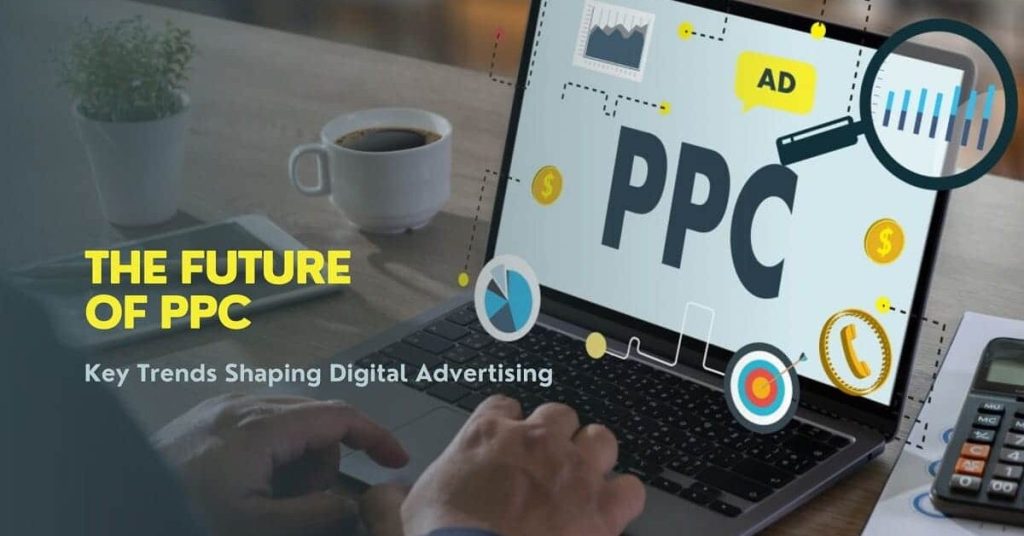
The digital landscape constantly evolves, and PPC strategies must keep pace. New technologies like AI and machine learning are changing how advertisers approach PPC, allowing for better-focused targeting and automated bid management. Moreover, with the constant changes in consumer behaviours, there will be a need to stay updated on trends to ensure that PPC campaigns are effective.
PPC has the potential to open up marketing strategies so that businesses can drive targeted traffic that is also measurable.
PPC is an Inalienable Approach for Organizations Which Are Keen on Improving Their Online Presence and Increasing Revenues
Acquiring an integral understanding of digital advertising strategies, proper marketing resource allocation, and continuous improvement may open tremendous potential within operational processes and decision-making strategies. Increasing market pressure and competition will probably become the nucleus of well-managed practices.
Final Thoughts
The incorporation of PPC principles in your organisation engenders many benefits:
- Increased Website Traffic:
PPC campaigns generate traffic to your website with incredible velocity, which increases your view among customers. - Target Audience Reach:
With the options you get through precise targeting, you can reach a possible audience while advertising. - Measurable ROI:
PPC can effectively track your marketing performance, allowing you to measure your return on investment for ad spending and adjust accordingly.
It’s the perfect time to take up PPC advertising and discover the holistic changes it can bring to your organisation. Optimise your digital strategy by taking the first step today!
]]>Tea or coffee?
Were Ross and Rachel on a break?
These are some tough questions. And will remain debatable.
Similarly, in marketing, there exists a question that is similarly debatable.
Facebook ads or SEM marketing? Which is better?
And the ultimate question of where to put your money?
However, who is correct?
The response truly comes down to what we call “purchase intent”.
Do we need to think about our outlook when we Google something versus our intent when we are on Facebook? For instance, assume you are away and searching for a fine dining restaurant, would you go on Facebook or Google? Eateries, hairdressers, coffeehouses, and so forth would improve SEM more than Facebook because they’re “search-based” organizations versus “display-based”.
What is SEM Marketing?
Search engine marketing, or SEM, is perhaps the best method for developing your business in an increasingly cutthroat commercial place. With many organizations out there all competing for similar eyeballs, it’s never been more crucial to publicize on the web, and search engine marketing is the best method for promoting your items and developing your business.
Search engine marketing’s biggest strength is that the advertisement is shown to people who are looking to buy that product and are highly motivated to do the same. They are ready to buy at that precise moment.
This is exactly why search engine marketing has such amazing results on its side and can make your business grow manifold.

What Are Facebook Ads?
It’s difficult to look past Facebook’s scope. With almost 3 billion active users, that is a ton of individuals seeing Facebook promotions every day.
We’re always talking about being targeted with your marketing though, so reach is just one part of the equation. Effective advertising doesn’t reach everybody, it contacts the ideal individuals, and this is the place where Facebook is amazingly helpful.
For detailed targeting, Facebook is almost unparalleled. It knows such a great amount of information about its users, and this data assists advertisers with contacting the right users with the right message.
Advantages of SEM Marketing and Facebook Ads?
Let us look at the advantages of these two more specifically
SEM marketing
- High purchase intent (people are looking for the product to buy)
- Cheaper costs per purchase (because of the higher purchase intent)
- Search-based (users looking for you).
Facebook Ads
- Hyper targeting (the ability to target is unmatched)
- Closed Loop: It’s all in one place. You see the ad; you click through; you buy. All within the app. It’s native.
- User base frame of mind: If your ads are compelling, you’ll do well because users go on Facebook to be entertained
Cases When SEM Marketing May Be a Better Option For You
What do you want to achieve?
If the answer is quick sales, then probably SEM is a better option. Let us take an example of an ad for a gym.
Here, this ad will be seen by people who are already looking for and searching to join a gym. This part makes the campaign more relevant because it showed the ad to people looking for something similar, therefore they have the potential to buy at that second
Think about it, you would search ‘gyms near me’ or ‘best gym membership deals’ on Google and not on Facebook right?
Cases When Facebook Ads Marketing May Be a Better Option For You
If you are looking for brand awareness, recognition, and a wider audience, then Facebook ads would be a better option. The audience will look at your ad if it is entertaining enough, that’s the reason people come on Facebook, right?
Take an example of Adidas ‘run for the oceans’ campaign. This particular event was popularized via Facebook. They had compelling pictures and they used social media to make sure that their campaign gained momentum.
Now again, think of the scenario. If you didn’t know about this campaign, you would never google it right (like the gym membership example above)
In this case, Facebook works the best. It creates a buzz and gets people talking about a particular topic.
Which is Better Facebook Ads or SEM Marketing?
Both Google Ads and Facebook Ads are extraordinarily strong promoting platforms that cater to basically every kind of business. While assessing every arrangement’s assets and potential applications, it’s also obvious that the two stages ought to be seen in a complementary way, rather than the indifferent ‘this vs that’ way.
Certain people demand contrasting Facebook Ads with the Google Display Network and keeping in mind that the two stages share a few similarities, the manners by which the two stages have developed independently of each other shows that Google and Facebook ought to be utilized together, not in opposition.
Need more help advertising your B2C brand? Contact us at +91 990 247 8800
]]>Ready to talk with a marketing expert?
A Pragmatic and innovative way to enthrall your target group is just a click away!
Get in Touch
Rukmini Knowledge Park, Kattigenahalli, SH 104, Srinivasa Nagar, Bengaluru, Karnataka 560064
+91-990 247 8800
contact@gingermediagroup.com
Popular in Television Advertising
Udaya TV AdvertisingSun TV AdvertisingStar Plus AdvertisingTV 9 AdvertisingZee TV AdvertisingNDTV India AdvertisingColors TV AdvertisingPopular in Airport Advertising
Spice Jet AdvertisingMumbai Airport AdvertisingDelhi Airport AdvertisingEmirites AdvertisingIndiGo Airlines Domestic India AdvertisingPopular in Newspaper Advertising
Deccan Herald AdvertisingPrajavani AdvertisingThe Hindu AdvertisingEconomic Times AdvertisingDainik Jagran AdvertisingHindustan Times AdvertisingPopular in Magazine Advertising
Forbes AdvertisingCosmopolitan AdvertisingBusiness World AdvertisingVogue Magazine AdvertisingPopular in Sports Advertising
IPL AdvertisingPopular in Outdoor Advertising
Billboard AdvertisingBus Shelter AdvertisingMetro Pillar AdvertisingUnipole Advertising© Ginger Media Group 2025. All Rights Reserved.