Key Aspects of YTD:
- Enhanced Decision-Making: YTD furnishes stakeholders with valuable details on income, costs, and profits, thus enabling them to make sensible financial decisions.
- Cost Efficiency: By evaluating YTD data, organisations can discover areas to save money and resources and redistribute their assets, ensuring that the expenses align perfectly with the strategic goals.
- Improved Customer Focus: This type of YTD data analysis serves as a checklist for enterprises to ensure that customer value is the only consideration, producing high customer satisfaction and a more substantial and extended workforce relationship between the two.
- Continuous Improvement: The YTD process approach allows for periodic measurement and alteration of strategies, mainly based on measuring effectiveness, ultimately resulting in continuous improvement.
- Strategic Planning: The year-to-date period is the best time for businesses to ensure smooth operations by using it as a forecasting formula and long-term decision design tool that enables businesses to navigate the market’s changimarket’stions confidently. The blog post mentions YTD as a concept that is the nature of modern enterprises. It deciphers how top managers fully utilise the potential of this technology in order to achieve proper financial clarity.
What is YTD (Year-to-Date)?
YTD, which is Year-to-Date, is an accounting term that covers the period that starts at the beginning of the fiscal year and continues to the day of the writing period. The latter is a widely used concept in financial statement applications, performance analysis, and other report processes, which are used to determine the performance of an organisation in the early part of the fiscal year. This is done by comparing the figures for the respective reporting period with last year’s figures. Year results are then used to determine the appropriate goals and strategies.
Key Components of YTD

- Performance Metrics: The YTD business’s metrics campaign is the focal point for estimating the company’s health. An example could be the year-to-date revenue, expenses, and profit margin performance that provides a company with an easily comparable view of how it is performing its goals.
- Timeframe Analysis: Understanding the YTD timeframe is crucial to accurately portray the outcomes since reporting and comparing this data is necessary. A company can consider seasonal differences and other influences that may affect the business’s performance during this period to delve more deeply into why these data sets differ from others.
- Data Aggregation: The aggregation and the consolidation of data collected from different departments are the two factors that make up the practice of collecting data. This provides a more comprehensive understanding of the organisation’s level relative to last year and a continuous holistic analysis.
Benefits of YTD

- Improved Decision-Making: YTD data enables organisations to make better decisions based on actual performance tendencies. For instance, a retailer may increase inventory levels based on YTD sales data to maximise profit during high-demand seasons.
- Cost Efficiency: The YTD analysis identifies wasteful expenditures and generates money-saving ideas. For instance, a company may find that some operation costs are above the budget threshold, which may warrant reviewing or renegotiating contracts with vendors to pursue cost efficiency.
- Enhanced Communication and Collaboration: YTD reporting is a key factor in the trend of transparent communication in the company and, hence, better interdepartmental communication. Sales teams can report the YTD performance implications to the market to infuse the concepts of collaboration and shared goals.
Core Principles of YTD

- Focus on Activities: Identifying specific activities and their contributions to business outcomes is central. By monitoring YTD reports on specific initiatives, companies can determine the effectiveness of their strategies.
- Link Activities to Costs: Establishing relationships between activities and their corresponding costs allows companies to see the affected areas and declare resources more effectively.
- Continuous Improvement: The regular review of the YTD metrics creates an environment of continuous improvement, where the need for change is underlined, and the winning strategies are supported.
Steps to Implement YTD Analysis
- Analyse Current Activities: Start by examining the existing processes and the data of the current YTD metrics being tracked. This will involve gathering data from various sectors, such as financial reports and data related to the organisation’s established Cost Drivers. By knowing why some costs go up or down in your company, you can measure performance and manage expenses much more efficiently, thus moving closer to business success.
- Implement Performance Metrics: Create a suite of high-quality metrics, primarily for calculating the effort put into evaluation. The metrics are easy to track and will help the organisation achieve its objectives.
- Engage Employees: By including workers in the management, a spirit of cooperation is awakened, resulting in their commitment to their work and thus realising better outcomes.
- Leverage Technology: Utilizing financial software and data analytics tools helps the YTD analysis process, as getting accurate reports and visuals on the spot is convenient.
Real-World Examples of YTD
- Example 1: A Retail Chain A well-known retail chain executed YTD metrics to observe season sales trends. After comparing YTD figures with the holiday sales of the previous 3 years, they managed their inventory efficiently and gained 15% of the revenue from holiday sales.
- Example 2: A Manufacturing Company A factory kept a tally of YTD production costs and spotted which lines were unproductive. Based on the findings, they made some process improvements, deducting 10% from their cost without sacrificing quality, which is clear evidence of the YTD’s impact on operations.
- Example 3: A Tech Startup A young tech company did the math to determine the cost of a new user acquisition at YTD and how many new customers were a part of that revenue, which had increased. Without YTD, the probable target for improving a CAC value is virtually impossible (Huang et al., 2019). Therefore, marketing strategies must be constantly reviewed and updated; YTD comparisons are necessary for the company’s customer cost (CAC) to improve, and its monthly revenue will not increase by 25% over the year (Vollmer et al., 2016).
In short, the YTD is a piece of advice for those who would like to see the full scope of their internal processes and discover their successes or failures (Elazameen et al., 2020). On top of this, enterprises will be able to actively manage their resources to the fullest and set their objectives in the most effective manner
Year-to-date (YTD) is a very effective strategy for organisations seeking to increase performance tracking and financial analysis. Businesses can unlock many new potential use cases through practical YTD analysis that includes figures for revenue, expenses, and profitability from the beginning of the year to today, which is accurate resource allocation and continuous improvement. Among the challenges of the marketplace that come with the growing competition is the need for efficient management practices like YTD reporting to help meet those challenges. By mastering the practice of YTD in your company, you will be able to achieve:
- Financial Transparency: The company’s conditions become apparent to staff and managers during the year, allowing them to make better decisions based on the information received.
- Proactive Performance Management: Early identification of patterns and deviations will yield the opportunity to take timely action and make the necessary changes to meet the set milestones.
- Informed Resource Allocation: Employing YTD data-driven insights to make the right decisions on which areas the resources need to be spent and enumerate mutual benefits of both efficiency and growth.
The organisation should be fully involved in using YTD reporting, as it can solve most problems at the speed of light. You deserve improved financial management from today to infinity and beyond!
]]>Key SWOT Analysis Points
- Better Decision-Making: SWOT analysis provides critical insight into what makes an organization.
- Economical: Organizations can make optimal use of their resources, simplify the processes, and identify savings by knowing the strengths points and potential weaknesses.
- Customers’ Focus: Through SWOT analysis, one learns about market opportunities and competitive threats. This helps in planning a business’s activities to align with customers’ needs and values.
- Continuous Improvement: SWOT encourages ongoing evaluation of strategies to ensure better they are able to be in a continuous state of adapting to the ever-changing business environments.
- Strategic Planning: This analytical approach provides more accurate forecasting and long-term decision-making and helps the organization gain much-needed insights in uncertain times to improve growth.
In this blog, we are going to discuss the principles of SWOT analysis, its importance in modern business practices, and how organizations can tap into its potential for enhanced strategic success. Join us as we discover valuable insights and practical steps to integrate SWOT analysis into your business strategy!
What is SWOT Analysis?
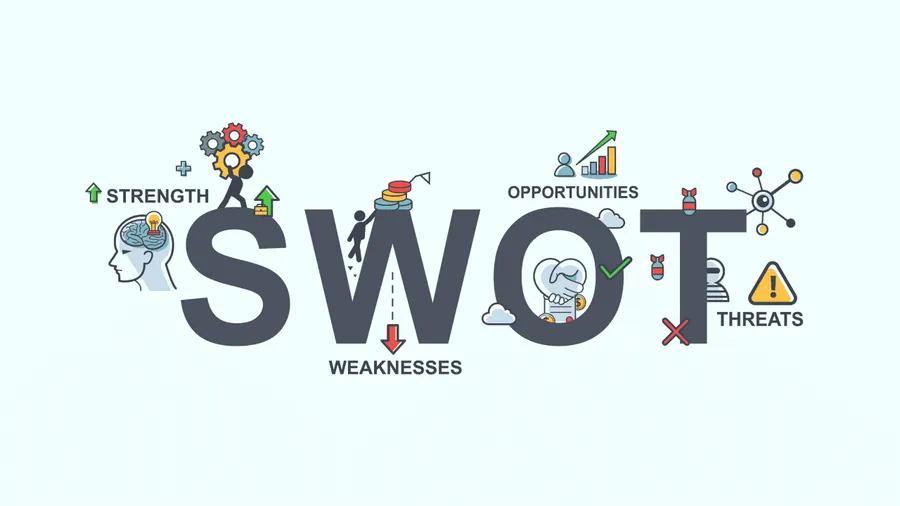
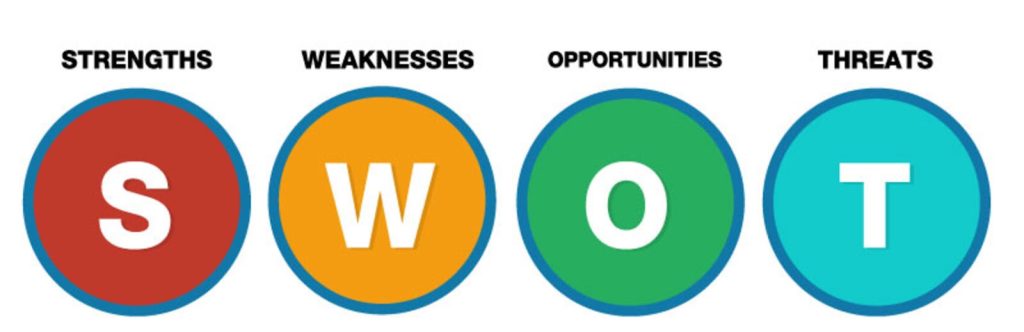
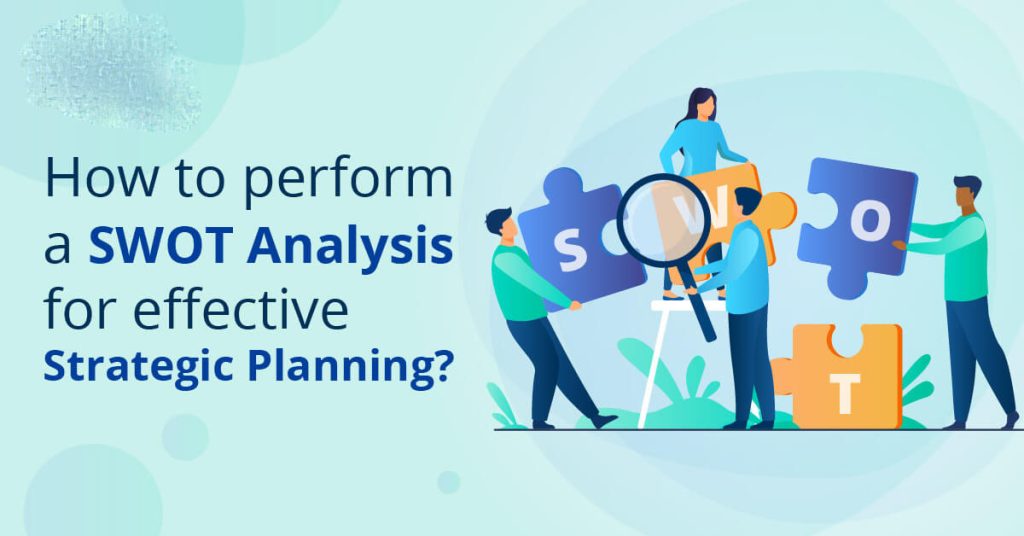
SWOT Analysis is a planning tool centered on the evaluation of the Strengths, Weaknesses, Opportunities, and Threats of an organization. This technique assists in having a complete understanding of internal capabilities as well as of the external environment in which an organization functions; hence, it enables organizations to make the right decisions and formulate proper strategies.
Components of SWOT Analysis
- Strengths: Determination of internal features or sources that provide a competitive advantage over others. Awareness of strength helps an organization in utilizing them.
- Weaknesses: The reason for understanding weaknesses is that it points out the areas where improvement is needed. Being transparent about weaknesses will allow organizations to address weaknesses beforehand.
- Opportunities: This aspect looks at external factors that could be exploited for growth or improvement. By identifying opportunities, organizations can develop strategies on how to capitalize on market trends that are favorable to the organization.
- Threats: The analysis of external threats enables organisations to know what risks they are exposed to. With threats identified, they devise plans to handle these risks and maintain their market share.
Implementation
After determining the elements of SWOT, the organizations need to take appropriate measures to exploit strengths, improve weaknesses, capture opportunities, and minimize threats effectively.
Benefits of SWOT Analysis
This helps in making sound decisions correctly as it clearly portrays the inside and out through what was shown. For example, the company identified its strength in modern technology while pointing out a weakness in customer services, and thus should improve on the service.
- Cost Efficiency: Organizations can optimize their operations and utilize resources more effectively by analyzing both the strengths and weaknesses. It is possible to save much money through redundant processes by optimizing resource utilization.
- Improved Communication and Collaboration: SWOT Analysis facilitates teamwork where all the departments are involved in making it a comprehensive study. This will bring about transparency and facilitate better strategic alignment throughout an organization.
- Risk Management: Knowing what could pose threats and weaknesses enables the development of strategies that would help minimize risks and enhance resilience as a whole.
- Opportunity Recognition: By assessing the conditions in the market, an organization can be able to recognize new ways for growth and innovation and remain ahead of competitors.
Core Principles of SWOT Analysis
- Focus on Activities: It is important to know what activities are and include the core competencies and processes and how they would add up to being either strengths or weaknesses.
- Link Activities to Costs: The fact that activities and costs go hand in hand makes possible the identification of costly weaknesses, which may then result in targeted improvements and cost cutting.
- Continuous Improvement: Strategy adaptation based on changing conditions requires continuous assessment and feedback to avoid losing the edge.
- Data-Driven Insights: Data analytics coupled with SWOT analysis may make the analysis more profound ,and the oorganisationcan can base strategies on evidence.
- CCross-functional involvement Teams from different functions bring diverse perspectives and insights that enhance the SWOT analysis process.
Steps to Implement SWOT Analysis
- Analyze Current Activities: First and foremost, SWOT analysis involves the analysis of the current activities in terms of processes and practices. Internal audits and stakeholder interviews can be used to assess this.
- Establish Cost Drivers: Factors that influence the organization’s strengths and weaknesses would be determined and recognized as a result of their influences on the profitability and performance.
- Begin Performance Metrics: Identify and track those performance metrics relevant to the established strengths and weaknesses for enabling organizations to monitor their own progress and adapt appropriately.
- Engage Employees: Perception by an employee is important in the SWOT analysis process since it helps with critical information gathering and promotes ownership of the process.
- Use Technology: The use of SWOT Analysis can be improved by making it more profound with the help of software tools and data analytics and making collaboration easier.
Actual Examples of SWOT Analysis
- Technology Firm: A leading technology firm used SWOT Analysis to analyse its market situation. The company realized that it had the strength of having a very good R&D capability, but at the same time, there was a threat of increasing competition. It innovated and remained an industry leader.
- Small Retail Business: The small retail business applied SWOT Analysis to discover the strengths of having strong local customer loyalty and the weaknesses in operational costs. It adopted the cost-cutting measure and increased profitability.
- Non-Profit Organization: The non-profit organization applied SWOT Analysis, which brought into light the strength of community support and weakness in funding. Discovering new opportunities for funding, it could adjust its resource allocation and enhance outreach efforts.
- Global Food Corporation: Multinational food company has applied SWOT Analysis on market trends and consumer preference. It discovered the emerging pattern of health issues (opportunity) while its supply chain management vulnerabilities could be considered as a threat.
- E-commerce Startup: This e-commerce startup realized its innovative marketing strategies (strength) but was facing very high customer acquisition costs which could be considered as weaknesses. The firm leveraged strengths and worked on weaknesses while optimising customer engagement tactics.
Conclusion
SWOT analysis is an effective tool by which organizations can improve strategic planning and decision making to enhance performance as well as support continued growth.
Final Thoughts
SWOT analysis is, hence, a great approach that holds much value for organisations that have to work on their strategic planning and decision-making processes. With the right understanding of strengths, weaknesses, opportunities, and threats; fair resource allocation, and steady efforts towards improvement, a business is able to unlock great potential within its operation process.
From the SWOT analysis applied in your business, you will achieve:
- Higher strategic focus: Identify your niche and leverage your unique strengths to differentiate yourself in the market.
- Better risk management: Get a clear view of potential threats and weaknesses that might be encountered so that you can prepare well for challenges.
- Higher opportunity for growth: Understand market trends and capitalise on them to drive innovation and expansion.
Now is the time to embrace SWOT analysis and experience the transformative effects it can have on your organisation. Take the first step toward effective strategic planning today!
]]>Ready to talk with a marketing expert?

A Pragmatic and innovative way to enthrall your target group is just a click away!
Get in Touch
Rukmini Knowledge Park, Kattigenahalli, SH 104, Srinivasa Nagar, Bengaluru, Karnataka 560064
+91-990 247 8800
contact@gingermediagroup.com
Popular in Television Advertising
Udaya TV AdvertisingSun TV AdvertisingStar Plus AdvertisingTV 9 AdvertisingZee TV AdvertisingNDTV India AdvertisingColors TV AdvertisingPopular in Airport Advertising
Spice Jet AdvertisingMumbai Airport AdvertisingDelhi Airport AdvertisingEmirites AdvertisingIndiGo Airlines Domestic India AdvertisingPopular in Newspaper Advertising
Deccan Herald AdvertisingPrajavani AdvertisingThe Hindu AdvertisingEconomic Times AdvertisingDainik Jagran AdvertisingHindustan Times AdvertisingPopular in Magazine Advertising
Forbes AdvertisingCosmopolitan AdvertisingBusiness World AdvertisingVogue Magazine AdvertisingPopular in Sports Advertising
IPL AdvertisingPopular in Outdoor Advertising
Billboard AdvertisingBus Shelter AdvertisingMetro Pillar AdvertisingUnipole Advertising© Ginger Media Group 2025. All Rights Reserved.