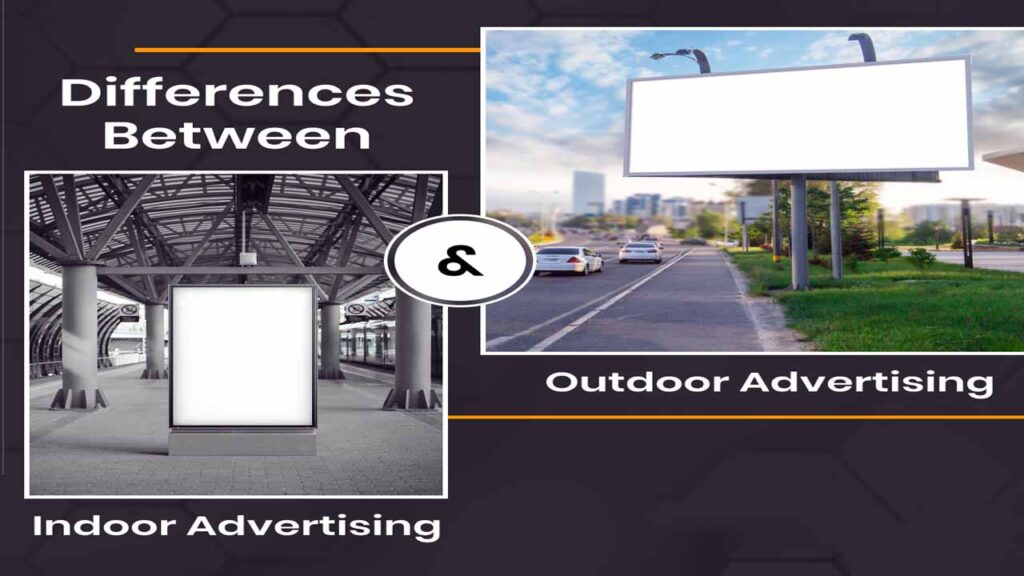
- Environment and Surroundings: Indoor advertising takes place in ant, whereas environment outdoor advertising takes place in open spaces in public areas.
- Targeting Audience: There is an indication of a demographic affinity, whereas the reach is wider in the case of outdoor advertisements.
- Cost: Indoor advertisements are less expensive, but it is costlier to give increased coverage with outdoor advertisements.
- Time Spent in Attention: Indoor advertisements capture attention for extended periods, while outdoor advertising has to hold the viewer’s attention even within a fraction of a second.
- Content Intensity: Indoor advertisements are likely to be more verbose than outdoor ones, which usually tend to be short but highly creative.
Your choice between indoor and outdoor advertising depends on the nature of your product, your target audience, and even the desired impression. For instance, indoor ads enjoy a captive audience and a more focused environment. Outdoor ads take advantage of communicating to a broad audience using all their preferred exposure. This blog deeply deeply deeply explores some key differences between indoor and outdoor advertising—including unique characteristics, benefits, and ideal use cases.
For marketers, choosing the suitable medium is more than just visibility—crafting a message that resonates in the right setting. As such, each form of advertising has its strengths and limitations, and drawing the most appropriate one depends on a very detailed understanding of how each environment affects consumer behaviour. Let’s take a step forward and examine the critical differences between indoor and outdoor advertising.
Critical Differences Between Indoor and Outdoor Advertising
1. Surround and Environment
The environment that an advertisement receives would make the audience perceive it in a particular manner. Indoor advertising is performed within controlled surroundings—shopping malls, restaurants, gyms, and corporate buildings. Such an environment allows for more elaborate and intricate advertisements because the recipients are static and have much time to focus on the message. This ranges from typical indoor displays with digital screens, posters, and standees that offer a variety that easily integrates with the theme and ambience of the surroundings.
- Controlled Environment:
It is placed in regions where focus can be charged and executed with details. - Sophisticated Messaging:
The advertisements can bear longer messages and complicated designs to allure the viewers. - Audience Engagement:
Because they are stuck in place, the viewers have ample time to engage with the advertisement. - Integration with Environment:
Indoor large-format advertisements are designed to integrate correctly with the surrounding environment where they will be situated, providing a cohesive experience for the viewer. - Tapping Technology:
Digital display mediums, due to their dynamic content, contribute more to engagement opportunities.
On the other hand, outdoor advertising is distributed across open public places like highways, roads, transport stations, and city squares. In such cases, the primary goal of outdoor advertising is to be seen quickly since there is not enough time to read and comprehend the advertisement. Standard outdoor advertising comes in hoardings, posters, and transit ads, as their specialty encompasses broad visual activity supported by short messages. The environment is less controlled, and the ad must stand out against interfering elements like traffic, buildings, and other outdoor advertisements.
- High Visibility:
There is generally a much higher view of outdoor advertising, often a glance. - Short Message:
Since time is usually the constraint, messages must be short and catchy. - Active Content:
Outdoor billboard messages normally are action-grabbing, first-impression stimuli. - Competition:
In many ways, outdoor advertisements compete with the environment. So, images have to be striking. - Diverse Locations:
Such billboard messages can appear at various places, giving the advertisement more exposure to mixed crowds.
The environment also decides the content that will go well with it. Indoor advertisements can be detailed and subtle in their message, while outdoor advertisements must be relatively short and catchy. It is vital to understand the characteristics of the environment in which the advertisements are spread out, as this aspect will determine a flawless ad for an audience within each environment.
2. Targeting and Engagement with the Audience

One of the significant differences between indoor and outdoor advertising is the ability to target and engage specific audiences. Indoor advertising is targeted and allows strategic placement in locations where the target audience spends more time. For instance, pasting an advertisement on the walls of a gym for fitness enthusiasts or utilising digital signs in a technology store for branding the newest gadgets are examples where indoor advertisements may be crafted and tailored toward a targeted audience. This narrowed detail targeting could translate to more significant campaign involvement; the ads speak more directly to what the listener has within immediate space and interest.
- Location-specific Adverts:
It can be displayed indoors where the target demographics are more likely to view it. - Contextual Relevance:
Content can become relevant to the needs and interests of an audience in that particular setting. - Tailoring Opportunities:
The demographic present determines the type of tailoring indoor adverts may experience. - Interaction Opportunity:
The more extended exposure opportunity offers more elaborate messaging and possible interactions.
On the contrary, outdoor advertising aims to attract the attention of as many individuals as possible. It is primarily for mass awareness rather than individual targeting. This is because the demography spreads through outdoor ads, making it well-suited for products and services targeting a mass level. For instance, a national fast-food company can use billboard advertising to introduce a new menu item. People in private and public transport and pedestrians will be exposed to the billboard. Since one may have a concise exposure window to outdoor advertisements, creating a memorable visual with taglines is necessary.
- Highly Visible:
The target audience will be a diverse range of potential customers. - High Mass Appeal:
Fits products or services of broad market relevance. - Fast Impact:
Messages have to reach audiences quickly since they are often in motion. - Memorable Design:
The focus of outdoor advertising is on visual elements that are as influential as possible and, therefore, attention-grabbing. - Low Interaction:
By the nature of the exposure, low interaction can only be achieved with quick impressions, making visuals very critical.
The engagement levels also differ from one medium to another. An indoor ad benefits from a more engaged audience who may spend several minutes or more near the ad, while outdoor ads must make an impact within seconds. That is where the difference lies, and accordingly, the design and message in each ad type differ from one another: depth and detail for the indoor ads and simplicity and colour appeal for the outdoor ads.
3. Cost and ROI
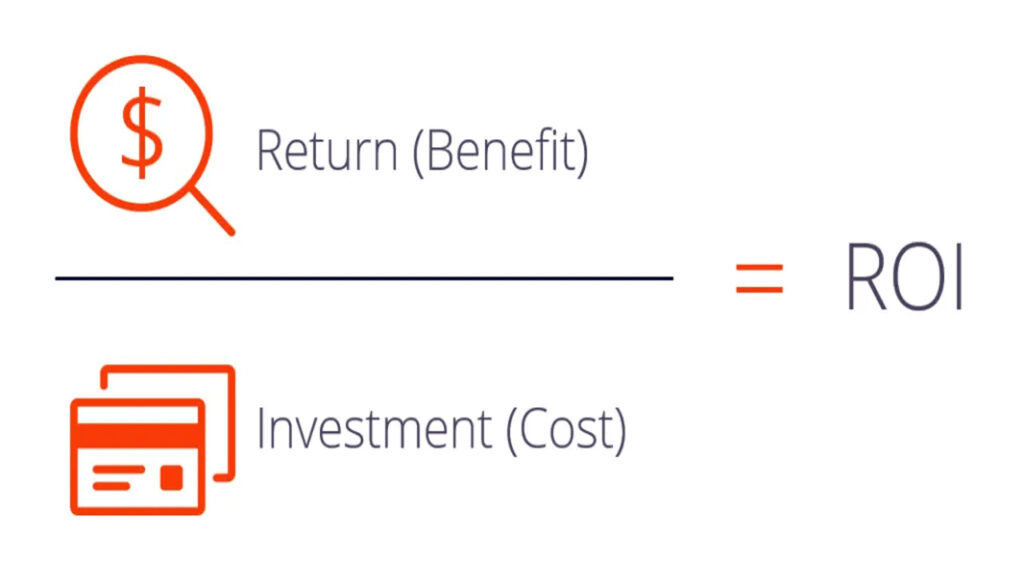
Indoor and outdoor advertising have an excellent cost disparity, whereby return on investment tends to be affected. Indoor advertising is relatively cheaper as it uses smaller advertisements within actual locations. The price will depend on factors such as the display size, the campaign duration, and niche targeting; indoor advertising would be a good fit for small businesses or local brands because it is cheaper and has a more effective return on investment.
- Low Overhead:
Indoor advertising productions tend to have a lower overhead. - Small Placements:
Targeted spending on focused demographics can be conducted through small placements. - Higher ROI:
Showing tailored messaging will yield higher conversion rates. - Budget Flexibility:
Brands can budget for targeted indoor spaces for specific periods. - Potential for Local Marketing:
For most local businesses, a successful strategy in indoor advertising would prove cost-effective.
Online advertising is simply the replacement. A billboard costs significantly more, especially when there is a lot of traffic and at strategic locations. However, the higher cost is justifiable through large-scale cover and brand reinforcement. In the case of giant corporations or national campaigns, outdoor advertising can generate high mileage through appreciation of solid brand awareness and top-of-the-mind recall.
- Higher Upfront Costs:
The initial investment for outdoor advertising is much higher. - Greater Reach Justification:
The cost is justifiable with broad exposure to the audience. - Brand Awareness:
Once the advertisement is blatant, it will likely increase the recall and recognition of the brand. - Large-Campaign Placement:
Outdoors work well when brand awareness strategies are used over a long period. - Market Saturation Opportunities:
Outdoor ads saturate specific regions for increased visibility and presence.
Deciding whether to use indoor or outdoor advertisement is critical as it means businesses should weigh their budgets, campaign goals, and the impact they anticipate getting for each. Indoor ads are usually more engaging; however, outdoor ads are where more awareness and visibility are made in deciding; therefore, much lies in choosing a style of advertisement that will give you the most return on investment and reach the goals set out during marketing.
Final Thoughts
Understanding the differences between indoor and outdoor advertising will guide any business in adequately using the media. The importance of intensive messaging through indoor ads works very well in places where people have enough time with the content. Outdoor ads—prominent, reaching a broad target audience—are used to spread large-scale awareness about the brand.
- Application of Purpose:
The choice between indoor and outdoor advertisements must match a particular marketing objective. - Behaviour of the Audience:
Understanding the impact of the environment on consumer behaviour is the only way forward. - Hybrid Approaches:
An amalgamation of indoor and outdoor ads is an all-inclusive approach to market coverage. - Choosing Ad Types:
The company has to evaluate the budget and expected return on investment. - Effectiveness Measurement:
The performance of the advertisement is measured constantly. This is a crucial step for devising advertising strategies.
Both indoor and outdoor advertising offer different advantages, and a business must choose according to its goals, budget, and ideal target group. A mix of the two can provide an all-around approach, reaching consumers at different stages of their day-to-day living. Whether in the form of a strategically positioned poster at a retail store or a gigantic billboard placed along a bushighwaywa ehighwahighway, retirement has a specific function within the rationale of a more extensive campaign.
]]>One ever-changing aspect of marketing is indoor advertising media, which includes a variety of techniques designed to captivate consumers in enclosed areas. Indoor advertising targets people inside particular locations, such as malls, airports, and business spaces, unlike outdoor advertising, which targets bystanders.
These advertisements take many forms, such as interactive displays placed in critical locations to draw captive audiences or digital screens and posters. Indoor advertising makes the most of dwell times, taking advantage of when people are in favourable settings for absorbing messages.
Using this method, content may be precisely targeted to the audience and demographics of the venue. Because indoor advertisements are versatile, marketers can create immersive and innovative campaigns that leverage consumer psychology to increase brand memory and engagement.
We examine the various indoor advertising media types in this investigation, highlighting their unique advantages and uses. Whether it’s the adaptability of interactive screens, the focused reach of digital displays, or the classic allure of posters, each media can make a significant impression on customers.
Is Indoor Advertising Media Beneficial?
A dynamic and calculated strategy, indoor advertising is ideal for companies looking to interact with their target market in small, controlled spaces. Unlike outdoor advertising, interior advertising uses certain locations such as transportation hubs, airports, and malls, providing a unique chance to target specific audiences with messages.
Indoor advertising goes beyond traditional marketing by providing quantifiable effects and the possibility of immersive experiences that create a lasting impression through contextual relevance and creative forms.
This type of advertising has a particular benefit in that it may draw in a captive audience, increasing brand memory and fostering high engagement levels. However, even with clear advantages, an efficient indoor advertising plan must still overcome obstacles like ad clutter and prices.
Benefits of Indoor Advertising Media
1. Targeted Reach
Ad placement is made possible by the distinct demographics drawn to indoor areas. Ads in airports, for example, reach a wide range of visitors, while those in gyms may specifically target fitness enthusiasts. This accuracy increases the possibility of connecting with potential customers.
2. High Engagement
People are less distracted in cramped areas, which makes it more likely that they will see and interact with advertisements. This trapped audience may move through these places more frequently or wait longer, giving ads plenty of exposure.
3. Improved Recall
Exposure to a brand regularly strengthens recall memory. When customers see advertisements frequently, they become accustomed to them, which helps them remember the brand better when making decisions.
4. Contextual Relevance
Indoor advertisements may complement their surroundings. For example, an advertisement for a food delivery service in a movie theatre foyer or a bookshop in a café feels contextually relevant and increases conversion rates.
5. Measurable Impact
Metrics for monitoring the efficacy of indoor advertising media are available. In these regulated environments, metrics like foot traffic, engagement rates, and conversion rates offer essential insights into the effectiveness of campaigns.
Different Types Of Indoor Advertising Media

Indoor media for advertising has a dynamic perspective of various media positioned carefully inside small areas to fascinate and engage viewers is what indoor advertising exemplifies. These settings, which range from the busy aisles of shopping centers to the fleeting moments at transit hubs, are ideal for connecting businesses with their target audiences.
These types of indoor advertising media provides a multimodal approach to consumer outreach. Businesses use interactive stands, digital screens, in-store displays, and experiential marketing to attract customers, spark interest, and build brand loyalty.
Crafting effective campaigns that connect inside these confined spaces and create a lasting impression on the audience requires an understanding of the subtleties and capabilities of each indoor advertising media.
Here are the different types of indoor advertising media:
1. Digital Screens

Malls, airports, and transit zones are home to high-definition digital screens that display dynamic content. They provide advertisers the freedom to alter their commercials and reach a variety of audiences with different messages.
These panels can include interactive components for increased interaction, and their colorful displays frequently draw attention. These displays provide an immersive viewing experience when placed in high-traffic areas of interior environments.
Indoor advertising media may run many campaigns at once, targeting various demographics at different times of the day, thanks to the ability to cycle advertising. Touchscreens and QR code integrations are examples of interactive elements that increase viewer engagement by enticing them to actively interact with the material on display.
2. Static Displays
In interior spaces, traditional static displays like posters, banners, and signs are often seen. Placed in strategic locations like restaurants, shopping centers, or event spaces, these displays provide an affordable way to communicate specific messages to onlookers.
These stationary exhibits act as anchors in the visual field, providing a constant presence that enhances the overall atmosphere of the area. They are a solid option for focused advertising because they consistently communicate information, whether promoting seasonal specials in retail settings or showing event details in conference buildings.
Furthermore, the flexibility of static displays permits prompt updates and alterations, guaranteeing pertinence and promptness in conveying brand stories in interior environments.
3. Interactive Kiosks
By offering amusement or information, touchscreen kiosks or interactive displays draw viewers in. These interactive kiosks, located in shopping centers or entertainment venues, let viewers connect with the material directly, making the experience memorable and encouraging further in-depth interaction with the promoted brand.
They operate as virtual assistants, helping with transactions, giving consumers access to real-time information, and even making the experience more enjoyable. These kiosks have developed into useful instruments for gathering customer information, giving companies insights into the preferences and actions of their customers.
Furthermore, immersive experiences may now be had at interactive kiosks thanks to technological breakthroughs like augmented reality (AR) and virtual reality (VR). This type is one of the most effective indoor advertising media.
4. In-Store Advertising
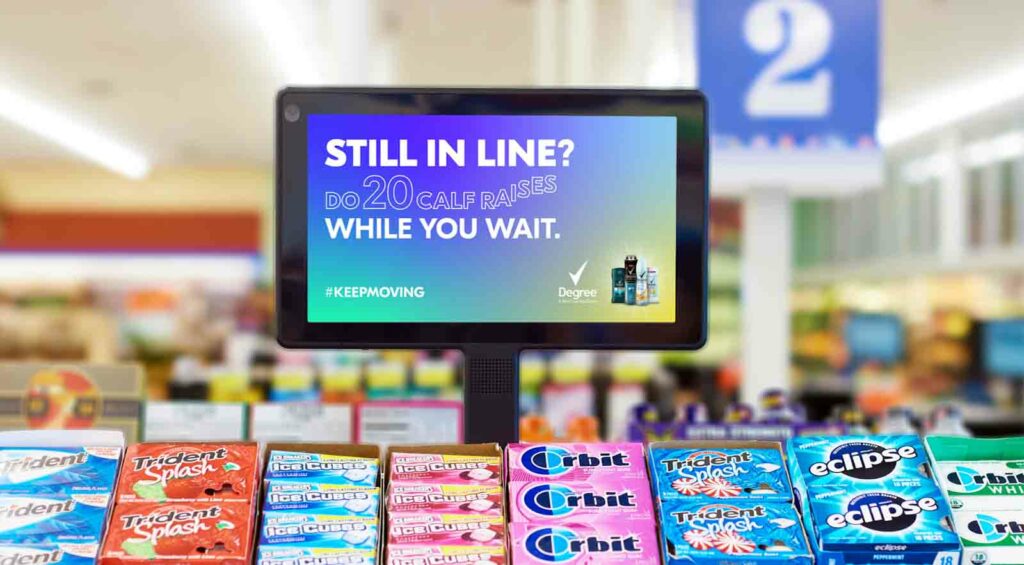
Product placements, end caps, and shelf displays are examples of in-store advertising in retail settings. At the point of sale, these well-placed commercials affect customer behavior directly by influencing purchase decisions.
Furthermore, digital signage in retail settings is included in the category of in-store advertising, which goes beyond static displays. The shopping experience is enhanced by interactive screens that are placed strategically next to product aisles and provide interesting material, product details, and even tailored suggestions.
These dynamic digital displays have the ability to alter promotions in real-time in response to user choices or real-time data, which increases their influence on consumer behaviour at the crucial point of purchase.
5. Transit Advertising
Advertisements that run inside trains, buses, and subways are aimed at passengers on their way. These advertisements maximize the captive audience and prolonged exposure time to increase brand awareness.
Using the commuter experience, transit advertising ensures that brands are woven into the routines of people’s everyday travels. Businesses capture customers’ full attention while they travel by inserting carefully placed advertisements inside transportation networks, turning inactive periods into worthwhile interaction opportunities.
When messaging are seamlessly incorporated into various areas, it not only increases brand awareness but also shapes customer behaviour by placing goods and services in the context of people’s daily lives.
6. Experiential Marketing
Through experiential marketing, brands provide immersive interior encounters. Pop-up stores, sponsored events, and interactive exhibits are effective ways to connect with consumers on a deeper level, create brand awareness, and leave a lasting impression.
By actively involving customers in the brand story, experiential marketing goes beyond traditional advertising. It promotes hands-on interaction, allowing people to touch, feel, and experience the spirit of the brand directly.
Through the use of workshops, live demonstrations, or gamification, companies are able to create unforgettable experiences that leave an emotional impression on customers. This, in turn, encourages consumer advocacy and brand loyalty. This is one of the significant indoor advertising media examples
7. Advertising In Elevators
Placing indoor advertising media posters in elevators guarantees a momentarily captivated audience. In retail centers or office buildings, elevator advertising successfully draws customers’ attention during brief journeys.
Because of its limited area and inevitable viewership, elevator advertising has a special chance for concise yet powerful messaging. These advertisements make the most of the little time that customers spend in elevators by showcasing promotions, succinct brand pitches, or captivating imagery.
As a result, every second matters when it comes to message retention and brand memory. Additionally, eye-level placement of elevator displays or posters can guarantee optimal viewing and interaction during these brief journeys.
8. Audio Advertising
In addition to visual media, audio cues such as background music, announcements, or radio-style commercials can be used in interior venues to engage consumers further. Audio advertising adds a further layer to visual media when used inside, resulting in a multisensory experience.
While announcements are placed purposefully to grab attention, background music sets the tone and impacts consumer behaviour subtly yet effectively. As customers move through these interior spaces, radio-style advertising that are adapted to the surroundings permeates the aural area, reiterating brand messaging and fostering a unified, immersive ambiance.
Because each kind of indoor advertising media has distinct qualities and benefits, companies may choose the best format for their needs based on campaign goals, target audience, and budget. Campaigns for indoor advertising may be made more impactful and effective by carefully combining these media.
Wrapping Up

We looked deep into the indoor advertising media definition, with its wide range of media that includes interactive, visual, and audio components, indoor advertising media offers a sophisticated and calculated method of interacting with viewers in confined spaces. Combining these channels produces a brand communication symphony that impacts customers more powerfully.
Through interactive kiosks, digital screens, in-store displays, and auditory cues such as announcements and background music, advertisers can create engaging experiences that appeal to the target audiences. This multi-sensory strategy is very effective because it enhances brand identification and recalls by using several aspects of human perception.
These ads are placed strategically in high-traffic locations like shopping centers, train stations, and performance spaces to guarantee maximum exposure to captive audiences. This increases brand visibility and enhances conversion rates.
Additionally, the adaptability of interactive kiosks and digital screens allows advertisers to supply dynamic material and modify messaging in real-time to match shifting customer habits or campaign goals. The marketing message’s total effect is increased when audio advertising and visual displays are combined to create an engaging story.
Indoor advertising media is becoming recognized as a flexible and effective approach that gives marketers a range of options to engage consumers in settings where they are most responsive.
These small spaces’ combination of interactive, visual, and audio components creates a memorable and captivating brand experience that strengthens bonds between businesses and customers over time.
]]>What Is Indoor Advertising?
This marketing is done in enclosed places such as shopping malls, airports, and stores. It takes advantage of the captive environment of enclosed places to drive focused messages to a captured audience. By targeting an audience in controlled indoor settings, businesses can enhance brand recognition and repeat messaging and ultimately spur customers to engage.
- Definition: In-store promotion is carried out within a closed, controlled environment, such as malls and airports, targeting audiences confined to a defined spatial boundary.
- Controlled locations: Advertising in controlled interior locations increases the chance of interacting more with the consumers because there are limited noise-causing distractions from outsiders.
- Different types: This includes digital screens, posters, in-store displays, and interactive kiosks, which help reach audiences at a variety of touchpoints.
- Target audience: Location-based and behavioral targeting to a consumer through indoor advertisements.
- Increased interaction: The inside lifestyle is more relaxed while inside the premises, which enhances audiences’ receptivity and attentiveness to brand communications and product-related knowledge.

In-Store Advertisements Media Example
Various types of indoor advertising are used to reach a wide variety of people. Companies place advertisements in busy places and capture the audience’s eyeballs with consumer interaction.
Types of Indoor Advertising Media:
- Mall Advertisement:
Malls are the best places for indoor advertisements because they experience heavy traffic. Advertising positioned on pathways and escalators is most likely to attract attention from a shopper who will inevitably interact with it. This form of advertising, by virtue of its captive setting, benefits from greater exposure in building brand recall, as prolonged exposure enhances such recall. - Transit Advertising:
Transit hubs—subways and bus stations—are one of the most promising means of reaching commuters. Digital signage and billboard advertising capture the waiting customers. This method can attract customers at an appropriate time and place by capturing their attention. Customers would, therefore, remember messages. - In-Store Displays:
In-store displays directly approach customers during the sale and influence purchases during an appropriate time. They feature offers or draw attention to specific products. Effective displays can attract consumers’ attention to the advertised products, which may lead to impulse purchases and brand awareness. - Digital Signage:
The dynamic content in airports, restaurants, and other venues with heavy foot traffic throughout the indoors makes digital screens quite attractive. This allows brands to add content, hence adding memorability to the advertisements. - Interactive Kiosks:
This allows the consumer to interact with the brand. Usually, kiosks show information, product details, and promotional opportunities. In this regard, kiosks are distinguishing features of airports or museums because people are more apt to interact with interactive content.
Advantages Of Indoor Advertising
Indoor advertising offers unique advantages, especially for companies seeking a particular, controlled group in a close environment. By leveraging this method, advertisers can elicit brand memory and convey their message to active viewers.
- Guaranteed Audiences:
Indoor advertising finds a captive audience since spaces such as malls and train stations are associated with less distraction. The environment enables better retention of the message because the audiences are on high alert and ready for engagement when they are devoid of external distractions. - Precise Targeting:
The indoor environment offers precise targeting as advertisers can place their ads in various environments appealing to any specific demographic and interest. For example, advertisements within the indoor space based on health might target an exercise-conscious customer to ensure maximum relevance and effectiveness. - Brand Recognition and Recall:
The repeated exposure developed from indoor advertising can help improve recall. Customers are likely to remember the advertised product or service since they repeatedly pass through the same indoor space. This repeated exposure may lead to better recognition of brands, making them memorable to customers. - Interactive and Dynamic Content:
With the advancement of technology, indoor advertisements can turn moving, and interactive content to be as appealing to a viewer as a static image would be. Other attractions, such as touch screens and QR codes, allow consumers to engage with the advertisements, making it a new experience. - Context Relevance:
Indoor advertisements help businesses communicate targeted and specific messages within indoor environments, thus making the ad relevant to the target group. For instance, restaurants can display daily deals within the restaurant, making the message timely and contextually appropriate.
Disadvantages of Indoor Advertising
Despite its advantages, indoor advertising has certain drawbacks that firms must consider to optimize their advertising efforts. Understanding these disadvantages helps advertisers strategize to run successful campaigns.
- Satiation and Clutter:
Clutter results from heavy traffic in malls or airports, with many advertisements competing for attention. Too much information by advertisers might desensitize the target consumer, meaning that the effectiveness of the advertisement and engagement may be minimized. - Cost:
The cost of leasing an indoor location can be significant, making it inaccessible to many small companies. Additionally, there are secondary costs in manufacturing and maintaining digital displays and changing ad content. - Audience Segmentation:
Different settings, such as transport hubs or offices, require tailoring ads to fit these unique environments, making ad campaigns more complex. Multi-campaign management can be time-intensive, particularly given the very different target markets. - Limited Reach:
Indoor advertising typically involves a relatively immobile population in specific spaces and cannot match the reach or impressions of outdoor or digital media. This limits its impact on a broader or more heterogeneous audience. - Ad Avoidance:
Even in controlled conditions, some viewers may actively avoid watching advertisements or tune out if they perceive the advertisement as invasive or irrelevant. The advertisers must ensure that content is engaging and relevant to the viewing context. to counter this
Final Thoughts
- Indoor captive audience:
Messages resonate more because indoor audiences are less distracted by external stimuli. - Targeted positioning:
Positioning ads in different environments strategically targets the right demographics effectively. - Higher brand recall:
Familiarity and repeated exposure within indoor environments can enhance brand recall. - Interactive media:
Screen-based and electronic media provide audiences with a more engaging experience than static communication. - Challenges:
Cost, congestion, and limited reach remain key hurdles, but these can be mitigated with careful attention.
Amid this evolving landscape, indoor advertising has become a valuable channel for transmitting meaningful messages to receptive audiences. For businesses, understanding the strengths and limitations of indoor advertising can inform an effective strategy for communicating brand messages within indoor settings.
]]>Key Takeaways
- Indoor advertising reaches a captive audience in high-traffic areas.
- Digital displays and wall posters are different types of media.
- The indoor location can offer many creative placement opportunities for your brands.
- Good brands always tap into indoor advertisements to reach the consumer.
- You need knowledge about your target audience to create a successful campaign in the indoor marketing context.
What is Indoor Advertising?

Indoor advertising means putting marketing material into an interior space for the consumer. Indoor advertisements take on many formats, including:
- Posters: Traditional yet effective posters can effectively transmit strong visual messages in high-traffic areas.
- Digital Screens: Dynamic and engaging, digital screens can display videos and advertisements that capture the eye.
- Interactive Displays enable consumers to interact directly with the brand, creating an immersive experience.
Why Indoor Advertising Works
Indoor advertising thrives in areas where people tend to congregate, offering a unique opportunity to capture attention. The following are key reasons why indoor advertising is impactful:
- Captive Audience: People spend massive chunks of time in malls, airports, and other places, making them more vulnerable to advertisements.
- Lower Diversion: Unlike when considering outdoor advertisements, which compete with several stimuli, indoor advertisements tend to engage audiences in an environment where they are not distracted by other competing stimuli.
- Targeted Messaging: Brands can tailor messages to specific demographics in a particular space.
- High Foot Traffic: People visit these popular venues, which guarantees the passage of many potential customers.
- Improved Engagement: In-store experiences will allow the consumer to associate with the brand, thus enhancing retention and recall.
In-Door Advertising Locations to Promote Your Brand

To get maximum indoor advertising benefits, brands must choose the correct location. Some of the best locations for indoor advertising are as follows:
Shopping Malls
Shopping malls are busy places with target customers. With footfall often in thousands, a brand can use prime locations such as:
- Near Escalators: Of course, the customer traversing between floors of an escalator may come across the ads.
- Food Courts: Hungry and waiting for the moment to fill your stomach, the waiting customers are prone to making impulsive decisions.
- Waiting Places near Restrooms: Waiting places near restrooms also become good spots for ads because of the waiting time.
Airports
Extremely long waiting periods have encouraged the airports to embrace the ads as a viable opportunity; therefore, the brands avail its luxurious space, and thus they employ:
- Digital Panels: Interactive video advertising for passengers on flights.
- Interactive Kiosk Displays: Informative kiosks that interact while catching the attention of one another, thus making the total experience of advertising personal yet relevant.
- Hoardings: Bright and shining hoardings people see on the way to significant stations.
Cinemas
Advertising in cinemas is a fabulous medium; generally, most people are very attentive while sitting in cinemas for some movie to start. The brands can use:
- Screen Ads: Pre-trailer ads can be highly effective in catching the viewers’ attention.
- Product Placement: Tie-up with film production houses for product placement increases brand presence in the storyline.
- Lobby Displays: Ads in the theater lobby can attract movie viewers while they wait for their shows.
Restaurants
Restaurants are a captive audience and can be reached through:
- Tabletop Ads: Innovative ads on tables or menus can advertise special deals and new items on the menu.
- Wall Posters: Brand partner promotions or special events can be created.
- Digital Menus: Brand messages can be posted in a digital menu format to complement the overall in-store customer experience.
Health and Fitness
Consumers at gyms can be highly targeted toward health and wellness advertising. These potential customers for health and wellness brands would see in-wall posters, including:
- Ads with fitness products and supplement lines.
- On screens playing workout techniques or featuring equipment and supplements.
- Event sponsorships: Sponsor fitness classes or events for effective brand promotion.
Top 10 Ways to Use Indoor Advertising to Promote Your Brand

Brands can use indoor advertising in many creative ways to reach a wider audience. There are ten effective strategies described below:
In-Store Product Displays
It is possible to develop attractive in-store product displays. Brands can make use of:
- Thematic Displays: Seasonal or thematic displays can attract attention and increase sales.
- Interactive Features: Touchpoints can be implemented to increase customer interaction.
- Prominent Location: All see and notice displays installed at eye level.
Interactive Kiosks
Interactive kiosks revolutionize customer engagement by providing information and enabling transactions. Interactive kiosks can be used to:
- Enhance Customer Experience: Customers may customize orders or find details about products.
- Data Reap: Customer preferences and behavior can be captured to target marketing.
- Sales Creation: Upsell possibilities can be created due to user activity.
Video Walls
Video walls can be visually very engaging to present brand messages. They consist of:
- Dynamic Content: Motion graphics and video capture attention.
- Opportunity to Engage: An opportunity for participation through interactivity.
- Flexibility: Malls, corporate offices – any place where these might be used.
QR Code Campaign
QR codes connect the offline with the online. Here again, QR codes present the opportunity for brands:
- Offer Deals: Reward customer interaction with promotional deals.
- Inform: Connect consumers to more product information or videos.
- Play Games: Develop experiences that are more engaging and interactive and can get users involved.
Event Sponsorships
Event sponsorships through indoor events allow brands to tap into a focused audience. The advantages include:
- Brand Awareness: Displays at an event can increase brand visibility.
- Networking: Direct communication with the target market increases the possibility of creating some meaningful relationships.
- Experiential Marketing: Providing an experience that people remember will make them loyal.
Loyalty Programs
Loyalty programs could be added to indoor advertisements to retain customers. Plans include:
- In-Store Promotions: The loyalty program’s points can be displayed digitally.
- Exclusive Offers: Exclusive offers would attract loyalty program members, increasing the number of participants in the program.
- Data Collection: Consumer data will be used to determine specific marketing efforts for subsequent marketing activities.
Augmented Reality Experiences
Augmented reality creates an immersive experience for customers. Brands can use AR when:
- Creating Engaging Screens: Allowing customers to engage with the product virtually.
- Enhancing Product Displays: Creating innovative ways for consumers to engage with products before buying them.
- Creating Interaction: AR interactions can create a buzz and encourage people to share it on social media.
Mobile Integration
The integration of the mobile application with indoor advertising is enhancing customer engagement. Brands can:
- Promote App Downloads: Incentives for downloading apps strengthen engagement.
- Send Push Notifications: Inform customers of offers while they are in the store.
- Provide Exclusive Content: Give them a cause to come back with a unique app experience.
Geotargeting Strategies
Geotargeting allows brands to offer location-specific deals. Brands can use:
- Location-Based Promotions: Inform customers of deals when they are near the store.
- Customer Movement Analytics: Knowing how customers move helps marketers hone their strategy.
- Higher Engagement: Targeted offers make it more likely for customers to convert.
Employee Brand Advocates
Indoor advertising also boosts employee morale and raises brand advocacy. Organizations can:
- Highlight Success Stories: Present the achievements of employees through digital screens.
- Promote Company Values: Internal messages enforce brand culture.
- Encourage Engagement: Engaged workers promote a happy workplace.
Success Story: Indian Brands That Use In-Store Advertising

Indian brands have easily added in-store advertising to their marketing mix. Here’s some of them:
Cafe Coffee Day
There is no coffee culture in India if it is not accompanied by Cafe Coffee Day. Their in-store advertisement includes:
- Interactive Menu Boards: Interactive menu boards involve the customers in the menu display.
- Creative Tabletop Designs: Creative designs have been known to start a conversation and enhance brand recall.
- Promotions on Digital Screens: CCD promotes the offers and events through screens.
Tanishq
Tanishq is the number-one jewelry brand in the world. Tanishq has dominated indoor mall advertising. Key elements of their strategy are:
- Kiosk Displays: Strategically located kiosks have stunning jewelry collections that attract footfalls.
- Beautiful Branding: Standardized brand image in every one of the indoor advertisements helps improve brand remembrance.
- Inviting Customer Experience: Catchy display causes customers to approach the products.
Vodafone
Vodafone has aptly leveraged indoor advertising at airports. It includes the following strategies:
- Interactive Digital Boards: Eye-catching and catchy content inform the idea of connectivity with the brand.
- Promotion Campaign: On-time promotions alert the traveler to deals that will create an enjoyable experience for him.
- Strategic Location Choices: Placement of ads near waiting areas ensures maximum views.
Final Thoughts
Indoor advertising presents many opportunities for brands to engage their target audience in innovative and impactful ways. Using various strategies and locations, brands can create memorable experiences that resonate with consumers. From interactive displays to strategic placements, the key is to craft compelling narratives that align with the brand’s messaging. With careful planning and execution, indoor advertising can lead to significant engagement and conversion rates, making it an essential component of any marketing strategy.
- Indoor advertising offers unique engagement opportunities.
- A well-placed ad can capture a captive audience.
- Innovative formats enhance consumer experiences.
- Understanding audience behavior is crucial for successful campaigns.
- Brands should leverage indoor advertising to create meaningful connections.
Ready to talk with a marketing expert?

A Pragmatic and innovative way to enthrall your target group is just a click away!
Get in Touch
Rukmini Knowledge Park, Kattigenahalli, SH 104, Srinivasa Nagar, Bengaluru, Karnataka 560064
+91-990 247 8800
contact@gingermediagroup.com
Popular in Television Advertising
Udaya TV AdvertisingSun TV AdvertisingStar Plus AdvertisingTV 9 AdvertisingZee TV AdvertisingNDTV India AdvertisingColors TV AdvertisingPopular in Airport Advertising
Spice Jet AdvertisingMumbai Airport AdvertisingDelhi Airport AdvertisingEmirites AdvertisingIndiGo Airlines Domestic India AdvertisingPopular in Newspaper Advertising
Deccan Herald AdvertisingPrajavani AdvertisingThe Hindu AdvertisingEconomic Times AdvertisingDainik Jagran AdvertisingHindustan Times AdvertisingPopular in Magazine Advertising
Forbes AdvertisingCosmopolitan AdvertisingBusiness World AdvertisingVogue Magazine AdvertisingPopular in Sports Advertising
IPL AdvertisingPopular in Outdoor Advertising
Billboard AdvertisingBus Shelter AdvertisingMetro Pillar AdvertisingUnipole Advertising© Ginger Media Group 2025. All Rights Reserved.