It’s easier to imagine success by identifying all the types of advertising media in this fast-paced marketing world. All the advertising campaigns aim to speak to the target audiences to whom it is addressed and then achieve the results; they choose appropriate combinations of the most suitable media channels to:
- Heighten visibility
- Boost engagement
- Kick the product conversions into high gear
While the dominance of digital media is undeniable, traditional and offline advertising channels such as:
- Outdoor advertising (e.g., billboards, transit ads)
- Print media (e.g., newspapers, magazines)
- Other offline methods (e.g., flyers, direct mail)
These methods remain highly effective, especially for local markets and specific audience segments. Balancing conventional means with digital media for effective reach is crucial and may be the most critical factor in:
- Impacting audiences in the most receptive manner
- Ensuring a holistic advertising approach
Why You Need to Understand Advertising Media Types
Understanding the different types of advertising media is not simply a matter of media placement, but rather understanding strengths and weaknesses, against which are aligned business goals, and then choosing those that best fit the message for the brand and target audience.
- Targeted Reach: Different media types help in reaching specific audience demographics. For instance, traditional media like television may have a broad reach, outdoor advertising targets audiences in particular locations, and social media offers tailored engagement options for niche audiences.
- Cost Management: Awareness of media costs allows businesses to allocate budgets wisely, focusing on channels that offer the best ROI. For example, while digital ads can be cost-effective for startups, large billboards might be more beneficial for local businesses.
- Message Customization: Understanding each media type enables marketers to adapt their message style—short and catchy for billboards, detailed and informative for blogs, or visual and engaging for social media.
- Campaign Measurement: Each medium provides unique metrics, making measuring performance and refining strategies based on real-time data easier. For example, while digital channels offer detailed analytics, outdoor campaigns can be tracked through foot traffic or coupon redemptions.
Traditional Advertising Media
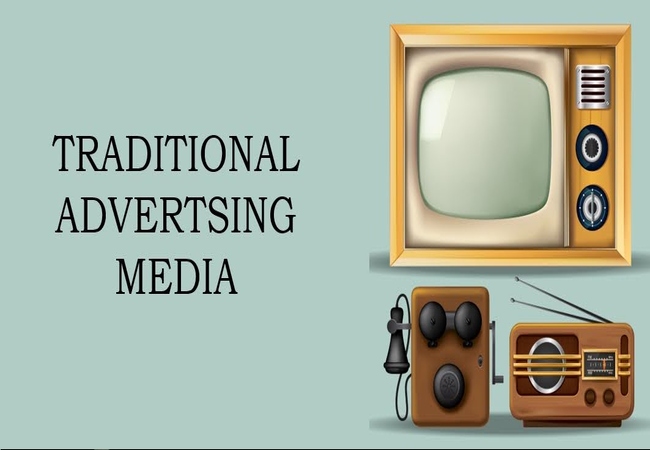
Traditional media include print, broadcasting, and out-of-home media. Even though digital channels are mushrooming around the corner, traditional media still contributes significantly to market reach, especially for newly established brands and local markets.
- Print Advertising includes newspapers, magazines, brochures, and flyers. It effectively targets specific age groups, such as older audiences who still prefer reading newspapers. It is helpful for industries where detailed information is crucial, such as real estate or automotive. It is best for building credibility and reinforcing brand image through high-quality visuals and long-form content.
- Broadcast Advertising encompasses television and radio ads. Television ads are ideal for reaching a mass audience quickly and are often used for product launches or branding campaigns. Radio ads are more localized and effective for small businesses targeting local audiences. They are ideal for creating memorable visual or auditory experiences that leave a lasting impact.
- Out-of-home advertising (OOH) includes billboards, transit ads, and posters. It captures attention in high-traffic areas like highways, city centers, and public transportation. Effective for brand awareness and reinforcing campaign messages through repeated exposure, OOH works well for promoting local businesses or time-sensitive offers.
Outdoor Advertising: Offline Visibility Creates Noise
Outdoor marketing grabs people’s attention by placing them in areas where they can be seen in public. It is excellent for building brand awareness, event promotion, and driving foot traffic into individual businesses. There are several different types of outdoor advertisements, each with strengths that make a particular campaign stand out.
- Billboards: One of the most recognizable forms of outdoor advertising.
- Best suited for high-impact visual messages, ideal for brand recognition.
- Works well for both national brands and local businesses due to its high visibility.
- Effective when placed in high-traffic areas, such as highways or busy city intersections.
- Transit Advertising: Found on buses, trains, taxis, and subways.
- It is ideal for reaching commuters and urban audiences who spend significant time in transit.
- Offers a mobile way of reaching audiences, ensuring the message is seen in multiple locations.
- Effective for time-bound campaigns, such as sales promotions or event announcements.
- Street Furniture: Includes bus shelters, kiosks, benches, and telephone booths.
- Allows advertisers to engage with pedestrians and vehicular traffic in urban environments.
- Useful for hyper-local targeting and reinforcing brand messages in specific neighborhoods.
- Ideal for interactive ads, such as digital screens or QR codes, that encourage user engagement.
- Event and Venue Advertising: Includes signage at sports stadiums, concert halls, and conventions.
- It best captures audiences’ attention in a more relaxed and receptive environment.
- It is ideal for highly engagingly targeting niche markets, such as sports enthusiasts or music lovers.
- Works well for building a brand association with popular events or cultural gatherings.
Other Offline Methods of Advertising: As a means aside from Traditional and Digital

While broadcast forms such as print and outdoor advertising billboards are well-known, many other offline advertising media are lesser known and offer entirely different ways of reaching audiences. Strategic use of these can complement more extensive campaigns and leave a memorable brand experience.
- Direct Mail Advertising: This involves sending promotional materials such as brochures, catalogs, postcards, or letters to the target audience.
- Highly personalized and effective for targeting specific geographic or demographic groups.
- Works well for detailed product information, seasonal promotions, and exclusive discounts.
- Best for nurturing customer relationships and generating leads in a tangible format.
- Experiential Marketing: Involves creating immersive brand experiences that engage consumers directly.
- It is ideal for launching new products, building brand loyalty, and generating social media buzz.
- Effective for creating emotional connections with the audience through live events, pop-up stores, or interactive installations.
- Best for encouraging word-of-mouth marketing and enhancing brand recall.
- Point-of-sale (POS) and In-Store Advertising include promotional displays, banners, and digital screens in retail environments.
- Effective for influencing purchase decisions at the point of sale.
- Best for highlighting new arrivals, special offers, or product demonstrations.
- Works well for encouraging impulse buys and reinforcing brand messages in-store.
Digital Advertising Media Types
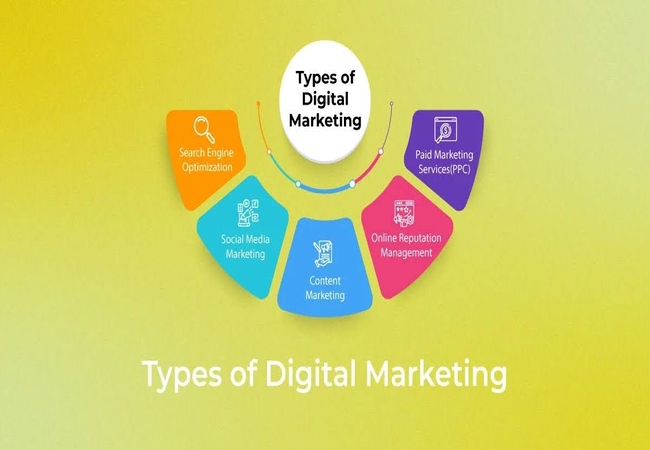
Digital advertising media have become essential marketing tools due to the internet and technology. Interactive and highly targeted avenues of engagement with audiences can ensure easier tracking and measurement of campaign success.
- Social Media Advertising: Platforms include Facebook, Instagram, LinkedIn, Twitter, and TikTok.
- Highly targeted, allowing businesses to reach specific demographics based on location, interests, and behavior.
- It is ideal for building communities, engaging in two-way communication, and promoting user-generated content.
- Best for running both organic and paid campaigns that can go viral and reach millions.
- Search Engine Marketing (SEM): Includes Google Ads, Bing Ads, and other PPC campaigns.
- Target users search for related products or services, making it highly conversion-focused.
- It allows for precise budget control, as advertisers only pay when users click their ads.
- Best for driving website traffic, generating leads, and increasing sales.
Final Thoughts
To create impactful and memorable campaigns, it’s essential to understand and strategically combine various advertising media types. Each type—whether traditional, digital, outdoor, or other offline channels—brings unique advantages that can help brands achieve diverse marketing objectives. By carefully analyzing the strengths of each medium, marketers can craft campaigns that resonate deeply with their target audiences, ensuring high engagement and optimal results.
- Utilize a Balanced Approach:
- Combine traditional and digital media to maximize reach and engagement.
- Use outdoor and offline ads to boost local visibility and brand recognition.
- Leverage experiential marketing for memorable brand interactions and in-store displays to influence purchasing decisions.
- Understand the Strengths of Each Media Type:
- Traditional Media: Best for building credibility and reaching broader audiences.
- Digital Media: Ideal for precise targeting, real-time engagement, and performance tracking.
- Outdoor Advertising: Perfect for high-impact visuals and reinforcing brand messages in strategic locations.
- Other Offline Methods: Excellent for personalization and creating immersive brand experiences.
- Create a Cohesive Multi-Channel Strategy:
- Develop unified messages that can be adapted for different media.
- Use cross-promotional strategies, such as integrating social media with experiential marketing events.
- Monitor performance across all media channels to refine and optimize campaigns based on data insights.
Frequently Asked Questions About Media Advertising
How do you select advertising media?
Selecting advertising media involves determining the target audience’s preferences and, depending on the campaign’s overall objectives, the channels to use. Other factors considered when making choices are reach, engagement potential, and budget.
What are forms of advertising media?
Advertising media refers to different forms, such as television, radio, print (newspapers and magazines), outdoor (billboards), and digital platforms like social media, websites, and email marketing. Each one has its strengths and is recommended to be used toward specific types of marketing objectives.
Why is advertising media important?
Advertising media is essential to a business because it will enable them to reach their audiences, increase the brand’s presence, and encourage and effectively drive sales. An effective advertising media strategy will undoubtedly support a brand’s growth and success more profoundly in markets.
Ad media tracks its ads’ effectiveness through key performance indicators, including reach, engagement, conversion rates, and return on investment. The businesses can then monitor their advertising activities through analytics tools and metrics.
What are some of the current advertising media trends?
Other contemporary trends involving advertising media include influencer marketing, personalization of content, using artificial intelligence in targeting, and social media becoming an increasingly critical platform. Therefore, keeping abreast of these trends would help a business understand which content to personalize, use its targeting facilities, and change market strategies to achieve better performance.
]]>In this guide, we’ll explore the significance of OOH advertising, dive into the emerging trends reshaping the industry, and discuss the future of this dynamic field.
Understanding Out-of-Home Advertising
OOH advertising encompasses any advertising that reaches the consumer while they are outside their home. This includes billboards, transit ads, posters, digital screens, and street furniture like bus shelters and benches. OOH advertising is everywhere—from the city streets to the highways and public transportation systems.
One of the greatest strengths of OOH advertising is its ability to reach a vast audience. Whether you’re a local business or a multinational corporation, OOH provides visibility that digital advertising often can’t match. The best part? It’s not easy to ignore. While online ads can be skipped or blocked, OOH advertising commands attention as consumers go about their daily lives.
Why OOH Advertising Matters
- High Visibility: OOH ads are strategically placed in high-traffic areas, making them highly visible to a diverse audience. This visibility fosters brand recognition and recall, which is essential for any marketing strategy.
- Constant Presence: Unlike digital ads, which can be easily dismissed, OOH advertisements have a continuous presence. This leads to repeated exposure, reinforcing brand messages over time.
- Community Connection: OOH advertising allows businesses to connect with their local communities. Local businesses can effectively promote events, special offers, or new products while fostering a sense of community involvement.
- Complementary to Digital Strategies: OOH advertising works seamlessly with digital marketing efforts. Brands can enhance their overall reach and impact by creating a cohesive message across platforms.
- Creative Storytelling: OOH provides a platform for brands to tell their stories in innovative and memorable ways, creating emotional connections with consumers.
- Data-Driven Decisions: With technological advances, measuring the effectiveness of OOH advertising has become more accessible. Marketers can utilize data to track audience engagement and campaign performance.
- Cost-Effectiveness: Compared to many digital channels, OOH can be more budget-friendly. This allows brands, especially smaller businesses, to reach large audiences without breaking the bank.
As the marketing landscape evolves, OOH advertising remains a potent tool for brands to engage consumers effectively.
Emerging Trends in Out-of-Home Advertising
The OOH advertising landscape is not static; it’s constantly evolving. Here are some of the latest trends that are shaping the future of OOH advertising:
3D Billboards: Creating Eye-Catching Experiences

Imagine walking down a busy street and seeing a billboard that seems to pop out at you. 3D billboards are captivating giants that utilize depth and dimension to engage viewers. These eye-catching designs create memorable experiences, making it hard for passersby to ignore the advertisement.
- Enhanced Engagement: The dimensional aspect encourages viewers to stop and take notice, leading to increased interaction and recall.
- Unique Storytelling: 3D billboards allow brands to tell their stories creatively, enhancing the consumer experience and creating memorable impressions.
- Photo Opportunities: Many people love to snap pictures with stunning 3D billboards, amplifying organic social media reach as they share their experiences.
- Brand Differentiation: 3D billboards help brands stand out and make a lasting impression on consumers in a crowded advertising landscape in a crowded advertising landscape.
- Innovative Designs: Brands continually experiment with new 3D concepts, pushing the boundaries of creativity in OOH advertising.
Programmatic Digital OOH: The Future of Advertising
Programmatic digital OOH advertising leverages data and automation to enhance campaign effectiveness. Marketers can adjust messages based on real-time factors like time of day, weather, and demographics, making the ads more relevant and impactful.
- Dynamic Content: Advertisers can change their messages based on external factors, optimizing relevance for their target audience.
- Improved Targeting: Marketers can reach specific demographics, increasing the likelihood of engagement and conversion rates.
- Real-Time Analytics: This technology allows marketers to access real-time data, making it easier to assess campaign performance and adjust strategies.
- Cost Efficiency: Programmatic buying reduces wastage by ensuring ad spending is targeted toward the most relevant audience segments.
- Seamless Integration: Programmatic digital OOH integrates well with online and mobile advertising efforts, providing a comprehensive marketing approach.
Creativity-Stimulated Advertisements: Thinking Outside the Box

Modern ads are evolving into interactive presentations that inspire responses from consumers. Brands can capture attention and foster deeper connections using novel materials and engaging designs.
- Interactive Elements: Brands incorporate interactive features, encouraging consumer participation and enhancing engagement.
- Unique Textures and Materials: Advertisers are experimenting with various materials to create tactile experiences that engage viewers’ senses.
- Visual Storytelling: Creative ads often tell a story, utilizing visuals to convey messages effectively and memorably.
- Cultural Relevance: Ads that resonate with current trends or cultural moments often see higher engagement rates, emphasizing the importance of staying relevant.
- Artistic Collaborations: Brands are partnering with artists to create visually stunning and thought-provoking installations that capture attention and create buzz.
Targeted and Location-Based Advertisements
These ads utilize real-time geolocation technology to send tailored messages to specific audiences. This precision increases engagement and conversion rates by ensuring the right message reaches the right people.
- Real-Time Customization: Location-based ads can change dynamically based on the user’s location, ensuring relevance and timeliness.
- Higher Engagement Rates: Targeted ads perform better as they cater specifically to the interests and needs of the audience.
- Enhanced Customer Experience: Consumers appreciate receiving relevant information, creating a more positive brand perception.
- Data-Driven Insights: Advertisers can collect consumer behavior and preferences data, enabling them to refine their targeting strategies continuously.
- Cross-Platform Integration: Location-based ads can be integrated with mobile and online advertising, creating a cohesive consumer journey.
Multi-Channel Focused Advertisements: Bridging the Gap
Advertisers integrate traditional OOH displays with digital channels to create cohesive brand experiences. For instance, billboard QR codes direct consumers to interactive online content, bridging the gap between offline and online interactions.
- Unified Brand Messaging: Multi-channel campaigns ensure consistent messaging across all touchpoints, enhancing brand recall.
- Increased Consumer Engagement: By linking physical ads to digital content, brands can engage consumers more deeply and encourage interaction.
- Social Media Amplification: Multi-channel campaigns often encourage social sharing, allowing brands to expand their reach through user-generated content.
- Data Collection Opportunities: Integrating online components provides brands with valuable consumer preferences and behavior data, informing future campaigns.
- Adaptive Marketing Strategies: Multi-channel approaches allow brands to adapt their strategies based on real-time feedback from various platforms.
Mobile Adverts: Engaging Consumers on the Go

OOH advertising now includes interactive elements that allow passersby to engage with signs using QR codes or NFC tags. This trend connects physical displays to the digital realm, expanding audience reach and engagement.
- Instant Access to Information: Mobile adverts provide consumers immediate access to relevant content, enhancing their overall experience.
- Convenience: The ability to engage with OOH ads through mobile devices makes it easier for consumers to interact with brands on their terms.
- Enhanced User Experience: By creating a link between physical ads and online content, brands can offer consumers an enriched experience that adds value.
- Consumer Engagement Metrics: Marketers can track interactions with mobile ads, providing insights into consumer behavior and preferences.
- Bridging the Digital Divide: Mobile integration allows brands to connect effectively with consumers who may not engage with traditional advertising methods.
Cost-Effective Ads
- Focus on Cost-Efficiency: There is a strong trend towards achieving impactful advertising without excessive spending.
- Digital Screens and Technology: Utilizing digital screens reduces the need for printing, lowering overall costs.
- Real-Time Adaptation: Digital ads allow for quick adjustments, enabling real-time updates to messaging based on audience response.
- Shared Advertising Boards: Marketers can collaborate on shared boards, splitting costs while increasing reach.
- Cooperative Ad Campaigns: Partnering with other businesses allows advertisers to pool resources and maximize exposure.
- High Demand for Resource Optimization: These strategies enable brands to convey a unique and powerful message while keeping expenses low.
The Future of OOH Advertising
As technology continues to advance, the future of OOH advertising looks promising. Here are some key factors to consider as the industry evolves:
Integration with Augmented and Virtual Reality
Augmented Reality (AR) and Virtual Reality (VR) transform how consumers interact with advertisements. Imagine walking past a billboard that lets you virtually try on sunglasses or see how a new car looks in your driveway. These technologies create immersive experiences that can captivate consumers.
Sustainability and Eco-Friendly Practices
As consumers become increasingly aware of environmental issues, brands adapt their OOH advertising strategies to be more sustainable. This includes using eco-friendly materials, minimizing waste, and opting for digital formats that reduce paper usage.
Enhanced Data Analytics
The use of data analytics in OOH advertising will continue to grow. Brands will have access to more sophisticated metrics to measure the effectiveness of their campaigns, leading to better targeting and personalization of advertisements.
Greater Focus on Personalization
The future of OOH advertising lies in personalization. By leveraging data and technology, brands can tailor their messages to specific audiences based on location, demographics, and behaviors. This shift toward personalization will make OOH advertising even more relevant and effective.
Continued Adaptation to Consumer Behavior
The way consumers engage with advertising is continually evolving. OOH advert remains relevant in an increasingly competitive landscape; it must adapt to changing consumer behaviors, preferences, and lifestyles to remain ought.
Out-of-home advertising continues to be a vital component of modern marketing strategies. As brands navigate the complexities of consumer engagement in a digital world, OOH offers unique opportunities for connection and impact. The emerging trends in OOH advertising reflect the industry’s adaptability, creativity, and commitment to staying relevant in an ever-changing environment.
- OOH advertising remains a powerful brand promotion, bridging the gap between physical and digital experiences.
- Technology and innovation are redefining traditional advertising practices, leading to more dynamic and engaging campaigns.
- Creative storytelling and personalization will be essential to successful OOH campaigns in the future.
- OOH advertising complements digital marketing strategies, offering a holistic approach to consumer engagement.
- Embracing emerging trends and adapting to consumer behavior will ensure that brands remain competitive and relevant.
By embracing the latest trends and understanding the future of OOH advertising, brands can effectively engage consumers and leave a lasting impression.
]]>OOH branding campaigns are extremely targeted and relevant in terms of geography, demographics, customer behaviour, and time of day.
With outdoor branding, brands have the opportunity to create memorable campaigns that will stand out from the crowd. A successful outdoor advertising campaign or OOH marketing strategy gets the correct message to the right people at the right time and place.
What is an Outdoor Advertising Campaign?

Outdoor advertising or out-of-home advertising or OOH advertising encompasses almost everything people encounter outside their houses. This covers advertisements viewed while “on the go.” OOH marketing includes billboards, bus benches, and other forms of transit advertising that are quite beneficial for any business or brand.
Although many people believe the location to be the single most crucial component, other key variables that affect the effectiveness of out-of-home advertising or OOH branding campaigns include location, length, ad size, and the graphics of the advertisement such as the logo, images, font, and colour.
A successful outdoor advertising campaign or out-of-home branding can be used to reach a broad audience with the right message at the right time. Outdoor marketing is a great way to get your message out to the public.
Need for an Outdoor Advertising Campaign

The majority of people spend more than 70% of their time outside of their homes, allowing businesses to advertise their services and gain greater visibility.
Roadside advertisements can access markets that are inaccessible to other forms of advertising. It has excellent frequency, coverage, and impact. The likelihood of repeating advertising is considerable because passengers frequently travel the same route.
OOH advertising or out-of-home marketing is accessible around-the-clock, is seen by a large audience, and, unlike TV commercials, print ads, and radio ads, outdoor advertisements are more difficult to block or ignore.
Out-of-home advertising or OOH marketing campaigns are a crucial component of any marketing plan. Campaigns for outdoor branding can be used to raise awareness of a good or service, advertise sales, and improve brand recognition.
How to Create a Successful Outdoor Advertising Campaign
It can be difficult to launch effective out-of-home marketing campaigns, especially if brands have no prior expertise or professional understanding of the OOH branding industry. This quick guide can get the business ready to begin the outdoor advertising campaign like a pro.
Set your objectives right

Establishing your marketing objectives is crucial. It is the first stage in developing a fruitful, profitable and successful out-of-home branding strategy.
The goals might be as basic as brand building, raising sales, or increasing website traffic but brands need to be specific about what they want to achieve with this OOH advertising campaign. OOH marketing or out-of-home branding often aligns with the rest of an industry’s marketing plan to maximize return on investment.
The success of an out-of-home marketing strategy can be evaluated using marketing goals. It will also help brands decide on their spending limit, the location of their ads, the message they want to convey, and even how long they need to keep them up.
Identify the target audience

Active and prospective customers are the target audience of the brands and their needs and want must be considered before planning an OOH advertising strategy. Covering the desires of the target audience is the ultimate way for designing an out-of-home marketing campaign.
As an advertiser, the most crucial thing to do is to have a thorough grasp of the target market and the target audience. Each aspect of any marketing strategy of a brand is influenced by its target audience.
Buyers’ personality aids in understanding and identifying the traits of the target market in several ways, such as their lifestyle preferences, demographics, and modes of decision-making.
Decide the location for the OOH branding campaign

The location of the out-of-home advertising plays a very important role when planning a successful outdoor advertising campaign.
Even though it is ideal to place the advertisement in a busy area, brands should think about whether or not the target audience often visits that location. Based on the goals, certain places will be more or less suggested and successful than others.
For instance, Positioning the billboard where it will attract potential consumers is great when it is advertising an offer from the company store or online. This may be in a busy city centre or on a main highway where it can be seen by both vehicles and passengers.
Design of the out-of-home advertising campaigns

To persuade their target market to purchase their good or service, brands must have the appropriate voice, tone, and appearance. Brands must capture and hold the attention of their target audience. If an OOH marketing or out-of-home marketing strategy is well-designed and conveys its message well, viewers are more likely to remember the company.
Moreover, market research aids in deciding the best strategy to use, the kinds of outdoor branding that will best reach the brand’s target audience, and most crucially, where to focus their advertising efforts.
For instance, any slogan or tagline should be brief, to the point, and memorable because your target audience might not have the time or inclination to read a paragraph of text when they are walking, driving, or riding the bus.
Tips to Consider while Planning for a Successful Outdoor Marketing Campaign
There might be hundreds of thousands of individuals that see the brand’s out-of-home marketing campaigns. Here are some suggestions for making sure that outdoor advertisement is memorable.
Thorough research

Market research enables brands to see the tactics employed by their rivals and what has proven successful for them.
Moreover, it enables them to recognize their USPs, the approaches and techniques the target audience reacts to, the niches where outdoor marketing might succeed, as well as other pertinent details.
Content is king

Businesses need to produce eye-catching and memorable designs for their billboards to be successful in the outdoor branding or out-of-home branding market. This goes beyond simply finding the ideal site.
To persuade the target market to purchase any good or service, brands must have the appropriate approach, tone, and voice. By making sure that the out-of-home branding campaign’s content is cool and shareable, brands can easily draw the attention of onlookers.
Maintaining simplicity

The majority of individuals view outdoor ads when they are moving along. Brands should make sure the message is easily understood so that it may be applied.
Reading lengthy phrases in outdoor ads is challenging so brands should make the ad’s sentences brief and to the point.
Discover the perfect balance

While brands want consumers to see their advertising, they don’t want to divert their attention while driving.
Maintaining the curiosity of people travelling in cars, public transport, cyclists, and pedestrians while also taking care to avoid having the advertisement become so distracting that they are unable to maintain their focus on the road.
Measure the ROI

The scale, efficacy, and cost of various outdoor branding mediums vary. Brands ought to know exactly how many resources they will need and what outcome they are hoping to get at this stage.
Evaluate the benefits and drawbacks of various out-of-home advertising strategies, as well as their costs per unit and impressions per mile.
Don’t restrict

Brands nowadays are aiming to deepen their customer interactions, and many believe that location-based mobile marketing is a channel that can do this. Technologies may be used to boost client activation and engagement.
As consumers spend the majority of their time on mobile devices these days, marketers can plan more effectively and demonstrate attribution for their campaigns by using mobile data that has been anonymized and aggregated with DOOH.
Takeaways
A good technique to deliver outdoor marketing, also known as out-of-home advertising or OOh branding, the campaign is to combine creativity with a defined marketing plan. Taking the effort to plan and organize an outdoor marketing strategy may reap rewards.
Purchasing advertising space on property near the physical store may greatly increase local foot traffic as a part of an out-of-home advertising strategy. Businesses may guarantee that their target audience continues to think of them by investing in an outdoor marketing campaign.
]]>A business’s value proposition should be at the heart of its marketing strategy. Only when an online or offline marketing plan aims to drive and communicate a sustainable advantage over the competition can this core value align with it? Emerging trends are only balanced with successful tactics when serious results are sought.
A business can use marketing strategies to develop its organization and attract customers. Before exploring further, let’s first discuss what marketing strategies are and why companies must use them.
What Are Marketing Strategies?
Marketing strategies are planned to promote a new venture across different media and channels. They involve goals, target audiences, content creation strategies, performance indicators, etc.
Main Components of Marketing Strategies
- Target Groups: Knowing who can be targeted to tailor your marketing practices is essential.
- Goals: Reaching clear and measurable objectives ensures your marketing strategy is coherent with the overall business objectives.
- Content Creation: Relevant and engaging content would help you reach and connect with your audience.
- Key Performance Indicators: You need to track metrics to assess your marketing initiatives’ effectiveness to continue improving.
- Competitive Advantage: You can position your brand better if you uniquely know your product or service.
A strong marketing plan can give you an idea about who your prospective customers are and where you may satisfy them better than others. That would be your long-term view of communicating value, where the startup delivers for a target audience. Remember that the hybrid marketing strategy, comprising online and offline strategies, should guide what one would undertake for any marketing campaign.
Why Businesses Need Marketing Strategies

A marketing strategy is the most fantastic tool for business growth for any startup: it is a map that guides savvy decisions of companies. There is a framework in marketing strategies through segmentation, targeting, and positioning—a way that helps startups understand how they will get to their customers effectively.
Why Companies Need Marketing Strategies
- Guidance: They provide direction for companies in their marketing endeavors.
- Customer Engagement: It helps design products and services to meet customer needs.
- Communication: It guides how to communicate product information to the target audience effectively.
- Overcoming Challenges: Marketing strategies can help overcome hurdles and anticipate future challenges.
- Performance Tracking: Businesses can measure the success of their marketing initiatives.
Thus, these marketing strategies can be a mantra for business growth; they enable businesses to overcome hurdles and predict future challenges. Here are 11 effective marketing strategies that will help your startup flourish.
11 Marketing Strategies for Business Growth

As mentioned earlier, business operations would require a committed effort to turn out successful, yet more than commitment is required. A marketer must devise a plan ensuring relevance and sustainability in the marketplace. The following lines identify some effective offline marketing strategies that are not a sure shot at success but contribute to business growth.
CSR Importance

Corporate Social Responsibility (CSR) is defined as a business’s commitment to being a good corporate citizen for the benefit of the company itself, society, and various stakeholders. Participating in social causes not only sensitizes but also changes people’s perceptions.
- Competitive Advantage: Companies with CSR departments tend to remain ahead of the competition.
- Brand Attachment: Active involvement in social causes tends to deepen consumer attachment.
- Cost-Efficiency: CSR activities tend to beautify your brand image with minimal advertising expenditure.
- Positive Publicity: CSR will positively attract media and give an excellent image to the brand.
- Community Engagement: It helps create a good image and increase credibility in the community.
For example, through the “Shiksha – Padhega India, Badhega India” initiative by Procter & Gamble, education has successfully been provided to more than 280,000 poor children. Water conservation initiatives undertaken by Hindustan Unilever have also brought the message of environmental concern to society.

Event Sponsorship

Event sponsorship is a significant marketing activity that increases exposure and branding. It involves a thematic presentation or exposition that represents a business and allows it to connect with people.
- Face-to-Face Contact: Events allow customers to experience the brand for direct contact, thus improving a brand’s relationship.
- Networking: Companies can associate with other entrepreneurs regarding possible collaborations.
- Target Audience: Events attract the right kinds of people, ensuring that marketing efforts reach the target audience directly.
- Brand Experience: Live events create a memory; consumers get to experience the brand in a meaningful way.
- Community Presence: Local sponsorships help build the company’s image in the community.
Start-ups can organize various events, such as marathons, art exhibitions, and product launching events, to create buzz about their brand. Sponsorship increases visibility and brings the brand to the forefront of the industry.
Guerrilla Marketing

Guerrilla marketing is an unorthodox and innovative approach that focuses on word-of-mouth and personal communication. It is best for start-ups and tiny businesses that wish to stand out without burning their pockets.
- Cost-Effective: Guerrilla marketing activities usually require relatively low investments compared to traditional advertisements.
- Creativity: There are no set rules; the company can do whatever it feels would get it noticed.
- Local Sensibility: Works excellent for cities; attracts local audiences’ attention.
- Social Sharing: Novel campaigns will be shared more on social media, spreading the word organically.
- Instant Attention: Surprise and engaging marketing can grab people’s attention immediately.
For instance, the Anando Milk billboard on a skyscraper in Mumbai increased milk consumption among children and showed the world how innovative guerrilla marketing can trigger a target audience.
Trade Shows

Businesses can attend trade shows to gain more visibility and promotion for their products and services. This is always an opportunity for networking in the industry and even partnerships.
- Demos of Product: Trade fairs allow business organizations to showcase their products and services to interested individuals.
- Lead Generation: The exposure enables firms to collect leads and follow up on clients.
- Networking: Startups can connect and network with professionals in the same trade.
- Market Research: Observing the reaction of competitors to a similar product will help evaluate future courses.
- Validation: Trade fairs provide a direct route for companies to communicate with customers, making a firm more believable and fostering growth.
Offline Affiliate Marketing

Affiliate marketing is one of the best modes of marketing. In this mode, affiliated marketers market a company’s products or services at their physical locations, increasing the chances of selling exponentially.
- Direct Interaction: People can touch and feel the product, which increases the possibility of selling it.
- Cost-Effectiveness: Businesses incur a cost only on successful sales, reducing risks in marketing.
- Rewarding Promotion: Affiliate marketers are motivated to promote because they receive a commission from successful referrals.
- Brand Awareness: Local affiliates can create community awareness by focusing on the target market.
- Scalability: Startups can scale affiliate programs with business growth.
For example, Amazon’s affiliate program enables bloggers and site owners to earn a commission by creating links for Amazon products. This model has been rewarding for Amazon and its affiliates in terms of good sales.

Out-of-Home Advertising

Out-of-home advertising involves advertising outside of the home. It constitutes a very effective strategy for reaching a larger audience through various marketing efforts to promote a company’s products or services.
- Deeper Reach: Out-of-home advertising targets where the consumer spends most of their time, thereby increasing exposure to the advertisement.
- Image-Based Appeal: Innovative images usually attract and linger in the subconscious.
- Location-Based Marketing: Advertisements can be placed at prime-access locations to maximize visibility.
- Competitive Advantage: Unlike digital, there is relatively less clutter to compete against in OOH spaces.
- Brand Saliency: The more consumers see it, the more they remember and recall a brand.
Common OOH mediums include billboards, posters, and digital displays in shopping malls and transit stations, making them vital for brand visibility.

Public Relations Investment

Public relations (PR) manages a firm’s reputation through strategic communications and media relations. Unlike advertising, PR emphasizes earned media, while advertising focuses on paid placements.
- Trust Value: PR has virtues since it comprises real stories rather than paid advertisements.
- Media Relations: A link with journalists can lead to priceless media coverage.
- Storytelling: Compelling stories related to your brand can easily connect to your target audience.
- Crisis Management: PR methods help navigate difficult situations while maintaining a good public image during challenging times.
- Long-Term Impact: Good PR can have long-lasting beneficial effects, building consumer loyalty and trust over time.
Strategic media releases can create a positive buzz about a startup and lead to opportunities for interviews, guest blog posts, and speaking engagements.
Freebies and Samples

Free samples allow consumers to test your product without risk. It’s an excellent way to enhance visibility and sales conversion.
- Risk Reduction: Consumers may be more willing to try a product without financial risk.
- Brand Experience: Free samples allow consumers to experience the product first-hand.
- Enhanced Loyalty: Offering free samples can create a sense of gratitude that leads to loyalty.
- Customer Feedback: This strategy allows companies to gather customer insights on the product.
- Word of Mouth: Satisfied customers may share their positive experience, bringing in referrals.
Many beauty brands, such as L’Oréal and Sephora, employ this strategy during product launches and events.
Referral Programs

A referral program incentivizes existing customers to recommend your business to friends or family. This is an effective strategy as people tend to trust recommendations from others.
- Trust Factor: Referrals have more credibility; people tend to trust the recommendation more than advertisements.
- Cost-Effective: Referral programs can lower customer acquisition costs significantly.
- Customer Loyalty: Rewarding referrals can increase customer loyalty among existing customers.
- Expanding Customer Base: Each referral can lead to a growing customer base with minimal investment.
- Ease of Implementation: Setting up a referral program is straightforward and easily managed.
Dropbox successfully used a referral program to exponentially increase its user base, rewarding users with additional storage space for each referral they made.

Flyers Making

Another way to reach your target audience using your brand’s message is through free printed promotional materials. Flyer printing may be an old strategy, but that doesn’t mean it’s not helpful; this is especially applicable when attending a trade show or increasing awareness for your community.
Given so many design options, flyers are more accessible to design and may be printed using the finest techniques we provide: our offset or digital printing.
Flyers and brochures can be used in many ways to attract your target audience’s attention:
- Flyers will look more beautiful if printed with the best technology and quality.
- To interest readers, startups can use catchy headlines, bold colors, and vivid images.
Digital Marketing

A digital marketing strategy is a plan for creating an online presence using tools like:
- Social media
- Sponsored Search
- Organic search
- Other web-based platforms like your website
Digital marketing tactics aim to increase brand awareness for your business and attract new customers. In building a digital marketing strategy, a business needs to take into account:
- Owned media: The organization’s communication channels.
- Paid media: The purchased media.
- Earned media: External media.
Cafe Coffee Day (CCD) is the largest coffee store in India. One of this company’s most distinct features is that it rarely uses print, television, radio, and other traditional media forms of promotion. Their marketing strategy is firmly based on digital media, especially online and social media advertisements.
Major Takeaways
To summarize, the primary strategies discussed here include:
- Emphasizing the importance of CSR for brand perception and engagement.
- Utilizing event sponsorship for direct consumer interaction.
- Leveraging guerrilla marketing for creativity and cost-effectiveness.
- Participating in trade shows for networking and lead generation.
- Implementing affiliate marketing for community-based sales initiatives.
- Investing in out-of-home advertising for broader reach.
- Managing public relations for trust and credibility.
- Offering freebies to enhance product trial and loyalty.
- Establishing referral programs to utilize word-of-mouth marketing.
- Focusing on local SEO for targeted traffic.
- Engaging customers through effective email marketing campaigns.
Conclusion
Every business needs to grow, and implementing sound marketing strategies is critical to achieving this. Each marketing strategy mentioned here has unique advantages and can be implemented in various ways, depending on the business’s goals, resources, and target audience. Therefore, companies must choose the strategies that best align with their objectives and brand values. Companies can ensure sustainable growth and increased customer engagement by effectively utilizing these marketing strategies.
]]>It is one of the various ways to advertise a good or service that has been taking off for a while now. Transit advertising, often known as advertising on transportation vehicles, refers to any form of advertising done with the help of taxis and vans. It may take the form of illustrations, plain text, or other aesthetic content. In fact, some companies like using interactive audio-visual marketing where potential customers can even participate in tests and demonstrations.
In this article, we’ll delve a little deeper and go over the reasons for mobile van advertising in order to clear up any confusions and questions you may have.
What do you mean by Mobile Van Marketing?
A mobile van is a vehicle that is utilised solely for advertising activities and is equipped with an appropriate arrangement for signboards or posters. Building a brand and getting noticed are the two main goals behind a mobile van branding campaign. Although this is a marketing strategy that any company can adopt, mobile van advertising is particularly advantageous for small enterprises. This is due to the ease with which they may approach their local population.
The concept used in mobile van branding is clear and basic. On most days public roadways and local streets are extremely crowded. Most significantly, at these places, you can easily discover a variety of buyers and can target them to sell your products. The millions of individuals who use or pass by local transportation systems every day are the primary audience for mobile van advertising campaigns. It provides unmatched advertising coverage to boost your marketing effort’s frequency and effect.
The American Public Transit Association (APTA) estimates that mobile van marketing produces over $500 million annually and reaches up to 83 per cent of daily travellers and 69 per cent of weekend passengers. The more people who see your mobile advertisement, whether it’s in a minibus, car, or van, the more probable it is that they will recognise your business and decide to buy something.
Why choose Mobile Van Marketing?
Mobile van advertising has many advantages over traditional forms of advertising that are difficult to overlook. Imagine a billboard-equipped mobile van driving throughout the city. Every driver on the street is bound to see it. This type of advertisement gives the brand name all the credit it merits.
Now think about your role as a business manager or a marketer and you will realise how smoothly mobile van advertising can help you build brand recognition. You can use a mobile van to introduce a new product or service to your market segment. There are ample reasons for mobile van advertising.
The benefit of mobile van advertising is that you may pick the locations where you wish to promote your goods or services. You can also control the timings and locations where you want to display your ads currently.
The ultimate purpose of mobile van branding is to draw potential customers’ attention and introduce them to your business. Making a dramatic, lasting impression is easy and effective with mobile van advertising.
On public transportation, passengers are searching for a convenient distraction. Because of this, transit users not only appreciate but also react to advertisements, providing businesses with an unparalleled chance to become popular on social media.
Top Reasons for Mobile Van Advertising 2023
Let’s take a closer look at mobile van marketing campaigns, digging down the most important eight reasons why this profitable type of out-of-home advertising should be a priority element of your media budget.
Versatile and multiple uses

Mobile vans are an adaptable kind of advertising that may accomplish several tasks simultaneously. They can advertise a particular item in a variety of ways. Often mobile vans for marketing are also built to function as roaming kiosks for business promotion since these real-time kiosks may be utilised to provide demonstrations and displays for marketing a specific product or service.
However, they can also be utilised as delivery vans for the company, with their logo and advertising displayed.
Does not require a fortune

Mobile van advertising is seen as an efficient kind of advertising because, when contrasted to other methods of outdoor marketing, it provides a bundle of enhanced exposure, widespread outreach, and efficient communication in a single vehicle for the lowest possible cost.
Additionally, they can be greatly customised, therefore the conversion rate is consistently greater. This makes this style of advertising more economical than many other types of advertising.
High geographical reach

Only mobile van advertising is capable of reaching hundreds of consumers in a single day, and that too without charging additional fees. This is mostly due to the extensive geographic coverage it offers. It spreads your business identity wherever it moves and can be stationed in strategic spots and market areas to maximise brand presence. Additionally, by choosing the market group they want to focus on, marketers can more successfully contact their intended audience.
Provides improved and more frequent exposure

The best aspect of mobile van advertising is undoubtedly how widely it is seen by consumers. No scope for turning off the tv or radio or paging through a newspaper! Also, customers are sure to see the mobile van advertising stationed on the highways several times because most people pay attention to the roads when driving or riding public transportation. Additionally, because there is an opportunity for repeated exposure to the audience, developing a brand identity is simple.
Targets a large chunk of the local population at once

Another noticeable aspect of mobile van marketing is how it simultaneously targets and attracts a sizable portion of the local populace. Mobile van advertising reaches everyone because it is not limited to a single location. Additionally, your message is broadcasted to everyone passing by the neighbourhood and not just the locals. By making its influence felt and encouraging potential customers to purchase a specific good or service, it aids in the creation of fresh demand.
Easily communicate with your customers

Mobile van branding gives your company’s image a character and vibe. It also helps in communicating the advertisements to the audience in a clear and impactful manner. According to 96% of viewers, mobile advertising is more successful than any other form of conventional outdoor advertising. It also provides a variety of opportunities to engage with your target market; you may run some fun competitions, award prizes with product samples, and improve customer engagement. This will assist you in developing close bonds with your consumers and may go a long way toward boosting customer loyalty and gaining credibility for your company.
Showcase multiple forms of media together

One of the most striking features of mobile van marketing is that it is highly adaptable and works with a variety of media, offering numerous chances to stack your marketing messages and strategies. This way there are more chances of captivating the attention of the audience and boosting engagement. Sometimes mobile vans also provide trials and demos of the products they are promoting and this helps the buyers to develop an idea about the goods being sold by the company.
The controls belong to you

In this marketing strategy, the brand has the choice to pick the areas where it wants to advertise to in order to grow its customer base. It can also set trip schedules and routes. During promotions in mobile vans, If you notice that your potential customers are unusually concentrated in one region, you may quickly manage your advertisement and stop it at the desired location. As a result, individuals of varied target age groups and socioeconomic backgrounds are able to see and interact with your advertisements.
The Bottom Line
To put it all in a nutshell, we can say that much like other types of promotion, mobile van branding has perks and downsides of its own. But because the advantages greatly surpass the drawbacks, this type of advertising is quickly rising to the top of the list of most favoured methods. Thus, it would be very soon that we begin to notice advertisements for some of the well-known brands on every bus and van!
]]>Aren’t you surprised? We do not blame you. You’d expect this tech-savvy generation to ignore ancient advertising mediums because the digital world takes up most of their time. However, as a recent Kantar Study points out, their ad preferences don’t replicate their habits.
“Gen Z Use online like OOH (Out-of-Home).” This statement headlines Kantar Millward Brown’s advertising habits study. This is often a generation of individuals who’ve had Facebook and Instagram profiles all their life. They consider their smartphones a lifeline associated with degrees and an extension of themselves.
Today over eighty million young Millennials represent $200 billion in annual shopping for power.
Millennials and Gen Z comprise nearly 1/2 of the United States of America population and represent the foremost cogent shoppers. However, Millennials and Gen Z are the elusive central audiences to interact with, as they lead the charge on cord-cutting, ad-blocking, and radio-streaming.
The shift in audience consumption habits has resulted in a lot of investment in out-of-home (OOH) promotion. Irrelevant ads have a steadfast, evergreen quality that appeals to most younger shoppers and, in distinction to different media channels, can not be unnoted by skipping, fast-forwarding, or paying a lot to avoid ads.
Here are three reasons why out-of-home advertising is the best media for reaching Millennials & information Z:
Authentic and real-world expertise resonate.
One of the only things the overwhelming majority of Millennials agree on is that they don’t wish to be marketed to. Gen Y craves genuineness, with eighty-nine preferring easy ads and ninetieth noting they need a brand’s messages to match its actions.
Gen Z conjointly values genuineness and real-world experiences. In fact, in line with a recent international study by Kantar Millward Brown, OOH is the #1 most popular ad format among Millennials and Gen Z.
And in line with Nielsen, “One out of each four shoppers can post a picture of a door ad to Instagram.” Shoppers are 48% likely to click on a mobile ad once being exposed to a similar ad on associate degree out-of-home advertising initially.
While Gen Y and Z shoppers love content, they need very little tolerance for interruptive ads – creating irrelevant ads and experiential media is a vital medium for marketers as they appear to make awareness, relevance, and affinity with younger shoppers.
Shorter attention spans during a digitally saturated world

Gen Y and Z have voracious appetites for content but conjointly shorter attention spans. Gen Zers grew up with smartphones. Their 8-second span is even faster than Millennials, who pay grievous bodily harm of twelve seconds on average.
Gen Y and Z are aligned in their media consumption habits. They like watching videos on-demand. Over twenty-fifths of Gen Z watch live TV on mobile, with a better proportion streaming on-demand video.
Digital and social media ads have become more saturated and less effective than ever. Facebook and social platforms currently throttle branded content in the news feed, making it more durable for brands to achieve their target shoppers.
To overcome this challenge, brands are increasing their promoting pay and outside ads, bolstering direct-to-consumer engagement within the native market with authentic content relevant to their daily lives.
Improve Brand Engagement

With advertisements that address the problems of society at large, OOH advertising helps the brand engage audiences and leave a mark on their minds. According to various research, about 48% of millennials are more likely to click on the mobile advertisement of a brand after being exposed to an OOH advertisement of it first. People are more likely to know more about your brand if you are running an OOH advertising campaign, instead of an online marketing campaign.
Also, if your billboard addresses a social issue, it is more likely to be shared online by your target audience and reach millions of people. This will also bring down your expenditure while maximizing impact and revenue.
Improves Market Presence

With an increasing number of people going for in-store experiences, OOH advertising is at an all-time high. Over 92% of the people admitted to noticing an OOH advertisement while out shopping for groceries or other stuff. It also helps build customer loyalty. More people tend to buy from a brand they know about, instead of the brand about which they have only seen a few ads online. Thus, with OOH advertising your brand’s market presence is boosted and more people tend to know about your brand. This will certainly boost people’s trust and loyalty to the service.
Improves Social Media Presence

About 46% of people tend to share pictures of OOH advertising on their social media accounts if they find it as something relevant or something that they relate with. This helps boost the social media presence of your service hence improving the conversion rates and the number of likes on your page. This helps your service land on top of search engine pages and improve your conversion rates. This also helps bring down costs for advertisement as the major outreach is done via social media and your brand makes a mark socially while resonating with the masses.
Conclusion
OOH advertising is the number one form of advertising your brand nowadays. It is the form of advertising that not only helps you gain more customers but also helps your brand create a market presence, resonate with the masses and provide a social outlook to your brand as well. Hence, this form of advertising helps your brand shine through and gain attention from the ever-busy millennials and Gen Z.
Advertising at the right places, keeping in mind the short attention span of the audience definitely will help the brand carve a niche for itself. Having said that, it is extremely important that your brand does create its space in the market to outshine the other products and generate revenue.
Monitoring the public response will also help you plan the future course of advertisement for your brand and to ensure that your brand does create a market of its own.
We at Ginger Media understand that not everyone is well versed when it comes to OOH advertising. So, we are here to help you out! We would love to assist and make the task radically simpler for you!
Please feel free to drop us a comment to suggest what would you like to see more of. 
If you are a medium or a large-sized business in India, looking to do sustainable, profitable, effective offline marketing, OOH advertising, BTL activation, auto branding, bus branding, RWA or anything that has to do with traditional media and offline marketing, branding, give us a call at +91-8884442846 or drop us an email at contact@gingermediagroup.com.
]]>What is outdoor and transit media branding?

Outdoor media is a form of media advertising which takes place outside the homes of people. That is, it is displayed in the form of billboards at flyovers, kiosks, digital billboards, hoardings, and signals near the road at the pedestrian path, the outdoors to be viewed by a mass population.
On the other hand, transit media branding also advertises outside, but it places advertisements on vehicles or transits which is why it is called transit media advertising. It is one of the prevalent ways of advertising for brands today.
Outdoor advertising differs from transit media advertising
1. Billboard Advertising
It is found that around 83% of people do remember the OOH advertisements they view 30 mins before shopping. Billboard advertising is on a rise. We view it as constantly evolving and changing advertising. In a highly digital world, hoarding advertising is done to provide a more realistic, immersive, and engaging brand experience to consumers. Billboard advertisements are stationary whereas transit advertisements like bus ads, auto rickshaw ads, or metro ads are non-stationary.
2. Street furniture
Street furniture is another popular form of OOH advertising that targets public-use furniture. For example, covering the sides of benches or a telephone booth. It is located in proximity to places where the brand’s target audience is present and gives customers an eye-level marketing experience. Street furniture advertising which is a form of guerilla marketing is restricted to specific places or residences. Whereas, transit ads are constantly moving in and around the city, traveling to the deepest corners of it.
3. DOOH Advertising
Looking at the emergence of digitalization in India, digital billboards are slowly making space for themselves in the Indian OOH industry and are allowing space for advertising that is even more striking and offers more space for innovation and creativity to brands. DOOH billboards have instilled customer engagement and interactivity over time. They display real-life graphics in simple yet super-engaging ways that connect with the human emotions of the average consumer. DOOH ads can be dynamic and can even be placed on transit vehicles. However, the majority of DOOH ads in India currently are non-transit ads and mainly cater to billboards, kiosks, or digital online ads.
Explore more outdoor advertising options you can invest in today
Types of transit media branding
1. Auto branding

Auto branding is a transit media branding done on auto-rickshaws. The brand is covered in the form of a printed flex around the auto-rickshaw. Auto branding advertisements are also called auto-hood advertisements. An average auto rickshaw in India runs 150 km and records more than 10,000 impressions a day making it one of the ideal choices of advertising for emerging brands and businesses. Vehicle advertising is shown to boost your brand name by 15 times as compared to other OOH advertising media
2. Metro branding
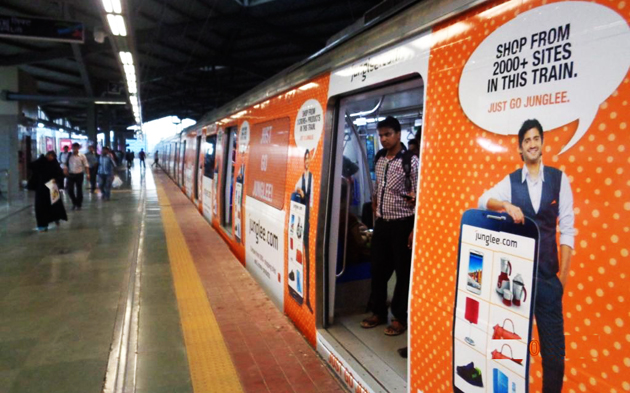
Metro and train advertising is a public transit branding method that involves advertising that is done in and outside metros or onto metro station assets. Metro station branding, metro full-wrap branding, and inside metro branding are great ways to target a more urbanized population. Commuters who regularly travel in metros and even trains for commutation purposes, tend to notice the vehicle’s outside branding wrapping. Be it while waiting at the platform or while looking around, metro and train branding is an effective way to catch your target audience’s attention and build a strong top-of-the-mind brand recall.
Metro branding is one of the forms of transit media advertising. If you wish to target even more commuters or corporate, working crowds, you can consider station branding as well.
3. Bus branding
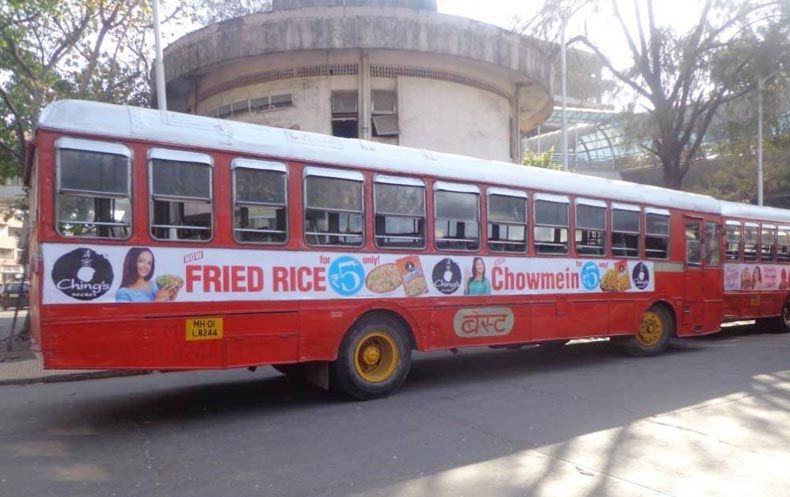
Bus branding is another kind of advertising wherein private and public buses aid in promoting the brand throughout the city or country. Bus branding is done through branded bus posters, bus wraps, backlit panel advertisements, advertising on bus sides, and bus seats. Also, a digital screen could be fitted inside the bus to engage even more consumers. An average urban bus travels around 150 to 300 kilometers per day covering 50K to 60K miles a year. The advertising mileage buses have proven to give is one of the main reasons why you will mostly see large-sized brands such as LIC, HDFC, Sony TV, or even top FMCG companies like Nestle, Hindustan Unilever doing regular bus branding campaigns to reach their target market.
4. Cab branding

Cab branding is a way of advertising your brand through cabs such as Uber or OLA or taxis. Cabs can act as mobile billboards, helping you target a more corporate audience. Cab branding is done by wrapping a poster or flex at the back, side panels, front or whole body of the cab. It increases brand visibility and helps in creating a better and stronger brand identity. Cab advertisements such as Uber or OLA ads are relatively less costly as compared to other transit media branding options such as metro branding or train advertising.
Advantages or benefits of Transit Media Branding
1. Transit media branding has a geographical plus point
Transit advertising is a wiser and smarter choice when it comes to local branding. Brands can make more out of their marketing budget by doing local branding to reach their target market.
They can select the market portion they desire to target and then place their ads on buses or trains in that specific region. Transit advertising is one of the highly classified mediums of advertising which is powerful for targeting the local consumer of a region. When a business decides to place transit advertisements in a select location, it is actively reaching out to people of a select demographic characteristic and background. For instance, a local restaurant advertises special offers on a bus stand that the customers often visit to reach that locality. This would help them be aware of the offers and products the place offers. This would in turn increase the customer footfall.
2. Transit media branding is cost-effective
Transit media advertising is like a large blanket spreading over a larger proportion of potential customers. It allows greater customer activation and acquisition at a lower cost. Therefore, transit media branding is one of the highly chosen methods of advertising for brands and businesses of all sizes. Unlike billboard advertising, you don’t need lakhs of rupees of budget to get started.
3. Provides you with long brand exposure time
While traveling in a bus or a plane, it is observed that people spend time noticing the brand around. For example, if you are on a seven hours flight and you see a brand wrap on the front seat, then you are likely to give it your attention both consciously and subconsciously. This is how it works. Even if it is a bus stand or a metro ride that displays your brand and that people use every day for traveling to work or other commutes, it aids in granting a longer exposure period. This would in turn make people refer to and choose your brand the next time they go shopping. Train advertising with full wraps is highly beneficial for brands. People following the same path would get your brand inside their minds without any effort, simply because it is displayed every day.
4. The coverage area is large in transit outdoor branding
Be it a bus or a cab, it is used by people for traveling almost all the time of the year. So when they enter or travel different streets or follow a particular route each day, so does your brand and that helps build a strong mind recall among your target audience. Transit media advertising facilitates effective brand activation through vehicles. For example, a bus with full wraps would display the brand in large size making it almost impossible to unsee for your target customers. Also, transit vehicles in India travel an average of 40 to 60 KM a day giving thousands of impressions. Transit media branding can help you spread your brand across a large geographical horizon repeatedly to build a good brand recall
Disadvantages or Cons of Transit media branding
1. Transit media branding depends on the public’s state of mind
We are humans and thus a collection of emotions. It is quite possible that at one point, an individual may not be in the mood to reflect upon and look around an advertisement. For example, a person sits on the bus and goes on to read a novel or take a nap. In this case, the purpose of transit media could remain quite defeated.
2. Routes may change overtime
A mode of public transport may not always take one way. According to the needs of the current times, the path of public transport is likely to change. During this time, it may not be able to cover a particular segment of the population.
3. Limitation on the creative front
Transit media cannot be highly customized and that is a disadvantage if we look the other way around. It is quite possible that at times the people who view the transit media advertising may not have a certain perception, need, or behavior of purchasing the particular product. For example, if a sports products ad is displayed to old-aged people, then they would never have the lifestyle of playing a sport actively at the age of 80. This is where there lies a boundary.
Conclusion
From the above key points, we can infer that while transit media advertising brings with it certain disadvantages, it is still quite effective in the long run. And today, various brands as discussed above are taking the help of transit media advertising to make their brand known to both local and non-local audiences. Transit media is not restricted to reaching one segment of the population but spreads the message throughout. Also, the cost involved is less compared to other advertising methods. Transit media acts as a moving brand billboard and it cannot be switched just like a television ad or even a digital online ad. It is seamless and offers brand visibility and brand activation in many ways!
Ginger Media Group is an established marketing agency that has done offline marketing for giant companies like OYO, Uber, Gillette, Unilet, & a lot more
Our agency focuses on a 360 degrees marketing approach that is customized to fit the requirements of our customers.
Checkout our transit media branding services
CONTACT
If you want to run an effective transit media campaign for your brand
Then contact us at,
+91 990 247 8800 or email at – contact@gingermediagroup.com
]]>In today’s fragmented media environment, brands are constantly on the lookout for new and innovative ways to engage with their target group.
Despite being occupants of a digital era, online advertising is beginning to frustrate media buyers as ad blockers are in widespread use. Even if a user does not use ad blockers, it is difficult to stand out as they are bombarded with several marketing messages on a daily basis.
Thus, to overcome these problems, brands are resorting to OOH (Out-of-Home) advertising to instil a sense of trust among their target group. The latest buzzword ‘OOH’ refers to advertising that takes place when someone is outside of their home. Billboards, signage and branded paper cups are fitting examples of OOH media. They cannot be blocked or skipped.
If you’re looking to reach a mass audience, Outdoor advertising is the answer. Today, the medium is continuing to outperform as most people spend time outside their home.
Importance of Measuring Marketing Campaigns
Though out-of-home advertising has gained immense recognition in recent times, there are still few media buyers that are reluctant to leverage on the benefits of the channel. The main reason being that tracking OOH campaigns is seemingly difficult compared to direct mails and newspaper adverts. Thankfully, in recent times, the industry that has struggled to calculate impressions has come up with innovative strategies and tools.
Therefore, it’s safe to say that choosing an outdoor medium is not just powerful but measurable as well.
Be it any campaign, actively tracking and measuring various metrics is important if you want to hit a particular goal. If you do not continually evaluate the effectiveness of a campaign, the time and money spent on marketing may be wasted.

Strategies to track OOH Campaigns
The following advertising metrics will help you track the success of OOH campaigns and measure return on investment (ROI)
Location: The most crucial factor when executing an OOH campaign is choosing the ideal location. Your aim is to target a particular demographic, with the right message and facilitate a strong CTA. Once you have determined your target market, the next step would be to use locations where a maximum number of people from your TG resides.
Code specific campaigns: Another highly effective method to track OOH campaigns is by printing discount vouchers, coupon codes and QR codes on your OOH media. Based on the number of people who visited your site and used the code during checkout, you can determine the effectiveness of the campaign.
Before and after sales: A simple way to calculate the performance of an OOH campaign is by looking at the sales conversion before and after running the ad. If there’s been a significant improvement, your campaign may be working.
Keyword analytics: If your campaign is associated with a memorable tagline or slogan, chances are your audience will go back and type keywords into a search engine. If those key searches turn up in your analytics, it’s again proof of the efficacy of your campaign. Similarly, hashtag metrics is also an effective method.
While tracking OOH campaigns, it is important to familiarise yourself with these terms:
- · DEC: Daily Effective Circulation –number of vehicles and pedestrians that pass a billboard per day.
- · OTC: Opportunity to Contact –how many people could walk past and see your outdoor advert.
- · VAC: Visually Adjusted Contact –number of people who saw the advert during the outdoor campaign
Today, cup branding has emerged as an effective medium in the OOH space. The main reason being that it can effectively be tracked post the campaign. Contrary to oversized billboards, paper cup ads are small yet powerful.
After every coffee cup advertising campaign, the team at GingerCup captures on-site photographs, conducts surveys and feedback, and records vendor responses.
 The responses to QR codes, coupon codes and microsites are also examined in detail.

The Baahubali 2 marketing team used cup branding in their marketing mix before the release of the film. The pre-bookings recorded were pulse-raising as nearly 1 million tickets were sold online within 24 hours.
To know more, email contact@www.gingercup.com.
]]>In today’s fast-paced world and over cluttered marketplace, it is more vital than ever to promote recognition of a service or product. Only when you implement unique brand promotion strategies you are memorised as a quality service provider.
Decades ago, branding was only confined to a name, sign, slogan, symbol or design. Back then, that was enough to distinguish one company’s products and services from that of another.
However today, the term ‘branding’ has become a little more complex and even more important.
The importance of brand promotion in marketing is not just about getting your target market to select you over your competition. It’s more about getting your potential clients to see you as the sole provider of a solution. Therefore, before implementing ideas, activities and strategies to promote your brand, make sure they conform to the following:
- Emotionally connect the target audience with a product/service
- Clearly deliver a brand’s message
- Confirms the brand’s credibility in the marketplace
- Motivates the buyer to make a purchase (Call-to-Action)
- Creates user loyalty
Top 4 Marketing Activities to watch for in 2022
As per a report published by Dentsu India, the digital industry is expected to reach a market size of
18,938 crores by 2021. The digital advertising industry is growing and while traditional media still seems
to be resilient, certain advertising ideas will blow up by 2022.
1. OOH media advertising (Out-of-Home advertising)
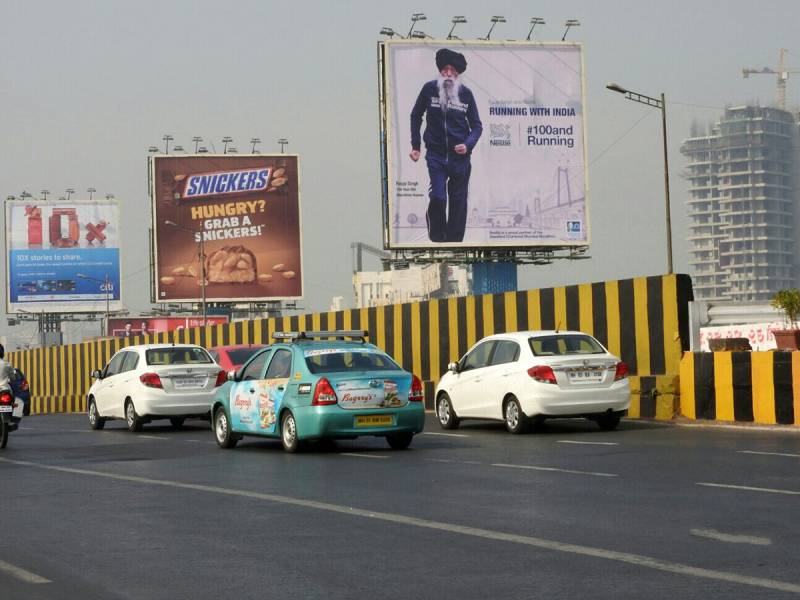
The pandemic seems to have highly impacted the OOH industry as its worth has decreased from Rs
3,910 crore in 2019 to Rs 2,160 crore in 2021.
Despite the drop in the OOH ad spend, the industry still has not lost its vital position as one of the most
popular traditional advertising media.
● Why the OOH industry can blow up by 2022?
- As the lockdown is shifting and people are stepping out, the demand for OOH advertising could see an
increase. - As the CEO of MOMS Outdoor Media Solutions said, the industry has already experienced lockdown
so now it’s more informed than before to make strategic plans. - The industry has got enough time to install new upgrades like the data and technology-enabled DOOH
screens which would prove beneficial for advertisers to advertise effectively.
2. Coffee Cup Advertising

This one has many benefits and fewer chances to fail. Many businesses tend to neglect this medium
because they are unaware of how targeted even an offline coffee cup advertising campaign can be.
From the location, profession, offer, CTA to more specific demographics like age, you can make your
coffee cup branding campaign just as targeted as an online marketing campaign.
We know this because we have done it for our various clients like Uber, Hotstar and even for the hit
movie, Drishyam 2.
● Why paper cup advertising can blow up by 2022?
- Food delivery sector has already seen a huge rise in sales as a result of Covid-19 and as the pandemic
improves, we might get to see a spike in street food, restaurant businesses.
This would mean an increased opportunity to get your paper cups seen by a whole lot more people. - With the government banning single-use plastic from 2022, paper cups would become the go-to for
food stalls, Cafes, restaurants across the country. - It’s a new, clutter-free and cost-effective way of advertising
If you want to learn more about how you can use paper cup advertising for your brand promotion and why paper cup advertising works, read this short blog.
3. Influencer marketing

Influencer marketing is been trending since 2020 and we expect it to keep up the uptrend towards 2022.
It seemed to have become a go-to marketing strategy for brands as the Covid-19 has forced TV
commercials shoots on hold.
Especially, micro-influencer marketing is seeing massive growth due to it’s low-cost, high engagement
and authenticity.
● Why influencer marketing could be trending in 2022?
- With cookie tracking going away by 2022, brands are now finding new ways to advertise to their
targeted audience. Influencer marketing being a targeted way of marketing with high engagement rate
will see a significant increase. - Micro-influencer marketing has shown to give higher engagement rates and an overall better ROI in
2021 so, the trend is likely to continue. - 2022 will witness influencers becoming content creators making them more effective for brand promotions as advertising via influencers who are seen as experts in their field can bring in a better ROI.
4. Newspaper advertising
The newsprint industry is one of the highly impacted industries by Covid-19. During 2020, the industry plunged to 300$/metric tonne. The prices now have started to see a rise as at the beginning of 2021, the newspaper industry was at 700$/metric tonne.
● Why the newspaper industry might see a fresh trend in 2022?
- The newspaper industry is on the path to recovery after its sharp decline in 2020.
- The prices of newsprint ads have started to rise once again and as the country starts to get up and running smoothly, we may see a rise in the distribution of newspapers in 2022.
- The credibility and popularity of newspapers in India can’t be compared to digital news. So, no matter the
digital transformation in India, newspapers are not going anywhere for at least years to come.
Conclusion
Though the digital industry is seeing massive growth, traditional advertising media isn’t that far behind
as well.
From your own experience, you might agree that people have got bored staying within their homes
People want to go out, travel, eat at their favourite restaurants, watch their favourite movie-stars film
on PVR, so as more and more people are being vaccinated, trains are made available and the overall restrictions
are lifted, we would be able to see the traditional media industry bouncing back.
Here‘s a quick recap of this blog:
4 Brand Promotion Trends to Watch Out in 2022
- The OOH industry (Out-of-home industry)
- Coffee cup advertising or paper cup advertising
- Influencer marketing
- Newspaper advertising
Ready to talk with a marketing expert?

A Pragmatic and innovative way to enthrall your target group is just a click away!
Get in Touch
Rukmini Knowledge Park, Kattigenahalli, SH 104, Srinivasa Nagar, Bengaluru, Karnataka 560064
+91-990 247 8800
contact@gingermediagroup.com
Popular in Television Advertising
Udaya TV AdvertisingSun TV AdvertisingStar Plus AdvertisingTV 9 AdvertisingZee TV AdvertisingNDTV India AdvertisingColors TV AdvertisingPopular in Airport Advertising
Spice Jet AdvertisingMumbai Airport AdvertisingDelhi Airport AdvertisingEmirites AdvertisingIndiGo Airlines Domestic India AdvertisingPopular in Newspaper Advertising
Deccan Herald AdvertisingPrajavani AdvertisingThe Hindu AdvertisingEconomic Times AdvertisingDainik Jagran AdvertisingHindustan Times AdvertisingPopular in Magazine Advertising
Forbes AdvertisingCosmopolitan AdvertisingBusiness World AdvertisingVogue Magazine AdvertisingPopular in Sports Advertising
IPL AdvertisingPopular in Outdoor Advertising
Billboard AdvertisingBus Shelter AdvertisingMetro Pillar AdvertisingUnipole Advertising© Ginger Media Group 2025. All Rights Reserved.