Key Aspects of UTM:

- Enhanced Decision-Making: Countless UTM parameters contribute to the identification of the best ads and channels, which in turn can be utilized for planning more effective marketing strategies.
- Cost Efficiency: Through clear performance goals and effective analytics, corporations can discontinue ineffective marketing tactics and redirect resources to more productive activities.
- Improved Customer Focus: UTM tracking ensures that promotional operations are marvelously targeting the right people whose preferences and behavior are close to the chosen marketing approach.
- Continuous Improvement: As brands analyze and take in UTM data consistently, they can lessen or wholly cut off particular marketing campaigns that the customers have little or no interest in and then promote products they are after.
- Strategic Planning: Companies can better predict how their campaigns will pan out and sketch out their long-term plans effectively since UTM data provides records of campaign performance over time. In this blog, we will shed light on the concepts of UTM, highlight the value of this contemporary marketing tool, and illustrate how companies can release their potential for enhanced marketing performance. Please take advantage of our blog, where we will reveal the most essential information and the easiest way to embed UTM into your marketing strategy. Join us as we uncover valuable insights and practical steps to integrate UTM into your marketing strategy!
What Is UTM?

UTM, the so-called Urchin Tracking Module, is a powerful tool for digital marketing implemented based on URL tracking parameters that are added to the links. Notably, the capabilities for traffic analysis are spoken of here. Marketers can benefit from detailed information, such as the exact traffic sources, the most successful campaigns, and user reactions to the content. Thus, their marketing strategy will be refined, and their performance will improve.
Key Components of UTM
1. Source
The source section states the webpage the user clicked the link from, such as one of the search engines, social media platforms, or direct referrals. Correctly understanding the source factor is essential because this element allows marketers to analyze the channels that bring substantial traffic and leads.
2. Medium
This component identifies the means of communication, such as email, social media, or cost-per-click (CPC). This helps the organization expand its reach by pointing out the specific platforms that produce the best outcomes.
3. Campaign
This piece enables the marketer to give his campaigns individual names, adding context to the traffic sources. It is fundamental to see which marketing drives are the most successful in garnering attention. Moreover, these results can help make strategic improvements.
Benefits of UTM
- Improved Decision-Making: UTM parameters and the knowledge acquired from the various return couriers explain specifically where the traffic originates and how it is used on a website. For example, if a business suddenly sees how a specific email campaign is driving so much traffic and conversions, it may want to give an extra push to such communications.
- Cost Efficiency: By interpreting UTM data, corporations can determine which marketing plans give the maximum return on their investment. For instance, a business can discover that Facebook ads are a better option than Google Ads, so it can use that as a strategic way to spend lower-cost resources on other methods.
- Enhanced Communication and Collaboration: Building UTM provides appropriate teams with the opportunity to clearly communicate the execution of the work and the responsibilities shared among all team members. The graphics of the data related to the campaign performance can be seen by all team members, who can thus coordinate their efforts in the name of transparency and common goals.
Core Principles of UTM
Focus on Activities: The first approach to tracking specific marketing activities, putting them into light, allows you to gain insight into lead and sales generation through various engagement methods.
Link Activities to Costs: Correlation between activities and expenses is a key budget and forecast process element. By combining the two, organizations will benefit from the maximum utilization of their marketing funds.
Continuous Improvement: UTM is an outcome that comes into being through continuous assessment and feedback. Time and again, teams improve their strategies and choose the best approaches as they focus on analyzing the performance of the marketing campaigns.
Steps to Implement UTM
Analyze Current Activities: In order to successfully implement UTM, companies should first focus on assessing their existing marketing activities and tracking methods. This will help disclose gaps and opportunities.
Establish Cost Drivers: Define the reasons for the different costs arising in various marketing channels. Gaining insight into these motivators will help defer resource allocation.
Implement Performance Metrics: Form a system of tags for tracking URL performance with UTM. Tools like Google Analytics are essential to cover all the metrics regarding the system.
Engage Employees: Involving the staff members in the implementation process is a key element for fostering a culture of data-based decisions. Furthermore, we can have training sessions as part of the formation of a knowledge base to enlighten the employees on UTM usage.
Leverage Technology: The employment of an app that has the authority to track software and marketing analytics enhances the UTM process. Technology integration guarantees the correct capture of data and the actualization of real-time monitoring.
Real-World Examples of UTM
1. HubSpot
HubSpot smartly utilized UTM parameters to track the success of its ebook marketing campaign. The composite analysis of lead sources showed that social media was the most fruitful marketing platform, as it delivered the best results among the people who were found there, while email campaigns were the second best choice. This made them go for social media marketing.
2. REI
REI tagged UTM for the holiday campaign they ran, and through this campaign, UTM became a real insight for them, as email newsletters brought 40% of the copied ads that the display ads copy got. Then, they reinforced material for email marketing.
3. Airbnb
Airbnb analyzed the UTM parameterized data to examine the effectiveness of the promotional channels. They figured out that the referral program was the most beneficial, and they kept their marketing in that direction of their marketing strategically.
Conclusion
UTM is necessary for organizations that want to track marketing metrics through data analysis and monitoring. Adroit use of UTM is the byword of tracking and improving geospatial accuracy and analysis. They will be very adaptive towards implementing UTM in spatial concept learning.UTM (Universal Transverse Mercator) is an invaluable approach for organizations that provides accuracy and analysis. Put the following steps to the accomplishments of a business through the employment of UTM:
1. Exactness in spatial data representation.
2. Integrating geospatial analysis into business strategy for evaluating spatial accuracy, precision, and modeling.
3. Making the GIS process standardized and effective.
Now is the time to adopt UTM and see the radical changes it can bring to your company. Start applying geospatial organizing today to initiate the process of optimization!
]]>Important Takeaways About GSC:
- Search Visibility: GSC provides pretty basic information concerning how your website appears in search results, improving your visibility.
- Performance Tracking: From the users’ point of view, it can track significant metrics like clicks, impressions, and CTR regarding specific queries and pages.
- Technical SEO Insights: This tool informs you of problems with indexing, mobile usability errors, and crawling that might impact your site’s performance.
- Comparison with Other Tools: Understanding how GSC differs from tools like Google Analytics (GA Full Form) is essential for leveraging its full potential.
- Strategic Decision Making: GSC empowers you to make informed decisions that enhance your website’s performance and search rankings.
As we proceed with this topic, we realize that Google Search Console is multifaceted and geared toward creating maximum visibility for the property, attracting ideal tenants, and ensuring a frictionless rental process.
What is Google Search Console?
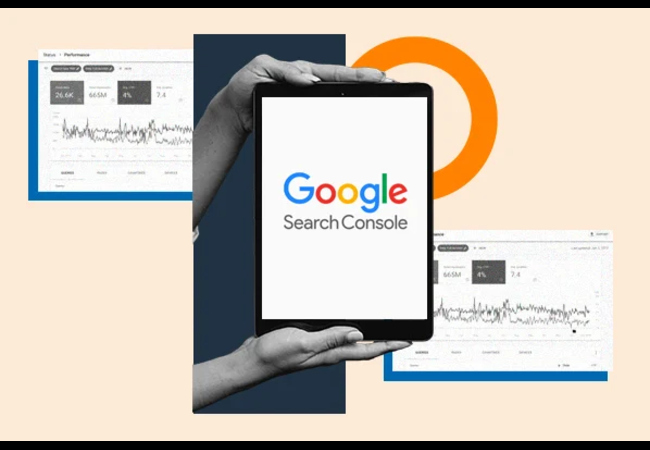
Google Search Console (GSC), formerly known as Google Webmaster Tools, is a free Google service designed explicitly for website owners. It allows them to monitor their site’s presence within Google’s index, understand any problems related to indexing as they arise, and track performance in search results.
Essential Features of GSC:
- Index Status: GSC informs you which pages Google indexes and highlights the ones it has issues with.
- Performance Report: It gives insight into clicks, impressions, and the average position of search queries, thus helping to determine the top-performing content.
- Mobile Usability: GSC analyzes your site’s mobile-friendliness and points out any issues that might hinder its usability on mobile devices.
- URL Inspection Tool: An inspection tool to check specific URLs on your website to see if they are indexed in Google, providing information on what Google sees concerning that page and, possibly, why it is not being indexed.
- Submission of the Sitemap: GSC enables you to directly submit your sitemaps to Google, ensuring more rapid and accurate indexing, especially concerning newly added or updated content.
For most, GSC is a natural complement to Google Analytics. While Google Analytics focuses on user behavior and engagement metrics, such as bounce rate, average session duration, and page views, GSC concentrates on how your site performs in search results. This means GSC is essential for identifying technical problems that keep your sites from appearing in searches, such as indexing issues, mobile usability problems, or crawl errors.
Another good thing about Google Search Console is that it provides critical information about your website’s click-through rate, impressions, and average position for particular queries. This essential information is invaluable when optimizing content to achieve better rankings. By combining GSC with more specific tools like Google Analytics 4 (GA4), which offers much more detailed tracking and reporting, web admins can gain complete clarity on site performance and user behavior, making informed decisions to maximize their online presence.
Importance of Google Search Console

In today’s digital environment, having a website is no longer a concern; what matters is how well it ranks and appears in search results. In this context, Google Search Console plays a considerable role. It acts as a bridge connecting your website with Google’s search engine, thus bringing your site’s strengths and weaknesses to life from Google’s perspective.
Why GSC is Important
- Track Search Performance: GSC enables you to monitor your website’s performance over time. It tracks impressions, clicks, and CTR for certain queries and pages.
- Fix Indexing Issues: The tool alerts you to indexing problems that might mean your site isn’t appearing in search results. You fix these issues to increase your site’s ability to be found through searches.
- Improve Mobile Usability: Like the trend in mobile traffic, ensuring your site is mobile-friendly becomes essential. GSC helps track any mobile usability issues.
- Enhance Search Rankings: While Google Analytics tracks how users behave once they arrive at your website, GSC focuses on how to get the user there first. This makes it a better tool to improve search ranks and organic traffic.
- Optimize SEO Strategy: GSC helps improve search visibility and provides insights into how Google indexes and presents your content. This information can profoundly inform your SEO strategy, allowing you to make data-driven decisions that contribute to increasing your website’s growth and achievement.
Google Search Console improves your site’s search visibility and helps you understand how Google indexes and presents your content. This understanding is crucial for developing an effective SEO strategy and making informed, data-driven decisions that enhance your website’s performance and growth.
Key Features of Google Search Console
This feature helps you keep track of, monitor, and significantly optimize your site’s performance in the search results. Some of the most powerful tools for you can be found below:
Key GSC Features:
- Performance Report:
It indicates how your site performs in Google Search. The report will display total clicks, impressions, average CTR, and average position on your website during a selected period. - URL Inspection Tool:
An inspection tool to check specific URLs on your website to see if they are indexed in Google provides information on what Google sees concerning that page and, possibly, why it is not being indexed. - Submission of the Sitemap:
GSC enables you to directly submit your sitemaps to Google, resulting in more rapid and accurate indexing, especially for newly added or updated content. - Mobile Usability Report:
It analyzes how mobile-friendly your site is and identifies any issues that might hinder its usability on mobile devices. - Index Coverage Report:
Provides information about the indexing status of your site, highlighting any errors or issues that need to be addressed to improve your site’s presence in search results.
The capabilities mentioned above allow web admins to track their website’s search performance, fix various issues, and ensure Google knows which structure their content is arranged according to. Maintaining these features is essential to keeping an edge over competitors’ rankings.
How Google Search Console Complements Google Analytics
Although Google Search Console itself is a powerful tool, further integration with Google Analytics is required to get deeper insights into how your website is performing. Google Analytics (GA Full Form) tracks user behavior once they have reached the site, such as page views and conversion tracking. The synergy between GSC and Google Analytics provides comprehensive insights:
Synergy Between GSC and Google Analytics
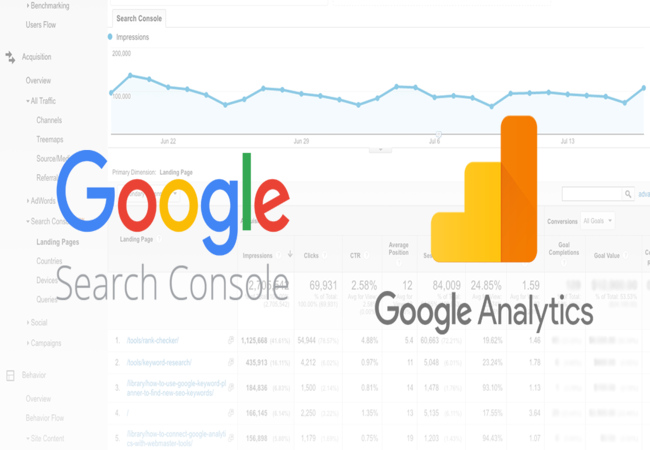
- Full View:
Using both tools, you will get a complete view of your website from the outside and inside perspectives. - Identify Problems:
In the GSC, a page is reported to have a high click-through rate, but in Google Analytics, the same page is reported to have a high bounce rate, indicating something might be wrong with its content. - Data-Driven Decision Making:
Using the data received from both tools, you can make decisions that help boost your site’s overall performance Optimization:
Combining GSC and Google Analytics insights allows for more effective optimization strategies that address search visibility and user engagement. - Comprehensive Reporting:
Integrating both tools provides a more comprehensive reporting framework, enabling you to track and measure the success of your SEO and user experience efforts concurrently.
Tutorials such as “Google Analytics for Beginners” help newcomers familiarize themselves with both tools. Mastery of both GSC and Google Analytics for website optimization enables data-driven decisions that can drive your site’s maximum performance.
Using the Combined Insights Example:
You have a newly launched product page, and GSC is showing an increase in clicks, but Google Analytics still has a high bounce rate. That’s a flag to review that page’s content and overall experience. The expectation set within the search results doesn’t align with the experience the visitor then gets. Some tweaking is needed to improve that engagement.
By leveraging both Google Search Console and Google Analytics, web admins can gain a holistic understanding of their website’s performance, identify areas for improvement, and optimize search visibility and user engagement.
Final Thoughts
Effective Google Search Console is a multi-faceted approach – strategic planning, execution, and continuous optimization. Taking in and implementing the key elements discussed here will enhance your website optimization strategies and ensure that you harness the full potential of GSC. Here are five final takeaways:
- Comprehensive Strategy Development:
To succeed, a comprehensive advertising strategy that includes visibility, targeting, compelling listings, multiple channels, and performance measurement will be crucial. - Investment in Quality Content:
For instance, investments in quality pictures and descriptions of a property can be substantial and attract people to consider a place for rent. - Data-Informed Decisions:
Leverage data and analytics to help guide your advertising decisions to ensure your money is allocated correctly. - Adaptability and Flexibility:
Adjusting your strategies based on feedback and performance data can make you more competitive and responsive to market changes. - Relationship Building:
This would result in better relations with prospective and existing tenants and, eventually, higher tenant satisfaction and loyalty through consistent communication and transparency.
Hence, embracing these principles will ensure that your Google Search Console efforts significantly augment your site’s visibility in Google Search. This practical strategy ensures that your website remains desirable and competitive within the ever-evolving digital marketing landscape. Effective Google Search Console is essential for any website owner, SEO professional, or digital marketer aiming to optimize their site for better search rankings and performance. By building visibility of the property, targeting the right audience, creating great listings, using multiple advertising channels, and measuring and optimizing campaigns, you can significantly improve your website’s marketing strategy. Investment in quality content, leveraging data-driven decisions, and staying adaptable to changes in the market define a good Google Search Console strategy. Building a meaningful relationship with tenants or users will further guarantee that your online presence can enjoy success in the long run. Communicate clearly and consistently with your audience to further solidify strong relationships. Make sure you take all these approaches to maximize the potential of your website optimization efforts and sustain growth in the highly competitive digital marketing landscape.
]]>Ready to talk with a marketing expert?

A Pragmatic and innovative way to enthrall your target group is just a click away!
Get in Touch
Rukmini Knowledge Park, Kattigenahalli, SH 104, Srinivasa Nagar, Bengaluru, Karnataka 560064
+91-990 247 8800
contact@gingermediagroup.com
Popular in Television Advertising
Udaya TV AdvertisingSun TV AdvertisingStar Plus AdvertisingTV 9 AdvertisingZee TV AdvertisingNDTV India AdvertisingColors TV AdvertisingPopular in Airport Advertising
Spice Jet AdvertisingMumbai Airport AdvertisingDelhi Airport AdvertisingEmirites AdvertisingIndiGo Airlines Domestic India AdvertisingPopular in Newspaper Advertising
Deccan Herald AdvertisingPrajavani AdvertisingThe Hindu AdvertisingEconomic Times AdvertisingDainik Jagran AdvertisingHindustan Times AdvertisingPopular in Magazine Advertising
Forbes AdvertisingCosmopolitan AdvertisingBusiness World AdvertisingVogue Magazine AdvertisingPopular in Sports Advertising
IPL AdvertisingPopular in Outdoor Advertising
Billboard AdvertisingBus Shelter AdvertisingMetro Pillar AdvertisingUnipole Advertising© Ginger Media Group 2025. All Rights Reserved.