Key Aspects of VR:
- Enhanced Decision-Making: VR facilitates the presentation of detailed statistics, allowing individuals to see trends and outcomes. This visualization improves the quality of the final decisions.
- Affordability: Using virtual Reality (VR) techniques in training and simulations will allow businesses to see where they can free up resources and direct them to more productive goals, thereby minimizing the cost of physical resources.
- Uplifted Client Concentration: The immersive nature of VR ensures that customers are provided with the most incredible benefits, such as the ability to create event-personalized experiences. In turn, this will lead to higher satisfaction rates. Continuous improvement technology is suitable for developing a work environment of innovation and companies’ capabilities to meet the market’s needs rapidly. Virtual Reality is an easily applicable tool that can simulate possible future events and poses many more issues we may proactively deal with. This blog will be a source of knowledge about VR, its application in modern business, and how organisations can use this technology to offer users the best experience that will engage them. Let’s resolve the issue and provide denotative measures to adopt VR in your business strategy.
What is VR (Virtual Reality)?
Virtual Reality (VR) is state-of-the-art technology that enables users to enter an immersive computer-generated environment and interact with 3D worlds and experiences as if they were present. Whether in gaming, education, healthcare, or entertainment, businesses using VR must continue to enhance training, increase engagement, and improve customer experiences in their different sectors.
The Central Components of VR
- VR Motion Equipment: One of the best things about VR headsets and motion controllers is/are the best hardware gadgets individuals use when doing something in the VR environment. The future of hardware is one of the most critical factors in enhancing the quality and Reality of users’ interactions.
- 3D Content Creation: The creation of realistic 3D content is the core of VR technology’s success. This part includes detailed graphics, sound design, and interactive elements, which ensure that users feel the presence and Reality of the virtual world.
- User Interaction: User interaction is how individuals connect with the VR environment using gestures, movements, or voice commands. This element is of the utmost importance because it affects how much the various techs are used and how well the users interact with and control them. Thus, it indirectly affects the outcome of the use case scenario.
Benefits of VR
- Improved Decision-Making: VR decision-making is facilitated through real-world scenarios like analysis and run. For illustration, a company may use VR as a simulation to demonstrate the logistics process, allowing the teams to apply the techniques before implementation at the site.
- Cost Efficiency: By switching from VR treatment in place of standard methods, companies can save money on both travel and training material costs. For example, a manufacturing company could emulate machine operations and avoid actual equipment costs- which may also be associated with unavailability.
- Enhanced Communication and Collaboration: VR encourages bonding and transparency among team members through virtual meetings, where people can meet up and work alongside each other “real-time by person” although scattered throughout different physical locations. This can be a ladder to which they climb to achieve goals as well as foster their relationship with each other.
Core Principles of VR
- Focus on Activities: All companies should prioritize understanding precisely what users will do in VR. But this approach, focused on activities, is the conduct of the competition, which operates through a strategy of customizing users’ experiences to the exact audience needs.
- Link Activities to Costs: Drawing a solid connection between the activities that are performed through VR and the specific money spent on each of them is a way by which organizations assess the short and long-term merits and demerits of VR investments.
- Continuous Improvement: Tech changesTech changes constantly; thus, a feedback loop is necessary for any VR program. Continual change in practices through the VR method to show the universe a point of that other software universe, which is user-centric and applicable.
Steps to Implement VR
- Analyze Current Activities: It is a key step to go through the current process, regardless of its convenience and virtues, and then understand where VR can be utilized optimally. This is the basis for proper implementation.
- Establish Cost Drivers: Organizations should establish the components contributing to costs in their VR projects to manage their resources adequately.
- Implement Performance Metrics: The most essential tools for this kind of exploration are setting up proper benchmarks that can be tracked. Such metrics can also include user engagement, training effectiveness, and feedback scores.
- Engage Employees: In-depth participative collaboration with workers in the development and application process guarantees they make their choice ahead of schedule, eventually resulting in more user-friendly designs; the user’s preferences will be the primary deciding factor.
- Leverage Technology: Using the most recent VR technologies and software platforms will result in the most vivid and furthest VR experiences, ensuring that organizations are always the first in this rapidly changing sector.
Real-World Examples of VR
- Example 1: Walmart has used VR to train employees in store management and implement practical solutions. In gaming situations, in contrast to real-world scenarios, employees learn all the practical matters apart from failure and mistakes, resulting in a significant improvement in service delivery and a more satisfied customer base.
- Example 2: Medical Training: The VR approach that the Medical University of South Carolina has incorporated for surgeons’ learning is a good example. By letting students practice in a controlled environment, students can be more prepared and confident before facing accurate procedures.
- Example 3: Travel and Tourism: Thomas Cook employed VR to allow tourists to tour their destinations virtually. This remarkable interaction aids the customer in decision-making, making them purchase more tours and be more satisfied. In short, virtual Reality is the latest developmental mechanism that has changed how organizations connect their workers and customers. At the same time, their understanding of fundamental elements, principles, and practical applications enables them to utilize VR technology efficiently to produce better outputs through training, collaboration, and other operational activities.
To summarize, VR is an excellent strategy for companies to improve employee training, customer engagement, and product development through innovative experiences. Properly distributed resources are gained when organizations take the time to understand how to use these technologies to their advantage. Company-wide continuous improvement programs should be linked closely with developing technology. Immersive simulation space, the correct certification of the facilities and adherence to the change program are the key components of the company’s sustainability in the VR technology adaptation process. As the pressures of the markets rise and the competition gets stronger, investing in VR will likely be one of the significant factors of effective management practices.
Using the fundamentals of VR in business management can bring these benefits:
- Improved Learning Experience: The immersive environment depicts real-life scenarios that improve the participants’ memory of knowledge and enhance their skill development.
- Better Customer Engagement: Introduce new and enjoyable digital experiences that will keep your customers engaged and guarantee cohesion with your brand.
- Developing High-Quality Products: Digital imaging technology will help with quicker prototyping and more demanding reviews, ensuring the project’s success later on.
Now is the time to introduce VR and closely monitor the changes it can bring to your organization. The first step to changing your training and customer communication practices today is now at your command!
]]>MAU has become one of the most important metrics by which organizations engage and retain their customers in today’s competitive landscape. This metric focuses on unique users interacting with a product or service within a month. It helps businesses evaluate the effectiveness of their offerings and customer outreach strategies.
MAU’s demand for user-centric insights allows businesses to enhance customer satisfaction and improve overall performance.
Important Considerations for MAU

- Mature Decision-Making Capabilities: Tracking MAU is crucial for understanding user activity. It impacts business decisions regarding feature development, marketing, and overall user experience.
- Cost Efficiency: Knowing the MAU allows companies to pinpoint areas needing improvement in products or services. This can lead to significant savings and efficient resource allocation.
- Better Focus on Customers: Monitoring MAU highlights what users value most, guiding improvements that align with customer preferences.
- Strategic Planning: Analyzing MAU data helps businesses forecast market trends, prepare for changes, and make long-term strategic decisions.
- Continuous Improvement: Regular reviews of MAU help adjust strategies and introduce new features or services based on user trends.
We will now explore the foundations of MAU, its significance in today’s business landscape, and how it can enhance user engagement with practical steps for businesses to implement.
What is MAU?
MAU stands for Monthly Active Users, a key metric used to measure user engagement across digital platforms like websites, apps, or online services. It captures the number of unique users interacting with a platform within a month.
This data gives businesses invaluable insights into user behaviour, product performance, and market reach. By tracking MAU, companies refine their offerings and identify growth opportunities to enhance user satisfaction.
Key Elements of MAU
- Definition of User: Calculating MAU requires clearly defining what constitutes an “active” user. This could be logged-in users, visitors performing specific actions, or content consumers. This definition ensures accuracy and relevance.
- Engagement Metrics: Engagement can be measured by session durations, repeat visits, and other user activities. These insights help businesses tailor their strategies based on user interactions.
- Analytics Tools: Accurate MAU measurement requires robust tools to gather user data, track behaviour patterns, and generate actionable insights.
Advantages of MAU
- Improved Marketing Strategies and Product Development: Tracking MAU helps companies make informed decisions regarding marketing campaigns and product improvements. An increase in MAU after a marketing campaign indicates success, assisting in future planning.
- Cost Efficiency: Understanding user engagement enables businesses to allocate resources more efficiently. For instance, companies can redirect marketing efforts to a more responsive segment.
- Better Communication and Collaboration: MAU analysis fosters collaboration across teams in marketing, sales, and product development, aligning them towards shared goals.
- Informed Decision-Making: Analyzing MAU allows companies to predict future trends and proactively adjust their offerings.
- Enhanced User Experience: Regular analysis of MAU helps identify areas for improvement, enhancing the overall user experience and satisfaction.
Principles of MAU

- Focus on Activities: Businesses need to understand what users do on their platforms, which features they use most, and where they face challenges. This information is crucial for making informed improvements.
- Link Activities to Costs: By understanding the relationship between user activities and operational costs, businesses can identify areas for cost optimisation and resource allocation.
- Continuous Improvement: MAU is not a static metric. Regular feedback and follow-up ensure that trends are monitored, enabling companies to adapt to changing user behaviour.
- Data-Driven Decisions: MAU enables businesses to make decisions based on user data, aligning their strategies with user needs and preferences.
- Team Involvement: Involving all team members in tracking MAU fosters a user-centric culture, with collective accountability for engagement and customer satisfaction.
How to Implement MAU

- Examine Current Activity: Analyze engagement metrics, establish a baseline MAU, and identify trends over time.
- Identify Cost Drivers: Analyze how marketing, subscription plans, and user engagement levels influence costs.
- Set Performance Metrics: Establish key performance indicators (KPIs) related to MAU, such as user retention, acquisition costs, and engagement levels.
- Involve Your Team: Encourage collaboration across departments by discussing MAU and fostering a user-centric mindset.
- Leverage Technology: Use analytics and data visualisation tools to track and report MAU in real time, enabling informed decision-making.
Application of MAU

Example 1: Social Networking Site
A social networking platform experienced rapid growth in MAU after introducing an easy-to-use content-sharing feature. This change increased user engagement and platform stickiness, leading to sustained growth.
Example 2: E-commerce Company
An e-commerce business analysed its MAU during significant sales periods, discovering that personalised marketing campaigns significantly boosted year-round user engagement.
Example 3: Video Streaming Service
A video streaming platform used MAU data to gauge the success of new content series. The company tailored its content offerings based on user interactions to increase engagement.
Final Thoughts
MAU is a powerful tool for improving user engagement and retention across businesses. By understanding user behaviour, companies can optimise their marketing strategies, enhance customer experiences, and make data-driven decisions that lead to growth.
Incorporating MAU into your business strategy enables you to:
- Gain Deeper Insights into User Behavior: Understand what drives user engagement and make data-informed decisions.
- Increase User Engagement: Develop targeted strategies that keep users returning and reduce churn.
- Maximise Marketing Efficiency: Focus resources on the most effective channels to drive active users and improve ROI.
- Improve Product Development: Tailor your offerings to meet user preferences and needs, enhancing overall satisfaction.
- Achieve Sustainable Growth: Use MAU insights to build long-term strategies that adapt to market trends and user demands.
Now is the perfect time to incorporate MAU as a core metric in your business strategy to boost user engagement and achieve sustainable growth!
]]>What is Marketing?
Marketing is a general term that encompasses all those efforts made toward promoting and selling goods or services. It is understanding the needs of a customer, designing products to satisfy such needs, and then communicating how valuable those products are. Marketing begins with a product’s conception and continues even after one has sold the product. This continuous interaction ensures that customers are retained and repeat business is promoted.
Key Features of Marketing
Identifying Target Market
In good marketing, the accurate group of consumers toward whom a product or service would be relevant should be established. It is crucial for the fruitful formation of messages that most people could connect to for an organization working on demographics, interests, and consumer behavior.
- Market Segmentation: The huge market should be broken into smaller, easier-to-identify segments according to age, gender, income, and lifestyle for more successful marketing efforts.
- Personas: Developing personas of customers assists marketers in gaining insight into the psyche of customers and thereby creating marketing efforts in much more relevant forms.
Knowing Customer Needs
Marketing deeply has its roots in what constitutes the needs and desires of consumers. At its core, understanding what the needs and requirements of customers are could easily be achieved by developing a line of engagement with customers in the form of a survey, feedback, and even social listening.
- Market Research: Proper research allows a brand to have information about the trends of preferences of the customers, and hence it adjusts to the offerings of the brands according to the demand.
- Customer Journey Mapping: Identifying the journey from awareness to the purchase will help know the pain points, and areas of enhancement will be fetched out.
Competitive Advantage
In highly saturative markets, differentiation is the key. Proper marketing strategies help companies differentiate their offerings from the rest of the competitors based on the uniqueness of selling propositions that attract consumers.
- Brand Positioning: A defined brand identity and message mean consumers know what makes a brand different, hence why they would want to buy it instead of its competitors.
- Innovation: Ongoing marketing efforts prompt innovation and improvement of products by the brand so that they do not become obsolete because the market is always changing.
Profit Orientation
All marketing activities are aimed at producing income while giving the consumer the enjoyment and participation that they require. The marketer, therefore, will have to determine what the customer requires against what the organization needs concerning profitability.
- Revenue Generation: Marketing affects sales and revenue because of its campaigns since it targets the development of sales.
- Cost Management: Through assessment, the cost-effectiveness of marketing strategies is examined to ascertain whether resources are being put to their maximum use.
Communication Strategy
Marketing creates a communication channel between the brand and its customers, better knowledge, and also provides an interaction.
- Integrated Marketing Communication (IMC): Control various marketing tools or media like social media, email, and content marketing simultaneously so an identical message is communicated will increase awareness and trust in the brand.
- Storytelling: Creating wonderful stories about products creates an emotional bond between the customers and hence makes them more loyal to the brand.
Critical Functions of Marketing
Generation and Interpretation of Market Data
Marketing is key in researching and getting to know the trends of the market, which consumers behave according to competition. Such information enables companies to come up with products that meet the needs of the market.
- Data Collection: The use of surveys, interviews, or focus groups enables businesses to come up with insights into consumer preferences.
- Analytics Tools: Advanced analytics tools are ways of tracking consumer behavior online; hence, marketers can learn why people engage in certain activities and sell something.
- Competitor Analysis: Analyzing competitors’ marketing strategies helps to understand the lessons and opportunities for differentiation.
Product Designing
Product designing—here, effective marketing is required in which innovative and attractive design is being created, which will attract customers.
- User-Centered Design: Since consumers are participating in the design process, it assures the creation of products based on their needs.
- Prototyping: With rapid prototyping and testing, a company collects consumer feedback early in the development cycle, thereby reducing the chance of market failure.
- Iterative Improvements: Brands can improvise and enhance their product based on continuous consumer feedback after its launch.
Branding
Branding is an important part of marketing because it gives a product or service a unique identity. A strong brand builds customer loyalty and trust for the product.
- Brand Identity: A landmark logo, color scheme, and messaging facilitate easier identification and remembrance by customers.
- Brand Values: Communication of the values and mission resonates with consumers on a deeper level, provoking loyalty and attachment.
- Reputation Management: Today, managing public reputation through customer interaction is very crucial through public relations for any brand.
Customer Support
Marketing also acts as help from the company to facilitate the customer by gathering inquiries and feedback, hence enhancing itself because of the latter gathered from customers.
- Customer Service Training: Each customer service team shall be provided with appropriate skills and awareness to enhance customer experience.
- Feedback Loops: Feedback mechanisms shall be devised in such a way that the views of customers are gathered for analysis so that development shall be done based on facts rather than guesswork.
- Post-Sale Engagement: Post-sale engagement with the customer helps in developing loyalty and might eventually increase the prospect of repeat business.
Pricing Strategy
The right price is an important success factor for business. Marketing research helps in such situations identify competitive prices that attract consumers while still staying profitable.
- Value-Based Pricing: Here, the perceived value by consumers of a product results in pricing over costs and provides for more profit margins.
- Dynamic Pricing: A pricing strategy when applied in real-time to a fluctuating market environment, competition, and demand maximizes sales.
- Promotional Pricing: Time-bound prices provide an element of contingency that can increase volume sales to an enormous extent, mainly at the time of key shopping seasons.
Why is Marketing Important for Consumers?
Marketing is important to consumers due to its diversity in terms of the products that can offer solutions or respond to the concerns of consumers. As shown by Invoca, 81% of retail shoppers research online before going out to shop. Marketing provides consumers with easy ways to find research information about brands.
What are the benefits of marketing to consumers?
Product Availability
Marketing will ensure that the solutions developed meet the needs of a consumer. Analysing the demand in the market leads companies to give solutions to the issues in society.
- Needs Assessment: Marketers assess consumer needs and preferences to devise solutions that will really solve the problems.
- Innovative Solutions: Marketing drives innovation, leading to the creation of new products that improve consumers’ lives.
Product Accessibility
Marketing distributes the products as well. Transportation and shipping offer the delivery of important goods even to distant places.
- Logistics Optimization: This is another marketing strategy that optimizes logistics to provide products in haphazardly located places.
- E-commerce Growth: Online shopping is, on the other hand, emerging, enabling individuals to reach a product that is not readily accessible in their areas.
Affordability of the Product
Prices are a significant factor that influences consumer decisions. Marketing represents the prevailing marketplace in order to quote prices that are reasonable but competitive, making the goods and services cheaper to the consumer.
- Competitive Pricing: Determination of the value of consumers’ money by studying the competitors’ quotations.
- Sales Promotions: Effective pricing of a product makes a product more affordable to the buyer, especially when it is tagged at low prices or coupons. This makes it affordable to a budget-conscious consumer.
Welfare of Society
Products that solve specific problems of society help bring about higher consumer welfare. Marketing enables the development of solutions to better people’s lives.
- Social Good: Increasingly, companies are developing products that create social good, which can either be environmentally friendly alternatives or health-centered solutions.
- Community Relevant: Marketing campaigns that are meaningful for local communities build a sense of belongingness and well-being for consumers.
Economic Benefits
Positive marketing contributes to overall economic growth. Its creation of demand for some of the highly required products pushes up the value in the increase of a country’s GDP.
- Employment: Marketing is interpreted by businesses into an increase in sales; most will, in turn, employ more personnel to handle the demands and make value in the smaller economies.
- Consumer Expenditure: The fruit of an effective marketing campaign leads to an increase in consumer spending, which in turn benefits the economy in its pursuit towards stabilising its activities.

Why Is Marketing Important to Brands?
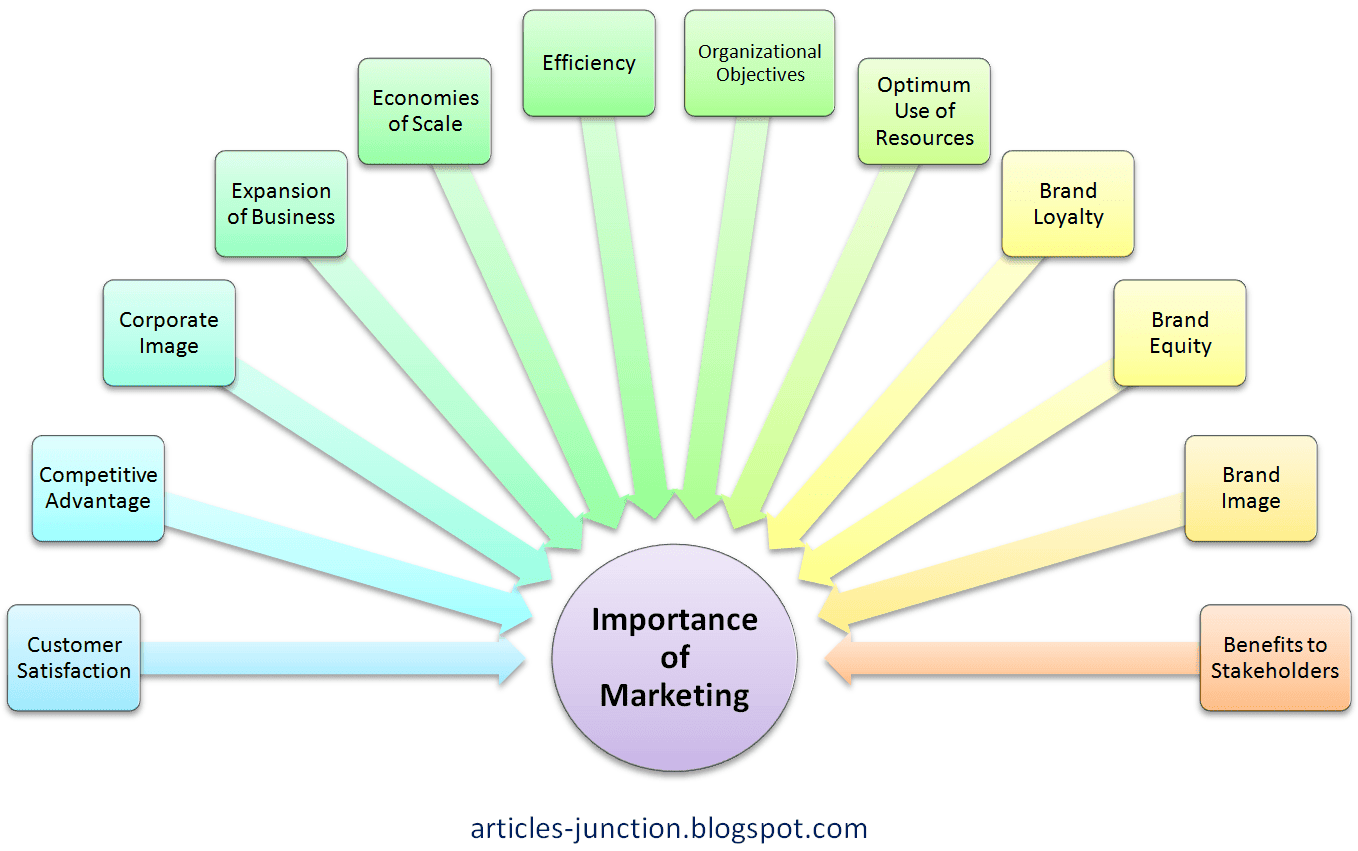
An effective and deliberate marketing plan enables a brand to be unique.
Advantages of Marketing to Brands
Significance of Customers
Marketing defines the value of a customer, therefore placing customers at the heart of the mission. A brand that seeks to fulfill the needs of its clients is bound to thrive.
- Consumer-Centered Approach: Creating fulfillment and loyalty.
- Customer Comments: Obtaining comments is consumer empowerment, therefore establishing trust with the brand.
Good Word-of-Mouth
Trust is the foundation of a brand-consumer relationship. Effective marketing has abundant good talk and recommendations that increase the reputation of the brand.
- Referral Programs: Happy customers are motivated to refer their friends and family, which constitutes a loyal customer base and increases the brand’s reach.
- Social Proof: Testimonials and case studies feature the value of products and help build trust among the potential.
Awareness Creation
Marketing insists on keeping boosting a brand and is always keeping it relevant to its target audience through such marketing.
- Advertising Campaigns: A great advertising campaign boosts brand recognition and makes the brand stay in people’s minds.
- Content Marketing: Valuable and informative content establishes the brand as a thought leader in the respective industry.
Emotional Connection
Emotional connections with the consumers are aligned with marketing strategies. This is predominantly a crucial factor for winning over customers.
- Brand Storytelling: Using a brand’s story to convey its values affirms feelings to the customers, making them feel close to the brand.
- Community Building: Creating a community around the brand establishes emotional bindings and loyalty.
Objectives
By being customer-centric, marketers can successfully fulfil marketing and sales missions with positive overall results.
- Goal Setting: Marketing goals and objectives should not drift far away from the organization’s outcome to ensure all efforts are channeled in the correct direction.
- Performance Measurement: Measuring marketing performance against the set objectives helps brands make adjustments to remain on track with great performance.
Final Thoughts
The relevance of marketing spans a much broader spectrum. In every business-related affair, marketing is a catalyst that uplifts the standard of living amongst people through the best product and services delivery. Concurring with this, it also does not reach a dead end in regard to contributing to the overall economic development of a country.
Key Takeaways:
- Improved Consumer Experience: Marketing makes the overall experience better for consumers because they get something worthwhile, which satisfies their requirements.
- Economic Growth: Marketing is what drives economic growth, developing demand and eventually a competitive market.
- Loyalty in Brands: The effort of marketing may accord loyalty to the brands because repeated consumers promise success of business for a more extended period.
- Creative Production: There is always pressure to provide products as per the needs of the customers, due to which innovation and creativity at the production stage are stimulated and encouraged.
- Social Benefit: Marketing is also involved in the promotion of products that can be used as a boon to society, thereby again pointing out the gain offered by effective marketing practices.
For all your marketing needs, contact us at +91 990 247 8800 or mail us at contact@gingermediagroup.com. We are a 360-degree marketing agency that promises to help brands fulfill all their desires.
]]>Ready to talk with a marketing expert?

A Pragmatic and innovative way to enthrall your target group is just a click away!
Get in Touch
Rukmini Knowledge Park, Kattigenahalli, SH 104, Srinivasa Nagar, Bengaluru, Karnataka 560064
+91-990 247 8800
contact@gingermediagroup.com
Popular in Television Advertising
Udaya TV AdvertisingSun TV AdvertisingStar Plus AdvertisingTV 9 AdvertisingZee TV AdvertisingNDTV India AdvertisingColors TV AdvertisingPopular in Airport Advertising
Spice Jet AdvertisingMumbai Airport AdvertisingDelhi Airport AdvertisingEmirites AdvertisingIndiGo Airlines Domestic India AdvertisingPopular in Newspaper Advertising
Deccan Herald AdvertisingPrajavani AdvertisingThe Hindu AdvertisingEconomic Times AdvertisingDainik Jagran AdvertisingHindustan Times AdvertisingPopular in Magazine Advertising
Forbes AdvertisingCosmopolitan AdvertisingBusiness World AdvertisingVogue Magazine AdvertisingPopular in Sports Advertising
IPL AdvertisingPopular in Outdoor Advertising
Billboard AdvertisingBus Shelter AdvertisingMetro Pillar AdvertisingUnipole Advertising© Ginger Media Group 2025. All Rights Reserved.