Largest Contentful Paint (LCP) plays a pivotal role in measuring the success of online advertising. It affects the user experience, engagement, and conversion rates, making it essential for advertisers to optimise. LCP is critical because:
- It impacts the user experience by measuring how fast the most significant content on a webpage loads.
- A slow LCP can significantly reduce user engagement and lead to higher bounce rates, potentially causing a loss in potential conversions. This underscores the urgency for advertisers to address LCP optimization.
- Optimizing for faster LCP not only improves advertising success but also boosts SEO rankings, making it a crucial factor for online advertisers to consider.
- LCP directly influences user retention and conversion rates, making it a key factor in determining the success of an advertising campaign.
- LCP optimisation boosts campaign performance.
What is the Largest Contentful Paint (LCP)?
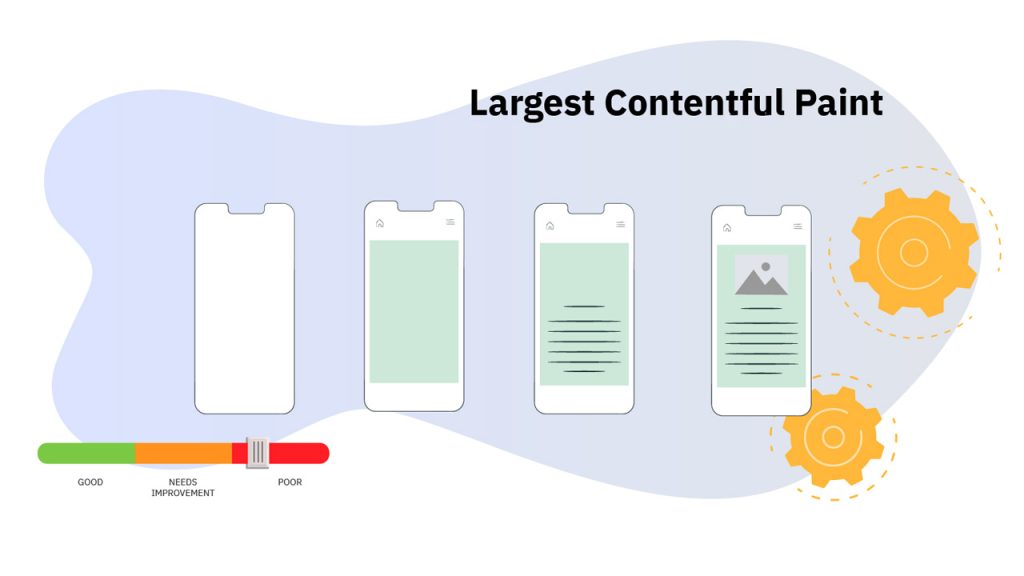
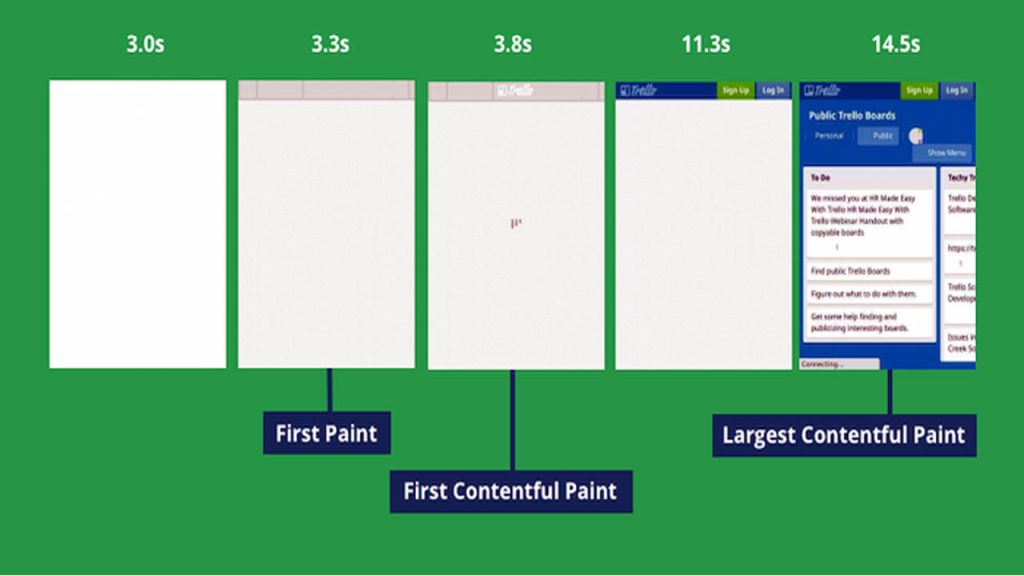
Largest Contentful Paint (LCP) refers to the time it takes for the most significant element in a browser’s viewport, such as an image, video, or block of text, to fully load. It is one of the three key metrics in Google’s Core Web Vitals and measures how quickly the main content becomes visible to the user.
- LCP Full Form: Largest Contentful Paint.
- LCP Google: It is a core web vital that affects search engine ranking.
- LCP SEO: Directly influences your website’s visibility in search results.
- LCP Content: Includes images, videos, and large blocks of text.
- LCP Performance: Determines how fast the most important content on your page loads.
When LCP takes more than 2.5 seconds, the user experience deteriorates. For advertisers, ensuring LCP remains under this threshold is vital to keep users engaged and avoid high bounce rates.
LCP’s Role in Advertising
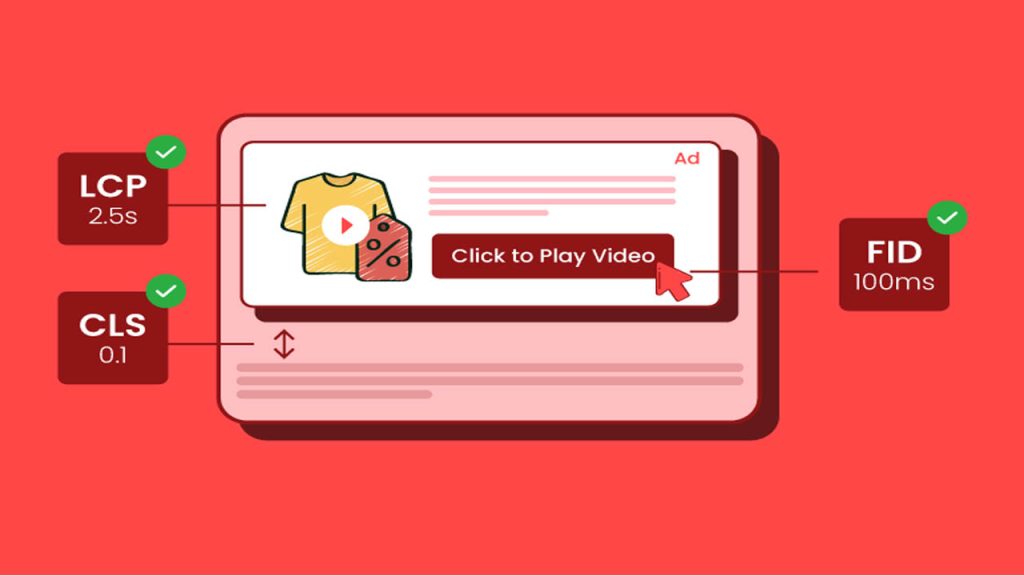
In advertising, LCP is crucial because it directly impacts user experience and the performance of a marketing campaign. If a page takes less time to load, users may abandon the site before interacting with the content, affecting engagement and conversions. Key points include:
- LCP Full Form: Largest Contentful Paint is critical for advertisers to understand.
- LCP SEO Impact: A faster LCP increases your site’s search rankings.
- User Retention: The higher the LCP, the more difficult it is to engage users.
- Conversion Rates: A slow LCP results in lower conversion rates.
- Ad Spend Efficiency: A poor LCP can save advertising budgets, leading to high bounce rates.
Optimising LCP ensures a faster page load time, which is essential for increasing engagement, improving SEO performance, and boosting advertising ROI.
Methods to Optimize LCP for Advertising Success
Improving Largest Contentful Paint (LCP) involves several optimisation strategies. These include optimising images, server response time, and render-blocking resources. Below are five essential methods to improve LCP:
1. Image and Video Optimization
Optimising images and videos is one of the most impactful techniques to enhance LCP. Large files can slow down the entire loading process. To improve LCP, you can:
- Compress images without losing quality.
- Use next-gen formats like WebP.
- Optimise video size and enable lazy loading for videos.
- Avoid large background images that slow down loading.
- Use appropriately sized images for all devices.
Optimising media files ensures faster loading times, improving the user experience and reducing bounce rates.
2. Minimize Server Response Time
Reducing server response time directly affects LCP. By cutting down on delays, advertisers can significantly enhance performance. Key strategies include:
- Use a Content Delivery Network (CDN).
- Optimise your web server settings.
- Enable browser caching.
- Serve content from a server closer to the user to reduce latency.
- Use HTTP/2 for faster content delivery.
A faster server response time improves the overall user experience and ensures the most significant content loads quickly.
3. Use Lazy Loading
Lazy loading delays the loading of non-critical elements until they are needed. This optimisation ensures the main content loads first, improving LCP. To implement lazy loading:
- Defer loading non-essential aspects like images and iframes.
- Prioritise loading content above the fold.
- Use lazy loading with HTML5 or JavaScript libraries.
- Ensure the primary content loads before secondary elements.
- Implement lazy loading across the site to optimise performance.
Lazy loading allows access to crucial content faster, improving user satisfaction and engagement.
4. Minimize Render-Blocking Resources
Render-blocking resources, such as CSS and JavaScript, can delay the loading of the page’s primary content, negatively impacting LCP. To minimise these delays:
- Optimise CSS and JavaScript files.
- Defer or async non-critical scripts.
- Minimise external stylesheets.
- Inline small CSS snippets for quicker rendering.
- Remove unused CSS and JavaScript.
By optimising render-blocking resources, you can significantly reduce LCP and improve page load speed.
5. Optimize Web Hosting
The quality of web hosting plays a significant role in determining LCP. Low-quality hosting can neutralise other optimisations, leading to poor performance. To improve hosting:
- Choose a fast and reliable hosting provider.
- Use managed hosting services for better performance.
- Regularly monitor uptime and response times.
- Upgrade to dedicated or VPS hosting.
- Conduct regular audits on hosting performance.
A reliable hosting provider ensures your website performs optimally, reducing load times and improving user experience.
LCP and SEO
LCP is one of the core components of SEO because it directly affects Google rankings. Websites with poor LCP scores are penalised, leading to reduced visibility and traffic. The impact of LCP on SEO includes:
- LCP Full Form: A core metric in Google’s SEO ranking factors.
- LCP Google: It serves as a page experience ranking signal.
- Bounce Rate: A slow LCP leads to a high bounce rate, negatively affecting SEO.
- Conversion Impact: Faster-loading sites convert better and rank higher organically.
- LCP SEO Best Practice: Improving LCP directly enhances SEO performance.
By optimising LCP, advertisers can improve user experience and enhance their SEO strategy, leading to better search engine rankings and more organic traffic.
LCP Performance Monitoring and Testing
To maintain a healthy LCP score, advertisers must consistently monitor and test their website’s performance. Several tools are available to check LCP and identify areas for improvement:
- Use Google PageSpeed Insights for detailed LCP analysis.
- Periodically test performance with Lighthouse.
- Identify slow-loading elements with Chrome DevTools.
- Set performance budgets to guide LCP improvements.
- Utilise real-user monitoring tools for accurate data.
Continuous testing and monitoring are crucial for maintaining optimal LCP performance and ensuring successful marketing campaigns.
Final Thoughts
The largest Contentful Paint (LCP) is a critical element in the success of online advertising and SEO performance. It directly affects user experience, conversion rates, and search rankings, making it essential for advertisers to optimise. Key takeaways include:
- LCP Google: A core web vital that affects SEO ranking.
- User Satisfaction: Faster LCP improves user experience and engagement.
- Improved Conversion: Optimizing LCP leads to better conversion rates.
- LCP SEO Directly impacts your website’s rank and visibility.
- Long-Term Success: Consistent monitoring and testing help ensure continuous improvement.
By improving your website’s LCP, you can enhance meaningful engagement with your audience, increase brand loyalty, and drive business growth.
]]>SEO is important because it is what decides the visibility of your webpage. No matter how well-built a site you might have, if you don’t optimise the key elements of SEO, you won’t rank well.
Though there are hundreds of elements of SEO, focusing on all of them might not be feasible. Instead, we suggest you focus on some of the most important Elements Of A Strong SEO Strategy and as your website’s rankings improve, you can focus on other important SEO components
Before we learn about the key elements of SEO, let’s understand what Seo is and how it works.
Basics Elements Of A Strong SEO Strategy
SEO is called Search Engine Optimization. It is optimising your website for the search engine so that it understands what your website is about, which industry you are in, and what your content is about.
The optimization is done through two methods: off-page SEO optimization and on-page SEO optimization.
On-page SEO Optimization:
As the term suggests, it is optimizing everything that is on your page. The key Elements Of A Strong SEO Strategy here are your website pages, title tags, headings, internal links, alt texts, keywords, meta tags, and meta description.
Off-page SEO Optimization:
As the term suggests, it is optimizing everything that’s off your page. The key Elements Of A Strong SEO Strategy here are your website speed, canonical URLs, social signals, brand mentions, link building, XML sitemaps, and reviews.
Now that you know what Seo is and some basics of SEO, let’s now learn about the 5 key elements of SEO.
The 5 Basic Elements of SEO
- Title Tags, Meta Description, Alt Texts
- Page URL, Internal Links and Backlinks
- Keywords
- Crawling and Indexing, Sitemap
- Social Signals
1. Title Tags, Meta Description, Meta Tags – Elements Of SEO
HTML Title Tag
The title tag in HTML provides the title to the webpage.
For example, the HTML title tag of this article is:
<h1 class = “entry-title”> 7 Key Elements of SEO: On-page SEO and Off-page SEO Optimization. </h1>
Therefore you see the title as “7 Key Elements Of A Strong SEO Strategy: On-page SEO and Off-page SEO Optimization”
How to write a good title for your blog?
- Keep the title length within 50 to 60 characters
- Include power words like amazing, solid, best, free, top
- Include your primary keyword within your title tag
- Be more specific. For example, a title that says “5 Ways to lose fat in 20 days” is better than just “How to lose fat?”
- Don’t keep your titles super short like just 3 to 4 words.
Meta Description
Your Meta Description is one of the most important Elements Of A Strong SEO Strategy.
Here’s an example of where it is seen in Google:
A meta description is super important because it tells the search engine and the viewers what the article is about.
How to write a good meta description for better SEO?
- Include your primary Keyword
- Do not stuff keywords. Remember the viewers are going to read it too
- Provide a brief of what the article is about.
- Keep it limited to 155 to 160 characters
- Provide some sort of value. If your article is about 10 free SEO tools, then try to give away the names of the first 5 in the meta description.
Alt Text
Other key Elements Of A Strong SEO Strategy is Alt texts. Alt texts are read aloud to users with learning disabilities and they’re important for SEO as well. Alt texts also appear when an image fails to load.
How to write a perfect alt text?
- Describe the image as specifically and naturally as you can. For example, an alt text that says “An illustration of a green colour wooden house on a dark street” is better than an alt text that says, “Image of a house and street” or worse, “image of the house” “image of the street”
- Don’t stuff keywords.
- Keep it short. Ideally within 125 characters.
2. Page URL, Internal Links and Backlinks – Elements Of SEO
Moving onto other key Elements Of A Strong SEO Strategy, we are going to discuss page URL, internal linking and backlinks. All these elements are super important from an SEO point of view.
How do you structure a good page URL?
- Don’t use too many hyphens or special characters. It comes off as spam.
- Include your primary keyword in your page URL.
- Use hyphens to break words
- If needed, use canonical tags
Internal Links
Linking your content internally helps improve the authority and visibility of your content. It’s probably the simplest element of SEO.
How you build internal links is by linking one piece of your content to another piece of content that ideally covers a similar topic.
Tips to build good internal links?
- Limit the number of internal links to 3 or 4 maximum per 2000 words article
- Keep the internal links as natural as possible
- Try to include your keyword within your anchor text wherever it feels natural. Do not overdo it.
Backlinks
Backlinks are another key Elements Of A Strong SEO Strategy. The more Backlinks you’ve, the more it tells Google that “Hey, this website seems awesome. Everybody is linking to it.”
There are several advantages to this. Backlinks can drive a ton of traffic to your blog, they can pass on the link juice if it’s a do-follow link resulting in higher rankings. Backlinks can also help you improve your domain authority.
How do you build good backlinks?
- If you’re guest posting, only guest post at sites similar to your business.
- Check the domain authority, and spam score of the website you’re guest posting on. You can use the tool, Keywords Everywhere for doing this.
- Try to get more do-follow links as they’re more beneficial in improving your website’s rankings
- Find websites that are backlinking to your competitor’s website and then send them an email convincing them why they should link to yours
- Find out broken or invalid links to replace them with yours
3. Optimising Keywords – Elements Of SEO
This important element of SEO can either make or break your content strategy. Keywords are essentially common search terms used by the searchers.
Keywords can be short-tail keywords or long-tail keywords. For example, “Book” is a short-tail keyword whereas “Buy inspirational books” is a long-tail keyword idea. Both are important, as ranking for a short-tail keyword can give you traffic while ranking for a long-tail keyword can give you more conversions.
Tips for Keyword Optimization:
- Combine both short and long tail keywords within your blog
- Try to target a maximum of 3 keywords per website page
- Try to include your primary keyword within the first 100 words of your article
- Also include keywords with buyer intent
- Include your primary keyword within your title tag and H1 tag
- Within your blog post, make sure you also include related keywords to your primary keyword
- Make use of Google’s “People also ask” snippet
- Keywords Everywhere and Ubersuggest are cost-effective and great tools for keyword research.
4. Crawling, Sitemap, Indexing
Crawling, indexing and submitting a sitemap is probably the most important element of SEO as it makes sure your site is found by the search engine or
Crawling
When a search engine crawls your website, it fetches all your web pages and the other pages to which you’ve linked. Many SEO professionals tend to overlook this step because it doesn’t directly affect your rankings. But we believe that crawling is the first step to being found on the web.
So, how do you crawl your website? Here are a few tips.
- Make sure your website navigation bar links to your primary pages
- Check your crawl status every 1 or 2 months within Google Search Console.
- If you want to check if your site is crawled and indexed, go on Google and type in “site: domain.com.”
- Make sure your webpage looks and function the same on mobile device and desktop
- Submit your sitemap
- Minimise your load time or heavy on-page UI elements
- Follow a good structure within your interlinking scheme
If you follow these best SEO practices, search engines will have an easy time crawling your website.
Sitemap
Sitemaps are what tell the search engine what pages you’ve on your website, which are the important ones, which ones are updated, and which are the related pages. Basically, it’s a blueprint of your website.
It’s one of those important elements of SEO that you’ve to get right. When you submit a sitemap to Google, it crawls and indexes your web pages which is extremely important.
Here are a few sitemap tips:
- Submit an XML sitemap
- Update your sitemap only when you make some substantial changes
- Prioritise your primary pages and keep them limited
- Try to avoid using canonical URLs in your sitemap
- Try to use the “no index, follow” tag instead of “robots.txt” within your sitemap
- Keep your sitemap size small
You can use tools like Google XML Sitemaps to generate a sitemap.
5. Social Signals
Google drives social signals from the collective engagement metrics your brand or webpage receives. For example, likes, shares, and views.
These social signals are what differentiates an ordinary web page from a branded one. This is where the metric “brand query” comes in.
It’s one of the most important elements of SEO that can significantly improve the rankings of your website.
How to improve your brand’s social signals?
- Create easily shareable content like infographics, industry reports
- Engage with your audience on social media
- Post consistently
- Add plugins that make sharing your content easy for viewers
- Include widgets in between your blog post telling a quick, unique idea and providing the readers with the option to make a tweet or retweet.
- Lastly, the basic of all, make sure you post content that’s worth sharing
If you want to increase the visibility of your brand, read this short article explaining 3 tactics you can use to increase brand awareness.
Conclusion
There are many important elements of SEO and we know sometimes, it gets a little overwhelming when you try to focus on all the elements at once. Just focus on the above key SEO elements, and your website rankings will drastically improve.
No more can you rank a blog post by just stuffing some keywords. Google is taking a multi-channel approach and so should your brand. Focus on building a brand and authority within your space because that’s what Google loves.
Need help with your brand marketing? Find out how we can help you improve your digital marketing efforts.
]]>