Many big companies can learn a lesson from the Uber advertisement campaign, as the multinational company is today highly admired for its cab advertisements and for allowing consumers to reserve rides using their applications on mobile phones. Let us discover some of the unique branding tricks of the cab that made Uber a worldwide leader in transportation by taking a case study about Uber’s marketing campaign.
About Uber: The Ride-Hailing Service of the World
Uber was born in 2008 over a cold Parisian street when Travis Kalanick waited outside the annual LeWeb technology conference for a failed cab. It was then that he hit on the idea. Imagine if we could hail a cab with our mobile. That’s what made a company later known as Uber.
It has now become a multinational company, moving people from countries of different origins while its original headquarters is still in San Francisco, California. The corporation was founded in 2009, and it has completely changed the world’s map by providing a hassle-free ride-hailing experience at an inexpensive price.
It serves over 100 cities in India. Uber has become a must-have product in the Indian transportation ecosystem, serving as the most convenient and affordable choice for millions of riders.
Key Uber Features
- Accessibility through Mobile: Users can easily book rides through mobile apps.
- Different Ride Options: Offers various rides to cater to people’s needs.
- International Reach: It provides its services in over 100 cities in India.
- User-Friendly Interface: The application interface is so user-friendly that anybody can use it.
- Competitive Pricing: The prices are highly competitive, making the product affordable to consumers.
Why Does Uber Market Do?
Uber marketing campaigns are implemented for different purposes, which are:
Reasons for Uber’s Marketing
- An Awareness for the Brand: The Indian market, comparatively, is new to Uber. Thus, there is a demand to develop brand awareness among Indians who could be its consumers. Marketing and advertisements may best give recognition and awareness for Uber services.
- Attract Newer Customers: Uber wants to attract new clients for its ride-hailing services in India. Increased visibility and awareness through marketing could bring more customers to try Uber’s services.
- Distinguish from Competition: India has several domestic and international competitors in the ride-hailing category. Uber’s advertisement distinguishes it from every competitor in that context alone. With such marketing, the company has a better chance of positioning it as holding a more significant value proposition or distinct features.
- Retention of Existing Customers: Competition in the Indian market is quite high. Hence, the service offerings of the marketing campaign done by Uber to its customers, along with various benefits and features, can make it possible to retain them since they are attracted to multiple repeat businesses.
- Building Trust among Users: Marketing builds trust among people when service offerings are promoted in a market with many service providers. In that context, people will find Uber reliable for ride-hailing services.
Uber: Best Marketing Campaigns Case Study
The following ten Uber branding strategies have helped the Uber advertising team relate to its target audience in a much more intimate and interesting way.
Uber “Badhte Chale” Ad featuring Virat Kohli
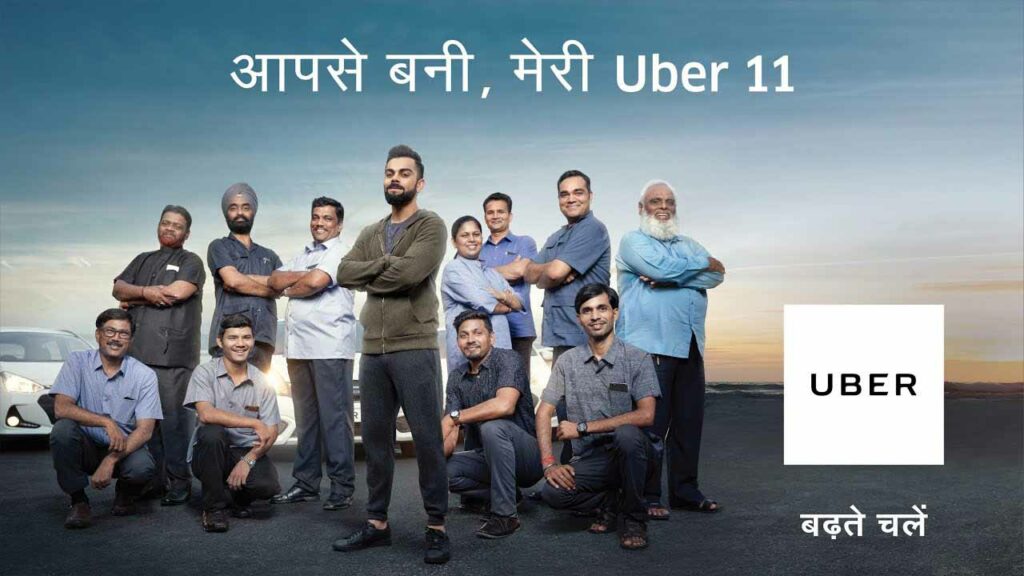
Every day, Uber connects millions of Indians to their destination. Considering this, Uber recently launched its new ad campaign, “Badhte Chalein,” carrying the theme that every trip is more than a journey; it’s a step forward on the more significant journey of life. The basis of “Badhte Chalein” is the brand’s new campaign, which looks to help Uber become a facilitator of social change.
- Forward-Looking Message: It is an inspiring yet approachable-looking and forward-looking campaign.
- Influential Brand Ambassador: The fact that Virat Kohli is in it connects pretty well with the audience.
- Emotional Resonance: It talks about the emotional side of the rider’s experience through enhancing brand relatability to the customer.
- Closes its Commitment to Sustainability: Responsible usage of resources is marketed toward fitting the positive social values of the brand.
- Inviting Inclusiveness: The advertisement invites inclusivity and participation from all sections of society, thus making it more attractive.
Referral Campaign: “Office Heroes”
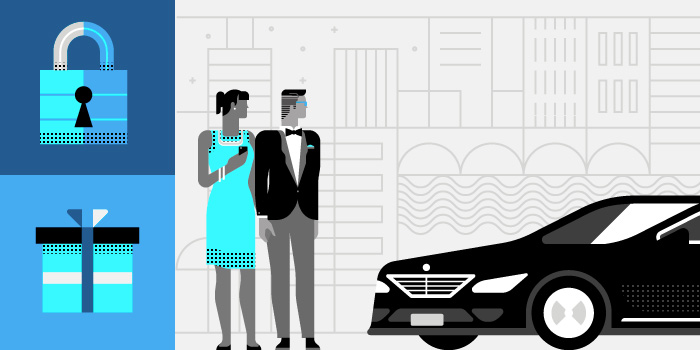
Instead of throwing millions of dollars into the usual campaigns, Uber was ready to take a chance on a good customer experience. To get the Uber marketing campaign rolling, Uber targeted offices, asking office employees to become “Office Heroes.”
- Incentivized Referrals: Sizeable discounts and free rides encouraged Uber to solicit existing customers and invite new customers to Uber.
- Gamification in Experience: There was significant competition among colleagues, which increased participation.
- Building Community: This activity created a community of office-goers that eventually became brand ambassadors.
- Low-Cost Marketing Activity: Contrasted to traditional marketing activity, the referral campaign was significantly low-cost.
- Long-Term Customer Relationship: Due to focusing on rewarding referral customer relationships, relationships were built long-term.
Uber “Rider Zero” Campaign

Uber rolled out its Rider Zero campaign across Bangalore, Mumbai, and Delhi NCR in 2013. It also roped in influencer profiles in each city, “trying out” Uber for the first time secretly. Influential Indians were gifted unique access to the service and asked to share it with their massive audience online.
- Creating Buzz Pre-Launch: This also generated excitement and buzz in the market even before the launch of Uber.
- Influencer Marketing: This campaign leveraged local influencers to tap into existing fan bases that built credibility for the brand.
- Social Media Amplification: The amplification of the campaign on social media increased the reach and engagement.
- Building Anticipation: The secrecy will always generate curiosity and anticipate potential users.
- High-Profile Endorsements: Getting known personalities as their first set of users lends prestige.
Strategic Tie-Up with Zomato
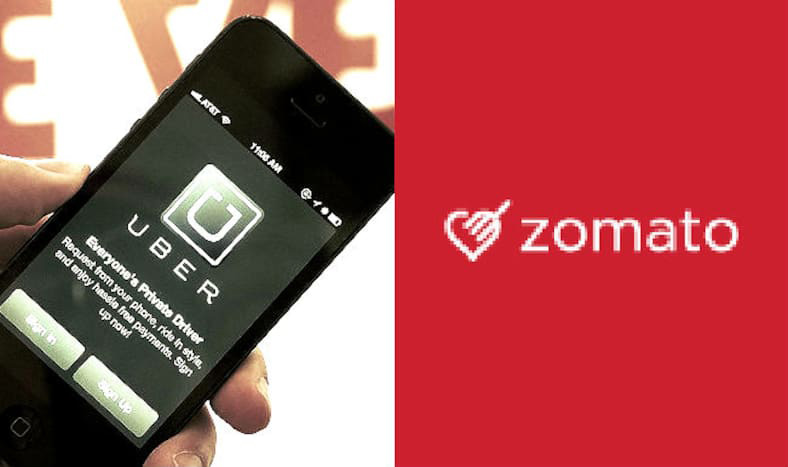
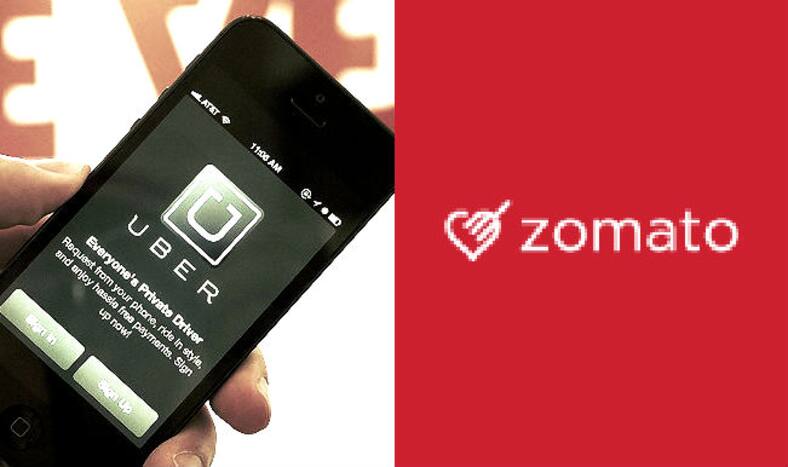
The entire strength of the marketing campaign of Uber is through branding partnerships. Uber has had strategic alliances with other very famous products and companies, which were revolutionary. In 2015, Uber allowed users to book a cab using the Zomato application to reach their desired restaurants. In 2016, Uber had tied up with BookMyShow as the official operations partner for the ongoing T20 Cricket season.
- Cross-Promotion: With Zomato as its partner, Uber gained a solid base to access another large customer base of foodies.
- User Interface Improves: It ensured user comfort during the ride-booking process while ordering food.
- Brand Association: Association with other big brands has given Uber higher brand mileage and visibility.
- Seasonal Promotion: The partnership with BookMyShow played on the glamour of T20 cricket, hence raising the instances of ride-booking during the matches.
- Added Value Services: The partnership allowed Uber to offer extra value to its customers since it improved loyalty.
Uber Innovative “Bas Socho Aur Chal Pado” Campaign
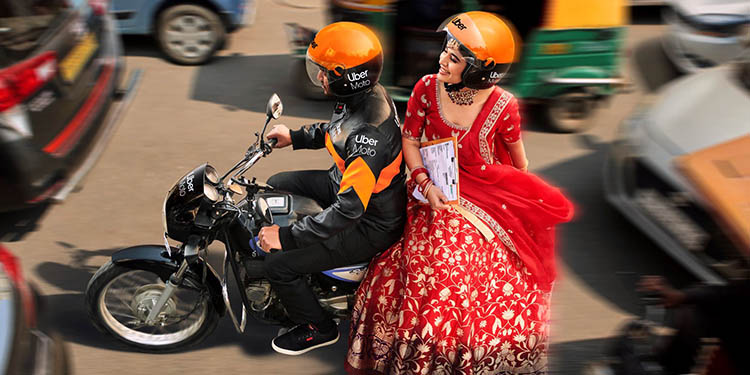
Uber launched a 360-degree campaign called ‘Bas Socho Aur Chal Pado’ in March 2022 intending to raise the visibility of its economic categories of trips and help people rediscover how they could travel daily. The ad pays homage to the indomitable spirit of the Indian ordinary citizen being so bold in pursuing their dreams without all things holding them back.
- Culturally Relevant Content: The ad campaign consisted of ads in various regional languages, making the viewer relate better.
- Celebrating Everyday Heroes: It celebrates familiar people’s aspirations, making it aspirational.
- More Visibility: Highlighting the economical travel options available for the users made the campaign reach out to cost-conscious customers.
- Multimedia Approach: This ensured maximum reach and engagement through various media channels.
- Helped Common Commuters: The campaign was capable enough to encourage the ordinary commuters to think of Uber for their daily commutation purpose.
The #UberPatang Advertisement Campaign
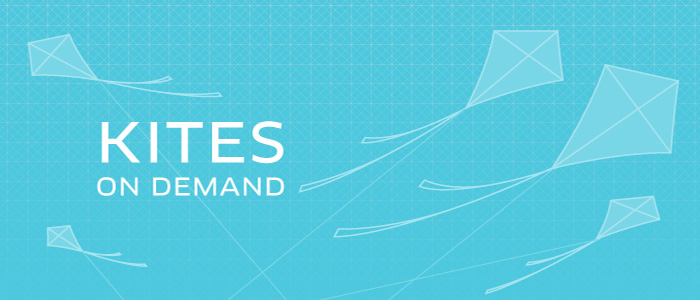
Festive branding is no innovation; however, for a newly established international cab service company to market itself against customers in their environment is an excellent decision. Since the promotional campaign was underway, Uber’s advertisement team decided to accelerate their reach by being “approachable” to the customers at the time of their need.
- Cultural Relevance: The campaign targeted customers when celebrating the festival of Makar Sankranti, making the campaign more relevant.
- Community Building: The distribution of kites and sweets proved goodwill and reached out to the community.
- Localized Marketing: A campaign running during festivals depicted cultural sensitivity and awareness.
- Live Interactive Experiences: The campaign turned out to be a highly interactive experience, which increased customer participation to the fullest.
- Brand Loyalty: When the brand speaks to customers about critical cultural moments, the chances for brand loyalty increase.
Uber #RentalHealthDay Campaign
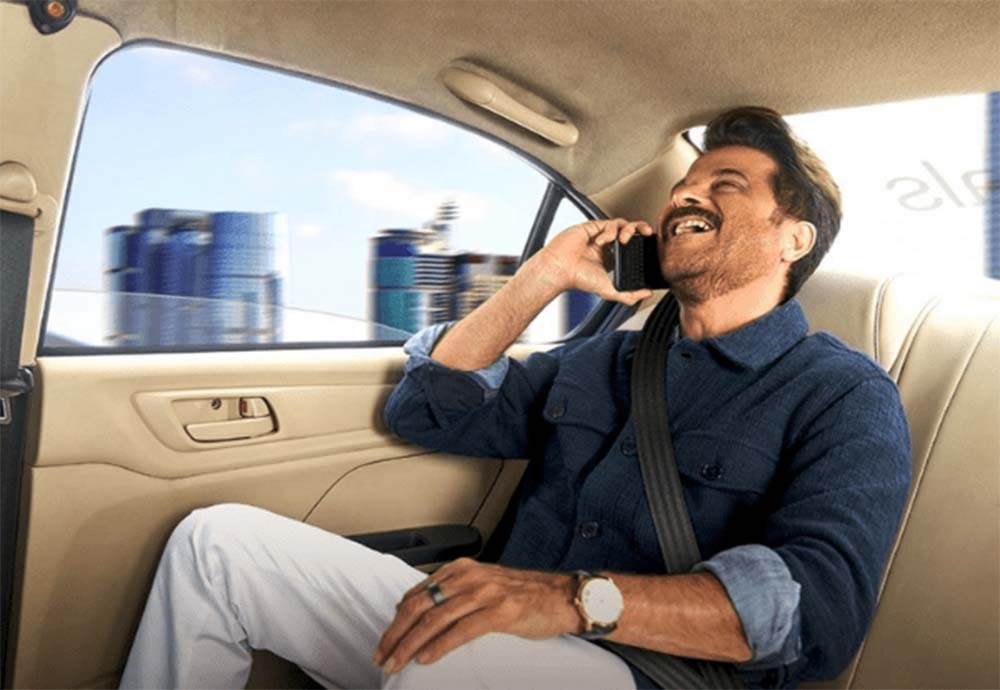

Uber has recently launched #RentalHealthDay for 2022, bringing forward its newest transport service, Uber Rentals. The ad talks about the stress that a long, busy day can lead to, and its objective is to help the rider get through their health and wellness.
- Focus on Customer Wellness: The primary focus on the customers’ mental well-being showed care from the brand side.
- Encouragement of Healthy Living: The campaign motivates people to seek well-being, connecting deeply with the audience.
- Community Engagement: Such a campaign fosters community interaction and engagement through shared experiences.
- Diverse Messaging: It speaks to a diverse audience while motivating them to use its services.
- Reputation for Caring: Building a reputation for being a caring service increases long-term brand loyalty.
Uber #WithinHerReach Campaign
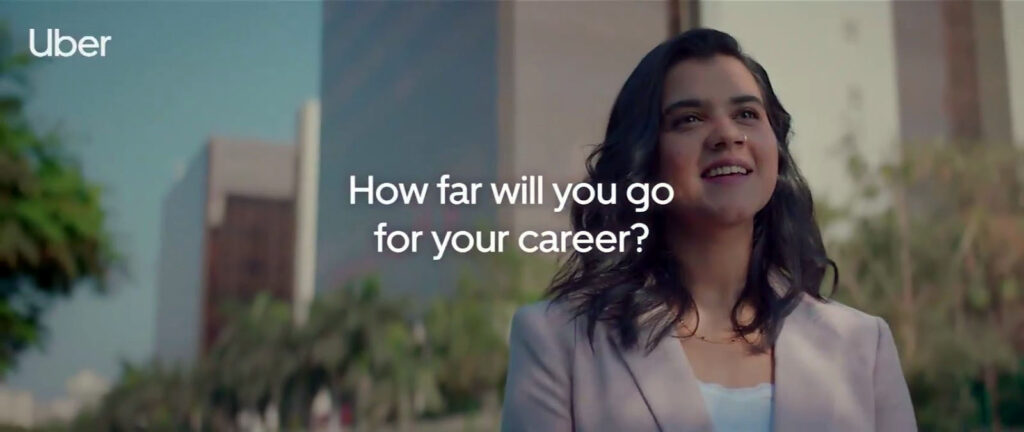
As part of the efforts to bring every opportunity #WithinHerReach, a dialogue initiated by Uber in 2019, Uber India has come out with a new initiative.
- The marketing campaign highlights that 3 out of every 5 women limit their job opportunities to only within a 1-kilometre radius of their homes.
- The advertisement appeared on the front page of The Hindustan Times to launch the campaign.
- The campaign continues to elicit conversations on the cause through multiple channels, including LinkedIn, Twitter, Instagram, and among industry decision-makers.
Uber: Official Sponsor of the 2019 ICC Men’s World Cup


Indians see cricket not as a sport but as an emotion, and Uber has tapped into that sentiment perfectly.
- Uber sponsored the ICC Men’s Cricket World Cup in 2019 as the largest transport company in the world.
- The campaign titled “This World Cup, Every Fan Wins” was designed to bring a sense of community, putting cricket fans at the center of the festivities.
- Under the sponsorship agreement, Uber became the first transport and food delivery company to strike a deal with the International Cricket Council (ICC) for the Men’s Cricket World Cup.
- The organization informed that the event was expected to attract an estimated 1.5 billion viewers worldwide.
“The Safe for Each Other 2.0” Campaign During the COVID-19 Pandemic
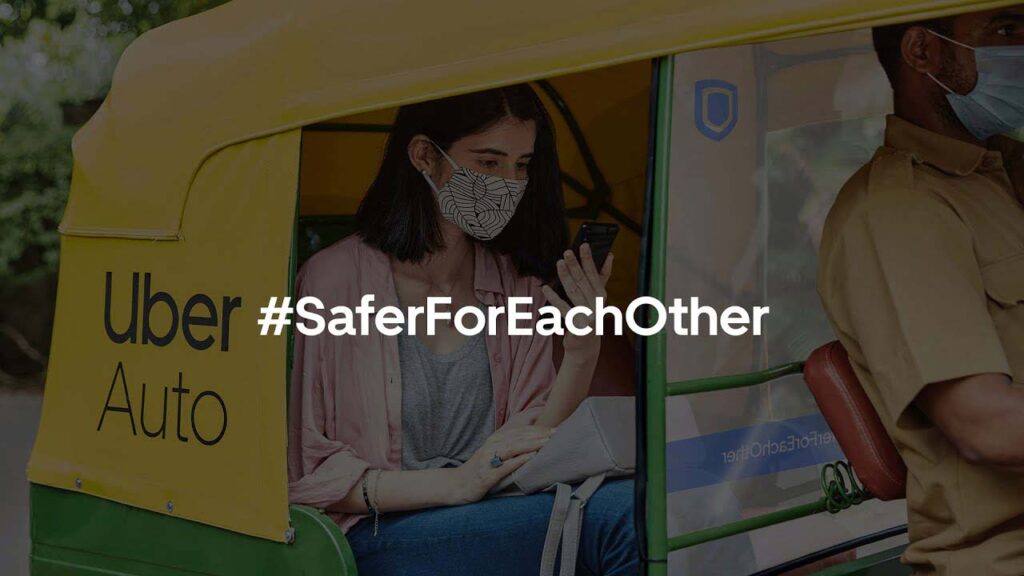
In response to the COVID-19 outbreak, Uber launched its “Safer For Each Other 2.0” advertising campaign as a way to assure users of the safety measures taken by the organization to ensure the well-being of passengers and drivers.
- Examples of safety measures include separators installed in cars and vehicles sanitized at regular intervals.
- To create awareness of Uber’s safety features, the advertising team employed a 360-degree approach, utilizing print, radio, and all digital and other media.
- Uber is revolutionizing the way people move safely, and this campaign aims to reinforce that fact.
Final Thoughts
Uber’s marketing strategies exemplify how a brand can resonate deeply with its audience by being culturally relevant, user-centric, and innovative. By adapting to local nuances and leveraging emotional connections, Uber has established itself as a service and a vital part of the community. Learning from Uber’s successful campaigns can provide valuable insights for businesses looking to elevate their marketing efforts.
]]>In this blog, we will dig deeper into the following areas to analyze the importance and effectiveness of offline marketing deeply.
- What is Offline Marketing?
- Why Choose Offline Marketing?
- Top Offline Marketing Campaigns of All Time
- Final Thoughts on the Importance of Offline Marketing
Offline marketing is not dead and buried, as many of the best-known pieces of advertising of all time have been executed using this method. Let’s see how, even today, it forms a vital part of the marketing mix.
What is Offline Marketing?

Offline marketing, also known as traditional marketing, refers to any type of marketing that does not involve the Internet or digital media. Offline marketing is as old as tradition, and most global brands have reached success through these methods. On the other hand, digital marketing seems ubiquitous and is soaking in more of the world’s attention and marketing dollars. In some cases, however, offline marketing is still perfectly acceptable because it focuses on niche audiences or local markets.
Critical Characteristics of Offline Marketing:
- Off-line Media: This type of marketing media does not apply to electronic mass media, like the Internet. However, its only sources are traditional media: television commercials, radio, print advertisements, billboards, and outdoor advertisements.
- Reach for the Target Group: Offline marketing will allow an organisation to reach messages to a targeted geographical area or a particular group within society to give meanings they can understand and appreciate.
- Customer Contact: Often, prominent people perceive offline campaigns as more concrete and tangible, giving credence to the brand and creating a more profound attachment to customers.
- Brand Awareness and Loyalty: Many consumers may recall a catchy jingle running on television or see that billboard strategically placed long after the online ad fades to oblivion, giving offline marketing staying power that some digital campaigns sometimes don’t.
- Part of Digital Marketing: Offline marketing campaigns can complement online efforts to create maximum visibility and brand recognition through a multi-channel strategy.
Benefits of Offline Marketing
- Broader Reach: The more traditional marketing instruments involve easier ways to reach people who might not be interested in interactive and engaging web-based communications.
- More Intense Experience: Paper-based ads, pamphlets, and hoardings are more memorable compared to their online version.
- Trust: TV and print media ads, among many others, are considered much more trust-provoking than any form of internet-based communication.
- Less Clutter: There is such a solid push to explore digital marketing. Therefore, the offline channels face lesser clutter and competition to grab anyone’s attention.
Offline marketing can be as effective as digital marketing, especially targeting specific demographics or local markets. It has helped significantly in developing customer loyalty and trust.
Why Offline Marketing?

Now that we know offline marketing, we should ask ourselves why businesses continue investing in it despite this tidal wave of digital influence shaping today’s business world. Offline marketing offers too many benefits, making it an integral part of a total marketing system.
- Building Strong Local Connections
Target locality using offline marketing, but businesses will also be able to support the community sense among locals. Businesses establish credibility and brand familiarity in targeted regions Through simple billboards, flyers, and even sponsoring local events.
Example: A dealership of cars uses radio commercials or mailed invitations for car sales events to increase exposure for the customer within proximity of the location. - Target Niches
Offline advertising is also very effective for niche targeting by interest. Companies can reach a narrow section of their customers through sponsoring events, speciality magazine advertising, or direct mail.
Example: An outdoor gear luxury brand might sponsor a local hiking event or advertise in specialized adventure magazines to focus on avid hikers. - Brand Awareness
TV commercials, hoardings, and other offline marketing elements tend not to be forgotten and have a better chance of provoking brand recall. Since most consumers enjoy iconic ads that ran several years ago when they were young, offline marketing is less likely to reach saturation.
Usage Example: The “Share a Coke” Coca-Cola campaign facilitated branded labels to speak directly to the masses; hence, the brand was recalled instantly. - Fewer Saturation Channels
Offline channels are no longer as cluttered as they once were with the onslaught of digital marketing. Thus, there is less competition for an offline marketer in terms of competing for consumers’ attention. An effective running of an offline marketing campaign shall attract brand attention, considering that the clutter is better than other channels.
Example: The exact number of or half that number of advertisements is pretty easy to grab with a billboard pasted on a traffic thoroughfare compared to a digital advertisement competing online. - Building Trust and Credibility
The messages of offline advertisements would most likely ring as more believable to consumers. That is the case mainly if they feature on television, radio, or print. Companies can tap into that trustworthiness by harnessing the history of media to help build credibility through a sound brand image.
Example: A law firm can use advertisements on local news stations on TV to set credibility before the public while attaining the target audience who trusts the former.
Offline marketing is effective simply because, in many situations, it can achieve a degree of credibility that digital marketing cannot. Thus, any effective marketing campaign must integrate offline marketing. Offline marketing enables businesses to ensure that people hear their intended message by supporting their digital efforts.
Top Offline Marketing Campaigns Ever
While most of the marketing campaigns clicked pretty amazingly online, it was from the world of offline marketing that some of the most legendary campaigns have struck the charts. Eight of the most successful offline marketing campaigns have left an impact.
Uber: ‘Safer For Each Other 2.0’

To supplement these efforts, Uber has carried out several safety measures, such as car walls and always disinfecting cars for the protection of their clients and drivers. The company launched ‘Safer For Each Other 2.0,’ which is the second phase of its advertisement campaign to win the trust of passengers.
- Uber’s ‘Safer For Each Other 2.0’ program intends to place a daily automobile safety icon behind the drapes of the firm.
- The campaign used print, radio, and other amplification channels for a 360-degree approach, letting as many people hear about Uber’s commitment to safety.
Coca-Cola’s “Share a Coke”

Another of the greatest marketing campaigns of all time is Coca-Cola’s “Share a Coke.” This managed to connect the company on a personal level with the customer, which compelled people to share bottles of Coke with their friends and family.
- It brought in a personal connection with customers while also making them feel part of the Coca-Cola family.
- The commercial raised sales of Coca-Cola products because the consumers were encouraged to buy several bottles and share them with their loved ones.
- The campaign fostered brand loyalty, as consumers felt compelled to continue buying the products after exposure to the “Share a Coke” campaign.
Toyota’s Offline Campaign: “Oh, What a Feeling”

The advertisement had an ear-sticking jingle, “Oh, What a Feeling,” in the TV, radio, and print ads. The ad jingle was focused on the message of fun with a Toyota Corolla.
- A catchy melody adorned the commercial that featured a young couple and their new car, promising fun times ahead.
- The campaign was extremely successful and catapulted Toyota to the pinnacle of the automobile industry overnight.
- It was effective at building brand recognition and loyalty, and sales of the Corolla soared after the advertisement aired.
Marlboro: “The Marlboro Man”

The Marlboro Man is the legendary embodiment of the American West and its pioneering spirit. With an increase in the number of male smokers in the United States, the iconic Marlboro Man was created to capture their attention.
- The Marlboro Man changed the face of cigarette sales in the United States.
- He became a stereotype of the American cowboy, a look that was effectively used to sell both cigarettes and the associated culture.
L’Oréal: “Because You’re Worth It”

One of the most classic marketing campaigns in history, L’Oréal’s “Because You’re Worth It” campaign, epitomizes a well-crafted slogan and message.
- The campaign made the public believe in the value and worthiness of the product.
- It gave consumers a sense of power and reminded them that they are worth the extra money spent on a luxury item.
- This approach brought great success and helped make it one of the most recognizable and successful marketing campaigns of all time.
Apple: “Get a Mac”

Apple Inc. developed a series of commercials in which two actors play the roles of a PC and a Mac, targeting Windows users.
- The campaign was one of the most celebrated and influential campaigns ever created.
- It established the modern branding paradigm, making it a commonly used marketing strategy that remains effective today.
- The creativity and innovation of this campaign are still appreciated, making it a standout example of effective advertising.
Geico: “So Easy a Caveman Can Do It”

Among the most successful offline marketing campaigns of recent years, Geico’s “So Easy a Caveman Can Do It” was a standout.
- The campaign’s success was due to its clever writing and humor, poking fun at caveman stereotypes such as being uneducated or primitive.
- The comprehensive campaign included television commercials, as well as print, radio, and outdoor advertising.
- The print and radio commercials featured cavemen telling jokes, while outdoor commercials showcased large billboard pictures accompanied by slogans about cavemen.
Dove: “Real Beauty”

Dove’s “Real Beauty” campaign is one of the most remarkable offline advertising campaigns ever. It challenged traditional beauty ideals portrayed in commercials and encouraged women to love and embrace their bodies.
- The campaign included workshops, seminars, and even beauty pageants, all aimed at celebrating women as they are and promoting body positivity.
- It was a very successful campaign, promoting women’s empowerment and inclusion, and remains an iconic example of impactful marketing.
Final Thoughts
The best campaigns stand the test of time. So long as offline marketing still engages audiences and creates powerful emotional connections, it remains essential.
If the past decade has taught us anything, the most successful advertising campaigns marry the digital with the tangible. Offline marketing holds the keys to connecting deeply with your target audience, which will keep you in a competitive position in any industry.
- Offline marketing is not dead; it’s thriving and can achieve remarkable success.
- It builds trust and credibility among customers by being more concrete and tangible.
- There is less clutter in offline channels, making them more effective for grabbing attention.
- Successful campaigns are memorable and can resonate with consumers for years.
- Integrating offline marketing into your overall strategy can enhance brand awareness and loyalty.
By fusing offline and online marketing strategies, we can ensure brands leap new territories.
]]>Even as the world slowly started to reopen, the impact of COVID-19 on the advertising industry was quite evident. The impact of the pandemic had a long-term influence on consumer behaviour and brand-to-customer interaction.
In the wake of the COVID-19 pandemic, advertising strategies have been changed and adapted to fit the new reality. In this article, we will discuss how the pandemic has impacted advertising, from how companies have adjusted their ad campaigns, to the impact on digital marketing budgets.
Importance of advertising during the pandemic

Advertising has always been a crucial element of every business, but it is much more critical during a crisis like COVID-19. During the pandemic became a concern for marketers as it was used to create and maintain brand awareness, communicate changes in services, support the economy, and provide helpful information.
With many individuals confined at home and spending more time online, it became critical for businesses to continue promoting to keep their brand presence in the minds of customers so that when things return to normal, consumers will remember and select them over the competition.
Advertising also contributed to increased consumer confidence and kept money flowing in the economy, which is especially crucial during a downturn such as a pandemic. It gave customers useful information about staying safe and healthy during the epidemic, or even promoted social distancing measures.
How did the pandemic change ad strategies?
Covid-19 triggered a significant revolution in how businesses advertise. With the majority of the population suffering to make ends meet during the pandemic, advertisers’ techniques had to be adjusted to avoid looking insensitive or out of touch.
This trend toward emotional marketing required firms to embrace narrative rather than depending on hard-selling strategies and slogans. Advertising messages were targeted to customers’ emotional concerns and to provide comfort during difficult times. Ads in particular focus on:
- How can families cope with day-to-day living during a pandemic?
- How can people remain productive when working from home?
- Local companies in need of assistance.
- Options and experiences for at-home entertainment.
- Healthcare and cleaning materials are examples of household necessities.
Businesses had to retrain themselves on effective marketing techniques, stressing needs and appealing to consumers’ emotions. Advertising was more concerned with connecting than with selling items.
Impact of COVID-19 on the advertising industry in India
There was a substantial impact of the pandemic on the advertising industry. The pandemic has prompted businesses to adjust fast to the new reality, from budget cuts to changes in marketing methods.
This section of the blog focuses on the impact of COVID-19 on the advertising industry and what these imply for the evolution of marketing!
Changed consumer behaviour

Consumer behaviour and media consumption was significantly affected on a large scale due to the impact of COVID-19 on the advertising industry. With more individuals remaining at home, online shopping and streaming services have increased. As a result, digital advertising has increased, notably on social media and streaming platforms.
Traditional advertising strategies, such as television and print, suffered a loss in viewership and reading, resulting in a reduction in ad expenditure in these sectors. Since the pandemic continues to influence daily life, changes in consumer behaviour and media consumption will probably continue to alter the advertising sector in the future.
Customers expect more relevant and personalised content that speaks directly to their interests and needs to interact with them on a deeper level. As a result, businesses today must employ data-driven insights to design targeted campaigns that offer personalised messages depending on user behaviour.
Increased focus on digital advertising strategies and e-commerce

The epidemic accelerated the transition to digital advertising and e-commerce. E-commerce has also grown significantly, with companies spending on online shops and advertising strategies to increase sales. As the pandemic influenced daily life, this trend toward digital marketing and e-commerce is expected to continue.
Due to the sudden shift to online shopping, businesses had to swiftly revise their plans by stepping up their digital presence and spending on digital marketing. This included utilising social media platforms with targeted advertising strategies as well as increasing their SEO optimization efforts to guarantee they showed higher search results.
Moreover, companies changed their services to match the new social distance norm, as well as contactless payment methods such as PayPal and Apple Pay. This enabled them to reach out to more people and maintain revenues despite store closures around the country.
Introduction of new advertising trends

The impact of the pandemic on the advertising industry led advertisers to seek out different strategies to reach their target consumers.
Online outlets
As more individuals stayed at home owing to Covid-19 limitations, internet advertising grew in popularity. Prominent online channels such as social media, websites, and blogs may assist firms in increasing visibility and reaching a broader audience.
Virtual events
Due to the epidemic, there has also been a growth in virtual events, with many firms taking use of this new medium for marketing objectives. Virtual events may be an efficient forum for introducing new products or services or raising brand recognition.
Influencer marketing
This trend currently encompasses a wide range of social media sites, including YouTube, Instagram, Twitter, and TikTok. Brands built greater trust from their consumers and create a deeper relationship that will endure longer than the epidemic by utilising influencers’ validation with their audiences.
Budget cuts and reduced ad spending

Budget cuts and lower ad expenditures are the most serious impact of COVID-19 on the advertising industry. Advertising expenditures have been trimmed to save expenses as many firms face financial instability and decreasing income.
This resulted in a decline in overall advertising spend, particularly in conventional advertising mediums such as television and print. Nonetheless, as more customers spend time online during lockdowns and social distancing measures, digital advertising has experienced a minor uptick.
Covid-19 influenced the digital advertising business as well, with direct response efforts being particularly badly impacted due to supply chain interruptions and increased competition from other marketers vying for consumer attention.
Examples of advertising campaigns during the pandemic
COVID-19 had an unprecedented impact on the advertising industry. Here are some of the advertising campaigns that were successful during the COVID-19 outbreak;
“Thank you for not riding with UBER”- UBER

The company praises individuals for not riding and staying at home by saying, “Thank You For Not Riding” and a note of thanks that concludes, “Stay at home for many who cannot.” The corporation promised to give 10 million free rides for key workers who must report to work due to an emergency.
Zero contact delivery- Dominos

In response to the coronavirus outbreak, Domino’s Pizza has implemented “zero-touch delivery” across all of its 1,325 locations. Domino’s allowed consumers to get their orders without any contact with delivery personnel under the new delivery strategy. The goal was to secure the safety of both consumers and delivery personnel.
“It’s Between You”- WhatsApp

Working from home accelerated the use of digital marketing technologies and approaches. Consequently, companies wanted to showcase items and services that were appropriate for the age of social distancing. The “It’s Between You” commercial from WhatsApp caught how the app’s capabilities can assist recreate in-person discussions and bring people closer together.
A campaign by TrulyMadly

TrulyMadly, a dating app, employed its match-making algorithm to link donors with patients who needed plasma to treat Covid-19. At this time, communication was primarily confined to digital, with only messages of safety and optimism. They decided to employ the same technology that supports their matchmaking mechanism for couples to assist COVID-19 patients in finding the perfect plasma donor.
Takeaways…
As we move forward, the impact of COVID-19 on the advertising industry continues to be felt. It pushed businesses to shift their attention away from product details and advantages and toward a more emotionally sensitive approach.
Businesses have to swiftly adjust to changing conditions, modifying their tactics to emphasize digital marketing and e-commerce while preserving a connection to conventional media. It will be interesting to see how the advertising industry will continue to evolve to meet the demands of the changing market.
]]>In March 2017, uberPOOL, made its way to tier II city, Pune. Prior to this, Uber had been serving the city of Pune for the past 2.5 years. The main idea behind launching UberPOOLin Pune is to make the city a better place to live in. People going the same way at the same time can share their journey, to at the tap of a button.
The UberPOOL program apart from reducing congestion, pollution, urban parking problems and transportation costs in cities, also results in riders having to pay less, and drivers spending less idle time between rides. It also gives riders a chance to meet new people on their journey.
How does uberPOOL work?
The booking algorithm for uberPOOL is pretty simple.
- Open the Uber app, select uberPOOL, and enter your destination.
- Review the final price you will need to pay.
- Hit the request button, and select the number of seats you need.
- Once you confirm the seats, you get matched with other persons heading in the same direction. A rider can book a maximum of 2 seats per pick up.
- The request goes to cab drivers nearby.
- You will see the estimated time in which the driver will arrive to pick you up.
- If there is a co-passenger travelling with you, his or her name will also be displayed. However, you can’t see where your co-passenger is going.
UberPOOL option is available only between 7 AM – 10 PM, 7 days a week.

Offer and Promo Code Campaign by GingerCup
As Uber launched uberPOOL in Pune in selected locations such as Hinjewadi and Magarpatta, team GingerCup used branded paper cups targeting daily commuters from colleges and corporates.
Each branded paper cup ad offered Rs. 50 off on the first 3 uberPOOL rides. To avail of the offer, promo code ‘POOLPUNE50’ has to be used while booking the ride.
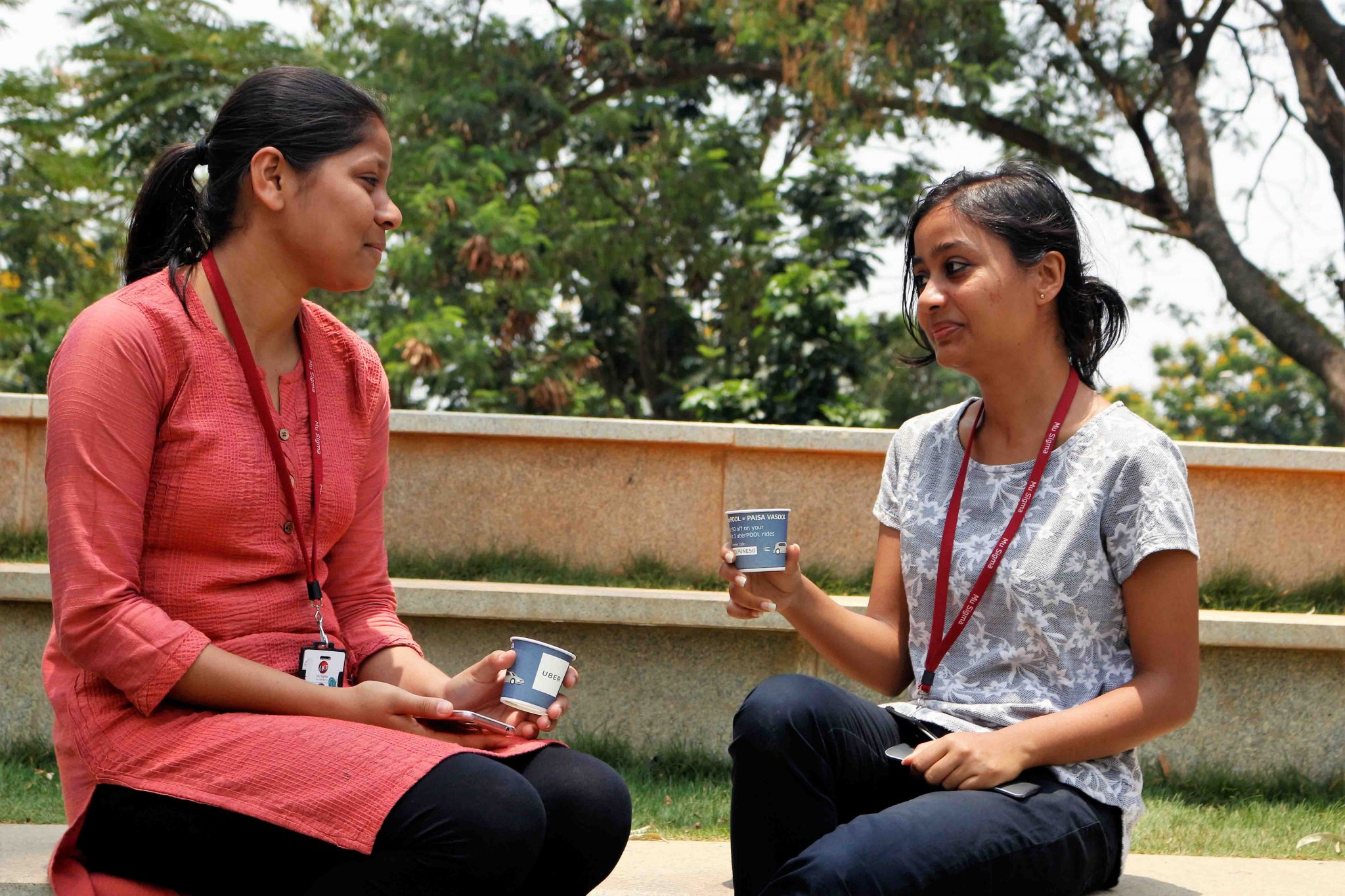
GingerCup targeted the high-traffic areas in Pune with paper cup marketing. Magarpatta city and Hinjewadi are satellite townships where corporate offices mostly IT/ITES and top consulting firms are located. These two are the most popular IT parks in Pune.
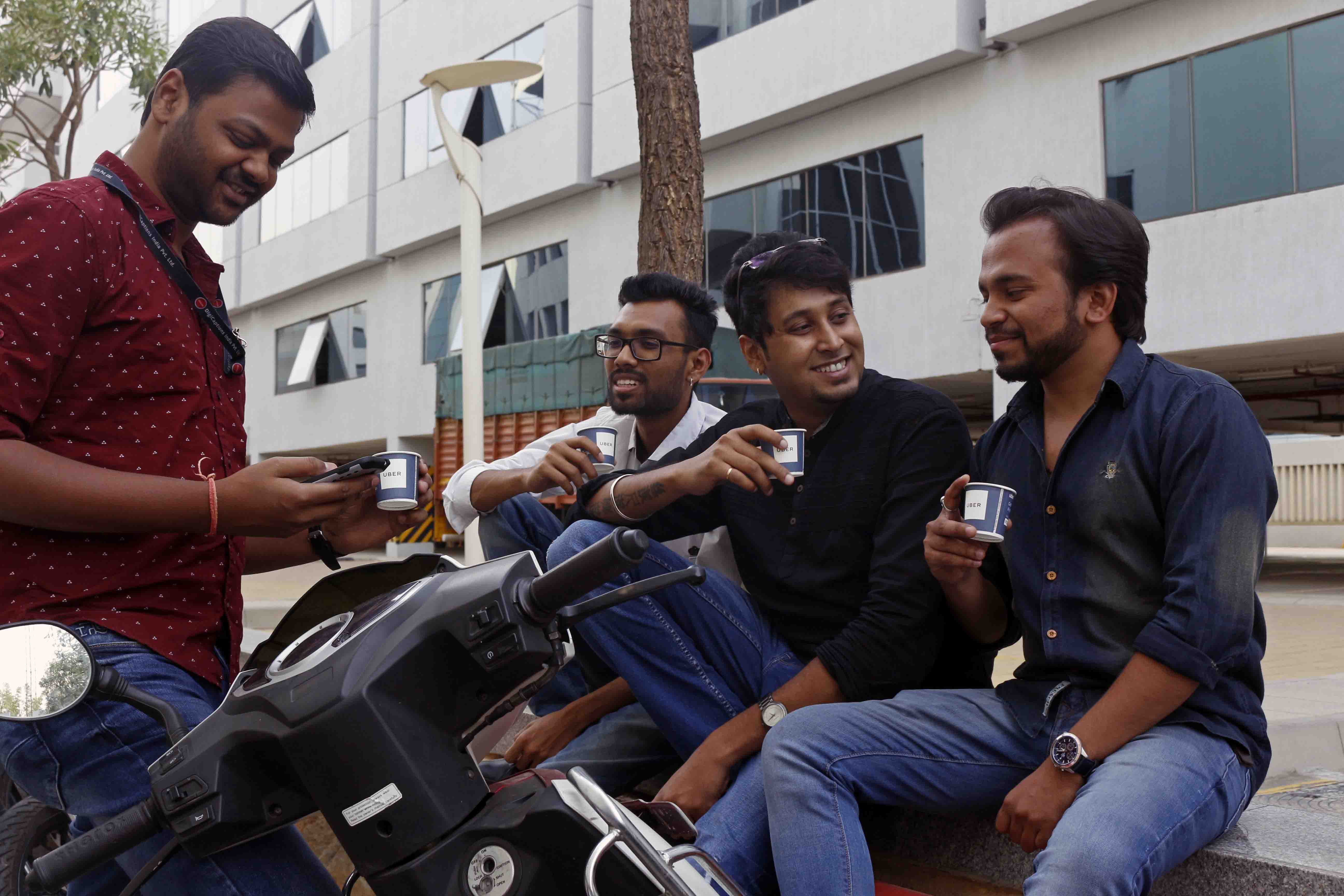
Using the power of a small creative paper cup ad that bores a powerful advertising message, our campaign will target individuals inside cafeterias, working spaces, IT parks, colleges and universities.
Our main aim is to generate excitement and get the audience to discuss and use the UberPOOL feature during their tea breaks and for daily commuting.
Not just daily commuting, UberPOOL is a great way to travel with friends to and fro during IPL matches and music festivals in Pune. The app easily allows riders to book UberPOOL rides to Maharashtra Cricket Association’s International Stadium, Pune.
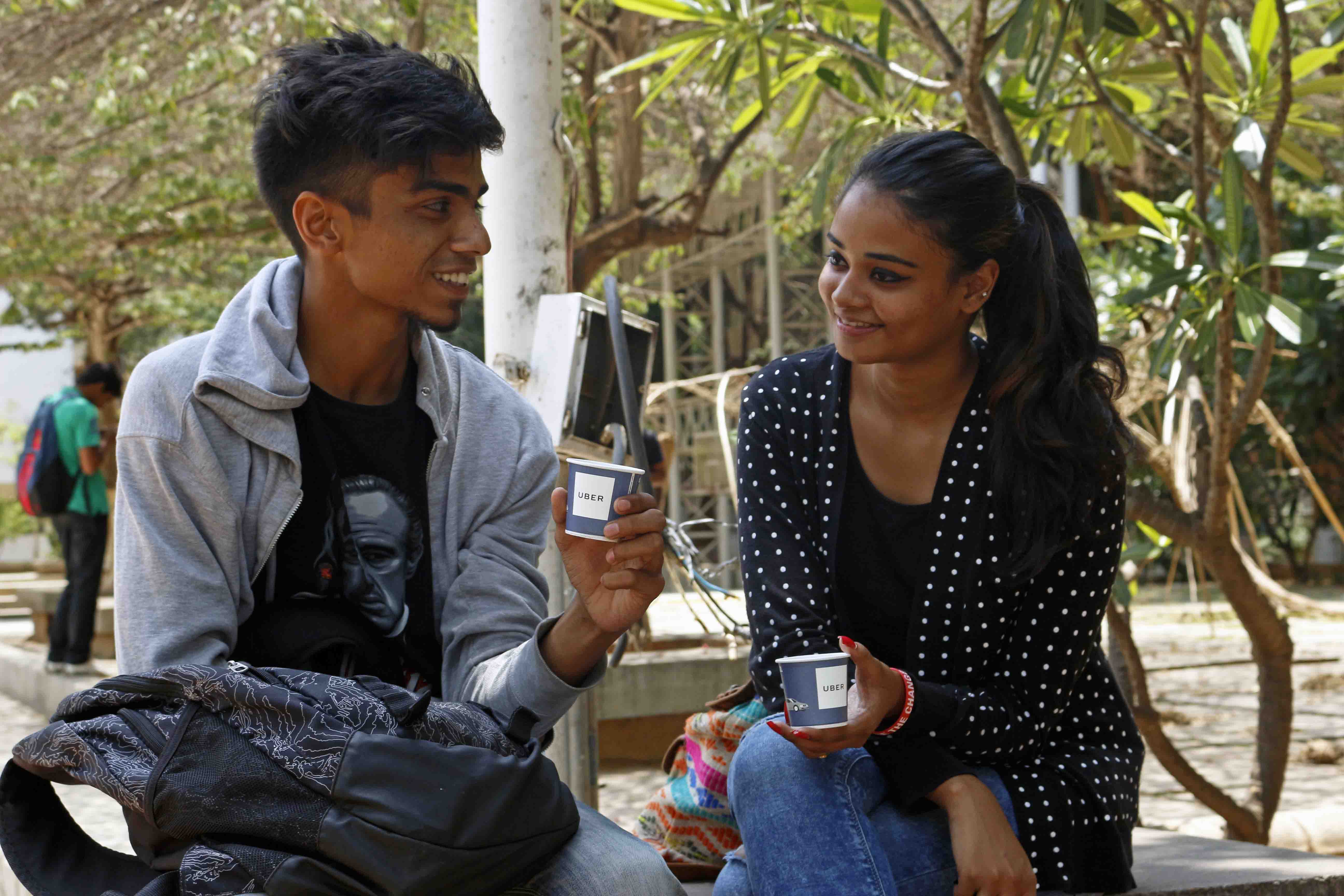
By advertising on paper cups, we want to revolutionise the way millions of people commute and think about getting around their cities. UberPOOL is definitely an affordable and viable alternative to personal car ownership.
Best paper cup advertising company Gingercup, send an email to contact@www.gingercup.com.
]]>Ready to talk with a marketing expert?

A Pragmatic and innovative way to enthrall your target group is just a click away!
Get in Touch
Rukmini Knowledge Park, Kattigenahalli, SH 104, Srinivasa Nagar, Bengaluru, Karnataka 560064
+91-990 247 8800
contact@gingermediagroup.com
Popular in Television Advertising
Udaya TV AdvertisingSun TV AdvertisingStar Plus AdvertisingTV 9 AdvertisingZee TV AdvertisingNDTV India AdvertisingColors TV AdvertisingPopular in Airport Advertising
Spice Jet AdvertisingMumbai Airport AdvertisingDelhi Airport AdvertisingEmirites AdvertisingIndiGo Airlines Domestic India AdvertisingPopular in Newspaper Advertising
Deccan Herald AdvertisingPrajavani AdvertisingThe Hindu AdvertisingEconomic Times AdvertisingDainik Jagran AdvertisingHindustan Times AdvertisingPopular in Magazine Advertising
Forbes AdvertisingCosmopolitan AdvertisingBusiness World AdvertisingVogue Magazine AdvertisingPopular in Sports Advertising
IPL AdvertisingPopular in Outdoor Advertising
Billboard AdvertisingBus Shelter AdvertisingMetro Pillar AdvertisingUnipole Advertising© Ginger Media Group 2025. All Rights Reserved.