What Do You Get from URL Full Form Knowledge?
- When we know about URLs, we can make smart choices about online content.
- By using the correct type of URLs, we improve how search engines find pages and thus save on SEO costs.
- Clear web addresses make client access to the content easier, improving their experiences.
- By evaluating URL construction, entity performance can be improved, with us ranked higher on search results pages. URL management skills can be used to anticipate future website traffic trends for audience behavior prediction purposes. Knowing the URLs used is a must to handle online business communications successfully. Read. For your enterprise to become a digital superstar, we will discuss URL long forms. This is the address of a resource on the web. By understanding URLs, we can help users find the information businesses need.
What Does URL Stand For?
URLs are called Uniform Resource Locators (URIs). They provide location data on the Internet and help users access web resources like sites, movies, files, etc.
Parts of a URL
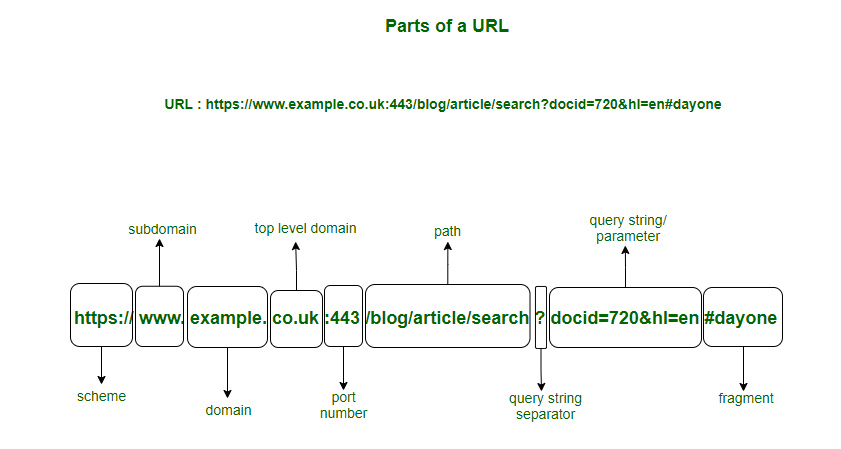
- Protocol (e.g., HTTP, HTTPS) outlines how data is securely exchanged between the server and users.
- Domain: (like www.example.com) This is a website’s human-name address, essential for branding and memorization.
- Path and Query: Tells precisely where a resource resides within a domain; it determines accessibility by search engines.
- URLs are crucial for website apps/platforms because they allow an understanding of the site’s layout/structure.
- Short, to-the-point URLs are helpful for users and improve search engine ranking/click-through rates.
- Organized URLs ease collaboration and increase content discoverability while reducing the need for further modifications to content.
- Understanding users’ interactions with URLs is key to enabling maintenance/enhancement.
- The clinic Evaluates changes in URL kinds of resources (money, time, etc.) to the task having agreed, e.g., experiences of different random searches/support the total quantity of visitors a fantastic web page initially has.
- This is regularly assessed through analytics and user feedback, which reveals current feelings and expectations. This provides marketers with value by providing insight-derived suggestions.
- First, screen the Web addresses to discover regions where customer experience may be boosted.
- Cut Costs: Work on improving what loads fast or slowly when customers click on a link, which also determines how quickly Google can crawl through it.
- See if It’s Working: Establish some benchmarks of success, like the number of clicks or time spent on pages, to determine whether different URL schemes are encouraging more customer interaction.
- Staff Input: When setting up URLs, include everyone on the team. Once they know why they are essential, they can devise new ways to organize them that nobody has considered.
- Technology Tools: Take advantage of special computer programs that show which URLs are popular or unpopular with search engines.
Real-World Samples of URL Full Forms
- Instance One: By giving URLs clear product names, a prominent online shop had 30% more visitors from searches.
- 2nd Example: When an ad agency matched every page subject to a topic, the number of buyers from search engines increased by 25%.
- 3rd Example: Removing useless digits made news URLs easier to remember, so people returned more often to read. Companies that know URL complete forms can get more hits on their websites by making their articles appear better in searches. URL Full Form is the key to website success and is functional. Knowing the idea of URL optimization, assigning resources wisely for maintaining a website, and continual improvement in digital strategies, businesses have good untapped potential. The reasons for implementing URL Full Form in your industry are:
- Search Engine Optimization (SEO) Enhancements: Better website visibility in search results leads to organically increased users.
- User-friendly Navigational URLs: Clear URLs help in finding navigation easier.
- More Clicks: Suitable URLs get users to click on them more often. Grab the opportunity to use URL Full Form today to experience an increase in visibility and, thereby, growth.
Key Aspects of UI:
- Enhanced Decision-Making: UI designs offer opportunities to reach the user’s mind and determine which behaviour is necessary to visualize the design choices they organically make.
- Cost Efficiency: Finding the prevailing areas of friction within the user interface is possible because businesses can manage the process more effectively, resulting in substantial savings and better resource distribution.
- Improved Customer Focus: UI designed with user experience as the primary target means that the ones that do not need such a high priority will be less used. That way, it can easily be seen that customer satisfaction is the main objective of that company.
- Continuous Improvement: Good design not only verifies test runs; the user interface should be tested before. The company should rethink which strategies work strategically for it and plan regular improvements to the user experience.
- Strategic Planning: A well-thought-out user interface will help the company forecast user engagement trends, such as ups and downs, which will, in turn, inform what users expect in the future. This blog will delve into UI principles, its importance in present business practices, and how to capture its potential for better user experience by organizations. Let’s go side by side with expert investigation and real-world examples of implementing UI strategies in your business framework!
What is UI (User Interface)?
UI (User Interface) is a user-centred design principle that communicates between end-users and digital products such as websites and apps. It refers to everything a user interacts with, including buttons, icons, sliders, text fields, and other visual elements. By properly evaluating and designing these elements, the customer’s fun, delight, and satisfaction can be maximized in a way that encourages their interaction.
Key Components of UI
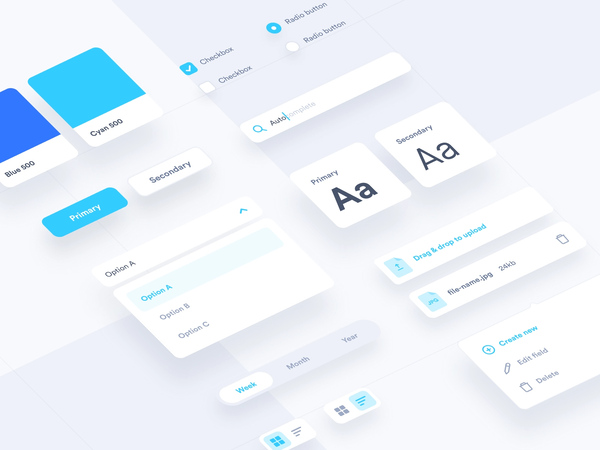
1. Visual Design: This component has a visual character because it imposes the quality of the user interface. It involves choosing the right colour schemes, typography, and layout, as the visual design allows for the most pleasing design, displaying the whole visual impression of the digital product.
2. Interaction Design: Interaction design is the process of defining the interaction between people and products. It is an area that deals with the design of interactive systems and, thus, the product’s execution.
3. Usability: Usability, which means how visitors can achieve their objectives when using a website, is very important for the success of any site. When a user interacts with a website, the site’s usability becomes easier and more efficient.
Benefits of UI

- Improved Decision-Making: UI is a part of interaction design and UX. It is concerned with the UI that a user uses to interact with a device and the visual appearance of the device. It is one of the disciplines of interaction design, processing human-computer interaction, and the design of on-screen information systems.
- Cost Efficiency: Simple, user-friendly applications enable businesses to save time and money. A good UI design makes it quicker for users to do their tasks since they can visualize the result of every action they take.
- Enhanced Communication and Collaboration: Mobile devices and gadgets have changed the way we interact and live. We cannot have a fully functional UI until we connect the dashboard’s functionality to the system’s performance.
Core Principles of UI

- Focus on Activities: Job roles and practices must be extracted from related user activities and clearly distinguished as core points. Discovering what a group of users would like to be able to do enables developers to implement a user interface that fulfils the initial requirements.
- Link Activities to Costs: The 21st century has witnessed the introduction of a new concept called the sharing economy in which companies like Uber and Airbnb rely on activity-based cost management. This enables a better view of the costs associated with different activities and helps in real-time decision-making.
- Continuous Improvement: Many apps and system improvements will likely be needed. Constant work with an idea, theurgic in all its aspects, comes out as the result of years of reading, meditation, and another kind of spiritual practice so that it can penetrate to the core of a work situation.
Steps to Implement UI
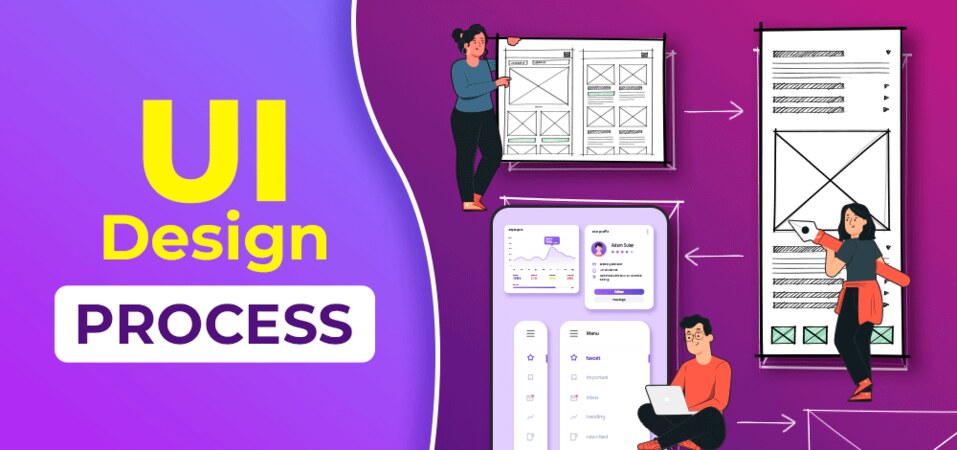
- Analyze Current Activities: Evaluate the end user experience and propose new improvement solutions for the existing interface design.
- Establish Cost Drivers: Factors regulating the expenditure of UI design and maintenance costs must be mentioned.
- Implement Performance Metrics: Configure and monitor the performance of aspects like user engagement and error rates to evaluate the UI’s effectiveness.
- Engage Employees: Employees’ participation in the UI development process helps make the collaborations with the users more real and, thus, makes them feel ownership of the product.
- Leverage Technology: Employ the best design tools or technology on the user interface to improve its features and provide the functionality and visual quality that allow the user to have a great experience.
Real-World Examples of UI

- Example 1: Airbnb: Airbnb implemented certain principles of user interface, which made the booking system more user-friendly and consequently led to increased facility use and user satisfaction.
- Example 2: Slack: Slack’s user interface is simple, which facilitates message communication that is fun to follow. This can lead to more collaboration and productivity in teams.
- Example 3: Dropbox: Dropbox developed a very clear UI design that simplified user file sharing. The easier and more intuitive Dropbox platform made using it more enjoyable for the users, increasing engagement and, thus, proving the significance of a good UI design.
It is now that the study’s preparation and final display can be articulated. The last section introduced a more descriptive approach to the topic. The study has added a new aspect to the explanation of the research. In conclusion, UI (User Interface) design is a significant approach for organizations to enhance user experience and engagement. Businesses can optimize their operation processes and decision-making opportunities by devising concrete solutions in intuitive design, employing resources for usability testing, and continually improving the UI design. Meeting the current market challenges and the fierce competition in any business, good UX design will undoubtedly be treated as a core to effectively managing the company’s product and service delivery. Adhering to the principles of UI design in business operations, you can accomplish:
- Small-scale user fulfilment due to easy and beautiful navigation and peers.
- Superior conversion rates owing to the decrease in friction in user interactions.
- There is even more brand loyalty as users are being given some points in the style and flow of the interface. According to recent research on the positive effects that a good UI design brings, the best approach would be to adopt this model right now. Make the first step to start being successful in the digital space and creating awesome user interactions!
Largest Contentful Paint (LCP) plays a pivotal role in measuring the success of online advertising. It affects the user experience, engagement, and conversion rates, making it essential for advertisers to optimise. LCP is critical because:
- It impacts the user experience by measuring how fast the most significant content on a webpage loads.
- A slow LCP can significantly reduce user engagement and lead to higher bounce rates, potentially causing a loss in potential conversions. This underscores the urgency for advertisers to address LCP optimization.
- Optimizing for faster LCP not only improves advertising success but also boosts SEO rankings, making it a crucial factor for online advertisers to consider.
- LCP directly influences user retention and conversion rates, making it a key factor in determining the success of an advertising campaign.
- LCP optimisation boosts campaign performance.
What is the Largest Contentful Paint (LCP)?
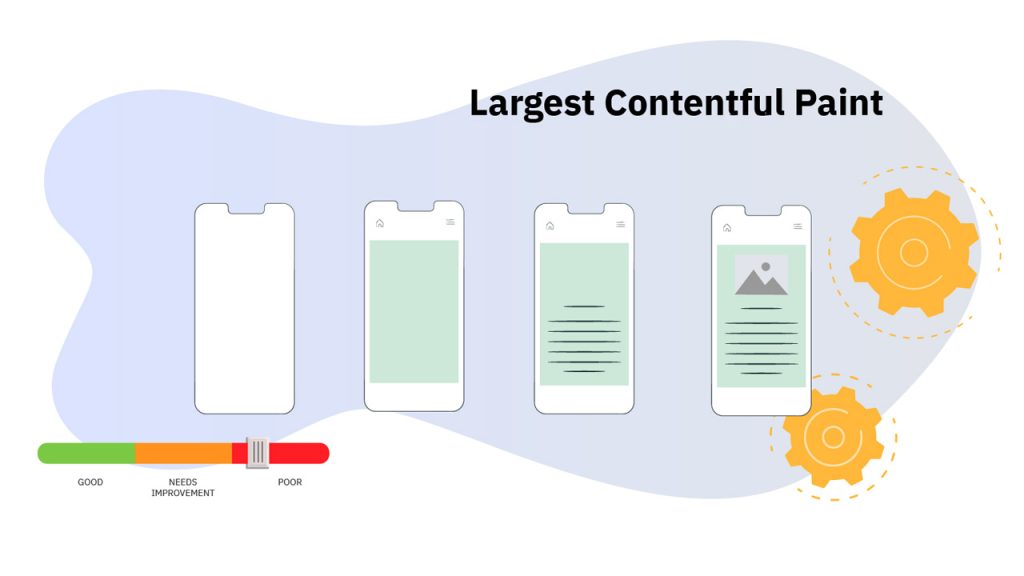
Largest Contentful Paint (LCP) refers to the time it takes for the most significant element in a browser’s viewport, such as an image, video, or block of text, to fully load. It is one of the three key metrics in Google’s Core Web Vitals and measures how quickly the main content becomes visible to the user.
- LCP Full Form: Largest Contentful Paint.
- LCP Google: It is a core web vital that affects search engine ranking.
- LCP SEO: Directly influences your website’s visibility in search results.
- LCP Content: Includes images, videos, and large blocks of text.
- LCP Performance: Determines how fast the most important content on your page loads.
When LCP takes more than 2.5 seconds, the user experience deteriorates. For advertisers, ensuring LCP remains under this threshold is vital to keep users engaged and avoid high bounce rates.
LCP’s Role in Advertising
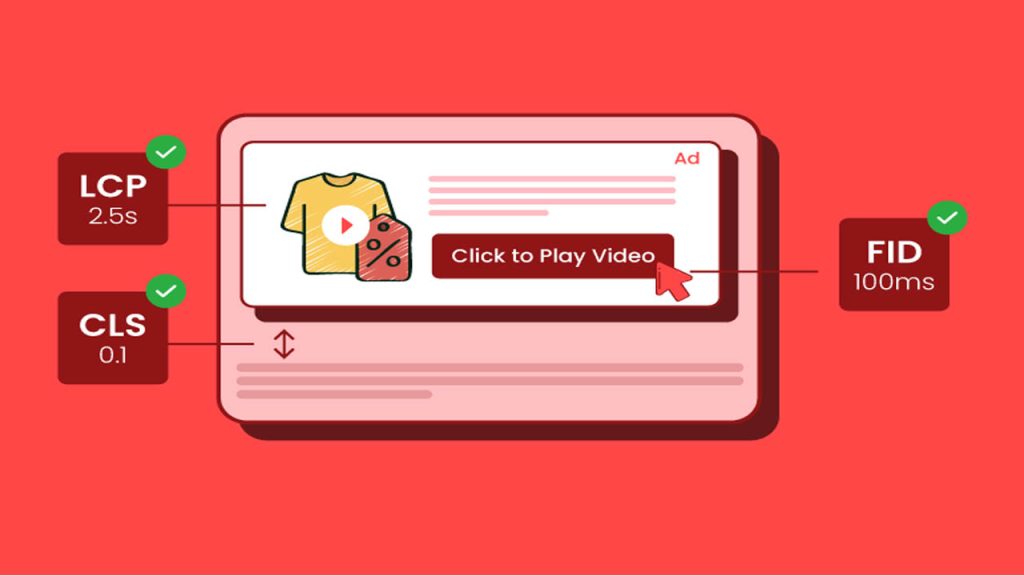
In advertising, LCP is crucial because it directly impacts user experience and the performance of a marketing campaign. If a page takes less time to load, users may abandon the site before interacting with the content, affecting engagement and conversions. Key points include:
- LCP Full Form: Largest Contentful Paint is critical for advertisers to understand.
- LCP SEO Impact: A faster LCP increases your site’s search rankings.
- User Retention: The higher the LCP, the more difficult it is to engage users.
- Conversion Rates: A slow LCP results in lower conversion rates.
- Ad Spend Efficiency: A poor LCP can save advertising budgets, leading to high bounce rates.
Optimising LCP ensures a faster page load time, which is essential for increasing engagement, improving SEO performance, and boosting advertising ROI.
Methods to Optimize LCP for Advertising Success
Improving Largest Contentful Paint (LCP) involves several optimisation strategies. These include optimising images, server response time, and render-blocking resources. Below are five essential methods to improve LCP:
1. Image and Video Optimization
Optimising images and videos is one of the most impactful techniques to enhance LCP. Large files can slow down the entire loading process. To improve LCP, you can:
- Compress images without losing quality.
- Use next-gen formats like WebP.
- Optimise video size and enable lazy loading for videos.
- Avoid large background images that slow down loading.
- Use appropriately sized images for all devices.
Optimising media files ensures faster loading times, improving the user experience and reducing bounce rates.
2. Minimize Server Response Time
Reducing server response time directly affects LCP. By cutting down on delays, advertisers can significantly enhance performance. Key strategies include:
- Use a Content Delivery Network (CDN).
- Optimise your web server settings.
- Enable browser caching.
- Serve content from a server closer to the user to reduce latency.
- Use HTTP/2 for faster content delivery.
A faster server response time improves the overall user experience and ensures the most significant content loads quickly.
3. Use Lazy Loading
Lazy loading delays the loading of non-critical elements until they are needed. This optimisation ensures the main content loads first, improving LCP. To implement lazy loading:
- Defer loading non-essential aspects like images and iframes.
- Prioritise loading content above the fold.
- Use lazy loading with HTML5 or JavaScript libraries.
- Ensure the primary content loads before secondary elements.
- Implement lazy loading across the site to optimise performance.
Lazy loading allows access to crucial content faster, improving user satisfaction and engagement.
4. Minimize Render-Blocking Resources
Render-blocking resources, such as CSS and JavaScript, can delay the loading of the page’s primary content, negatively impacting LCP. To minimise these delays:
- Optimise CSS and JavaScript files.
- Defer or async non-critical scripts.
- Minimise external stylesheets.
- Inline small CSS snippets for quicker rendering.
- Remove unused CSS and JavaScript.
By optimising render-blocking resources, you can significantly reduce LCP and improve page load speed.
5. Optimize Web Hosting
The quality of web hosting plays a significant role in determining LCP. Low-quality hosting can neutralise other optimisations, leading to poor performance. To improve hosting:
- Choose a fast and reliable hosting provider.
- Use managed hosting services for better performance.
- Regularly monitor uptime and response times.
- Upgrade to dedicated or VPS hosting.
- Conduct regular audits on hosting performance.
A reliable hosting provider ensures your website performs optimally, reducing load times and improving user experience.
LCP and SEO

LCP is one of the core components of SEO because it directly affects Google rankings. Websites with poor LCP scores are penalised, leading to reduced visibility and traffic. The impact of LCP on SEO includes:
- LCP Full Form: A core metric in Google’s SEO ranking factors.
- LCP Google: It serves as a page experience ranking signal.
- Bounce Rate: A slow LCP leads to a high bounce rate, negatively affecting SEO.
- Conversion Impact: Faster-loading sites convert better and rank higher organically.
- LCP SEO Best Practice: Improving LCP directly enhances SEO performance.
By optimising LCP, advertisers can improve user experience and enhance their SEO strategy, leading to better search engine rankings and more organic traffic.
LCP Performance Monitoring and Testing
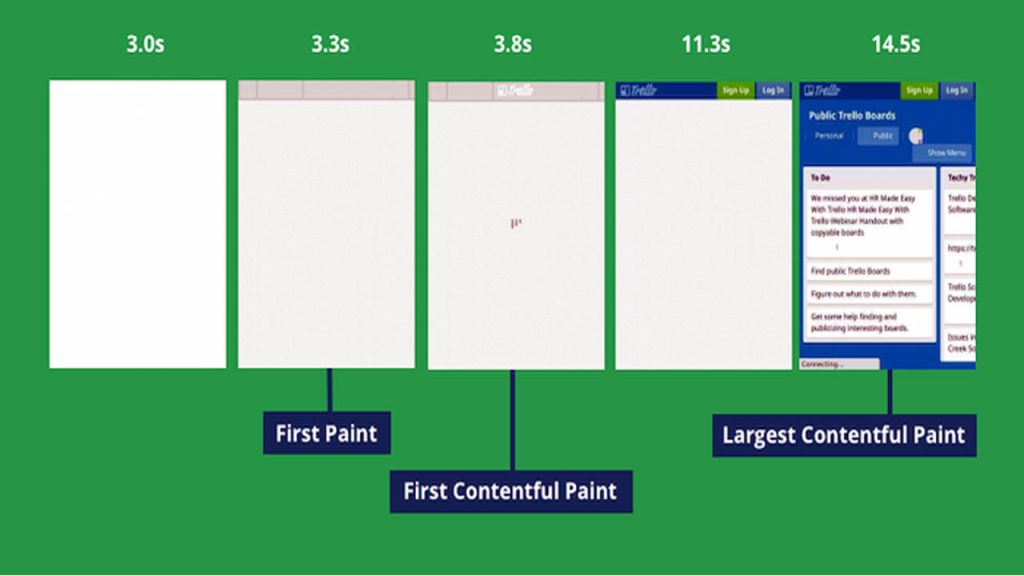
To maintain a healthy LCP score, advertisers must consistently monitor and test their website’s performance. Several tools are available to check LCP and identify areas for improvement:
- Use Google PageSpeed Insights for detailed LCP analysis.
- Periodically test performance with Lighthouse.
- Identify slow-loading elements with Chrome DevTools.
- Set performance budgets to guide LCP improvements.
- Utilise real-user monitoring tools for accurate data.
Continuous testing and monitoring are crucial for maintaining optimal LCP performance and ensuring successful marketing campaigns.
Final Thoughts
The largest Contentful Paint (LCP) is a critical element in the success of online advertising and SEO performance. It directly affects user experience, conversion rates, and search rankings, making it essential for advertisers to optimise. Key takeaways include:
- LCP Google: A core web vital that affects SEO ranking.
- User Satisfaction: Faster LCP improves user experience and engagement.
- Improved Conversion: Optimizing LCP leads to better conversion rates.
- LCP SEO Directly impacts your website’s rank and visibility.
- Long-Term Success: Consistent monitoring and testing help ensure continuous improvement.
By improving your website’s LCP, you can enhance meaningful engagement with your audience, increase brand loyalty, and drive business growth.
]]>FID Full Form: Refers to First Input Delay, an important metric for gauging web responsiveness.
User Experience Impact: High FID results in poor user satisfaction and increases bounce rates.
SEO Influence: Google considers FID for ranking, making optimisation vital for online visibility.
As users browse the web, they expect immediate responses to their actions. A delay can lead to frustration and negative perceptions of the brand. High FID can result in users abandoning a site before it fully loads, leading to lost traffic and potential revenue. Therefore, understanding and optimising FID is essential for enhancing user satisfaction and driving conversions.
A site with a low FID offers a smooth and engaging experience, which is especially crucial for e-commerce websites, educational platforms, and interactive web applications. Whether the site involves filling out forms, navigating through menus, or engaging with dynamic content, minimising FID directly contributes to positive user interactions. This not only helps retain visitors but also improves conversion rates, making FID optimisation a crucial part of any web development strategy.
What is the First Input Delay (FID)?
First Input Delay (FID) is a web performance metric that quantifies the time delay between a user’s first interaction with a page and the moment the browser can respond to that interaction. It is a critical measure of how responsive a webpage is when users attempt to interact with it, capturing the experience during the initial page load phase.
- Definition: FID captures the responsiveness of a webpage during the initial user interaction.
- Measurement Target: It measures interactions such as clicking a button, tapping a link, or using form fields.
- Ideal FID Value: A desirable FID is less than 100 milliseconds, ensuring a responsive experience.
FID is a part of Google’s Core Web Vitals, a set of metrics designed to help developers understand the quality of user experience on their websites. It reflects the real-world experience of users and is particularly important for sites that require user interactions shortly after loading. A high FID indicates that a site may be sluggish or unresponsive, potentially driving users to competitor sites that offer a smoother experience.
This metric is crucial for understanding how users perceive the interactivity of a page. FID is particularly relevant for websites that heavily rely on JavaScript, as it is often JavaScript execution that blocks the main thread, causing delays. By focusing on FID, developers can ensure that their websites respond promptly to user interactions, providing a high-quality browsing experience.
Why is First Input Delay Important?

First, Input Delay is vital for several reasons, primarily centred around user experience. A quick FID enhances user satisfaction by ensuring that interactions with a website feel smooth and instantaneous. It is a key indicator of how well a site responds to user input during the loading phase and directly impacts the perception of site speed and responsiveness.
- User Satisfaction: Low FID ensures smooth and responsive interactions, leading to better engagement.
- SEO Relevance: Google uses FID as a ranking factor, influencing website visibility.
- Conversion Rates: Sites with low FID retain users better, boosting conversions and reducing bounce rates.
High FID values can result in users abandoning a site, which directly impacts traffic and potential revenue. Additionally, optimising FID is not just a technical necessity but also a strategic move to enhance online presence and competitiveness in the digital marketplace. With Google incorporating FID into its ranking algorithms, a site’s visibility in search results can suffer if FID is not within acceptable limits. Thus, improving FID not only benefits user experience but also supports better SEO outcomes.
Measuring First Input Delay

Measuring FID accurately is essential for understanding user experience on a website. Tools like Google’s Lighthouse or Web Vitals extension provide insights into various performance metrics. Accurate measurement helps identify areas that need improvement, allowing developers to target specific bottlenecks that impact page responsiveness.
- Lighthouse and Web Vitals: Tools that provide detailed insights into FID and other performance metrics.
- Real User Interactions: FID captures the actual delay users experience during initial interactions.
- Different Devices & Conditions: Measure FID across devices and networks for a complete view of user experience.
When measuring FID, it’s crucial to consider various devices and network conditions, as user experiences can vary significantly. For example, mobile devices often have higher FID values due to hardware limitations and slower network speeds. A thorough understanding of FID across different environments helps developers create more inclusive and responsive web applications, ensuring a positive experience for all users.
Factors Affecting First Input Delay
Several factors impact First Input Delay, and understanding these can help developers create more responsive web applications. The main contributors to high FID are typically related to JavaScript execution, resource loading, and complex document structures.
- JavaScript Execution: Heavy scripts blocking the main thread can delay responses.
- Resource Size & Quantity: Large images, excessive CSS, and multiple JS files increase loading times.
- DOM Complexity: A complex DOM structure can slow down the browser’s response to interactions.
Optimising JavaScript, minimising third-party scripts, and leveraging asynchronous loading can significantly reduce delays and improve FID. Streamlining resources and simplifying the DOM structure are also essential strategies for reducing FID. Developers should prioritise reducing the time scripts take to execute and ensure that essential interactive elements are available as soon as possible.
Strategies to Improve First Input Delay
Improving FID requires a combination of optimisation strategies tailored to address the factors affecting responsiveness. Each strategy should focus on reducing the time taken for the browser to become responsive after the initial user interaction.
- Optimise JavaScript Execution: Use code-splitting to load scripts only when needed.
- Resource Optimization: Compress images, minify CSS and JavaScript, and implement lazy loading.
- Utilise Content Delivery Networks (CDNs): CDNs distribute content across servers worldwide, reducing latency.
By addressing these areas, businesses can create a more responsive web experience that enhances user satisfaction and engagement. Implementing these strategies can help reduce FID, leading to a smoother, more interactive user experience. These improvements not only benefit user experience but also contribute to better SEO performance, as search engines prioritise sites that load quickly and respond promptly to user inputs.
Final Thoughts
First Input Delay (FID) is a crucial metric for assessing web performance and user experience. As the digital landscape continues to evolve, understanding and optimising FID becomes increasingly important for businesses seeking to enhance user satisfaction.
- Metric Importance: FID measures how quickly a page responds to user interactions, reflecting user experience quality.
- Impact on Rankings: With Google prioritising FID as part of Core Web Vitals, optimising this metric is essential for SEO.
- User Expectations: Users expect immediate responses, making FID optimisation crucial for retaining visitors.
By focusing on FID and its optimisation, businesses can ensure they meet user expectations and create a seamless online experience. This, in turn, can lead to improved search engine rankings, increased traffic, and, ultimately, a more successful online presence.
]]>Ready to talk with a marketing expert?

A Pragmatic and innovative way to enthrall your target group is just a click away!
Get in Touch
Rukmini Knowledge Park, Kattigenahalli, SH 104, Srinivasa Nagar, Bengaluru, Karnataka 560064
+91-990 247 8800
contact@gingermediagroup.com
Popular in Television Advertising
Udaya TV AdvertisingSun TV AdvertisingStar Plus AdvertisingTV 9 AdvertisingZee TV AdvertisingNDTV India AdvertisingColors TV AdvertisingPopular in Airport Advertising
Spice Jet AdvertisingMumbai Airport AdvertisingDelhi Airport AdvertisingEmirites AdvertisingIndiGo Airlines Domestic India AdvertisingPopular in Newspaper Advertising
Deccan Herald AdvertisingPrajavani AdvertisingThe Hindu AdvertisingEconomic Times AdvertisingDainik Jagran AdvertisingHindustan Times AdvertisingPopular in Magazine Advertising
Forbes AdvertisingCosmopolitan AdvertisingBusiness World AdvertisingVogue Magazine AdvertisingPopular in Sports Advertising
IPL AdvertisingPopular in Outdoor Advertising
Billboard AdvertisingBus Shelter AdvertisingMetro Pillar AdvertisingUnipole Advertising© Ginger Media Group 2025. All Rights Reserved.