In today’s highly competitive electoral landscape, choosing the best advertising media for political campaigns is critical to winning voter attention and driving engagement. With India’s diverse electorate spanning regions, languages, and demographics, effective political campaign advertising strategies require a well-planned mix of both traditional and modern channels.
Recent trends in political advertising in India highlight a sharp rise in campaign spending, with overall budgets expected to grow by 20–60% compared to previous elections. While digital and social media platforms are transforming how parties reach and influence voters through targeted messaging, traditional channels like television and outdoor advertising continue to dominate in terms of mass visibility.
A strong election campaign marketing strategy integrates digital precision with offline scale to maximize reach, improve recall, and ensure consistent messaging across touchpoints. This blog explores the most effective political campaign marketing channels, helping campaigns build awareness, shape public perception, and connect meaningfully with voters.
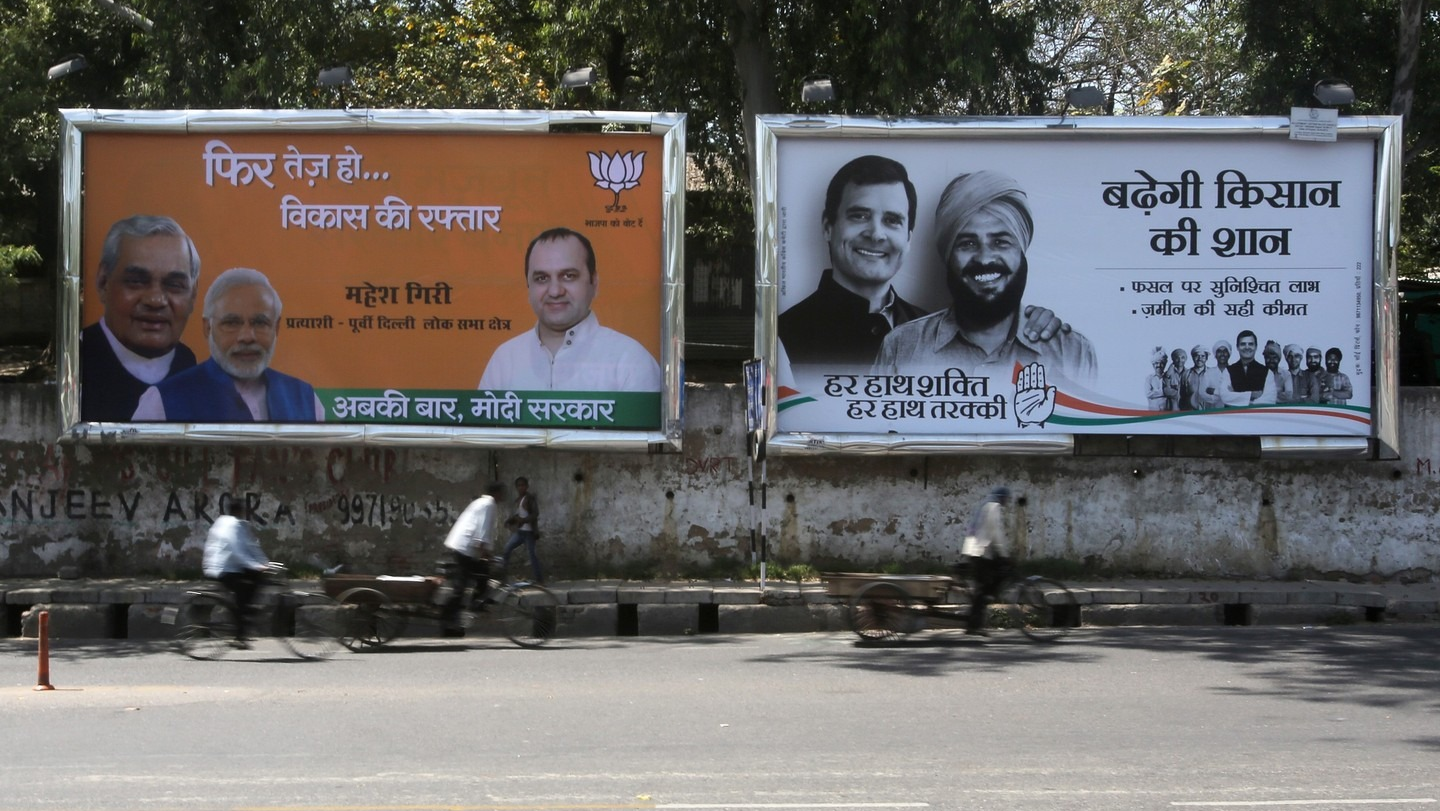
1. Outdoor Hoardings and Billboards
Outdoor hoardings and billboards are among the most widely used political campaign media, offering tens of thousands of daily impressions in high-traffic areas like junctions and highways. In India, premium hoardings can be seen by 100,000+ people per day, making them highly effective for name recognition, party symbols and simple messaging. Their constant presence helps campaigns reinforce identity and recall within key constituencies.
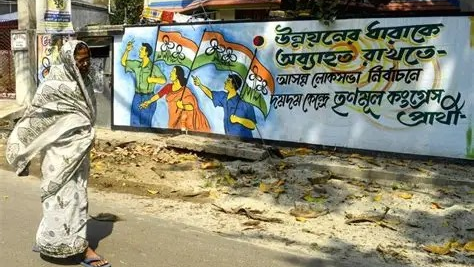
2. Wall Paintings and Murals
Wall paintings are a traditional and powerful form of political advertising in semi urban and rural areas. They provide long term visibility and remain in place throughout the campaign period.
This format is popular in media political campaigns because of its affordability and wide reach. Wall paintings help campaigns maintain a constant presence in local communities.
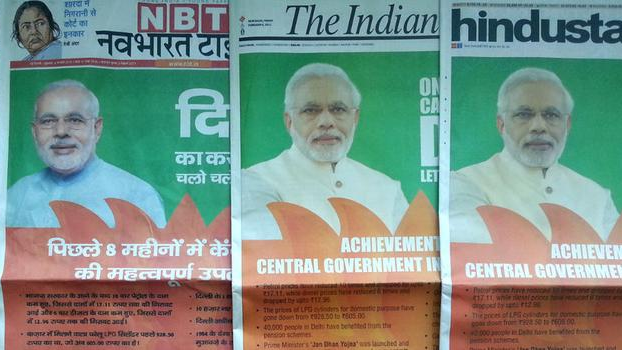
3. Newspaper Advertising
Newspaper advertising allows political campaigns to communicate detailed information such as announcements, policy highlights and candidate messages. Print media is trusted by older voters and regional audiences.
As part of advertising media for political campaigns, newspapers add credibility and allow campaigns to tailor messaging by region and language. They are particularly useful for reaching voters who rely on traditional news sources.
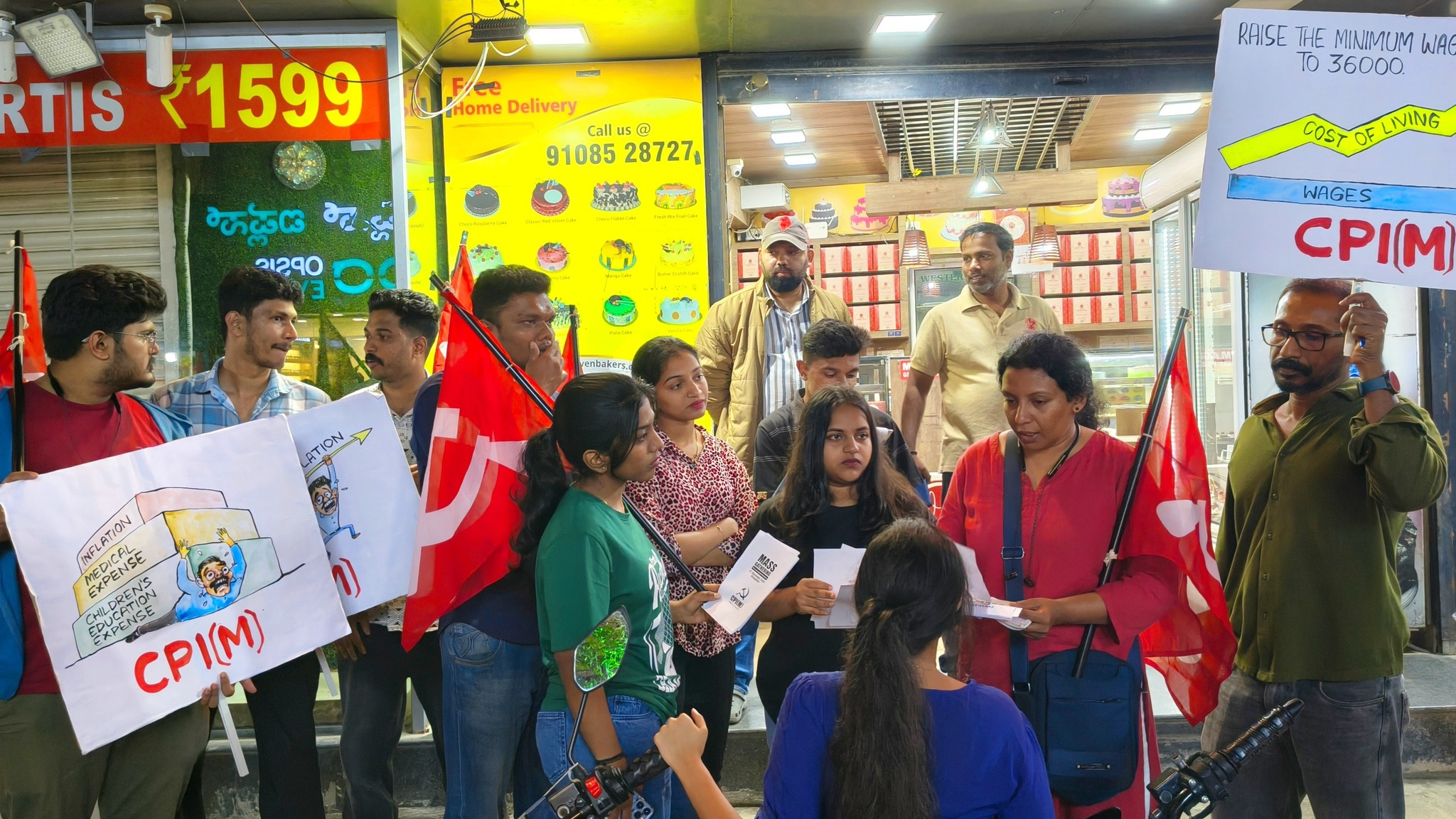
4. Pamphlet and Flyer Distribution
Pamphlets and flyers enable direct, grassroots level communication with voters. These materials are commonly distributed door to door, at public gatherings or during campaign activities.
This medium supports advertising media political campaigns by allowing campaigns to share structured information directly with households. Flyers are effective for explaining key messages, symbols and voting details.
5. Transit Media Advertising
Transit media includes bus branding, auto branding, and advertisements on trains or transit hubs. These formats offer mobility and repeated exposure as vehicles move across different neighborhoods.
Transit advertising is considered one of the most effective media political options for city wide and regional coverage. It ensures that campaign messages are seen by commuters all day.
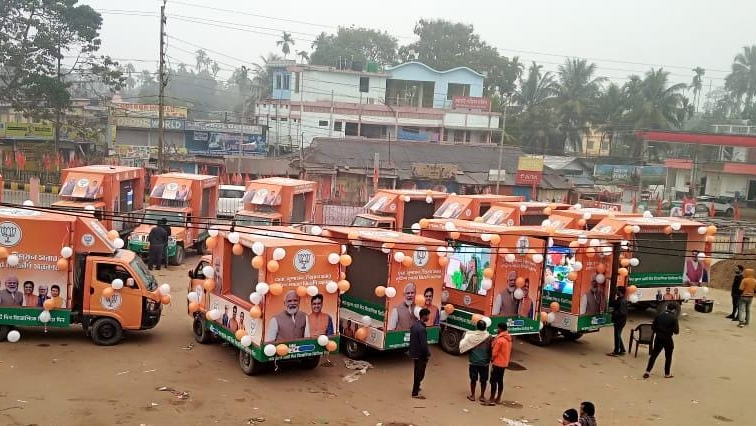
6. Public Address Systems and Audio Campaigns
Audio campaigns using loudspeakers and public address systems are commonly used during political rallies, roadshows and local events. They are effective in crowded or high density areas.
This medium plays an important role in advertising and political campaigns by delivering messages audibly to large audiences. Audio campaigns are particularly useful in areas with lower literacy levels.
7. Digital and Social Media Advertising
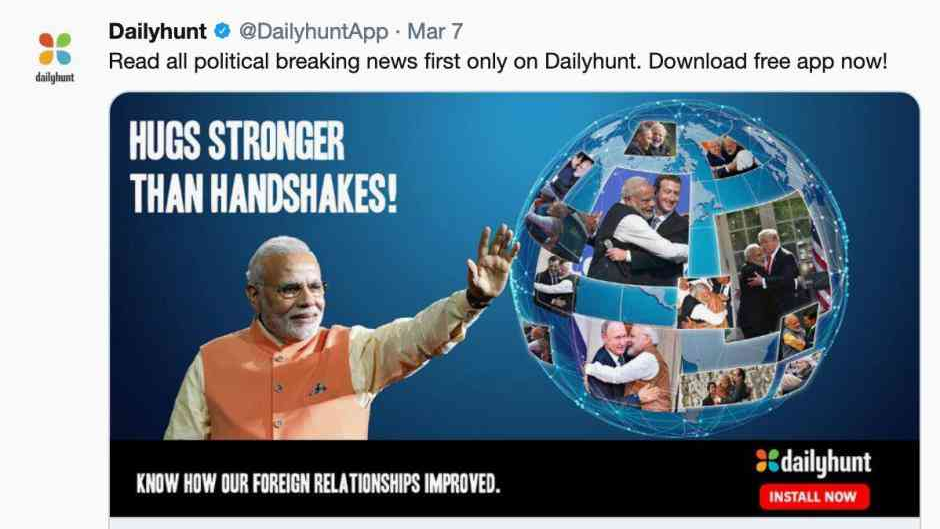
Digital platforms allow political campaigns to reach specific voter segments based on location, age, language and interests. Social media advertising helps spread campaign messages quickly and widely.
This medium complements traditional advertising media by extending campaign visibility into online spaces. Digital ads also allow campaigns to adapt messaging based on audience response and engagement.
8. Ground Activations and Public Meetings
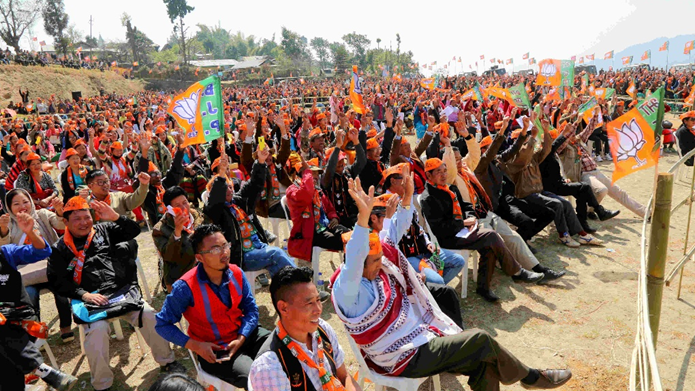
Ground activations like rallies, roadshows and public meetings allow campaigns to engage directly with voters, creating strong emotional connections. Studies show that face-to-face interactions can increase voter recall by up to 30% compared to passive media. These engagements build trust, reinforce authenticity and leave a lasting personal impact.
How Political Campaigns Can Choose the Right Advertising Media
Selecting the right advertising media mix depends on several factors, including voter demographics, geographic spread, campaign budget and election timelines. Urban campaigns benefit more from digital platforms and outdoor formats, while rural campaigns often rely on traditional print and audio based media.
Campaigns should assess where voters spend most of their time and which media channels they trust. Using multiple advertising media and political channels together helps reinforce messages and improve overall campaign effectiveness.
Common Challenges in Political Advertising Media Planning
Political campaigns often face challenges such as limited timeframes, budget constraints and regional diversity. Poor coordination with media channels leads to inconsistent messaging or wasted impressions.
Over reliance on a single medium reduces reach, while a lack of monitoring impacts execution quality. Addressing these challenges requires careful planning and continuous evaluation of advertising media and political campaigns.
Benefits of Using the Right Advertising Media for Political Campaigns
- Wider voter reach across regions
- Stronger message recall
- Improved visibility and recognition
- Better alignment with voter behaviour
- More effective use of campaign budgets
- Consistent messaging across multiple touchpoints
Advertising media play a central role in the success of political campaigns. By selecting the right advertising media, campaigns reach voters more effectively, communicate messages clearly, and maintain strong visibility throughout the election period.
From outdoor formats and print media to digital platforms and ground activities, the most effective advertising media political campaigns use are those aligned with voter needs and campaign objectives. With strategic planning and consistent execution, political campaigns maximize impact, engagement and message recall.
Frequently Asked Questions (FAQ’s)
1. What is the best advertising media for political campaigns?
The most effective approach is a mix of outdoor advertising, digital platforms, transit media, print, and ground activations to ensure both mass reach and targeted voter engagement.
2. Why is digital advertising important in political campaigns?
Digital advertising enables precise voter targeting, real-time optimization, and scalable reach, making it a key component of modern political campaign strategies.
3. How do political campaigns choose the right advertising channels?
Campaigns select channels based on voter demographics, geographic spread, media consumption behavior, campaign goals, and budget allocation.
4. Is offline advertising still effective for political campaigns?
Yes, offline media like hoardings, wall paintings, and pamphlets remain highly effective for local visibility and strong recall, especially in rural and semi-urban areas.
5. How can political campaigns improve voter engagement and recall?
By using a multi-channel strategy, consistent messaging, localized content, and combining digital outreach with on-ground activations, campaigns can significantly boost engagement and recall.
Why Choose Ginger Media Group for Affordable Offline Marketing
Ginger Media helps startups execute affordable offline marketing campaigns with clarity, transparency, and measurable impact. With strong expertise across outdoor, transit, print, and on ground activations, Ginger Media focuses on cost effective solutions that deliver real visibility without unnecessary spending. From planning and execution to monitoring and reporting, the team ensures startups get the best value from every offline campaign. By combining strategic media selection with on ground execution strength, Ginger Media enables brands to scale offline marketing efficiently and confidently.
]]>In today’s competitive digital landscape, D2C marketing strategies are critical for brands looking to scale efficiently and stand out. With rising competition and shrinking attention spans, choosing the best advertising options for D2C brands is no longer optional it’s essential for driving visibility, conversions, and long-term loyalty.
Unlike traditional retail models, direct-to-consumer advertising enables brands to build direct relationships with customers, control their narrative, and optimize every touchpoint in the buyer journey. From performance marketing for D2C to customer acquisition strategies across digital and offline channels, brands must adopt a multi-channel approach to remain competitive.
This blog explores the top advertising channels for D2C brands, combining digital marketing, content-led engagement, and offline visibility strategies to help businesses drive scalable growth, improve customer engagement, and maximize ROI in an increasingly crowded marketplace.
Why Advertising Strategy Matters for D2C Brands
For D2C brands, success depends on building direct relationships with customers. Unlike traditional retail, direct-to-consumer advertising is key to driving awareness, engagement and sales. A strong advertising strategy helps brands reach the right audience, boost visibility and retain customers. By combining online and offline channels, D2C brands can create trust, enhance recall and ensure every marketing effort delivers maximum impact.
1. Social Media Advertising
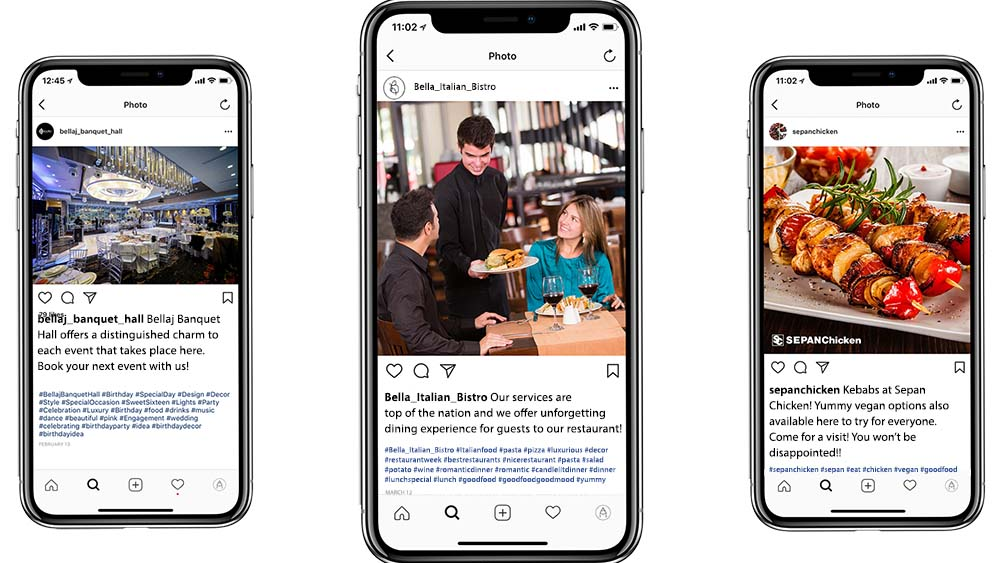
Social media platforms are among the most powerful advertising options for D2C brands. Channels like Instagram, Facebook and LinkedIn allow precise targeting based on interests, behaviour and demographics, helping brands reach the right audience. 84% of marketers say social media is crucial for brand awareness and 70% of consumers discover new brands through social ads.
These platforms not only boost visibility but also drive conversions. Social ads account for 52% of top-performing conversion channels, while social media contributes to 30% of website traffic for brands. This makes it an essential tool for building awareness, engagement and growth for D2C businesses.
2. Influencer Marketing
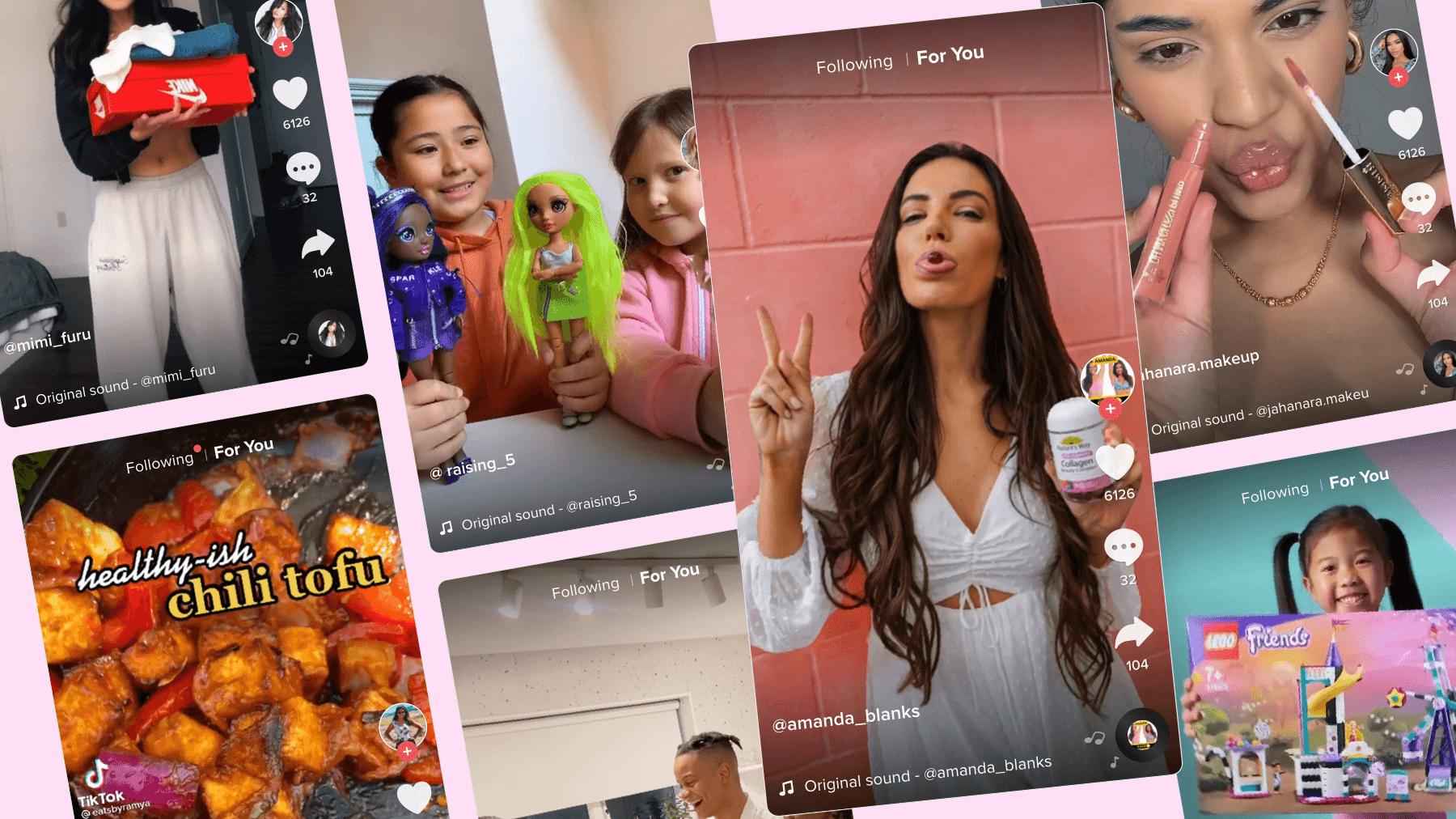
Influencer marketing helps D2C brands reach niche audiences through creators who have trust and credibility. Collaborating with influencers allows products to be showcased in real life, relatable contexts.
The popular options D2C brands explore, influencer marketing strengthens authenticity and social proof.
3. Search Engine Advertising
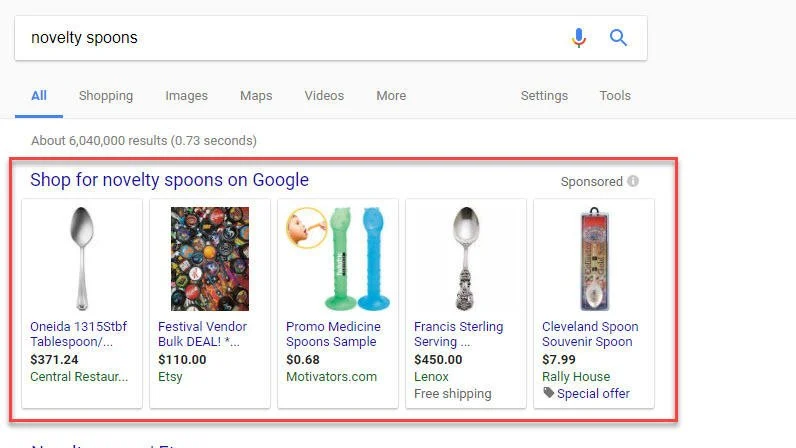
Search engine advertising helps D2C brands reach users with high purchase intent, people actively searching for products or solutions online. Paid search ads appear at the top of search results when customers are ready to buy, making this one of the most performance‑driven advertising options for D2C brands. Studies show that over 60% of online shoppers click on paid search results when researching products and search ads drive a significant share of conversions for direct‑to‑consumer businesses.
4. Marketplace Advertising
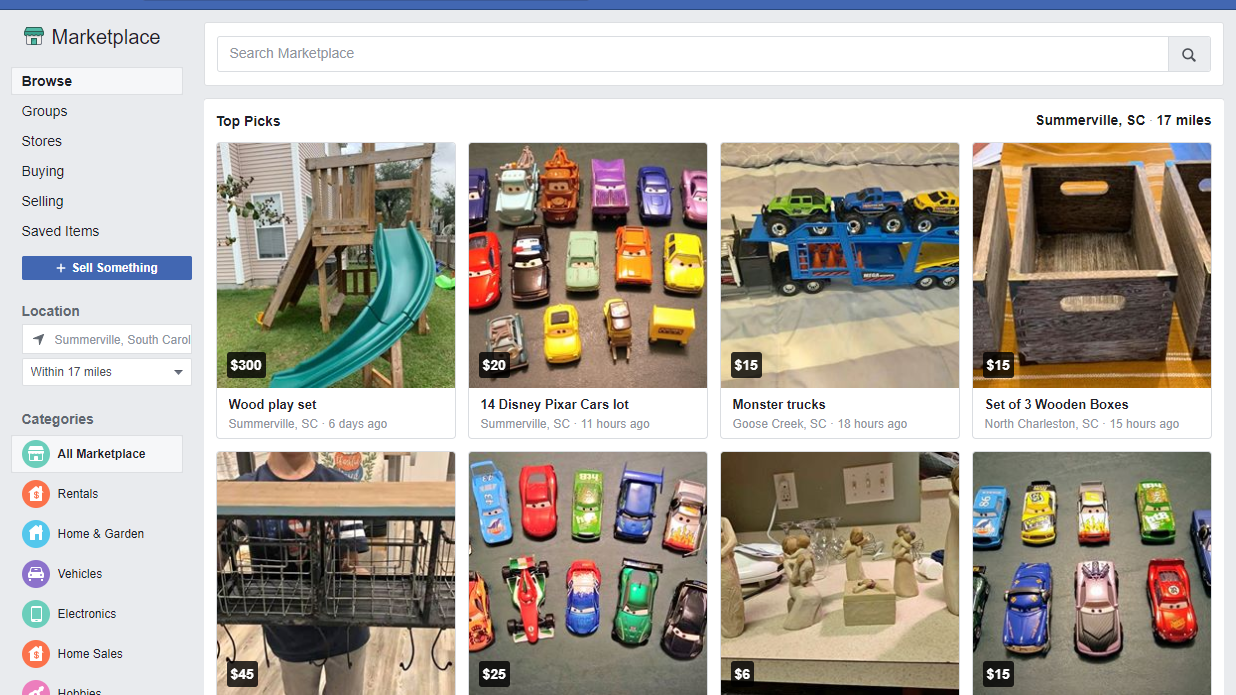
Advertising on marketplaces such as Facebook, Amazon and Flipkart enables D2C brands to reach customers who are already in a purchase mindset. Sponsored listings and product ads help improve visibility and competitiveness.
This option supports conversion focused advertising options that D2C brands use to scale sales.
5. Content Marketing
Content marketing helps D2C brands educate and engage customers through blogs, videos, guides and tutorials. By providing valuable information, brands build authority and connect meaningfully with their audience. Studies show that 70% of consumers prefer learning about products through content rather than traditional ads and brands using content marketing see higher customer retention and engagement rates.
As a long-term strategy, content marketing drives organic growth, strengthens trust and positions D2C brands as reliable, knowledgeable players in their industry.
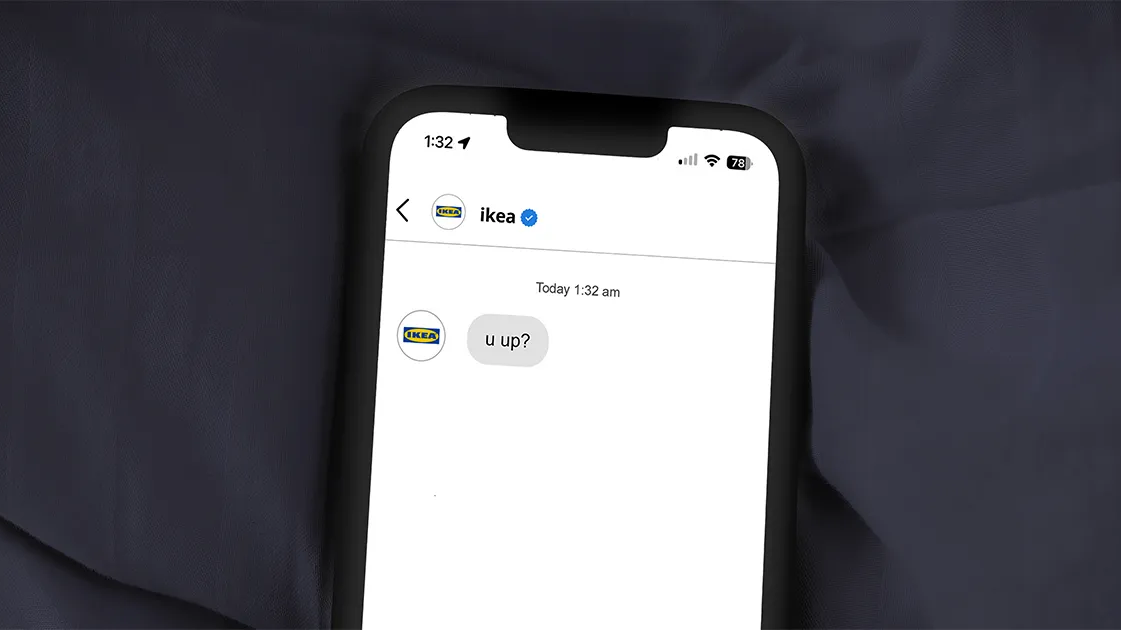
6. Email and SMS Marketing
Email and SMS campaigns allow D2C brands to communicate directly with existing customers. These channels are effective for promotions, product launches and customer retention.
They remain cost effective advertising options for repeat engagement and loyalty building.
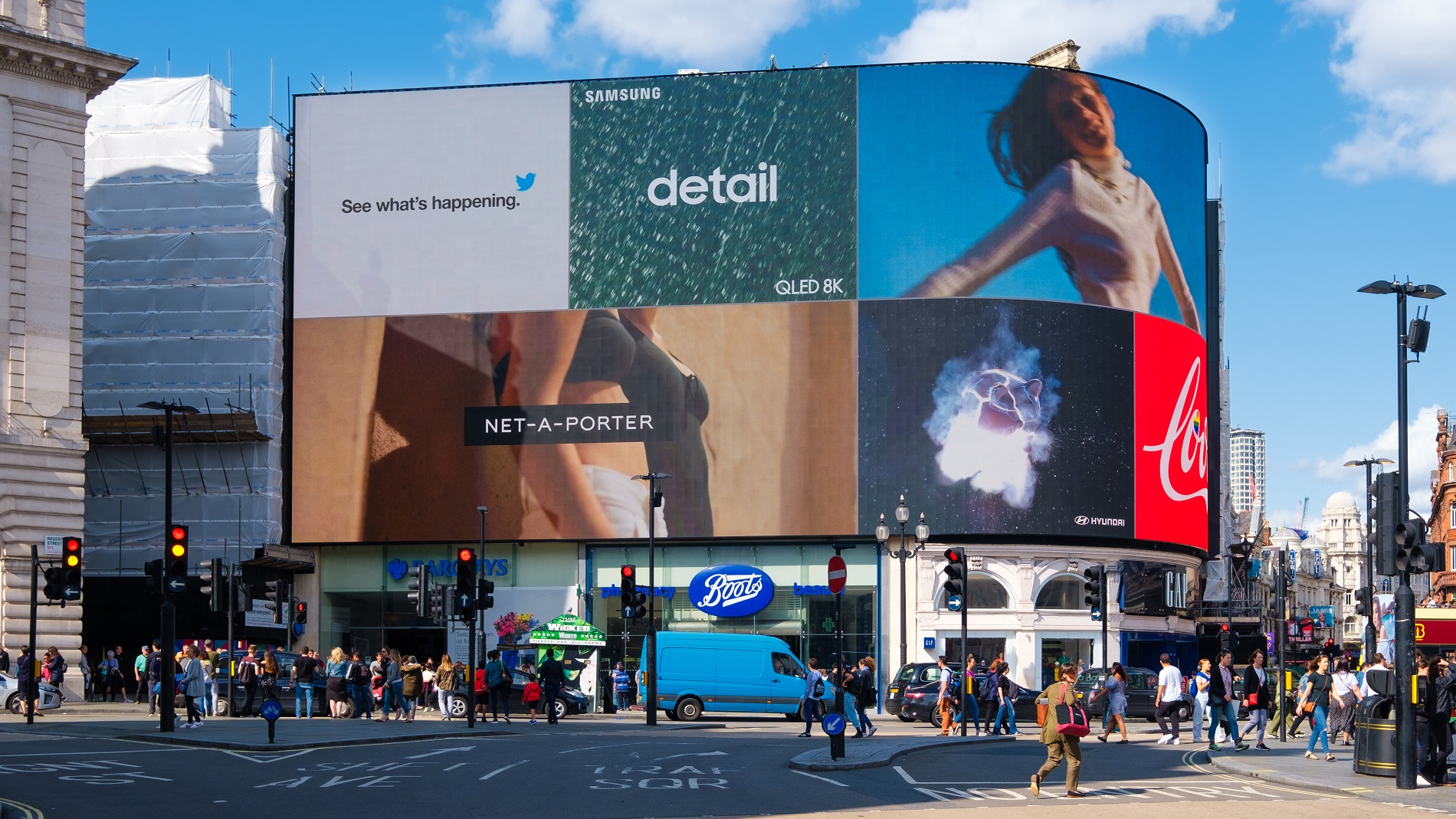
7. Outdoor Advertising
Outdoor advertising helps D2C brands build mass visibility beyond digital platforms. Formats such as hoardings, transit media and street-level advertising improve brand recall in real world environments.
This option is useful for brands looking to scale awareness using offline advertising options that D2C brands rely on.
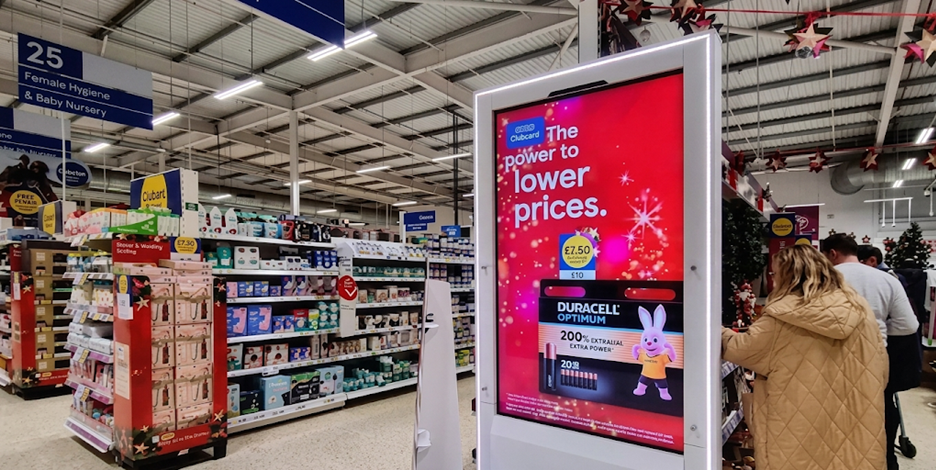
8. In Store and Retail Advertising
Pop-up stores and retail collaborations give D2C brands a chance to create physical touchpoints with customers. In-store displays, branding and experiential setups enhance engagement and build trust. Research shows that 68% of consumers are more likely to purchase after interacting with a brand in a physical setting and experiential campaigns significantly improve brand recall.
These offline initiatives help D2C brands bridge the gap between online presence and real-world experience, strengthening customer relationships and driving long-term loyalty.
9. Referral and Loyalty Programs
Referral programs encourage existing customers to be brand advocates. Incentives motivate customers to share products and return for repeat purchases.
This option strengthens organic growth and works well for paid advertising options.

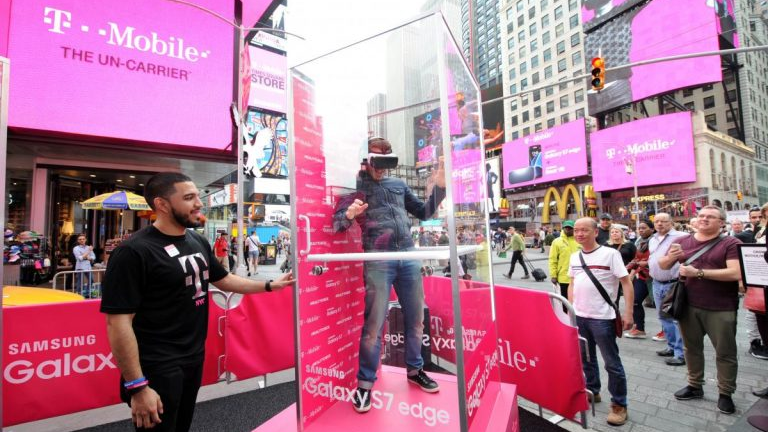
10. Event and Experiential Marketing
Events and experiential marketing enable D2C brands to create memorable, hands-on interactions with customers. Product trials, pop-up events and live demonstrations boost engagement and brand connection. Studies show that experiential campaigns can increase brand recall by up to 70% and significantly influence purchase decisions.
These strategies help D2C brands deepen customer relationships, build trust and leave lasting impressions that drive loyalty and repeat engagement.
How D2C Brands Choose the Right Advertising Options
Choosing the right channels depends on factors such as product category, audience behaviour and brand growth stage. Early stage D2C brands focus more on performance driven digital channels, while growing brands benefit from adding offline and experiential formats.
Using a combination of advertising options, D2C brands trust delivers better results than relying on a single channel.
Benefits of Using the Right Advertising Options for D2C Brands
- Improved brand visibility and reach
- Stronger customer engagement
- Better conversion and retention rates
- Scalable growth opportunities
- Balanced online and offline presence
Frequently Asked Questions (FAQ’s)
1. What are the most effective advertising strategies for D2C brands?
The most effective strategies include social media advertising, search engine marketing, influencer collaborations, content marketing, and offline campaigns for brand recall.
2. How do D2C brands acquire customers online?
D2C brands acquire customers through performance marketing channels like paid search, social media ads, influencer marketing, and content-driven organic traffic.
3. Which advertising channels deliver the highest ROI for D2C brands?
Search engine advertising and social media ads typically deliver the highest ROI due to high-intent targeting and measurable performance.
4. Why is a multi-channel advertising strategy important for D2C brands?
A multi-channel approach helps D2C brands maximize reach, improve customer engagement, and reduce dependency on a single platform for growth.
5. How can D2C brands improve customer retention through marketing?
D2C brands can improve retention using email marketing, SMS campaigns, loyalty programs, and personalized remarketing strategies.
Advertising plays a central role in the success of D2C brands. By selecting the right advertising options, brands build awareness, drive sales and create lasting customer relationships.
From digital platforms to offline channels, the most effective advertising options D2C brands use are those aligned with their audience and business goals. With strategic planning and consistent execution, D2C brands achieve sustainable and measurable growth.
Why Choose Ginger Media Group for Affordable Offline Marketing
Ginger Media helps startups execute affordable offline marketing campaigns with clarity, transparency and measurable impact. With strong expertise across outdoor, transit, print and on ground activations, Ginger Media focuses on cost effective solutions that deliver real visibility without unnecessary spending. From planning and execution to monitoring and reporting, the team ensures startups get the best value from every offline campaign. By combining strategic media selection with on ground execution strength, Ginger Media enables brands to scale offline marketing efficiently and confidently.
]]>Out-of-home (OOH) advertising remains one of the most powerful offline marketing tools for brands aiming to capture attention at scale. Whether it’s billboards, transit media, or street-level displays, OOH advertising places brand messages directly into real-world environments, where people actually engage with them. OOH advertising becomes part of everyday life, delivering consistent visibility and stronger brand recall. This is why many marketers include it as a core component in their advertising planning and broader campaign strategies.
To maximize results, brands rely on a structured OOH advertising planning checklist. A well-defined advertising planning checklist helps ensure the right locations, formats, messaging, and timing are aligned for maximum impact. Effective OOH advertising planning not only improves reach but also enhances campaign efficiency and ROI.
However, visibility alone doesn’t guarantee success. Many OOH campaigns fail because of poor planning, resulting in wasted budgets and missed opportunities. A strong, structured planning approach ensures your campaign reaches the right audience, in the right locations, with the right message and also maximizes impact and ROI. In this blog, we walk you through 8 essential steps to plan, execute and manage high‑impact OOH advertising campaigns that deliver measurable results.
1. Define Clear Campaign Objectives
Every successful OOH campaign starts with clear objectives. Brands need to define what they want to achieve before selecting media or designing creatives. Objectives may include building brand awareness which OOH can increase by up to 25%, launching a new product, driving store visits or strengthening market presence.
Clear goals guide all advertising planning decisions. When objectives are well defined, it is easier to choose suitable formats, locations and campaign duration. Studies show that OOH campaigns with defined objectives are 70% more likely to meet their marketing goals, ensuring the campaign stays focused and aligned with business outcomes.
2. Identify the Target Audience
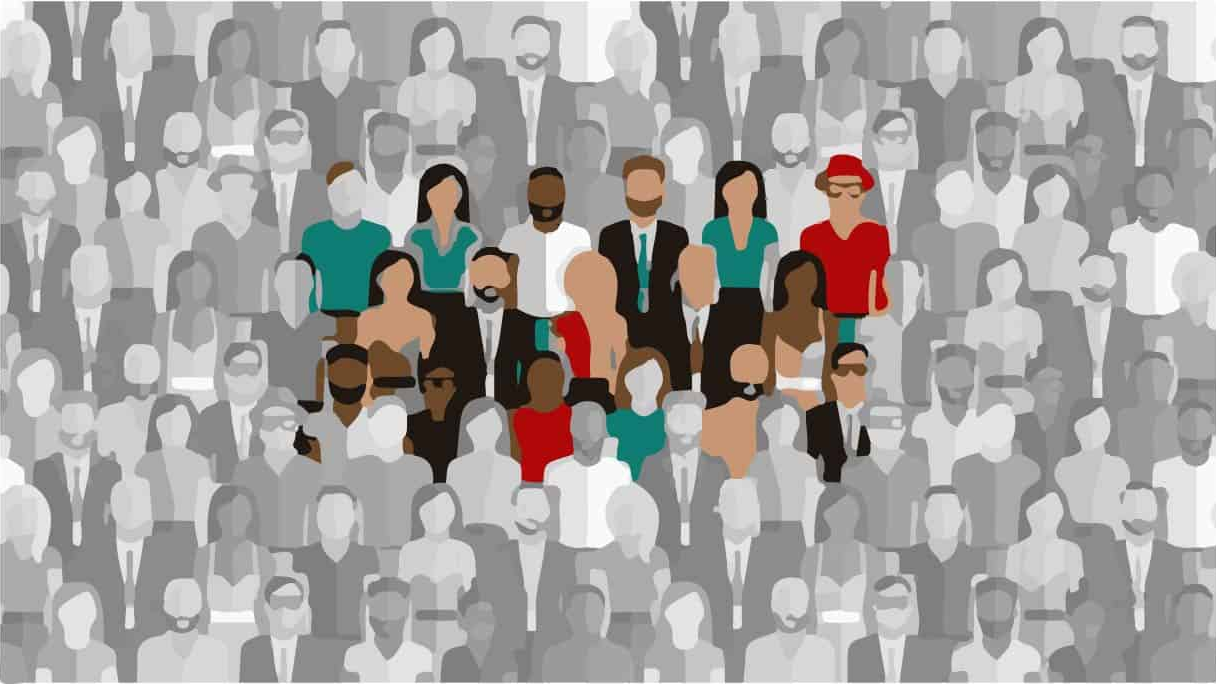
Understanding the target audience is critical in OOH advertising. Factors such as age, profession, lifestyle, income group and daily movement patterns influence where and how ads should be placed.
Research shows that OOH campaigns targeting the right audience can increase ad recall by up to 47%. Campaigns perform best when they match audience behavior, knowing where your audience travels, works, studies or socializes helps improve relevance and attention. Accurate audience profiling strengthens outdoor advertising strategies by ensuring that messages reach the right people at the right time, maximizing engagement and campaign effectiveness.
3. Select the Right OOH Media Formats
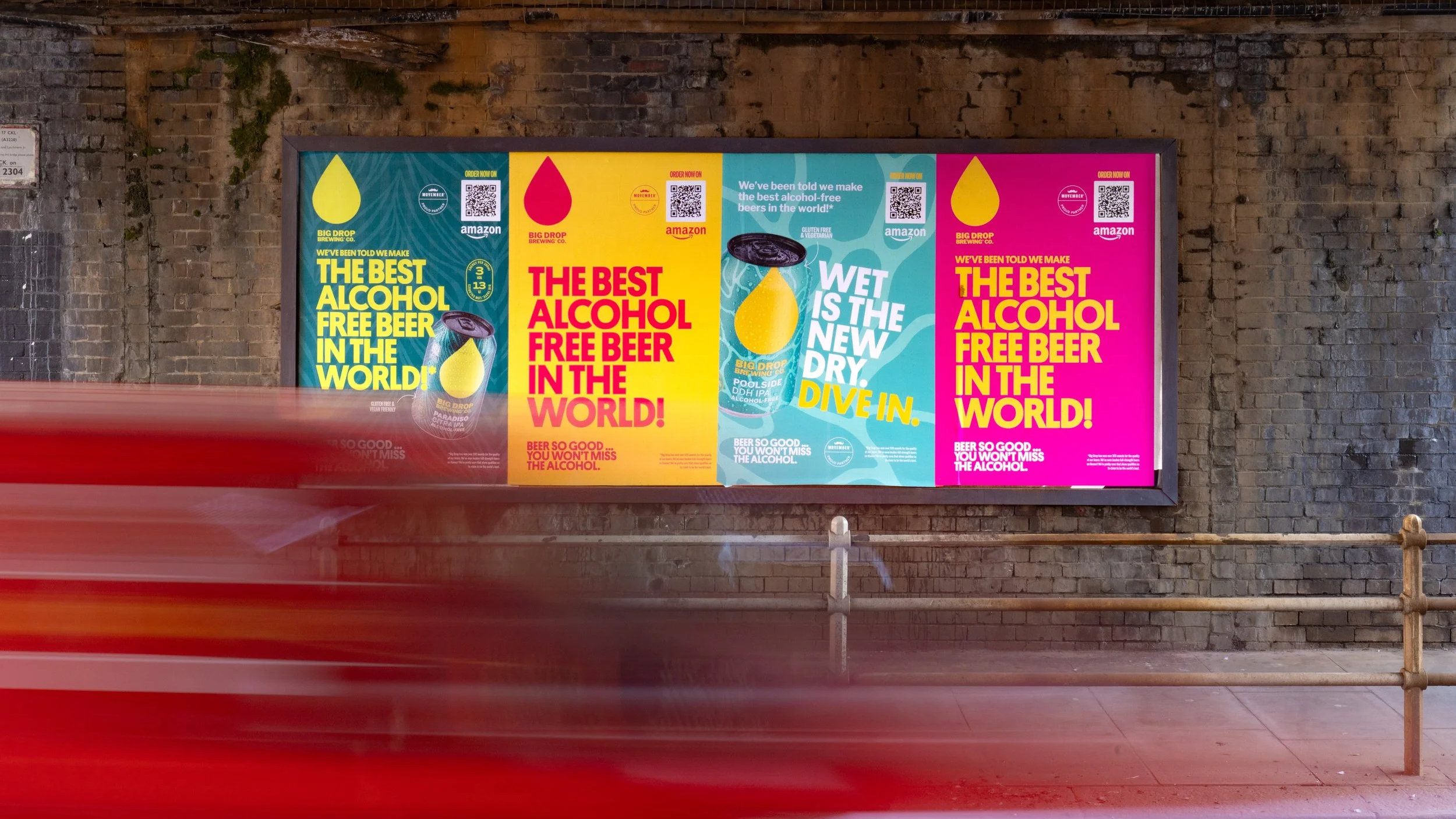
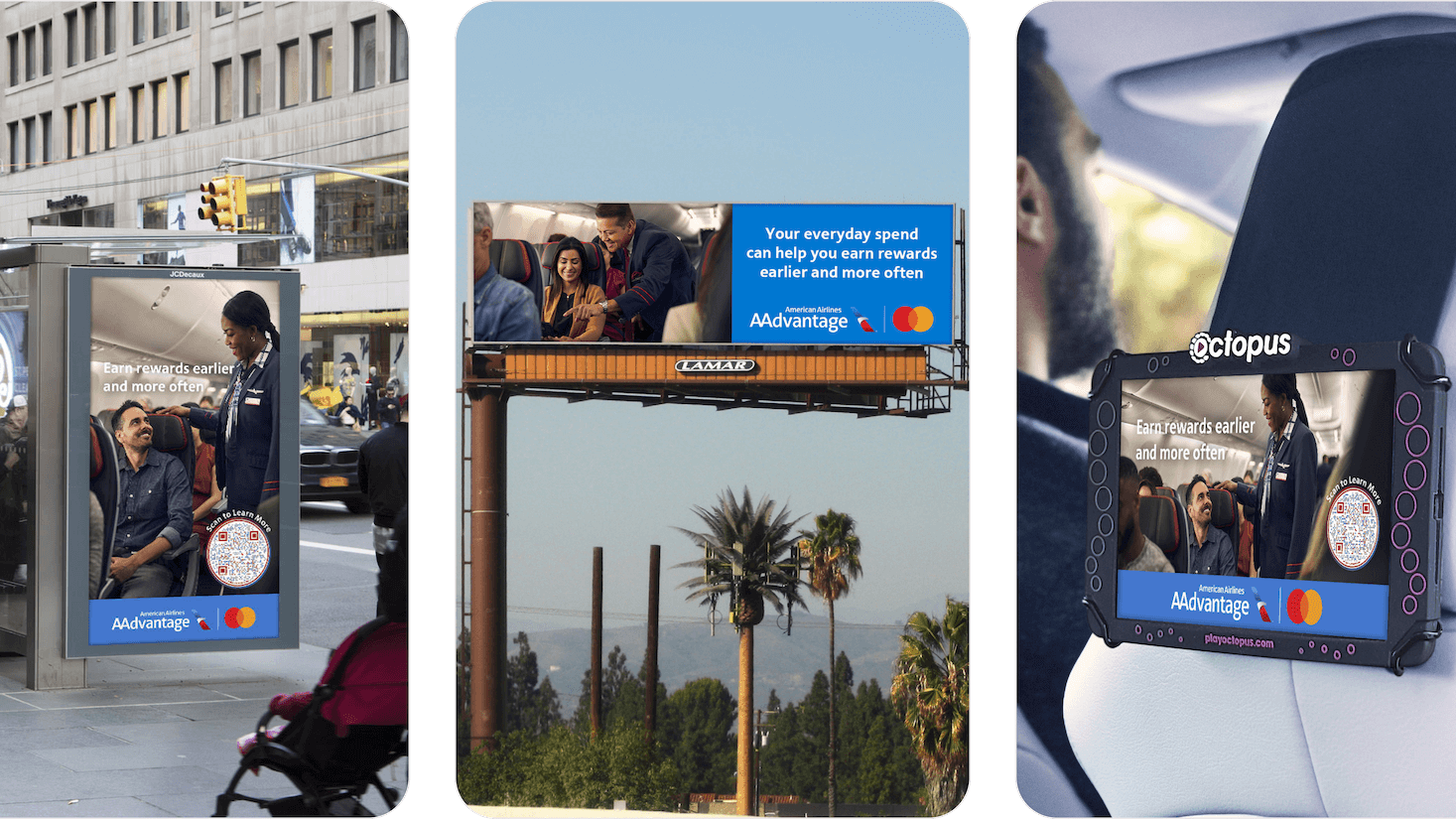
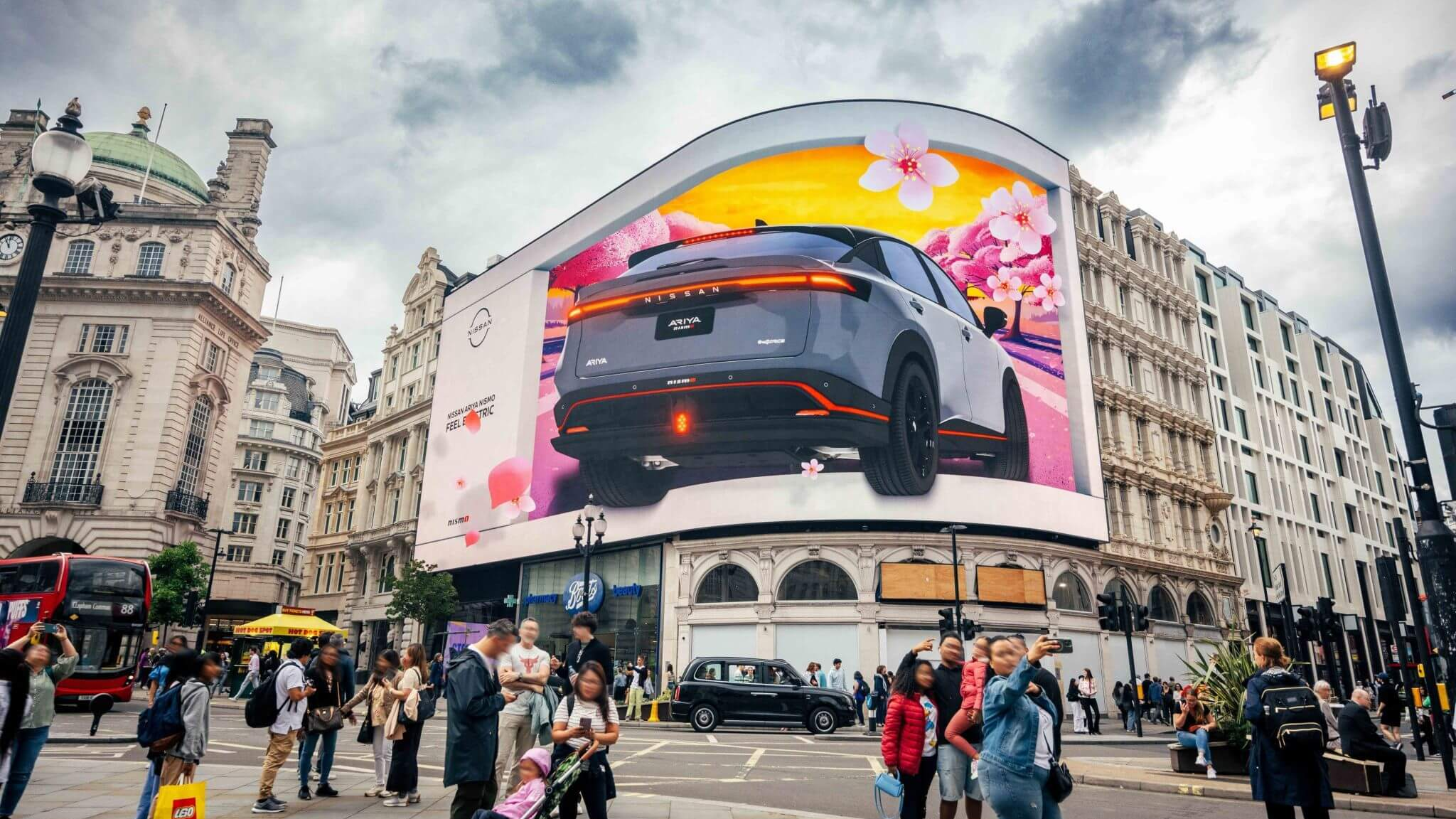
Different objectives require different OOH formats. Billboards are ideal for mass visibility, reaching up to 70,000 people per day in busy locations, while bus shelters and street furniture work well for repeated exposure in local neighborhoods. Transit media such as buses, metros and autos provide mobility and frequency, allowing brands to reach commuters multiple times a week.
Selecting the right formats is a core part of any OOH advertising planning checklist. Brands should consider visibility, dwell time, audience proximity and message complexity when choosing formats. A well-balanced media mix can increase campaign effectiveness by 30% or more, ensuring the brand message reaches the right audience in the most impactful way.
4. Choose Strategic Locations
Location selection plays a major role in the success of OOH campaigns. High footfall areas, commuting routes, business districts, residential zones, and activity hubs ensure repeated exposure. Studies show that OOH ads placed in high-traffic locations can boost brand recall by up to 60%.
Strategic location planning supports effective advertising by improving recall and reducing wastage. Rather than choosing locations based on availability alone, brands should focus on relevance, traffic patterns and audience concentration. The right location can increase campaign impact by nearly 40%, helping brands get maximum results even with a limited budget.
5. Plan Campaign Duration and Timing
Campaign duration and timing influence how often audiences see an ad and how well they remember it. Research shows that OOH campaigns running for 4–6 weeks can increase brand recall by up to 50%, while longer-term placements help build familiarity and trust over time. Short-term campaigns are effective for product launches or events, giving a quick burst of visibility.
Timing should align with audience movement patterns, seasonal trends and business cycles. Properly planned duration ensures optimal exposure without overspending, making campaigns more efficient and impactful.

6. Design Clear and Impactful Creatives
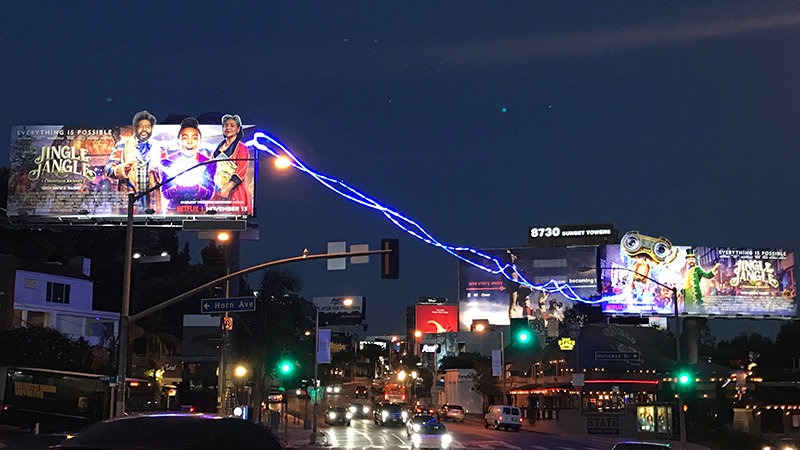
OOH creatives must communicate messages quickly and clearly. People usually view outdoor ads for only 3–5 seconds, so simplicity is key. Short messages, bold visuals, readable fonts and strong colour contrast are essential design elements.
Well-designed creatives can increase message retention by up to 70%, making the campaign more effective. Avoid clutter, excessive text or complex visuals. A strong creative ensures that the audience understands the message instantly, even from a distance, improving the overall impact of your OOH campaign.
7. Allocate and Control the Budget
Budget planning is an important part of any advertising checklist. OOH budgets typically include media costs, production expenses, installation, maintenance and monitoring. On average, media costs can account for 50–70% of an OOH campaign budget, while production and installation make up the rest.
Clear budget allocation helps brands avoid overspending and ensures smooth execution. Studies show that campaigns with well-planned budgets are 60% more likely to stay on track and meet objectives. Tracking costs across all stages allows better control and accountability, helping brands maximize visibility and results without unnecessary expenses.
8. Monitor Execution and Measure Performance
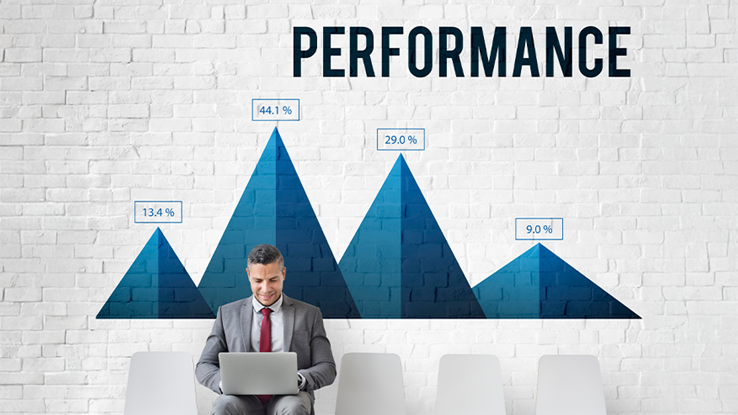
Monitoring ensures that OOH ads are installed correctly, remain visible and comply with agreed placements throughout the campaign. Studies show that regular monitoring can improve campaign effectiveness by up to 25% by preventing issues like damaged creatives or incorrect locations.
Measuring performance can include footfall analysis, brand recall surveys, location-based data and response tracking. Campaigns that track results are 40% more likely to achieve their marketing goals, providing valuable insights to improve future OOH advertising efforts. Proper monitoring completes the OOH advertising planning checklist and ensures each campaign delivers maximum impact.
Common OOH Advertising Planning Mistakes
Many brands underestimate the importance of planning in OOH campaigns. Common mistakes include choosing locations without audience relevance, using unclear creatives, ignoring campaign timing and failing to monitor execution. Research shows that up to 60% of OOH campaigns underperform due to poor planning.
Avoiding these mistakes improves OOH advertising planning and ensures campaigns deliver consistent results. Learning from past campaigns can increase effectiveness by 30–40%, helping brands refine strategies and achieve better long-term performance.
Benefits of a Structured OOH Advertising Planning Checklist
- Better alignment with campaign goals
- Improved media and location selection
- More efficient budget utilization
- Stronger message recall
- Smoother execution and coordination
- Better measurement and optimization
Frequently Asked Questions (FAQ’s)
1. What is OOH advertising?
OOH advertising (Out-of-Home advertising) refers to any form of advertising that reaches consumers outside their homes, such as billboards, transit ads, and street displays. It is widely used to build large-scale brand awareness.
2. What is an OOH advertising planning checklist?
An OOH advertising planning checklist is a structured guide that helps marketers plan campaigns effectively. It typically includes location selection, audience targeting, format choice, budgeting, and performance tracking.
3. What are the benefits of OOH advertising?
The key benefits include high visibility, wide audience reach, strong brand recall, geographic targeting, and continuous exposure in real-world environments.
4. What are the most effective OOH advertising strategies?
Effective strategies focus on selecting high-traffic locations, using clear and impactful messaging, leveraging creative visuals, and integrating campaigns with digital channels for better engagement and measurement.
OOH advertising is a powerful medium, but its success depends heavily on how well it is planned. A structured OOH advertising planning checklist helps brands approach campaigns with clarity, precision and purpose.
By following these eight steps, brands can strengthen outdoor advertising strategies, improve OOH campaign management and achieve consistent, measurable impact from their investments. With thoughtful planning and execution, OOH advertising delivers long lasting brand visibility and real business value.
Why Choose Ginger Media Group for Affordable Offline Marketing
Ginger Media helps startups execute affordable offline marketing campaigns with clarity, transparency and measurable impact. With strong expertise across outdoor, transit, print, and on ground activations, Ginger Media focuses on cost effective solutions that deliver real visibility without unnecessary spending. From planning and execution to monitoring and reporting, the team ensures startups get the best value from every offline campaign. By combining strategic media selection with on ground execution strength, Ginger Media enables brands to scale offline marketing efficiently and confidently.
]]>From campus billboards and canteen hoardings to transit advertising around colleges, these college advertising locations ensure consistent visibility and strong brand recall. For youth focused brands, being present in these spaces is not just about visibility, it is about becoming part of the everyday college experience.
In this blog, we’ll walk you through the Top 10 College Centric Advertising Locations in India from high-impact outdoor displays near campuses to buzzing hangout zones and hostel areas and explain how each location helps brands get noticed, talked about and remembered. Whether you’re a startup trying to create buzz or a big brand looking to sustain relevance, these insights will help you reach students at the right time and in the right place.
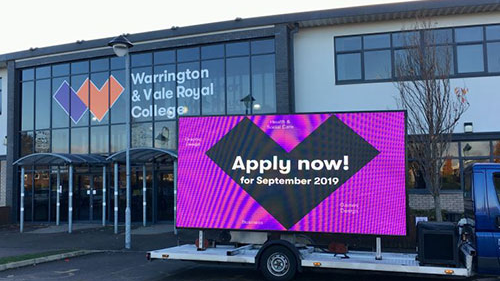
1. College Campus Entry and Exit Zones
Campus entry and exit points are where college life truly comes alive each day with students, faculty and visitors moving through during peak hours like 8–10 AM and 4–6 PM. On many campuses in India, over 5,000 students pass these gates two to four times daily, creating repeat brand visibility.
Among college-centric advertising locations, campus gates deliver exceptional recall because students repeatedly notice the same message while commuting between hostels, cafes and classrooms. Studies show repeated exposure can lift brand recall by nearly 60%, making this a high-impact student crowd advertising location for campus branding opportunities and youth marketing strategies.
2. Nearby Cafes and Food Streets
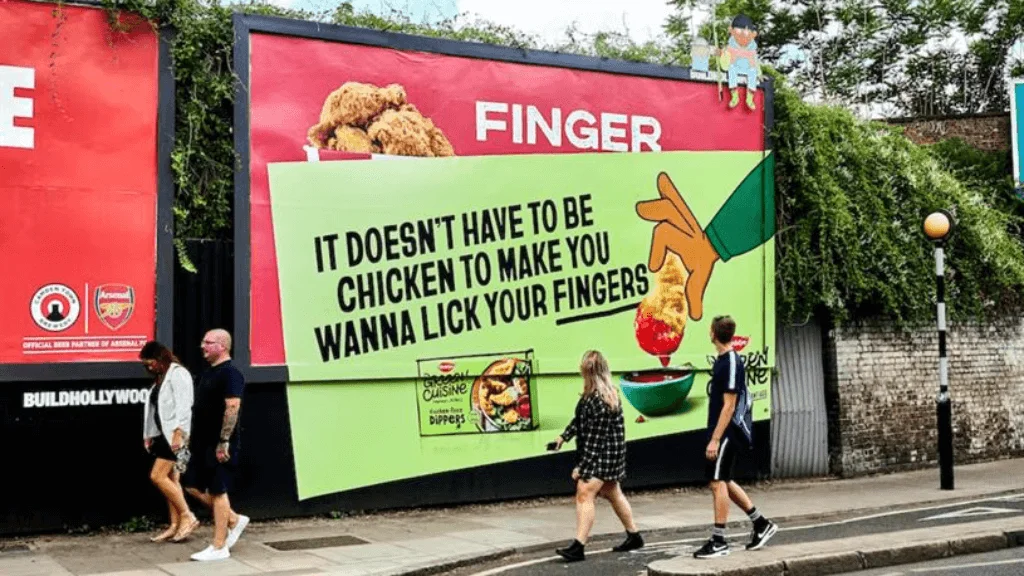
Cafes and food streets around colleges are where friendships grow, ideas flow and hours quietly disappear over coffee and snacks. In India, students typically spend 30–60 minutes per visit in these zones, creating longer viewing time and stronger engagement than most outdoor formats.
Among college-centric advertising locations, these hangout hubs consistently rank as the best student crowd advertising locations for lifestyle, food and youth-driven brands, because ads blend naturally into real conversations, group moments and everyday campus routines.
3. Bus Stops and Bus Shelters Near Colleges
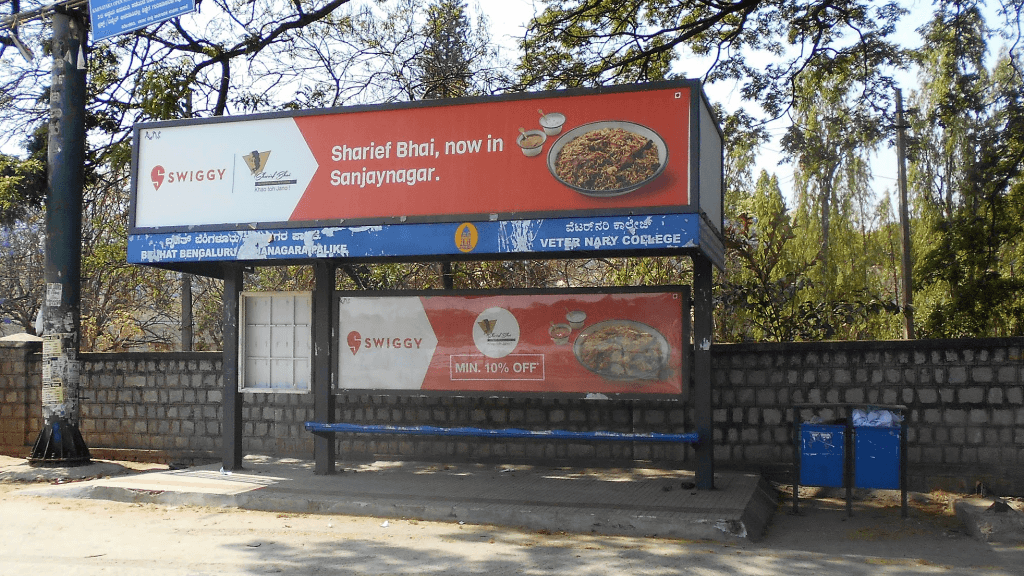
Bus stops near colleges quietly become part of a student’s daily routine, rushed mornings, tired evenings and a few minutes of waiting in between. In India, student commuters typically wait 5–10 minutes per trip, giving ads here uninterrupted viewing time when phones are down and attention is naturally higher.
Among college-centric advertising locations, bus stops work especially well for brands targeting student commuters, because the same message is seen twice a day, five days a week, building fast familiarity, strong recall through simple and repeated exposure.
4. Metro Stations Serving College Hubs
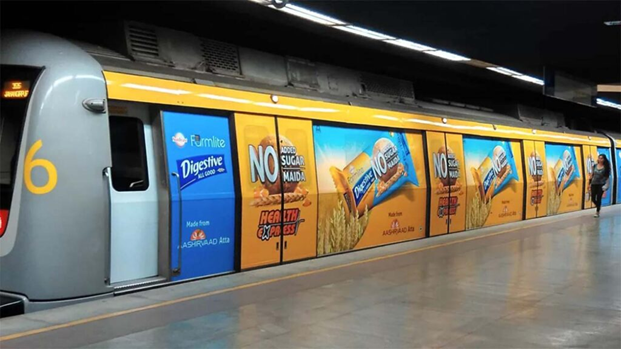
Metro stations near college clusters see constant student traffic throughout the day, with some stations in India recording over 20,000 daily commuters, many of them college students. Formats like entry panels, stair branding and concourse ads stand out, capturing attention during short dwell times of 2–5 minutes while students wait or move between trains.
These stations are high-impact college-centric advertising locations in metro cities, offering repeated visibility as students pass through multiple times a day. Studies show repeated exposure at transit points can increase brand recall by up to 70%, making metro stations ideal for campus-focused marketing campaigns.
5. College Festivals and Cultural Events
Annual college festivals bring together students from multiple institutions, creating lively, energetic environments with footfalls often exceeding 10,000 attendees in a single day. Advertising, banners and sponsorships at these events capture attention in real-time, generating high engagement and strong brand recall.
Such festivals are key college-centric advertising locations in India, offering brands the chance to connect experientially with students. Studies show that on-ground activations at events can boost brand affinity by over 60%, making festivals a vital part of any student-focused marketing strategy.
6. Hostels and PG Accommodation Zones
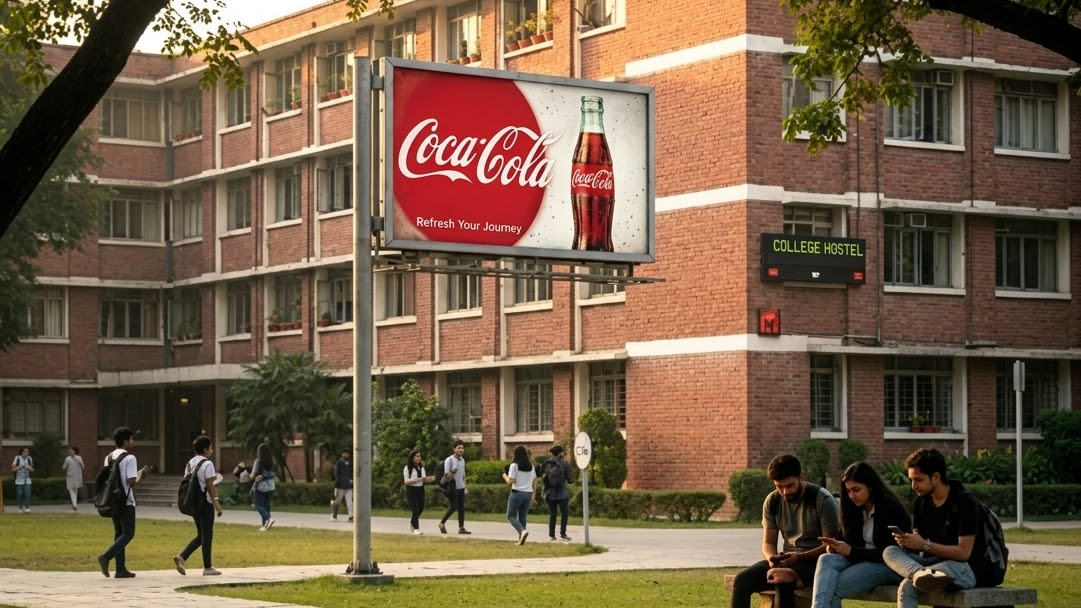
Hostels and PGs house thousands of students who spend 6–10 hours daily on-site, offering brands repeated, close-up exposure.
These residential zones are high-value college-centric advertising spots, ensuring consistent visibility and strong brand recall among students.
7. Coaching Centers and Training Institutes
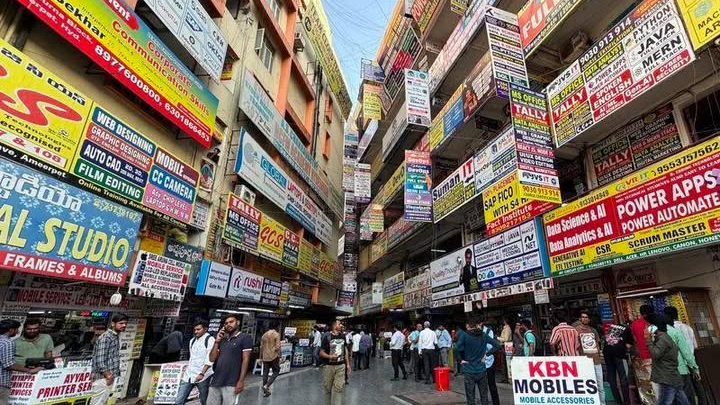
Coaching centers and training institutes attract students dedicated to career growth and skill development, with some top institutes in India seeing over 1,500 students daily.
Advertising here reaches a highly motivated and aspirational audience, making these spaces effective college-centric locations for education, technology and career-focused brands, where messages are seen by students actively seeking opportunities to upskill.
8. College Area Retail Stores and Bookshops
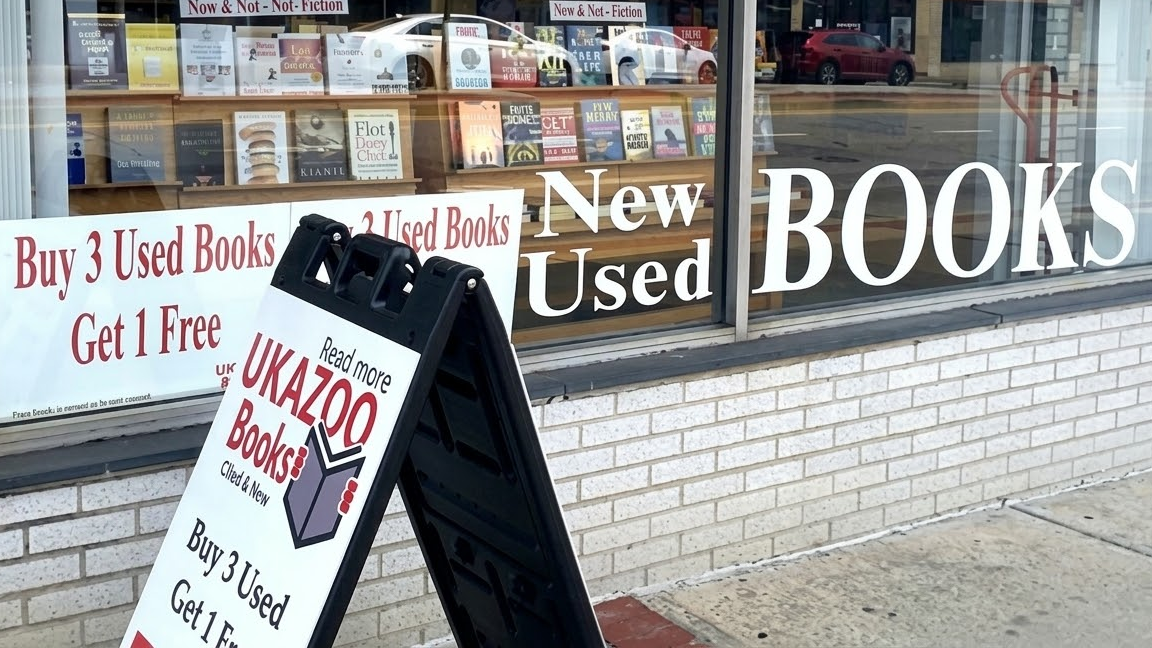
Retail stores and bookshops near colleges see heavy student traffic daily, with some outlets in India receiving 1,000–2,000 student visits per week.
In-store posters, standees and display ads perform well here, making these outlets top college-centric advertising spots for daily-use products and student-focused brands, ensuring high visibility and frequent engagement.
9. College Transportation Routes
Routes frequented by college buses, shared autos and student commuters see thousands of students daily, providing repeated brand exposure throughout the day. In India, popular corridors can witness 5,000+ student movements during peak hours.
Advertising along these routes reinforces brand presence continuously, making them strategic college-centric outdoor advertising locations that maximize visibility and recall among the student audience.
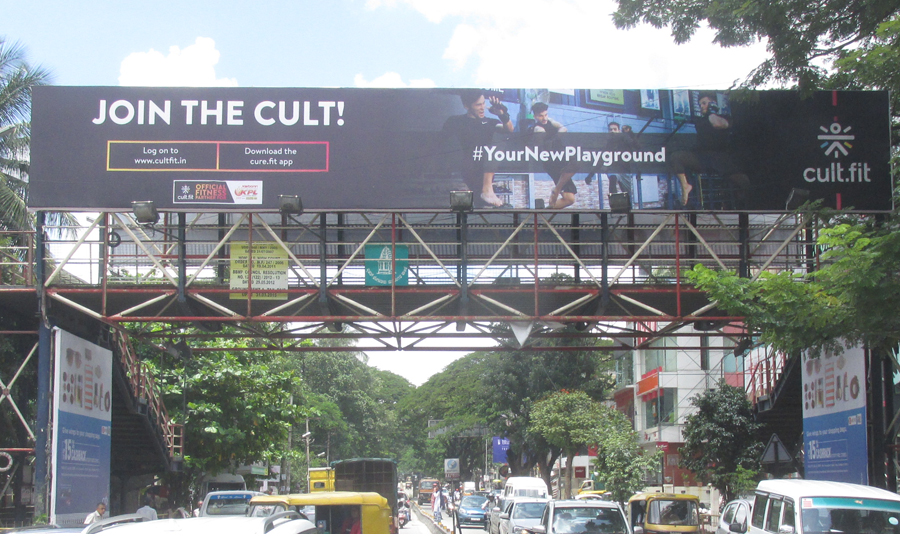
10. Student Activity Zones and Hangout Areas
Parks, gaming zones, and public spaces near colleges draw students during evenings and breaks, with some hotspots seeing 2,000–3,000 student visits weekly in India.
Advertising in these relaxed, informal settings helps brands connect naturally with students, making them ideal college-centric locations for boosting awareness, engagement and long-term recall.
How to Pick the Perfect College Spots to Reach Students
Choosing the right college-centric locations isn’t random, it depends on student density, daily routines and your campaign goals. The best results come from spaces where students naturally hang out, like cafes, hostels, bus stops or campus gates, because that’s where attention is highest.
Smart brands mix multiple locations to stay visible throughout the day, from classrooms to commutes to social hangouts. This approach ensures repeated exposure, stronger recall and a real connection with the student audience, turning everyday campus moments into meaningful brand interactions.
Benefits of College Centric Advertising
- High relevance among student audiences
- Strong peer driven brand recall
- Targeted exposure in focused locations
- Supports long term brand loyalty
- Strengthens youth-focused marketing efforts
Frequently asked Questions (FAQ’s)
1. What is college centric advertising in India?
College centric advertising in India refers to promoting brands in and around college environments such as campuses, hostels, cafes, transit points and student hangout areas. It helps brands directly reach Gen Z audiences where they spend most of their time.
2. Why is college advertising effective for youth brands?
College advertising is effective because it targets students in high engagement zones where trends start and decisions are influenced. Repeated exposure in daily routines helps improve brand recall and builds stronger connections with young audiences.
3. Which are the best locations for college advertising?
Some of the best college advertising locations include campus entry and exit gates, nearby cafes, bus stops, metro stations, hostels, college festivals and student hangout areas. These locations offer high footfall and consistent visibility.
4. How does college advertising improve brand recall?
College advertising improves brand recall through repeated exposure. Students see the same ads multiple times a day during classes, travel and social activities, which helps the brand stay top of mind.
5. What type of brands benefit most from college centric advertising?
Youth focused brands such as FMCG, food and beverage, fashion, edtech, fintech, telecom and lifestyle brands benefit the most from college centric advertising.
College-centric advertising isn’t just about putting up ads, it’s about becoming part of student life. When brands show up in the right spaces, whether at campus gates, cozy cafes, bustling bus stops or popular hangouts, they connect with young, trend-setting audiences in moments that truly matter.
From everyday commutes to social hangouts and vibrant college events, every location offers a chance to build visibility, recall and meaningful engagement. With smart planning and consistent presence, brands don’t just get noticed, they become part of the college experience, earning trust, loyalty and conversations that extend far beyond the campus walls.
Why Choose Ginger Media Group for Affordable Offline Marketing
Ginger Media helps startups execute affordable offline marketing campaigns with clarity, transparency and measurable impact. With strong expertise across outdoor, transit, print and on ground activations, Ginger Media focuses on cost effective solutions that deliver real visibility without unnecessary spending. From planning and execution to monitoring and reporting, the team ensures startups get the best value from every offline campaign. By combining strategic media selection with on ground execution strength, Ginger Media enables brands to scale offline marketing efficiently and confidently.
]]>Did you know that 72% of parents still trust what they see in the real world like banners, hoardings and local events. When choosing a school? Unlike fleeting digital ads, offline marketing quietly builds trust, sparks conversations and keeps your institute top of mind. One well-placed banner or newspaper feature can turn a familiar name into a parent’s first choice.
It’s more than visibility, it’s about connection. Local campaigns and community presence make your institute feel reliable and authentic. Studies show schools that combine offline strategies with digital outreach see up to 30% more admission enquiries. By using creative, consistent offline ads, your school doesn’t just get noticed and it becomes the school parents can’t stop talking about.
Why Offline Advertising Matters in Education
Choosing the right school or college isn’t instant, it’s a careful process. Parents observe, compare and look for signs of reliability before making a decision. This is where offline advertising shines. A well-placed banner, a newspaper feature or a community event can create a strong, trustworthy presence that digital ads alone can’t match.
Offline channels also let institutes target the local community directly, reaching parents and students in their own neighborhoods. When done consistently, these efforts boost recall, reinforce credibility and perfectly complement online campaigns. In short, offline advertising doesn’t just inform, it builds trust, familiarity and loyalty before the admission forms even arrive.
1. Newspaper Advertising
Newspapers remain one of the most trusted sources of information for parents. Publishing admission announcements, exam results or institutional achievements instantly signals credibility and seriousness.
For schools and colleges, newspapers are more than just ads, they reach decision-makers who value reliable, traditional media. This makes them a powerful offline tool to create trust, showcase accomplishments and strengthen your institute’s reputation in the community.

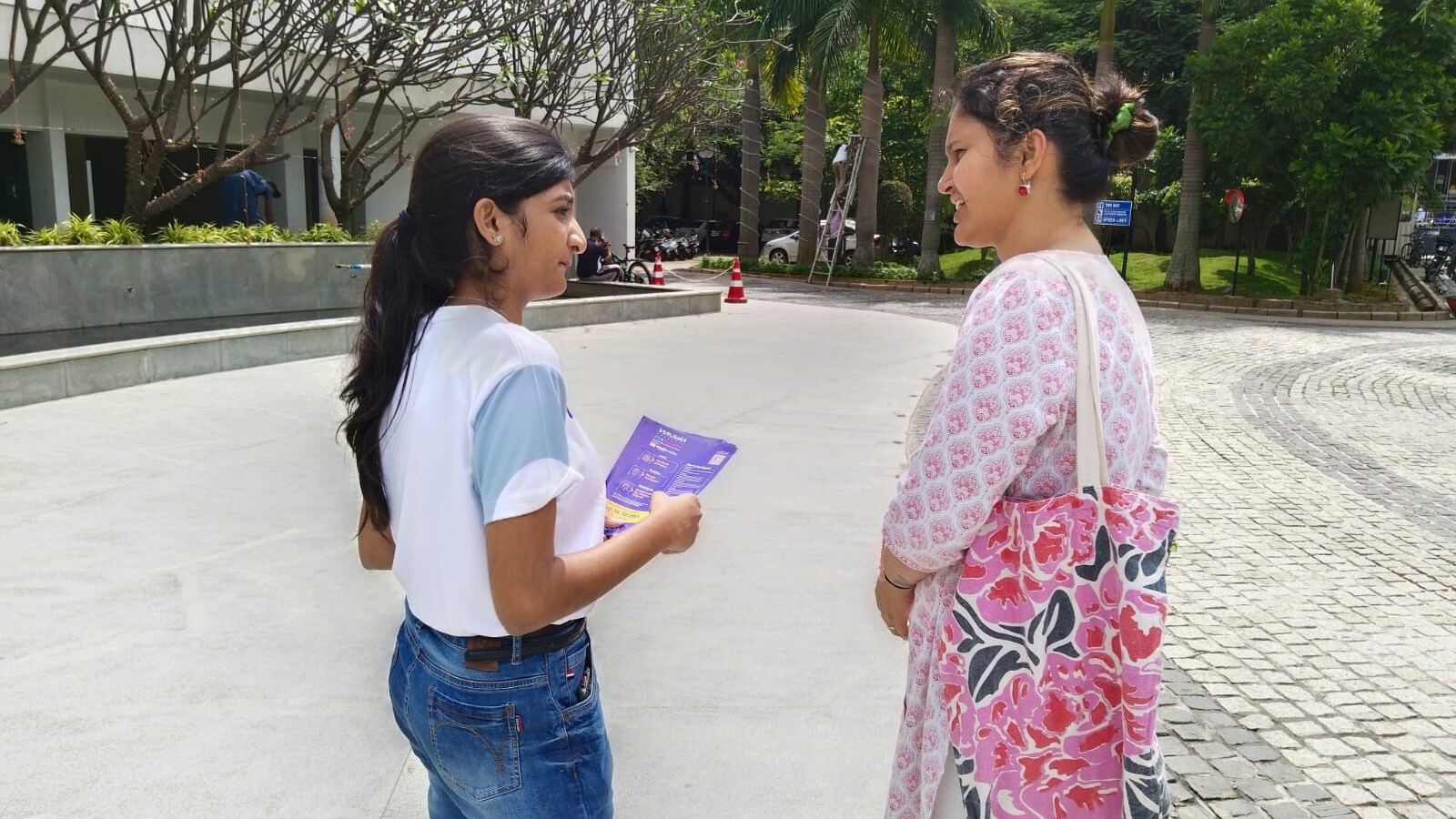
2. Flyer and Pamphlet Distribution
Flyers are one of the most commonly used offline advertising options that education institutes depend on. When distributed near residential areas, schools, and coaching centres, they reach parents and students directly.
This approach works well for promoting admissions, scholarship programs and new academic batches.
3. Outdoor Hoardings Near Academic Zones
Hoardings placed near school areas, junctions and residential neighbourhoods help create strong visual recall. Even smaller hoardings are impactful when positioned thoughtfully.
As visible offline advertising options, hoardings help institutes establish authority and recognition within their local market.

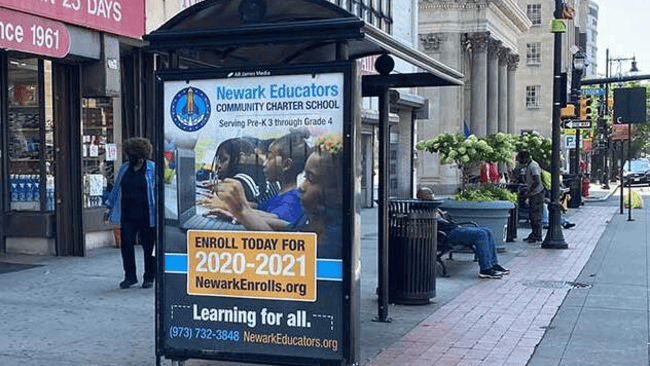
4. Bus Shelter Advertising
Bus shelters see daily footfall from parents, students and commuters. While waiting, people naturally notice and absorb the advertisements around them, giving your message longer attention and impact.
This makes bus shelters ideal for offline campaigns focused on repeated exposure and steady brand recognition, helping your institute stay visible and memorable in the community.
5. School Diary and Stationery Branding
Branded school diaries, notebooks and stationery keep your institute in sight all year long. Every time a student writes, flips a page or takes notes, your brand is subtly reinforced.
This daily exposure makes stationery branding a quiet yet powerful offline advertising tool, creating familiarity and trust without being intrusive and is one of the most effective traditional marketing methods for schools and colleges.

6. Flex Banners and Admission Signage
Flex banners placed near campuses, main roads and tuition centres are commonly used during admission seasons. They are simple to install, affordable and easy to update.
This makes them one of the quickest offline advertising options for communicating timely information.

7. Education Fairs and Community Events
Education fairs and local events give institutes the chance to meet parents and students face-to-face. These interactions let you answer questions, explain your offerings and build real, personal connections that ads alone can’t achieve.
By combining visibility with meaningful engagement, such events make offline advertising more memorable and trustworthy, helping your institute stand out in the community.

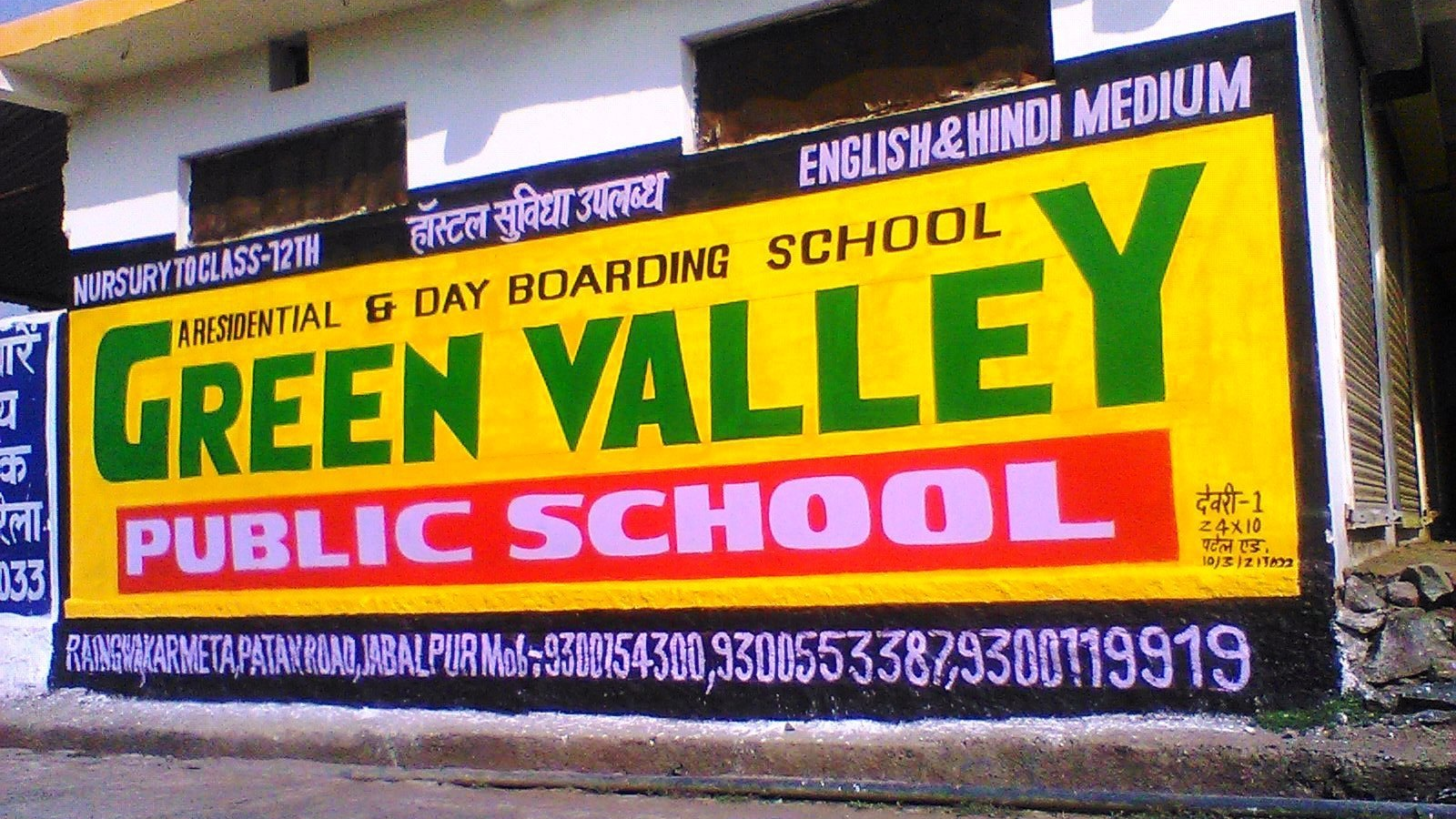
8. Wall Paintings in Residential Areas
Wall paintings offer long term visibility and are effective in semi urban and rural locations. They help institutes to become familiar names within the community over time.
As part of offline advertising options for education, wall paintings deliver consistent exposure at a relatively low cost.
How to Choose the Right Offline Advertising Options
Not all offline channels work the same for every school. Choosing the right media depends on who you want to reach, where they are and what your admission goals are. Studies show that parents are 60% more likely to trust institutes they see regularly in their neighbourhoods, so aligning your advertising with local habits is key.
Schools and colleges get the best results by mixing multiple offline options from newspapers and bus shelters to community events and branded stationery. This approach not only increases visibility but also builds trust and recall, turning casual observers into engaged parents ready to enquire. In offline marketing, it’s not just about being seen, it’s about being seen in the right place, at the right time and with the right message.
Benefits of Offline Advertising for Education Institutes
- Builds trust and credibility among parents and students
- Strengthens local visibility
- Supports admission focused campaigns
- Improves long term brand recall
- Complements digital marketing efforts
Frequently Asked Questions (FAQ’s)
1. Why does offline advertising matter for schools?
Because parents trust what they see around them. Banners, newspapers and local ads help schools feel familiar and reliable.
2. Which offline ads work best for schools?
Simple formats like newspaper ads, hoardings, flyers, bus shelter ads and education fairs usually bring strong visibility.
3. Is offline advertising still useful today?
Yes. When schools combine offline ads with digital marketing, they often reach more parents and get better enquiries.
4. Is offline advertising expensive?
Not always. Options like flyers, flex banners and wall paintings are affordable and still very effective locally.
5. How does offline advertising help increase admissions?
Seeing a school’s name regularly in the neighbourhood builds familiarity, making parents more likely to enquire during admission season.
Offline advertising continues to be a valuable tool for education institutes looking to grow visibility and admissions. By choosing the right offline advertising options, institutes connect with parents and students in a more meaningful way.
From print media to outdoor formats, traditional advertising methods for education play an important role in shaping trust and perception. With thoughtful planning and consistent execution, offline advertising can deliver reliable and lasting results.
Why Choose Ginger Media Group for Affordable Offline Marketing
Ginger Media helps startups execute affordable offline marketing campaigns with clarity, transparency and measurable impact. With strong expertise across outdoor, transit, print and on ground activations, Ginger Media focuses on cost effective solutions that deliver real visibility without unnecessary spending. From planning and execution to monitoring and reporting, the team ensures startups get the best value from every offline campaign. By combining strategic media selection with on ground execution strength, Ginger Media enables brands to scale offline marketing efficiently and confidently.
]]>If you’ve ever walked through a busy Indian city, you know how hard it is to ignore the billboards, bus ads and street displays around you. That’s the power of outdoor advertising. It’s everywhere and it works. In fact, the OOH market in India has grown nearly 13% in recent years and studies show that 71% of people actually notice these ads, with 40% taking action after seeing them. It’s a real-world way to get your brand in front of people, not just online.
The best part? You don’t need a huge marketing budget to make an impact. From street-level ads to transit media, there are cost-effective ways for startups, SMEs and regional brands to boost visibility, reach both local, mass audiences and get real results.
In this blog, we’ll walk you through the Top 10 Budget Outdoor Advertising Options in India That Actually Work, helping you pick the formats that give your brand the biggest bang for every marketing rupee.
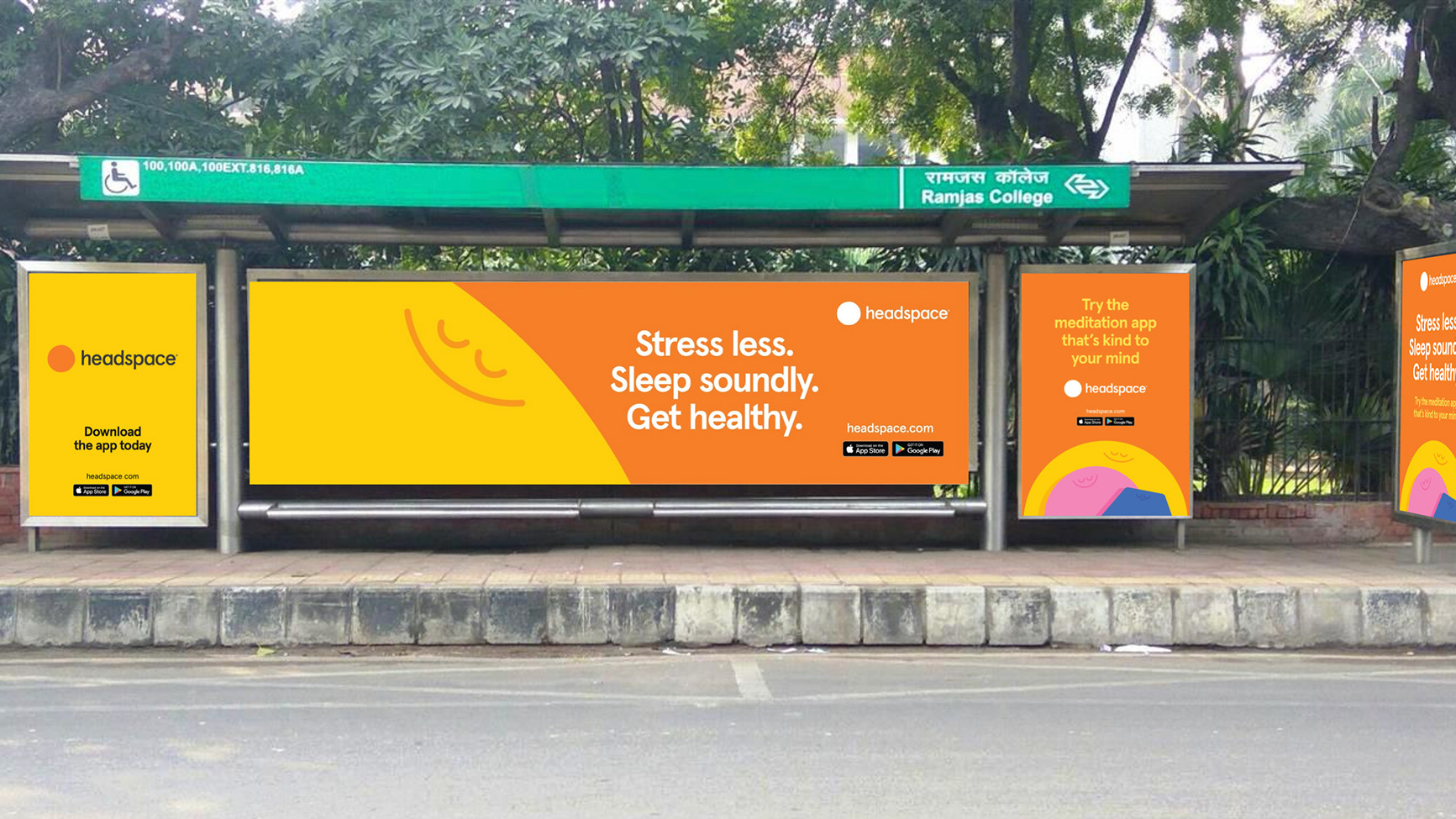
1. Bus Shelter Advertising
Bus shelter advertising works because people naturally pause, spending 5–10 minutes waiting daily. This gives brands repeated exposure, boosting recall by up to 70%, while reaching thousands of urban commuters every day.
Affordable yet high-impact, shelters turn idle moments into memorable experiences. Creative designs and interactive elements grab attention, making this format perfect for awareness campaigns that stick in people’s minds.
2. Auto and E-Rickshaw Branding
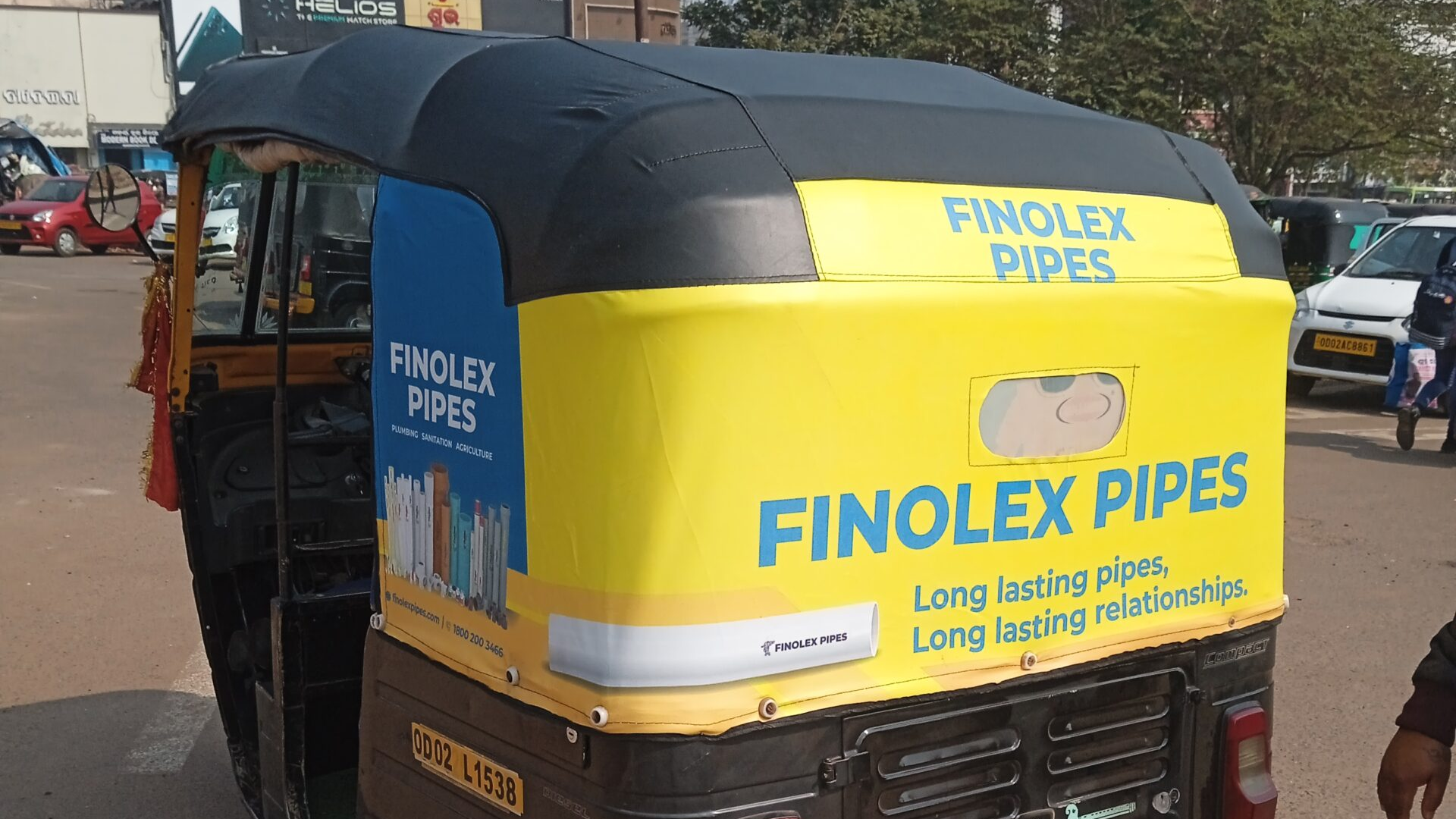
Auto and e-rickshaw branding snakes through Indian cities and towns, reaching over 60% of daily commuters in urban pockets. Affordable and constantly moving, it turns every ride into a mini billboard, exposing your brand to people on streets, markets and busy corners multiple times a day.
This format is ideal for hyperlocal campaigns, with studies showing that mobile outdoor ads increase brand recall by up to 50% in targeted neighborhoods. Every stop, turn and ride becomes an opportunity to make your brand visible, memorable and part of daily life, all without a hefty investment.
3. Metro Train and Station Advertising
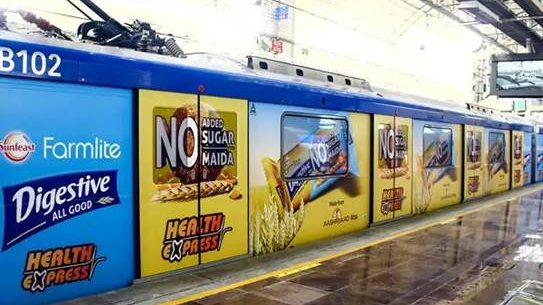
Metro advertising connects with thousands of daily commuters and office-goers in major cities, reaching people where they spend 30–60 minutes every day. From inside train panels to station branding and digital screens, your message is seen repeatedly, turning travel time into a high-impact opportunity.
With a mix of wide reach and consistent visibility, this format is one of the most cost-effective outdoor options in urban markets. Every ride, every station stop and every glance at a digital screen helps your brand stay top-of-mind, making daily commutes a moment for connection.
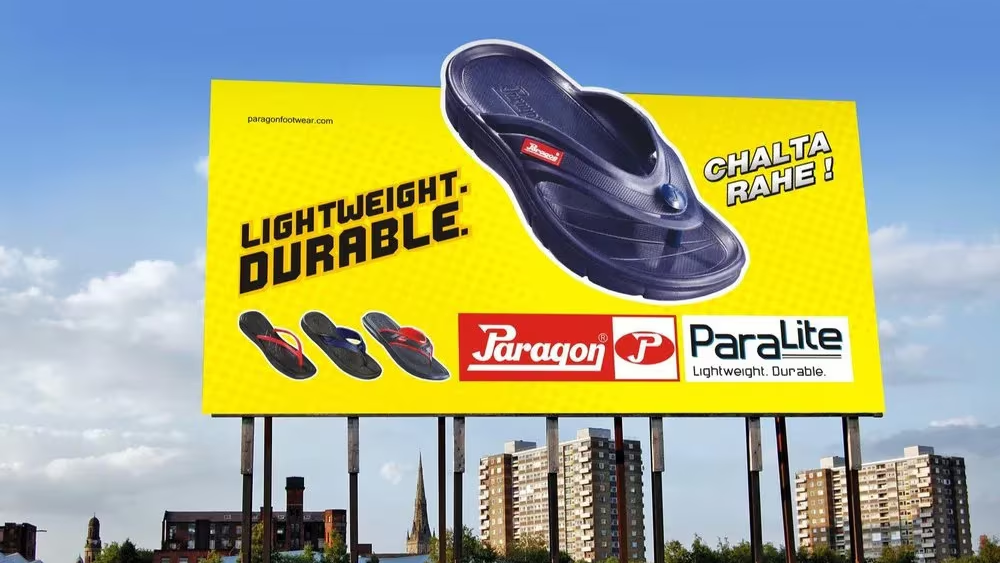
4. Hoardings in Strategic Locations
Premium hoardings in metro cities can be costly, but strategically placed ones in tier-2 and tier-3 cities offer high visibility at a fraction of the price. These spots see heavy footfall and vehicle traffic, turning every glance into a potential brand impression.
When selected wisely, hoardings become a reliable and cost-effective outdoor advertising tool, giving brands a chance to stand out, be noticed and leave a lasting impact without breaking the budget.
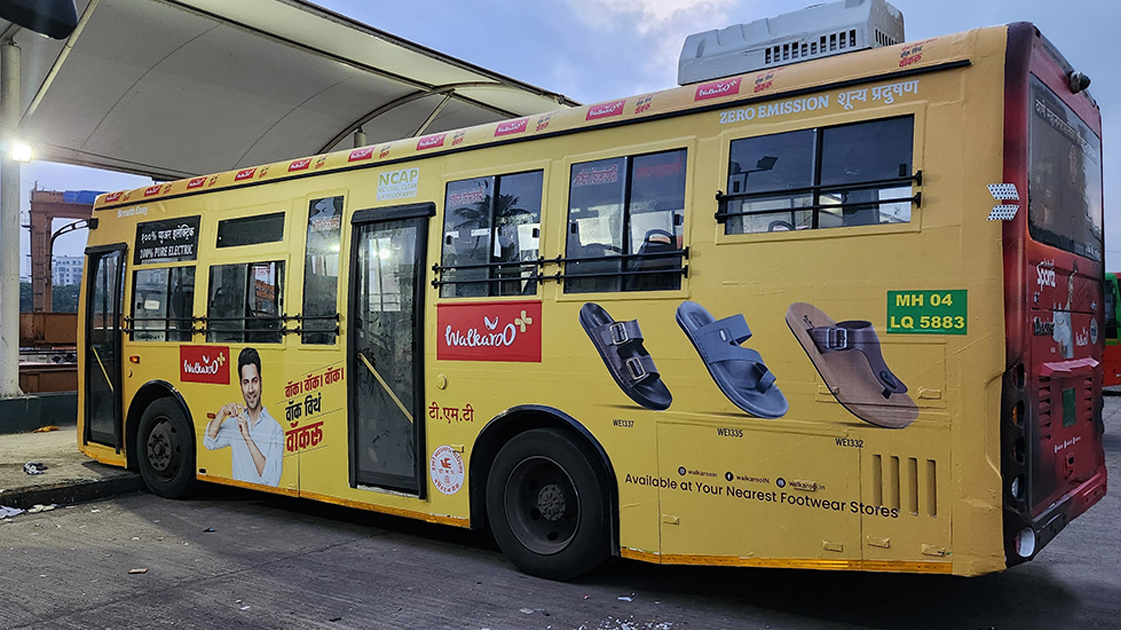
5. Bus Branding
Bus branding through full wraps, side panels and rear panels turns everyday public buses into moving billboards. Operating on fixed routes daily, they provide consistent exposure to thousands of commuters across neighborhoods, markets and busy streets.
This makes bus branding one of the most practical and cost-effective outdoor channels, letting brands achieve city-wide visibility while keeping budgets under control. Every route, stop and turn becomes an opportunity for your message to be seen and remembered.
6. Wall Paintings and Murals
Wall paintings remain a tried-and-true outdoor medium in India, turning everyday walls into long-lasting brand canvases. Studies show these ads can be noticed by over 70% of local passersby regularly, offering months or even years of continuous visibility at a fraction of digital costs.
For brands targeting semi-urban and rural markets, wall paintings are ideal. They reach communities directly where people live, work and shop, making them one of the most reliable and cost-efficient outdoor options that leave a lasting impression and build brand familiarity over time.

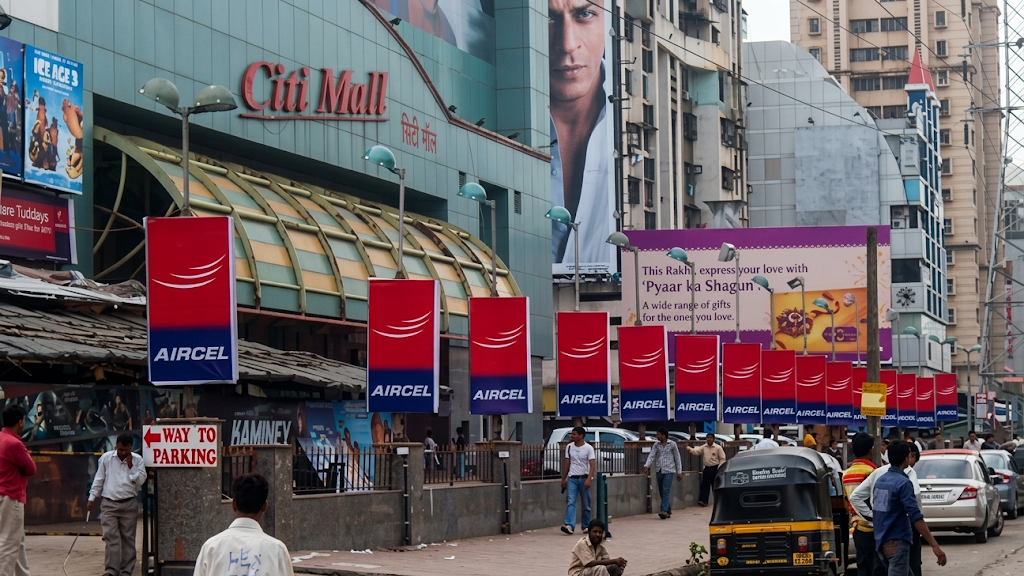
7. Pole Kiosks and Street Furniture
Pole kiosks, lamp post ads and other street furniture turn everyday streets into brand touchpoints at eye level, reaching thousands of pedestrians and drivers daily. Studies show that ads placed in high-traffic areas are noticed by up to 65% of passersby, offering repeated exposure without heavy costs.
Affordable and effective, these formats are perfect for building local brand awareness, helping brands stay visible in neighborhoods, markets and busy streets. Every glance, stop and walk-by becomes a chance for your message to stick in people’s minds.
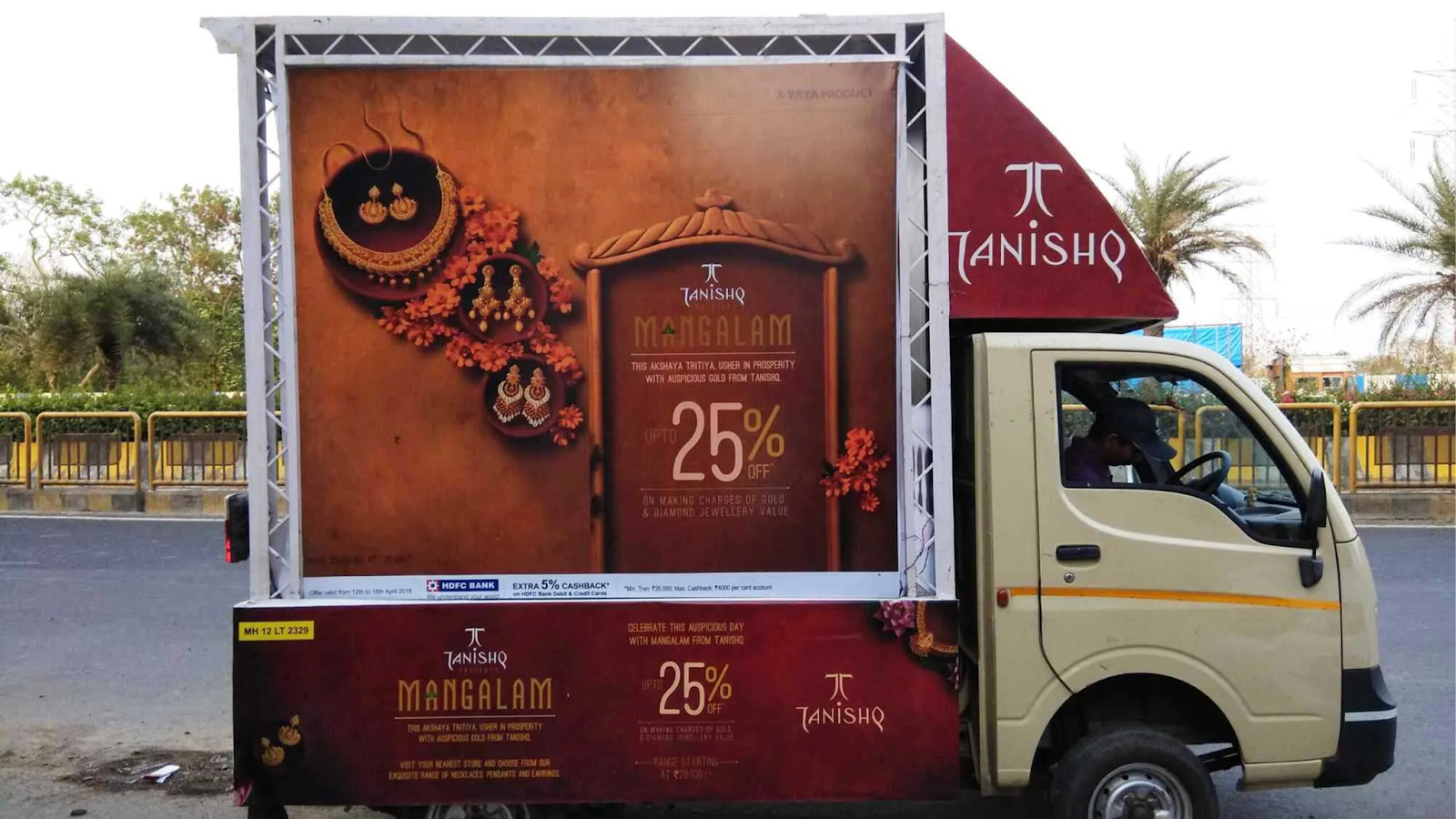
8. Mobile Van Advertising
Mobile van advertising lets brands bring their message straight to the people, moving through residential areas, busy markets, events and city streets. With each route, vans reach hundreds to thousands of potential customers daily, making every drive a live billboard in motion.
This flexibility and reach make mobile vans a powerful and cost-effective outdoor advertising tool, turning neighborhoods, events and streets into opportunities for your brand to be seen, remembered and talked about, wherever your audience is.
9. Transit Media at Railway Stations
Railway station advertising connects with thousands of passengers every day, turning platforms, entry gates and waiting areas into high-visibility brand spaces. Studies show that commuters often notice ads while waiting, with up to 65% recall in high-traffic stations.
Compared to airports, railway stations offer a more affordable way to reach large audiences, delivering strong footfall and repeated exposure. Every train arrival, departure and pause becomes a chance for your brand to be seen, remembered and talked about by a diverse, urban audience.

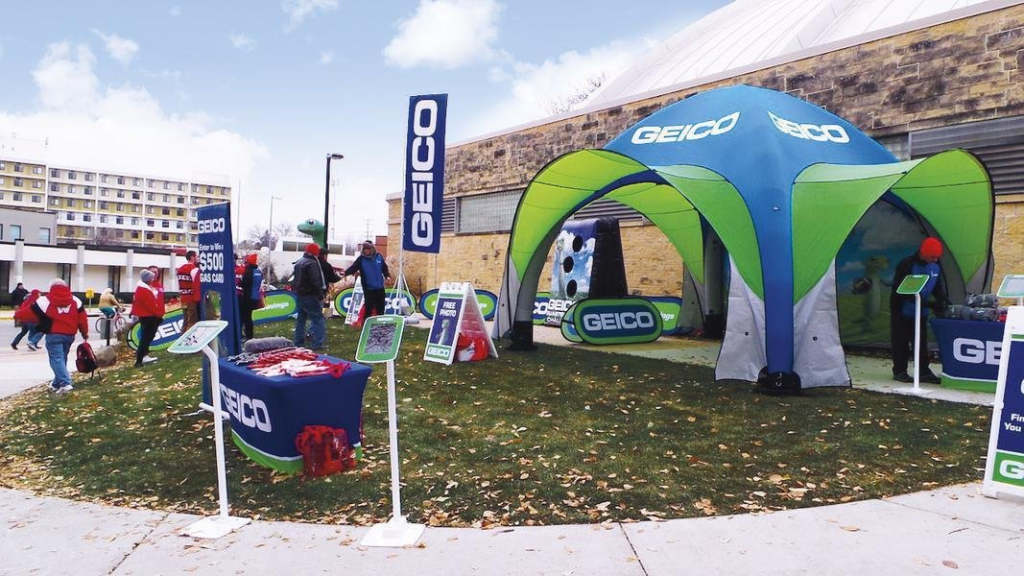
10. Inflatable and On-Ground Activations
Inflatables and on-ground activations turn ordinary spaces into memorable brand experiences, grabbing attention instantly during product launches, promotions and special events. Studies show that over 70% of event attendees actively notice such activations, making them highly engaging in a short time.
This format is perfect for brands seeking impactful, engagement-focused outdoor advertising without long-term commitments. Every activation creates buzz, encourages interaction and leaves a lasting impression, turning crowds into excited, brand-aware audiences.
How to Choose the Right Outdoor Advertising Media
Picking the right outdoor advertising medium starts with understanding your audience, location, campaign goals and budget. Brands get the best results by choosing formats that truly connect with their target audience, rather than just going for the most expensive options.
Using a mix of outdoor channels like buses, billboards and street furniture, often works better than relying on a single format. Combining mediums ensures wider reach, repeated exposure and smarter use of budget, turning every touchpoint into a meaningful opportunity to be seen and remembered.
Benefits of Cost Effective Outdoor Advertising Media
- High brand visibility at lower costs
- Strong local and regional reach
- Consistent exposure in real world environments
- Better recall through repeated impressions
- Suitable for both startups and established brands
Outdoor advertising is a powerful medium for brands looking to build visibility across India. By choosing the right cost effective outdoor advertising media, businesses achieve strong reach without exceeding their budgets.
From transit-based advertising to street-level formats, India offers multiple cost-effective outdoor advertising options for brands of all sizes. With thoughtful planning and the right media mix, outdoor advertising delivers impactful and measurable results.
Frequently Asked Questions (FAQ’s)
- What are the most cost-effective outdoor advertising options in India?
Some of the most cost-effective outdoor advertising options in India include bus shelter ads, auto and e-rickshaw branding, wall paintings, pole kiosks, mobile van advertising, and bus branding. These formats offer strong visibility and local reach at relatively lower costs compared to premium billboards. - How much does outdoor advertising cost in India?
Outdoor advertising costs in India vary depending on the city, location, format, and campaign duration. Small formats like auto branding or wall paintings can start from a few thousand rupees, while larger hoardings or metro advertising placements can cost significantly more in high-traffic areas. - Is outdoor advertising effective for local businesses in India?
Yes, outdoor advertising is highly effective for local businesses because it provides strong hyperlocal visibility. Formats like wall paintings, pole kiosks, auto branding, and bus shelters help businesses reach nearby customers who frequently pass through those areas. - Which cities in India are best for outdoor advertising campaigns?
Major metro cities such as Mumbai, Delhi, Bengaluru, Chennai, and Hyderabad offer large audiences and high traffic for outdoor advertising. However, tier-2 and tier-3 cities often provide more affordable advertising options with strong local engagement. - How can startups use outdoor advertising on a small budget?
Startups can maximize impact by choosing cost-effective formats like transit media, auto branding, street furniture ads, and mobile van campaigns. Selecting high-footfall locations and combining multiple outdoor formats can help improve reach while staying within budget.
Why Choose Ginger Media Group for Affordable Offline Marketing
Ginger Media helps startups bring their offline marketing ideas to life with clarity, transparency and measurable results. With deep expertise across outdoor, transit, print and on-ground activations, the team focuses on cost-effective solutions that deliver real visibility without wasting a single rupee.
From planning and execution to monitoring and reporting, Ginger Media ensures startups get maximum value from every campaign. By combining smart media selection with strong on-ground execution, they help brands scale offline marketing efficiently, build presence and grow with confidence even on tight budgets.
Outdoor advertising remains one of the most effective offline marketing channels, helping brands achieve strong visibility and audience engagement in a crowded market. Studies show that over 70% of consumers notice outdoor ads and nearly half have made a purchase influenced by them. From billboards to transit displays and digital out-of-home (DOOH), these campaigns deliver real-world exposure that drives campaign performance and enhances overall brand impact.
However, measuring the ROI of outdoor advertising is often a challenge for marketers. Without clear performance tracking and data-driven insights, it’s difficult to justify budgets or optimize campaigns. This guide outlines 8 practical steps to evaluate advertising impact, improve budget allocation and make smarter marketing decisions with measurable results.
Why Measuring ROI in Outdoor Advertising Is Important?
Measuring ROI in outdoor advertising is essential for brands to understand the real business value of their campaigns. Outdoor ads operate in physical environments, so tracking audience engagement, exposure and brand visibility requires clear, practical methods. Studies show that brands monitoring outdoor campaign performance experience up to 20% higher consumer recall and stronger awareness.
Effective ROI measurement provides actionable insights into audience reach and overall advertising impact, enabling smarter budget allocation and improved campaign strategies. By linking performance to measurable outcomes, brands can optimize future campaigns, enhance marketing effectiveness and ensure outdoor advertising contributes meaningfully to data-driven business decisions.
8 Steps to Measure ROI of Outdoor Advertising
Step 1: Define Clear Campaign Objectives
The first step in measuring ROI is setting clear and measurable campaign objectives. These objectives may include increasing brand awareness, driving store visits, generating leads or improving sales performance.
Research shows that campaigns with clearly defined goals are over 50% more likely to achieve measurable results compared to those without. Having specific, quantifiable targets ensures that success metrics are aligned with business outcomes and provides a strong foundation for evaluation, enabling marketers to track performance, optimize strategies and demonstrate the tangible impact of outdoor advertising investments.
Step 2: Identify Target Audience and Locations
Understanding the target audience and selecting the right locations is key to outdoor advertising success. Ads placed in high-traffic areas aligned with audience behavior can increase engagement by up to 30%, according to industry studies. Strategic location planning ensures campaigns reach the right people at the right time, maximizing visibility and interaction.
This step not only boosts campaign performance but also makes ROI measurement more precise, allowing marketers to link exposure directly to outcomes like brand recall, store visits or lead generation and ultimately demonstrate the real value of outdoor advertising investments.
Step 3: Track Reach and Impressions
Reach and impressions show how many people actually saw an outdoor ad. Using traffic data, footfall and location analytics, brands can target high-visibility spots, reaching up to 60% of daily commuters in prime areas.
Tracking these metrics helps marketers gauge campaign exposure and directly link it to ROI, whether through store visits, inquiries or sales, making every outdoor campaign more measurable and effective.
Step 4: Use Location Based Data and Footfall Analysis
Footfall analysis shows how outdoor advertising drives people to physical locations like stores or event venues. Using GPS data and mobile location insights, brands can identify high-traffic areas that boost visits, with studies indicating targeted ads can increase store footfall by up to 25%.
This step is especially valuable for campaigns focused on offline engagement, helping marketers connect exposure to actual visits and measure ROI more effectively.
Step 5: Monitor Brand Recall and Awareness
Brand recall studies and surveys measure how well audiences remember an outdoor campaign. Post-campaign surveys reveal insights into message retention and brand recognition, with research showing that memorable outdoor ads can increase recall by up to 70%.
Monitoring brand awareness is crucial for evaluating the long-term impact of campaigns and linking audience perception to overall ROI.
Step 6: Track Lead Generation and Sales Impact
Curious how outdoor ads actually turn heads into action? For performance-focused campaigns, brands track leads, inquiries and sales generated from outdoor advertising. By leveraging unique phone numbers, QR codes, and custom landing pages, marketers can accurately attribute responses, with studies showing tracked campaigns can increase conversions by up to 35%.
This approach connects outdoor exposure to tangible business results, making ROI measurement precise and helping brands understand the true impact of their campaigns.
Step 7: Compare Campaign Costs with Outcomes
To know if your outdoor campaign really paid off, brands calculate ROI by comparing total campaign costs with measurable results. Costs usually cover media placement, production and execution and studies show that campaigns with detailed ROI tracking can improve marketing efficiency by up to 25%.
This comparison helps marketers understand how effectively their budget was used, identify high-performing strategies and determine whether investments delivered the expected business returns, making every outdoor advertising decision more data-driven and impactful.
Step 8: Analyse Results and Optimize Future Campaigns
The final step is analysing campaign data to see what worked and what didn’t. Insights from past outdoor campaigns can improve targeting, messaging and placement strategies, with studies showing that brands who optimize based on data achieve up to 30% higher ROI in future campaigns.
Continuous review and refinement ensure that every subsequent outdoor ad delivers stronger results, better engagement, and measurable business impact.
Common Challenges in Measuring Outdoor Advertising ROI
Outdoor advertising measurement comes with challenges like limited real-time data, tricky attribution and no universal measurement standard. But brands that combine multiple tracking methods gain clearer, more accurate insights, with studies showing up to 40% better performance accuracy.
Following a structured measurement approach not only helps evaluate campaigns effectively but also empowers marketers to make smarter, data-driven decisions, optimize strategies and ensure every outdoor ad investment delivers maximum ROI and business impact.
Measuring ROI in outdoor advertising takes a clear strategy, the right tools and consistent tracking. By following these 8 steps, brands can accurately assess ROI, gain deeper insights into campaign performance and confidently justify their marketing investments. As outdoor advertising evolves, adopting data-driven measurement practices ensures every campaign delivers maximum impact, stronger engagement and long-term marketing success for the brand.
Frequently Asked Questions (FAQs)
1. How is ROI calculated in outdoor advertising?
ROI in outdoor advertising is calculated by comparing the total campaign cost with the measurable outcomes it generates. These outcomes may include increased store visits, leads, website traffic, or sales attributed to the campaign. Marketers typically use the formula:
ROI = (Revenue generated – Campaign cost) ÷ Campaign cost × 100.
This calculation helps brands determine whether the campaign delivered a profitable return.
2. What metrics are commonly used to measure outdoor advertising performance?
The most common metrics include reach, impressions, footfall data, brand recall, engagement levels, leads generated, and sales impact. Additional tools such as QR codes, custom URLs, location analytics, and surveys help marketers track how audiences interact with outdoor advertisements and connect exposure to measurable outcomes.
3. Can outdoor advertising ROI be tracked accurately without digital tools?
While digital tools make tracking easier, outdoor advertising ROI can still be measured using traditional methods such as customer surveys, coupon codes, unique phone numbers, and in-store feedback. However, combining these methods with digital tracking technologies like GPS-based footfall analysis and QR code tracking significantly improves measurement accuracy.
4. How long does it take to measure the results of an outdoor advertising campaign?
The timeframe depends on the campaign objective. Campaigns focused on brand awareness may take several weeks or months to reflect results through recall studies and surveys. Performance-driven campaigns, such as those aimed at generating leads or store visits, can often show measurable results within a few days or weeks after launch.
5. What tools help improve ROI tracking for outdoor advertising campaigns?
Several tools can enhance measurement accuracy, including mobile location analytics, QR codes, unique landing pages, call tracking numbers, brand recall surveys, and campaign management platforms. These tools allow marketers to link audience exposure to real actions such as store visits, inquiries, and purchases, enabling more precise ROI evaluation.
Why Choose Ginger Media Group for Affordable Offline Marketing
Ginger Media helps startups run affordable offline marketing campaigns with full clarity, transparency and measurable impact. With expertise across outdoor, transit, print and on-ground activations, the team delivers cost-effective solutions that maximize visibility without unnecessary spending. From planning and execution to monitoring and reporting, Ginger Media ensures every campaign generates real results. By combining strategic media selection with strong on-ground execution, Ginger Media empowers startups to scale offline marketing efficiently, make data-driven decisions and confidently achieve meaningful brand growth.
]]>Airport advertising is a powerful offline marketing channel for brands targeting premium audiences, including high‑income consumers and business travellers. In 2024, India recorded around 376 million air passengers, including both domestic and international flyers, reflecting a strong recovery and growth in aviation traffic. Passenger numbers continued to expand in 2025, with airports like Chhatrapati Shivaji Maharaj International Airport in Mumbai handling a record 55.5 million passengers that year. As of early 2026, industry data indicates continued demand with sustained passenger movement and airport traffic milestones being recorded. The number of operational airports in India has grown to over 160, supporting the country’s expanding air travel network.
This growth enables effective business travelers marketing and repeated exposure to key audiences. Compared with other offline marketing channels, airport media offers sustained passenger engagement , making it a top choice for impactful campaigns in India’s booming aviation market.
Airport Advertising in India: Market Overview
Airport advertising in India has grown significantly over the last decade, fueled by rising passenger traffic and major upgrades in airport infrastructure. Today, India operates over 140 airports, including domestic, international and regional hubs, making it one of the fastest-growing aviation markets globally.
For brands, airports provide access to business travelers, corporate decision-makers, high-income consumers and international audiences. With formats such as digital screens, airport advertising, hoardings, baggage trolley advertising and lounge branding.
Airport media offers premium exposure that few other offline marketing channels can match, ensuring high brand visibility and engagement.
How Many Commercial Airports Are There in India?
India currently has more than 30 commercial international airports and over 100 domestic airports handling scheduled passenger traffic. These airports are spread across major metros, tier-1 cities and fast growing regional hubs.
Ongoing airport development initiatives have increased advertising opportunities across the country. This wide network allows brands to plan large scale national campaigns as well as targeted regional airport advertising strategies.
Which Is the Biggest Airport in India?
The biggest airport in India, based on passenger capacity and overall scale is Indira Gandhi International Airport in New Delhi. It handles the highest passenger traffic in the country and functions as a major international aviation hub.
Due to its size and footfall, this airport offers unmatched advertising visibility and access to premium audiences. It is one of the top choices for both national and global brands.
Top 10 Airport Advertising Locations in India
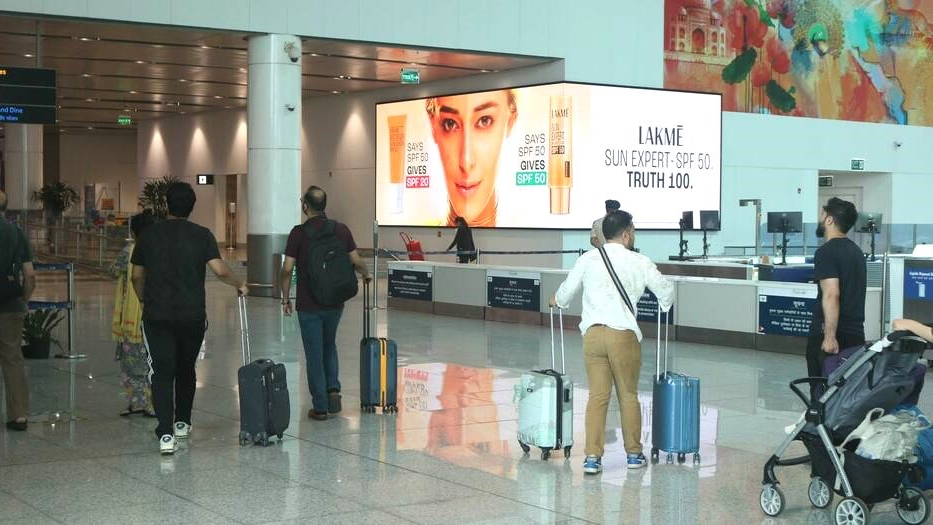
1. Indira Gandhi International Airport – New Delhi
Indira Gandhi International Airport is India’s busiest airport and a primary gateway for both International and domestic travel. With multiple terminals and consistently high footfall, it offers extensive advertising opportunities across arrival, departure and transit zones.
Brands advertising gain exposure to diplomats, corporate leaders, International travellers, and high spending consumers.
2. Chhatrapati Shivaji Maharaj International Airport – Mumbai
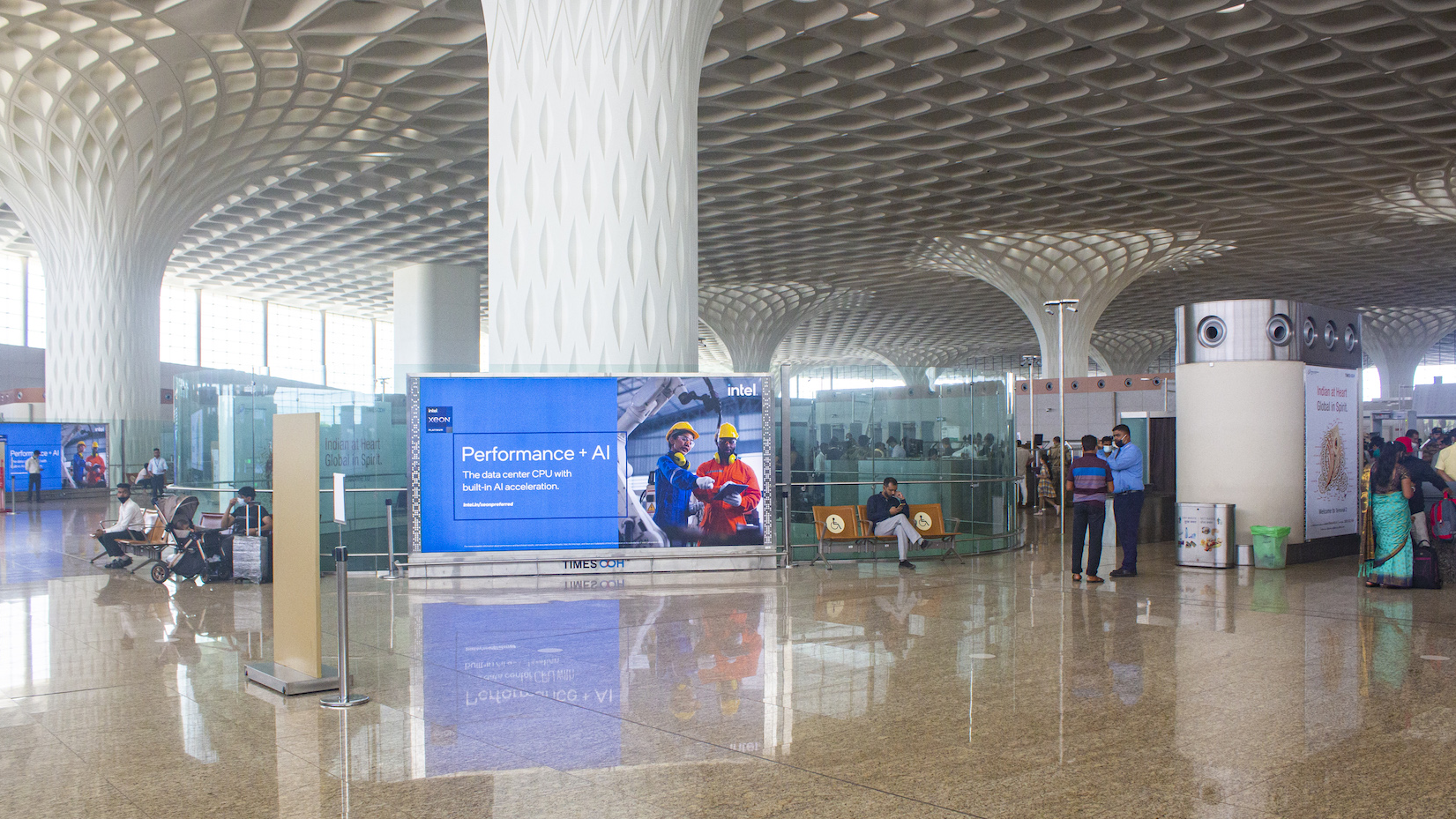
Mumbai’s international airport is one of the most premium airport advertising locations in India. Chhatrapati Shivaji Maharaj International Airport handled around 55.5 million passengers in 2025, including over 16 million international flyers, reinforcing its status as India’s busiest global gateway. As the financial capital of the country, it attracts business leaders, investors and global travelers, making it an ideal spot for brands aiming for premium audience advertising.
Advertising at this airport helps brands associate themselves with luxury, finance and corporate influence, while delivering sustained brand visibility to both domestic and International audiences in one of the highest‑footfall media environments in the country.
3. Kempegowda International Airport – Bengaluru
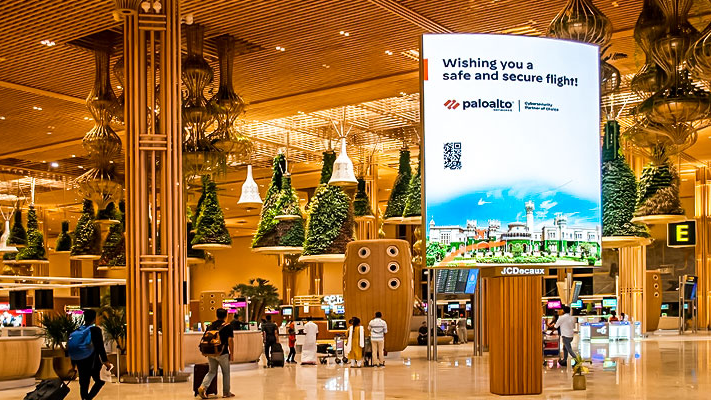
Kempegowda International Airport in Bengaluru, India’s technology and startup hub, handled over 41.8 million passengers in 2024‑25, including domestic and international travelers.
The airport attracts IT professionals, entrepreneurs, and business travelers, making it ideal for premium audience advertising. Brands can leverage digital screens, lounge branding and other formats to reach a digitally aware, innovation-driven audience and maximize brand visibility in one of India’s busiest aviation hubs.
4. Rajiv Gandhi International Airport – Hyderabad
Rajiv Gandhi International Airport in Hyderabad handled over 24 million passengers in 2024‑25, serving both domestic and International travelers.
The airport attracts IT, pharmaceutical and corporate professionals, making it ideal for premium audience advertising. Brands can use digital screens, lounge branding and baggage trolley advertising to reach educated, high-income travellers and maximize brand visibility in one of South India’s fastest-growing aviation hubs.
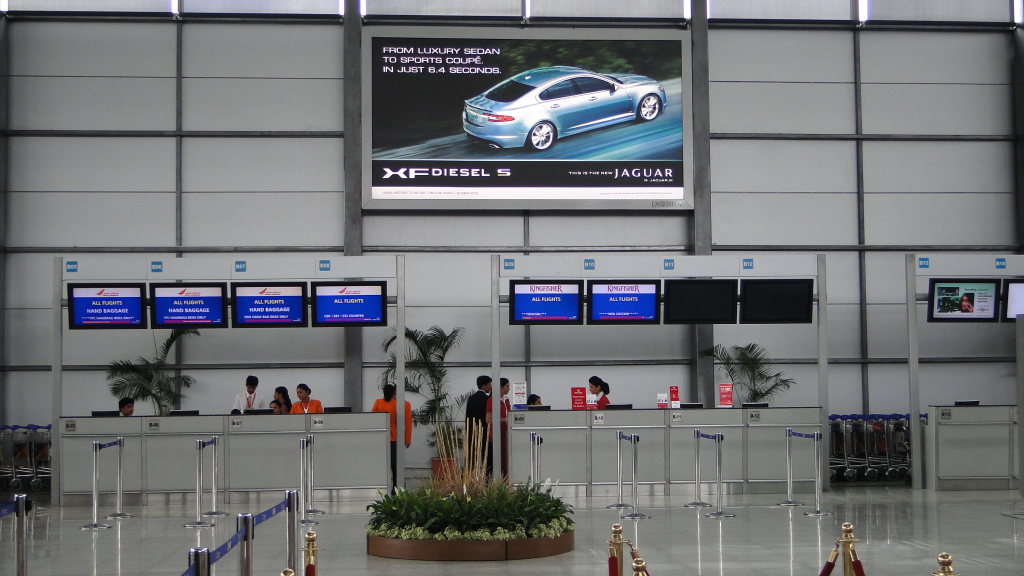
5. Chennai International Airport – Chennai
Chennai International Airport handled over 22 million passengers in 2024‑25, serving domestic and International travelers.
The airport attracts both business and leisure travelers, making it ideal for premium audience advertising. Brands can leverage digital screens, lounge branding and baggage trolley advertising to reach South Indian consumers and international passengers, ensuring strong brand visibility in one of the region’s key aviation hubs.
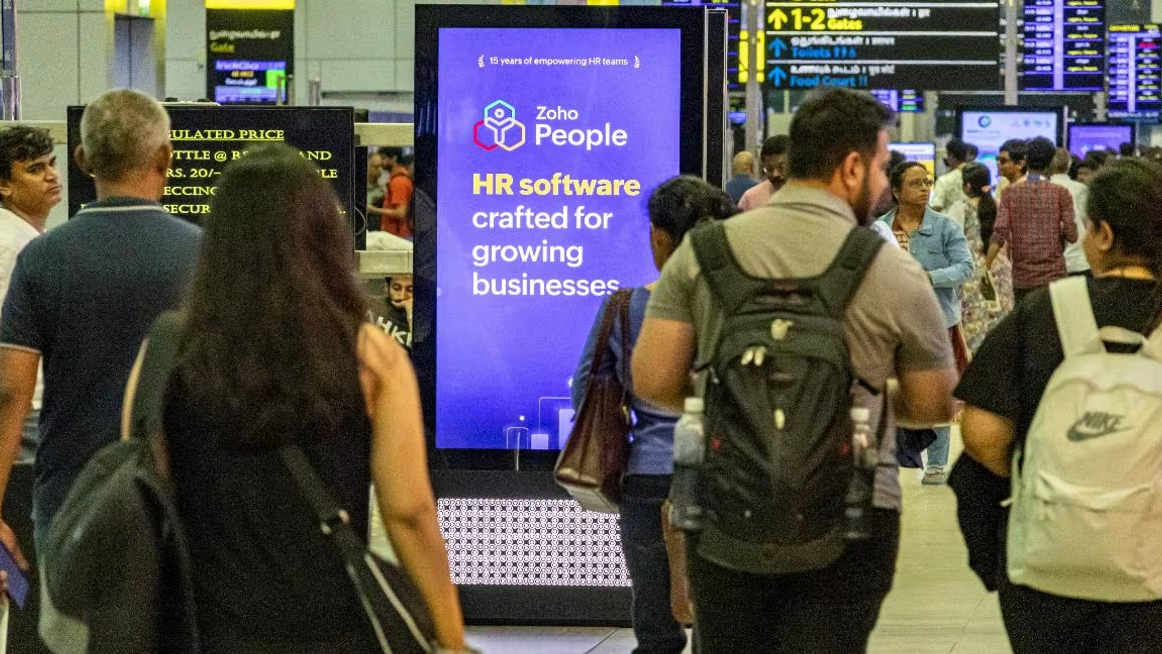
6. Netaji Subhas Chandra Bose International Airport – Kolkata
Netaji Subhas Chandra Bose International Airport in Kolkata handled over 24 million passengers in 2024‑25, covering domestic and international routes.
The airport attracts business travelers, cultural tourists and International flyers, making it ideal for premium audience advertising. Brands can use digital screens, lounge branding and baggage trolley advertising to strengthen brand visibility and establish a presence in Eastern India’s key aviation gateway.
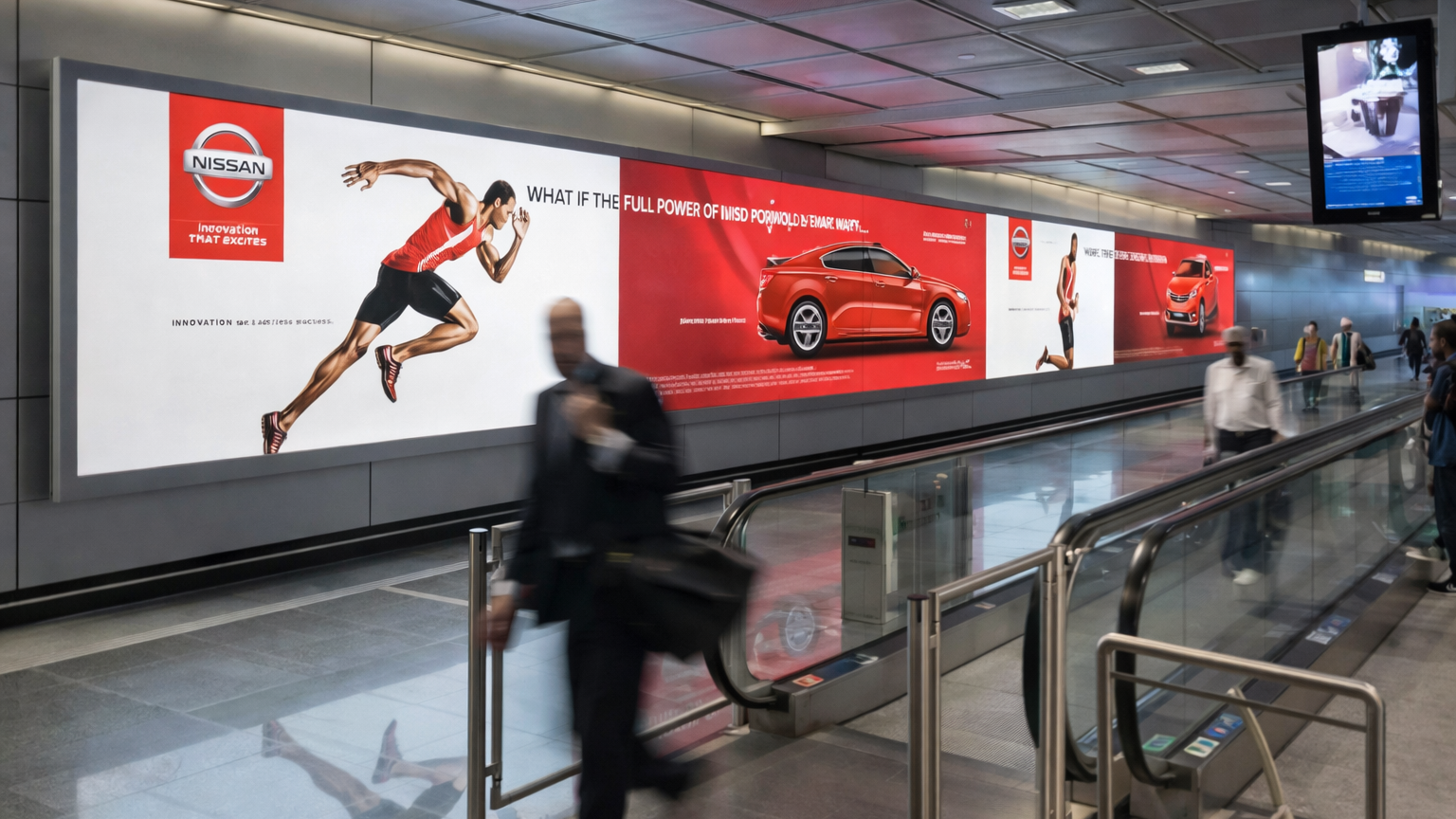
7. Cochin International Airport – Kochi
Cochin International Airport in Kerala handled over 10 million passengers in 2024‑25, with a significant portion of international travellers from the Middle East.
The airport attracts NRIs, international flyers and premium leisure travelers, making it ideal for premium audience advertising. Brands can leverage digital screens, lounge branding and baggage trolley advertising to maximize brand visibility in one of Kerala’s busiest aviation hubs.
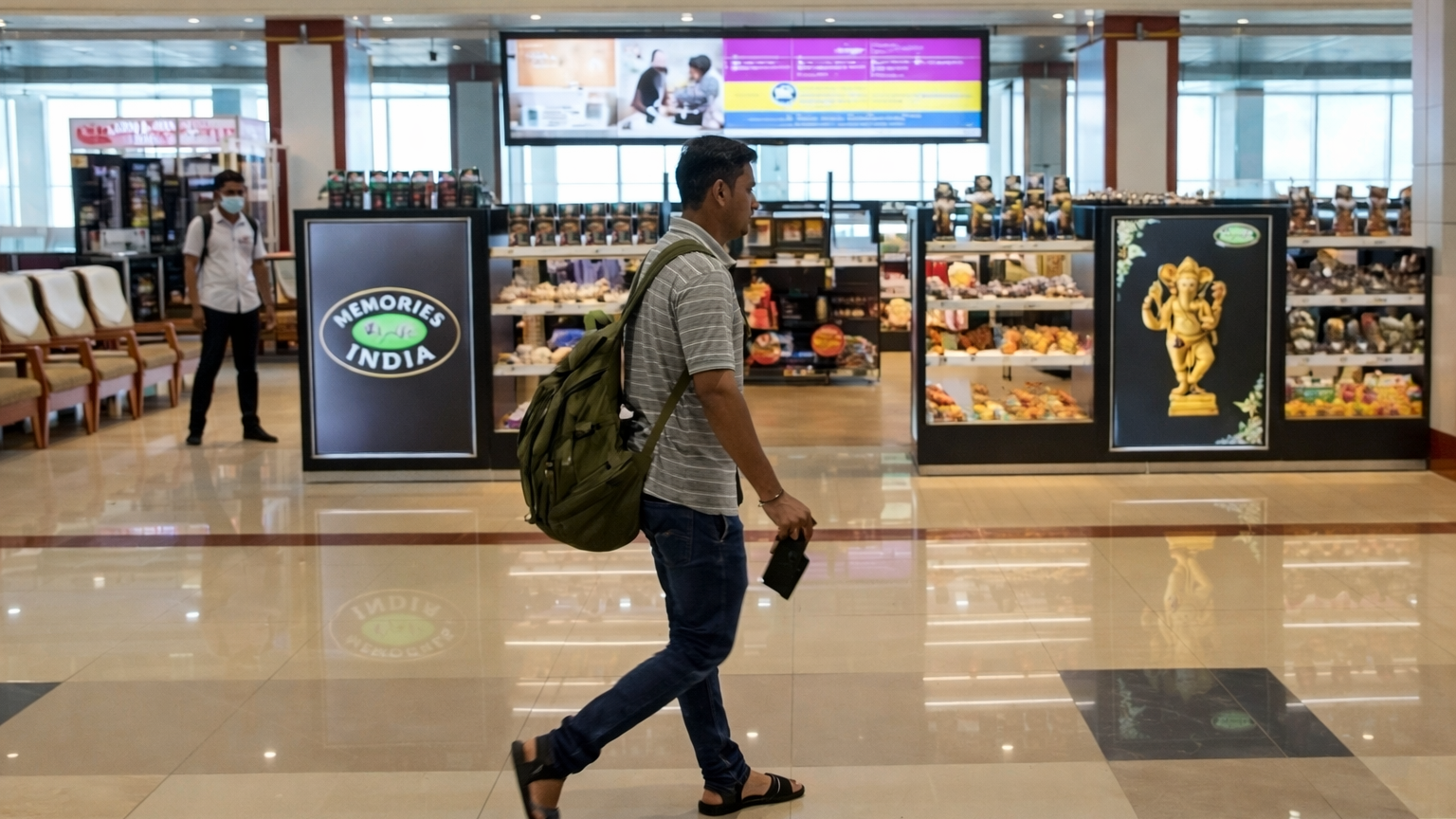
8. Sardar Vallabhbhai Patel International Airport – Ahmedabad
Sardar Vallabhbhai Patel International Airport in Ahmedabad handled over 9 million passengers in 2024‑25, serving domestic and International travelers.
The airport attracts business travelers from manufacturing, textiles, trade and industrial sectors, making it ideal for premium audience advertising. Brands can use digital screens, lounge branding and baggage trolley advertising to reach business-oriented and industrial audiences, ensuring strong brand visibility in western India’s key commercial hub.
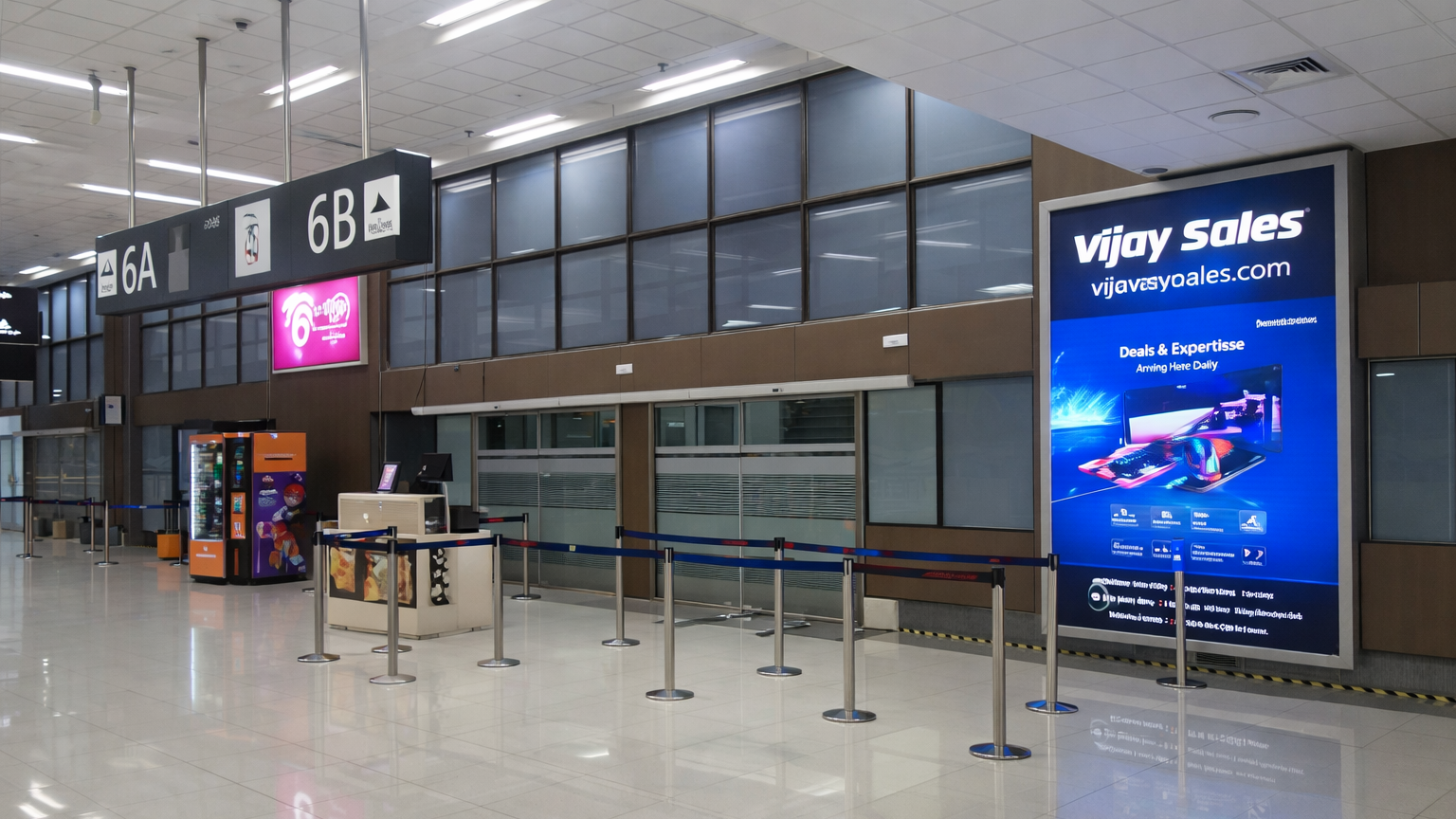
9. Goa International Airport – Goa
Dabolim Airport in Goa handled over 7 million passengers in 2024‑25, including domestic and international travelers.
The airport attracts leisure travellers and tourists year-round, making it ideal for premium audience advertising. Brands in travel, hospitality, lifestyle and consumer sectors can leverage digital screens, lounge branding and baggage trolley advertising to engage relaxed, highly attentive audiences and maximize brand visibility in one of India’s top tourist destinations.
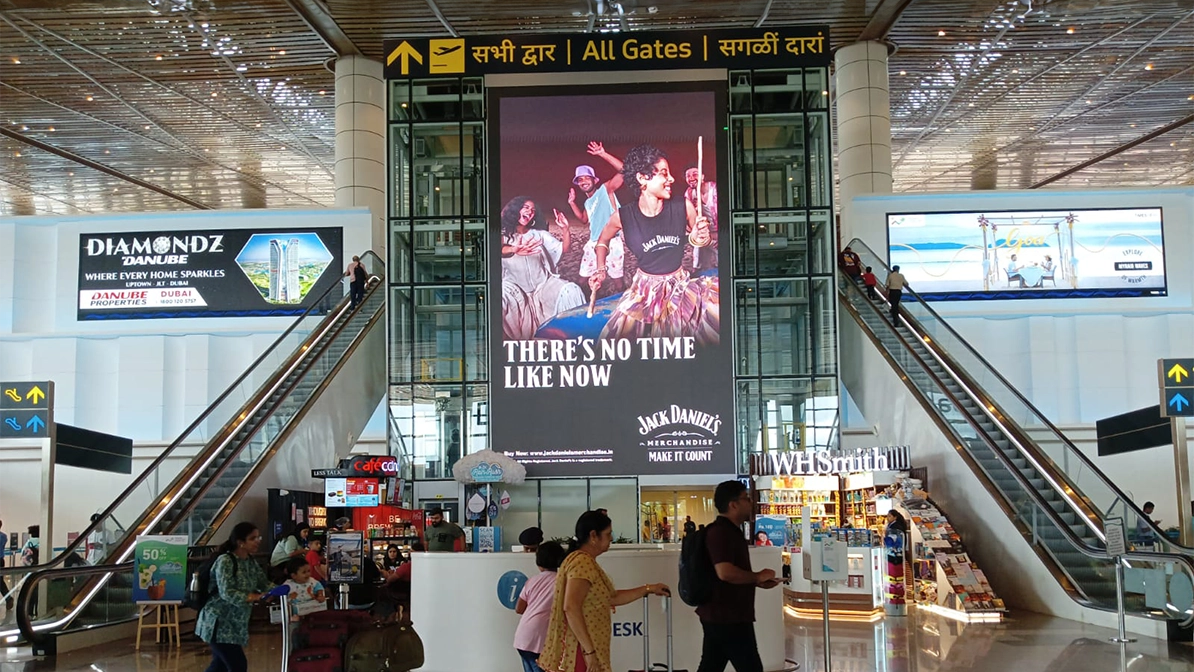
10. Pune International Airport – Pune
Pune International Airport handled over 5 million passengers in 2024‑25, serving domestic and international travelers.
The airport attracts professionals, students and business travellers, making it ideal for premium audience advertising. Brands targeting young professionals, IT employees and urban consumers can leverage digital screens, lounge branding and baggage trolley advertising to maximize brand visibility in one of Maharashtra’s fastest-growing aviation hubs.
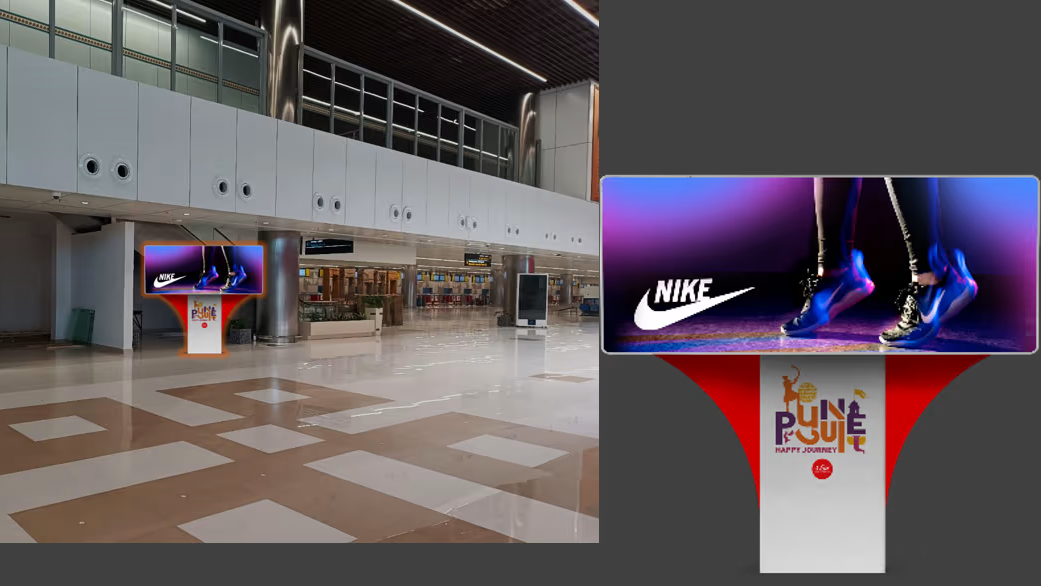
Role of an Airport Advertising Agency in India
Partnering with an airport advertising agency in India allows brands to plan and execute campaigns efficiently. These agencies handle airport selection, media planning, permissions, creative placement and on-ground execution.
An experienced agency ensures brands choose the right airports, advertising formats such as digital screens, lounge branding, baggage trolley advertising and optimal campaign durations. This maximizes brand visibility, engages premium audiences and maintains consistency across multiple locations, making airport advertising a highly effective offline marketing channel in India’s growing aviation market.
Airport advertising is one of the most premium and impactful offline marketing channels in India. With over 140 commercial airports and growing passenger traffic, brands have multiple high-visibility locations to showcase their campaigns.
By choosing the right airport advertising locations and partnering with a professional airport advertising agency in India, brands can reach influential, high-income audiences, maximize brand visibility and build long-term brand value across the country’s expanding aviation market.
Frequently Asked Questions (FAQs)
Q1. How much does airport advertising cost in India?
Airport advertising costs vary depending on airport location, format, and campaign duration. Premium metros like Delhi and Mumbai are priced higher than regional hubs.
Q2. Which airport is best for advertising in India?
Indira Gandhi International Airport and Mumbai International Airport offer the highest passenger footfall and premium audience exposure.
Q3. Is airport advertising effective for luxury brands?
Yes. Airports attract high-income travelers, corporate decision-makers and international audiences, making them ideal for luxury and premium brands.
Q4. What formats are available for airport advertising?
Digital screens, lounge branding, baggage trolley ads, wall wraps, escalator branding and experiential activations.
Why Choose Ginger Media Group for Affordable Offline Marketing
Ginger Media helps start-ups execute affordable offline marketing campaigns with clarity, transparency and measurable results. With expertise across outdoor, transit, print and on-ground activations, Ginger Media focuses on cost-effective solutions that deliver real brand visibility without unnecessary spending.
From planning and execution to monitoring and reporting, the team ensures startups get the best value from every campaign. By combining strategic media selection with strong on-ground execution, Ginger Media enables brands to scale offline marketing efficiently, reach their target audiences, and achieve measurable impact with confidence.
]]>Restaurants and QSRs operate in competitive, fast-moving markets where decisions are impulsive and visibility matters. Nearly 78% of QSR customers say marketing influences their order decisions and 70% of diners are more likely to visit a restaurant with a strong social media presence showing how strategic media shapes choice. Effective advertising strategies, backed by media planning for restaurants and QSR brands, use a mix of location-based and outdoor advertising to boost visibility.
By integrating digital, offline and omnichannel advertising, brands strengthen recall and drive footfall. These approaches help shape food choices, build strong media touchpoints and support growth.
What Is 8 Best Advertising Media for Restaurants & QSRs
Advertising media are the channels through which restaurants reach potential customers. For food brands, timing and repetition are critical making the right exposure at the right moment essential to influence spontaneous choices. Effective formats focus on three outcomes: visibility near the outlet, recall during hunger moments and reinforcement across touchpoints. Backed by strong media planning for QSR brands and point of sale advertising for QSRs, the following 8 quick service restaurant marketing channels deliver consistent recall and sustainable growth:
1. Outdoor Hoardings Near Catchment Areas
Hoardings placed near residential clusters, office zones, or high traffic junctions are a strong advertising medium for restaurants.

They are most effective when situated within a short walk or drive from the outlet. Frequent exposure enhances brand recall, keeping the brand top of mind during dining choices.
Local advertising boards help QSRs create buzz and establish a strong presence in new areas.
2. Transit Advertising Around Commute Routes
Transit advertising leverages high-traffic areas like metro stations, bus routes and key junctions. With over 60% of urban commuters passing these spots daily, even brief glances add up and repeated exposure boosts brand recall by up to 70%.
For restaurants and QSRs, transit ads create consistent visibility, keeping the brand top of mind during meal decisions.
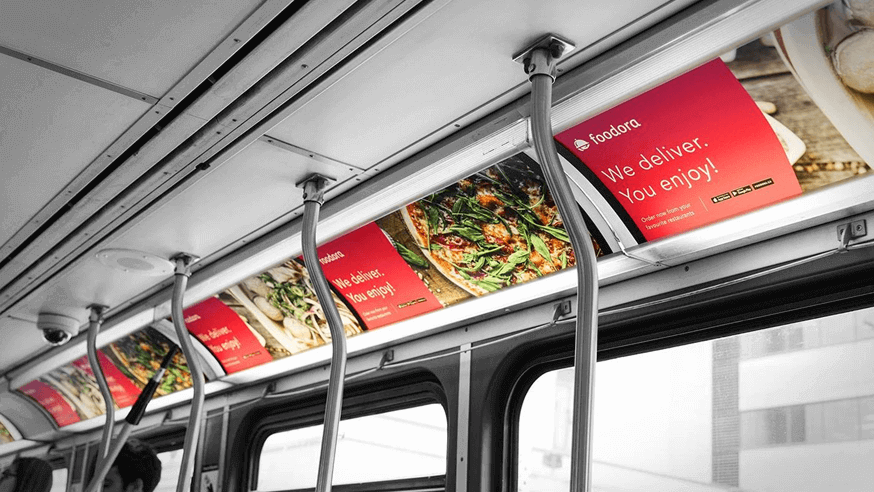
QSRs targeting office goers and students benefit significantly from this medium.
3. Food Delivery App Visibility & In App Media
Food delivery platforms are a key discovery and conversion channel for restaurants and QSRs. With in-app banners, sponsored listings, and featured placements, these platforms influence users actively searching for meals. Sponsored listings can boost visibility by over 50%, while restaurants using ads often see order increases of 30% within a month.
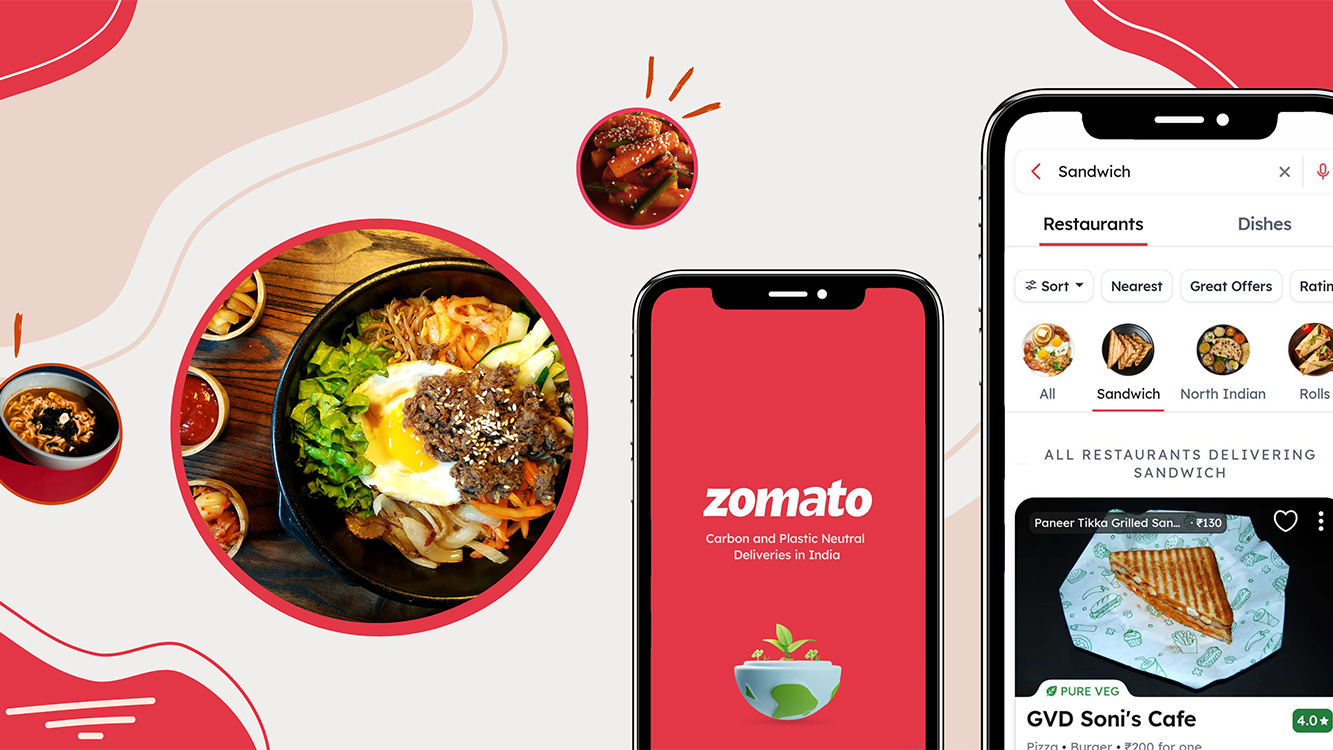
It is supported by offline visibility, ensuring Brand recognition when seen on the app.
4. Micro Influencers & Hyperlocal Content Collaborations
Micro influencers and food reviewers help restaurants reach local audiences effectively. Studies show that 35% of diners make restaurant choices based on online reviews, and 83% of consumers trust recommendations from bloggers and local content creators more than traditional ads, making these voices highly credible.
Restaurants collaborating with micro-influencers often see up to 40% higher local footfall and significantly increased engagement on social media. With 74% of consumers using social media to decide where to eat, authentic content from trusted local voices helps build trust quickly and drives both orders and visits.

For new or local restaurants, this approach drives awareness and trust in targeted neighbourhoods.
5. In Store and Point of Sale Advertising Media
In-restaurant advertising like standees, menus, table tent and digital screens.
Influences add-ons, combos, and repeat purchases. Around 70% of diners notice in store promotions and menu-based upselling can increase average order value by 15–20%.
These formats work best when customers are ready to order, with digital screens and table tents driving up to 30% higher engagement and boosting immediate sales.
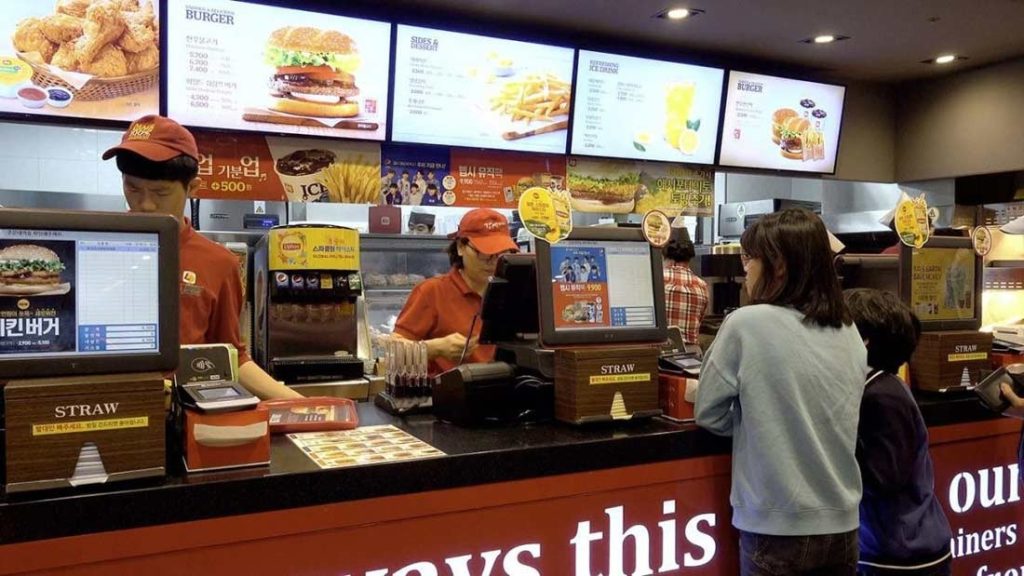
QSRs use in store media to increase average order value without additional customer acquisition costs.
6. Geo Targeted Mobile Advertising
Mobile advertising is highly effective when paired with location targeting. Ads triggered within a defined radius around restaurants can double engagement and conversion rates compared to generic campaigns. Studies show location-based ads drive 80% more store visits, and consumers exposed to nearby ads are 30% more likely to visit the outlet.

Restaurants using geo targeted media have walk-ins when campaigns are aligned with lunch, evening, or late night hours.
7. Cinema & Mall Advertising Media
Malls and cinema complexes draw audiences already ready to eat or socialize. Placing ads in food courts, mall corridors and cinema lobbies captures attention at the perfect moment, reaching consumers in a receptive mindset. This strategic exposure not only builds brand recall but also drives footfall directly, making these high-traffic locations ideal for restaurants and QSRs looking to turn intent into action.

QSRs and casual dining brands use this medium during weekends and festive periods.
8. Local Radio & Audio Advertising
Radio is a relevant advertising medium for restaurants operating at the city or regional levels.
Short, repetitive audio spots recall brand names and locations and are provided during commute hours. Radio works for promotions and limited time deals.

Why Advertising Media Choice is Critical for Restaurants & QSRs
Restaurants and QSRs operate in highly competitive markets with thin margins; every marketing rupee counts. Choosing the wrong advertising channel can waste up to 30% of your spend and deliver low returns, while the right media drives visibility, engagement, and sales.
The most effective channels are contextually relevant, targeting hunger moments, commute routes, and nearby locations. Outdoor media builds awareness, mobile and app ads capture intent, and in store displays increase order value, creating a seamless customer journey that drives footfall and repeat visits.
Frequently Asked Questions (FAQs)
Q1. What is the best advertising medium for restaurants?
Outdoor hoardings, transit advertising, and geo targeted mobile ads are among the most effective channels for driving local footfall.
Q2. How do QSRs increase footfall through advertising?
By combining location-based outdoor media, food delivery app promotions, and in store advertising, QSRs create multiple brand touchpoints.
Q3. Is digital advertising better than outdoor advertising for restaurants?
Both work best together. Outdoor builds awareness while digital captures intent and drives immediate orders.
Choosing the right advertising media is crucial for restaurants and QSRs to boost visibility and drive footfall. In a category fueled by impulse and proximity, the right media can influence decisions within minutes.
For restaurants, success comes from being visible where customers already are. Carefully selected advertising channels help build recall, trust, and encourage repeat visits. Start by understanding customer movement and meal-time behavior. This ensures your brand stays relevant, competitive, and top of mind in a crowded and fast-moving food market.
Why Choose Ginger Media Group for Affordable Marketing
Ginger Media helps startups execute affordable marketing campaigns with clarity, transparency, and measurable impact. With strong expertise across outdoor, transit, print, and on ground activations, Ginger Media focuses on cost effective solutions that deliver real visibility without unnecessary spending. From planning and execution to monitoring and reporting, the team ensures startups get the best value from every offline campaign. By combining strategic media selection with on ground execution strength, Ginger Media enables brands to scale offline marketing efficiently and confidently.
]]>Indian cities are moving faster, smarter, and more connected than ever and brands are looking beyond personal screens to reach consumers in the real world. The city itself has become a powerful canvas for communication, where every street, transit hub, and lifestyle space offers an opportunity to connect.
Digital Out-of-Home (DOOH) advertising is transforming these urban spaces, turning commutes, shopping trips and daily routines into meaningful brand moments. With inventory expanding rapidly across transit hubs, residential zones, retail environments and lifestyle destinations, DOOH offers visibility that is both dynamic and contextually relevant.
The top 10 DOOH advertising formats in India, explained clearly for practical planning.
1. Metro Station Digital Screens
Metro stations are among the most effective DOOH advertising formats in India. Commuters walk, wait and pause multiple times within station premises, providing high dwell time for ads.
Digital screens placed near entry gates, ticketing areas, staircases and platforms benefit from repeated daily exposure, with over 500,000 commuter impressions per day at busy stations like Delhi Metro’s Rajiv Chowk, Mumbai Metro’s Andheri, and Bengaluru Metro’s Majestic. This frequency helps brands build strong recall and reinforce messaging over time.
Metro DOOH advertising works in cities such as Delhi, Mumbai, Bengaluru and Hyderabad, where commuter volumes remain consistently high, making these formats ideal for mass visibility and engagement.
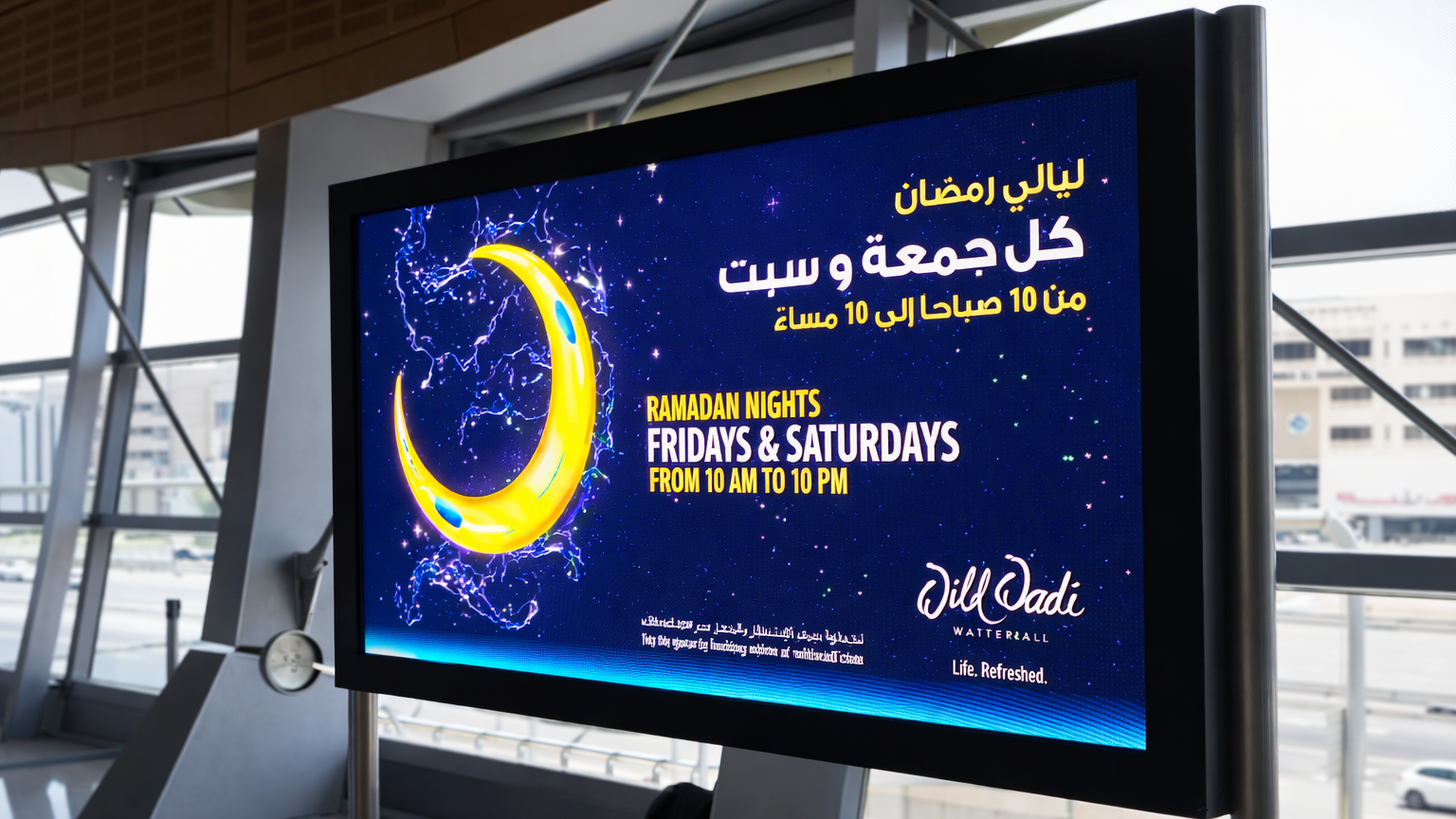
2. Fuel Station (Petrol Pump) Digital Screens
Fuel stations are a unique DOOH advertising environment with guaranteed attention windows. Drivers and passengers spend time refuelling, making payments or waiting briefly.
Digital screens near fuel pumps, billing counters and convenience stores capture attention in a controlled, uncluttered environment, making every second of exposure highly effective.
Although viewing time is short, these screens deliver focused impressions, reaching 10,000 to 50,000 consumers daily at busy urban locations.
This DOOH format works best for FMCG, automotive, fintech and consumer service brands targeting urban audiences, providing high-frequency, contextually relevant visibility.
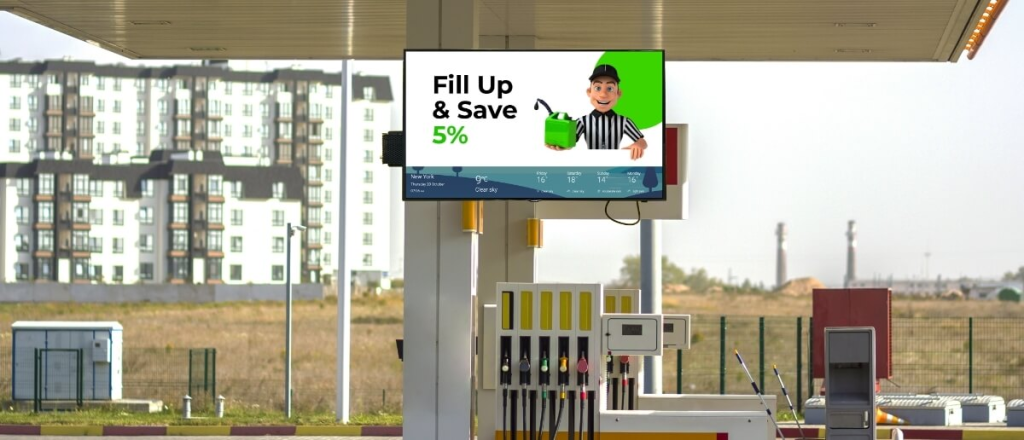
3. Mall Digital Screens
Malls are high-impact DOOH advertising locations with footfall often exceeding 50,000 visitors per day and longer dwell times.
Screens placed at entrances, corridors, escalators, food courts and multiplex lobbies reach shoppers in a browsing or buying mindset, with exposure happening across multiple visits, helping brands build strong recall.
For retail, lifestyle and entertainment brands, mall DOOH advertising formats support discovery and brand reinforcement effectively.
4. Residential Society & Gated Community Digital Screens
Residential societies and gated communities are emerging as powerful DOOH advertising formats in India.
Screens placed at society entrances, lift lobbies, clubhouses, and parking areas reach over 5,000 to 20,000 residents daily, including families, working professionals and decision makers in a trusted, captive environment.
This format works for brands giving daily use products, local services, education, healthcare and real estate solutions.

5. Airport Terminal Digital Displays
Airport terminals are premium DOOH advertising environments with extended dwell time.
Travellers spend significant time at check-in, security, boarding gates and baggage claim areas, providing 10,000 to 50,000 daily impressions at busy airports like Delhi, Mumbai and Bengaluru. Digital screens in these zones allow brands to communicate effectively without distractions, building high recall and premium brand perception.
Airports such as Delhi, Mumbai, and Bengaluru are key hubs for DOOH advertising formats in India, for brands targeting business travellers and affluent audiences.

6. Digital Billboards on Roads and Flyovers
Large-format digital billboards on highways, arterial roads and flyovers deliver city-wide visibility, reaching 50,000 to 150,000 vehicles daily in busy corridors.
DOOH formats allow time-based or event-led creative updates without reprinting costs and messaging can be simplified for fast-moving traffic, ensuring maximum impact in short exposure windows.
Digital billboards work for brand awareness and recall, for launches, festive campaigns and mass market communication.

7. Digital Screens in Hospitals & Healthcare Facilities
Hospitals and healthcare facilities offer high dwell time and focused attention, with patients and attendants spending 20 to 60 minutes on average in waiting areas.
Screens placed in waiting lounges, OPDs, pharmacies and diagnostic centres reach 3,000 to 15,000 viewers per day at busy urban facilities, making this DOOH format highly effective for clear, trust-led brand messaging.
DOOH advertising format works well for healthcare brands, insurance, wellness products, and services targeting families.
8. Railway Station Digital Screens
Railway stations are among the busiest public spaces in India, with the Indian Railways network handling over 20 million passengers every day across major and mid-sized cities.
Digital screens at station entrances, platforms, foot overbridges and waiting areas deliver 20,000 to 60,000 daily impressions at high-traffic stations.They reach daily commuters and long-distance travellers, with 10 to 40 seconds of viewing time per pass, helping build strong and consistent brand recall.
The format builds mass awareness and is a strong pillar of DOOH advertising in India.
9. Cinema & Multiplex Digital Screens
Cinema and multiplex environments offer highly captive audiences before screenings, with viewers spending 10 to 25 minutes on average in pre-show and waiting zones.
Digital screens in ticketing areas, lounge zones and food courts capture attention with limited distractions, delivering high message absorption and stronger brand recall.
DOOH advertising format works for entertainment, FMCG, mobile apps, and lifestyle brands seeking strong recall.
10. Hospitality & Leisure Space Screens
Hospitality and leisure spaces such as hotels, gyms, cafes, co-working spaces and entertainment venues offer high-attention environments, with visitors spending 30 to 90 minutes on average per visit.
Digital screens in these venues can deliver 2,000 to 8,000 daily impressions per location, making them effective for focused brand visibility and contextual messaging.
Screens in these environments reach audiences during relaxed or downtime moments. Brands use this DOOH advertising format to build contextual relevance.
Why Choosing the Right DOOH Advertising Format Matters
Many brands view DOOH advertising as a single category. The DOOH advertising format serves a different objective.
Transit heavy formats drive frequency and scale. Residential, healthcare and hospitality formats build trust and familiarity. Retail and cinema formats influence consideration.
Effective DOOH advertising strategies focus on format alignment. This delivers stronger outcomes.
DOOH advertising is a strategic media that blends physical presence with digital flexibility. The effectiveness of DOOH advertising lies in choosing the right formats for specific audience moments.
For DOOH advertising formats in India, understanding how people move, wait and engage in real world environments. Well chosen formats deliver consistent visibility, contextual relevance and long term recall.
Exploring DOOH advertising as part of your media, start by mapping customer journeys across the city. Identifying the right DOOH advertising formats helps your brand stay visible, credible, and relevant.
Why Choose Ginger Media Group for Affordable Marketing
Ginger Media helps startups execute affordable marketing campaigns with clarity, transparency and measurable impact. With strong expertise across outdoor, transit, print and on ground activations. Ginger Media focuses on cost effective solutions that deliver real visibility without unnecessary spending. From planning and execution to monitoring and reporting, the team ensures startups get the best value from every offline campaign. By combining strategic media selection with on ground execution strength, Ginger Media enables brands to scale offline marketing efficiently and confidently.
]]>Ready to talk with a marketing expert?

A Pragmatic and innovative way to enthrall your target group is just a click away!
Get in Touch
Rukmini Knowledge Park, Kattigenahalli, SH 104, Srinivasa Nagar, Bengaluru, Karnataka 560064
+91-990 247 8800
contact@gingermediagroup.com
Popular in Television Advertising
Udaya TV AdvertisingSun TV AdvertisingStar Plus AdvertisingTV 9 AdvertisingZee TV AdvertisingNDTV India AdvertisingColors TV AdvertisingPopular in Airport Advertising
Spice Jet AdvertisingMumbai Airport AdvertisingDelhi Airport AdvertisingEmirites AdvertisingIndiGo Airlines Domestic India AdvertisingPopular in Newspaper Advertising
Deccan Herald AdvertisingPrajavani AdvertisingThe Hindu AdvertisingEconomic Times AdvertisingDainik Jagran AdvertisingHindustan Times AdvertisingPopular in Magazine Advertising
Forbes AdvertisingCosmopolitan AdvertisingBusiness World AdvertisingVogue Magazine AdvertisingPopular in Sports Advertising
IPL AdvertisingPopular in Outdoor Advertising
Billboard AdvertisingBus Shelter AdvertisingMetro Pillar AdvertisingUnipole Advertising© Ginger Media Group 2025. All Rights Reserved.